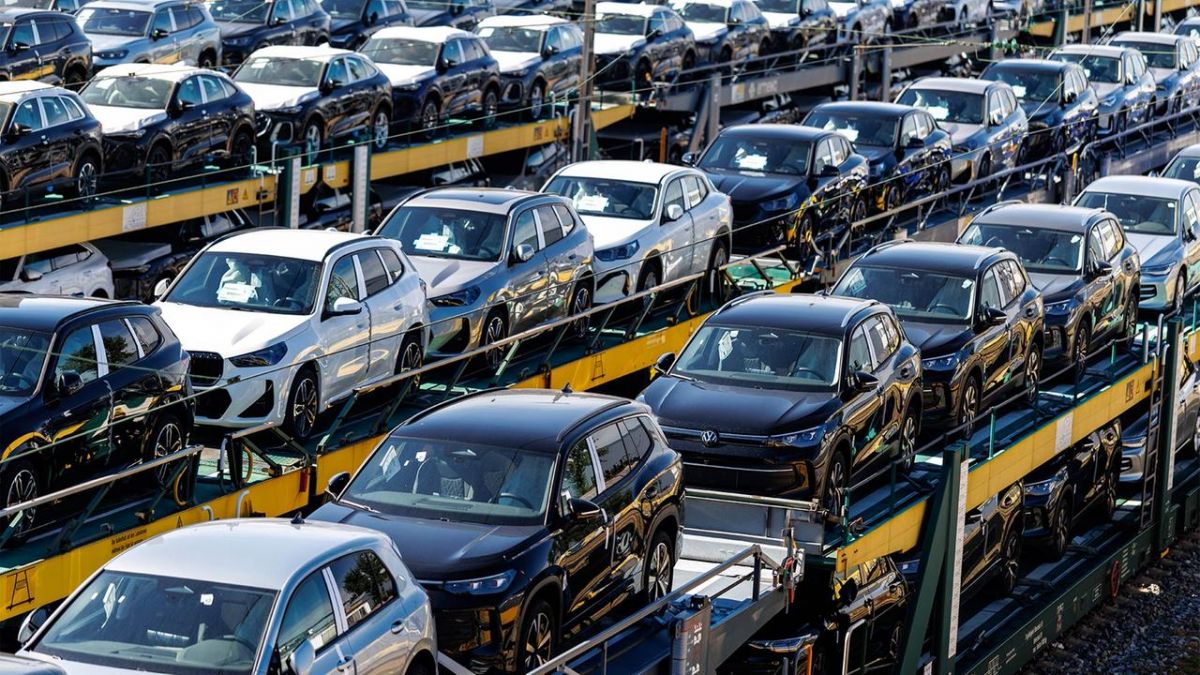
The Gotthard König GmbH car dealership in Berlin has filed for insolvency, affecting around 1200 employees and 82 locations, while the industry suffers from the challenges of the transition to electromobility and strong competitive pressure. (translated)
The article discusses the controversies surrounding Markus Söder's call for an end to the EU ban on combustion engines, supported by a controversial study from the Technical University of Munich, which attributes only 41 percent less CO₂ emissions to electric cars over their lifecycle, and notes that the true challenge for the German automotive industry is not the EU ban starting in 2035, but the competition from Chinese manufacturers. (translated)

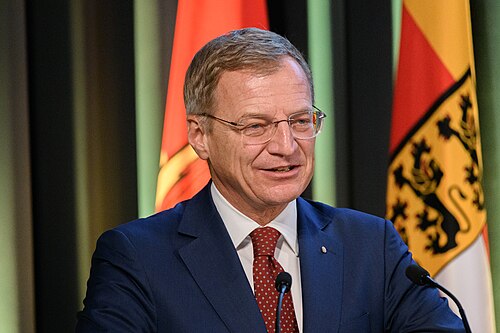
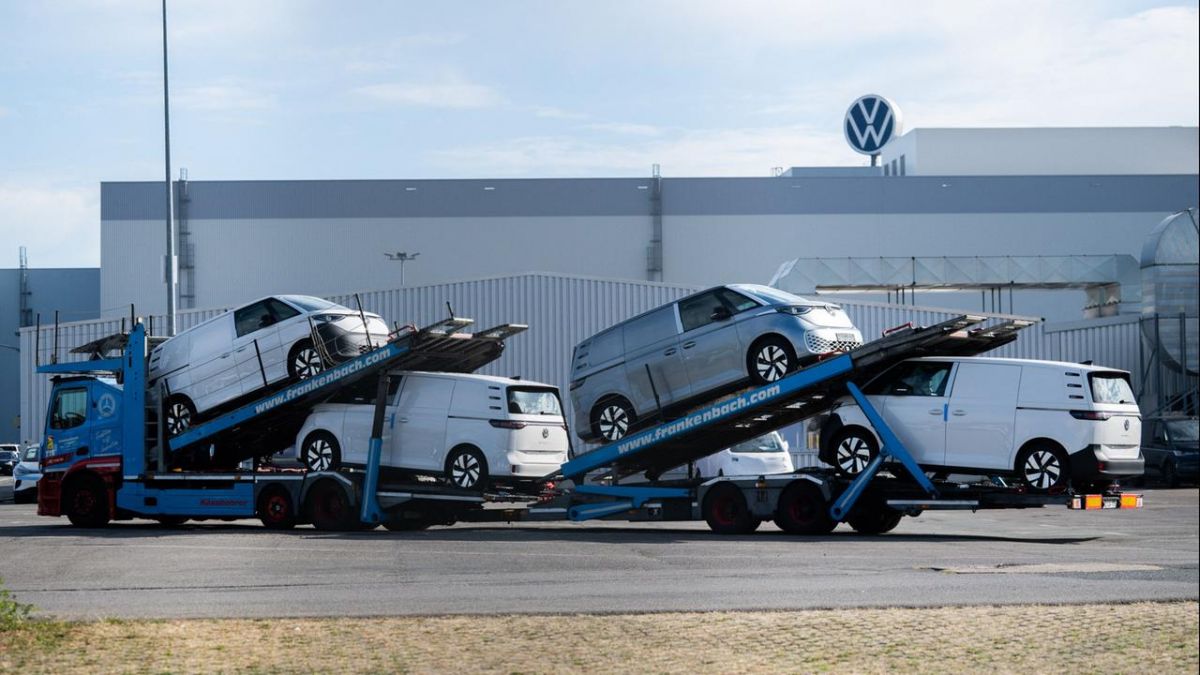
Lower Saxony's Prime Minister Olaf Lies advocates for the expansion of electric vehicle production at the VW plant in Emden to secure the future of the site and the 7,700 employees despite the company's cost-cutting plans. (translated)

BYD is bringing a variety of plug-in hybrid cars to the German market at dumping prices, surpassing many German manufacturers, which is interpreted as an export of the price war from China. (translated)

The Volkswagen board under Oliver Blume has called extraordinary employee meetings at the Emden and Zwickau plants to inform about the announced cost-cutting measures, while the locations are under discussion due to the lack of competitive utilization options for the 2030s, but no closures have been decided. (translated)

Volkswagen is facing significant economic problems due to declining sales figures, geopolitical conflicts, and the challenges of electric mobility, which is leading to planned job cuts and possible plant closures, while the company is trying to simplify its structures and reduce costs. (translated)

A new TÜV survey shows that the car remains the most popular means of transport in Germany, with 80 percent of weekly usage, while electric mobility is gaining importance and 54 percent of respondents oppose restrictions on car traffic in city centers. (translated)

According to a recent TÜV study, the car remains the most important means of transportation for over 80 percent of Germans, while electric mobility is gaining significance, with the majority rejecting extensive restrictions on car traffic in city centers. (translated)

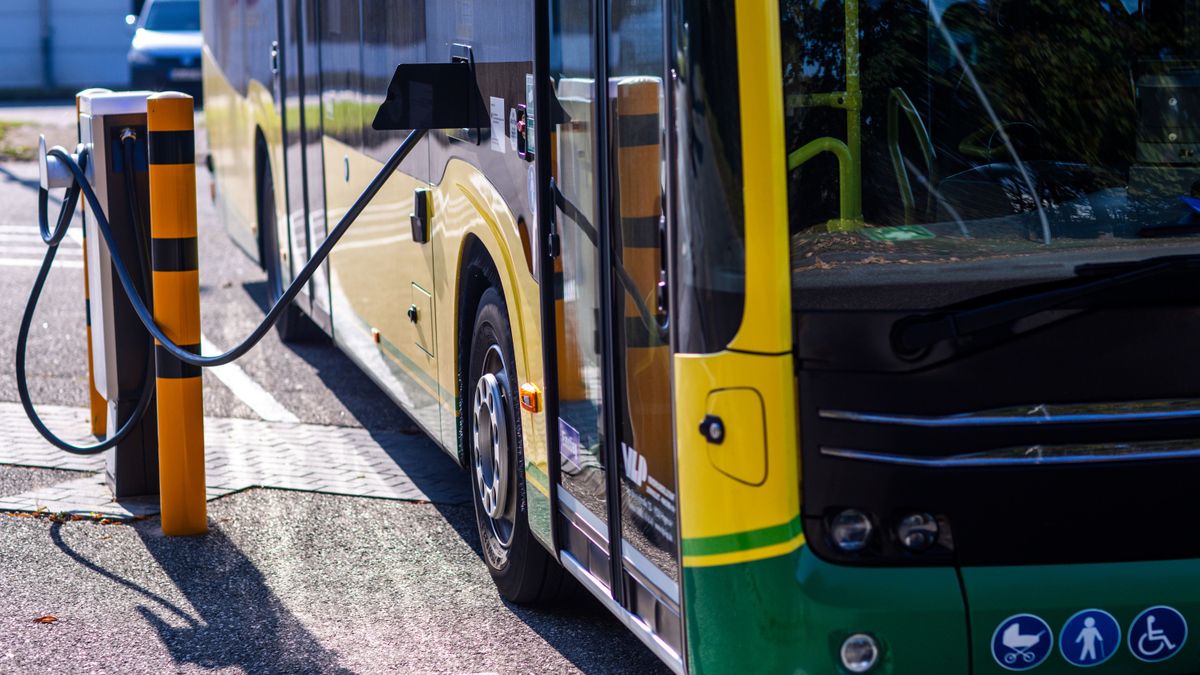
In 2025, global sales of electric trucks and buses rose by 86 percent to around half a million vehicles, with China dominating nearly 90 percent of the sales, while the EU, India, Brazil, and the UK also recorded significant growth, although infrastructure challenges and cost parity with conventional diesel vehicles remained. (translated)

In 2025, global sales of electric trucks and buses increased by 86 percent to nearly half a million vehicles, with China playing a central role, accounting for about 90 percent of sales and a significant increase in the heavy truck sector, while the EU and other markets also showed double-digit growth rates, but challenges such as insufficient charging infrastructure and price parity with diesel trucks remained. (translated)

The article highlights the challenges of charging infrastructure for electric cars in Germany, noting that while there could be enough public charging points nationwide, many inner-city neighborhoods are facing an acute shortage of charging points, which could jeopardize progress towards the desired electric mobility by 2045. (translated)

Deutschlands Autobauer verlieren in China dramatisch an Boden. Ein früherer BMW Manager warnt vor einer globalen Auslese. #Autoindustrie #BMW #China #Elektromobilität Marktverlust: Der Marktanteil deutscher Hersteller in China ist nach Angaben von Daniel Kirchert von 25 auf 12 Prozent gefallen. Im ersten Halbjahr 2026 verdienten dort nach seiner Darstellung nur drei Automobilunternehmen Geld. Wettbewerb: Kirchert erwartet eine Phase extremer Konkurrenz und hält es für möglich, dass einige der heutigen Top 10 Automobilhersteller innerhalb von fünf Jahren verschwinden. Zudem kaufen nach seiner Einschätzung bereits 90 bis 95 Prozent der jungen chinesischen Kunden heimische Marken. Die deutsche Autoindustrie steht unter erheblichem Anpassungsdruck und muss ihre Wettbewerbsfähigkeit deutlich steigern. Vielen Dank für den wichtigen Hinweis! Quelle: auto motor und sport https://t.co/Wzo8CBEZZI #Autoindustrie #China #Wettbewerb
According to a study by PwC, the registration of pure electric cars in Europe reached a record with a share of 22 percent and over 600,000 vehicles in the second quarter, while growth at a global level, especially in China, is slowing down, and the oil price acts as an external accelerator for electromobility. (translated)

Elektroauto-Fahrer können durch die THG-Quote jährlich bis zu 370 Euro erhalten, indem sie ihren gesparten CO₂-Ausstoß verkaufen, was durch Regelungen der Bundesregierung und den Emissionshandel gefördert wird, während der Bonus letztlich von Mineralölkonzernen finanziert wird. #Elektromobilität #THGQuote #EAuto

Die deutsche Industrie befindet sich in einer kritischen Lage, da der Export schwächelt, die Wettbewerbsfähigkeit sinkt und immer mehr Jobs verloren gehen, während die Hoffnungen auf künstliche Intelligenz ruhen, um eine Wende herbeizuführen. #Industrie #Wettbewerbsfähigkeit #Elektromobilität

Äthiopien verbietet ab 2024 den Import von Fahrzeugen mit Verbrennungsmotor und fördert gleichzeitig die Einfuhr von Elektroautos durch reduzierte Importzölle, um die Elektromobilität voranzutreiben. #Elektromobilität #Äthiopien #E-Autos

CEO společnosti Xpeng, He Xiaopeng, oznámil ambiciózní plány na expanzi v Evropě, zdůraznil důležitost umělé inteligence v nových modelech a odhalil, že jejich cílem není jen finanční zisk, ale také zlepšení světa prostřednictvím inovativních technologií. #Xpeng #Elektromobilität #KünstlicheIntelligenz
In einem kritischen Podcast wird aufgezeigt, dass schwere Hybrid-Pkw weit weniger umweltfreundlich sind als ihr Ruf, da sie in der Praxis oft deutlich mehr CO₂ ausstoßen als angegeben, während die Bundesregierung tatenlos zusieht, was auf das Dilemma zwischen kurzfristigem Profit und langfristigem Gemeinwohl hinweist. #Elektromobilität #Klimaschutz #HybridPkw

Großbritannien führt ab 2028 eine kilometerabhängige Abgabe für Elektroautos ein. Die Finanzierung des Straßenverkehrs wird für E Mobilität neu ausgerichtet. #Elektromobilität #Großbritannien #Verkehr #Elektroauto Neue Abgabe: Großbritannien will ab dem 1. April 2028 zusätzlich zur bestehenden Kfz Steuer eine kilometerabhängige Abgabe für Elektroautos einführen. Hintergrund sind sinkende Einnahmen aus der Kraftstoffsteuer. Belastung: Die Abgabe soll zunächst drei Pence je Meile betragen. Das entspricht rund 2,2 Eurocent pro Kilometer. Nach Angaben der britischen Regierung würde dies bei einer durchschnittlichen Fahrleistung von 12900 Kilometern rund 277 Euro pro Jahr bedeuten. Mit der wachsenden Zahl von Elektroautos steigt zugleich der finanzielle Druck auf die bisherigen Modelle der Straßenfinanzierung. Vielen Dank für den wichtigen Hinweis! Quelle: (Auto Motor und Sport) https://t.co/UdlVSJY3QR #Elektromobilität #Großbritannien #Verkehr