BETA nonprofit public democratic european moderated

Search

#expression

GeoTales described a scenario where several agricultural regions would be simultaneously affected, while dam production would decrease, trade routes would be disrupted, and populations would experience exceptional heat. It specified that the term "super El Niño" referred to an episode of about +2 °C or more in the Niño 3.4 area, without constituting a universal category comparable to that of cyclones. According to GeoTales, the bulletin published on October 8 by the World Meteorological Organization forecasted an average anomaly of about +3.7 °C in this area for the period from October to December, with a peak around December. It also reported that NOAA assessed the probability of reaching at least +2.5 °C over three months at 83% according to its RONI index, mentioning an episode likely to exceed those observed since 1950. It emphasized that the two agencies used different methods, but their figures indicated an exceptionally intense event. GeoTales explained that observations showed increased heat beneath the surface of the Pacific, a deeper thermocline, as well as anomalies in westerly winds and precipitation in the central and eastern parts of the ocean. It reminded that El Niño is a natural phenomenon and estimated that it would be too simplistic to attribute this episode solely to climate change, while adding that background warming could exacerbate its consequences. To illustrate the possible impacts, GeoTales mentioned Guatemala, citing a video published the day before by LIMIT Media. It wrote that in the "dry corridor" that also crosses Honduras and El Salvador, the lack of rain and crop losses were already undermining the food and income of families relying on maize and bean cultivation. #ElNiño #ChangementClimatique #Météo (translated)

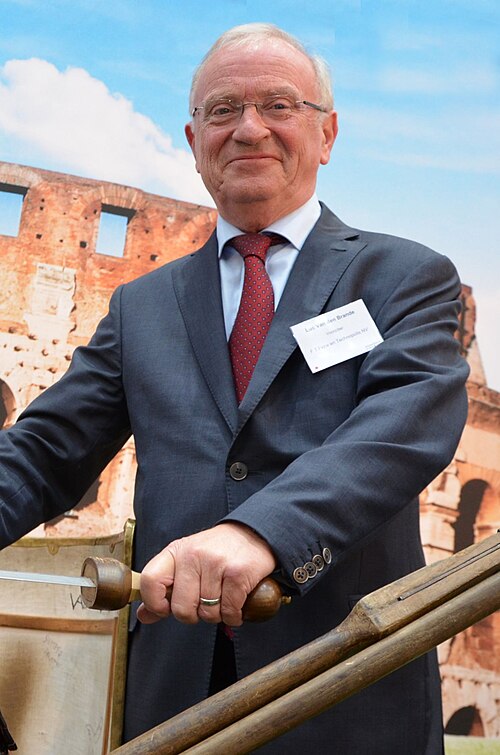
But hardly was it put on the rails when Flanders, through the voice of its minister-president at the time, the Christian democrat Luc Van den Brande, launched the idea of confederalism: a central level reduced to its simplest expression, with two states – Flanders and Wallonia – jointly managing Brussels. #Belgique #Flandre #confédéralisme (translated)

La Belgique tiendra-t-elle jusqu’en 2030 ?
www.lalibre.be

John Joodan estimated that a scene from DBS showed how ridiculous Goku had been made in his base form. He specified that the scene and dialogues were identical, but that the facial expression changed everything, adding that the criticisms were therefore not unfounded. #DragonBallSuper #Goku #Anime (translated)

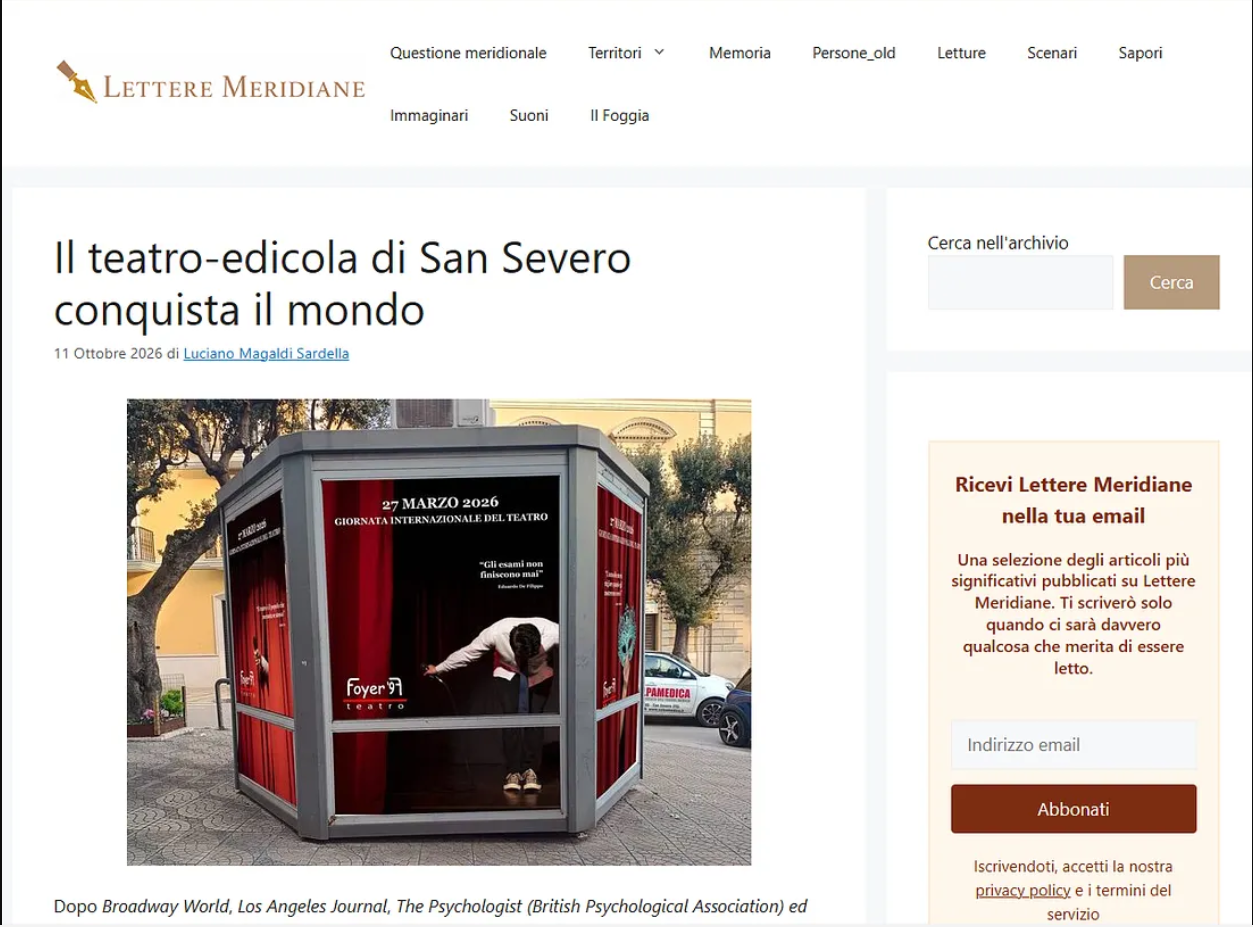
LETTERE MERIDIANE — “TEATRO-EDICOLA” OF SAN SEVERO CONQUERS THE WORLD SOURCE: https://www.letteremeridiane.org/2026/10/il-teatro-edicola-di-san-severo-conquista-il-mondo/?fbclid=IwY2xjawU4oqFleHRuA2FlbQIxMQBwZG9mAXNydGMGYXBwX2lkEDIyMjAzOTE3ODgyMDA4OTIAAR5rVEwYs6UUXg7v-P0SyIQ_DRb_F6ZiY58OcseYoV4J7atcTiERnhWaqKM2pw_aem_Njle1jq1XLzHr93KLBUcVA After “Broadway World”, the “Los Angeles Journal”, “The Psychologist (British Psychological Association)” and Hollywood Beat Magazine, its “academic consecration” has now arrived courtesy of Stanford University. As I have already emphasised in my article on the revival of the GIO Festival in Foggia, celebrated by BroadwayWorld for the world stage premiere of the Giordano’s opera Marina (1888), the province of Foggia has long ceased to be peripheral. It happens when it finds an idea that shifts the coordinates: well, in San Severo, 40 kilometres from Foggia, it has happened again. Only this time an orchestra was not needed; six chairs were enough. The celebrated Teatro-Edicola of San Severo artistic director Francesco Gravino of the theatre company Foyer ’97 has been featured in the academic journal “Stanford Social Innovation Review (SSIR)” as an academic case study. The news, relayed on 19 September 2026 by ANSA Nazionale, looked like a misprint. Then it became clear that it was not. SSIR, an award-winning publication covering multisectoral solutions to global problems, included the project in its Dispatches section with the reportage “The Six-Seat Revolution”. It is the inverse trajectory to that of the GIO Festival: not a forgotten opera returning to a grand historic Italian horseshoe theatre, but an entire theatre reborn inside a disused place, forgotten by man. There are moments when past and future intertwine to create something visionary, innovative, artistically “revolutionary”: San Severo experienced one of those moments on the morning of 27 March 2026, during World Theatre Day, when the shutter of a newsstand closed for six years in Via Matteo Tondi was reopened “not to sell newspapers, but to offer stirring stories”, to quote Gravino’s motto. The idea of the visionary Francesco Gravino, artistic director, stage director and actor of the San Severo company Foyer ’97, active for at least 30 years in Capitanata, centred on the kiosk, hexagonal in metal and glass, granted free of charge by its owner Pino Frau, by now an urban relic created by the publishing crisis of the early 2000s: today in Italy active newsstands have fallen from about 35,000 in 2005 to about 20,000 in 2024, a decline of 42.8%. Gravino and eleven other actors restructured it in two weeks of work, without institutional funding, and transformed it into what is now under examination by the London commission of Guinness World Records as the “world’s smallest theatre”. The formula is deliberately austere: six spectators at a time outside, actors inside at less than a metre’s distance, 15-minute performances, continuous rotation from 11:00 to 20:45, texts ranging from Goldoni to Chekhov, from Ibsen to Dacia Maraini. On the door a QR code with an original theatrical warning: “Warning! This QR code transforms passers-by into actors. Scan only if ready.” The numbers immediately showed that it was no boutade: more than 60 people in a single afternoon, three inaugural days that sold out. But above all a positive echo that went beyond the borders of San Severo. “Broadway World” (just as in the previous case of the GIO Festival), the world’s most influential theatre criticism outlet with over 5.5 million monthly views, devoted exclusive coverage to it on 27 April 2026: “An Abandoned Italian Newsstand Just Became the World’s Smallest Theatre”. Not a mere listing, but an analysis: “There is no foyer, there is no balcony, there is no grid. There is barely a wing. What there is is something almost unrecognisable as an evening at the theatre, and for that very reason it is all the more powerful.” “Broadway World” captured Gravino’s manifesto idea: “This is a theatre of proximity. In an era of digital distance, we are putting human contact back at the centre,” framing it as “More than a clever exercise in site-specific theatre. It is a reappropriation.” All of this, in a Mezzogiorno of Italy often narrated only in terms of organised crime and marginalisation. To that seal of approval was added another, even more disorienting for a newsstand in San Severo: the “Los Angeles Journal”, one of the most influential publications on the West Coast for the performing arts. On 12 May 2026, it headlined thus: “San Severo’s Teatro-Edicola as an Innovative Model for Los Angeles Theaters?” opening as follows: “In a city in southern Italy that Hollywood has never heard of, a theatre director has just built the smallest stage in the world: six seats, fifteen minutes, zero distance. Los Angeles should pay attention.” The “Los Angeles Journal” does not indulge in folklore, but places the kiosk in Via Matteo Tondi alongside the prestigious 1,600-seat Ahmanson Theatre in Los Angeles, the Pantages of Broadway in Hollywood, the 99-seat plan of Rogue Machine, the Odyssey, the Victory Theatre and the Hollywood Fringe. It even recalls Ethan Marks’s Electrical Box Theatre, a veritable electrical box lined with red velvet in downtown Los Angeles, to argue that Gravino has taken to the extreme the question Los Angeles has been asking itself for decades: How small can a stage become before it ceases to be a stage? And it recognizes the San Severo urban model: almost zero cost, two weeks of work and six chairs, in return for immediate provincial, regional and national media coverage, recognition by the San Severo’s Municipal Administration, and a format exportable anywhere. Then, the third American piece came from “Hollywood Beat Magazine” on 20 April 2026: Six seats. Fifteen minutes. One actor. No stage. The magazine recounts the kiosk in Via Tondi left disused for almost six years, the contemporary six-seat cultural outpost, placing Francesco Gravino in a distinguished genealogy: Richard Schechner and environmental theatre, Jerzy Grotowski and poor theatre, Nicolas Bourriaud and relational aesthetics. But it closes with pragmatism: it is not a thesis, it is fixing a street corner, that is, repairing an urban street corner by asking not how large a theatre can become, but how small it must become again to recover its original power. And finally, the celebrated London-based “The Psychologist”, the journal of the “British Psychological Society (BPS)”, the oldest psychological society in the world, transformed the Teatro-Edicola into a scientific case study: on 30 July 2026 it published “The world’s smallest theatre — and Psychologists’ next act”, starting from the same detail, the morning of 27 March when the metal shutter of the hexagonal kiosk in Via Tondi reopened after six years, six people inside, an actor at less than a metre’s distance beginning Chekhov. It describes the formula: six spectators, 15 minutes, 11 actors over 10 hours, from Goldoni to Euripides, inside a kiosk where the fourth wall does not break because architecturally it never existed. But the BPS goes a step further: it cites the 2025 studies by Damien Gabriel in IBRO Neuroscience Reports, that live performance generates measurably stronger emotional and physiological activation than video, and introduces Edward Hall’s proxemics: below one metre is intimate space, reserved for doctors, close friends, lovers. In that one-square-metre space, the actor’s breath is audible, micro-expressions legible, the self-other boundary becomes permeable. The Teatro-Edicola “does not make theatre better, it makes it inevitable”. And it is here that one understands why Stanford is studying it as an academic case study in social innovation, not as a case of artistic originality. In Italy, meanwhile, the national media circuit had already picked up the phenomenon: RaiNews — TG2 Storie brought it to RaiDue at midnight on 19 April. RTL 102.5 devoted space to the format conceived by Gravino and developed by Foyer ’97 in the heart of San Severo in Via Tondi, defining it as a permanent micro-stage capable of bringing theatre into public space. ANSA.it, Gazzetta del Mezzogiorno, La Repubblica, TG2000, Radio Capital, Swiss RSI, ANSA Brazil and many others followed. And for the record: Fiorello praised it in La Pennicanza as an artistic case inspired by his Edicola Fiore, and Biagio Antonacci, on his tour in the Augustan amphitheatre of Lucera, made a “fact-finding” stop at the Teatro-Edicola singing the celebrated and nostalgic Iris in front of an audience certainly larger than the “six seats”. Francesco Gravino’s theatre company Foyer ’97 was not born yesterday: behind it lie the Teatro-Cantina of 2016, the underground theatre, and in 2011 a performance on the bell tower of a church in the centre of San Severo at 45 metres high. The Teatro-Edicola completes, in Gravino’s words, “the entire vertical extension of theatre: underground, street level, rooftop”. And it is preparing for its thirtieth anniversary in 2027 aiming to purchase the kiosk to make it permanent, exporting the “San Severo Model” to Rome, Lucca, and to the festivals of Santarcangelo and Todi. As with the GIO Festival, someone might dare to claim that it is merely a stunt, but when BroadwayWorld places you alongside the Los Angeles Opera House, the “Los Angeles Journa”l proposes you as a model for Hollywood, “Hollywood Beat Magazine” reads you through Grotowski and the “British Psychological Society” uses you to explain mirror neurones, it is no longer a stunt but an excellent artistic and academic positioning. To those who still whisper that Foggia and Capitanata are provincial, the answer is now written on two opposite and complementary fronts: on 5 June in Foggia a 138-year-old opera found the stage again at the Giordano ending up on BroadwayWorld; on 27 March in San Severo a 4-square-metre kiosk invented a stage that did not exist, ending up at Stanford, in Los Angeles, in Hollywood and in London. The periphery, when it has a precise idea, becomes the centre. Even with six chairs. Luciano Magaldi Sardella

Il teatro-edicola di San Severo conquista il mondo

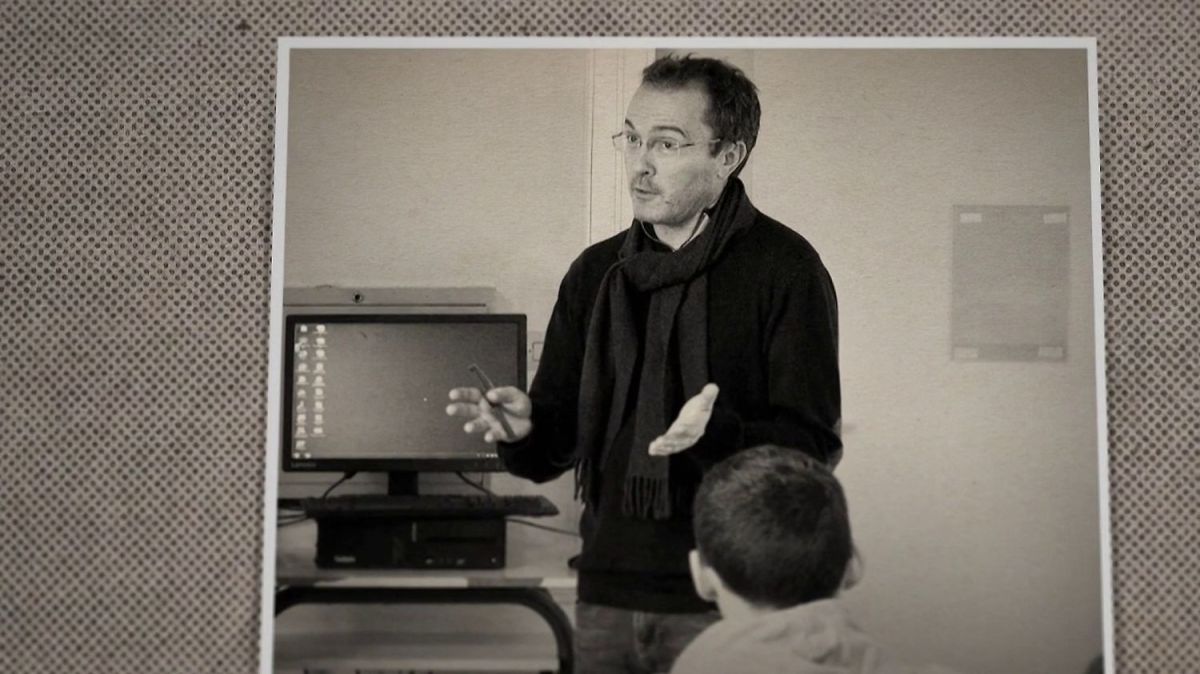
The Generation Paty project allows high school students who attended the trial for the assassination of Samuel Paty to share their experiences and raise awareness among middle school students in Conflans-Sainte-Honorine about the issues of freedom of expression and the consequences of rumors. #SamuelPaty #LibertéDéexpression #GénérationPaty (translated)

"Génération Paty" : quand les lycéens racontent le procès de l'assassinat de Samuel Paty aux collégiens actuels de Conflans-Sainte-Honorine

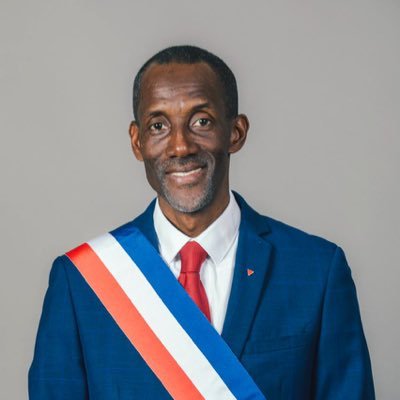
Bally Bagayoko presented the launch of the Hip-Hop and Urban Cultures Festival of the New Town of Saint-Denis–Pierrefitte-sur-Seine as an evening focused on creation, commitment, and hope. He said that the city aimed to maintain a strong cultural ambition despite a difficult political and social context, which weakened local communities and tested cultural policies. He described culture as a right and a means of emancipation, and hip-hop and urban cultures as spaces for expression, encounter, and solidarity. According to him, the evening also allowed for affirming support for the mobilization of high school students on October 17. Bagayoko advocated for a convergence of struggles and generations around social justice, equality, dignity, and access to culture. #HipHop #CulturesUrbaines #SaintDenis #PierrefitteSurSeine #CulturePourToutesEtTous #Jeunesse #ConvergenceDesLuttes #FaireRenaîtreLEspoir #HipHop #CulturesUrbaines #Culture (translated)

Press Briefs reported nearly 7,000 police custody cases, 86% of which involved minors, and indicated that the majority had not led to legal proceedings at this stage. The account described these arrests as a massive and unprecedented measure aimed at containing the mobilization of young people. Several cited observers viewed this as a form of intimidation, while Press Briefs believed this practice infringed on the right to protest and risked normalizing disproportionate police and judicial responses. The account added that the preventive use of police custody had already been documented during the Yellow Vests movement. Relying on independent press articles, Press Briefs relayed testimonies from high school students reporting violent detention conditions, symptoms of post-traumatic stress, forced undressings, and physical or psychological violence. A 15-year-old reportedly recounted being slammed against a concrete bed and hit on the head by police and then insulted. A complaint had been filed, according to the account, which also indicated that the police prefecture had not responded to Mediapart's questions about the reported statements. Mohammed, a 16-year-old high school student in Saint-Denis, reportedly stated that police had hit the bars of his cell during the night to wake up the detainees and had targeted him with a racist insult. The mother of Noham, also 16, claimed that her son had been hit in the liver and face after asking why he had been arrested. Adam's mother also denounced violence against young protesters. Press Briefs added that several teenage girls and boys reported sexist and racist remarks from police, and complaints had been filed. Anne Savinel-Barras, president of Amnesty International France, expressed her concern over the repression of the student movement, believing that the young people's demands for education and health were met with prohibitions on demonstrations and disproportionate police violence. The NGO stated that it would support people peacefully protesting and defend the right to demonstrate. The United Nations High Commissioner for Human Rights also expressed concern about the situation in France and notably called for a proportional use of force. #jeunesse #manifestation #répression (translated)

Assel 2d

Assel wrote that starting this evening, singing, theater, dance, and stage expression would be part of her area of expertise, referring to #StarAcademy. #StarAcademy https://t.co/J8c9RqSeSF #StarAcademy #chant #expressionartistique (translated)

BFMTV 2d

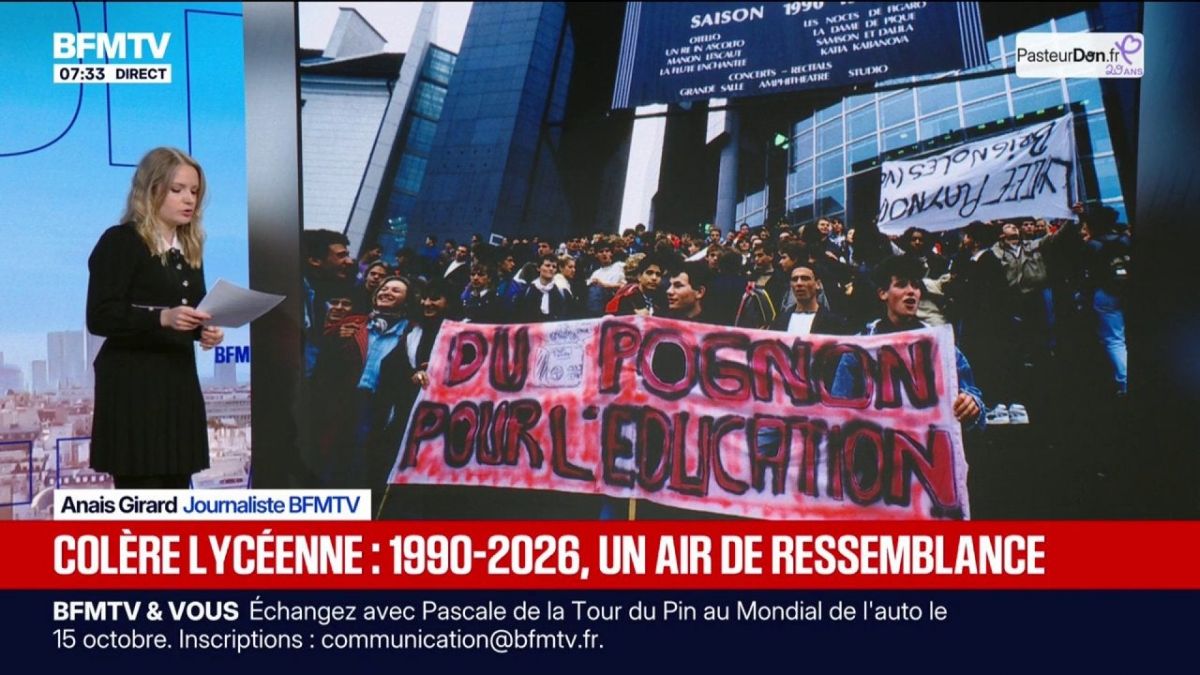
The BFM-Société article compares the high school protests of 1990 and 2026, highlighting significant similarities in the expression of student anger. #MobilisationLycéenne #ColèreLycéenne #HistoireÉducative (translated)

Colère lycéenne: 1990-2026, un air de ressemblance

"The government has dealt with the expression of a deep movement concerning the youth as that of rioters," analyzes Raquel Garrido, former deputy. #MobilisationLycéenne #Éducation #Austérité (translated)

Mobilisation lycéenne: "C'est le revers de toutes les politiques de rigueur et d'austérité", explique Olivier Besancenot, membre du NPA
www.bfmtv.com

"The government has treated the expression of a profound movement concerning the youth as rioters," analyzes Raquel Garrido, former deputy. #MobilisationLycéenne #CriseVeRépublique #Éducation (translated)

Mobilisation lycéenne: "J'y vois un élément de crise supplémentaire, une crise de la Ve République", observe Olivier Besancenot, membre du NPA
www.bfmtv.com
BFMTV 3d

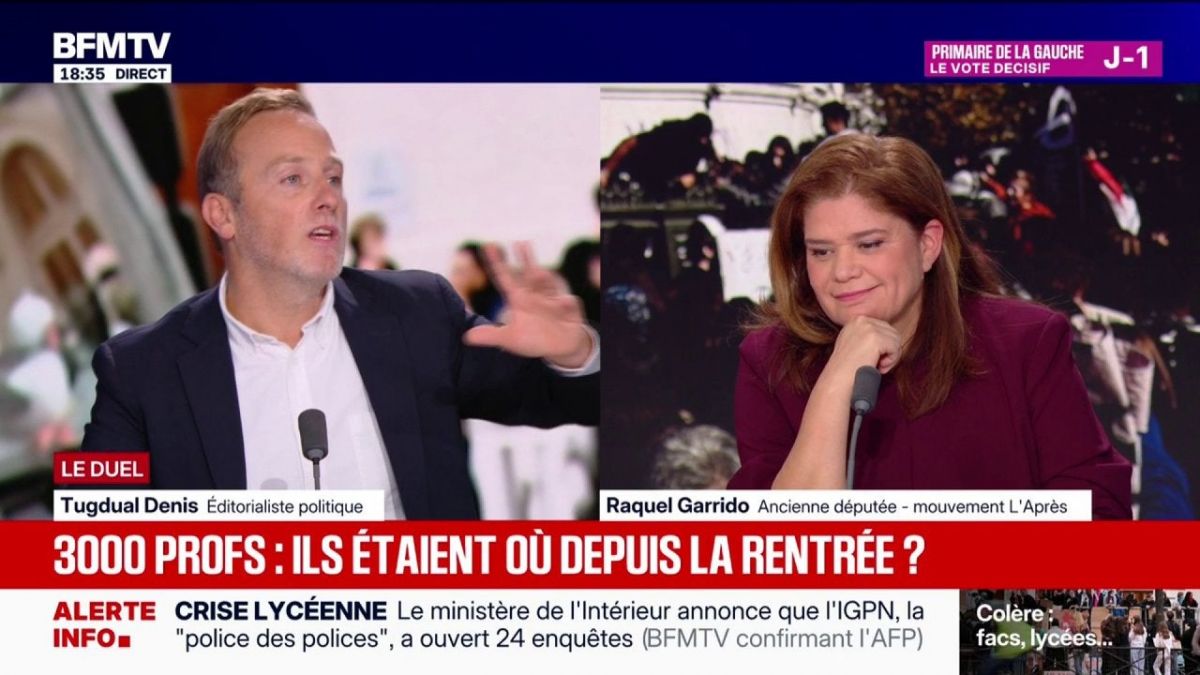
Raquel Garrido analyzes the way the government has treated the student movement, labeling it as rioters while it is a legitimate expression of the concerns of young people, in a context where 3,000 substitute teachers are going to be assigned to ease the anger of high school students. #MouvementLycéen #Education #RaquelGarrido (translated)

Mouvement lycéen : "le gouvernement a traité en émeutiers l'expression d'un mouvement profond qui concerne les jeunes", analyse Raquel Garrido, ancienne députée

"The government treated the expression of a profound movement concerning young people as a riot," analyzes Raquel Garrido, former deputy. #MobilisationLycéenne #Révendications #ExtrêmeGauche (translated)

Mobilisation lycéenne : "Leurs revendications, qui sont légitimes, sont balayées par l'ultraviolence de l'extrême gauche", estime Guilhem Carayon, vice-président de l'UDR
www.bfmtv.com

The police in Paris confiscated students' signs at the entrance of the demonstrations, sparking criticism over a violation of freedom of expression. #LibertéDExpression #Paris #Manifestation (translated)

« Une entrave à la liberté d’expression » : à Paris, les forces de l’ordre ont confisqué des pancartes de lycéens à l’entrée des manifestations

The author expressed joy at the decline in the digital audience of the press, which he referred to as a "system." He stated that the French had had enough of subsidized propaganda and wanted more free debate and freedom of expression. https://t.co/MQqMBNYBiI #LibertéDExpression #Démocratie #Presse #FR (translated)

The author denounced police censorships that he qualified as illegal. He recalled that freedom of expression, including the right to contest, is a fundamental right and indicated that it is also stated and guaranteed to young people by the UN Convention on the Rights of the Child (1989) and the French Education Code (2021). https://t.co/NWFGdlPZsw #LibertéDExpression #DroitsHumains #Jeunesse #FR #ONU (translated)

SR 4d

"Freedom of political expression is particularly protected in France by law," specifies Sebastian Roché, research director at the CNRS, a specialist in comparative policing. #LibertéDExpression #Manifestations #Pancartes (translated)

Colère des lycéens : La police a-t-elle vraiment le droit de confisquer les pancartes des manifestants ?
www.20minutes.fr

The author called for defending freedom of expression in the face of what he described as the violence of an extreme left totalitarianism, which he believed heralded dark days for freedom of thought. (translated)

Fdesouche.com shared the remarks of Louis Montangon (UNI) on the GG of RMC. He stated that, in public higher education, individuals who openly expressed their right-wing opinions faced compromised career paths. (translated)

The article explores the reasons why athletes are hesitant to express themselves on political issues before presidential elections, fearing negative consequences for their careers. #sport #politique #expression (translated)

« Si on le fait, on se fait massacrer » : pourquoi les sportifs rechignent à s’exprimer sur la politique avant la présidentielle