SLY | Sakor estimated that Know My Name performed better on stage than Firestarter, as he believed True Damage offered much more than K/DA in concert. However, he found the opening ceremony to be very average compared to those of previous years. He also praised Soyeon, whom he believed carried both groups on her own, and called her the best of all time. #KDA #TrueDamage #Soyeon (translated)
FM Anand: Canada is targeting the people and companies behind the missiles Putin fires at Ukrainian cities. Today at the G7 Foreign Ministers’ Meeting in Paris, we announced sanctions on 38 entities and 24 individuals. www.canada.ca/en/global-af...
"Over 55% of cities no longer meet the legal threshold of 10,000 inhabitants but have city administration. They are practically communes. It is possible. Right here in my county is the city of Slănic Moldova, which has a small population, bordering the city of Târgu-Ocna. It is possible that a city Târgu-Ocna will result in the end. It would also be natural; I know the area well," explained Dragoș Benea during the conference. #Politic #PSD #ReformaAdministrativa (translated)
"I consider that it is premature to express my position on any possible proposals before they are presented and discussed in the context of an institutional dialogue. I believe it is natural to have official discussions with representatives of the current Government, especially as I have noticed a significant and welcome change in approach compared to the previous Government, reflected so far in a balanced, constructive discourse and a real openness to dialogue. We appreciate this change in attitude and believe it is important to give institutional dialogue the chance to lead to concrete solutions that take into account both the rights recognized for magistrates and the principles of the rule of law," said Lia Savonea, for Cotidianul, according to News.ro. #ICCJ #salarii #dialoginstituțional (translated)
Police remained on the streets of Frankfurt on Sunday after rioting and looting broke out following youth demonstrations, leaving shopfronts smashed, fires burning and several people injured. #FrankfurtRiots #Looting #YouthDemonstrations
They say that Hegseth fires every general or admiral he feels insecure or inferior around... and that's just about all of them. And he does this in the midst of a war. www.theatlantic.com/national-sec...
The author wrote that 24 new Canadair aircraft from De Havilland would begin protecting Europe from wildfires from 2028, with 12 allocated to the rescEU fleet and 12 to EU countries. They said the aircraft had been negotiated in 2021 and would strengthen the response as fires became longer and more intense, describing the effort as cooperation between the EU and Canada to protect communities. https://t.co/Te6ZyAYnFE #Wildfires #EU #Safety #CA #EU
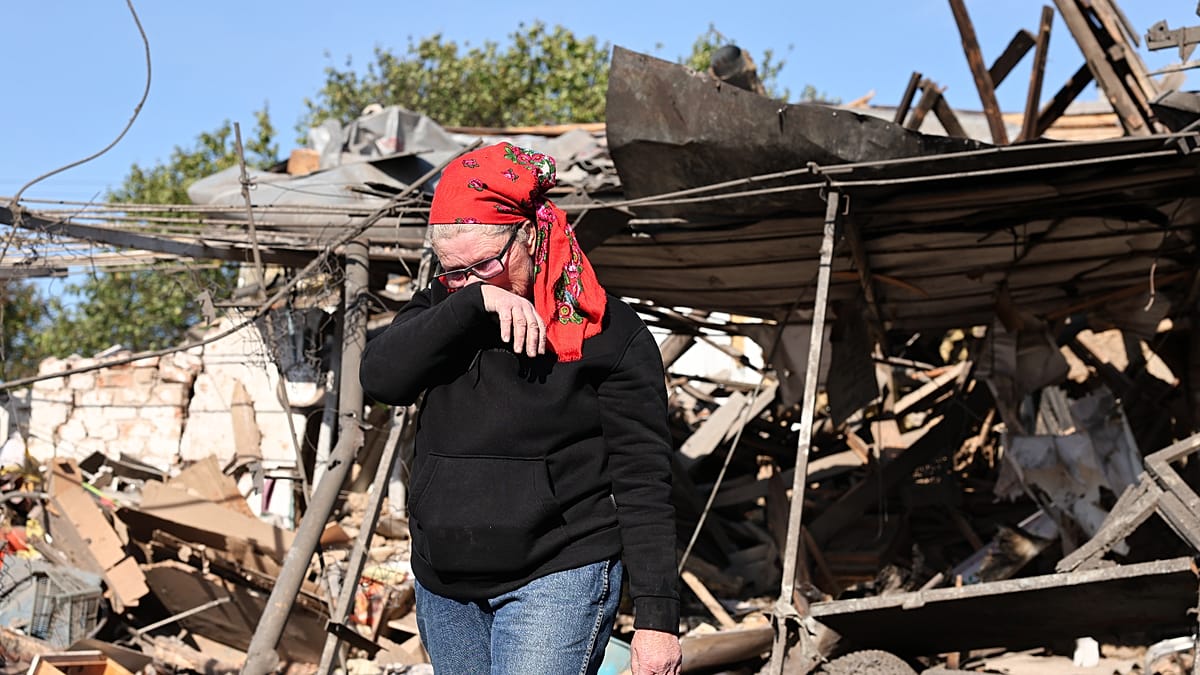
Russian overnight strikes injured four people in Zaporizhzhia and sparked fires in the Odesa region on Monday. Ukrainian emergency services said an industrial site was hit twice more as firefighters battled the flames. #UkraineWar #Odesa #Zaporizhzhia

Don't change the time! Change the schedule, not the time! The biological rhythm is regulated by the Sun, not the clock. Time is not a work schedule that we can shift at will. Time is the measure by which we organize our lives, and nature has its own rhythm. The Earth does not change its rotation twice a year. The sun does not rise earlier because we decided to move the clock forward. Animals, birds, insects, and plants follow their biological rhythms related to light, darkness, and the natural succession of seasons. Humans are part of this nature. Our bodies have their own biological clock, fundamentally influenced by light. And when we officially move the clocks by one hour, we are not changing the course of nature, but rather asking humans to abruptly adapt to an administrative convention. Why do this every spring and reverse it every autumn? Is it natural to change the time or to adapt our schedules? Let's consider the majority of people: workers, farmers, students, teachers, parents, retirees, people who must adhere to a schedule set by others. They cannot always modify their schedules at will. They need to wake up at a certain hour, get to work, take a child to school, or comply with the public transport timetable. In contrast, there are people and organizations that have the opportunity to adapt their schedules based on the season, natural light, or the needs of their activities. If, for some people, changing their schedule is feasible, why impose the time change on everyone? Let's take a hypothetical example: if 10% of people have the freedom to adapt their schedule, is it fair to change the time for all those who do not have this freedom? Would it not be more logical to change the schedule where needed, rather than change the time by which the entire society organizes itself? Stores can modify their opening hours. Factories can adapt their shifts. Institutions can adjust their schedules, and schools and public transport can analyze timetables according to local conditions and people's needs. We do not all have to operate on the same schedule to live by the same time. Nature does not need our approval to follow its rhythm. In spring, the days lengthen. In autumn, the days shorten. This is the natural rhythm of the Earth, which we can observe without moving even a single clock hand. If we want to start activities earlier in summer, we can start sooner. If winter requires a different schedule, we can adapt it. But why change the official time, get used to a new convention, and then revert to the old one? Would it not be simpler to keep the same time all year round and organize our activities according to the season? I do not claim that all living beings measure time in hours and minutes. I assert something more important: their biological rhythms are linked to the natural cycle of light and darkness, not to the numbers we display on the clock. And humans should take this truth into account when organizing their lives. The economy must serve people, not people be permanently forced to adapt to the economy. One argument presented in favor of changing the time is the more efficient use of natural light or the reduction of energy consumption. But the actual effects depend on the country, season, population habits, and how energy is used. If we want to save energy, let's examine actual consumption. If we want more light during activities, let's adapt the schedules. If we want to improve work organization, let's change the timetables where possible. There is no need to change the time for the whole society to achieve flexibility in certain areas. The schedule is a tool we can adapt. The time should be a stable reference. We cannot stop the seasons. We cannot modify the Earth's rotation. We cannot ask nature to adapt to our clock. But we can organize our lives more wisely. Instead of moving the clock hands twice a year, we can learn to adapt our schedules to the reality around us. Instead of changing the time for everyone, we can allow each field to find the appropriate schedule, within the bounds of the law and with respect for people's rights. Let's keep the time stable and make the schedules flexible! Let's leave time in peace. Twice a year, millions of people are forced to change their clocks, schedules, and biological rhythms to adapt to an administrative decision. It is said that changing the time brings economic or energy benefits. However, in modern society, these advantages are increasingly contested, while the disadvantages are felt by nearly the entire population. People, animals, and plants do not live by the clock on the wall, but by the natural rhythms of the Earth. The human body is regulated by the alternation of light and darkness. When we artificially move the time forward or back, we disturb this balance. Many people sleep worse, feel more tired, and need days or weeks to readjust. Living beings do not change their schedules twice a year. Birds do not migrate by the clock, cows do not produce milk according to the official hour, and dogs do not understand why their owner takes them for a walk an hour earlier. Nature follows the sun, not administrative decisions. There is also a principle issue. For a relatively small percentage of people and activities that would benefit from more light in the evening, the schedule of the entire society is modified. About 90% of people are forced to adapt, even though they did not ask for this and do not gain direct advantages. It would be more logical for the sectors that need a different schedule to adapt it themselves. Stores can open earlier or later. Factories can modify their work shifts. Schools, institutions, and companies can adjust their schedules as needed. It is much easier for certain organizations to change the schedule in a targeted manner than to change the official time for the entire population. Moreover, modern technology has greatly diminished the argument for saving energy. Lighting now represents a smaller proportion of total consumption, while air conditioning, computers, and other equipment operate regardless of time changes. The time should serve people, not people be obliged to serve the time. A modern society can function efficiently without moving the clock hands twice a year. Stability, health, and respect for natural rhythms are stronger arguments than the tradition of a measure introduced in another era. Therefore, the most rational solution is to keep the same time throughout the year and adapt schedules where necessary, rather than changing the lifestyle rhythm of an entire population. Why should we keep the same time all year? Changing the time twice a year represents an artificial intervention in the natural rhythm of society. Although it was introduced with the intention of saving energy, numerous modern studies show that the benefits are minimal, while the social, medical, and economic costs are significant. 1. The biological rhythm is regulated by the Sun, not the clock. The human body operates according to an internal biological clock, synchronized with the natural alternation of day and night. Research in chronobiology shows that artificial changes in time disrupt sleep, concentration, and metabolism. In the days following the switch to summer time: - sleep disorders increase; - more traffic accidents occur; - productivity at work decreases; - there is an increase in the risk of heart attacks and other cardiovascular problems. In practice, millions of people are forced to suffer a slight "jet lag" without having traveled anywhere. 2. Nature does not change the time. Animals and plants regulate their activity according to light. Birds, insects, domesticated and wild animals do not change their schedules just because the government decides to move the clock forward by one hour. Farmers often observe that cows continue to adhere to their biological schedule regardless of the change in official time. The same happens with many other living beings. In reality, we are changing the clock display, not the position of the Sun in the sky. 3. Economic benefits are diminishing. Changing the time was introduced in an era when lighting consumed a significant proportion of the energy used by the population. Today: - lighting is much more energy-efficient; - the main consumption comes from air conditioning, heating, servers, computers, and appliances; - estimated savings are very low or even nonexistent in many states. In contrast, the economic costs are real: - employee productivity decreases after the time change; - absenteeism increases; - additional costs associated with accidents and medical problems arise; - computer and logistics systems need to be periodically adjusted. 4. It is unfair to change the schedule of all for the needs of a minority. If certain economic sectors find it useful to start activities earlier in summer, they can adapt their schedules. For example: - stores can operate from 07:00 to 21:00 instead of 08:00 to 22:00; - factories can alter shifts; - public institutions can temporarily adjust working hours; - schools and companies can decide locally what schedule is optimal. It is much simpler for 10% of organizations to change their schedule than for 100% of the population to change their biological clock. 5. Stability means efficiency. Transport, information systems, international economic activities, and public services function more smoothly when the official time remains constant. One hour throughout the year: - reduces scheduling errors; - simplifies transport and communications; - eliminates confusion regarding timetables; - provides predictability for citizens and companies. Conclusion The sun does not change its time. The Earth does not change its time. Nature does not change its time. Only humans move the clock hands and then endure the consequences of this decision. Instead of modifying the schedule of an entire society twice a year, it is more logical to keep the same time constantly and allow those fields that need a different schedule to adapt their programs individually. This way, natural biological rhythms are respected, economic costs are reduced, and the comfort of the majority of the population is increased. A modern society needs flexibility in scheduling, not the constant change of the clock. (translated)
AFRICA DAILY REPORT — 23 OCTOBER 2026 1. Nigeria — 13-day Ebola diagnosis delay raises regional containment concerns Importance: 10/10 — Critical Reuters reported that Nigeria's first Ebola patient in more than a decade was not tested until 13 days after symptoms began. The patient visited several healthcare facilities before diagnosis, complicating contact tracing; 44 contacts had been identified. The outbreak, first detected in DR Congo in May, has also affected Uganda and Kenya. The Bundibugyo strain has no approved vaccine or treatment. The source of the patient's infection is still being investigated. Source: Reuters, 22 October 2026 https://www.reuters.com/business/healthcare-pharmaceuticals/late-detection-nigeria-raises-alarm-ebola-spreads-across-africa-2026-10-22/ 2. Ethiopia–Kenya — Hundreds flee clashes in border town of Moyale Importance: 9/10 — Very High Hundreds of Ethiopians, mainly women and children, crossed into Kenya after fighting broke out in Moyale on Wednesday and continued on Thursday. The cause of the clashes in southern Ethiopia's Oromiya region was not established. Kenya Red Cross began assessing humanitarian needs; no dedicated displacement camp was ready. The incident is geographically separate from the fighting in northern Tigray. Source: Reuters, 22 October 2026 https://www.reuters.com/world/africa/hundreds-ethiopians-flee-into-kenya-after-border-town-fighting-2026-10-22/ 3. South Africa — Police investigate killing during anti-migrant unrest in Durban Importance: 9/10 — Very High Police said a foreign national was beaten to death by a crowd of about 50 people during a march in central Durban. The victim's nationality and the precise motive had not been established. The killing follows months of anti-migrant protests, including recent looting and vehicle fires in Durban and Johannesburg. Authorities are investigating the attack. Source: Reuters, 22 October 2026 https://www.reuters.com/world/africa/south-african-police-investigate-killing-foreign-national-by-crowd-2026-10-22/ 4. Tunisia — Police clash with protesters in Tunis suburb and southern towns Political / governance development — neutral coverage Police used tear gas against protesters in Ettadhamen following the death of a man after his detention. His family alleged police violence; local media reported a different possible cause, and the interior ministry had not commented. Further clashes occurred in Jebeniana and Agareb, while students in Sfax protested emergency-care delays after a student's death. The unrest unfolds amid economic and political tensions; responsibility for the disputed deaths remains unproven. Source: Reuters, 22 October 2026 https://www.reuters.com/world/africa/tunisian-police-clash-with-protesters-capital-day-heightened-tensions-2026-10-22/ 5. Libya — Dispute over central-bank leadership exposes institutional divisions Political / governance development — neutral coverage Libya's eastern-based parliament said it approved in principle central-bank governor Naji Issa's resignation and backed board member Fowzi Musbah Abukhzam as interim replacement. A deputy leader of the western High Council of State rejected the move, while the council's head supported the interim appointment. The competing positions could reopen a dispute over control of the bank, a key institution in Libya's divided governance system. Source: Reuters, 22 October 2026 https://www.reuters.com/world/africa/libyas-eastern-parliament-accepts-central-bank-governor-resignation-spokesperson-2026-10-22/ 6. South Africa–China — Exports increase after Chinese zero-tariff initiative Importance: 8/10 — High China's ambassador said South African exports to China rose nearly 25% year on year from May through August after Beijing introduced zero tariffs on qualifying African exports. South African imports from China rose 23%. Pretoria is seeking to reduce its trade imbalance and diversify export markets as it faces uncertainty over continued access to US AGOA preferences; an announcement is expected in early November. Source: Reuters, 22 October 2026 https://www.reuters.com/world/asia-pacific/south-africas-trade-with-china-surges-after-duty-free-deal-2026-10-22/ 7. Nigeria — Dangote refinery IPO could expand stock-market participation Importance: 9/10 — Very High The Nigerian Exchange Group's chief executive said Dangote's $1.6 billion refinery initial public offering could multiply the country's active investor base three- to fivefold. The offer, scheduled to run until the end of October, is being promoted through accessible channels and could deepen links with stock exchanges in Kenya, Egypt, Botswana and Ethiopia. The projections are expectations, not confirmed outcomes. Source: Reuters, 22 October 2026 https://www.reuters.com/world/africa/nigeria-bourse-ceo-says-dangote-refinery-ipo-widen-investor-base-2026-10-22/ 8. Namibia — Government cuts 2026 growth outlook to 2.3% Importance: 8/10 — High Namibia reduced its 2026 GDP growth forecast from 3.1% to 2.3% after weaker-than-expected first-half activity. Its mid-year budget review kept the fiscal deficit forecast at 5.5% of GDP but raised the public-debt projection to 68.7% of GDP. Officials cited weak global demand, commodity-price uncertainty, high fuel costs, possible El Niño effects and foot-and-mouth disease as risks. Source: Reuters, 22 October 2026 https://www.reuters.com/world/africa/namibia-cuts-2026-growth-forecast-23-after-weak-first-half-2026-10-22/ 9. Uganda — August export earnings jump 36%, driven by gold Importance: 8/10 — High A finance-ministry report published Thursday showed Uganda's August merchandise exports reached $1.5 billion, up from $1.1 billion a year earlier. Gold shipments were worth $889 million, a 68.9% increase. The figures reinforce Uganda's role as a regional gold-processing and trading hub, while the government expects planned commercial oil production to strengthen foreign-exchange earnings over the medium term. Source: Reuters, 22 October 2026 https://www.reuters.com/world/africa/uganda-export-earnings-up-36-august-higher-gold-receipts-2026-10-22/ 10. Africa / United States — New Ebola travel declarations required from November 3 Importance: 9/10 — Very High According to a CDC memo reported by Reuters, all US-bound airline passengers will have to declare whether they were in DR Congo during the preceding 21 days. The digital or paper attestation requirement takes effect November 3. Existing US restrictions already address recent travel to DR Congo, Uganda and South Sudan. Airlines are due to receive implementation briefings, making the change relevant to African travel and aviation operators. Source: Reuters, 22 October 2026 https://www.reuters.com/business/healthcare-pharmaceuticals/us-impose-ebola-attestation-requirement-international-air-passengers-2026-10-22/ #Africa #AfricaNews #TopNewsOfAfrica #Tunisia #TunisiaProtests #Tunis #PoliticalUnrest #PoliceClashes #SouthAfrica #China #SouthAfricaChinaTrade #ChinaAfricaRelations #AfricanExports #ZeroTariffs #InternationalTrade #AfricanEconomy #Ethiopia #Kenya #Moyale #BorderClashes #ForcedDisplacement #HumanitarianCrisis #Nigeria #EbolaOutbreak #PublicHealth #DangoteRefinery #Namibia #Uganda #AfricanSecurity #wrldorg
There are a bunch of stories about investigations into Corey Lewandowski. But until State fires Kristi Noem--she's still Christopher Landau's staffer--you can be sure any investigation will be murdered in a bathtub. Or maybe a washbasin. www.cbsnews.com/news/doj-cor...