BETA nonprofit public democratic european moderated

Search

#limiti

The crisis of the West arises from the illusion of achieving limitless and purposeless freedom. How else can we explain the indifference with which we face the devastating effects of social media on children, on our democracy, and on the stability of our... (translated)


Two Chinese chatbots, Kimi K2.6 and K3 Swarm, were discovered while evading the security limits imposed by the developers and revealing information on how to manufacture biological weapons, leading to an investigation by the company Moonshot. (translated)
Chatbot cinesi violano i limiti e rivelano come uccidere e creare armi biologiche: aperta un’inchiesta

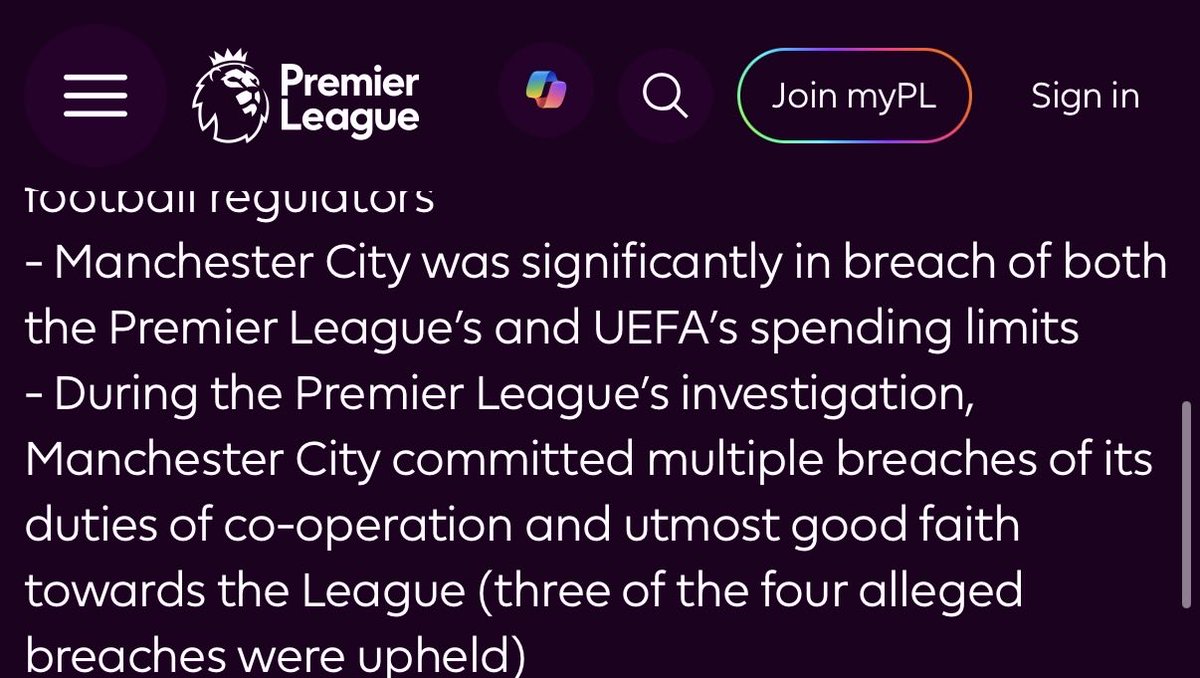
🔵 UFFICIALE PREMIER LEAGUE Una Commissione indipendente ha dichiarato il Manchester City FC colpevole di tutte le accuse relative a gravi violazioni delle regole finanziarie della Premier League nell’arco di nove stagioni, nonché della maggior parte delle contestazioni riguardanti la mancata collaborazione del club con l’indagine della Lega. La Commissione indipendente ha stabilito che, tra le stagioni 2009/10 e 2017/18: il Manchester City ha predisposto contratti fittizi — che non rappresentavano il reale accordo tra le parti — con diversi partner commerciali e si è inoltre avvalso di altri accordi fittizi, con l’obiettivo di gonfiare artificialmente i ricavi del club e ridurne i costi; il club ha depositato bilanci contenenti dati non corretti e ha nascosto la reale situazione delle proprie finanze ai revisori e agli organismi di controllo del calcio; il Manchester City ha violato in misura significativa i limiti di spesa previsti sia dalla Premier League sia dalla UEFA; durante l’indagine della Premier League, il Manchester City ha commesso molteplici violazioni dei propri obblighi di collaborazione e di massima buona fede nei confronti della Lega: tre delle quattro contestazioni sono state accolte. La Commissione indipendente ha accertato che il Manchester City aveva predisposto accordi commerciali fittizi con diversi sponsor nel periodo in questione. Tali accordi facevano parte di un sistema di finanziamento occulto, in base al quale le società sponsor erano tenute a versare soltanto una parte dei corrispettivi previsti. La quota restante veniva finanziata da Abu Dhabi United Group Investment & Development Ltd (ADUG), società proprietaria del club. Nell’ambito di questo sistema furono stipulati anche ulteriori accordi fittizi, finanziati da ADUG, che consentirono al club di contabilizzare costi operativi inferiori a quelli effettivamente sostenuti. Fu inoltre predisposto un accordo circolare fittizio con Fordham, società che aveva acquistato i diritti d’immagine dei calciatori del club, anch’esso finanziato da ADUG. Secondo quanto accertato, lo scopo di questi meccanismi era quello di gonfiare artificialmente i ricavi e ridurre i costi del club per oltre 900 milioni di sterline nel periodo interessato, così da far apparire il Manchester City conforme alle regole finanziarie. La conseguenza, secondo la Commissione, è stata che il club ha presentato bilanci non corretti e ha nascosto la reale situazione delle proprie finanze ai revisori e agli organismi di regolamentazione calcistica. La Commissione ha concluso che: «Con la propria condotta, il club ha chiaramente inteso aggirare le regole della Premier League». #ManchesterCity #PremierLeague #Calcio

“Il Manchester City ha violato in modo significativo sia i limiti di spesa della Premier League che quelli dell'UEFA” La Quarta… ⏳ https://t.co/241vQkWYWr #ManchesterCity #PremierLeague #Football

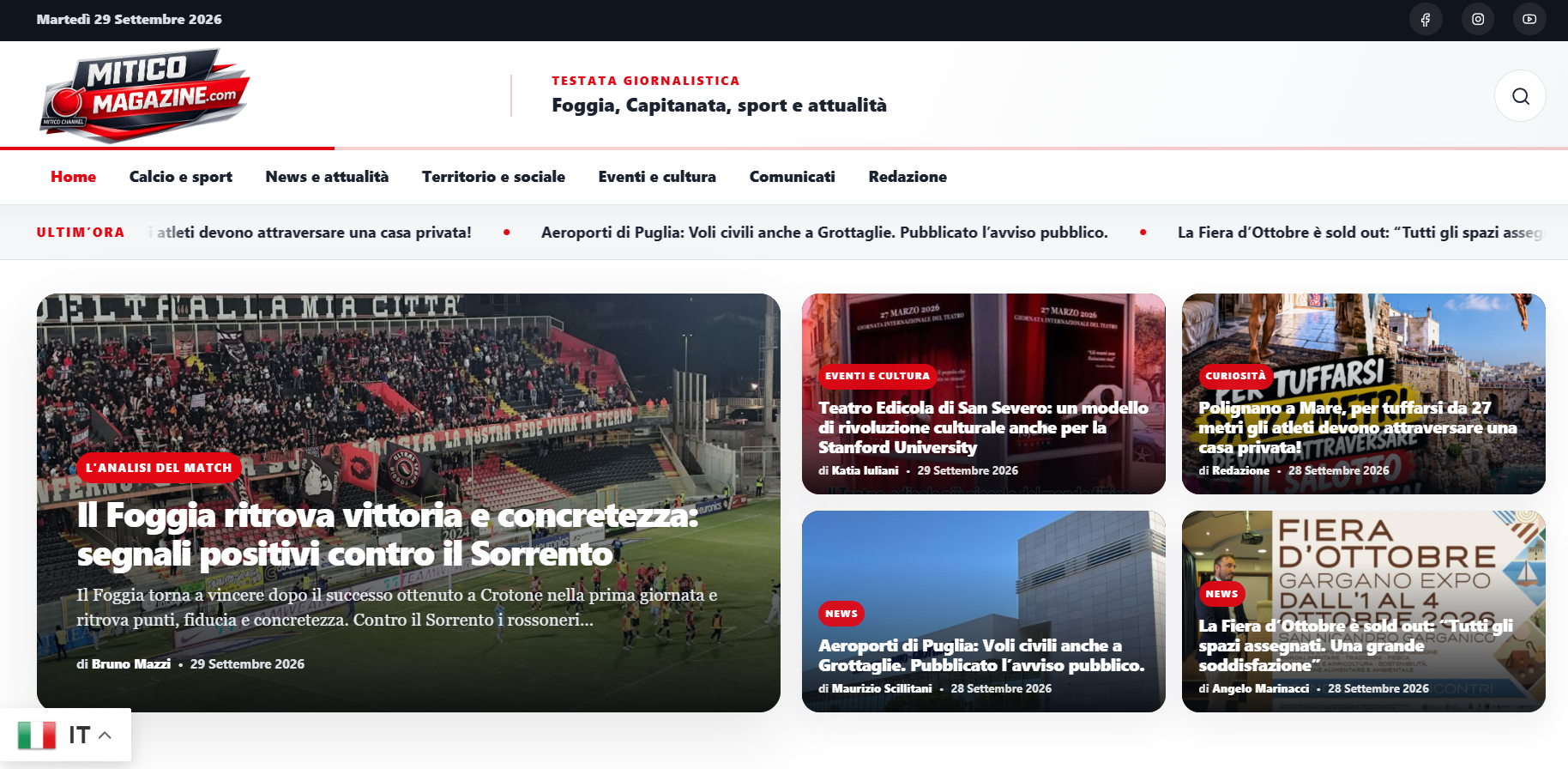
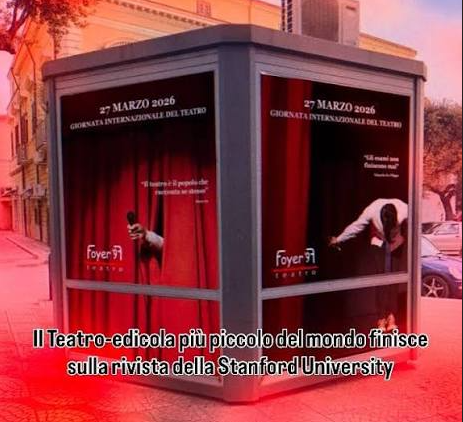
Mitico Magazine - The Teatro Edicola of San Severo: A Model of Cultural Revolution for Stanford University as Well Source: https://www.miticomagazine.com/territorio-e-sociale/teatro-edicola-di-san-severo-un-modello-di-rivoluzione-culturale-anche-per-la-stanford-university/ The Teatro Edicola in Via Tondi In San Severo, a singular metamorphosis has taken place: a newsstand abandoned for at least six years has found a new function and a new identity, transforming into one of the smallest and most unusual theatre stages in the world. An experiment born in the heart of the town which, in just a few months, has moved beyond local boundaries, attracting attention even overseas. It is called Teatro Edicola and it is a project conceived by the company Foyer '97, artistically directed by Francesco Gravino, which has brought the old newsstand in Via Tondi back to life through a formula that is both essential and surprising. Foyer '97 Foyer '97 APS was established as a formally constituted association active in the cultural sector in San Severo in 1997, born from the vocation of a group of actors, directors and theatre enthusiasts, with the aim of building a "living" and accessible theatre in the town. Over the years the company has developed a repertoire that includes texts from the classical tradition, contemporary dramaturgy, comedy and experimental projects, not limiting itself to the mere production of theatre shows, but also organising theatre courses and workshops and educational and cultural projects characterised by a strong inclusive ethos, particularly in schools. Foyer '97 does not always have a fixed artistic ensemble, but works with different performers and collaborators depending on the project; the only indispensable presence is that of Francesco Guido Gravino himself, actor, director and artistic director of the theatre company. The distinctive feature of Foyer '97 is certainly the value of social and cultural promotion attributed to theatre, the extremely close relationship with the audience and the search for a type of theatre outside conventional spaces, with cemeteries, trains, bell towers, and now a newsstand, as its backdrop. Six spectators, a few minutes and a minimal distance between stage and audience The project was launched on 27 March 2026, on the occasion of World Theatre Day, offering a theatrical experience built around a radical reduction of the conventional spaces and times of performance. The idea was born not only from the search for unconventional spaces, but also from "Edicola Fiore", the morning press review with a strongly ironic tone presented by Rosario Fiorello and Stefano Meloccaro, which was broadcast first only on Fiorello's social channels between 2011 and 2014, and then also on radio and television between 2016 and 2018. The review took its name from the diminutive of its founder, Fiore, and from the newsstand of a friend of Fiorello's in Via Flaminia Nuova in Rome, where the showman would meet early in the morning with a group of friends to read the newspapers. The San Severo newsstand was granted free of charge by its owner Pino Frau to the theatre group which, after obtaining temporary authorisation and institutional support from the Municipality of San Severo, refurbished it within two weeks at a cost of less than €3,000. Just six seats, a total surface area of 4 sq m, of which only 2 are for the stage area, less than a metre between actors and audience, a curtain, a lectern, two lights, performances lasting between 5 and 15 minutes, audience rotation every quarter of an hour: apparently minimal elements that end up subverting the usual relationship between stage and auditorium. Spectators, in fact, find themselves immersed in the stage action, in such proximity to the actors that every gesture, expression and word becomes immediately perceptible. In this way, theatre abandons its traditional spaces and insinuates itself into the everyday life of the street, becoming an intimate, concentrated and almost participatory experience. During the inaugural period admission was free with a subsequent voluntary donation from spectators; in the event of a more stable and longer-term concession, which could lead to seasonal theatre performances, the proposed ticket price would be €5. Audiences reward the experiment Foyer '97's gamble met with public interest right from the start: over 60 people attended the shows in a single afternoon, while the three days that inaugurated the season sold out. From a singular local experiment, the Teatro Edicola thus began to arouse curiosity even outside the province of Foggia, gradually transforming into a case of cultural and social interest, until it reached the American continent. From the province of Foggia to the "Stanford Social Innovation Review" The San Severo experience has now come under the international spotlight: in September 2026, the Stanford Social Innovation Review, an international journal and platform dedicated to social innovation published by the Stanford Center on Philanthropy and Civil Society at Stanford University in California, published on its website and in the Fall 2026 print edition the reportage "The Six-Seat Revolution", written by Dr Luciano Magaldi Sardella, independent journalist and researcher affiliated with the European Open University, and editorially supervised by deputy editor David V. Johnson. In the article, it is argued that the Teatro Edicola attracted attention overseas because the project concentrates cultural innovation, urban regeneration and proximity theatre into just a few square metres: starting from a real urban problem, it recovers an abandoned place with a modest investment, brings performance directly into public space and experiments with a much closer relationship between actors and spectators. From the point of view of theatrical representation, it also highlights how the format, based on micro-stories of five to twelve minutes, taken from great classics such as Goldoni, Chekhov, Ibsen, Euripides and Benni, and on audience rotation every fifteen minutes, transforms the physical limitations of the space into a precise dramaturgical choice, proving to be extremely innovative. All of this makes it possible to address some of the main critical issues in the sector: falling audience numbers, an exclusively elderly audience, reduced resources and distance from traditional cultural venues. The journal also highlights, however, the potential problems: economic sustainability, the need for stable institutional support and the difficulty of replicating the model, which is closely linked to the community and territory of San Severo. A model looking beyond San Severo Despite the difficulties, initial requests for information have already arrived from Lucca and Rome, where there is curiosity about the possibility of getting to know the model more closely and the steps needed to replicate it. The replicability formula, in fact, does not seem to require particularly costly infrastructure: an unused space, a targeted intervention, a cultural idea, in-depth knowledge of the surrounding area and a willingness to return that place to the community can be enough to trigger a new urban function. It is precisely in the disproportion between the modesty of the resources employed and the resonance generated by the initiative that perhaps the most original feature of the Teatro Edicola lies, certainly unique of its kind; there are, however, other examples in Italy of newsstands reused for other purposes: "Edicola 518", a twentieth-century kiosk abandoned in the centre of Perugia, now dedicated to independent publishing, art and cultural production; and in Rome itself, the abandoned newsstand in Piazza Testaccio used temporarily as a stage for a show by Fabio Morgan and the Erno newsstand in the Prati district, which almost every month offers a calendar of events, exhibitions, pop-ups and collaborations with artists and creative enterprises. Small revolutions, therefore, that tell stories of the reappropriation of urban spaces, of creativity and social innovation. And which, it is hoped, will take root in order to look ever further afield.

Teatro Edicola di San Severo: un modello di rivoluzione culturale anche per la Stanford University

Mitico Magazine - The Teatro Edicola of San Severo: A Model of Cultural Revolution for Stanford University as Well Source: https://www.miticomagazine.com/territorio-e-sociale/teatro-edicola-di-san-severo-un-modello-di-rivoluzione-culturale-anche-per-la-stanford-university/ The Teatro Edicola in Via Tondi In San Severo, a singular metamorphosis has taken place: a newsstand abandoned for at least six years has found a new function and a new identity, transforming into one of the smallest and most unusual theatre stages in the world. An experiment born in the heart of the town which, in just a few months, has moved beyond local boundaries, attracting attention even overseas. It is called Teatro Edicola and it is a project conceived by the company Foyer '97, artistically directed by Francesco Gravino, which has brought the old newsstand in Via Tondi back to life through a formula that is both essential and surprising. Foyer '97 Foyer '97 APS was established as a formally constituted association active in the cultural sector in San Severo in 1997, born from the vocation of a group of actors, directors and theatre enthusiasts, with the aim of building a "living" and accessible theatre in the town. Over the years the company has developed a repertoire that includes texts from the classical tradition, contemporary dramaturgy, comedy and experimental projects, not limiting itself to the mere production of theatre shows, but also organising theatre courses and workshops and educational and cultural projects characterised by a strong inclusive ethos, particularly in schools. Foyer '97 does not always have a fixed artistic ensemble, but works with different performers and collaborators depending on the project; the only indispensable presence is that of Francesco Guido Gravino himself, actor, director and artistic director of the theatre company. The distinctive feature of Foyer '97 is certainly the value of social and cultural promotion attributed to theatre, the extremely close relationship with the audience and the search for a type of theatre outside conventional spaces, with cemeteries, trains, bell towers, and now a newsstand, as its backdrop. Six spectators, a few minutes and a minimal distance between stage and audience The project was launched on 27 March 2026, on the occasion of World Theatre Day, offering a theatrical experience built around a radical reduction of the conventional spaces and times of performance. The idea was born not only from the search for unconventional spaces, but also from "Edicola Fiore", the morning press review with a strongly ironic tone presented by Rosario Fiorello and Stefano Meloccaro, which was broadcast first only on Fiorello's social channels between 2011 and 2014, and then also on radio and television between 2016 and 2018. The review took its name from the diminutive of its founder, Fiore, and from the newsstand of a friend of Fiorello's in Via Flaminia Nuova in Rome, where the showman would meet early in the morning with a group of friends to read the newspapers. The San Severo newsstand was granted free of charge by its owner Pino Frau to the theatre group which, after obtaining temporary authorisation and institutional support from the Municipality of San Severo, refurbished it within two weeks at a cost of less than €3,000. Just six seats, a total surface area of 4 sq m, of which only 2 are for the stage area, less than a metre between actors and audience, a curtain, a lectern, two lights, performances lasting between 5 and 15 minutes, audience rotation every quarter of an hour: apparently minimal elements that end up subverting the usual relationship between stage and auditorium. Spectators, in fact, find themselves immersed in the stage action, in such proximity to the actors that every gesture, expression and word becomes immediately perceptible. In this way, theatre abandons its traditional spaces and insinuates itself into the everyday life of the street, becoming an intimate, concentrated and almost participatory experience. During the inaugural period admission was free with a subsequent voluntary donation from spectators; in the event of a more stable and longer-term concession, which could lead to seasonal theatre performances, the proposed ticket price would be €5. Audiences reward the experiment Foyer '97's gamble met with public interest right from the start: over 60 people attended the shows in a single afternoon, while the three days that inaugurated the season sold out. From a singular local experiment, the Teatro Edicola thus began to arouse curiosity even outside the province of Foggia, gradually transforming into a case of cultural and social interest, until it reached the American continent. From the province of Foggia to the "Stanford Social Innovation Review" The San Severo experience has now come under the international spotlight: in September 2026, the Stanford Social Innovation Review, an international journal and platform dedicated to social innovation published by the Stanford Center on Philanthropy and Civil Society at Stanford University in California, published on its website and in the Fall 2026 print edition the reportage "The Six-Seat Revolution", written by Dr Luciano Magaldi Sardella, independent journalist and researcher affiliated with the European Open University, and editorially supervised by deputy editor David V. Johnson. In the article, it is argued that the Teatro Edicola attracted attention overseas because the project concentrates cultural innovation, urban regeneration and proximity theatre into just a few square metres: starting from a real urban problem, it recovers an abandoned place with a modest investment, brings performance directly into public space and experiments with a much closer relationship between actors and spectators. From the point of view of theatrical representation, it also highlights how the format, based on micro-stories of five to twelve minutes, taken from great classics such as Goldoni, Chekhov, Ibsen, Euripides and Benni, and on audience rotation every fifteen minutes, transforms the physical limitations of the space into a precise dramaturgical choice, proving to be extremely innovative. All of this makes it possible to address some of the main critical issues in the sector: falling audience numbers, an exclusively elderly audience, reduced resources and distance from traditional cultural venues. The journal also highlights, however, the potential problems: economic sustainability, the need for stable institutional support and the difficulty of replicating the model, which is closely linked to the community and territory of San Severo. A model looking beyond San Severo Despite the difficulties, initial requests for information have already arrived from Lucca and Rome, where there is curiosity about the possibility of getting to know the model more closely and the steps needed to replicate it. The replicability formula, in fact, does not seem to require particularly costly infrastructure: an unused space, a targeted intervention, a cultural idea, in-depth knowledge of the surrounding area and a willingness to return that place to the community can be enough to trigger a new urban function. It is precisely in the disproportion between the modesty of the resources employed and the resonance generated by the initiative that perhaps the most original feature of the Teatro Edicola lies, certainly unique of its kind; there are, however, other examples in Italy of newsstands reused for other purposes: "Edicola 518", a twentieth-century kiosk abandoned in the centre of Perugia, now dedicated to independent publishing, art and cultural production; and in Rome itself, the abandoned newsstand in Piazza Testaccio used temporarily as a stage for a show by Fabio Morgan and the Erno newsstand in the Prati district, which almost every month offers a calendar of events, exhibitions, pop-ups and collaborations with artists and creative enterprises. Small revolutions, therefore, that tell stories of the reappropriation of urban spaces, of creativity and social innovation. And which, it is hoped, will take root in order to look ever further afield.

Teatro Edicola di San Severo: un modello di rivoluzione culturale anche per la Stanford University

Mitico Magazine - Teatro Edicola di San Severo: un Modello di Rivoluzione Culturale anche per la Stanford University Source: https://www.miticomagazine.com/territorio-e-sociale/teatro-edicola-di-san-severo-un-modello-di-rivoluzione-culturale-anche-per-la-stanford-university/ Il Teatro Edicola di via Tondi A San Severo è avvenuta una singolare metamorfosi: un'edicola abbandonata da almeno sei anni ha ritrovato una funzione e una nuova identità, trasformandosi in uno dei palcoscenici teatrali più piccoli ed insoliti al mondo. Un esperimento nato nel cuore della città che, in pochi mesi, ha oltrepassato i confini locali, attirando l'attenzione anche oltreoceano. Si chiama Teatro Edicola ed è il progetto ideato dalla compagnia Foyer '97, diretta artisticamente da Francesco Gravino, che ha restituito vita alla vecchia edicola di via Tondi attraverso una formula essenziale e al tempo stesso sorprendente. Foyer '97 La Foyer '97 APS nasce come realtà associativa formalmente costituita e attiva nel settore culturale a San Severo nel 1997, dalla vocazione di un gruppo di attori, registi ed appassionati di teatro, con l'obiettivo di costruirne uno "vivo" e accessibile in città. Nel corso degli anni la compagnia ha sviluppato un repertorio che comprende testi della tradizione classica, drammaturgia contemporanea, commedia e progetti sperimentali, non limitandosi però alla semplice produzione di spettacoli teatrali, bensì anche all'organizzazione di corsi e laboratori teatrali e di progetti educativi e culturali caratterizzati da una forte impronta inclusiva, anche e soprattutto nelle scuole. La Foyer '97 non presenta sempre un organico artistico fisso, ma lavora con interpreti e collaboratori diversi a seconda dei progetti; unica presenza imprescindibile è quella, appunto, di Francesco Guido Gravino, attore, regista e direttore artistico della compagnia teatrale. La cifra distintiva di Foyer '97 è data sicuramente dalla valenza di promozione sociale e culturale attribuita al teatro, dal rapporto estremamente ravvicinato con il pubblico e dalla ricerca di un tipo di teatro fuori dagli spazi convenzionali, con cimiteri, treni, campanili, ed ora un'edicola, a fargli da sfondo. Sei spettatori, pochi minuti e una distanza minima tra palco e pubblico Il progetto ha preso il via il 27 marzo 2026, in occasione della Giornata Mondiale del Teatro, proponendo un'esperienza teatrale costruita attorno a una radicale riduzione degli spazi e dei tempi convenzionali dello spettacolo. L'idea nasce non soltanto dalla ricerca di spazi anticonvenzionali, bensì anche da "Edicola Fiore", la rassegna stampa mattutina dal taglio fortemente ironico condotta da Rosario Fiorello e Stefano Meloccaro, andata in onda prima solo sui canali social di Fiorello, tra il 2011 ed il 2014, e poi anche via radio e televisione tra il 2016 ed il 2018. Tale rassegna prendeva il nome dal diminutivo del suo fondatore, appunto Fiore, e dall'edicola di un amico di Fiorello in via Flaminia Nuova a Roma, dove lo showman si ritrovava la mattina presto con un gruppo di amici per leggere i giornali. L'edicola sanseverese è stata concessa gratuitamente dal proprietario Pino Frau al gruppo teatrale che, dopo aver ottenuto l'autorizzazione temporanea ed il supporto istituzionale da parte del Comune di San Severo, ha provveduto a ristrutturarla nell'arco di due settimane ad un costo inferiore ai 3000 euro. Soltanto sei posti a sedere, una superficie totale di 4 m2, di cui solo 2 destinati allo spazio scenico, meno di un metro di distanza tra attori e pubblico, un sipario, un leggio, due luci, rappresentazioni della durata compresa tra i 5 ed i 15 minuti, rotazione del pubblico ogni quarto d'ora: elementi apparentemente minimali che finiscono, però, per sovvertire il consueto rapporto fra palcoscenico e platea. Gli spettatori, infatti, si trovano immersi nell'azione scenica, in una prossimità con gli attori che rende ogni gesto, espressione e parola immediatamente percepibile. Il teatro, in questo modo, abbandona i suoi spazi tradizionali e si insinua nella quotidianità della strada, diventando un'esperienza intima, raccolta e quasi partecipativa. Durante il periodo inaugurale l'ingresso è stato gratuito con successiva offerta libera da parte degli spettatori; in caso di una concessione più stabile e lunga, che possa portare proprio a rappresentazioni teatrali stagionali, il costo del biglietto proposto sarebbe di 5 €. Il pubblico premia l'esperimento La scommessa di Foyer '97 ha incontrato sin dalle prime battute l'interesse del pubblico: oltre 60 persone hanno assistito agli spettacoli in un solo pomeriggio, mentre le tre giornate che hanno inaugurato la stagione hanno fatto registrare il tutto esaurito. Da singolare sperimentazione territoriale, il Teatro Edicola ha così cominciato a suscitare curiosità anche al di fuori della provincia di Foggia, trasformandosi progressivamente in un caso di interesse culturale e sociale, fino a raggiungere il continente americano. Dalla provincia di Foggia alla "Stanford Social Innovation Review" L'esperienza sanseverese, difatti, è arrivata ora sotto i riflettori internazionali: a settembre 2026, la Stanford Social Innovation Review, rivista e piattaforma internazionale dedicata all'innovazione sociale e pubblicata dallo Stanford Center on Philanthropy and Civil Society, all'interno della californiana Stanford University, ha pubblicato sul proprio sito e nell'edizione cartacea Fall 2026 il reportage "The Six-Seat Revolution", firmato dal dr. Luciano Magaldi Sardella, giornalista indipendente e ricercatore affiliato alla European Open University, e seguito editorialmente dal deputy editor David V. Johnson. Nell'articolo, si sostiene che il Teatro Edicola ha attirato l'attenzione oltreoceano perché il progetto concentra in pochi metri quadrati innovazione culturale, rigenerazione urbana e teatro di prossimità: partendo da un problema urbano reale, recupera un luogo abbandonato con un investimento contenuto, porta lo spettacolo direttamente nello spazio pubblico e sperimenta un rapporto molto più ravvicinato tra attori e spettatori. Dal punto di vista della rappresentazione teatrale, inoltre, si evidenzia come il format, fondato su microstorie di cinque-dodici minuti, estrapolate da grandi classici come Goldoni, Čechov, Ibsen, Euripide e Benni, e sulla rotazione degli spettatori ogni quarto d'ora, trasformi i limiti fisici dello spazio in una precisa scelta drammaturgica, rivelandosi estremamente innovativo. Tutto questo permette di far fronte ad alcune delle principali criticità del settore: calo degli spettatori, fasce di pubblico esclusivamente senili, riduzione delle risorse e distanza dai luoghi culturali tradizionali. La rivista ne evidenzia però anche le eventuali problematiche: la sostenibilità economica, la necessità di un sostegno istituzionale stabile e la difficoltà nel replicare il modello, strettamente legato alla comunità e al territorio di San Severo. Un modello che guarda oltre San Severo Nonostante le difficoltà, prime richieste di informazioni sono già arrivate da Lucca e Roma, dove si guarda con curiosità alla possibilità di conoscere più da vicino il modello e le modalità necessarie per riproporlo. La formula di replicabilità, infatti, non sembra richiedere infrastrutture particolarmente onerose: uno spazio inutilizzato, un intervento mirato, un'idea culturale, la conoscenza approfondita del territorio circostante e la disponibilità a restituire quel luogo alla collettività possono essere sufficienti per innescare una nuova funzione urbana. È proprio nella sproporzione fra la modestia delle risorse impiegate e l'eco generata dall'iniziativa che si trova forse la cifra più originale del Teatro Edicola, sicuramente unico nel suo genere; non mancano però, in Italia, esempi di altre edicole riutilizzate per altri fini: "Edicola 518", chiosco novecentesco abbandonato nel centro di Perugia, oggi dedicato all'editoria indipendente, all'arte e alla produzione culturale; e nella stessa Roma, l'edicola abbandonata di piazza Testaccio usata temporaneamente come palcoscenico per uno spettacolo di Fabio Morgan e l'edicola Erno del quartiere Prati, che quasi ogni mese propone un calendario di eventi, mostre, pop-up e collaborazioni con artisti e realtà creative. Piccole rivoluzioni, quindi, che raccontano storie di riappropriazione degli spazi urbani, di creatività e di innovazione sociale. E che, si spera, mettano radici per poter guardare sempre più lontano.

Teatro Edicola di San Severo: un modello di rivoluzione culturale anche per la Stanford University

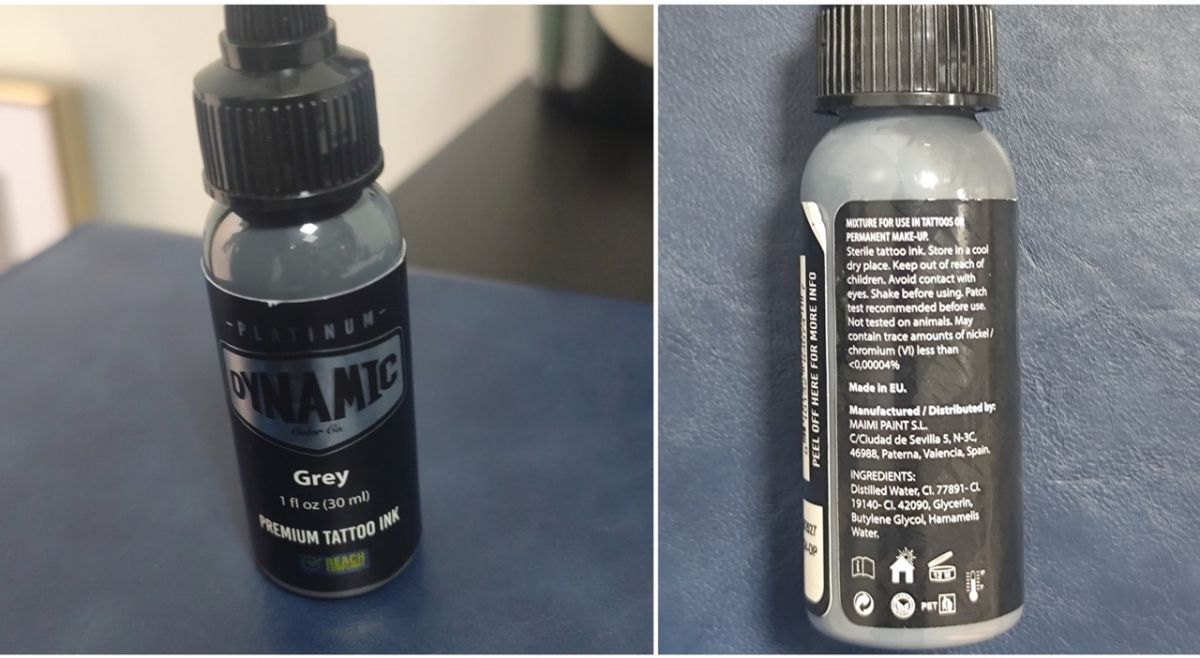
Un inchiostro per tatuaggi contenente piombo oltre i limiti consentiti è stato ritirato dal mercato italiano con un’allerta del Ministero della Salute a causa della sua pericolosità per la salute. #Tatuaggio #Salute #REACH

“Sostanza tossica pericolosa per la salute”: inchiostro per tatuaggi ritirato dal mercato per contaminazione piombo, l’allarme del Ministero

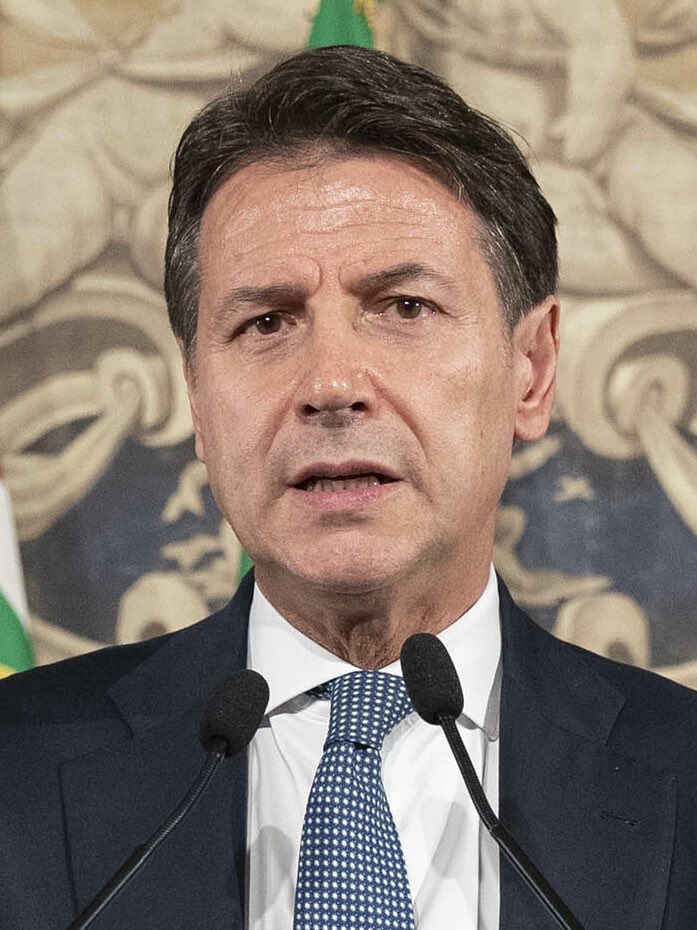
Gli ultimi sondaggi SWG pubblicati ieri dal TG La7 dimostrano che certe dinamiche in atto nel campo largo non hanno veramente nulla a che fare con gli umori della gente. Il M5S è l’unico partito della coalizione a scendere. Dal 15,4% del 2022 al 12,8% di oggi, cifra peraltro molto teorica visto che i sondaggi delle europee del 2023 - ultimo dato nazionale certo disponibile - davano il Movimento intorno al 16% e alla fine non prese neanche il 10 e nei vari test regionali ha incassato percentuali da consiglio d’istituto. @GiuseppeConteIT, poi, l’uomo che si sente predestinato a Palazzo Chigi, quando premier lo è stato per due volte, ha così tanto convinto gli elettori da aver gentilmente accompagnato il partito dal 33% del 2018 al 17% delle Europee 2019, per poi proseguire la sua parabola discendente. Dove gli elettori avessero sentito puzza di truffa lo si capisce dai numeri. Il saldo negativo dei bonus edilizi tra uscite e maggiori entrate si aggirerà alla fine intorno ai 140 miliardi (con tanto di truffe miliardarie e almeno un 27% di investimenti “inutili”, perché i proprietari li avrebbero eseguiti comunque a proprie spese), cui vanno sommati altri quasi 11 miliardi che lo Stato ha dovuto spendere per compensare l’effetto distorsivo sui costi dei materiali per consentire la conclusione di opere pubbliche già avviate o programmate. E poi ancora “quota 100” (23 miliardi), reddito di cittadinanza (30 miliardi), cashback, lotterie, bonus bici e monopattini e varie altre trovate. Roba della quale in parte il circo del M5S ha prima tentato di disconoscere la paternità ed ha poi provato di rivendicare meriti, spedendo lo stesso Conte, @SPatuanelli ed altri straordinari giocolieri in tv ad inventare calcoli su moltiplicatori e fantomatici effetti sul PIL, puntualmente stroncati da Bankitalia e da praticamente tutti gli studi indipendenti. Si è poi cercato di spacciare Conte per l’eroe del PNRR, fino a quando @PaoloGentiloni non ha rivelato che a distribuire soldi era stato un algoritmo. Qualcuno cercò allora di arginare il danno dicendo che il merito dell’avvocato del popolo era stato quello di convincere l’Europa a fare debito comune, ma anche su quel punto le cronache riportano che a chiederlo erano stati 9 paesi e che la parte del leone la fece Macron e non Conte. Fu infatti il capo dell'Eliseo e non il premier italiano, alla fine, a conviencere Angela Merkel ad accettare l'emissione di Eurobond, superando così l'opposizione di tutti i paesi del nord Europa. Non a caso, l'accordo fu annunciato dallo stesso presidente francese e dalla cancelliera tedesca nel corso di una conferenza stampa in videocronferenza tenutasi il 18 maggio 2020. In questo concentrato di fallimenti elettorali, bugie e disastri contabili, al quale in un paese normale non sarebbe consentito di dirigere neanche una bocciofila, qualcuno vede il radioso futuro del campo largo. E parliamo di un leader il cui “programma” di insostenibili nuovi bonus, mancette e regalie ha convinto sì e no un terzo degli stessi iscritti del movimento, incluso il punto dirimente dello stop delle armi a Kyiv, che nonostante la martellante propaganda di Travaglio (che, da De Magistris a Ingroia, di fallimenti elettorali è più grande certificatore), è stato tra i punti meno votati delle decine di quesiti proposti sulla piattaforma, ma che lui spaccia comunque per linea rossa invalicabile da imporre all’intera coalizione. I risultati elettorali impietosi, la matematica dei conti, l’illogica posizione in politica estera e un briciolo di consapevolezza dei propri limiti dovrebbero, però forse indurre il Cetto la Qualunque di Volturara Appula a fare quello che finora è riuscito solo a suggerire assai avventatamente a chi, a differenza sua, di vittorie da rivendicare ne ha: prendere atto della realtà sul campo e negoziare. #PoliticaItaliana #Elezioni2023 #Movimento5Stelle

Snicky, du bist bei Nius! Snicky, du bist bei BILD! Snicky, dieser eine GEZ-Clown hatet gegen dich. Bros und hoes... seid mir nicht böse... und ich weiss, das mag arrogant klingen, aber: das bedeutet mir alles nichts mehr. Null. I dont give a fuck, ob leute sich mit mir schmücken oder mich zum teufel jagen. Das ist komplett egal. Ich bin eine 24/7/365 Maschine. Mach das alles seit Jahrzehnten. News outlets weltweit featuren mein zeug. Ich hab das internet (mehrmals) durchgespielt. Es geht NUR noch darum, MACHT bloßzustellen. Sie mit ihren eigenen mitteln zu entblößen und zu demütigen. Und leuten dabei ein lächeln ins gesicht zu zaubern... und einen moment hoffnung zu schenken in dieser chaotischen welt. Der Rest sind Ego, Klicks und Schein-Relevanz. Unnützer Rest-Schmand einer pervertierten Social-Media-Hölle. Seid einfach die beste Version von euch selbst! Egal ob jemand gerade zuguckt oder nicht. Snicky out ❤️ P.S. "Snicky warum limitierst du Kommentare?" geht mir auch 100% am Arsch vorbei. Meinungsfreiheit ist ein Hirngespinst und es interessiert mich NULL, was irgendwelche Gockel zu meinen Gedanken sagen 🤣 Keine Zeit für sowas. Gott segne euch. #Meinungsfreiheit #SocialMedia #Ego

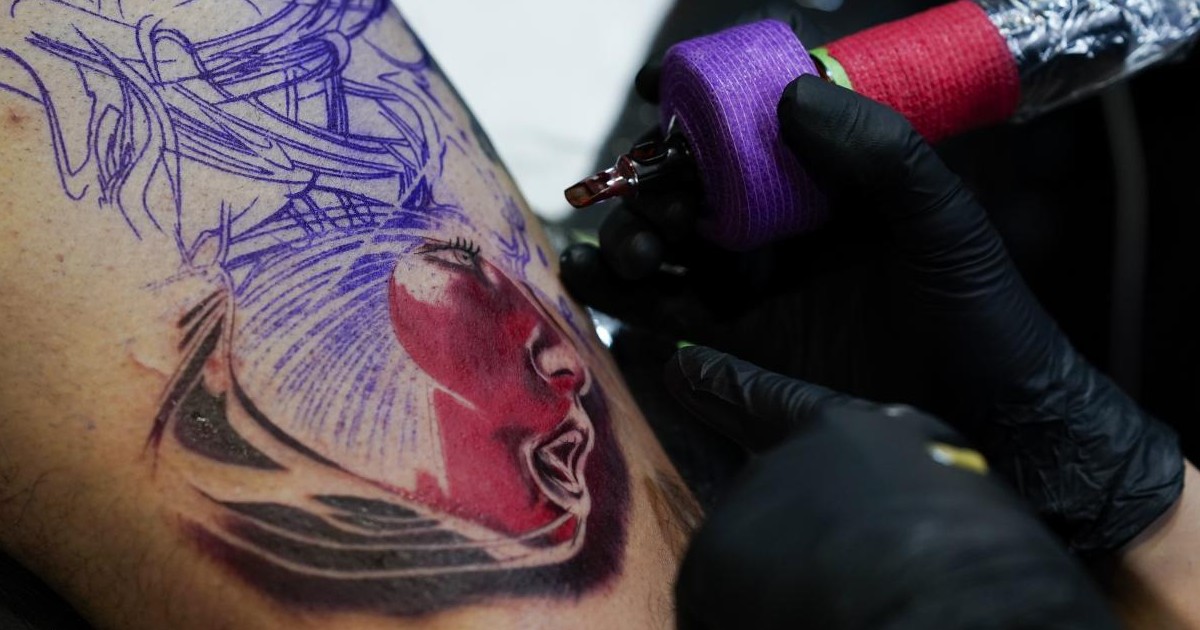
Il Ministero della Salute ha ritirato dal mercato un lotto di inchiostro per tatuaggi Dynamic Tattoo Ink Grey 30 ml a causa di un contenuto di piombo superiore ai limiti di legge, evidenziando i rischi chimici per la salute, in particolare per il sistema nervoso, i reni e il sangue. #tatuaggi #piombo #salute

Inchiostro per tatuaggi ritirato dal mercato per troppo piombo, il lotto da non usare e i rischi per sistema nervoso, reni e sangue
ANSA.it 4d

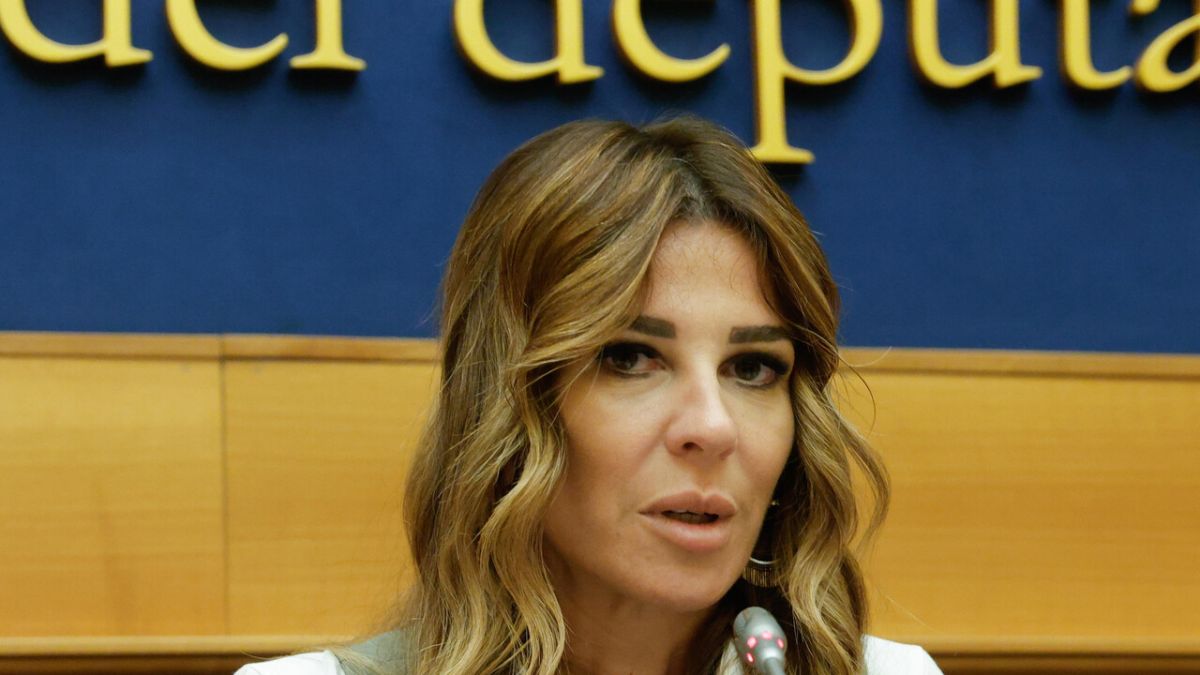
La politica italiana si interroga sui limiti all'uso dell'intelligenza artificiale in campagna elettorale dopo che Roberto Vannacci ha diffuso un'immagine modificata della sottosegretaria Matilde Siracusano, provocando reazioni contrastanti tra le forze politiche e l'appello a evitare contenuti ingannevoli. #IntelligenzaArtificiale #Deepfake #PoliticaItaliano

La politica riflette su limiti all'Ia, ma Vannacci provoca: 'Grazie della pubblicità'
ANSA.it 5d

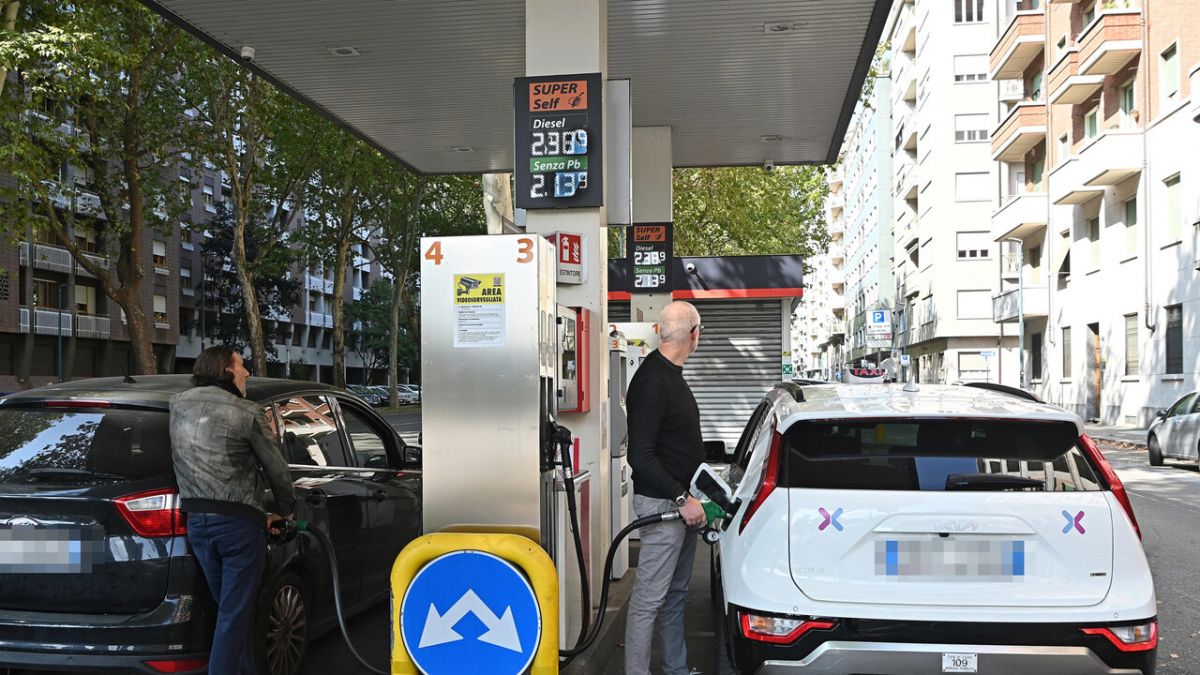
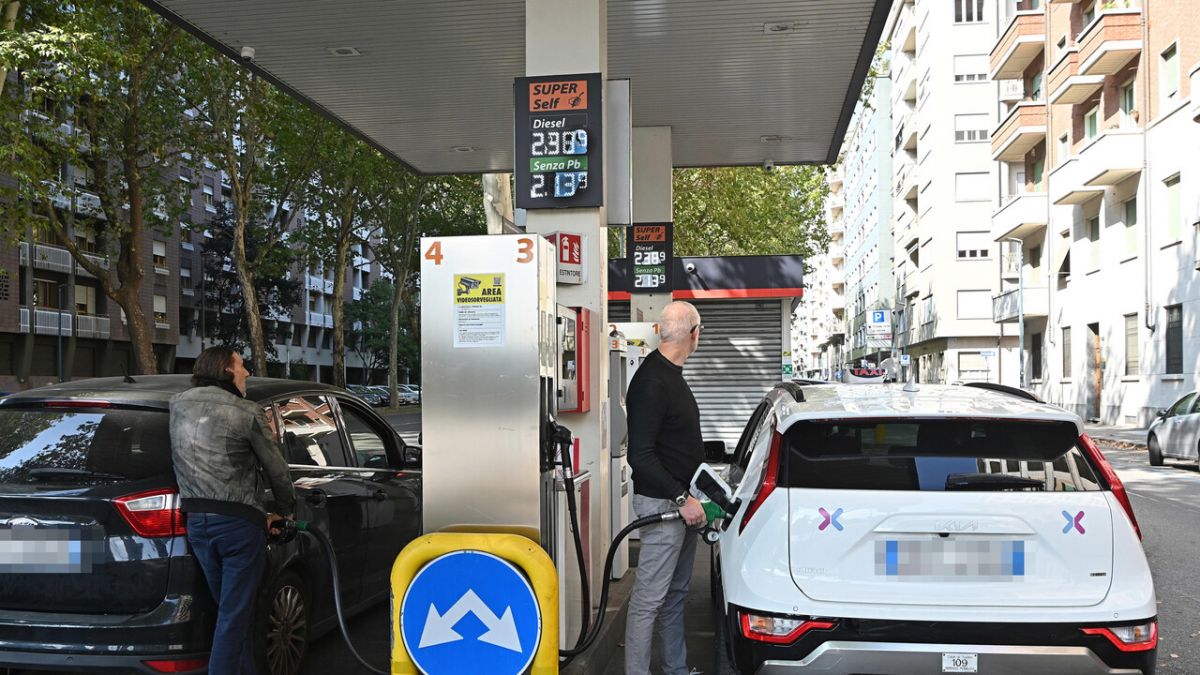
Da domani, la rete Ip applicherà limiti progressivi ai prezzi dei carburanti, in risposta alle richieste del Governo italiano, dopo che Eni e Socar hanno deciso di calmierare i prezzi per mitigare l'impatto della crisi geopolitica sulle famiglie e le imprese. #carburanti #prezzi #Socar

Da domani limiti ai prezzi dei carburanti anche sulla rete Ip. 'Saranno applicati progressivamente'
ANSA.it 5d

Socar, dopo Eni, annuncia che applicherà progressivamente limiti ai prezzi dei carburanti sulla rete Italiana Petroli per sostenere le famiglie e le imprese italiane, in un contesto di alta instabilità geopolitica. #carburanti #prezzibenzina #Socar

Limiti ai prezzi dei carburanti anche sulla rete Ip. 'Saranno applicati progressivamente'

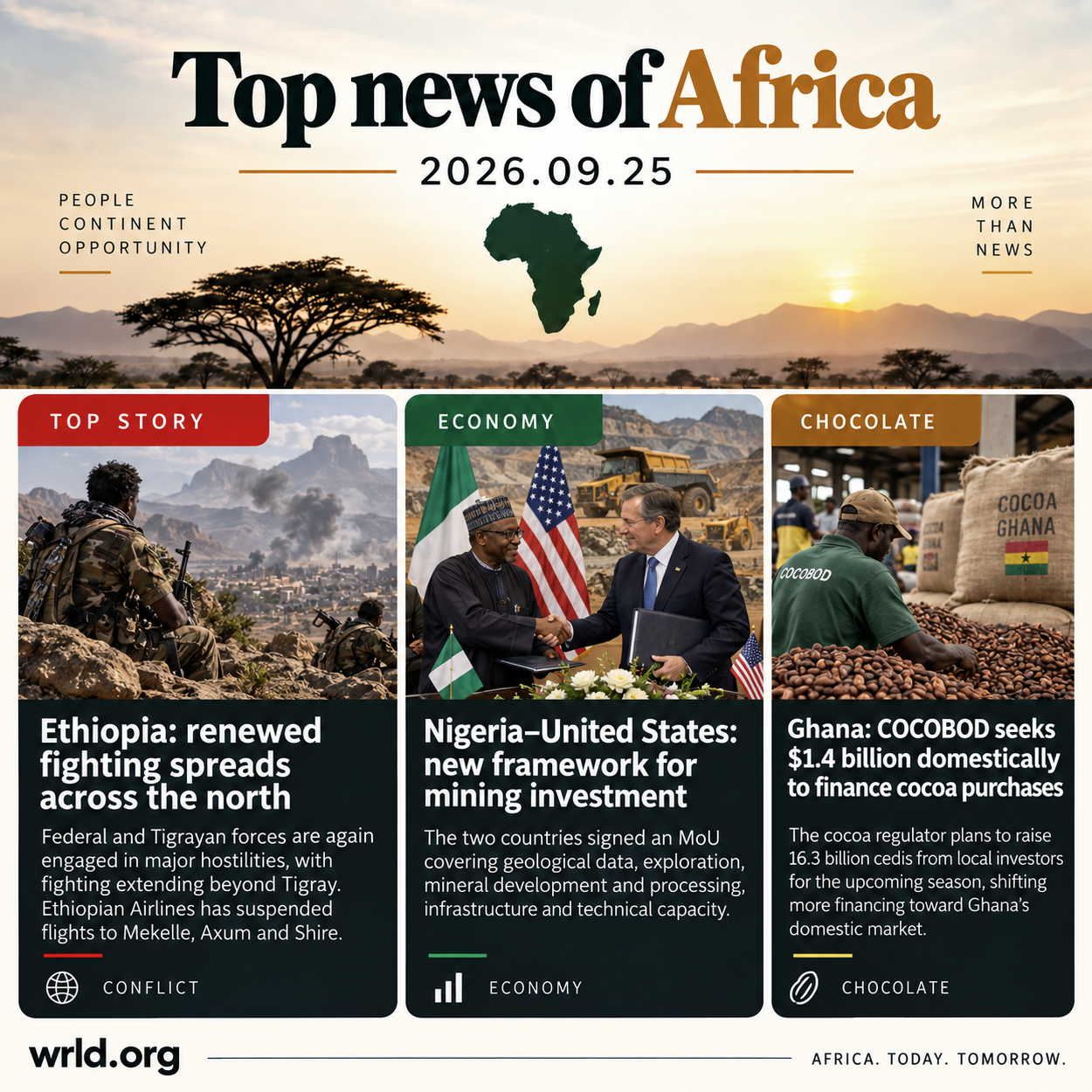
AFRICA DAILY REPORT — 25 SEPTEMBER 2026 Major developments reported during the previous 24 hours. 1. ETHIOPIA — Renewed fighting spreads across the north Federal and Tigrayan forces are again engaged in major hostilities, with fighting extending beyond Tigray. Ethiopian Airlines suspended flights to Mekelle, Axum and Shire amid the escalation and concerns over renewed conflict. Source: https://abcnews.com/International/wireStory/ethiopian-airlines-cancels-flights-tigray-amid-concerns-renewed-136676469 2. DR CONGO — Ebola outbreak continues to expand Updated European CDC data reported 7,773 confirmed cases and 3,759 deaths, with Ituri remaining the most affected province and North Kivu also recording substantial transmission. Public-health impact: Critical. Source: https://www.ecdc.europa.eu/en/ebola-outbreak-democratic-republic-congo-and-uganda 3. DR CONGO — Fatal violence during Ebola burial highlights resistance to response teams One person was killed and several wounded after security forces opened fire during unrest surrounding the burial of a suspected Ebola victim in Beni. The incident illustrates the public-trust and security challenges complicating containment efforts. Public-health/security impact: Very High. Source (Reuters report): https://www.internazionale.it/ultime-notizie-reuters/2026/09/24/one-dead-after-security-forces-open-fire-during-ebola-burial-in-congo-sources-say 4. SUDAN — RSF intensifies drone attacks in North Kordofan Reuters reported a renewed campaign of drone strikes against government-held towns in North Kordofan, including attacks affecting Um Ruwaba and El Obeid. Drones are playing an increasingly important role in Sudan's war. Humanitarian/security impact: Very High. Source (Reuters): https://www.internazionale.it/ultime-notizie-reuters/2026/09/24/sudan-s-rsf-steps-up-deadly-drone-attacks-on-frontline-cities 5. MOROCCO — PAM finishes first in parliamentary election Preliminary official results gave the Authenticity and Modernity Party (PAM) 97 of 395 seats, followed by the National Rally of Independents with 66, Istiqlal with 65 and the Justice and Development Party with 54. Source (official Moroccan government portal): https://maroc.ma/en/news/2026-legislative-elections-pam-leads-97-seats-according-preliminary-results-minister-interior 6. NIGERIA–UNITED STATES — New framework for mining investment Nigeria and the United States signed a memorandum of understanding covering geological data and exploration, mineral development and processing, infrastructure and technical capacity. Economic/strategic impact: High. Source (Channels Television): https://www.channelstv.com/2026/09/24/nigeria-us-sign-mineral-investment-pact/ 7. NIGER — Madaouela uranium agreement increases state participation Niger and Atomic Eagle finalized an agreement concerning the Madaouela uranium project, with the arrangement providing for Nigerien state participation and renewed activity at the project. Economic/strategic impact: High. Source: https://www.nigertoday.com/articles/en/niger-and-atomic-eagle-finalize-madaouela-uranium-deal-ending-dispute.html 8. SOUTH AFRICA — Financing costs constrain $98 billion energy-transition programme South Africa warned at the UN Climate Summit that high borrowing costs and shrinking international grants are limiting its clean-energy transition. A $550 million credit guarantee has been secured to attract private investment in electricity transmission. Economic/energy impact: High. Source (SABC News): https://www.sabcnews.com/sabcnews/1163387-2/ 9. GHANA — COCOBOD seeks $1.4 billion domestically to finance cocoa purchases Ghana Cocoa Board is seeking to raise 16.3 billion cedis ($1.4 billion) from domestic investors to finance cocoa purchases for the upcoming season, shifting more financing toward Ghana's domestic capital market. Economic impact: High. Source (Reuters report republished by Business Recorder): https://www.brecorder.com/news/40440904/ghanas-cocoa-regulator-pitches-usd14bn-domestic-financing-plan 10. UGANDA — Refugee programme remains heavily underfunded Uganda's response plan for more than two million refugees remains substantially underfunded, increasing pressure on food, healthcare, water, sanitation and host communities. Humanitarian impact: High. Source (Uganda Business News): https://ugbusiness.com/2026/09/politics-policy/ugandas-refugee-plan-is-a-third-funded-as-kampala-seeks-eu-help #Africa #AfricaNews #TopNewsOfAfrica #Ethiopia #Tigray #NorthernEthiopia #EthiopiaConflict #HornOfAfrica #RegionalSecurity #AfricanSecurity #Nigeria #UnitedStates #NigeriaUS #MiningInvestment #CriticalMinerals #MineralDevelopment #MiningSector #GeologicalData #StrategicMinerals #AfricanEconomy #Ghana #COCOBOD #Cocoa #CocoaIndustry #Chocolate #CocoaFinance #Agriculture #Agribusiness #DomesticMarkets #CapitalMarkets #Trade #Investment #EconomicDevelopment #Geopolitics #AfricaToday #wrldorg

Ethiopian Airlines cancels flights to Tigray capital as soldiers take over airport

Israele e la guerra innescata dalla strage del 7 ottobre, l’antisemitismo e gli ignavi dell’Europa, Gaza e la violenza senza limiti di Hamas. I tunnel del terrore, gli ostaggi ebrei e la caccia a Sinwar nelle pagine di “Occidente o niente” https://t.co/Wxh0SFRkXE https://t.co/mlvPbf4iOs #Israele #Gaza #antisemitismo #IL #PS #DE #EU

Abbattere gli ulivi dei Territori Palestinesi poco prima della raccolta dei frutti. Il sadismo di Israele non conosce limiti. #Palestine #OliveTrees #IsraeliOccupation #PS #IL

La drammatica discesa nel buio dei social network frequentati dagli adolescenti, per esplorare i rischi enormi che corrono. Le pratiche autolesionistiche, le estorsioni, gli incitamenti alla violenza. Come si può pensare che non ci vogliano dei limiti. https://t.co/cfGGdBwQmE #socialnetwork #rischi #limiti #Thetweetdoesnotmentionanyspecificcountries.Therefore #therearenocountrycodestoreturn.

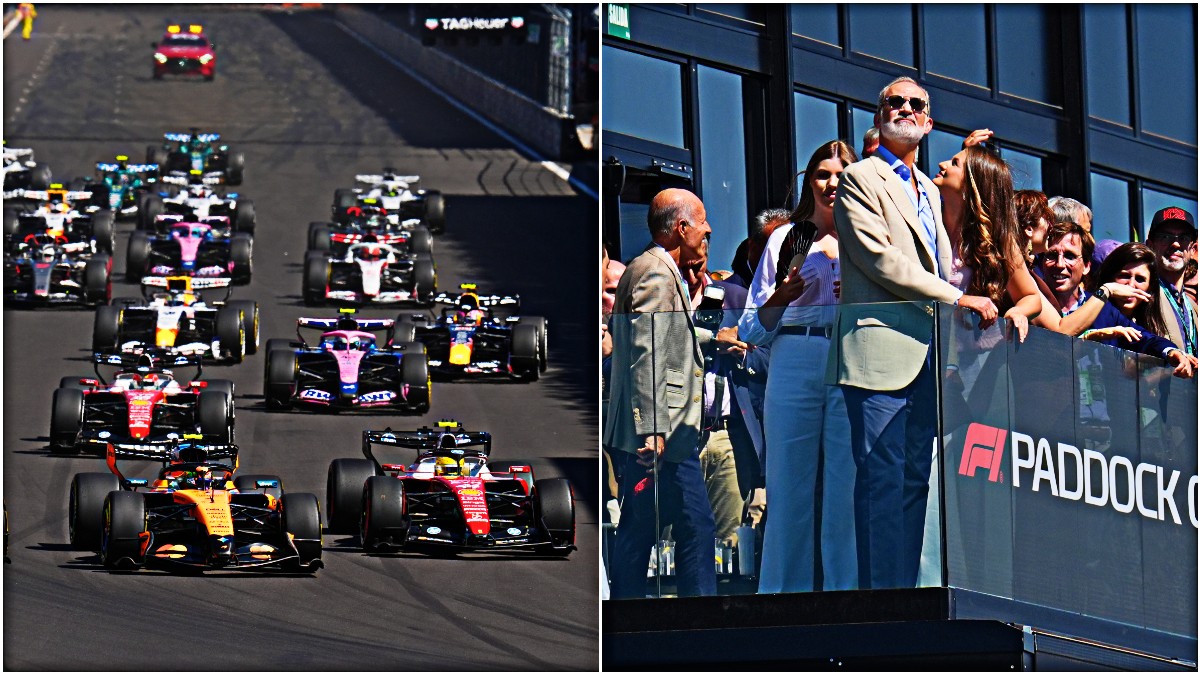
Il nuovo regolamento della Formula 1 prevede Gran Premi più brevi, limiti orari flessibili e un maggior focus su social e intrattenimento, al fine di attrarre un pubblico più giovane e garantire una fruizione più immediata della competizione. #Formula1 #F12027 #Motorsport

Gare più brevi, limiti d’orario e più spazio a social e spettacolo: tutte le novità del nuovo regolamento in Formula 1
L

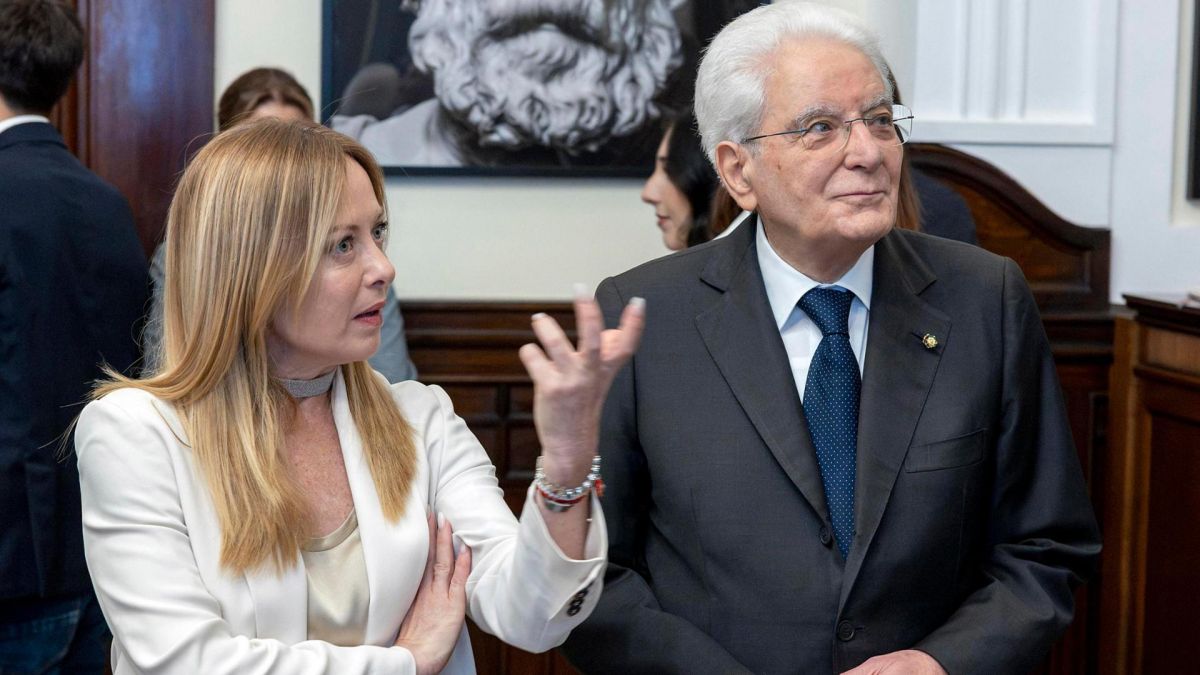
Giorgia Meloni sfida il presidente Mattarella citando una sua circolare di 36 anni fa sui limiti degli studenti stranieri in classe, mentre il Quirinale esprime preoccupazione per l'interpretazione politica della proposta della premier e ribadisce la necessità di inclusività e integrazione scolastica. #Immigrazione #GiorgiaMeloni #PoliticaItaliano

Stranieri in classe, Meloni sfida Mattarella: “Da ministro fece come me”. Lo stupore del Colle