BETA nonprofit public democratic european moderated

Search

#loyalty

From 1945 until today, the Free World has been built by loyalty, strength, and the courage to stand together when it matters most. After the destruction of World War II, the West learned a hard lesson: peace is never defended by weakness, hesitation, or isolation. Peace is https://t.co/8P5n6ITtAt #FreeWorld #StrengthInUnity #PeaceThroughCourage #Nospecificcountrycodesarementionedinthetweet.

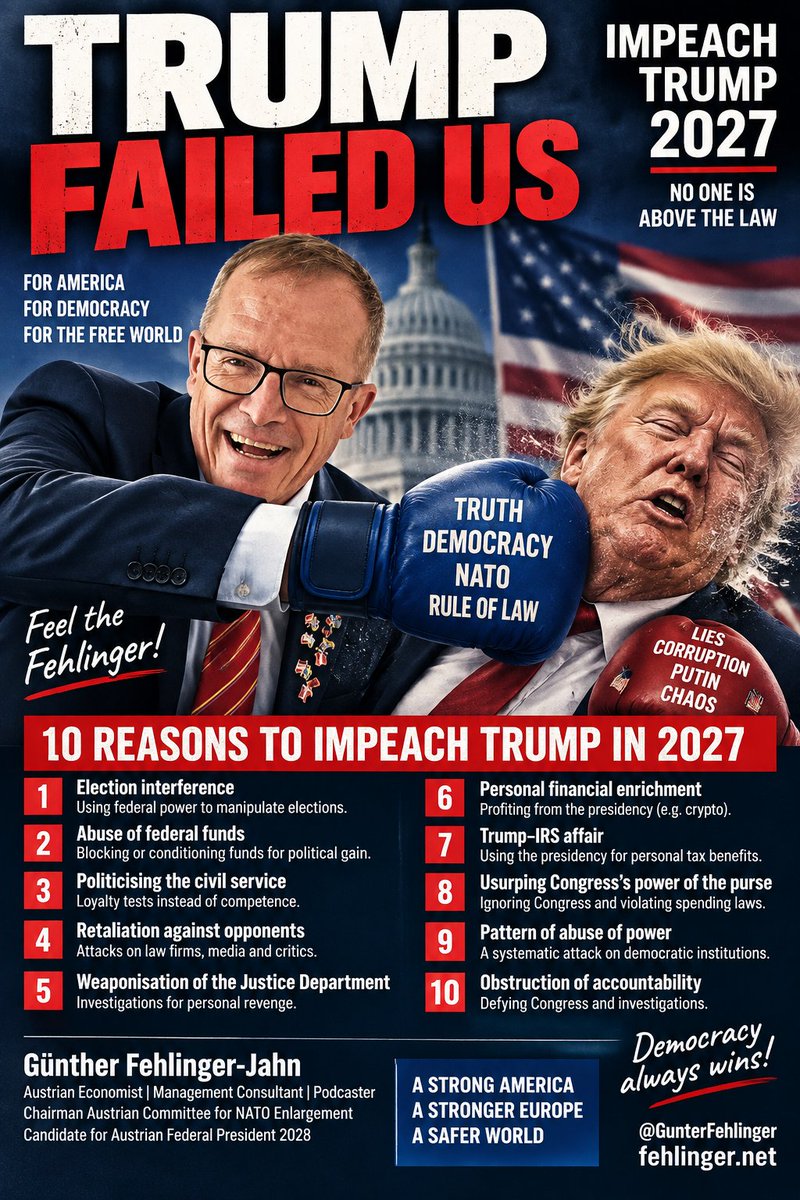
TRUMP FAILED US. America needs strength, credibility, constitutional government and leadership of the Free World — not chaos, personal revenge and government by loyalty test. In 2027, the new Congress must investigate the full record: interference with elections, pressure on https://t.co/d2YNTszVA1 #TrumpFailedUs #Leadership #ConstitutionalGovernment #US

Freeman of the City of London: An Ordinary Honour for All, an Honorary One for Few SOURCE: https://www.linkedin.com/pulse/freeman-city-london-ordinary-honour-all-honorary-one-sardella-ph-d--m1alf/ Abstract The Freedom of the City of London is an institution of mediaeval origin, attested as far back as 1237, originally conceived to afford freeborn citizens protection from feudal obligations, the right to trade, and the ownership of property within the bounds of the Square Mile — the territory of the City of London proper. Having evolved progressively from a concrete economic privilege into a civic and symbolic distinction, it has preserved its relevance over the centuries through successive legislative reforms — most notably the extension of eligibility to all nationalities in 1996 — and today records approximately 1,800 to 2,000 new admissions annually. The present article examines the historical and juridical evolution of the title, sets out the several routes of access provided by current regulation (by servitude through apprenticeship, by patrimony, by redemption through direct nomination, by presentation through the Livery Companies, and by registration on the electoral roll), and analyses the contemporary profile of the Freemen in the light of recent admissions of prominent figures from the worlds of finance, culture, sport, and public life. Contrary to the elitist image surrounding many British honours, the ordinary Freedom proves accessible to any person whatsoever, regardless of nationality or financial standing, upon the satisfaction of minimal requirements and the payment of an administrative fee of £180–185. The article concludes by reflecting upon the contemporary significance of the institution: not in the residual privileges, now largely ceremonial, but in its identity-forming, civic-participatory function and its connection to the long history of the oldest and most venerable city in Europe. Keywords: Freedom of the City of London; Livery Companies; City of London Corporation; British honours; urban civic identity. Contenuto dell’articolo Introduction Amongst the historic honours of Britain, few institutions evoke an imaginative world as rich as the Freedom of the City of London. Cited in films, novels, and articles on manners and custom with tones of exclusivity and mystery, it is frequently associated with figures of the very highest standing: sovereigns, heads of state, military commanders returning from the wars. Yet, upon closer and more methodical scrutiny, a markedly different picture emerges: that of a title which, in its ordinary and non-honorary dimension, is today accessible to a considerable number of persons each year, without the requirement of extraordinary merit or elevated financial means. The present contribution aims to examine the institution in its twofold aspect, historical and contemporary, with the object of dispelling the most prevalent misconception: that which confounds the ordinary Freedom with the Honorary Freedom — the latter genuinely rare and reserved for figures of international standing. This article traces the mediaeval origins and legislative evolution (§ 2), sets out the current routes of access (§ 3), discusses requirements, costs, and procedure (§ 4), analyses the contemporary composition of the body of Freemen (§ 5), examines rights, privileges, and obligations (§ 6), reviews the most distinguished recipients of recent decades (§ 7), and concludes with some reflections upon the contemporary significance of the institution (§ 8). Origins and Historical Development of the Institution The Freedom of the City of London is attested from 1237, during the reign of Henry III, as a form of civic status designating individuals not subject to a feudal lord, and therefore entitled to the protections guaranteed by the City's charters. In this original sense, the term freeman denoted the free man in the fullest sense of the word: one who might trade freely within the perimeter of the Square Mile, hold property, and join the trade guilds without external interference. The practical privileges were of concrete scope and directly functional to the mediaeval economy: exemption from certain tolls, including the celebrated right to drive flocks of sheep across London Bridge without payment — a concession rooted in the wool trade that dominated the English economy — protection against arbitrary arrest beyond the jurisdiction of the City, and access to the markets regulated by the guilds. As confirmed by the subsequent reissues of Magna Carta by Henry III in 1225, such liberties were intrinsically bound to the self-governance of the City, which defended them against royal and baronial interference. The progressive codification of the institution took place through royal ordinances from the fourteenth century onwards. In 1319, Edward II issued constitutions restricting access to the Freedom to members of the trade guilds, prohibiting the admission of unaffiliated outsiders, and thereby formalising servitude through apprenticeship as the principal route for new entrants, whilst the patrimonial route ensured continuity for established families. Subsequent monarchs, from Edward III onwards, repeatedly confirmed the civic liberties through charters granted often in exchange for financial loans, consolidating the City's autonomy and its role as creditor to the Crown. In the nineteenth century, with industrialisation and the demographic expansion of London, corporate control over trade proved increasingly unenforceable. The Municipal Corporations Act of 1835 extended eligibility to any person living, working in, or having a significant connection with London, partially detaching the title from corporate membership and progressively transforming it into an honorary distinction of a civic character. During the twentieth century, further reforms rendered access more inclusive. Women, already admitted informally as widows by inheritance in earlier periods but formally excluded from the standard routes, saw their right to ordinary admission recognised — Angela Burdett-Coutts having already received the Honorary Freedom in 1872, and Florence Nightingale in 1908 — while formal equality was consolidated in the twentieth century. Finally, in 1996, the requirement of British or Commonwealth citizenship was abolished, opening the title to any nationality whatsoever. Routes of Access: The Current Regulatory Framework The current regulations, administered by the Court of the Lord Chamberlain of the City of London Corporation, provide for five principal modes of access to the Freedom of the City of London, each reflecting different historical ties between the individual and the City's institutions. By servitude confers the title upon the completion of a formal apprenticeship under the Custom of London, traditionally of seven years' duration, under a master freeman of a Livery Company. This route, the oldest and of the greatest historical significance, verifies merit through practical competence and loyalty to the guild. Completing apprentices are admitted without the need for approval by the Court of Common Council, provided they have been registered on the City's electoral roll for at least one year, and in such cases no financial contribution is required. By patrimony confers automatic eligibility upon the children of Freemen, provided the parent held the title at the time of the candidate's birth and appropriate documentation is furnished. Historically restricted to sons, it was extended to daughters by the Municipal Corporations Act of 1835. The candidate must have attained the age of eighteen, must not be an undischarged bankrupt, and must not have relevant unspent criminal convictions. By redemption constitutes the route open to any person whatsoever. The candidate submits an application to the Court of the Lord Chamberlain, supported by two sponsors — Common Councillors, Aldermen, or Liverymen of at least one year's standing who attest to their reputation — and the matter is examined by the Freedom Applications Sub-Committee and approved by the Court of Common Council. The administrative fee (the Freedom Fine) amounts to £180 following the tariff revision of 1 April 2024 (£185 in the case of direct nomination). For candidates registered on the Ward List, the City's electoral roll, the procedure is free of charge. By presentation through a Livery Company is the route most frequently taken in contemporary practice. The candidate first becomes a member of their relevant guild, following a procedure that varies amongst each of the 113 Livery Companies currently active, and subsequently submits an online application to the Court of the Lord Chamberlain for admission to the Freedom of the City, with approval in the vast majority of cases being a matter of routine. Requirements, Costs, and Procedure The requirements for access to the ordinary Freedom are of a simplicity that may well surprise, given the aura of exclusivity surrounding the title. The candidate must have attained the age of eighteen, must not be an undischarged bankrupt, and must not have unspent criminal convictions within the meaning of the Rehabilitation of Offenders Act of 1974. No requirement of nationality, residence, educational attainment, or financial standing is imposed. The documentation required is of a standard biographical character: a full birth certificate, a marriage certificate or name-change document where applicable, and, where admission is by presentation, the certificate of membership issued by the relevant Livery Company. The application is submitted online through the City of London Corporation's portal. The admission ceremony is held at the Guildhall in London, in the Court Room of the Lord Chamberlain, on every working day between 10.30 and 12.00, and between 14.00 and 15.30. The newly admitted Freeman is invited to read aloud the Declaration of a Freeman and to sign the Admissions' Book, receiving upon its conclusion a calligraphed certificate on vellum and a copy of the Rules for the Conduct of Life — the eighteenth-century document of moral guidance that enjoins the holder to lead a life of rectitude, compassion, and social engagement. For those unable to attend in person, the City Corporation has retained the option of conducting the ceremony virtually, a facility introduced during the pandemic and subsequently preserved. The Contemporary Composition of the Body of Freemen One significant empirical datum serves to diminish the elitist dimension of the title: between 1,800 and 2,000 new persons are admitted each year, within a body that counts over 300,000 documented admissions across the centuries. As the City of London Corporation itself observes, contemporary Freemen comprise 'a broad cross-section of the population', encompassing professionals, students, craftspeople, entrepreneurs, military personnel, and foreign nationals. The growing contribution of university students, frequently presented in groups by their academic institutions, and of international professionals, has further broadened the demographic base. The group ceremony of 2024, in which 40 individuals drawn from fields ranging from science and medicine to entrepreneurship and diversity initiatives received the title simultaneously, is illustrative of this openness. A fundamental distinction must, however, be emphasised. The Honorary Freedom of the City of London constitutes an entirely separate institution of radically different scope. Granted by the Court of Common Council by special resolution, it is reserved for figures of exceptional international stature — typically fewer than a dozen conferred annually — and represents, in the words of the City Corporation itself, the highest honour it is able to bestow. It is this Freedom that has been enjoyed by Winston Churchill, Her Majesty Queen Elizabeth II, and, more recently, the television presenter Rachel Riley (October 2025), in recognition of her commitment to Holocaust education and the combating of antisemitism. The confusion between the two forms is the principal source of the distorted public perception of the institution. The Contemporary Significance: Between Identity and Participation While the great majority of the practical privileges once associated with the condition of Freeman have today disappeared or been reduced to solemn ceremonial form, what persists is the powerful symbolic and identity-forming value of the title. The ceremony retains elements of ritual solemnity — the reading of the Declaration, the signing of the historic Admission Register, the receipt of the calligraphed certificate on vellum — which inscribe the new Freeman within a chain of continuity of nearly eight centuries, linking diverse figures through a shared bond with the history of the Square Mile. This venerable London institution also performs a cohesive function within the ecosystem of the City and the Livery Companies. The 113 active guilds collectively disbursed over £81 million in charitable activities in 2024, through programmes of vocational training, scholarships, and technical apprenticeships that preserve specialist skills in economically significant sectors. Being a Freeman constitutes a formal prerequisite for advancement to Liveryman, and therefore for the exercise of voting rights in the governance of the City: a vestige of corporate democracy which, however distant from the models of universal suffrage, retains its own institutional logic within the unique legal architecture of the London Square Mile. Critics of a progressive persuasion have observed that the system favours established networks and access by hereditary or professional routes, potentially excluding broader strata of the London population, with the pool of living Freemen well below one per cent of the nine million residents of Greater London. Nevertheless, the data on recent admissions — encompassing recognition spanning African entrepreneurship, community sport, broadcasting, and medicine — suggest a trajectory of progressive opening which, whilst falling short of full demographic representativeness, attests to the institutional will to maintain the institution as a living tradition rather than an exclusive relic. Conclusions The foregoing analysis permits the formulation of several concluding observations. The Freedom of the City — the ordinary Freedom — is today an honour accessible to a far wider audience than the collective imagination suggests. The admission requirements are minimal, the costs modest, the procedures relatively streamlined and open to any nationality. The persistent confusion with the Honorary Freedom, reserved for figures of exceptional international eminence, is the principal source of a distorted perception that merits correction. The contemporary value of the title resides not in the residual privileges, now largely solemn and ceremonial, but in three complementary dimensions: the identity-forming, which connects the holder to nearly eight centuries of institutional history; the civic-participatory, which through access to the Livery Companies and the City's electoral system inserts the Freeman into genuinely operative networks; and the communitarian, which through the mechanisms of honorary recognition celebrates contributions of an ever more varied scope and provenance. In this respect, the Freedom represents an instructive case study in how historic institutions may reinvent themselves without losing authenticity, preserving their significance through inclusion rather than exclusion. References and Sources: City of London Corporation. (2024). Freedom of the City of London. https://www.cityoflondon.gov.uk/about-us/law-historic-governance/freedom-of-the-city Guild of Freemen of the City of London. (2025). Freedom of the City. https://www.guild-freemen-london.co.uk/freedom-of-the-city Livery Committee. (2025). Freedom of the City. https://liverycommittee.org/about/membership-freedom-and-livery-clothing/freedom-of-the-city/ Municipal Corporations Act 1835. UK Parliament. Rehabilitation of Offenders Act 1974. UK Parliament. Grokipedia. (2025). Freedom of the City of London. https://grokipedia.com/page/Freedom_of_the_City_of_London City Solicitors' Educational Trust. (2025). Applying for the Freedom of the City of London. LondradaVivere.com. (2025). La 'Freedom of the City of London': un'antica libertà ancora viva. City of London Corporation. (2023). Livery Companies: Charitable Activities Report 2024. ONS / City of London Corporation. (2023). Financial Services Contribution to UK GDP.

Freeman of the City of London: An Ordinary Honour for All, an Honorary One for Few

"Our enemies don’t sit in Moscow. Our enemies sit in Magdeburg and Berlin." (translated)

H

The Destruction of Historical Understanding The third lesson we can take away from *1984* is that if you want to control people, you must destroy their understanding of history. Orwell writes, “Who controls the past controls the future. Who controls the present controls the past.” There is a clear example of this in Canada. In order to create one large, international communal state in which everyone is expected to care about everyone else, those in power must shatter people’s understanding of history and persuade them to support that agenda. How do you accomplish that? Canada’s unmarked-graves controversy is a useful example. The story became global, and much of the political class and media supported it. No bodies were ever found. Instead, ground-penetrating radar detected anomalies in the soil, which were then described as unmarked graves containing children. From the very beginning, there was no physical evidence to support such a bold claim. But that was never the point. The point was to make people believe that supporting Canada meant supporting the genocide of children allegedly buried beneath the ground on which they stood. Whether or not people accepted the claims, the narrative had a powerful effect: it undermined patriotism and weakened any sense of loyalty to the nation.

H

What Chairman Mao and Dolores Umbridge Have in Common In Harry Potter, Dolores Umbridge is a more realistic villain than Voldemort: she gains power through titles, loyalty, conformity, and paperwork, not competence. She weakens Defense Against the Dark Arts by replacing practical preparation with Ministry-approved theory—her real talent is playing the institutional game. This echoes Hannah Arendt’s “banality of evil,” where ordinary people advance by obeying and enforcing a system. When loyalty matters more than ability, institutions start selecting for mediocrity. The parallel with Maoist China is stark. During the Cultural Revolution, Zhang Tiesheng was celebrated for submitting a blank exam and attacking “bookworms.” Despite poor results, political loyalty earned him a seat in the National People’s Congress. Mao’s promotion rule was effectively “red and expert”: political reliability outweighed competence. The consequences were catastrophic. Honest reporting was punished, so officials produced what Mao wanted to hear. False harvest data drove unrealistic targets and helped fuel the Great Leap Forward famine, which killed tens of millions. Education was politicized too: the Gaokao was abolished in 1966, and when admissions resumed, scores were replaced by class background, manual labor experience, and Party recommendations; the national exam returned only in 1977. Totalitarian systems don’t just remove capable people—they select for those politically reliable and morally compliant. Mediocrity shields leaders from rivals; reduced conscience makes coercion easier. Psychologist Andrew Lobaczewski called this pathocracy: rule by the pathological disordered, where normal institutions lose their ability to distinguish honest from manipulative. The system keeps its name and stated purpose while serving something else. The lesson: tyranny doesn’t require everyone to become evil. It requires enough people to stop recognizing the pathological. Once that moral filter disappears, institutions become vulnerable to exploitation—how psychopaths take over a society.

H

Who Gets Promoted in a Broken Society? In Harry Potter, J.K. Rowling created a villain: Dolores Umbridge. She gains power not through competence, but conformity, loyalty, and bureaucracy. Evil rarely looks like Voldemort. Umbridge resembles Hannah Arendt’s “banality of evil”: ordinary people pursuing advancement by playing the institutional game. She enforces ideology through bureaucracy. Loyalists replace competent people, dissenters are labelled extremists, and punishment becomes a tool of conformity. The goal is not truth, but compliance. Political Ponerology Polish psychologist Andrew Lobaczewski studied how institutions can be captured by pathological individuals. He called the resulting system pathocracy, and the transformation of normal institutions into ones serving pathological interests ponerization. The danger begins when institutions lose the ability to distinguish competence from manipulation. Those willing to conform can rise precisely because others will not. Ideologues create doctrines, propagandists spread them, and ruthless operators capture institutions. The lesson: totalitarianism does not require one tyrant. It emerges when institutions lose the ability to distinguish the pathological from the honest. The Case of Mao Mao’s China offers a striking example. During the Cultural Revolution, Zhang Tiesheng became famous for submitting a blank exam paper while denouncing intellectuals. Political loyalty mattered more than academic ability. Mao elevated being politically “red” over being technically “expert.” Specialists were displaced by ideologically reliable outsiders. Officials who honestly reported collapsing harvests were purged, while those telling Mao what he wanted to hear advanced. False information helped sustain the Great Leap Forward, whose famine killed tens of millions. China abolished university entrance exams in 1966; they were not restored until 1977. A system that selects against competence eventually loses the ability to see reality. Mediocrity protects power; moral compromise enforces it. Capture education, and you shape a generation unable to challenge the system.

BOOP.PL 3w

Nieoficjalnie 9 września nowe menu w polskim McDonald's. Maple BBQ & Bacon Quarter Pounder Podwójny Maple BBQ & Bacon Quarter Pounder McCrispy Teriyaki McNuggets Black Pepper & Garlic (6 szt.) + 1 sos do wyboru Sprite X Sakura 0,4 l WYŁĄCZNIE w aplikacji – Loyalty: Cheese Empanadas (3 szt.) od 16.09 do 30.09 Sos Szechuan Style Sos Truffle Cheese McFlurry Popcorn Caramel #McDonalds #NoweMenu #FastFood

Unlike his first term, when many of his most notable conflicts were with dissenters in his own administration, this time around US would-be gilded dictator has butted heads even with those who have proven themselves the most loyal to him https://t.co/siGR6UmQj6 #GildedDictator #PoliticalConflict #LoyaltyIssues #US

Trump—a comically germaphobic billionaire with Liberace’s taste in decor who plays tracks from the Phantom of the Opera at rallies—has earned the loyalty of millions of white working-class voters being one of the least personally relatable candidates ever https://t.co/7F5tQyVa2c #Trump #Germaphobe #WorkingClass #Therearenocountrycodesmentionedinthetweetprovided.

10/10 Allies will learn to perform loyalty rather than align strategically. Adversaries will learn to wait. The paradox of Trump's Latin American interventionism: even when it "works," it teaches the region that US power is no longer something to rely on #USForeignPolicy #LatinAmerica #TrumpInterventionism #US #LA

Blue Moon Jul 3

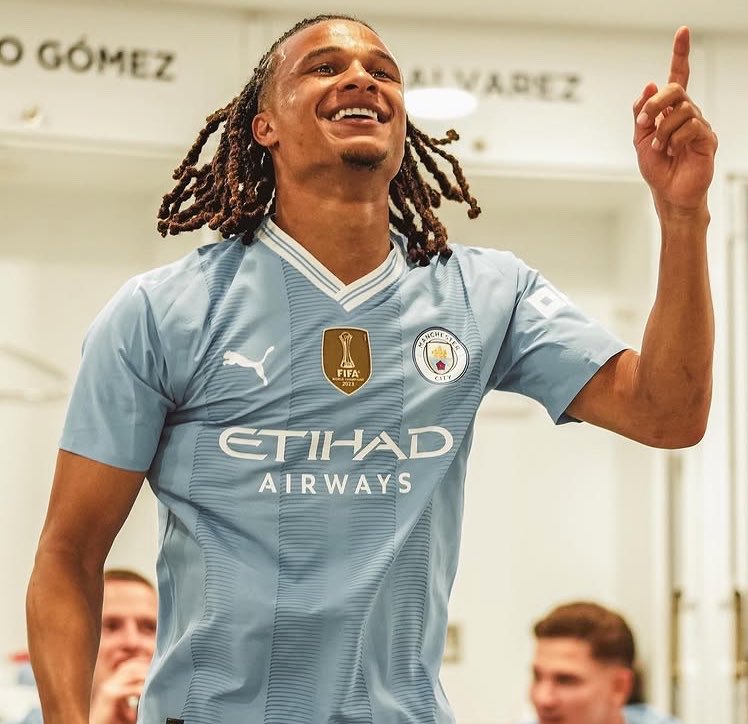
Nathan Ake 🩵🥹 Un soldat incroyable. Pendant six ans, tu t’es battu pour ce maillot. Tu as remporté tous les titres possibles, toujours avec exemplarité. Jamais un problème, que du sérieux et de l’amour pour le club. Tu as été extraordinaire. Lors du triplé, tu as mis dans ta poche les meilleurs ailiers du monde. Tu vas me manquer. @NathanAke #MerciNathan #Loyalty #Football

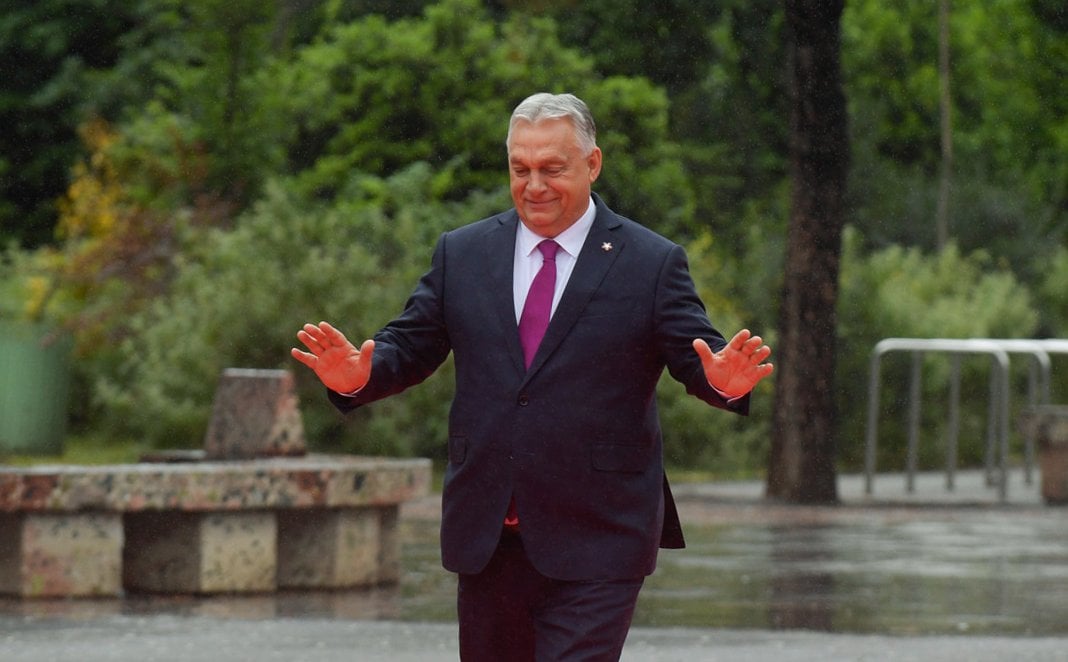
Viktor Orbán's defeat in Hungary has revealed the fragility of his hybrid regime, where loyalty among elites waned as belief in the regime's invincibility crumbled, demonstrating that such regimes are vulnerable not only to public dissent but also to internal disillusionment with the power structures that sustain them. #Węgry #ViktorOrban #reżimhybrydowy

Edit Zgut-Przybylska: Jak machina władzy Orbána pękła od wewnątrz

Life under Turkey's Autocracy: Erdogan emerges from @suzyhans book as a ruthless autocrat who rose to power through undeniable popular support. Then came corruption and oppression, gutting of state institutions, loyalty over expertise https://t.co/vsvVqB8Rvw #Turkey #Erdogan #Autocracy #TR

Antonio Jun 23

Ο,ΤΙ ΠΕΙ ΡΕ ΤΥΦΛΗ ΕΜΠΙΣΤΟΣΥΝΗ ΑΚΟΛΟΥΘΟΥΜΕ ΠΙΣΤΑ #paobc https://t.co/77Pu8qNGPd #trust #loyalty #follow

Ava Addams Jun 13

Hey @ouraring Can you explain how a customer is supposed to feel when they pay for a ring, the ring never arrives, and your solution is neither a replacement nor a refund? I've been a loyal customer, but this experience has been awful. Ready to throw away my 4 in the trash at #CustomerService #OuraRing #LoyaltyLost #Thetweetdoesnotmentionanyspecificcountries.Therefore #therearenocountrycodestoreturn.

@ismaik1860 Lass die Leute reden, wir stehen immer hinter dir, bitte verlasse niemals diesen Verein!! #Support #TeamSpirit #Loyalty

Normalerweise spreche ich nicht über private Dinge. In den letzten Wochen war ich so ziemlich von der Bildfläche verschwunden. Viele haben sich nach mir erkundigt, aber ich habe nur selten die Kraft gefunden, zu antworten. Leider ist mein geliebter Vater am 11. Mai verstorben. In seinen letzten Stunden durfte ich noch bei ihm sein und seine Hand halten. Vorgestern haben wir ihn zu Grabe getragen. Vor diesem Verlust habe ich immer Angst gehabt. Und jetzt kann ich nicht fassen, dass mein Vater einfach nicht mehr da ist. Ich werde niemals mehr “Papa” sagen können und nie mehr sein freudiges “Sandimaus“ hören, wenn er mich gesehen hat. Mein Vater war ein Ausnahmemensch. Er stand wie kein anderer für alte Tugenden: Ehre, Würde, Anstand, Rückgrat und Treue. Er war ein Gentleman, der allen Menschen mit Respekt begegnet ist. Auch war er der selbstloseste Mensch, den ich kenne. Er hat für andere alles gegeben, und sich selbst stets zurückgenommen. Meine Mutter hat er auf Händen getragen. Auch für meine Großeltern war er immer da. Sie haben ihn geliebt wie ihren eigenen Sohn. Ich hätte mir keinen besseren Vater wünschen können. Er war liebevoll und fürsorglich. Ich habe ihm alles zu verdanken. Es tröstet, dass er jetzt von allen Schmerzen befreit und wieder mit meiner Mutter, seiner großen Liebe, vereint ist. Ich bin unendlich dankbar dafür, dass ich ihn hatte.   ***   I usually don’t speak about my personal life. Over the past few weeks, I’ve been missing in action. Many of you have reached out, but I’ve rarely had the bandwidth to reply. Sadly, my beloved father passed away on May 11. I held his hand when he passed. A couple of days ago, we laid him to rest. I had always been afraid of this day. And now I can’t fathom that my dad just isn’t around anymore. Never again will I be able to say “Papa” and never again will I hear his joyful “Sandimaus” when he’d see me. My father was a truly extraordinary mensch. Like none other, he embodied traditional virtues: honor, dignity, decency, integrity, and loyalty. He was a gentleman who treated everyone with respect. Also, he was the most selfless and giving person I have ever known. He cherished my mother, the love of his life. I could not have wished for a better father. He was loving and caring. I owe everything I am to him. At least now he is relieved of his pain and reunited with my mother. I am truly grateful that I had him. #Trauer #Erinnerung #Familie

T
Tim Goldring Jun 4

Not sure if wrld.org has an arts or literature section? I’m looking for beta readers for a new book “Letters from England”. Here is an overview: OVERVIEW In August 2015, Timothy Goldring, a British businessman, began a sentence of seven years in Changi Maximum Security Prison, Singapore. He had no telephone. He could not always reply to letters. He had a concrete floor, a tikka sleeping mat, and seven cellmates in a cell twelve feet by twenty. The following month, a letter arrived through the food hatch. It was typed. It was from Lancashire. It began: Dear Tim, Trust your accommodation is up to the normal standards. Francis - IT businessman, Fitbit enthusiast, walker of the Yorkshire Dales, dreamer of a bungalow in Burnley with an inside lavatory — wrote to his oldest friend every month for four and a half years. Fifty-one letters. He did not miss a month. He wrote about what was happening in the world, about Donald Trump and Brexit, about his shoulder operation and his grandchildren and the taxi he drove home drunk on New Year’s Eve. He wrote the way he talked — with a Lancashire man’s instinct for irony, an old friend’s instinct for loyalty, and the stubborn conviction that the world continued and his friend was entitled to know about it. He did not write about the cell. He did not write about the sentence. He treated Timothy as he had always treated him: as a man who was interested in the world and entitled to opinions about it. Between every line, unspoken but unmistakable, was a single message: “I have not forgotten you. Here is the world, held open. I’m keeping your place in it warm.” Letters from England is two books woven into one. It is Francis’s book — a month-by-month chronicle of Britain, seen through the lens of one man’s grim, affectionate, furiously funny dispatch from the outside world. And it is Timothy’s book — the replies he could not send at the time: what it is to receive, month after month, the voice of a friend speaking from a world you can no longer reach. What it is to discover, in the most reduced of circumstances, that a smaller world is not necessarily a lesser one. That a monk’s cell and a prison cell are, in certain lights, the same room. That friendship, at its most austere — stripped of presence, of reciprocal conversation, of every ordinary reassurance — is perhaps the most extraordinary thing there is. This is not a story of crime or punishment. It is a story of loyalty. Of what one man does when another disappears from the world. He writes. Month after month. Into the silence. Because the alternative — to say nothing, to let the distance win — was, for Francis, sat in his cottage in Lancashire, simply not acceptable. If anyone is interested let me know and we’ll figure out how to get a pdf to you. Many thanks.