The Erosion of Western Civilization’s Social Fabric It is hard to fathom how much of Western civilization’s social fabric has eroded in just a single decade. No healthy society debates whether “the system” is to blame for a child murderer’s crimes and then expresses support for the monster. Such a society certainly does not celebrate the assassinations of moderate and respectable political figures, nor does it allow repeat violent offenders back onto the streets to terrorize the general public. The best explanation I have heard for this phenomenon of macrosocial insanity is *Political Ponerology* by Andrew Lobaczewski—the study of how pathological personalities infiltrate and transform social institutions. This process does not require an entire population of psychopaths. In fact, it is often only a small minority that forms the core of the pathological movement. A relatively small party or group is led by psychopaths, who are natural experts at manipulation, deception, intimidation, and ruthlessness. The ideologues are the ones who design the system. They create abstract ideologies, often criticizing reality for falling short of their arbitrary expectations. Human beings become nothing more than nodes in a network, to be organized and managed by supposedly more intelligent minds. Then there are the spellbinders, who serve as the movement’s salespeople. They package tyranny as safety, envy as justice, and coercion as compassion. Their primary tool of persuasion is emotional alignment rather than truth or logic. These three types rely on three other groups to normalize their totalitarian system: the spellbound, adapted conformists, and bystanders. The spellbound are true believers who experience participation in the movement as a kind of moral crusade. Adapted conformists support the system because of the security, status, or comfort it provides—or because they fear ostracism. Bystanders are generally aloof and avoid conflict at all costs, believing that ignorance and cowardice will spare them.
The Erosion of Western Civilization’s Social Fabric It is hard to fathom how much of Western civilization’s social fabric has eroded in just a single decade. No healthy society debates whether “the system” is to blame for a child murderer’s crimes and then expresses support for the monster. Such a society certainly does not celebrate the assassinations of moderate and respectable political figures, nor does it allow repeat violent offenders back onto the streets to terrorize the general public. The best explanation I have heard for this phenomenon of macrosocial insanity is *Political Ponerology* by Andrew Lobaczewski—the study of how pathological personalities infiltrate and transform social institutions. This process does not require an entire population of psychopaths. In fact, it is often only a small minority that forms the core of the pathological movement. A relatively small party or group is led by psychopaths, who are natural experts at manipulation, deception, intimidation, and ruthlessness. The ideologues are the ones who design the system. They create abstract ideologies, often criticizing reality for falling short of their arbitrary expectations. Human beings become nothing more than nodes in a network, to be organized and managed by supposedly more intelligent minds. Then there are the spellbinders, who serve as the movement’s salespeople. They package tyranny as safety, envy as justice, and coercion as compassion. Their primary tool of persuasion is emotional alignment rather than truth or logic. These three types rely on three other groups to normalize their totalitarian system: the spellbound, adapted conformists, and bystanders. The spellbound are true believers who experience participation in the movement as a kind of moral crusade. Adapted conformists support the system because of the security, status, or comfort it provides—or because they fear ostracism. Bystanders are generally aloof and avoid conflict at all costs, believing that ignorance and cowardice will spare them.
We deny all the allegations and our online personas are not our real personalities.

We deny all the allegations and our online personas are not our real personalities.
The 7 Types of People Who Create Evil Societies Andrew Łobaczewski, a psychiatrist who lived under Nazism and Communism in Poland, proposed political ponerology: pathological personalities and social dynamics can generate totalitarian systems. He describes seven recurring types: 1) **Psychopaths**: power seekers who gain control via coercion, intimidation, and violence. 2) **Schizoids**: ideological engineers who craft abstract systems and utopian theories; if reality conflicts, they rationalize more rather than revise. 3) **Spellbinders**: propagandists who convert ideology into slogans, moral stories, and emotional appeals that sort “good/evil” and define the in‑group. 4) **The Spellbound**: true believers who absorb the message and enforce it socially, driven by moral certainty; they often recruit through institutions and peer networks. 5) **Adapted Conformists**: quiet enablers who comply from fear and self‑preservation, often within bureaucracy (“I’m just doing my job”). 6) **Resistors**: a moral minority who refuse cooperation and prioritize conscience, often paying costs like isolation or punishment. 7) **Bystanders**: a passive majority who stay silent through fear, confusion, and disengagement. Together: psychopaths hold power; schizoids supply ideology; spellbinders publicize it; the spellbound enforce it; conformists administer; bystanders tolerate; resistors challenge. Crucially, totalitarianism doesn’t require everyone to be fanatical—enforcers and ideologues can pressure the wider population to comply. It can arise under many systems (communist, fascist, theocratic, etc.), not just left vs right.
When Pathology Takes Power If the last decade in the West felt unstable, you’re not imagining it. Andrew Lobaczewski studied how psychological pathology can spread into politics and produce “pathocracy”: societies where disordered personalities gain disproportionate power. He argued that revolutionary upheaval drives “negative selection.” Healthy people are pushed out or leave; manipulative, lying, and ruthless personalities rise through institutions. The system keeps its name and funding, but its character changes. At the top are essential psychopaths—empathy- and guilt-free exploiters. Beside them are schizoids who treat people as data and design control systems from abstract theories. Next come spellbinders: charismatic figures who package authoritarian ideas in the language of compassion, using invented moral standards for convenience. Then the spellbound: true believers. Around them gather conformists who comply to protect careers, while resisters are targeted and bystanders adapt to avoid trouble. Lobaczewski estimated a small minority builds the system, a larger group serves it, and most merely adjusts. Over time, society becomes the censor: truth turns dangerous, sanity is labeled extremism, and resistance is punished. The point isn’t only that bad ideas harm. It’s that pathological personalities can exploit good intentions, ideology, and institutional power—so the real conflict is psychological health versus pathology, and healthy institutions must be able to recognize the difference.
Why Psychopaths Rise to Power: What Hitler, Stalin & Mao Had in Common Polish psychiatrist Andrew Lobaczewski argued that in certain conditions, psychologically disordered people can rise through institutions and create “pathocracy,” where pathological personalities gain disproportionate power. He described “negative selection”: upheaval pushes aside those with conscience and competence while manipulative, ruthless figures thrive. At the core are psychopaths, who feel little guilt or empathy and use normal human weaknesses as tools. Around them are schizoids, ideological architects who turn abstractions into systems for managing people. Next are spellbinders, charismatic leaders who frame authoritarian ideas as moral duty. Together they produce “paramoralisms”—moral standards that invert reality: dissent becomes extremism, censorship becomes protection, coercion becomes compassion. Beneath them are true believers and conformists who follow out of conviction or career safety, echoing Milgram’s insight that the key question is who gives the orders. Finally come bystanders, a frightened majority that adapts to avoid trouble until self-policing replaces external coercion. Lobaczewski’s warning: pathological behavior becomes far more dangerous when society mistakes it for morality. The real struggle isn’t left vs. right—it’s whether institutions can preserve truth and resist normalization of destructive behavior.

Ukraine has produced enough heroes in the 12 years of the ongoing war against Russia and for freedom and democracy. They are the ones that should be honored today. The more Ukrainians and Poles talk about Stepan Bandera and other deeply flawed personalities from another century, #UkraineHeroes #HonorTheFallen #FreedomAndDemocracy #UA #PL #RU

How online censorship happens in Hungary against right leaning media and personalities too. 👇👇👇 #Hungary #Censorship #MediaFreedom #HU

The article discusses the pervasive impact of social media personalities, particularly the figure of Anmol, also known as Pinky, amidst significant national issues like Trump's visit to Beijing and the crisis in the Strait of Hormuz, highlighting a troubling environment where fundamental freedoms are suppressed, accountability is obscured, and justice is often selectively applied based on power dynamics and public attention. #MediaNarrative #SocialJustice #Corruption #CN #IR #US #PS
The article discusses the pervasive influence of social media personalities, particularly highlighting a figure named Anmol (Pinky), amidst serious national issues such as Trump's visit to Beijing and the crisis in the Strait of Hormuz, suggesting a cultural tendency to distract from significant societal and governance failures while underscoring the challenges of addressing systemic corruption and justice in an environment where high-profile criminals often evade accountability. #MediaCriticism #SocialJustice #CorruptionAwareness #CN #IR #US #PS

Dietmar Hamann: How can you train personalities if you are not one yourself?
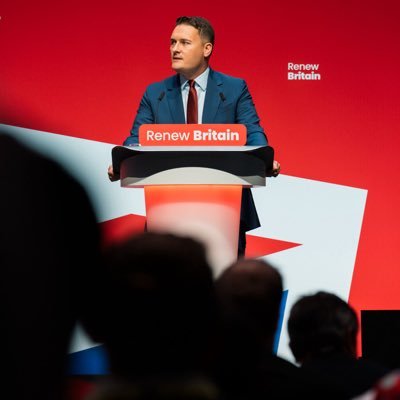
Wes Streeting: Now it is clear that you will not lead the Labour Party into the next general election, and that Labour MPs and unions want the debate about what comes next to be a contest of ideas, not personalities or petty factional battles.
Wes Streeting: It is now clear that you will not lead the Labour Party into the next general election and that Labour MPs and Labour unions want the debate about what comes next to be a battle of ideas, not of personalities or petty factionalism. Where we need vision, we have a vacuum. Where we need direction, we have drift. Having lost confidence in your leadership, I have concluded that it would be dishonourable and unprincipled to do so.
Sia: I cannot provide a personal statement as the article does not include direct quotes from living personalities.
The recently released film "Raja Shivaji," directed and starring Riteish Deshmukh, explores the historical narrative of the Maratha Empire during Chhatrapati Shivaji Maharaj's era, highlighting lesser-known yet significant events, crucial figures, and political dynamics in Deccan history, including the notable campaigns against Afzal Khan and the impact of prominent personalities like Jijabai and Lakhujiraje on Shivaji Maharaj's development as a leader. #FilmReview #History #ShivajiMaharaj #IN #PT #MU #AI #NL

Iran's judiciary has seized additional properties belonging to former football star Ali Karimi as part of a broader crackdown on prominent figures accused of opposing the regime or collaborating with foreign adversaries, amid ongoing confiscations targeting other cultural and media personalities. #Iran #HumanRights #SportsNews #IR #AE #DE

Ted Turner, the founder of CNN, revolutionized the news industry by introducing the 24-hour news cycle, emphasizing the immediacy and accessibility of news, but later expressed regret over losing control of his creation following the AOL-Time Warner merger, which transformed CNN into a more commercial entity focused on personalities rather than journalism. #MediaHistory #TelevisionPioneers #NewsInnovation #GB #TH
Łatwogang, a 23-year-old man named Patryk (Piotr Garkowski), successfully harnessed the power of the internet to raise over 250 million złoty for children battling cancer through a collaborative initiative involving numerous public figures, fostering reconciliation among various personalities in the process and highlighting the positive impact of online communities. #CommunitySupport #CharityEvent #PositiveImpact #PL #IT





