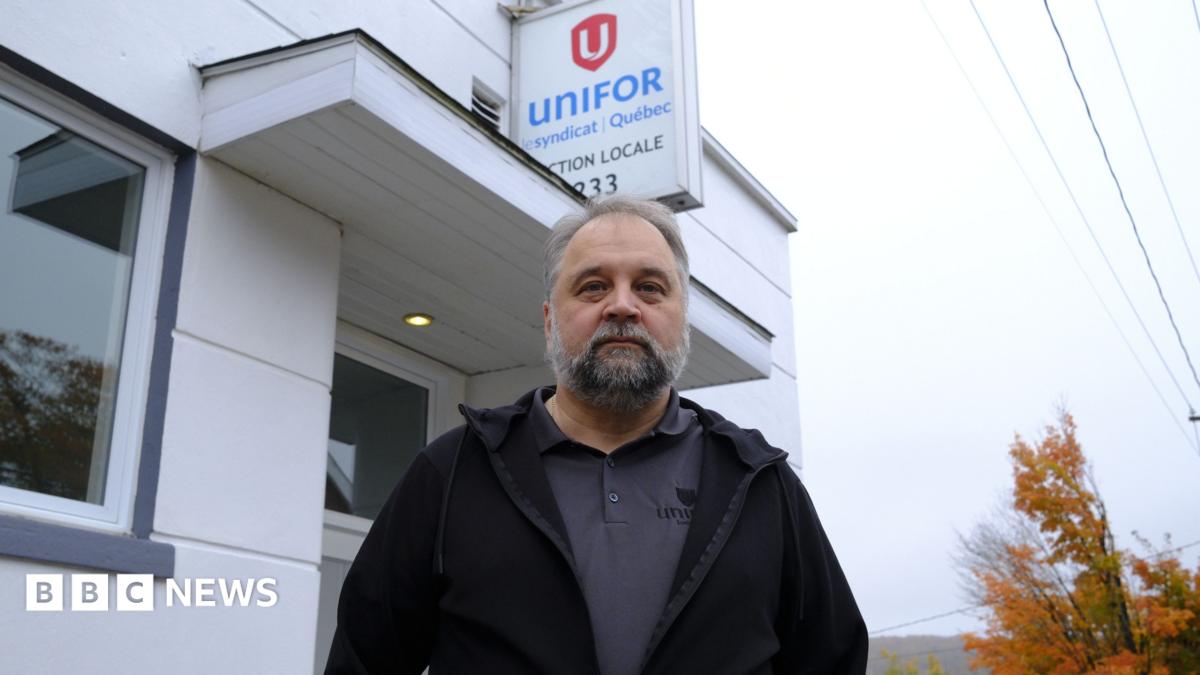
A century-old paper mill in Témiscaming, Quebec is indefinitely closed after the US imposed 50% tariffs on its products, putting hundreds out of work. #TradeWar #Tariffs #EconomicImpact
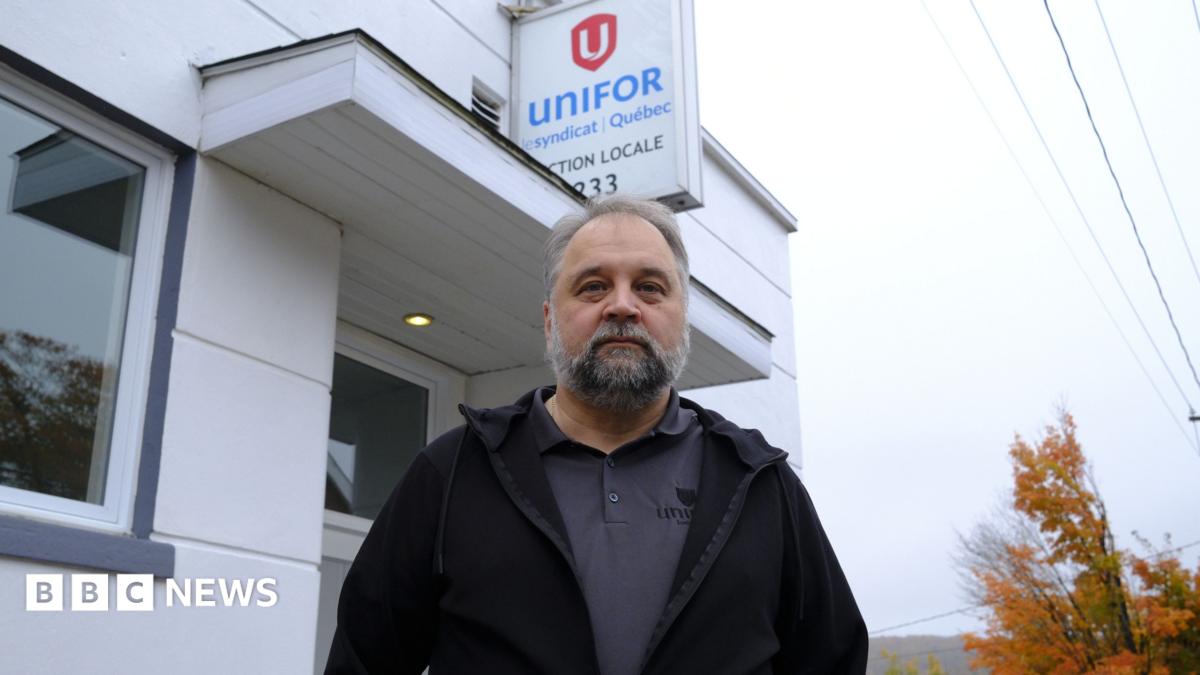
A century-old paper mill in Témiscaming, Quebec is indefinitely closed after the US imposed 50% tariffs on its products, putting hundreds out of work. #TradeWar #Tariffs #EconomicImpact

A century-old paper mill in Témiscaming, Quebec is indefinitely closed after the US imposed 50% tariffs on its products, putting hundreds out of work. #TradeWar #Tariffs #EconomicImpact

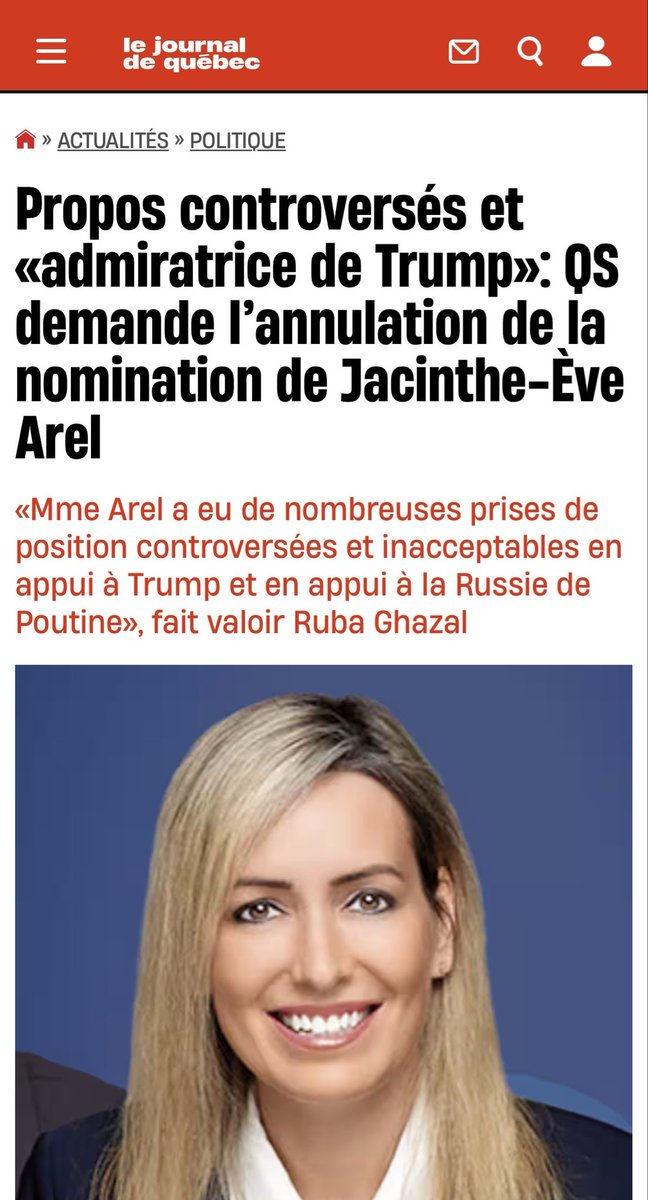
Mathieu Bock-Côté defended the arrival of Jacinthe-Ève Arel in the Parti québécois, arguing that her right-wing positions should not exclude her from the civic space. He recalled that she had sometimes seen qualities in Donald Trump, severely criticized health measures during the pandemic, and argued that there were only two sexes. Bock-Côté specified that he was not commenting on the merits of these opinions, but that they could be contested without justifying, in his view, Arel's exclusion. He accused members of Québec solidaire of demanding Arel's dismissal and wanting to ban her from political life. He also criticized some Péquistes who had relayed this indignation and claimed that Arel did not have a place in the PQ. According to him, the party was a coalition that could welcome social democrats, progressives, conservatives, and libertarians. Bock-Côté argued that the independence of Quebec was the common ground for Péquistes, despite their disagreements on the model of society. He believed that the sovereignist movement should also welcome people close to Éric Duhaime's ideas, and presented Arel's membership in the independence camp as a contribution to this cause. #Québec #Indépendance #Politique (translated)
Eric Duhaime commented on the appointment of Jacinthe-Ève Arel as chief of staff of the Parti québécois. He said he had known her as a conservative candidate in the 2022 elections and described her as brilliant and eloquent. He wished her success in her mandate related to government efficiency and regulatory easing, believing that Quebec needed to reduce the size of the state and advance conservative ideas. However, he felt that she was repeating the mistake made in 2018, when she ran for a coalition. According to him, the right was then used to display a diversity of opinions, while decisions remained on the left. He warned against the role of a facade right within the PQ, while expressing a desire to give the new government a chance and observe its measures to reduce the size and intervention of the state. Regarding Ruba Ghazal, who called for the departure of Jacinthe-Ève Arel, Duhaime argued that her act of waving a keffiyeh during her swearing-in at the National Assembly deprived her, in his view, of all legitimacy to criticize controversial remarks or actions. #Québec #Politique #Conservateur (translated)
Pascal Bérubé accused Éric Duhaime of misleading the public for several weeks regarding partisan appointments. He argued that hiring political staff in the government apparatus was necessarily political and that Duhaime had chosen conservatives for his riding office rather than Péquistes or people he did not know. Bérubé defined a partisan appointment as the allocation of state management positions unrelated to political decisions to individuals associated with the ruling party, rather than to the most capable candidates. He claimed that the Parti Québécois had committed not to proceed in this manner and accused Duhaime of spreading misinformation in order to gain a political advantage, which, according to him, undermined trust in institutions. #PolitiqueQuébécoise #Désinformation #NominationPartisane (translated)
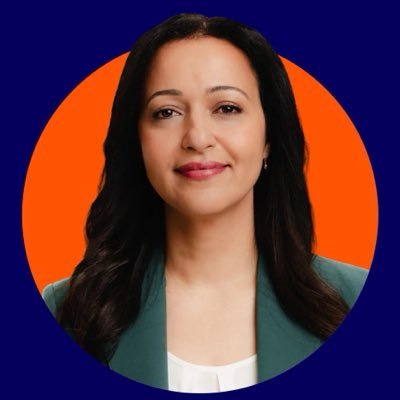
Ruba Ghazal said she received numerous messages from people who did not understand the appointment, within a Parti Québécois government, of a person who admires the American right. She wondered how Prime Minister Paul St-Pierre Plamondon, who had made promises about homelessness, could entrust a key position to someone she described as fiercely opposed to holding a national summit on the subject. She finally asked if the public should believe the words or the actions of the Prime Minister. #polqc #polqc #politique #itinérance (translated)
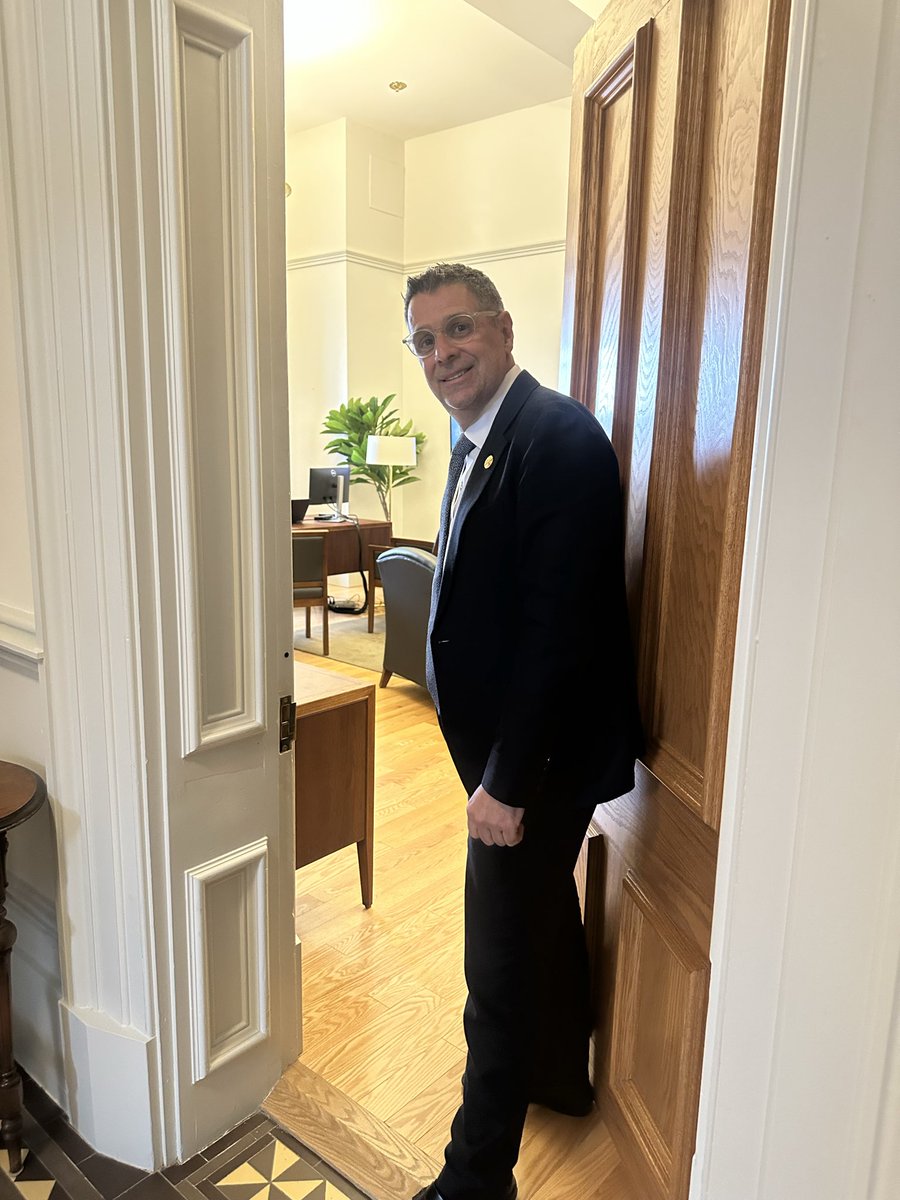
Eric Duhaime indicated that he had taken possession of his new office on the third floor of the National Assembly, as the second leader of the opposition. He wrote that the work serving Quebecers was beginning and presented the priorities of the Conservatives: to leave more money in the pockets of citizens, eliminate the waste of public funds, and improve access to healthcare. #Québec #Politique #Gouvernement (translated)
Sébastien Bovet wrote that Alex Boissonneault, former PQ MP, was becoming the director of communications for the government and spokesperson for the prime minister. He added that Boissonneault would sometimes speak on behalf of the prime minister on certain issues. #polqc #polcan https://t.co/gtaeQ749mq #politique #Québec #gouvernement (translated)
Annie Dufour believed that the reaction either revealed a lack of understanding of diplomacy or a desire to harm relations between Quebec and Ottawa in order to promote independence, at the risk of negative consequences for Quebecers. She added that this position would not be advantageous in either case and called for governing seriously rather than amateurishly or opportunistically. #Québec #Diplomatie #Politique (translated)
Charles Milliard criticized the Premier of Quebec for not participating in the Canada-EU summit organized in Quebec, even though he claimed to want to meet European leaders. He stated that a letter does not replace being present at the table and that diplomacy involves building relationships and defending one's interests, rather than sulking due to a lack of a microphone. According to him, Quebec's partners would be present, while the Premier would leave his chair empty. Milliard asserted that the absence amounted to a loss and condemned a lack of leadership. #PLQ #PolQc #AssNat #PolQc #AssNat #Diplomatie (translated)
Paul St-Pierre Plamondon said he took note of Mark Carney's offer to give him a seat at the VIP table as an observer, without the right to speak or a mandate to negotiate on behalf of Quebec. He described this proposal as a request made to Quebec to submit and renounce its role in defending the economic and political interests of Quebeckers, adding that he would refuse such a situation if he were prime minister. He condemned what he described as a strategy aimed at marginalizing Quebec internationally and subordinating its competencies to the decisions of the federal government. According to him, all party leaders in the National Assembly had stated the day before that they expected to speak and participate fully in a summit held in Quebec. He also said that the leader of the official opposition in Ottawa and that of the Bloc Québécois supported his request. Plamondon added that he had written to representatives of the European Union to remind them that agreements between Europe and Quebec had to go through the Quebec government, especially if a summit was held on its territory. He also mentioned the refusal to allow him to speak to welcome guests. He proposed a bilateral discussion and announced that he would send Quebec's chief diplomat, Pascal Paradis, to initiate the exchanges. #Québec #Politique #International (translated)
Equity, diversity, inclusion (EDI) in health research: a Quebec report from 12 interviews regarding 8 projects. A complete toolkit accompanies the report (p. 17-18). Three appendices present the instruments of the approach: an interview guide, a descriptive table, and an EDI analysis grid (p. 19-24). Equity, diversity, and inclusion in the scientific programming of the SSA Support Unit Québec. Bilkis Vissandjée, Laurie Martin, Romy Labranche, Télia Fénié - SSA Support Unit Québec - April 2026. Audio Capsules of Health Practices. Source analysis and link. For health, prevention, and medico-social stakeholders, this report offers benchmarks to strengthen inclusion in projects: involving the concerned persons from the design phase, recognizing their experiential knowledge, and making tools accessible to diverse audiences. It also highlights the necessary conditions for real participation: time, resources, support, and clearly defined roles. Its interview guide and analysis grid can feed a team reflection on practices and possible improvements. Originating from a Quebec research approach, these benchmarks need to be adapted to intervention contexts. #pratiquesensante #EquiteEnSante #EDI #PatientPartenaire #SystemeDeSanteApprenant #SavoirsExperientiels #CoConstruction #Québe (translated)

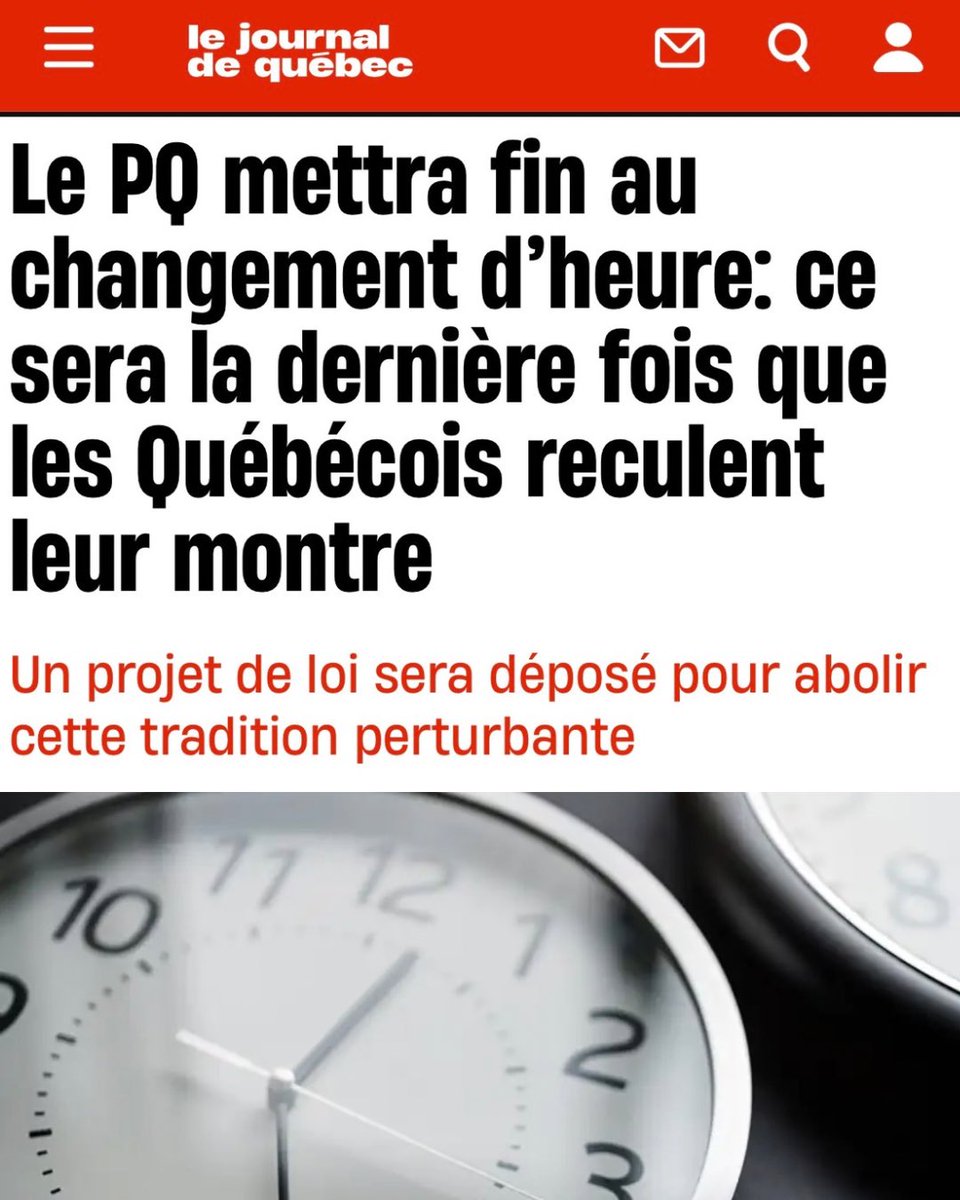
Paul St-Pierre Plamondon wrote that the time change on Saturday would probably be the last in Quebec. He indicated that the Parti Québécois had questioned this practice several times and claimed that studies deemed it harmful to health and difficult for children to cope with. He announced that consultations with specialists would begin in the coming months, as part of a short parliamentary committee, to assess the effects of the time change and determine whether it would be preferable to keep daylight saving time or standard time. He said that this year would likely be the last in which families would have to deal with the adaptation difficulties of children. #ChangementDheure #Québec #Santé (translated)
Paul St-Pierre Plamondon indicated that he met with Ruba Ghazal and Sol Zanetti from Québec solidaire after seeing Charles Milliard. He described the exchange as constructive and said they agreed to collaborate in the coming years on topics where their positions converged. He stated that he presented the intention of the Quebec government to act on the crises of homelessness and housing. According to him, the participants also identified convergences regarding general states on education, health prevention, and the cost of living. He added that the spokespersons of Québec solidaire had mentioned common priorities, including the independence of Quebec, electoral reform, relations with First Nations and Inuit, as well as the fight against climate change. #Québec #Solidarité #Politique (translated)
Mathieu Bock-Côté argued that the arrival of PSPP in power had plunged federalists into panic. According to him, they had tolerated Quebec nationalists who defended Quebec's identity without challenging the Canadian framework, but were now worried to see a leader who, for the first time in over 25 years since Jacques Parizeau, refused to conform to the rules of the system. He also noted that PSPP had not communicated his strategy to Ottawa in advance. Bock-Côté accused federalists of presenting the federal government as superior and responsible for important issues, while relegating Quebec to managing its local affairs. He defended the request of the Quebec Premier to represent Quebec at an international event held on its territory, reminding that, according to him, Quebec was the only French-speaking state in America and its national state. He stated that federalists had ridiculed this request and criticized PSPP for wanting to speak on behalf of Quebec. The author described several currents of federalism, including those he accused of despising Quebecers, Trudeau supporters who viewed independence as an ethnocentric retreat, and those he portrayed as satisfied with their submission. He also claimed that these attitudes had led some Quebecers to perceive themselves through the eyes of former conquerors. He cited Mark Carney, whom he accused of lacking respect for Quebec, and concluded that PSPP was not intimidated. #Québec #Souveraineté #PSPP (translated)
Paul St-Pierre Plamondon argued that the federal government had engaged in negotiations with the European Union directly affecting Quebec without consulting or giving it a place at the table. He said this approach contrasted with previous negotiations on the free trade area with the EU and reminded that Quebec had, in his view, played a pioneering role in supporting NAFTA. The leader of the Parti Québécois also reproached the federal government for wanting to impose economic decisions falling under Quebec’s jurisdiction, breaking with the Gérin-Lajoie doctrine. He condemned the fact that the Quebec premier was unable to speak at an event held in Quebec, and deemed insufficient the opportunity that may have been granted to him to influence Quebec interests by allowing cocktail shrimp service at a reception. Plamondon believed that this situation represented a lack of respect and a setback for Quebec's autonomy. He described the vision of Canada defended by Mark Carney as centralizing, even unitarian, and claimed it reduced the provinces to a role of observers in discussions affecting their interests and responsibilities. He recalled that Pierre Falardeau denounced, in "Le Temps des bouffons", the subordinate place of Quebecers in relation to financial elites, and mentioned the struggle for Quebec to decide its own development, notably under Jean Lesage, René Lévesque, Jacques Parizeau, and Bernard Landry. He concluded that Quebec must participate in decisions that defended its interests. #Québec #Autonomie #Démocratie (translated)
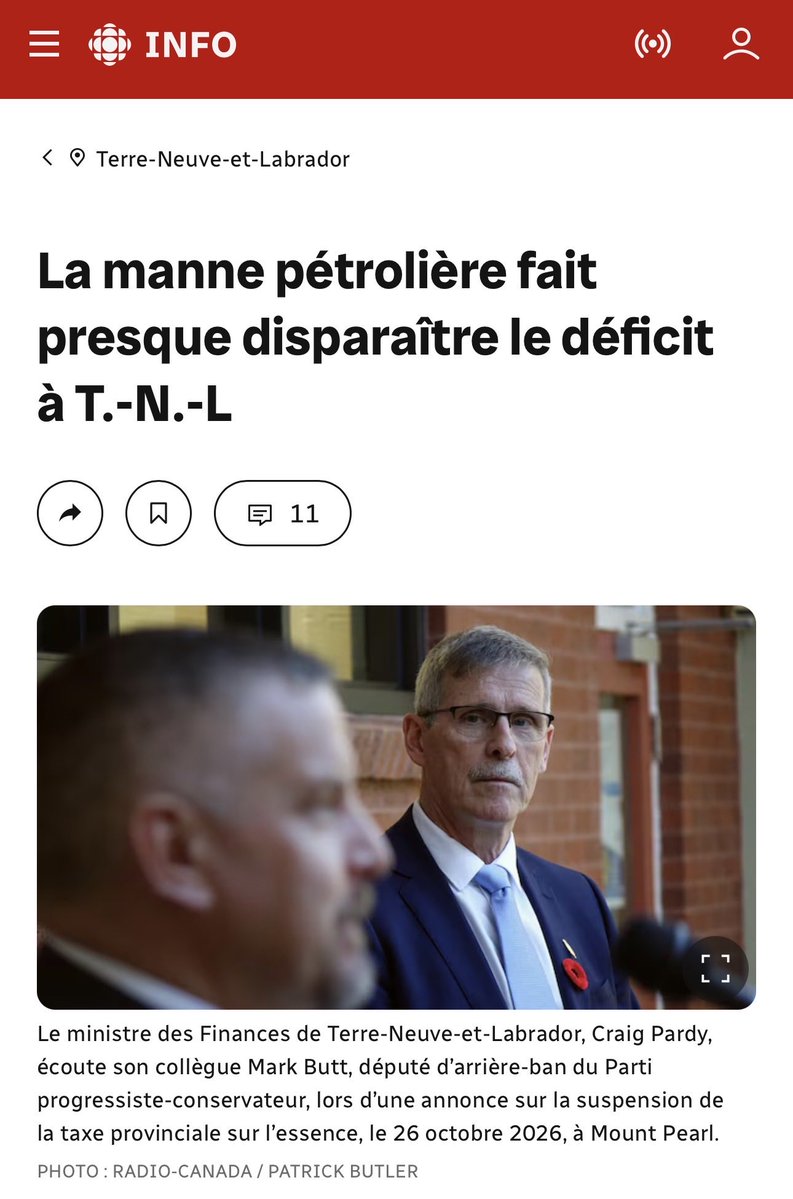
Eric Duhaime stated that the Conservative government of Newfoundland had erased the province's deficit by exploring its hydrocarbons and that it would suspend the provincial gasoline tax starting December 1st. He noted that this tax was 19.2 cents per liter in Quebec, where, according to him, drivers paid more in gasoline taxes than almost anywhere else in America. He also criticized the Quebec government for banning the responsible exploitation of the province's natural gas reserves. According to him, sovereignty was more about energy and economic independence than a referendum that he deemed destined to fail. He expressed hope that Quebec conservatives would make this argument to the Péquistes in the coming months. #Énergie #Économie #GazNaturel (translated)
Quebec separatists are demanding a greater say in negotiations with the European Union, emphasizing their need to be present in decisions regarding resource issues. #Quebec #EuroopaLiit #maavarad (translated)

In Laval, 13 vulnerable individuals and 14 practitioners describe the obstacles to accessing comprehensive sexual health services. Suggestions for action: reach out, support, make reception more flexible, and better promote resources. Towards the development of comprehensive sexual health services in Laval: analysis of the needs of vulnerable populations Sophie Gilbert and Sylvie Lévesque (researchers, UQAM), Sophia Grouev and Kasandra Beaulieu (research assistants, UQAM). Co-researchers from practice settings: Maude St-Germain and Justine Gendron (Sphere – Comprehensive Sexual Health), Danielle Fournier (Laval Women's Condition Roundtable) Audio Capsules on Health Practices Analysis of Health Practices and link to the source This report helps adapt practices to people that sexual health services find difficult to reach. Based on testimonies from the individuals concerned and practitioners, it sheds light on the barriers to accessing care: shame, distrust, isolation, daily constraints, or inappropriate access criteria. It offers concrete suggestions for reaching out to the public, building trust, supporting efforts, and improving partnerships. Founded on the context of Laval, Quebec, it can stimulate team reflection on accessibility and continuity of support, taking into account local resources and realities. Towards the development of global sexual health services in Laval: analysis of the needs of vulnerable populations. #️⃣ #pratiquesensante #ComprehensiveSexualHealth #ReachOut #Intersectionality #SocialHealthInequalities #PartnershipResearch #AccessToCare #VulnerablePopulations #pratiquesensante #SantéSexuelleGlobale #AllerVers #Intersectionnalité #InégalitésSocialesDeSanté #RecherchePartenariale #AccèsAuxSoins #PopulationsVulnérabilisées (translated)

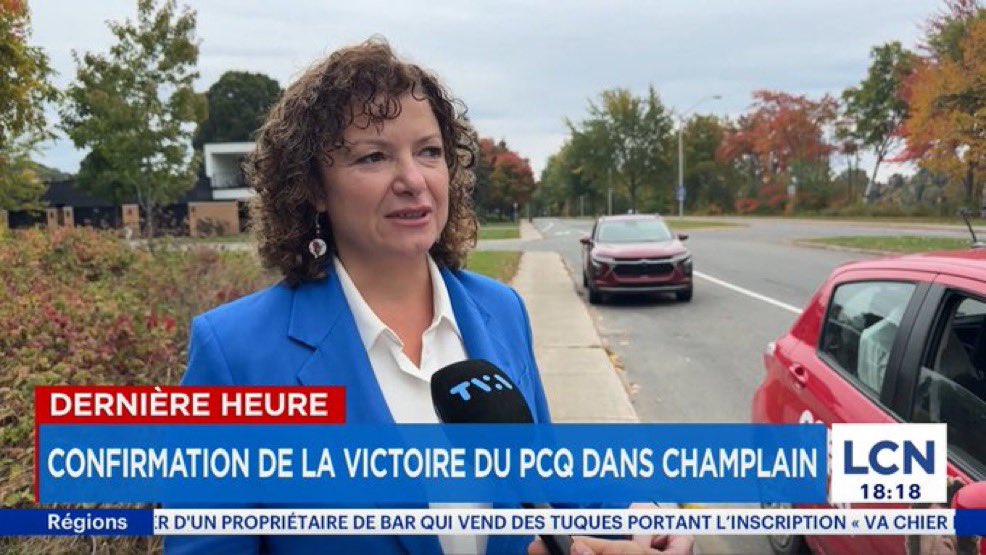
Jim Légaré indicated that the confirmation was now made and that Adriana was and would remain the 19th member of the Conservative Party of Quebec. https://t.co/4HPmaRh1nt #QCPolitique #PartiConservateur #Députée (translated)