WRLD

Search

#scelta
Cristiano Lucarelli 15h
Italian footballer (born 1975)

Cristiano Lucarelli confirmed this after the match, explaining the reasons for the decision to give him playing time: “He is a boy with extraordinary generosity. Next week he will have to stop for a chemotherapy session, but today it seemed right to give him this opportunity. He was physically well and, above all, a field like this could give him a breath of fresh air." #Livorno #Tumore #Chemioterapia (translated)
1916
Donald J. Trump 2d
President of the United States (2017–2021; since 2025)

Alaska voters have finally rejected the latest attempt to abolish the state’s open primary system and ranked choice voting, which has been heavily criticized by Trump. #JonathanKreissTomkins #ElezioniAlaska #TsunamiBlu (translated)

2963
Uccellino Milan 2d

Milan's little bird had written that, within the span of ten hours, the sports director who had responded to the person he accused of sabotage and especially the owner of the latter had launched attacks against her, confirming, according to him, what he had claimed earlier. He had added that some had defended the decision to go to Perth during the season. #calcio #sport #controversia (translated)

2624

Piercamillo Falasca reported having read that, according to Dario Nardella, Kaja Kallas would not have been a suitable choice as the EU negotiator with Russia, because her Baltic origins would provoke Putin. Falasca recalled that Kallas was born a Soviet citizen in 1977 and acquired Estonian citizenship after the country's independence, a circumstance that, in his opinion, would annoy the Russian president because he would have to negotiate with a former subject. He argued that, as Vice-President of the European Commission and High Representative for Foreign Affairs, Kallas was the most institutionally suitable person to represent the EU. Falasca added that allowing Putin's historical-psychological obsessions to guide European choices would mean legitimizing them, and he defined this as the mistake made for years by the Italian left regarding Russia, regardless of Nardella's good faith. #UE #Russia #Politica (translated)

3189
Il Fatto Quotidiano 2d

Davide Cortese, a 36-year-old doctor originally from Cagliari, describes his choice to move to Strasbourg not as an escape, but as an opportunity for professional and personal growth, emphasizing the importance of institutional support and a work culture that is more serene compared to the Italian one. #CervelliInFuga #MediciInFrancia #Erasmus (translated)

www.ilfattoquotidiano.it
Medico in Francia. “Qui ti fanno crescere davvero, si lavora con serenità. Per me vivere in Italia non è più possibile”
2665
L
lastampa.it 2d

The president of the Senate, Ignazio La Russa, has sparked controversy by discussing fascism as a popular choice, citing a biblical example to support his position on the will of the people and democracy. #Fascismo #VolontàPopolare #Democrazia (translated)

www.lastampa.it
“Il fascismo scelto dal popolo”: le parole di La Russa agli studenti fanno discutere
2563
Double 3d

Duca reiterated that not supporting the national team was a legitimate choice. He instead defined it as a serious stupidity to celebrate a victory for Italy because a player from one's own team had not been called up, using an insult related to intellectual disability to describe those who did so. #Italia #calcetto #sport (translated)

3017
Il Sole 24 ORE 3d

The article analyzes how for young workers under 30, the choice between a 1% or 5% tax on contractual increases is not always clear, highlighting that the lower option can lead to a higher effective tax due to the retention of deductions and bonuses. #CongressoSIN #FiscaleGiovani #ScontiFiscali (translated)

www.ilsole24ore.com
Giovani, la flat tax sugli aumenti non è sempre la scelta migliore: ecco quando conviene rinunciare
2905
Giorgia Meloni 4d
Prime Minister of Italy since 2022

"I'm sorry that they are considered South American measures; I don't think they are. Clearly, I would have been happier to achieve the same result with an agreement, as has happened in past years. Let's try to help each other, and that is the choice the government has made. I consider it a choice of justice." #FNM #GiorgiaMeloni #Cyberattacchi (translated)

3028
ANSA.it 4d

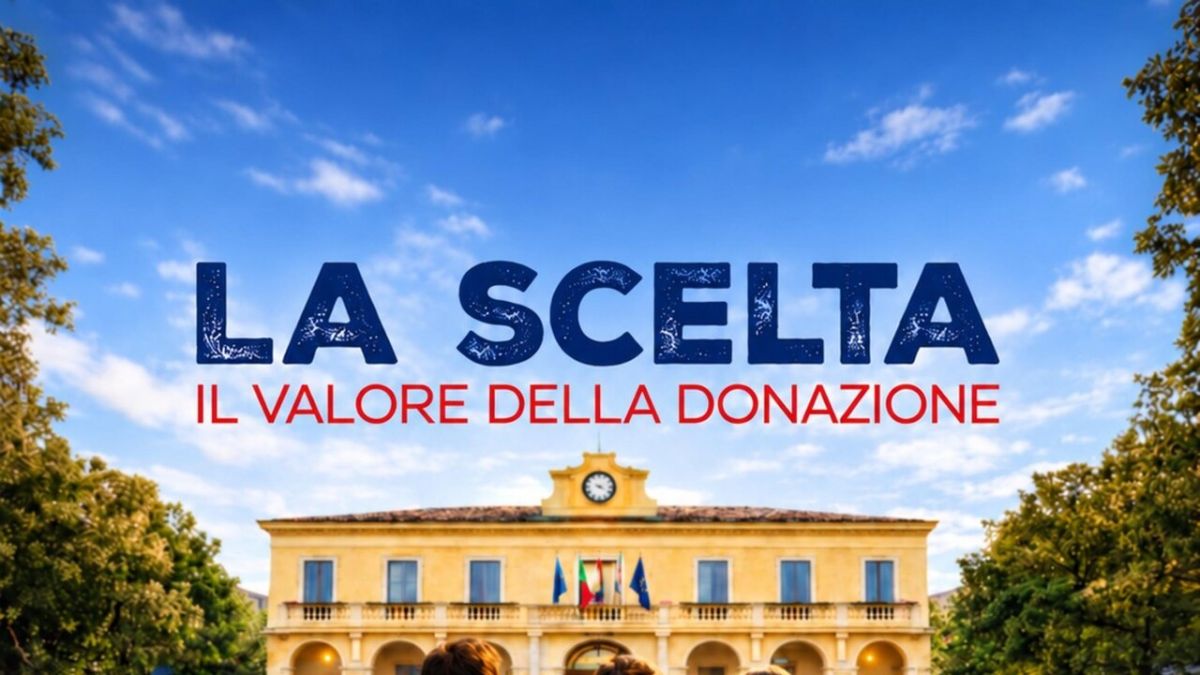
A docufilm titled The Choice. The Value of Donation, created by 750 students from 14 high schools, explores the theme of organ donation through the comparison between young people, experts, and transplant recipients, with the aim of raising awareness and informing about the culture of donation. #DonazioneOrgani #GiovaniInformer #CulturaScientifica (translated)

www.ansa.it
Donazione di organi, le domande di 750 studenti diventano un docufilm
3255
Luciano Magaldi Sardella (PhD) 4d

"VIVERE CERIGNOLA": FROM THE FIELDS OF CAPITANATA TO THE UNITED NATIONS: THIS IS HOW THE MURALS OF STORNARA CHALLENGE THE WORLD’S CAPITALS SOURCE: https://www.viverecerignola.it/2026/11/12/dai-campi-della-capitanata-alle-nazioni-unite-cos-i-murales-di-stornara-sfidano-le-capitali-mondiali/207189/ STORNARA (FG) - The UN agency for Intellectual Property includes the Foggia village among the most attractive global hubs for urban art. Thanks to a grassroots festival that managed to turn around the fate of a small agricultural center. Neither the skyscrapers of New York nor the grand boulevards of Paris are needed to become a global reference point for contemporary culture. Sometimes, all it takes are the plastered facades of a village of six thousand souls, surrounded by the wheat fields of the province of Foggia, and the tenacity of a community that decides not to succumb to marginality. This is the story told in Geneva by the World Intellectual Property Organization (WIPO), which in its latest report on creative industries has spotlighted the artistic miracle of Stornara. ------------------------------------------------------------------- An Italian exception among metropolises The document, titled From Local Scenes to Global Recognition: Talent Mobility in Street Art, examines the global geography of murals, analyzing over 74,000 works mapped on a planetary scale. The goal of the economists behind the study - Egbert Amoncio, Alexander Cuntz, and Alessio Muscarnera - was to understand where international artists are active and which places can attract talent from abroad. In the map of cultural "magnets," giants like Los Angeles, Berlin, London, Barcelona, and Melbourne appear. Yet, amid these major capitals, the virtuous anomaly of Stornara stands out: a rural center that, thanks to the power of ideas, has managed to enter the select global elite of public art. -------------------------------------------------------------------- The winning bet of Stornara Life APS It all began in 2017, when the Stornara Life APS association, driven by Lino Lombardi and the "Whistleblowers' Band," launched Stramurales. The aim was not only aesthetic but deeply social: to counter economic decline and cultural isolation through shared beauty. In less than a decade, the village has transformed into an open-air gallery with over 173 wall works, including about fifty creations by international masters in the field. An open-air laboratory whose social impact has already been certified in the international academic realm, thanks to a study published in the "Harvard Health and Human Rights Journal" by researchers from Apulia, Luciano Magaldi Sardella and Matteo Mantuano, who analyzed urban art as a genuine infrastructure for public well-being. -------------------------------------------------------------------- The value of the human scale What impresses UN analysts is the proportional impact of the project. Relating the number of foreign works to the population, Stornara achieves an inconceivable per capita artistic concentration for any metropolis. Here, art is not confined to a peripheral neighborhood but inhabits every street and accompanies residents' daily actions. The WIPO report finally indicates the secret formula that makes this model replicable elsewhere: authenticity. Unlike top-down regeneration operations, often viewed with suspicion by the artists themselves, in Stornara, it is the residents who donate the walls of their homes, welcoming muralists into week-long artist residencies and participating in the selection of themes. A lesson in civic participation that demonstrates how even small villages in the South can speak to the world without losing their soul. (translated)

449
Il Messaggero 4d

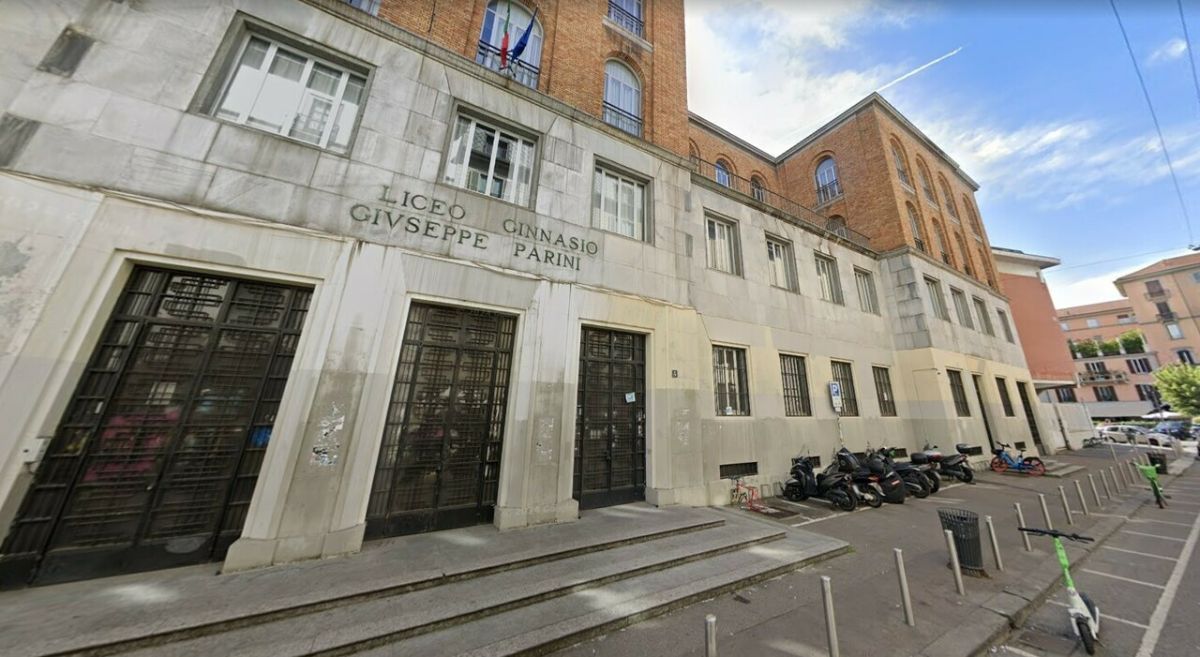
The principal of the Parini high school in Milan decided not to evacuate the students due to a false bomb threat, considering the email suspicious and even comical, in line with the choice of many colleagues across Italy. #AllarmeBomba #Scuola #Milano (translated)

www.ilmessaggero.it
Allarmi bomba, il preside del liceo Parini di Milano sceglie di non evacuare gli studenti: «Mail comica, sembrava la citazione di un film»
2702
Daniele Capezzone 5d
Italian politician

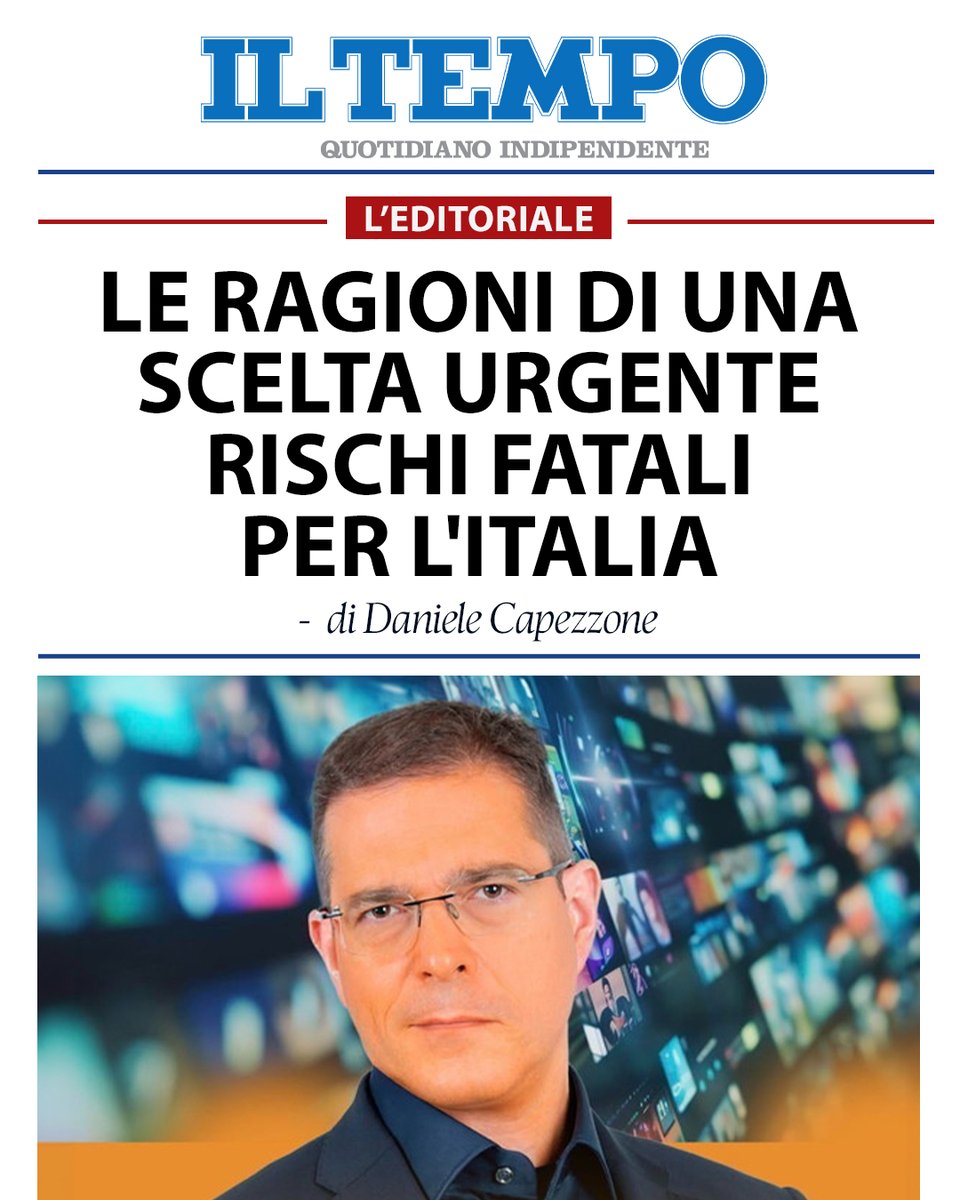
The author had argued that banning the Muslim Brotherhood was an urgent choice and had described the situation as a fatal risk for Italy. He had added that the country could be in more danger than imagined and had termed the ongoing hacker attacks as a test. https://t.co/tKJq4y7LMf #Italia #Sicurezza #FratelliMusulmani #IT (translated)

2933
Stefano Fassina 5d
Italian politician

The author argued that the sending of arms to Ukraine was now treated as a necessary administrative act rather than a political choice, describing the situation as a moral abyss. He also stated that the interministerial decree was classified and presented only to Copasir, without being subject to review or approval. https://t.co/ChIkPK4otn #Ucraina #guerra #politica #UA (translated)

3384
Il Fatto Quotidiano 5d

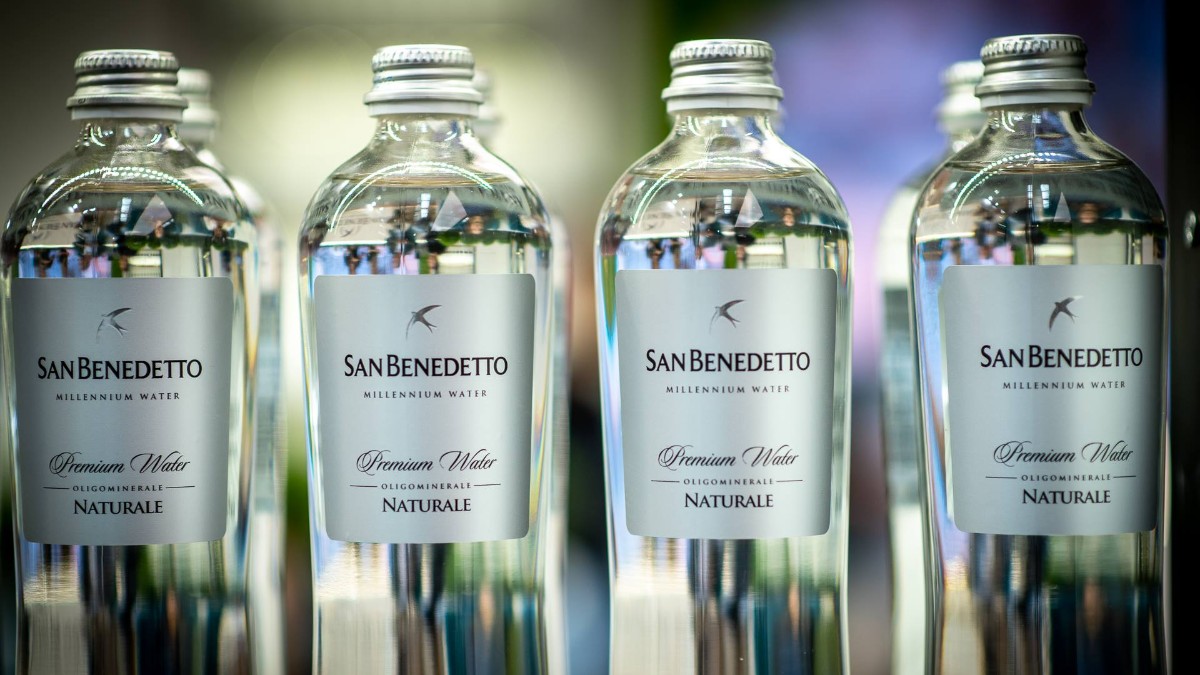
San Benedetto has announced 120 layoffs, attributing the choice to factors such as the increase in energy costs and raw materials, as well as the postponement of the plastic and sugar tax, raising concerns among unions that report the absence of justifiable economic difficulties for such a decision. #licenziamenti #plastictax #sugartax (translated)

www.ilfattoquotidiano.it
San Benedetto annuncia 120 licenziamenti e dà la colpa anche a plastic e sugar tax (che la manovra rinvia per la nona volta)
2373
Giorgia Meloni 6d
Prime Minister of Italy since 2022

The author of the post argued that the bill decree intervened on the mechanism which, according to him, excessively increased the price of electricity due to the cost of gas. He described the measure as a concrete and courageous choice to tackle a problem that had remained unresolved for too long. https://t.co/lx93Oio3io #Energia #Politica #Bollette #IT (translated)

2939
Giorgia Meloni 6d
Prime Minister of Italy since 2022

The third choice, adds Meloni, is "to protect savings destined for consumers. In the decree, we set strict limits on the transfer of costs: those who are called to finance the mechanism cannot pass them on to bills, beyond what is expressly allowed by the law. The measure will last eighteen months and provides for a gradual exit, to avoid abrupt changes at the deadline." #EnergiaRinnovabile #CaroEnergia #GiorgiaMeloni (translated)

3740
Nicola Porro 7d
Italian journalist (1969-)

The author of the post reported that Recalcati, in Repubblica, had explained the protests of young people with the belief that no political choice could improve their lives. According to the author, that expectation had been passed down to them by their parents from the '68 generation. He also argued that politics did not improve life, but rather worsened it, and quoted a phrase by Reagan about the State, without completing it. #politica #giovani #protesta #IT (translated)

3175
Pino Rotta 1w

Coordinated solitude, author Claudio Aloisio Written by Pino Rotta, November 8, 2026 Claudio Aloisio is a communication and marketing professional, a field in which he has worked for many years. When his first essay "Coordinated Solitude" (Ed. Ideacoop Media Service, 2026) was released, sharing the same field of activity and interests (albeit with different directions and experiences), I found it interesting to read it, especially since we share the same city but have not met, which was already a good reason to find the essay interesting and its title stimulating. "Coordinated solitude" is an essay that analyzes, with a wealth of documentation and bibliography, the phenomena of the formation of convergences or exclusions among groups and individuals through the study of media languages and, in particular, those of the digital domain. A field that has already been widely investigated for several years. My first approach to these new linguistic proposals dates back, among other readings, to a 1994 essay "Collective Intelligence" by Pierre Levy. In that essay, Levy, at the dawn of the web era, launched the idea that the network, which collected the contributions of millions of users, contained them all without controlling their paths, interactions, or effects. Stimulating concepts that today help us understand how much conflict can arise between theory and its application considering time and technological development. However, Aloisio surprises the reader with suggestions from the very first pages of the essay. In fact, despite addressing the analysis of digital languages with an epistemological line rooted in Anglo-Saxon studies, particularly American ones, from the outset the author seems to suggest that this is not a “technical” essay but is entirely political in the higher sense of the term. The first reference is found in the citation of an author who was among the fathers of European sociology in the early years of the last century: Emile Durkheim, one of the first sociologists and philosophers who analyzed social phenomena with enormous meticulousness and rigor, linking religion with social structure. This opening will be found in the subsequent pages of "Coordinated Solitude," but it will not be the only surprise in Aloisio's analytical developments. In the essay, the author describes how people who may share spaces, interests, and common values, by finding them in the digital world, can at a certain point recognize themselves in different affiliations and even come to see in others a “us” that makes them akin to their own story or a “them” that indicates a distance, exclusion, and even a threat in relation to it. The causes of these dynamics are very well structured in the essay, as is the well-structured context in which individual stories are born, meet, and ultimately find different outcomes. Outcomes that can lead to reinforcing one's affiliations, which, however, are discovered at the end of the interaction process and that, throughout the journey, rarely reach a state of awareness. Outcomes that are influenced by pre-existing value structures that do not necessarily coincide with those of the members of the groups with which one identifies or clashes. This path is analyzed by Aloisio by considering the social dynamics of the West, examining and contrasting similar but not necessarily overlapping social realities, such as American and Italian society. In the identification processes that coexist in these social realities, the belonging to social class, religious group, ethnicity, sexual orientation, and sense of nation enters strongly. Everyone has their own experiences, but at the end of a journey of interaction, now almost exclusively digital, one finds oneself sharing a sense of belonging with other multitudes of people who have completely different experiences. And in this sense of belonging, fears of the future, frustrations of the past and present are downloaded, and one is enveloped by fears and anger that must find an enemy to blame. An enemy that is often suggested by the discovery of affinities among the groups that are created, much more often than not created, on digital platforms. Addressing the current nature of the algorithms governed by Artificial Intelligence, the author suggests the method through which these affiliations arise, which can be irrational but are entirely real and influence individual and social daily life. The individual in the digital dimension, which becomes the everyday reality of social action, is called to take responsibility for maintaining their conviction and belonging or risk feeling excluded, isolated, alone. The weight of a choice that often becomes distressing and paralyzing. But how is it possible to read and interpret these “Coordinated Solitudes”? Aloisio's essay provides a reading and suggests a methodology to identify the path that sometimes, but not always, leads to the awareness of how certain choices are made and what elements need to be questioned to verify if the reading of these languages withstands the law of contradiction and thus can be used to ascribe scientific value to it. But at the end of this journey of understanding languages, forms of aggregation, and the proof of the compatibility of individual choices, Aloisio presents us with another surprise that speaks volumes about his educational journey. The discourse of education and the reading of digital languages is ultimately a discourse on democracy, on social structure, and these factors cannot be disregarded without risking losing the ability to give meaning to one’s social action as well as one’s communicative action. It is my view that the surprise that is the coherence of the entire analysis of the essay comes with the reference that the author makes at the end to the work of Jürgen Habermas. The most important philosopher, sociologist of language, heir of the Frankfurt School who passed away at the age of 97 in March 2026, is the foremost interpreter of the theory of democracy and of the criticism of oppressive authority, which does not exclude conflict but determines its progressive outcome through the mediation of communicative action. Communicative action that questions institutions not to destroy them but to avoid remaining subjected to authoritarianism and, in the form of linguistic mediation, to be active subjects, not subdued by a system that, due to the nature of formal institutions, can always degenerate into authoritarianism. Coordinated solitudes thus find themselves with a positive perspective, with outcomes that are never guaranteed or predetermined, but feasible for reconstructing trust in the future realized through the recognition of the other as part of a common living and not as a threat to be feared, excluded, or even suppressed. Lastly, it should be noted that, although not explicitly considered, Aloisio does not prioritize simplification in the reading of contexts, evading complexity as a fundamental element of contemporary society's reality (perhaps it would have been useful to refer to Edgard Morin's theories), but it is evident that complexity must be confronted with different analytical methodologies and that the appeal to the work of Zygmunt Bauman leads us to presume this. https://www.heliosmag.it/?p=1659 (translated)

796
Michele De Pascale 1w

"Finally," comments the president of Emilia-Romagna Michele de Pascale (Pd), who also points out another deadline: "In February, we will have the choice of the figure, the personality that the center-left will propose for the leadership of the government." #CampoLargo #Governo #PoliticaItalia (translated)

3076