WRLD

Search

#scholars
João Pedro de Magalhães 3d

The post said applications were open to UK and international students, and that the University of Birmingham was waiving international fees. It added that international students would still need to pay about £3,500 for visa and healthcare costs, and shared a link for eligibility details and applications. https://t.co/XJXneD7cFk #InternationalStudents #Scholarships #StudyInUK #UK
2915
Dr Abeba Birhane 2w

"Releasing over 700 files at once is not a demonstration of scholarship, but a demonstration of power. We urge mathematicians to discontinue their work with OpenAI and to return to a vision of science that centers human understanding." www.ahmath.org/statements

2288
Joel S. 2w

Scholars debate exactly how good conditions were for religious minorities in Islamic Al-Andalus, but everyone agrees it was better for Jews than Christian rule. It takes some chutzpah for a Catholic priest to go to Jerusalem and say this, given what happened to the Jews when Catholics took Spain.

1954
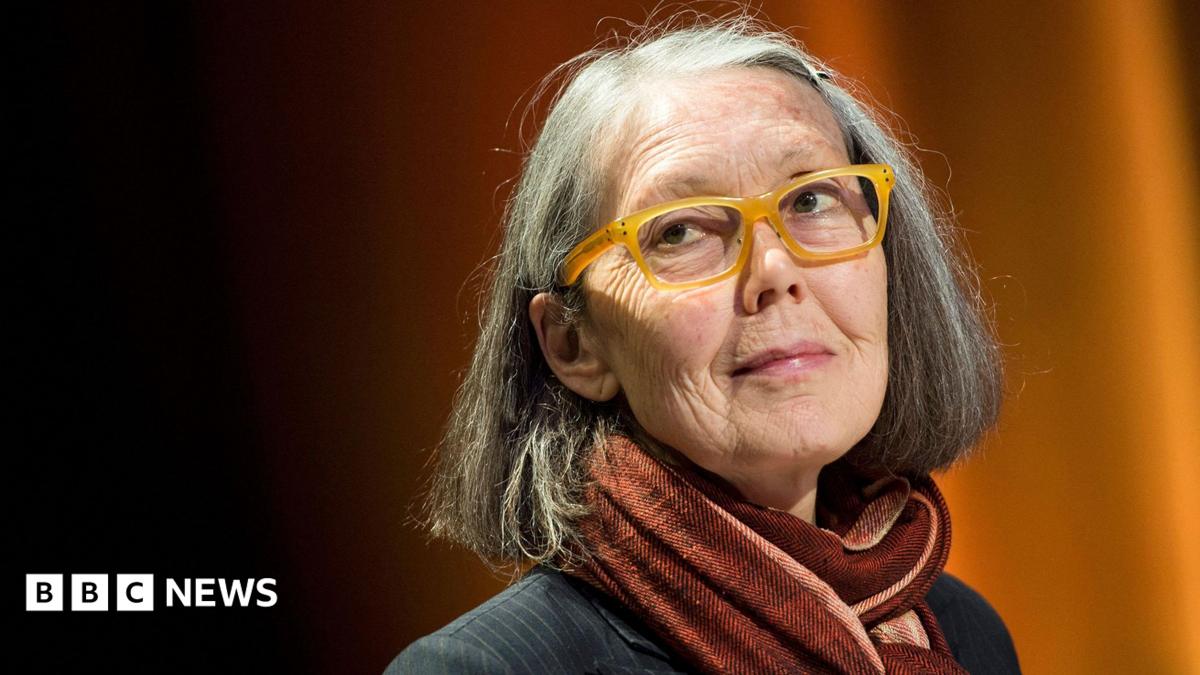
BBC 3w

Carson, 76, is celebrated for works that often cross boundaries between poetry, fiction and scholarship. #AnneCarson #NobelPrize #ContemporaryLiterature

www.bbc.co.uk
'Bold and inventive' Canadian poet Anne Carson wins Nobel Literature Prize
3462
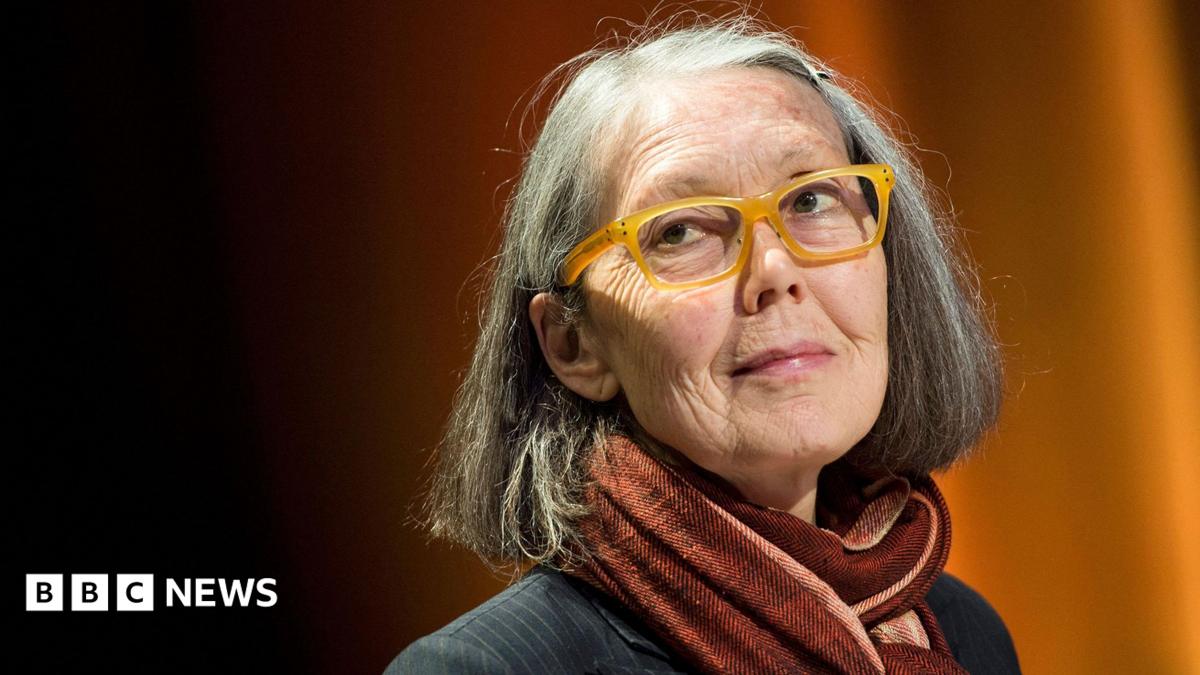
BBC 3w

Carson, 76, is celebrated for works that often cross boundaries between poetry, fiction and scholarship. #NobelPrize #Literature #AnneCarson

www.bbc.co.uk
'Bold and inventive' Canadian poet Anne Carson wins Nobel Literature Prize
3463
Luciano Magaldi Sardella (PhD) Sep 19

"PUGLIA IN": FROM SAN SEVERO TO STANFORD UNIVERSITY: THE 'SIX-SEAT REVOLUTION' OF TEATRO EDICOLA SOURCE: https://www.pugliain.net/301723-san-severo-teatro-edicola/ SAN SEVERO (FG) - The "Stanford Social Innovation Review (SSIR)", the scholarly quarterly published by the "Stanford Center on Philanthropy and Civil Society" at the prestigious Stanford University — ranked second in the world in the Shanghai Ranking of World Universities — and universally regarded as the pre-eminent global point of reference for scholars, policy-makers and practitioners in the fields of innovative enterprise and philanthropy, hath published the reportage “The Six-Seat Revolution” concerning the Teatro Edicola of San Severo, the smallest theatre in the world, born of the intuition of Francesco Gravino, Artistic Director of the Foyer ’97 company. Its author is Luciano Magaldi Sardella, independent researcher and international journalist, a native of Orta Nova with maternal lineage rooted in San Severo, and erstwhile contributor of studies published in international academic journals. The piece appeared in the Septembertide (Fall 2026) edition of the academic review, within the section consecrated to Arts and Culture. A presence which projecteth San Severo, and more broadly the entirety of Capitanata, into the international élite of research on cultural and urban innovation. The theatre is born from a disused newsstand It all commenceth upon 27 March 2026, World Theatre Day, in the Piazza Municipio at San Severo. A newsstand long disused in Via Matteo Tondi raiseth its shutter to reveal, in lieu of newspapers and cigarettes, an actor upon the stage. Within: six chairs. At intervals of fifteen minutes, a new audience taketh its place. Drawing inspiration from the televisual format of "Edicola Fiore" of the celebrated Sicilian radio and television presenter, there was born Teatro Edicola, a structure now recognised in the media as the smallest theatre in the world by both dimension and capacity: four square metres in total, with a scenic space of less than two metres. Gravino hath led Foyer ’97 for nigh on thirty years, forging an exacting artistic trajectory in a context — that of Southern Italy — historically penalised with respect to public funding for culture. And yet, when he beheld that vacant kiosk, he chose the path of provocation: to transmute the bare minimum into a manifesto concerning the very signification of theatre. The model and its measurable effects The inaugural season endured for three days. All performances were sold out. In a single afternoon, upwards of sixty persons attended the representations. The cost of the entire pilot operation was less than three thousand dollars. The formula is radical in its constitutive elements: performances of five to twelve minutes' duration, conceived expressly for the space rotation of the audience every fifteen minutes direct and ineluctable visual contact betwixt actor and spectator no architectural or psychological distance betwixt stage and stalls ticket proffered at five euros per person, with a hybrid economic model envisaging municipal support, local sponsors and box-office receipts According to the analysis published in the "Stanford Social Innovation Review", Teatro Edicola representeth a replicable paradigm of low-cost, high-impact urban regeneration, capable of reactivating abandoned commercial spaces — newsstands, tobacconists, telephone kiosks — without the necessity of substantial infrastructural investment. The voice of him who built it all Francesco Gravino entertaineth no doubt as to the significance of the undertaking: “One doth not require grand theatres to transform a portion of a city. One requireth a sound idea and the courage to restore to the collectivity a space that hath lost its function.” And concerning the import of international recognition: “Teatro Edicola was born to demonstrate that a locus of encounter and culture may arise wheresoever, even within two square metres. That today this labour should be studied at an international level and that enquiries should arrive from cities such as Lucca and Rome is confirmation that the path is the right one.” The director hath also explicated the symbolic choice of place: the newsstand was the point at which, each morn, one paused, one apprised oneself, one recognised oneself as a community. Its disappearance lacerated a precise social fabric. To restore unto it a cultural function signifieth to re-stitch that fabric from the very point at which it was rent. Challenges: scalability, institutional recognition, rootedness The SSIR reportage doth not merely celebrate the project but analyseth also its critical nodes. The first is sustainability over time: an activation of three days, howsoever successful, doth not yet constitute a stable programme, a veritable seasonal programmation (weekends from springtide to autumn) with a rotating roster of local and regional companies. The second node concerneth replicability without loss of identity: Teatro Edicola functioneth also by virtue of the profound roots of Foyer ’97 within the San Severo territory. To transplant the model elsewhere requireth not merely a physical kit, but an entire process of community building. The third obstacle is institutional: in a system of public funding which rewardeth organisations possessed of consolidated premises and predictable output metrics, a project deliberately experimental, hyper-localist and by its very nature impermanent struggleth to gain access to the ordinary channels of the Fondo Nazionale per lo Spettacolo dal Vivo (FNSV) of the Ministry of Culture. A lesson which travelled beyond Puglia In the Stanford Social Innovation Review the author concludeth that the intuitions of Teatro Edicola transcend the San Severo context: in any community wherein cultural institutions struggle to reach youthful, diverse, or economically marginal publics, the principle of proximity proveth disruptive: to meet people where they already are, in the spaces they inhabit quotidianly. From the populous centre of Daunia to the pages of Stanford University: San Severo and its diminutive kiosk demonstrate that six chairs, four square metres, and a vision sufficeth to alter the manner in which a city conceiveth itself. And to proffer unto the world a model which costeth less than one might suppose yet is worth far more than one might imagine.

www.pugliain.net
Da San Severo alla Stanford University: la “Rivoluzione a Sei Posti” del Teatro Edicola
935
S
Sandfeen Sep 12

The Erosion of Truth in Feminized Institutions Human beings developed the scientific process to observe reality and uncover fundamental truths about the universe. However, the increasing feminization of academia has, in some cases, shifted its priorities, with social equity taking precedence over truth. A study titled *“Taboos and Self-Censorship Among U.S. Psychology Professors”* asked professors whether they prioritized scientific truth or social equity when the two appeared to conflict. According to the study, 66.4% of male professors chose truth, compared with 43% of female professors—a 23.4-point gap. This suggests that some individuals are willing to set aside truth in favor of ideology. The study also found that professors feared social sanctions for expressing their empirical beliefs, while younger, more left-leaning, and female faculty members were more likely to oppose controversial scholarship. Psychology faculty are reportedly 56% women and 44% men. Based on the study’s figures, approximately 53.3% of professors would rank truth first. Women account for roughly 71–75% of newly awarded psychology doctorates. If the field reaches 73% women, only about 49.3% of psychologists would rank truth first. The broader implications are significant. As academic institutions increasingly prioritize diversity, equity, and inclusion, research and data may be ignored when they conflict with political goals. Science influences education, medicine, human resources, therapy, the media, and nearly every other field concerned with human behavior. These studies shape legislation, psychological diagnoses, corporate policies, pharmaceutical prescriptions, and popular advice. Truth is not necessarily losing to lies. Rather, as institutions become increasingly feminized, they may gradually stop valuing truth itself.

469
S
Sandfeen Sep 12

The Value of Truth in Science Humanity developed the scientific process to observe the universe and uncover its fundamental truths. However, the increasing feminization of academia has, in some fields, shifted emphasis from truth toward social equity. As a result, certain areas of science appear less focused on understanding how the world works and more focused on reshaping it according to political ideals. A study titled *“Taboos and Self-Censorship Among U.S. Psychology Professors”* asked professors whether they prioritized scientific truth or social-equity goals when the two appeared to conflict. According to the study, 66.4% of male professors chose truth, compared with 43% of female professors—a 23-point gap. This suggests that some academics would knowingly place ideology above truth. The study also found that nearly all professors feared social sanctions for expressing their empirical beliefs. Researchers observed that younger, more left-leaning, and female faculty members were more likely to oppose controversial scholarship. Psychology faculty are currently approximately 56% women and 44% men. Based on the study’s figures, an estimated 53.3% of professors rank truth first. Women also receive roughly 71–75% of newly awarded psychology doctorates. If women eventually comprise 73% of the field, only about 49.3% of psychologists would rank truth first. The broader implications are significant. As women’s representation in scientific and academic institutions increases through both natural trends and affirmative-action policies such as DEI, research and data may be disregarded when they conflict with political goals. Psychology influences education, medicine, human resources, therapy, media, and other institutions concerned with human behavior. These fields shape legislation, psychological diagnoses, corporate policies, pharmaceutical prescriptions, and popular advice. Truth is not necessarily losing to lies. Rather, as institutions become increasingly feminized, they may gradually stop valuing truth itself.

469
Jürgen Schmidhuber Sep 9

Certain companies train their AIs to plagiarise work by unnamed scholars, extending an AI history permeated by plagiarism and misattributions. It started a long time ago. In the 1900s, the old method of least squares (Gauss & Legendre, 1795-1805) was renamed "neural network," #AIethics #Plagiarism #NeuralNetworks #Therearenospecificcountrymentionsinthetweetprovided.Therefore #nocountrycodescanbereturned.

235
S
Sandfeen Sep 8

The Erosion of Truth in Feminized Institutions Human beings developed the scientific process to observe reality and uncover fundamental truths about the universe. However, the increasing feminization of academia has, in some cases, shifted its priorities, with social equity taking precedence over truth. A study titled *“Taboos and Self-Censorship Among U.S. Psychology Professors”* asked professors whether they prioritized scientific truth or social equity when the two appeared to conflict. According to the study, 66.4% of male professors chose truth, compared with 43% of female professors—a 23.4-point gap. This suggests that some individuals are willing to set aside truth in favor of ideology. The study also found that professors feared social sanctions for expressing their empirical beliefs, while younger, more left-leaning, and female faculty members were more likely to oppose controversial scholarship. Psychology faculty are reportedly 56% women and 44% men. Based on the study’s figures, approximately 53.3% of professors would rank truth first. Women account for roughly 71–75% of newly awarded psychology doctorates. If the field reaches 73% women, only about 49.3% of psychologists would rank truth first. The broader implications are significant. As academic institutions increasingly prioritize diversity, equity, and inclusion, research and data may be ignored when they conflict with political goals. Science influences education, medicine, human resources, therapy, the media, and nearly every other field concerned with human behavior. These studies shape legislation, psychological diagnoses, corporate policies, pharmaceutical prescriptions, and popular advice. Truth is not necessarily losing to lies. Rather, as institutions become increasingly feminized, they may gradually stop valuing truth itself.

587
Maarten Boudry Sep 7

What is more demeaning to black scholars than the assumption that you need to lower the bar all the way to the floor for them, because they couldn't make it otherwise? Who are the real "racists" here? https://t.co/MdTH0DQd0r #Racism #BlackScholars #Equity #Nospecificcountrycodesarementionedinthetweet.

117
Luciano Magaldi Sardella (PhD) Sep 5

After “Broadway World”, Marina (1888) from the Teatro Umberto Giordano’s “GIO Festival” in Foggia now reaches the Belgian “Opera Gazet” SOURCE: https://medium.com/@ingnucllms/after-broadway-world-marina-1888-from-the-teatro-umberto-giordanos-gio-festival-in-foggia-73ba01e5f50a SOURCE: https://www.operagazet.com/marina-by-giordano-its-world-stage-premiere-in-foggia/ SOURCE: https://www.operagazet.com/marina-by-giordano-its-world-stage-premiere-in-foggia/ From the homepage of “Broadway World” to the pages of an authoritative international magazine: the world stage première of Umberto Giordano’s youthful melodrama now consecrates Foggia as the capital of a “rediscovered verismo”. There is a destiny that waits, patiently, to be fulfilled. It is the destiny of Marina, a one‑act melodrama with music by Umberto Giordano and a libretto by Enrico Golisciani, composed in 1888 for the celebrated Sonzogno competition and subsequently withdrawn by the composer himself, falling into an oblivion that lasted 138 years. That destiny was fulfilled on 5 June 2026 at the Teatro Umberto Giordano in Foggia, with the World Staging Première of the opera, the inaugural event of the first edition of the “GIO Festival” — “Giordano International Opera Festival”, the new international showcase which, from 5 to 20 June, transformed the Capitanata into a widespread stage devoted to the Maestro from Foggia. A cultural enterprise of European breadth, promoted by the Chamber of Commerce of Foggia together with the Municipality and the Province, supported by the Region of Puglia and the Fondazione Monti Uniti, and capable of restoring to history a fundamental fragment of nascent verismo. The Foggia production — directed by Giandomenico Vaccari, conducted and coordinated by Matteo Dal Maso, with sets and costumes by Alfredo Troisi, lighting by Massimo Russo, and soprano Valeria Sepe in the eponymous role — represented not a mere performance, but the scenic resurrection of an opera long believed lost. Its autograph score was rediscovered only recently at Yale University’s “Beinecke Rare Book and Manuscript Library”, within the “Frederick R. Koch” Collection, thanks to the philological work of the conductor and musicologist of Venetian and German heritage, Andreas Gies, who prepared its critical edition. After the transatlantic resonance that saw the “GIO Festival” reach the homepage of “Broadway World” thanks to the world première of Marina, complete with exclusive photographs of the historic debut, a new and prestigious international recognition now arrives. The authoritative Belgian opera magazine “Opera Gazet” dedicates an extensive musicological review to the Foggia event with the article: “ “MARINA” (by Giordano) — ITS WORLD STAGE PREMIÈRE IN FOGGIA”. An arrival far from secondary. If “Broadway World” marked the opera’s transatlantic debut, “Opera Gazet” now seals its critical consecration among the most discerning and specialised audiences: the melomaniacs, scholars, and professionals of the operatic world. From Foggia to New York, from New York to the circuit of the international opera press. The trajectory of Marina confirms what the “GIO Festival” has sought to demonstrate since its inception: Giordano’s legacy is not a local memory, but a living repertoire, capable of conversing with major stages and with the world’s most prestigious cultural outlets. The rediscovery born in Foggia is now a heritage shared by all.

822
Luciano Magaldi Sardella (PhD) Sep 5

“BROADWAY WORLD”, NEW YORK, PUBLISHES EXCLUSIVE PHOTOS OF GIORDANO's MARINA's WORLD STAGE PREMIERE IN TEATRO UMBERTO GIORDANO IN FOGGIA SOURCE: https://www.linkedin.com/pulse/broadway-world-new-york-publishes-exclusive-photos-sardella-ph-d--uxaie/ SOURCE: https://www.broadwayworld.com/bwwopera/article/Photos-MARINA-Umberto-Giordanos-Lost-Opera-Receives-World-Stage-Premiere-at-GIO-Festival-20260821 Has the "GIO Festival" of Foggia now entered the circuits of the international operatic press and the network of theatres that truly matter? This is, by every measure, an excellent beginning. The Umberto Giordano Theatre can no longer be dismissed as a provincial venue, as some once contended; it now emerges as a historic operatic institution of rising international stature. Broadway World itself has described the event as a global exclusive: “Exclusive 2026 Gran Gala Opening of Giordano’s Marina (1888) at the World Staging Premiere of the Giordano International Opera Festival (GIO Festival) in Foggia’s Umberto Giordano Theatre.” The "Giordano International Opera Festival (GIO Festival)" now possesses every requisite hallmark of a major cultural institution: - the world staging premiere of Marina (1888) by Umberto Giordano, marking a turning point in global operatic history; - Umberto Giordano, a verismo composer of international renown, born in Foggia; - world‑class operatic press coverage through Broadway World; - an international operatic event, emerging yet already significant in its inaugural edition; - national‑level collaborations with Teatro alla Scala and Fondazione Teatro Petruzzelli; - the Umberto Giordano Theatre, now making a decisive leap into the sphere of international opera. Here are the exclusive photographs from the world premiere of Marina (1888) at the Umberto Giordano Theatre in Foggia, marking a historic turning point in the annals of world opera and in the cultural history of Foggia, Italy, and the global legacy of Umberto Giordano. All of this has been formally acknowledged and underscored by "Broadway World", which has published an exclusive photographic gallery documenting, with remarkable completeness and precision, the historic world premiere of Giordano’s Marina, presented at the Umberto Giordano Theatre as part of the "GIO Festival" 2026. The visual collection constitutes a contribution of considerable value for scholars, opera enthusiasts and professionals, offering an in‑depth perspective on every element of the production. – Staging and Production: The gallery clearly reveals the director’s vision: First World War atmospheres, dramatic tensions, familial dynamics and the construction of a visual world fully coherent with the contemporary reading of the opera. The images capture the narrative strength of the staging choices and the meticulous attention to detail that distinguished this unprecedented premiere. – The Cast: The photographs portray the principal artists in their most intense moments: - Marina, performed by Valeria Sepe; - Giorgio Lascari, sung by Samuele Simoncini; - Lambro, portrayed by Elia Fabbian; - Daniele, interpreted by Cüneyt Ünsal. Each image conveys the interpretative quality of the performers and the emotional depth of their characters. – Scenery and Costumes: The visual documentation highlights the work of Alfredo Troisi, responsible for sets and costumes, and the lighting design by Massimo Russo. The images display carefully crafted environments, fabrics, colours and scenic solutions that recreate a historically credible and evocative context. – Highlights of the Inaugural Evening: The gallery also includes photographs capturing the atmosphere of the packed theatre, the participation of the audience, the emotion of the premiere and the city’s enthusiastic response. These images bear witness to a cultural event of notable significance, capable of uniting communities, institutions and admirers of the operatic art.

www.linkedin.com
“BROADWAY WORLD”, NEW YORK, PUBLISHES EXCLUSIVE PHOTOS OF GIORDANO's MARINA's WORLD STAGE PREMIERE IN TEATRO UMBERTO GIORDANO IN FOGGIA
1292
Luciano Magaldi Sardella (PhD) Sep 5

“THE BATTLE OF CERIGNOLA (1503)” RETURNS TO THE CENTRE OF EUROPEAN HISTORY: FEATURED IN THE 'LONDON DAILY NEWS' SOURCE: https://www.linkedin.com/pulse/battle-cerignola-1503-returns-centre-european-history-sardella-ph-d--9urse/ SOURCE: https://www.londondaily.news/why-britons-should-recall-the-battle-of-cerignola-1503-the-battlefield-where-guns-killed-chivalry/ The prestigious London-based newspaper London Daily News—a publication exceeding 250,000 monthly readers and more than two million annual contacts—has released the first in-depth historical feature devoted to the Battle of Cerignola (1503), long regarded by scholars as Europe’s first modern battle: the moment when the arquebus and new tactical doctrines heralded the end of heavy cavalry and inaugurated a radically different way of waging war. A TRIBUTE TO PAST AND PRESENT MUNICIPAL ADMINISTRATIONS Due praise is owed to Cerignola’s current "Municipal Administration", including the Mayor and the Councillor for Culture, who in recent years—together with many other civic leaders—have steadfastly championed the valorisation of local history. Their commitment to initiatives, research programmes, and identity-building projects is now resonating well beyond Italy’s borders. A WELL-DESERVED RECOGNITION FOR PROF. MATTEO STUPPIELLO Heartfelt gratitude is extended to Professor Matteo Stuppiello, founder and president of Cerignola’s Centro Studi Torre Alemanna, who has devoted decades of archival, archaeological, cultural, and educational work to the Battle of Cerignola. His tireless scholarship has played a decisive role in restoring this event to the international historical debate. His contribution is now acknowledged not only within Foggia and Apulia, but across the national and European sphere. CERIGNOLA AT THE HEART OF EUROPEAN AND GLOBAL HISTORY The battlefield of 1503—where the Spanish forces of the “Great Captain”, Gonzalo Fernández de Córdoba, defeated the French army of Louis d’Armagnac, Duke of Nemours, through innovative strategy and the extensive deployment of arquebusiers—is today recognised by military historians worldwide, particularly in Spain, as a true turning point in global military history. Thanks to the synergy between institutions, scholars, and the local community, Cerignola is finally receiving the international visibility it has long deserved.

www.linkedin.com
“THE BATTLE OF CERIGNOLA (1503)” RETURNS TO THE CENTRE OF EUROPEAN HISTORY: FEATURED IN THE 'LONDON DAILY NEWS'
705
Luciano Magaldi Sardella (PhD) Sep 5

LUCIANO MAGALDI SARDELLA: ACADEMIC BOOK REVIEW OF"LONDON SCHOOL OF ECONOMICS (LSE)" PUBLISHED BY THE"PRINCETON UNIVERSITY PRESS" SOURCE: https://www.linkedin.com/pulse/luciano-magaldi-sardella-academic-book-review-school-sardella-ph-d--bsvse/ LUCIANO MAGALDI SARDELLA'S LITERARY–ACADEMIC REVIEW LONDON SCHOOL OF ECONOMICS (LSE) PUBLISHED BY PRINCETON UNIVERSITY PRESS I am delighted to share a piece of news that marks a meaningful moment in my trajectory as an academic literary reviewer for the London School of Economics (LSE). My review of the volume Crisis Cycle: Challenges, Evolution, and Future of the Euro, published by Princeton University Press, has been included among the assessments cited on the book’s official webpage. To find myself placed alongside distinguished commentators such as John H. Cochrane, Luis Garicano, and Klaus Masuch prompts further reflection on how much ground remains to be covered in aspiring to emulate their exemplary scholarly standards. John H. Cochrane’s book confronts a question of considerable consequence for Europe’s future: can the euro truly endure in its present form? In my review for the LSE Review of Books, I sought to convey the full complexity of this challenge, which I regard as central for economists, policymakers, and scholars of European integration. Princeton University Press: https://press.princeton.edu/.../9780691271606/crisis-cycle Princeton University Press edition on Amazon: https://www.amazon.com/.../Crisis-Cycle.../dp/0691271607... Bluesky: https://bsky.app/profile/did:plc:4snhergltry4xlrwkx72uvlm Book page (Kennys): https://www.kennys.ie/.../crisis-cycle-challenges... LSE Review of Books Email Love: https://emaillove.com/email-inspiration-from-lse-review... With profound academic gratitude to all those who have supported me, I remain committed to contributing to the international debate on the economic and institutional transformations shaping our continent.

www.linkedin.com
LUCIANO MAGALDI SARDELLA: ACADEMIC BOOK REVIEW OF"LONDON SCHOOL OF ECONOMICS (LSE)" PUBLISHED BY THE"PRINCETON UNIVERSITY PRESS"
1057
Luciano Magaldi Sardella (PhD) Sep 5

"VILLA DI FARAGOLA": FROM ASCOLI SATRIANO TO THE UNITED STATES — PUBLISHED IN THE PRESTIGIOUS "POPULAR ARCHAEOLOGY USA" SOURCE: https://www.linkedin.com/pulse/villa-di-faragola-from-ascoli-satriano-united-states-sardella-ph-d--pgd6f/ in the heart of apulia, buried for fifteen centuries beneath the wheat fields of the carapelle valley, lay one of the most opulent aristocratic residences of ancient italy: the villa of faragola, near ascoli satriano (fg). discovered in 2003 by the university of foggia and excavated under the direction of giuliano volpe and maria turchiano, this extraordinary late antique residence – almost certainly belonging to the cornelii scipiones orfiti, one of the most powerful senatorial families of the fourth century – has yielded wonders unique in their kind to scholars around the world. the best-preserved stibadium in italy: a sigma‑shaped masonry dining couch, decorated with gilded marble reliefs of dionysian theme, at the centre of a summer banqueting hall of incomparable luxury. a private bath complex of more than a thousand square metres – among the largest ever documented on the italian peninsula – with glass‑paste mosaics, opus sectile floors, and walls clad in polychrome marbles imported from tunisia, greece and the peloponnese. a cenatio aestiva where roman senators reclined along the curve of the dining couch while a fountain played among the marbles and the scent of the apulian countryside drifted in through the open colonnade. then, on the night between 6 and 7 september 2017, an arson attack – almost certainly criminal in origin – destroyed within hours the protective covering of the site, scorching the marble floors, warping the mosaics, and sweeping away decades of work. professor volpe, who was in kuala lumpur at the time, learned of the news via whatsapp early that morning. No one has ever been brought to trial but faragola did not surrender. thanks to funding of around three million euros, restoration work was completed in november 2024. the villa still bears the marks of the fire – and archaeologists have deliberately chosen not to erase them: that scar is now history, just as much as the senators’ banquets. the faragola archaeological park is now preparing for its second opening to the public. a magnificent article in the american magazine popular archaeology recounts the entire story – from the daunian roots of the site to its present‑day rebirth. it is truly worth reading.

www.linkedin.com
"VILLA DI FARAGOLA": FROM ASCOLI SATRIANO TO THE UNITED STATES — PUBLISHED IN THE PRESTIGIOUS "POPULAR ARCHAEOLOGY USA"
587
Luciano Magaldi Sardella (PhD) Sep 5

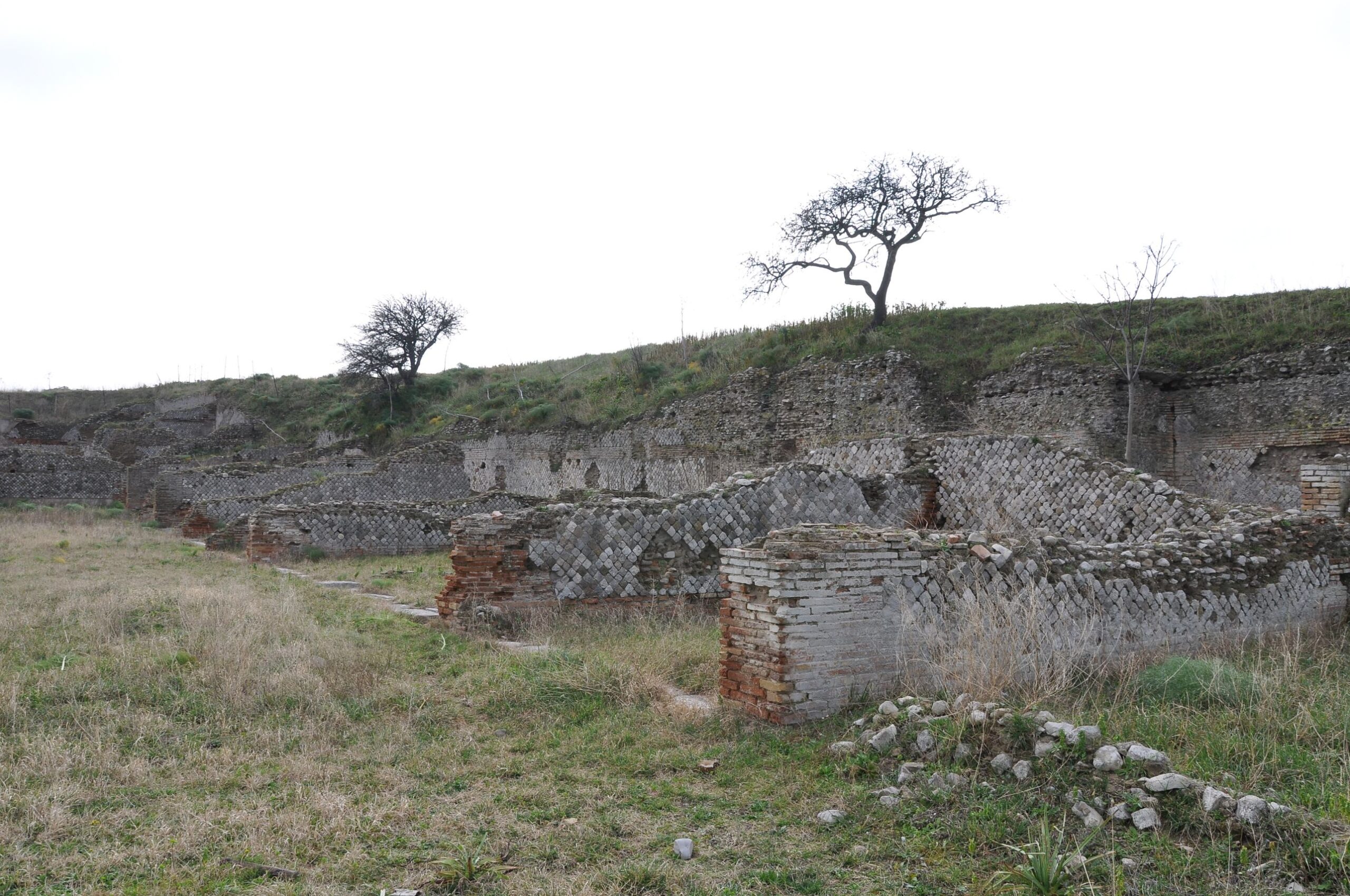
IlSipontino.net: Herdonia, the “Pompeii of Apulia”, featured on Popular Archaeology (USA) SOURCE: https://www.ilsipontino.net/herdonia-la-pompei-di-puglia-in-un-articolo-pubblicato-oggi-su-popular-archaeology-usa/ In the golden heart of the Tavoliere delle Puglie, where the wheat still ripples beneath the very sky that once witnessed the passage of Hannibal’s armies and Trajan’s legions, Herdonia at last emerges onto the international stage: the ancient city that scholars, with equal admiration and regret, have long described as “the Pompeii of Puglia". Published in Popular Archaeology, the article by Dr Luciano Magaldi Sardella retraces, with both passion and scholarly rigour, the entire epic of this extraordinary site: from its Daunian origins in the Iron Age, marked by its celebrated anthropomorphic stelae and the earliest textile embroideries known in Italy, through the tragedy of the Punic Wars – two battles of Herdonia in the aftermath of Cannae – the Roman refoundation along the Via Traiana, and finally the hunting retreat of Frederick II of Swabia of the Hohenstaufen dynasty. Only 20 per cent of its 20–24 hectares has been brought to light over sixty years of Belgian (Joseph Mertens, 1962–1992) and Italo‑Belgian excavations (University of Bari, Giuliano Volpe, 1993–2000). The remaining 80 per cent, preserved intact beneath the thin Puglian mantle, constitutes a living archive of history that could occupy archaeologists for the next century. After twenty‑two years of enforced silence due to a protracted legal dispute, the year 2022 marked a decisive turning point: the State acquired the entire area, allocating more than €2.7 million for restoration, enhancement, and the creation of the Archaeological Park of Herdonia. The HerMA Museum, inaugurated in 2017 just a short distance from the site, already welcomes thousands of visitors with its Daunian and Roman masterpieces, while the Polytechnic University of Bari has produced the first complete 3D model of the ruins. “Herdonia is not merely a site of the past; it is a place capable of narrating the whole of Italy, from prehistory to the Middle Ages, without being overlaid by a modern city,” writes Magaldi Sardella. “It now finally possesses the conditions to become one of the great archaeological parks of our country.” The field lies open. Puglia has rediscovered its Pompeii. It is now for the world to uncover it.

www.ilsipontino.net
Herdonia, la Pompei di Puglia, in un articolo pubblicato oggi su Popular Archaeology Usa
1528
Luciano Magaldi Sardella (PhD) Sep 5

SanGiovanniRotondoFree.it — Herdonia, the “Pompeii of Apulia”, Captivates America: Popular Archaeology Shines a Spotlight on the Tavoliere’s Hidden Treasure SOURCE: https://sangiovannirotondofree.it/2026/02/28/herdonia-la-pompei-di-puglia-conquista-lamerica-riflettori-di-popular-archaeology-sul-tesoro-nascosto-del-tavoliere/ In the golden heart of the Tavoliere delle Puglie, where the wheat still ripples beneath the very sky that once witnessed the passage of Hannibal’s armies and Trajan’s legions, Herdonia at last emerges onto the international stage: the ancient city that scholars, with equal admiration and regret, have long described as “the Pompeii of Puglia”. Published in Popular Archaeology, the article by Dr Luciano Magaldi Sardella retraces, with both passion and scholarly rigour, the entire epic of this extraordinary site: from its Daunian origins in the Iron Age, marked by its celebrated anthropomorphic stelae and the earliest textile embroideries known in Italy, through the tragedy of the Punic Wars – two battles of Herdonia in the aftermath of Cannae – the Roman refoundation along the Via Traiana, and finally the hunting retreat of Frederick II of Swabia of the Hohenstaufen dynasty. Only 20 per cent of its 20–24 hectares has been brought to light over sixty years of Belgian (Joseph Mertens, 1962–1992) and Italo‑Belgian excavations (University of Bari, Giuliano Volpe, 1993–2000). The remaining 80 per cent, preserved intact beneath the thin Puglian mantle, constitutes a living archive of history that could occupy archaeologists for the next century. After twenty‑two years of enforced silence due to a protracted legal dispute, the year 2022 marked a decisive turning point: the State acquired the entire area, allocating more than €2.7 million for restoration, enhancement, and the creation of the Archaeological Park of Herdonia. The HerMA Museum, inaugurated in 2017 just a short distance from the site, already welcomes thousands of visitors with its Daunian and Roman masterpieces, while the Polytechnic University of Bari has produced the first complete 3D model of the ruins. “Herdonia is not merely a site of the past; it is a place capable of narrating the whole of Italy, from prehistory to the Middle Ages, without being overlaid by a modern city,” writes Magaldi Sardella. “It now finally possesses the conditions to become one of the great archaeological parks of our country.” The field lies open. Puglia has rediscovered its Pompeii. It is now for the world to uncover it.

sangiovannirotondofree.it
Herdonia, la Pompei di Puglia conquista l’America: riflettori di Popular Archaeology sul tesoro nascosto del Tavoliere - San Giovanni Rotondo Free
588
Luciano Magaldi Sardella (PhD) Sep 5

StatoQuotidiano.it — Herdonia, the “Pompeii of Apulia”, Captivates America SOURCE: https://www.statoquotidiano.it/28/02/2026/herdonia-la-pompei-di-puglia-conquista-lamerica/1289894/ The site, renowned for its millennia‑old history and its extraordinary archaeological heritage, takes centre stage in an in‑depth feature published today in Popular Archaeology by Dr Luciano Magaldi Sardella. In the golden heart of the Tavoliere delle Puglie, where the wheat still ripples beneath the very sky that once witnessed the passage of Hannibal’s armies and Trajan’s legions, Herdonia at last emerges onto the international stage: the ancient city that scholars, with equal admiration and regret, have long described as “the Pompeii of Puglia”. Published in Popular Archaeology, the article by Dr Luciano Magaldi Sardella retraces, with both passion and scholarly rigour, the entire epic of this extraordinary site: from its Daunian origins in the Iron Age, marked by its celebrated anthropomorphic stelae and the earliest textile embroideries known in Italy, through the tragedy of the Punic Wars – two battles of Herdonia in the aftermath of Cannae – the Roman refoundation along the Via Traiana, and finally the hunting retreat of Frederick II of Swabia of the Hohenstaufen dynasty. Only 20 per cent of its 20–24 hectares has been brought to light over sixty years of Belgian (Joseph Mertens, 1962–1992) and Italo‑Belgian excavations (University of Bari, Giuliano Volpe, 1993–2000). The remaining 80 per cent, preserved intact beneath the thin Puglian mantle, constitutes a living archive of history that could occupy archaeologists for the next century. After twenty‑two years of enforced silence due to a protracted legal dispute, the year 2022 marked a decisive turning point: the State acquired the entire area, allocating more than €2.7 million for restoration, enhancement, and the creation of the Archaeological Park of Herdonia. The HerMA Museum, inaugurated in 2017 just a short distance from the site, already welcomes thousands of visitors with its Daunian and Roman masterpieces, while the Polytechnic University of Bari has produced the first complete 3D model of the ruins. “Herdonia is not merely a site of the past; it is a place capable of narrating the whole of Italy, from prehistory to the Middle Ages, without being overlaid by a modern city,” writes Magaldi Sardella. “It now finally possesses the conditions to become one of the great archaeological parks of our country.” The field lies open. Puglia has rediscovered its Pompeii. It is now for the world to uncover it.

www.statoquotidiano.it
Herdonia, la 'Pompei di Puglia' conquista l’America
940
Luciano Magaldi Sardella (PhD) Sep 5

FoggiaReporter.it: Ordona, the “Pompeii of Apulia”: Dr Luciano Magaldi Sardella’s contribution on Popular Archaeology USA SOURCE: https://www.foggiareporter.it/ordona-la-pompei-di-puglia-su-popular-archaeology-lintervento-del-dr-luciano-magaldi-sardella.html Destined to become one of the largest archaeological parks in Italy. In the golden heart of the Tavoliere delle Puglie, where the wheat still ripples beneath the very sky that once witnessed the passage of Hannibal’s armies and Trajan’s legions, Herdonia at last emerges onto the international stage: the ancient city that scholars, with equal admiration and regret, have long described as “the Pompeii of Puglia”. Published in Popular Archaeology, the article by Dr Luciano Magaldi Sardella retraces, with both passion and scholarly rigour, the entire epic of this extraordinary site: from its Daunian origins in the Iron Age, marked by its celebrated anthropomorphic stelae and the earliest textile embroideries known in Italy, through the tragedy of the Punic Wars — two battles of Herdonia in the aftermath of Cannae — the Roman refoundation along the Via Traiana, and finally the hunting retreat of Frederick II of Swabia of the Hohenstaufen dynasty. Only 20 per cent of its 20–24 hectares has been brought to light over sixty years of Belgian (Joseph Mertens, 1962–1992) and Italo‑Belgian excavations (University of Bari, Giuliano Volpe, 1993–2000). The remaining 80 per cent, preserved intact beneath the thin Puglian mantle, constitutes a living archive of history that could occupy archaeologists for the next century. After twenty‑two years of enforced silence due to a protracted legal dispute, the year 2022 marked a decisive turning point: the State acquired the entire area, allocating more than €2.7 million for restoration, enhancement, and the creation of the Archaeological Park of Herdonia. The HerMA Museum, inaugurated in 2017 just a short distance from the site, already welcomes thousands of visitors with its Daunian and Roman masterpieces, while the Polytechnic University of Bari has produced the first complete 3D model of the ruins. “Herdonia is not merely a site of the past; it is a place capable of narrating the whole of Italy, from prehistory to the Middle Ages, without being overlaid by a modern city,” writes Magaldi Sardella. “It now finally possesses the conditions to become one of the great archaeological parks of our country.” The field lies open. Puglia has rediscovered its Pompeii. It is now for the world to uncover it.

www.foggiareporter.it
Ordona, la Pompei di Puglia: su “Popular Archaeology” l’intervento del Dr. Luciano Magaldi Sardella - Foggia Reporter
705