WRLD

Search

#sociologi
L
Le Soir 7h

In his latest essay, Sortir des passions tristes, sociologist Benoît Scheuer offers insights and possibilities to overcome the current climate of distrust and malaise, inspired by his previous research projects. #BenoîtScheuer #PassionsTristes #Sociologie (translated)

www.lesoir.be
Les cinq leviers de Benoît Scheuer pour « sortir des passions tristes »

1475
T
Thijs Bol 1d
researcher

Professor of sociology and education expert Thijs Bol from the University of Amsterdam describes the development as good news, especially for children from less privileged families. #onderwijs #doorstroomtoets #schooladvies (translated)

Schooladviezen vaker naar boven bijgesteld na invoering doorstroomtoets
nos.nl
2666
Radiožurnál 1d

The Czech Republic is characterized by low taxation of property and capital income, which, according to sociologist Prokop, increases the tax burden on labor, especially for low-income employees. #daně #sociologie #Česko (translated)

radiozurnal.rozhlas.cz
Daníme práci, ale majetek téměř vůbec. Česko je v tom výjimečné, říká sociolog Prokop
2497
Patrick Collison Wrld summary 2d
Irish entrepreneur

The author argued that travel writing could function as sociology because a foreigner’s naivety allowed broad generalisations that might otherwise seem insufficiently justified for publication. They described saying that one’s own people had “poor manners” as a tough claim.

2992
Saluto i coglioni Wrld summary 3d

I salute the idiots who wrote that on November 23, 2026, several people, whom he described with derogatory expressions, had discovered international law. He claimed they spoke about it inconsistently, as he said they did on any topic, and accused them of doing it seriously and brazenly. #DirittoInternazionale #Politica #Sociologia (translated)

2676
ABC TU DIARIO EN ESPAÑOL 3d

The article argues that the ban on publishing polls in the last week before elections can be beneficial, as it protects the right to information while preventing the manipulated use of sociology to create false expectations among voters. #Encuestas #DerechoAlaInformación #EleccionesGenerales2026 (translated)

www.abc.es
Silencio demoscópico: chamanes fuera
2798
InfoVlogger Wrld summary 4d
Spanish influencer

The author questioned the reliability of the surveys and claimed that the differences between companies could reach 20 or 30 seats for some parties. He argued that, in light of these variations, either the sociologists were very incompetent or the polls were fabricated. (translated)

2926
Paolo Becchi Wrld summary 5d
Italian philosopher

The author wrote that over 100 researchers from around the world, including economists, political scientists, jurists, sociologists, philosophers, and historians, had raised the alarm claiming that billionaires threatened democracies. #democrazia #uguaglianza #giustizia #IT (translated)

3387
A
AD 6d

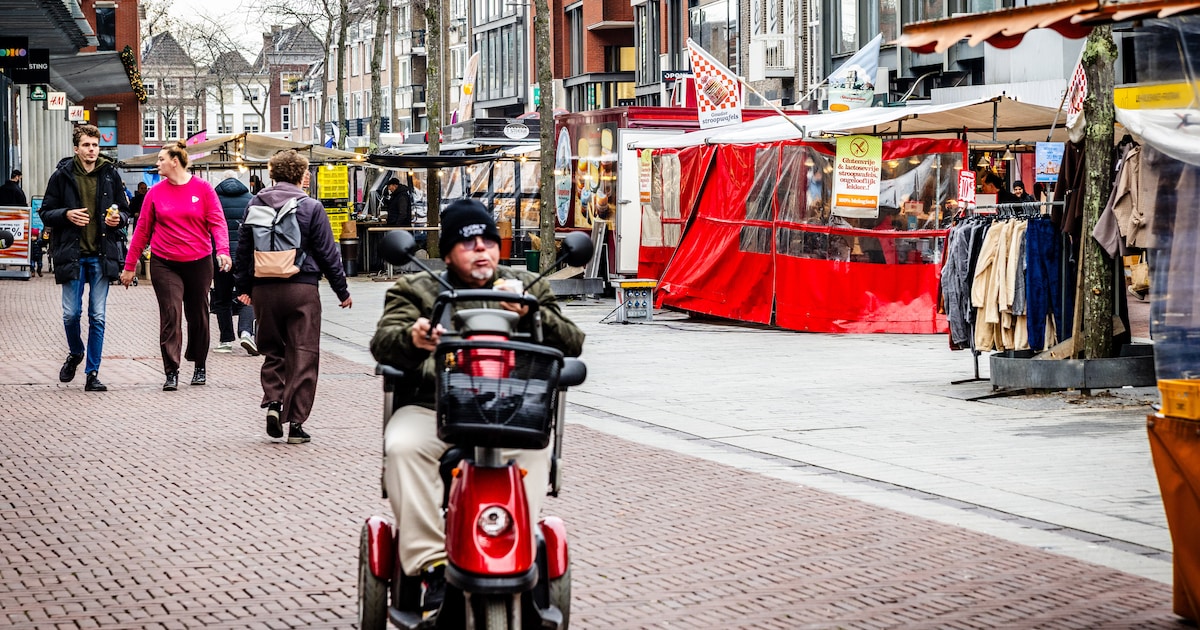
Dutch weekly markets, such as the one in Dordrecht, are facing a decline and are at risk of dying out in ten years. #Dordrecht #weekmarkt #sociologischevragen (translated)

www.ad.nl
Nederlandse weekmarkten lopen leeg: ‘Over tien jaar is dit verleden tijd’
2601
Clémence Guetté Wrld summary 6d
French politician

The author proposed to replace the IGPN and IGGN with an independent authority and to sanction violence in order to put an end to what he called impunity. He also recommended extending police training by two years, particularly on sociology, racism, and anti-racism. https://t.co/DicTKXHKDv #Police #Justice #Antiracisme #FR (translated)

3397
Jakub Steiner Wrld summary 1w
Czech economist

The author stated that the number of reactions to the PAQ tax study demonstrated the influence of this think tank in his opinion. At the same time, he asked in what areas Czech economists had erred, as he believed they were surpassed by sociologists, and why Czech universities failed to secure their role, which had to be represented by a private think tank. #ekonomie #sociologie #vzdělání #CZ (translated)

2965
Jiří Navrátil Wrld summary 1w
Czech politician

"The theory of three and a half percent is a nice media shortcut, but it is not possible to say it that way," says Jiří Navrátil, a sociologist focusing on civic protests from Masaryk University. #demonstrace #politika #sociologie (translated)

3082
Médias Citoyens Wrld summary 2w

Citizen Media stated that the French media had conducted an almost uninterrupted campaign against Emmanuel Macron for nearly ten years. The media cited Le Monde, which it claimed had dedicated significant coverage to the Benalla affair after the 2018 World Cup and portrayed the president in an authoritarian light, notably by comparing him to Adolf Hitler on the front page of M during the Yellow Vest crisis. It also accused the newspaper of publishing biased portraits and neglecting positive initiatives and French successes. Citizen Media also accused France Inter, France Culture, and France Info of regularly criticizing the actions and reforms of the head of state. It argued that listener interventions on France Inter had often been very aggressive and did not reflect, in its view, the political and electoral diversity of the country, mentioning an audience dominated by NUPES and LFI. Finally, the media claimed that BFM TV, LCI, and CNews had transformed controversial reforms, social movements, and political difficulties into permanent crises. It predicted that the prospect of a duel between the extremes could provide French newsrooms with five more years of high ratings. #MacronBashing #MédiasFrançais #Politique (translated)

3550
D
de Volkskrant 2w

In her opinion piece, Jolande Withuis argues that the concept of 'class' is confusing and cannot adequately capture the complex, historical experiences of poverty, while the debate about class resurfaces after years of focus on diversity and identity thinking. #klasse #sociologie #diversiteit (translated)

www.volkskrant.nl
‘Klasse’ is een bron van spraakverwarring
2529
Karol Nawrocki Wrld summary 3w
Polish politician and historian, President of the Republic of Poland since 2025

President K. Nawrockis announced that he will participate. #Lenkija #politika #sociologija (translated)

2768
Pino Rotta 3w

Coordinated solitude, author Claudio Aloisio Written by Pino Rotta, November 8, 2026 Claudio Aloisio is a communication and marketing professional, a field in which he has worked for many years. When his first essay "Coordinated Solitude" (Ed. Ideacoop Media Service, 2026) was released, sharing the same field of activity and interests (albeit with different directions and experiences), I found it interesting to read it, especially since we share the same city but have not met, which was already a good reason to find the essay interesting and its title stimulating. "Coordinated solitude" is an essay that analyzes, with a wealth of documentation and bibliography, the phenomena of the formation of convergences or exclusions among groups and individuals through the study of media languages and, in particular, those of the digital domain. A field that has already been widely investigated for several years. My first approach to these new linguistic proposals dates back, among other readings, to a 1994 essay "Collective Intelligence" by Pierre Levy. In that essay, Levy, at the dawn of the web era, launched the idea that the network, which collected the contributions of millions of users, contained them all without controlling their paths, interactions, or effects. Stimulating concepts that today help us understand how much conflict can arise between theory and its application considering time and technological development. However, Aloisio surprises the reader with suggestions from the very first pages of the essay. In fact, despite addressing the analysis of digital languages with an epistemological line rooted in Anglo-Saxon studies, particularly American ones, from the outset the author seems to suggest that this is not a “technical” essay but is entirely political in the higher sense of the term. The first reference is found in the citation of an author who was among the fathers of European sociology in the early years of the last century: Emile Durkheim, one of the first sociologists and philosophers who analyzed social phenomena with enormous meticulousness and rigor, linking religion with social structure. This opening will be found in the subsequent pages of "Coordinated Solitude," but it will not be the only surprise in Aloisio's analytical developments. In the essay, the author describes how people who may share spaces, interests, and common values, by finding them in the digital world, can at a certain point recognize themselves in different affiliations and even come to see in others a “us” that makes them akin to their own story or a “them” that indicates a distance, exclusion, and even a threat in relation to it. The causes of these dynamics are very well structured in the essay, as is the well-structured context in which individual stories are born, meet, and ultimately find different outcomes. Outcomes that can lead to reinforcing one's affiliations, which, however, are discovered at the end of the interaction process and that, throughout the journey, rarely reach a state of awareness. Outcomes that are influenced by pre-existing value structures that do not necessarily coincide with those of the members of the groups with which one identifies or clashes. This path is analyzed by Aloisio by considering the social dynamics of the West, examining and contrasting similar but not necessarily overlapping social realities, such as American and Italian society. In the identification processes that coexist in these social realities, the belonging to social class, religious group, ethnicity, sexual orientation, and sense of nation enters strongly. Everyone has their own experiences, but at the end of a journey of interaction, now almost exclusively digital, one finds oneself sharing a sense of belonging with other multitudes of people who have completely different experiences. And in this sense of belonging, fears of the future, frustrations of the past and present are downloaded, and one is enveloped by fears and anger that must find an enemy to blame. An enemy that is often suggested by the discovery of affinities among the groups that are created, much more often than not created, on digital platforms. Addressing the current nature of the algorithms governed by Artificial Intelligence, the author suggests the method through which these affiliations arise, which can be irrational but are entirely real and influence individual and social daily life. The individual in the digital dimension, which becomes the everyday reality of social action, is called to take responsibility for maintaining their conviction and belonging or risk feeling excluded, isolated, alone. The weight of a choice that often becomes distressing and paralyzing. But how is it possible to read and interpret these “Coordinated Solitudes”? Aloisio's essay provides a reading and suggests a methodology to identify the path that sometimes, but not always, leads to the awareness of how certain choices are made and what elements need to be questioned to verify if the reading of these languages withstands the law of contradiction and thus can be used to ascribe scientific value to it. But at the end of this journey of understanding languages, forms of aggregation, and the proof of the compatibility of individual choices, Aloisio presents us with another surprise that speaks volumes about his educational journey. The discourse of education and the reading of digital languages is ultimately a discourse on democracy, on social structure, and these factors cannot be disregarded without risking losing the ability to give meaning to one’s social action as well as one’s communicative action. It is my view that the surprise that is the coherence of the entire analysis of the essay comes with the reference that the author makes at the end to the work of Jürgen Habermas. The most important philosopher, sociologist of language, heir of the Frankfurt School who passed away at the age of 97 in March 2026, is the foremost interpreter of the theory of democracy and of the criticism of oppressive authority, which does not exclude conflict but determines its progressive outcome through the mediation of communicative action. Communicative action that questions institutions not to destroy them but to avoid remaining subjected to authoritarianism and, in the form of linguistic mediation, to be active subjects, not subdued by a system that, due to the nature of formal institutions, can always degenerate into authoritarianism. Coordinated solitudes thus find themselves with a positive perspective, with outcomes that are never guaranteed or predetermined, but feasible for reconstructing trust in the future realized through the recognition of the other as part of a common living and not as a threat to be feared, excluded, or even suppressed. Lastly, it should be noted that, although not explicitly considered, Aloisio does not prioritize simplification in the reading of contexts, evading complexity as a fundamental element of contemporary society's reality (perhaps it would have been useful to refer to Edgard Morin's theories), but it is evident that complexity must be confronted with different analytical methodologies and that the appeal to the work of Zygmunt Bauman leads us to presume this. https://www.heliosmag.it/?p=1659 (translated)

808
Josef Bernard Wrld summary 3w
Czech politician

"It does not mean that low income causes vaccine refusal. For socioeconomically disadvantaged individuals, factors such as poorer access to healthcare, lower trust in institutions, lower health literacy, different life priorities, administrative barriers, or social exclusion may play a role," said Josef Bernard from SYRI and the Institute of Sociology of the Czech Academy of Sciences. #očkování #sociálníotázky #covid19 (translated)

3006
Radiožurnál 3w

Sociologist Daniel Prokop criticizes the current system of redistributing finances for municipalities in the Czech Republic, which allegedly insufficiently supports poorer regions and undermines local economic development. #rozpočet #regionálnírozvoj #sociologie (translated)

radiozurnal.rozhlas.cz
Obce nemají nic z toho, když podporují byznys. Systém přerozdělování je špatný, říká sociolog Daniel Prokop
3012
La Zanzara Wrld summary 3w

The Zanzara reported a comment from Giuseppe Cruciani about the performance of a boy who, in front of law enforcement, showed them a mirror and said he did not believe he wanted to do that job when he was little. Cruciani replied that none of his parents would have wanted him to become like that, using a vulgar insult. #Giustizia #Sociologia #Opinioni (translated)

2784
Le Monde.fr 3w

Jean-Claude Passeron, a great figure in French sociology, has passed away, leaving a legacy marked by his contributions to the understanding of social inequalities and education. #BrowserIssues #NetworkTroubleshooting #WebExtensions (translated)

www.lemonde.fr
Mort de Jean-Claude Passeron, grande figure française de la sociologie
2668