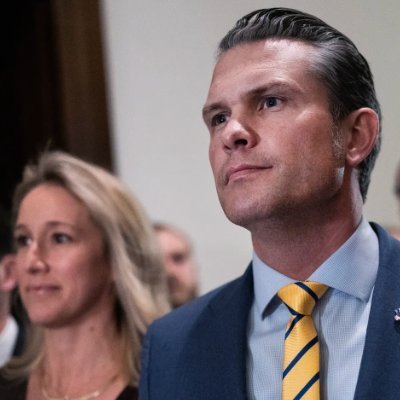
The matter was announced by U.S. Secretary of Defense Pete Hegseth, who is currently visiting Venezuela. #Yhdysvallat #Venezuela #sotilaallinenyhteistyö (translated)
Henri Vanhanen wrote that the discussions held in St. Petersburg once again demonstrated, in his opinion, the difficulty of negotiating with Russia. He reported that the Kremlin considered the proposals prepared in Oslo to be almost useless but simultaneously stated its willingness to continue negotiations and spoke about the approaching end of the war. Vanhanen described this as contradictory and believed Russia was holding its demands steady without revealing what it would be willing to compromise on. According to Vanhanen, Moscow sought to shift the discussion to the post-war European security order and the security guarantees that would be given to Russia. He regarded the guarantees as absurd because, according to him, Russia had started the largest offensive war in Europe in decades. Referring to previous Russian demands, he assessed that the guarantees could practically grant Moscow influence over which countries would join NATO and what kind of defense arrangements neighboring countries could make. He added that the U.S. President could not promise such things on behalf of other NATO countries or independent European states. Vanhanen argued that European security should not be built by giving an aggressor the right to dictate the defense of other countries. In his view, mutual arms control and the reduction of military risks could be negotiated, but Russia's demands for a sphere of influence should not be presented as security guarantees. He reported that Zelensky had announced Ukraine was ready to freeze the war at the current front lines. Vanhanen considered this a significant practical compromise and clarified that it did not, in his opinion, involve a legal cession of territories to Russia. He compared this to Russia's stance and wrote that Ukraine had indicated what it would accept, while Russia had stated what it would not accept. Vanhanen described the situation as revealing regarding Trump's negotiation tactics. He wrote that the United States had already loosened the pressure of sanctions on Russia and had agreed to diesel cooperation, but he assessed that there were no signs of similar political concessions from Moscow. According to him, the continuation of negotiations could benefit Russia by keeping Washington interested in economic cooperation, giving time to advance military objectives, and providing an opportunity to wait and see if Trump's impatience would again be directed toward Ukraine. Vanhanen asked how many times Trump would be willing to reward Putin for his willingness to negotiate without substantial changes in his actions. He considered the diplomatic work of Stub and Støre the previous day to be important because, in his opinion, they had restored the Americans, Ukrainians, and Europeans to a common preparation. However, he warned that a single successful negotiation day should not obscure the fact that Moscow's public demands remained unchanged. Vanhanen concluded by stating that in peace negotiations, what mattered was not the number of meetings with Putin but what he was willing to do to end the war. #Venäjä #neuvottelut #rauha (translated)
Henri Vanhanen wrote that Finland should close the Russian consulate in Mariehamn after the Russian consul left Åland. According to him, the consulate, established in 1940 at the demand of the Soviet Union, oversaw the demilitarization of Åland, and Russia still had a special status as overseer of Finland's military arrangements in the area. Vanhanen found the situation grotesque and said there was no convincing reason to maintain the consulate in the current security environment. He referred to a previous HBL poll indicating that even 59 percent of Ålanders supported closing the consulate. Vanhanen also believed that the future of Åland's demilitarization should be discussed seriously. He described the islands as a strategically important archipelago located in the critically important Baltic Sea for the security of Finland and Sweden, stating that the starting point for defense should be military necessity. He noted that closing the consulate and dismantling the demilitarization were legally distinct issues, but both deserved a new security policy assessment. Vanhanen wrote that Russia should not dictate how Finland defends its territory. (translated)
Henri Vanhanen wrote that NATO's commander for European forces, Alexus Grynkewich, had described the alliance's strategic thinking in preparation for a possible Russian attack without revealing classified operational plans. According to Vanhanen, the speech aimed to convey that an attack on NATO territory would fail, and to reassure Europeans. He noted that the speech did not indicate, in his view, that NATO was anticipating an immediate attack. Vanhanen mentioned that Grynkewich summarized the theory of victory in three phases: the attack would be halted, its advance would be paralyzed, and if necessary, the military system supporting the attack would be broken. According to Vanhanen, this could mean strikes not only against the attacking troops but also against their logistics, command, and other support systems, if necessary, within Russian territory. The goal, in his interpretation, would not be to defeat Russia as a state, but to prevent it from seizing even part of NATO territory and pressuring the alliance to accept the situation. Vanhanen also highlighted from the speech that the plan took into account a situation where U.S. forces would be tied up in another war. He considered this a crucial issue for Europe and referred to the limited military resources of the United States and Trump's Russia policy, which he believed had made Washington's decisions difficult to predict. Vanhanen proposed that alongside NATO's plan, Europe needs its own plan for victory. Its goal would be for European NATO countries to be able to repel and defeat a large-scale conventional Russian attack over the next ten years even without U.S. combat troops. He believed this would require a joint assessment of the shortcomings in European defense, regular exercises without the assumption of U.S. participation, and binding decisions to correct the deficiencies. Vanhanen wrote that the purpose of a credible deterrent would be to make the initiation of war unprofitable for Russia. #Nato #Venäjä #turvallisuus (translated)
Henri Vanhanen thanked Charles Lindbergh for addressing military issues based on facts. He assessed that Sanna Marin's demand to shoot down every Russian plane violating NATO airspace did not hold up under closer scrutiny, even though it sounded resolute. Vanhanen wrote that Russia's repeated violations of airspace should not be underestimated, but shooting down an armed fighter during peacetime would be a different scale of solution than intercepting a drone that has invaded airspace. According to him, it would be essential to assess whether it was a short violation or a deep incursion into Finnish territory that disregarded warnings and posed a real military threat. Vanhanen warned that shooting down a fighter could lead to the deaths of Russian soldiers and trigger a chain of events whose consequences Finland would not decide alone. He also viewed that Russia aimed to provoke and test the West's reactions, and it should not be allowed to dictate the timing or conditions for an escalation in the military situation. According to him, credible defense required both the readiness to use force and discretion in its application. https://t.co/uT4UMwcIib #turvallisuuspolitiikka #Venäjä #Nato (translated)
Henri Vanhanen wrote that he doubted whether Vladimir Putin had a realistic understanding of the situation in the war in Ukraine or whether he would be willing to accept information contrary to his own views. Vanhanen assessed that in Russia's system, reporting bad news to the leadership could be dangerous and that the military leadership, subordinates, or the president's inner circle might distort or filter information. Vanhanen referred to a recent assessment by the think tank ISW, which stated that Ukraine's successful counteroffensive in northern Donetsk had shattered Russia's plan to encircle the region's key defensive cities from two directions. According to him, Russia's goal of capturing the entire Donetsk region appeared to be further away as a result. Vanhanen wrote that Putin might continue the war to achieve unrealistic goals if he believed that Russia was closer to victory than reality suggests. He deemed it even more concerning that Putin might be receiving accurate information but did not want to believe it. Vanhanen emphasized that Russia's military failure, in his view, might not necessarily change Putin's goals or his desire to continue the war. He believed that an unrealistic situational picture could lead to the prolongation of the war and taking greater risks, and he appealed for continued support for Ukraine and to resist Russia's military pressure. https://t.co/Lb2advefv2 #Ukraina #Putin #sota (translated)
Henri Vanhanen recalled working in the parliament in February 2022 when Russia launched its full-scale attack on Ukraine. According to him, Finland had not yet sent defense aid to Ukraine at that time. Vanhanen stated that he had suggested to the National Coalition Party’s parliamentary group that the government should be required to provide military assistance. Vanhanen wrote that Finland was sending its 35th defense assistance package to Ukraine and had delivered defense materials worth approximately 3.6 billion euros to the country. He described the support as a long-term national commitment that had been continued across government terms and party lines. According to Vanhanen, supporting Ukraine's defense was also necessary for Finland's security. He assessed that the repelled Russian attacks in Ukraine would reduce Russia's ability to threaten other countries in Europe. Vanhanen wrote that Finland's support should continue for as long as it was needed. https://t.co/SGRsbSx53P #Ukraina #Suomi #Puolustusapu (translated)
The Daily Bureaucrat wrote that Russia has once again found itself in a situation where part of its territory is occupied by Ukraine. He ironically referred to the three-day military special operation as a success story and used a derogatory term for a person in that context. #Ukraina #Venäjä #Sota (translated)
Canada is preparing for the unlikely possibility of a U.S. attack, although experts consider the idea of war far-fetched and emphasize the military cooperation between the countries. #Kanada #USA #sotilaallinenuhka (translated)
Korson Jussi I Vantaa defender! asked whether it was a matter of Russia after the drone strike on Ukraine, but claimed that the situation was in France and described the country as ravaged by civil war. He estimated that France, having lost its national unity, was no longer likely to pose a military threat to anyone. #Ranska #Ukraina #sisällissota (translated)
Henri Vanhanen wrote that Ukraine had announced the use of its own FP-7 ballistic missile in battle for the first time. According to him, President Volodymyr Zelensky had reported on the first combat use and stated that the next phase would be production. Vanhanen noted that the missile manufacturer, Fire Point, claimed the FP-7 had a range of about 200 kilometers, a warhead weight of 150 kilograms, and a speed of up to 1,500 meters per second. He stated that the missile could target command posts, air defense systems, air bases, and ammunition depots, for example. Vanhanen pointed out that there had been no information on the first launch about what it struck or whether the missile hit its target. He wrote that the military significance of the system would depend on whether the missiles could be produced sufficiently, affordably, and accurately. According to him, approximately seven months had passed since the first known test launch. Vanhanen mentioned that Fire Point was also developing the FP-9 missile, which aimed for a range of over 800 kilometers and a warhead of up to 800 kilograms. He emphasized that the FP-9 was not yet an operational weapon. According to Vanhanen, the significance of the FP-7 would ultimately depend on whether it could be put into production. https://t.co/MWd1JlMbu8 #Ukraina #ohjukset #sota (translated)
Eighty years ago, the Nuremberg War Crimes Trials began, which convicted the highest military and political leadership of Nazi Germany, thereby establishing principles for later international war crimes tribunals. #Nürnberg #sotarikokset #historia (translated)
There may be something much larger happening in Russia than it appears outwardly. We are used to thinking of mobilization as an event. Putin gives a speech, a decision is announced, and reservists are called to service. The next mobilization may look completely different. Russia may gradually call men to service, decentralizing actions across the country, pressuring people to sign contracts, and sparing politically sensitive cities like Moscow and St. Petersburg. There may never be a single day when we could state that a new mobilization has begun. If this does not produce enough soldiers, the situation could become even bleaker. Russia could even stage an attack on its own soil and blame it on Ukraine or NATO. The goal would not be to convince us, but rather the Russians, that the country is under attack and needs more men for the war. This is also significant for Finland. If Russia manages to mobilize hundreds of thousands of new soldiers, the issue is not just about the front in Ukraine. At the same time, it is worth watching whether Russia begins to build a new strategic reserve and fill its new units in the Leningrad military district near Finland. There is no immediate threat of attack against Finland, but right now decisions can be made that determine Russia's military power at our borders for years to come. https://t.co/zWneprVedN #Venäjä #SotilaallinenVoima #Ukraina (translated)
Kun mikään media Suomessa ei kerro mitä rajan takana ajatellaan, niin käänsin Putinin puhetta 18.9 sotilasteollisuuskomitean kokouksessa. Tunnelma huoneessa näyttää olevan hämmentynyt, mitä helvettiä Euroopassa oikein tapahtuu. Teen selkokielisiä viime päivien tapahtumista https://t.co/A0QwY5xTMK #Putin #SotilaallinenTeollisuus #Eurooppa
EU:n uuden budjetin pitää näkyä konkreettisesti siellä, missä Euroopan turvallisuusympäristö on muuttunut eniten. Itäraja, arktinen alue, sotilaallinen liikkuvuus ja jäänmurtajat ovat koko Euroopan turvallisuutta. https://t.co/zImRQSHOC8 #Eurooppa #Turvallisuus #Budjetti #EU #FI #NO
1. Venäjän ja Iranin sotilaallinen yhteistyö on paljon syvempää kuin olemme tienneet. FT paljasti salaisen ohjelman, jossa Venäjä auttaa Irania kehittämään risteilyohjuksia USA:n sotalaivoja vastaan. Tämä on iso uutinen. 🧵 https://t.co/SLNX4oWG0W #Venäjä #Iran #sotilaallinenyhteistyö
Presidentti Alexander Stubb uskoo, ettei Venäjä halua hyökätä Natoon, sillä sen vahva sotilaallinen pelote on riittävä estämään tällaiset hyökkäykset, vaikka länsimaat ovat varoittaneet hybriditoimintojen riskeistä. #Venäjä #Nato #UkrainanSota
SDP:n uusi puolustusvero olisi myrkyllinen maanpuolustukselle ja talouskasvulle. Maanpuolustus on valtion ydintehtävä, eikä mikään tilapäinen haittameno, jota viisi vuotta rahoitetaan. Venäjän muodostama sotilaallinen uhka on pitkäaikainen ja maanpuolustuksen rahoitustason noston pitää olla kestävä ja uskottava. Uusi vero myös kohdistuisi jo valmiiksi kireästi verotettuun ahkeruuteen, investointeihin ja yritystoimintaan pahentaen Suomen talouden ja työllisyyden ongelmia. #Puolustus #Verotus #Talous
Tilanne kiristyy - sapeleita kalistellaan. Vieraskynä: Venäjä valmistautuu sotilaalliseen provokaatioon #Venäjä #sotilaallinen #provokaatio #FI #RU
Venäjän sotilaallinen voima ei enää pääty sen rajoille. Ukrainassa Moskovan rinnalla toimivat jo Iran, Pohjois-Korea ja vähintäänkin epäsuorasti Kiina. Siksi myös Suomen turvallisuutta on arvioitava uudella tavalla Aasiasta Eurooppaan ja Lähi-itään. 👇 https://t.co/Q3McQcX36Y #Turvallisuus #GeopoliittisetKysymykset #Ukraina