BETA nonprofit public democratic european moderated

Search

#trials

🇪🇺 produces 21% of the world’s leading biotech publications, but our share of global clinical trials fell from 18% to 9%. The #BiotechAct is our answer: faster trials, more investment, clearer rules, stronger incentives for 🇪🇺 manufacturing & better use of health data and AI. #BiotechAct #ClinicalTrials #HealthData #EU
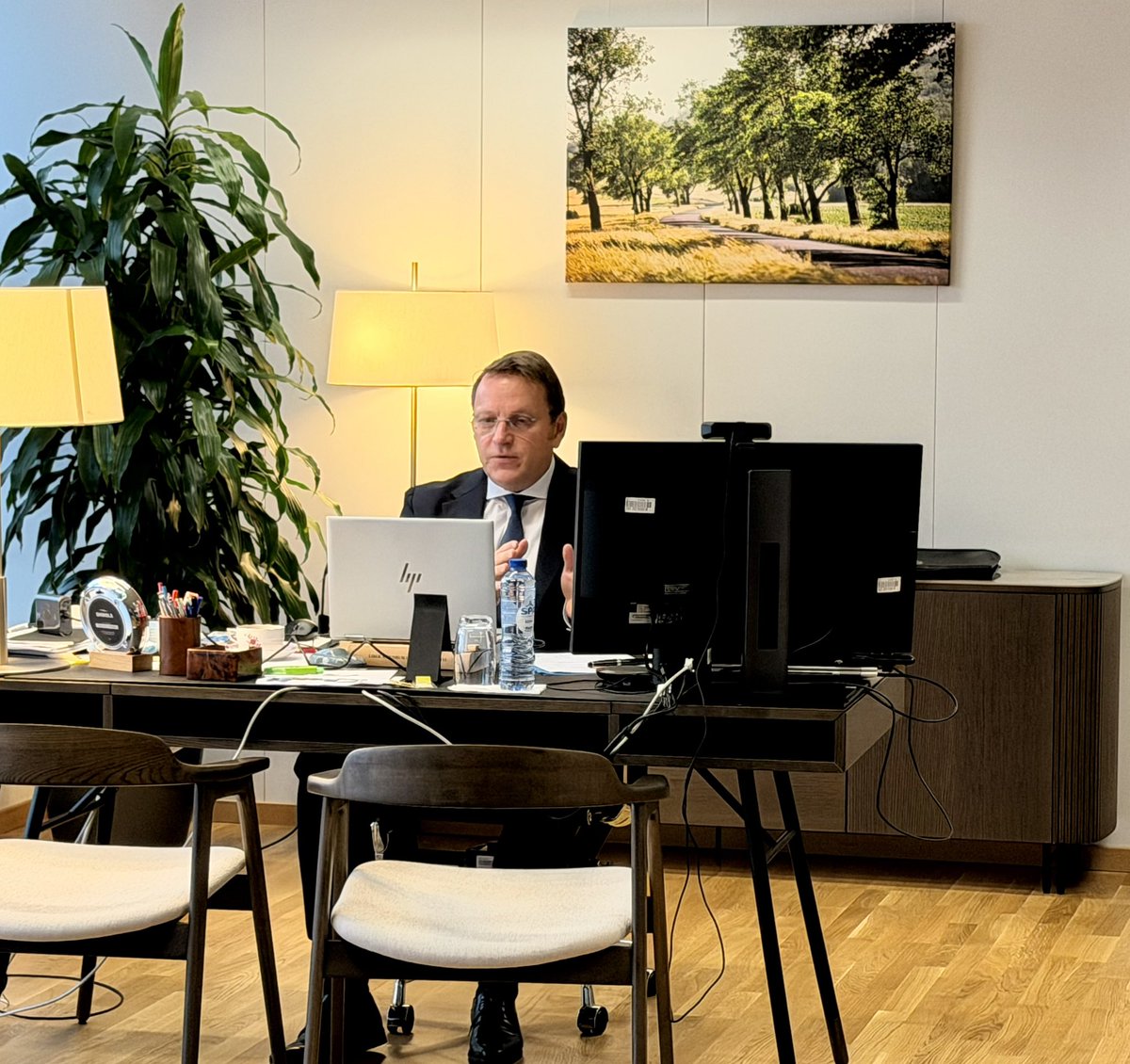
My messages at #BSF2026: shifting to prevention is the only way to keep universal healthcare coverage sustainable. But without clinical trials&manufacturing capacity, Europeans won’t access the latest innovations we need. It’s time to move our Health Package over the finish line. https://t.co/pclP2O8qEr #Healthcare #Innovation #Prevention #EU

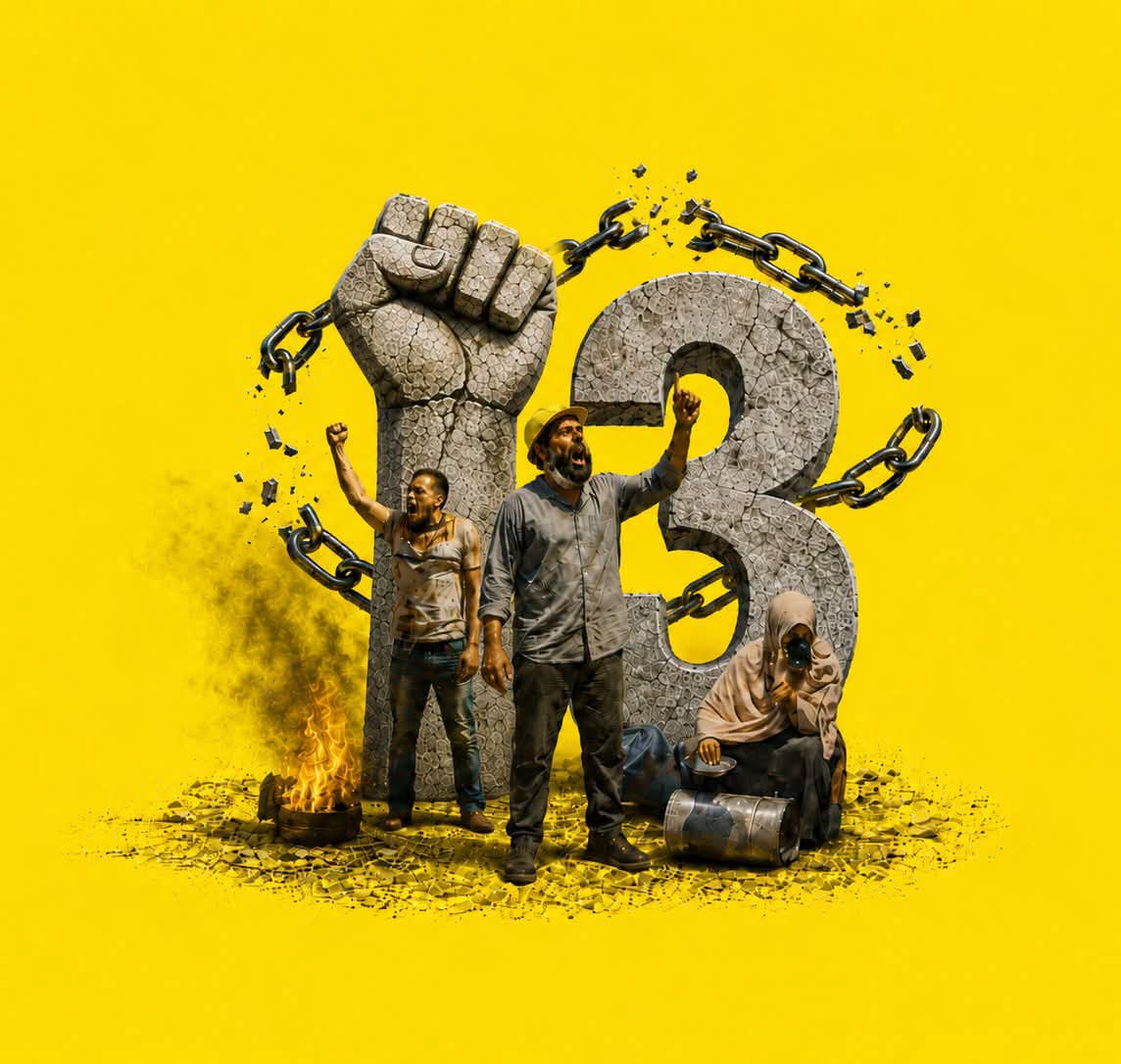
Rabaa: The Hour the World’s Conscience Stood Still On the anniversary of one of the largest single-day killings of protesters in modern history, one question remains unanswered: who will be held accountable? By Adham Hasanin Egyptian journalist and political writer, based in the Netherlands On 14 August, the anniversary returns of a day unlike any other in modern Egyptian history. Not simply because it was the bloodiest Egypt has known wars and massacres before and since ,but because it was the day a state chose to open fire on its own people in broad daylight, in front of the world’s cameras, and then let thirteen years pass without a single officer ever being held accountable. This article will not be a cold recitation of statistics, though the statistics exist, are documented, and are horrifying. It is an attempt to understand something deeper: how a square in the heart of Cairo, filled with tents, children, and worshippers, became the site of the largest mass killing the Arab world has witnessed in the past decade and why the echo of that day still reverberates in every Egyptian prison cell today. I. A Morning That Began Like Any Other For readers unfamiliar with the background: in July 2013, the Egyptian military, led by then-General Abdel Fattah el-Sisi, removed Mohamed Morsy Egypt’s first freely elected civilian president, a member of the Muslim Brotherhood who had taken office in 2012 following the 2011 uprising against Hosni Mubarak. In response, tens of thousands of Morsy’s supporters staged an open-ended sit-in demanding his reinstatement. By 14 August 2013, more than twenty thousand people had spent weeks camped out at two Cairo squares, Rab’a al-Adawiya and al-Nahda, in a peaceful sit-in. They were not an army, nor a uniform bloc; they were entire families men, women, and children, some affiliated with the Muslim Brotherhood, many simply ordinary citizens who saw the restoration of elected legitimacy as a cause worth the risk. There were tents for sleeping, communal kitchens feeding the demonstrators, speaking platforms, and a small field clinic that no one imagined would, within hours, become one of the most terrifying places in modern Egyptian history. In the early hours of that morning, Central Security Forces and army units, under the command of then-General Sisi, began what was officially described as a "dispersal" operation targeting both sit-ins simultaneously. It was not a dispersal in any ordinary sense of the word. According to a year-long investigation by Human Rights Watch, it was a pre-planned operation that anticipated, from the outset, thousands of deaths. II. The Numbers the Regime Refuses to Speak The Egyptian government, to this day, cites a death toll of "over 600" for that single day a figure that, even at its official lowest, is horrifying enough to warrant an independent international investigation. But the field investigation conducted by Human Rights Watch, drawing on field hospital records, survivor testimony, and analysis of video footage from dozens of angles, arrived at a far more disturbing figure: at least 817 people killed at Rab’a Square alone, with the true toll likely exceeding 1,000, plus another 87 killed at the nearby al-Nahda Square. When the deaths from the weeks surrounding 14 August are added from the dispersal of the Republican Guard sit-in on 8 July, through the Mansoura Street killings, to the dispersal of an October 6 march the combined total reaches at least 1,150 deaths in just six weeks, according to Human Rights Watch’s meticulous documentation. This figure led the organisation to use a term not deployed lightly in international law: crimes against humanity. Human Rights Watch described the Rab’a killings as "one of the world’s largest killings of demonstrators in a single day in recent history." Not in Egyptian history alone in modern history as a whole. What happened at Rab’a is cited in international reporting alongside China’s 1989 Tiananmen Square massacre. This is the true scale of what the Egyptian state has spent thirteen years trying to minimise, justify, and reduce to a mere "security incident" in a news bulletin. III. "All According to Plan" When Mass Killing Becomes Administration, Not Chaos The title Human Rights Watch chose for its detailed report on the massacre deserves lingering on: "All According to Plan." This is not an emotive headline; it is a precise legal conclusion built on field evidence. According to the investigation, what happened at Rab’a was not a dispersal operation that spiralled out of control amid chaos or panic, as the regime later tried to portray it. It was a carefully planned operation that assumed, in advance, massive casualties. Then-Interior Minister Mohamed Ibrahim admitted, in a televised interview broadcast on 31 August 2013 just weeks after the massacre that his ministry had anticipated losses of "10 percent of the people" present at the sit-in, acknowledging that the number of demonstrators exceeded twenty thousand. By simple arithmetic, this is an official admission that the state anticipated, in advance, the deaths of roughly two thousand people and proceeded with the operation regardless. This is the true horror at the heart of the Rab’a story: it was not a security operation that spun out of control, but a conscious administrative decision, made in an air-conditioned room, with advance calculations, by men who knew precisely how many human beings would die under their fire and who proceeded anyway, or perhaps because of it. According to Human Rights Watch’s analysis, the objective was to send an unambiguous message: whoever challenges the new state will pay an irreversible price. IV. Snipers, Women, and Children The Faces the Reports Do Not Tell Behind every number in the Human Rights Watch reports lies a full human story, deliberately omitted from the state’s official narrative. The investigation documented how security forces opened fire from multiple angles, and how snipers positioned themselves atop buildings surrounding the square, targeting according to survivor testimony and analysed video footage any movement in the square, regardless of whether it was an armed combatant or a nurse trying to reach a wounded person. According to documented testimony, entire families had their tents burn over their heads as fire swept through the sit-in. Doctors and paramedics were killed while trying to pull the wounded from the line of fire. Most damningly of all, the documentation shows deliberate targeting of ambulances and field medical points meaning that wounded people who survived the first bullet then faced death by bleeding out, because anyone attempting to save them was themselves a target. This detail the targeting of medics is what elevates the event from "excessive violent repression" to what human rights organisations have described as a systematic crime. When security forces target those trying to save the wounded, they are not merely dispersing a sit-in; they are preventing witnesses from surviving to tell what happened. V. Thirteen Years of Total Impunity The most painful part of the Rab’a story is not only what happened that day, but what has not happened in the years since. From 14 August 2013 to today, not a single officer, of any rank, has been held accountable for the deaths of hundreds, or thousands, of Egyptians. Quite the opposite: the state has moved to entrench impunity through the force of law itself. Egypt issued legislation granting senior military officers immunity from questioning over any violations that may have occurred following Morsy’s removal a law specifically designed to close the door on any future judicial accountability, regardless of how political circumstances might change. Even the fact-finding committee established by then-interim President Adly Mansour to investigate the June and July events concluded, in its report issued more than a year after the events, that the sit-in’s leaders bore responsibility for the deaths, on the grounds that they had allowed weapons into the square even as the same report admitted, in a glaring contradiction, that security forces had failed to target only armed individuals, meaning they had fired indiscriminately on everyone: armed and unarmed, man and woman, adult and child. This is the pattern that has repeated for over a decade: as each anniversary approaches, official statements re-narrate the events and shift blame onto the victims, while the actual perpetrators — those who planned the operation, gave the orders, and pulled the trigger — remain free. Some now occupy the highest offices of the state. VI. Why This Anniversary, Why Now? A reader might ask: why revisit this story after all these years? Has the world not moved on to newer crises? The answer lies in the very nature of impunity. When a state is never held accountable for the largest massacre of protesters in its modern history, it does not simply "forget" the crime it sets a precedent, telling every future ruler and every future security apparatus: mass killing is possible, politically profitable, and free of cost. This poisonous lesson does not remain confined within Egyptian borders; its echo reaches every Arab capital contemplating how to handle its own opposition. More dangerously, this system of impunity did not stop at Rab’a’s edges; it is the foundation on which Egypt’s entire subsequent decade of repression was built: thousands of political prisoners, grossly unfair mass trials that produced death sentences for dozens of defendants in cases linked directly to the Rab’a events themselves, laws criminalising peaceful protest, a muzzled press, and a civil society hollowed of substance. All of it traces back to the morning of 14 August 2013, when the state learned that overwhelming force succeeds, and that the world will condemn for a few days, then move on. VII. Delayed Justice Is Not Forgotten Justice Despite more than a decade of official silence and impunity, the Rab’a case remains alive in international legal memory. Human rights organisations, from Human Rights Watch to Amnesty International, continue to renew their annual calls for an independent international investigation, grounded in the legal principle that crimes against humanity are not subject to statutes of limitation: delayed justice is not forgotten justice. The victims who fell in that square were not numbers in a statistical report. They were fathers who left behind children too young, that day, to understand why their father would never return. They were mothers who, thirteen years later, are still searching for a clearly marked grave to which they can carry flowers, and young people who had decades of life ahead of them that they never got to live. Their memory does not fade with time; it grows with their children, who carry with them the same question their parents asked before they were killed: when will justice come? Conclusion: What Does This Anniversary Demand of Us? Every year, as the anniversary of 14 August returns, the same question resurfaces one the Egyptian state refuses to answer: who gave the order? Who planned the operation? Who decided that twenty thousand human beings deserved to be shot with live ammunition because they staged a peaceful sit-in? This anniversary is not a call for vengeance, nor an invocation of the past for its own sake. It is a reminder that justice, however delayed, remains a debt still owed. And that every instance of international silence over a massacre of this scale opens the door to the next one, elsewhere, under a different pretext, carrying the same lethal conviction: that the world will condemn for a week, then forget. We will not forget. And we will not stop asking the question that unsettles everyone who took part in that crime, regardless of the office they hold today: where is the accountability? Rab’a is no longer merely the name of a square in Cairo. In the conscience of everyone who believes in justice, it has become a test of the world’s conscience itself a test the world has not yet passed.

Mass trials without due process in El Salvador: "Judges are afraid. They’re convicting everyone" https://t.co/VDYxFitM4n #ElSalvador #DueProcess #JusticeReform #SV

Mass trials without due process in El Salvador: Judges are afraid. They’re convicting everyone — Prosecutors and the courts are securing convictions based on opaque police files, anonymous allegations and trials conducted behind closed doors https://t.co/P7vXnJwxK5 #ElSalvador #HumanRights #JusticeSystem #SV

Tom Nesky Aug 6

Metaphysics of the Solitary Absolute: Philosophical and Legal Analysis of the Thesis of Solitary Amorality ​The Thesis of Solitary Amorality, formulated by Tom Nesky under the banner of the Axiom of Relationality of Law and Being, constitutes a radical challenge to classical and contemporary normative theories. Its central premise—stating that law, morality, and the category of crime are not inherent properties of reality, but artificial products of social relations—requires a rigorous deconstruction at the intersection of legal positivism, phenomenological existentialism, ontological anarchism, and monistic metaphysics. This paper attempts a systematic analysis of the intellectual pillars of this thesis, examining its internal coherence, genealogical roots, and consequences for the understanding of freedom and human subjectivity. ​The Systemic Construction of Crime vs. Pure Theory of Law ​The first pillar of the Thesis of Solitary Amorality, designated as Nullum Crimen Sine Systema, posits that law does not discover pre-legal categories of evil, but brings them into existence through the very act of establishing a boundary of permissibility. This assertion exhibits a profound convergence with 20th-century legal positivism, particularly with Hans Kelsen's Pure Theory of Law (Reine Rechtslehre). Kelsen advocated for a methodological purification of legal science from ethical, sociological, and political elements, defining law as a normative system founded upon a hypothetical basic norm (Grundnorm). ​In the Kelsenian view, the legal system functions as a coercive apparatus devoid of inherent moral value. A crucial point of intersection with Nesky's thesis is the elimination of the traditional dualism between acts that are inherently evil (mala in se) and acts prohibited merely by law (mala prohibita). Kelsen argued that an act becomes unlawful solely when a legal norm attaches state-enforced coercion to it. Unlawfulness is not an ontological property of the act, but the result of a relationship of normative imputation. This implies that the law does not penalize an act because it is intrinsically evil; rather, an act is considered evil solely because it has been subjected to systemic penalization. ​This clash became prominent during the debates surrounding the Nuremberg trials, where positions based on natural law and legal positivism collided. While prosecutors such as Robert Jackson invoked universal moral norms (mala in se) as the basis for punishing criminals despite the previously binding positive law of the Third Reich, Kelsen pointed out the theoretical inconsistency of such an approach. He argued that judging on the basis of retroactive law (ex post facto) constitutes a breach in the systemic coherence of positivism, even if it might be justified by political and historical necessity. ​Nesky's project imparts an existential dimension of oppression to this structure, bringing it close to the critique of the state formulated by Friedrich Nietzsche. Nietzsche famously described the state as "the coldest of all cold monsters," which devours the individual's singularity and imposes herd morality upon them. The gaze of the state, mediated through the Other, paralyzes the sovereignty of the individual and forces them to navigate within arbitrarily designated normative boundaries. Every stroke drawn across the chaos of reality establishes a boundary, and every boundary instantly creates the concept of its transgression. ​The Paradox of the Systemic Cage and the Limits of Ontological Anarchism ​The second pillar of the thesis—The Paradox of the Systemic Cage—points to the impossibility of escaping the system through rules alone. Every attempt to negate the existing order, from establishing anarchist structures to escaping into geographical isolation, immediately transforms into a new system whose primary imperative becomes the defense and maintenance of that very absence of rules. This process of structural looping finds its reflection in the current of ontological anarchism formulated by Hakim Bey (pseudonym of Peter Lamborn Wilson). ​Bey, drawing on a synthesis of Nietzscheanism, Situationist theory of the spectacle, and chaos esotericism, recognized that classical revolutions striving to overthrow the state inevitably reproduce structures of domination, becoming new forms of confinement. As an alternative, he proposed the concept of the Temporary Autonomous Zone (TAZ). TAZ is a tactic for creating temporary, non-hierarchical spaces that deliberately evade formal structures of state control. The key element of TAZ is its ephemerality: before the system can map, define, and absorb the autonomous zone, it must dissolve itself and relocate to another point in space-time. ​Attempts to transform TAZ into Permanent Autonomous Zones (PAZ) immediately encounter the paradox noted by Nesky. The need to defend and codify freedom within a lasting community gives rise to internal rules, mechanisms of exclusion, and hierarchy. For this reason, Murray Bookchin criticized ontological anarchism (calling it "lifestyle anarchism" or "bourgeois anarchism") for its lack of political realism and its flight from systemic struggle against capital and state in favor of aesthetic rebellion. The convergence of these perspectives demonstrates that freedom defined as reactive resistance to a system remains structurally determined by it. ​The Dissolution of the Relational Mirror: The Existential Gaze and the Collapse of Morality ​The third pillar of the thesis, designated as The Dissolution of the Mirror (L'Autre), posits that good and evil require the presence of an external witness and judge. This assertion represents a direct application of Jean-Paul Sartre's existential phenomenology, particularly his analysis of the Gaze (le look / le regard) and the relation to the Other (l'Autre) presented in Being and Nothingness. ​Sartre illustrates the constitutive role of the Other through an analysis of the voyeur's situation. At the moment of complete absorption in the act of peeping through a keyhole, the subject's consciousness is pre-reflective—the voyeur does not reflect on himself; his consciousness completely merges with the act being performed. Only the sudden sound of footsteps in the hallway shatters this unity. The voyeur realizes that he himself is seen, and is instantly paralyzed by shame. ​For Sartre, shame is not a purely internal emotion; it is shame of oneself before the Other. The Gaze of the Other objectifies the free subject (being-for-itself—pour-soi), freezing them into a specific role and moral evaluation (being-for-others—pour-autrui). As Ellie Anderson points out, Descartes' formula "I think, therefore I am" is replaced in Sartre by "I feel shame, therefore Others exist." The Gaze of the Other marks the birth of social morality, wherein the individual learns to view themselves from a third-person perspective. ​This existential dynamic corresponds to the Nietzschean genealogy of "bad conscience." Nietzsche demonstrates that morality and guilt are products of the forced internalization of human instincts that could no longer be discharged outwardly due to social barriers. Forced into the constraints of society, man turns against himself, creating an internal judge (conscience) modeled on the external tyrant. ​This vision also resonates with the classical theory of Thomas Hobbes. In Leviathan, Hobbes explicitly declares that in the state of nature, where there is no common power, there is no law, and where there is no law, no notion of injustice exists. Concepts of good, evil, justice, and property are attributes of man living in society, not in solitude. Removing the social fabric reverts the individual to a state in which theft and injury lose their raison d'être due to the absence of relational reference to the Other. #philosophy # metaphysics # thesis # morality

Every day matters and every vaccine candidate in clinical trials gives us another shot at getting a safe, effective vaccine to the people who need it as swiftly as possible.

Moderna starts human trials for Bundibugyo Ebola vaccine as Congo's outbreak continues
www.euronews.com

This tragic case is a reminder of why clinical trials and risk-averse regulatory agencies matter. And why unregulated "anti-aging" treatments should concern us all. What the longevity field needs is more rigorous science, not more hype. #ClinicalTrials #AntiAging #LongevityResearch #Therearenospecificcountrymentionsinthetweet #sotherearenocountrycodestoreturn.

I have pledged to govern with an "iron fist," including plans to build a mega-prison modelled on El Salvador's Cecot facility and to allow judges to conceal their identities during criminal trials for security reasons.

Keiko Fujimori takes office as Peru's president, vowing to end decade of instability
www.euronews.com

Haiti is more than its trials. It’s a nation of creative youth & engaged diaspora, with a culture that shines far beyond its borders. I'm convinced with adequate international support the people of Haiti will be able to free themselves from gang violence, reclaim their security https://t.co/jycu4aA7bh #Haiti #CulturalResilience #InternationalSupport #HT

Deutsches Team in Chamber Trials! @Dimeax_ @Faisterino @LetsHugoYT @nooreaxYT Wie wird sich das Team gegen die besten internationalen Spieler schlagen? Chamber Trials 11 findet statt am 13. Juni um 19:00 deutsche Zeit! https://t.co/IZtgaxT2yZ #ChamberTrials #Gaming #Esports

One glimmer of hope in the Ebola response: Within hours of the outbreak in DRC being declared, researchers convened to prepare drug trials. A lot has changed on that front since the Ebola outbreak in West Africa a decade ago. But huge challenges remain… My story in #Ebola #DRC #MedicalResearch #CD #GW

BBC May 26

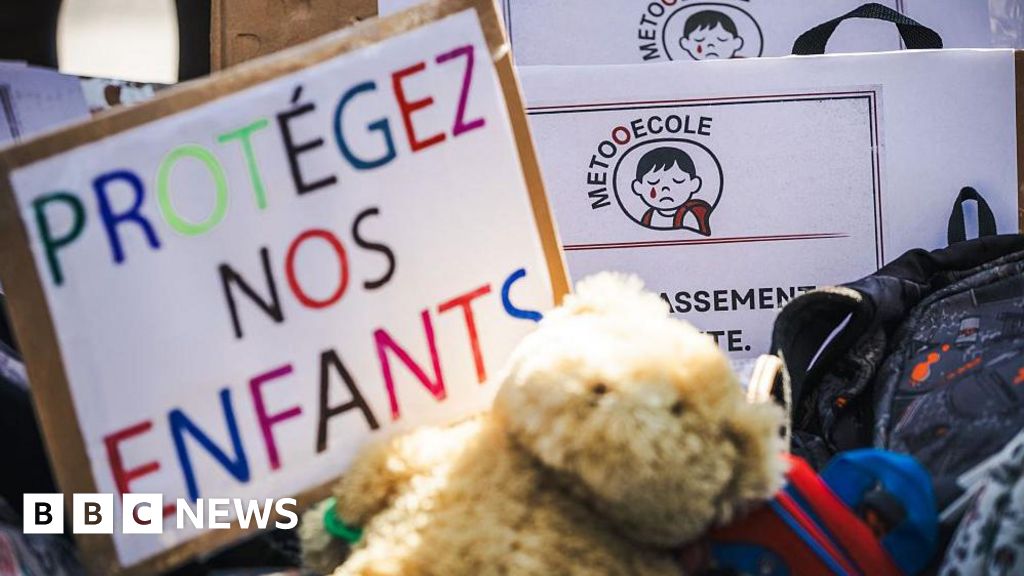
A wave of child abuse allegations has engulfed Paris schools, leading to protests from parents and a climate of fear, as numerous animateurs (school assistants) face accusations of inappropriate behavior, prompting calls for reform in their recruitment and oversight amidst an ongoing scandal that has seen at least 16 arrests and multiple trials. #ChildAbuse #ParisSchools #ProtectOurChildren

Wave of child abuse cases shakes schools in Paris

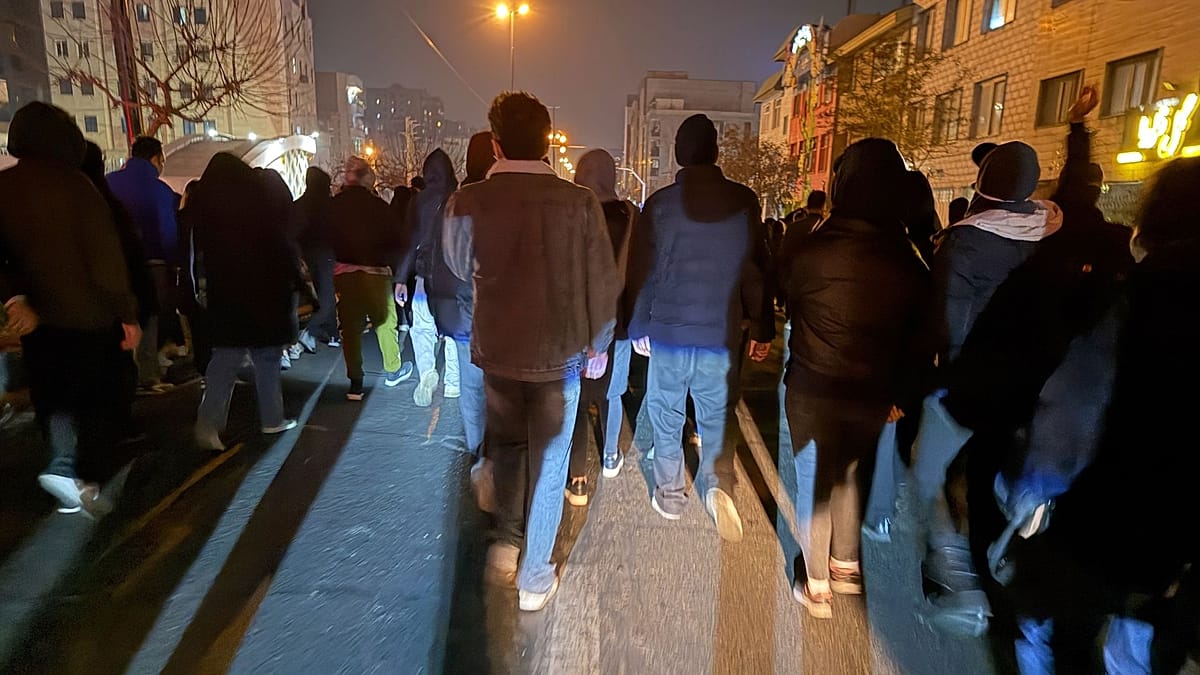
Iran has executed two men linked to January protests and executed four others sentenced to death for their involvement in a 2022 protest case, amid widespread condemnation from the UN and human rights organizations regarding the fairness of the trials. #IranProtests #DeathPenalty #HumanRights

Iran executes two over protests and alleged espionage as court sentences four more to death

Met with Isabel Rubio, President of @EuropeanCancer, which is advancing cancer research, treatment, care & policy. Through initiatives like the Life Science Strategy & #MissionCancer, the EU is fighting against youth cancer & funding multi-country clinical trials. https://t.co/q2IfcJo1DZ #CancerResearch #YouthCancer #EUHealth #EU

BBC May 22

Scientists at Oxford University are rapidly developing a new vaccine for the rare Bundibugyo Ebola virus, with the potential for clinical trials to begin in two to three months, amidst an ongoing outbreak in the Democratic Republic of Congo that has resulted in 750 suspected cases and 177 deaths. #EbolaVaccine #PublicHealth #VaccineDevelopment

UK scientists developing new Ebola vaccine that could be ready in months
Hadja Lahbib May 20

With €2M from #EU4Health, @AfricaCDC will use wastewater surveillance to track #Ebola & other pathogens. @EU_HERA’s €7.4M for @WHO’s R&D Blueprint will help fast-track vaccine & treatment trials, turning science into lifesaving action. #Ebola #Health #Africa #EU #NG #WHO