How does a painting change when we look at it through the eyes of a literary character? Mona Lisa — Leonardo da Vinci (1452–1519) Elizabeth Bennet might smile at all the theories surrounding that famous smile. Emma Woodhouse would probably try at once to decipher the personality of the woman in the portrait. Water Lilies — Claude Monet (1840–1926) Anne Elliot might see time, memory, and change in it. Mr. Darcy might appreciate precisely the calm and restraint of the image. The Starry Night — Vincent van Gogh (1853–1890) Catherine Morland might turn the restless sky into the beginning of a mystery. Marianne Dashwood might notice the emotion first, and only then the landscape. These characters belong to the world of Jane Austen (1775–1817), while the paintings come from very different periods. Perhaps one interesting way to look at art is to ask not only: “What do I see?” but also: “What would someone else see in it?” #ArtHistory #FamousPaintings #LeonardoDaVinci #ClaudeMonet #VincentVanGogh #ArtAndLiterature #Museums #CaptainWeb #English
Cum se schimbă un tablou atunci când îl privim prin ochii unui personaj literar? Mona Lisa — Leonardo da Vinci (1452–1519) Elizabeth Bennet ar putea zâmbi în fața tuturor teoriilor despre celebrul surâs. Emma Woodhouse, probabil, ar încerca imediat să-i descifreze caracterul. Water Lilies — Claude Monet (1840–1926) Anne Elliot ar putea vedea aici timp, memorie și schimbare. Mr. Darcy poate că ar aprecia tocmai liniștea și reținerea imaginii. The Starry Night — Vincent van Gogh (1853–1890) Catherine Morland ar putea transforma cerul neliniștit într-un început de mister. Marianne Dashwood ar vedea poate mai întâi emoția și abia apoi peisajul. Personajele aparțin lumii lui Jane Austen (1775–1817), dar picturile vin din epoci foarte diferite. Poate că un mod interesant de a privi arta este să ne întrebăm nu doar „Ce văd eu?”, ci și „Ce ar vedea altcineva?” #ArtHistory #FamousPaintings #LeonardoDaVinci #ClaudeMonet #VincentVanGogh #ArtAndLiterature #Museums #CaptainWeb #Română Asta mi se pare mult mai potrivit pentru Captain Web: tablourile sunt personajele principale, iar Austen este lentila prin care le privim.

How would Jane Austen’s (1775–1817) characters react to famous paintings? Mona Lisa — Leonardo da Vinci (1452–1519) Would Elizabeth Bennet be amused by all the interpretations built around the smile? Would Emma Woodhouse immediately try to “read” the personality of the woman in the portrait? Would Lady Catherine de Bourgh accept the mystery — or confidently explain what the expression really means? Water Lilies — Claude Monet (1840–1926) Would Mr. Darcy appreciate the quietness and restraint of the painting? Would Anne Elliot see something in it about time, memory, and things that change slowly? Would Marianne Dashwood simply be overwhelmed by the atmosphere? The Starry Night — Vincent van Gogh (1853–1890) Would Elizabeth Bennet be drawn to the energy and freedom of the image? Would Catherine Morland turn the restless sky into the beginning of a Gothic mystery? Would Marianne Dashwood notice the beauty first — or the unease? Perhaps the way a character looks at a painting tells us as much about the character as it does about the artwork. #JaneAusten #PrideAndPrejudice #Emma #NorthangerAbbey #SenseAndSensibility #Persuasion #ArtAndLiterature #ArtHistory #ArthurWren #English
Cum ar reacționa personajele lui Jane Austen (1775–1817) în fața unor tablouri celebre? Mona Lisa — Leonardo da Vinci (1452–1519) Elizabeth Bennet s-ar amuza de toate interpretările construite în jurul zâmbetului? Emma Woodhouse ar încerca imediat să „citească” personalitatea femeii din portret? Lady Catherine de Bourgh ar accepta misterul sau ne-ar explica sigură pe ea ce înseamnă cu adevărat expresia? Water Lilies — Claude Monet (1840–1926) Mr. Darcy ar aprecia liniștea și reținerea tabloului? Anne Elliot ar vedea în el ceva despre timp, memorie și lucrurile care se schimbă încet? Marianne Dashwood ar fi pur și simplu copleșită de atmosferă? The Starry Night — Vincent van Gogh (1853–1890) Elizabeth Bennet ar fi atrasă de energia și libertatea imaginii? Catherine Morland ar transforma cerul neliniștit într-un început de mister gotic? Marianne Dashwood ar vedea în el mai întâi frumusețea sau neliniștea? Poate că felul în care un personaj privește un tablou ne spune la fel de multe despre personaj cât ne spune despre operă. #JaneAusten #PrideAndPrejudice #Emma #NorthangerAbbey #SenseAndSensibility #Persuasion #ArtAndLiterature #ArtHistory #ArthurWren #Română

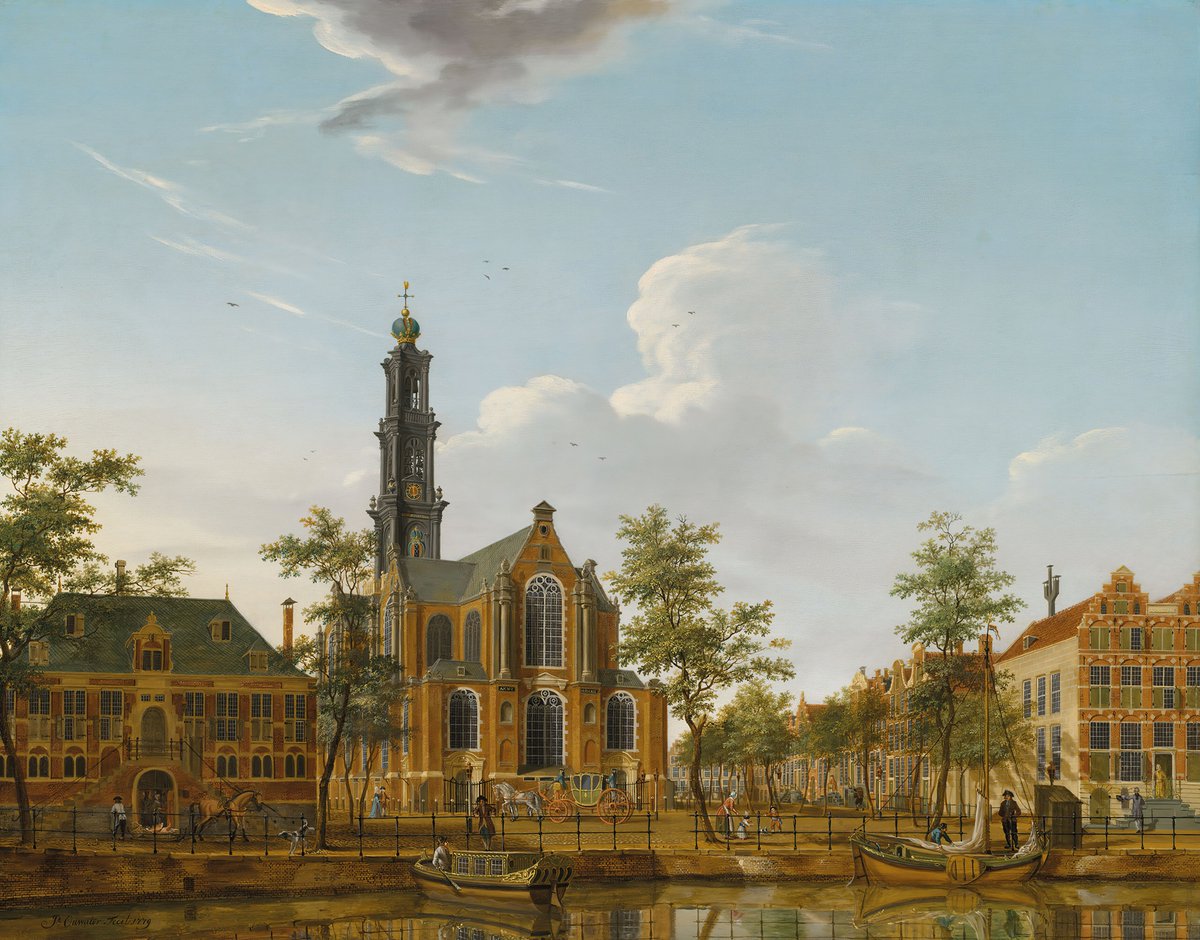
View Of The Westerkerk Seen From Across The Keizersgracht, Amsterdam. Isaac Ouwater, 1779 https://t.co/IaeArKU5DA #Amsterdam #Westerkerk #ArtHistory
View of Oudezijds Voorburgwal with the Oude Kerk in Amsterdam Jan van der Heyden, ca. 1670 https://t.co/IahQLkOF2y #Amsterdam #ArtHistory #DutchMasters


The article recounts how a handcrafted American eagle emblem, gifted by Russian schoolchildren to the U.S. ambassador in Moscow during World War II, harbored a secret listening device known as "The Thing," which successfully eavesdropped on diplomatic conversations for seven years until its discovery in 1951, illustrating the innovative use of art for espionage and the cultural implications of such deception. #Espionage #ArtHistory #ColdWar #US #RU #GB
The article discusses Pablo Picasso's controversial masterpiece "Les Demoiselles d'Avignon," created in 1907, which has evoked both admiration and disdain over the decades; it explores the impact of African art on Picasso's work, the reactions it garnered upon its unveiling, and highlights contemporary artist Henry Taylor's reinterpretation of this piece showcased in a major exhibition at the Musée Picasso in Paris, emphasizing themes of representation and identity. #ArtHistory #Cubism #PabloPicasso #FR #US #CD
The article discusses Pablo Picasso's controversial masterpiece "Les Demoiselles d'Avignon," created in 1907, which has evoked both admiration and disdain over the decades; it explores the impact of African art on Picasso's work, the reactions it garnered upon its unveiling, and highlights contemporary artist Henry Taylor's reinterpretation of this piece showcased in a major exhibition at the Musée Picasso in Paris, emphasizing themes of representation and identity. #ArtHistory #Cubism #PabloPicasso #FR #US #CD


Paul Klee's "Angelus Novus," a fragile drawing representing a bewildered angel, has arrived in New York for its first exhibition at the Jewish Museum, emphasizing its poignant history of survival through Nazism and its connection to philosopher Walter Benjamin, who interpreted it as a symbol of human catastrophe amidst the tumultuous backdrop of their respective lives. #ArtHistory #PaulKlee #Resilience #US #IL #DE #FR #CH #GE #ES #JP #IR #PS
Paul Klee's "Angelus Novus," a fragile drawing representing a bewildered angel, has arrived in New York for its first exhibition at the Jewish Museum, emphasizing its poignant history of survival through Nazism and its connection to philosopher Walter Benjamin, who interpreted it as a symbol of human catastrophe amidst the tumultuous backdrop of their respective lives. #ArtHistory #PaulKlee #Resilience #US #IL #DE #FR #CH #GE #ES #JP #IR #PS

Paul Klee's fragile drawing "Angelus Novus," a symbol of resilience that survived the horrors of Nazism and became linked to philosopher Walter Benjamin, is making its New York debut at the Jewish Museum as part of the exhibition "Paul Klee: Other Possible Worlds," which explores Klee's complex legacy amid his persecution as a perceived outsider by the Nazis. #PaulKlee #ArtHistory #AngelusNovus #US #IL #DE #FR #CH #GE #BA #SP #IR #JP
Paul Klee's "Angelus Novus," a fragile drawing symbolizing resilience against Nazism, has arrived in New York for its first public exhibition at the Jewish Museum, highlighting its poignant history and the complex narrative surrounding both the artwork and its previous owner, philosopher Walter Benjamin, who linked the piece to a deeper moral commentary on human catastrophe. #PaulKlee #ArtHistory #CulturalResilience #US #IL #DE #FR #CH #GE #PS #IR
Paul Klee's "Angelus Novus," a fragile drawing symbolizing resilience amid the horrors of Nazism, has made its New York debut at the Jewish Museum as part of the exhibition "Paul Klee: Other Possible Worlds," revealing the complex and often overlooked moral undertones of Klee's work, particularly in light of its poignant history with philosopher Walter Benjamin. #ArtHistory #PaulKlee #Exhibition #US #IL #DE #FR #CH #GE #ES #BA
Paul Klee's "Angelus Novus," a fragile drawing symbolizing resilience amid historical trauma, has arrived in New York for its first exhibition at the Jewish Museum, highlighting its profound connection to philosopher Walter Benjamin and the moral complexities embedded within Klee's art during his persecution by the Nazis. #PaulKlee #ArtHistory #JewishMuseum #US #IL #DE #FR #CH #GE #ES #IR #JP

The article discusses the restoration and reexhibition of José Aparicio's painting "El año del hambre en Madrid," which reflects on the historical suffering during the Spanish famine of 1811-1812, emphasizing its complex political symbolism and initial fame, contrasted with its subsequent decline in prominence, ultimately highlighting the painting's ability to provoke reflection on art, memory, and power within the context of cultural history. #ArtHistory #CulturalHeritage #PoliticalArt #ES