BETA nonprofit public democratic european moderated

Search

#Persuasion

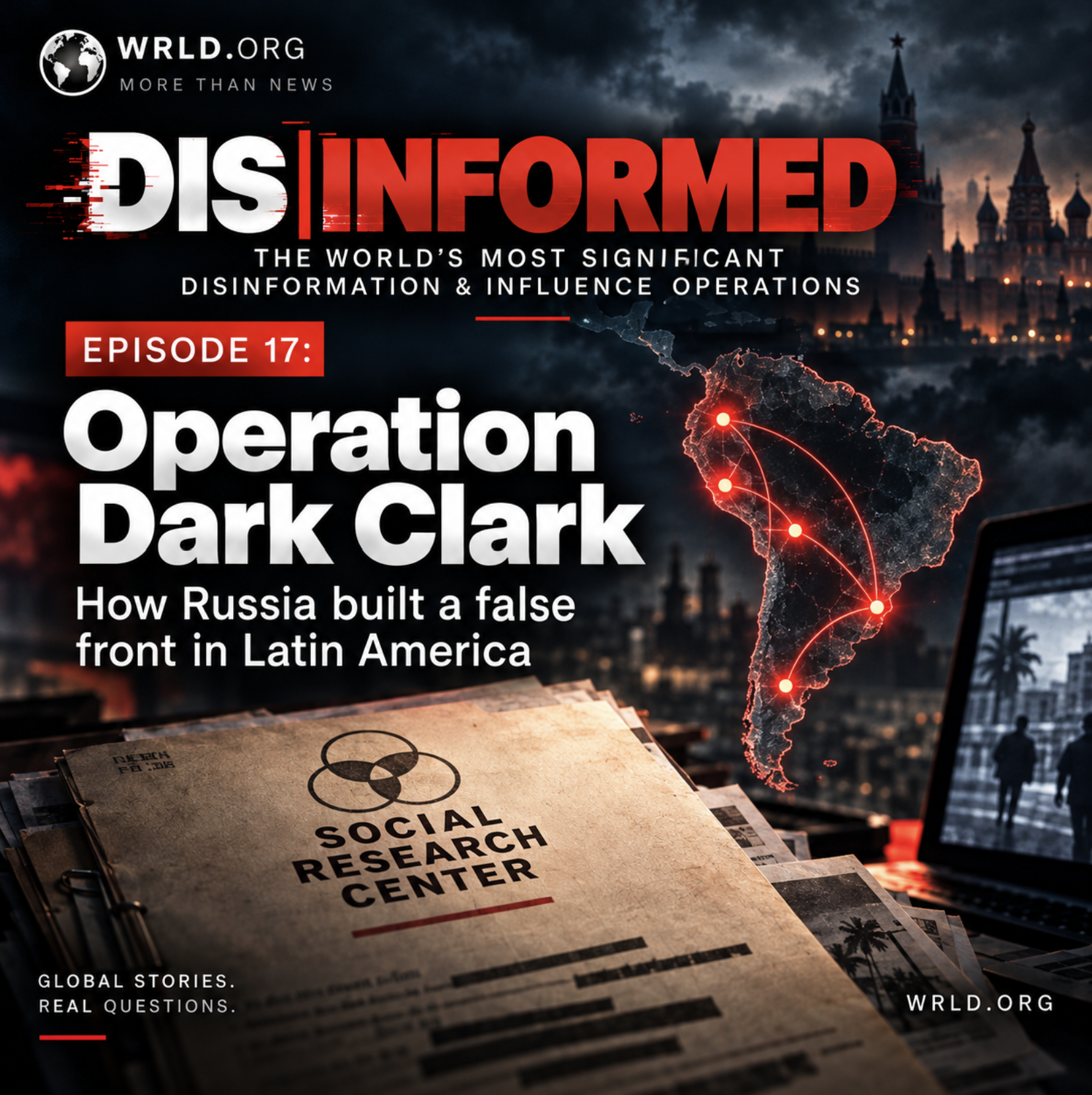
Operation Dark Clark – Russia built a real organisation around a false identity Most influence operations create fake people, fake websites or fake news stories. Operation Dark Clark appears to have gone considerably further: Russian operators built what looked like a functioning research organisation in Latin America, employed real people to produce genuine research and concealed from those employees who was ultimately directing their work. OpenAI disclosed the operation on 8 October after banning a cluster of accounts originating in Russia. The actors used ChatGPT while targeting countries across Latin America, principally to damage Ukraine’s reputation, manipulate domestic political debates and manage a self-described research organisation called the Social Research Center, or SRC. OpenAI assessed Dark Clark as Category Five on the six-level Breakout Scale, the first operation it has disrupted since beginning its influence-operation reporting to reach that level. A front organisation with real employees The SRC presented itself as a research platform studying subjects including Latin America’s relationship with India and the Indian diaspora. OpenAI found more than 60 articles on its website, most of them apparently original rather than plagiarised. Internal reports produced by the Russian operators discussed hiring, dismissals, salary scales, staffing and unfinished research projects, strongly suggesting that the operators controlled the organisation rather than merely collaborating with it. At the centre of the structure was “Mia Clark”, a fictitious identity reportedly used to manage social-media activity and communicate with staff. According to OpenAI, the available evidence indicates that employees working for SRC in Latin America were probably unaware that the organisation was being directed by Russian actors. They interviewed experts, conducted research and wrote papers in what appears to have been good faith. The deception therefore existed primarily at the organisational level: much of the work was real, but the identity and strategic purpose of the institution commissioning it were not. OpenAI This is one reason Dark Clark differs from the familiar model of a troll farm. A reader encountering an SRC paper might be looking at research genuinely written by a Latin American employee based on genuine interviews. The manipulation lies further upstream, in who built the institution, selected its direction and controlled its infrastructure. From forged emails to real events The operation also appears to have attempted something more ambitious than online persuasion: inducing real people to produce events that could later be turned into propaganda. In May 2026, according to the operators’ internal reports, they created an email address impersonating Lima’s regional education authorities and instructed schools to organise activities about Ukraine for a cultural-diversity event. The instructions included references to Stepan Bandera, whose historical legacy remains particularly contentious in Poland and parts of Eastern Europe. The operators claimed that some schools complied, replied to the false address and sent photographs of the events. OpenAI could not independently verify every claim contained in the operators’ reports. It did, however, find Peruvian reporting matching the story, followed by publications in Poland and an English-language outlet in Hungary. Some coverage included comments from a Polish MEP calling for people displaying what he described as anti-Polish attitudes to be declared persona non grata. OpenAI therefore concluded that the fabricated starting point appears to have entered genuine political debate across national borders. The mechanism is unusually effective because the final photographs need not themselves be fabricated. If people can be tricked into staging a real event on the basis of a forged instruction, the operation creates authentic visual evidence of something that was artificially initiated. The same method in Ecuador and Bolivia Dark Clark’s internal reports describe similar efforts elsewhere. In Ecuador, the operators claimed they used a fake education email to encourage schools to stage ceremonies involving President Daniel Noboa and Erik Prince, the former head of Blackwater. Ecuadorian media subsequently covered a matching controversy, and the country’s education minister issued a detailed denial. Other Ecuador-focused material included fabricated audio attributed to Ukraine’s consul and a false television report alleging that Noboa’s government was recruiting Ecuadorians to fight in Ukraine. Local fact-checker Lupa found that the supposed Teleamazonas report had never been broadcast, that images had been taken from Instagram, that the audio was AI-generated and that a company named in a supposed recruitment contract did not exist in Ecuador’s corporate registry. In Bolivia, an internal report described a fake audio recording supposedly made by an employee of state water company EPSAS during anti-government protests. It claimed that water supplies to La Paz would be cut and a state of emergency declared. The allegation produced a fact-check and an official denial. OpenAI says the operators explicitly described their objective as worsening the political crisis surrounding the demonstrations. Possible links to the post-Wagner influence machine Dark Clark did not emerge in a vacuum. The operators repeatedly asked ChatGPT about Politology and La Compania, names associated in previous investigations with the Russian influence apparatus that developed from structures once connected to Yevgeny Prigozhin. Forbidden Stories and its partners obtained 1,431 pages of internal documents describing a network known as “The Company”, which they reported had grown to almost 100 operatives and was conducting influence projects across roughly 30 Global South countries. Their investigation found that the organisation moved under the supervision of Russia’s Foreign Intelligence Service, the SVR, after Prigozhin’s death. Its documented budget for ten months of activity in 2024 was approximately €7.3 million. Two older Argentina campaigns claimed in Dark Clark’s internal reports — a false story about Javier Milei buying Cartier collars for his dogs and the staging of anti-Milei graffiti — had already been independently attributed by investigative journalists to Politology/La Compania. That is significant corroboration, but it is not enough to prove that every Dark Clark activity was run by the same organisational structure. AI was the back office, not the mastermind Perhaps the most important finding concerns artificial intelligence itself. In most documented cases, the Russians were not using ChatGPT to generate the propaganda seen by the public. Their principal use was administrative: drafting reports for an unknown superior, summarising operations, translating material and recording the supposed success of campaigns. Those reports also expose a weakness in the operators’ own measurement. OpenAI found instances in which they tried to claim credit for developments they had probably not caused, suggesting that they were not only attempting to manipulate Latin American audiences but also presenting an inflated picture of their effectiveness to whoever was supervising them. Dark Clark nevertheless broke further into the real world than any influence operation OpenAI had previously disrupted. Under the Brookings framework, Category Five means that an operation has escaped its original network and been amplified by high-profile individuals such as politicians. Dark Clark crossed that threshold because fabricated narratives appear to have provoked governmental denials, mainstream reporting and political comment in several countries. Its most important innovation was therefore not a particularly convincing deepfake. It was the construction of a partly genuine institution around a concealed foreign controller. The research could be real. The employees could be real. The interviews could be real. What was false was who they were ultimately working for. Sources OpenAI — Disrupting AI-enabled “false front” operations https://openai.com/index/disrupting-ai-enabled-false-front-operations/ Forbidden Stories — Propaganda Machine: Russia’s foreign influence strategy across three continents https://forbiddenstories.org/propaganda-machine-secret-documents-reveal-russias-foreign-influence-strategy-across-three-continents/ Forbidden Stories — Ghost Journalists, Cash and Kremlin Scripts: Argentina https://forbiddenstories.org/ghost-journalists-cash-and-kremlin-scripts-how-russian-operatives-tried-to-influence-argentinian-media/ openDemocracy — Russian influence operation in Bolivia https://www.opendemocracy.net/en/russia-bolivia-south-america-putin-evo-morales-wagner-prigozhin-covert-operations-propaganda-disinformation-foreign-interference/ Lupa Media — Fake Teleamazonas report about recruiting Ecuadorians for Ukraine https://lupa.com.ec/verificaciones/noboa-mercenarios-ucrania-ecuador/ Brookings Institution — The Breakout Scale https://www.brookings.edu/articles/the-breakout-scale-measuring-the-impact-of-influence-operations/ Keywords: #DISINFORMED #Episode17 #OperationDarkClark #DarkClark #Russia #LatinAmerica #RussianInfluence #RussianDisinformation #Disinformation #InformationWarfare #InfluenceOperations #ForeignInterference #FIMI #FalseFront #FrontOrganisation #FakeInstitution #SocialResearchCenter #SRC #ArtificialIntelligence #AI #GenerativeAI #ChatGPT #OpenAI #NarrativeManipulation #SourceLaundering #InstitutionalManipulation #ForgedDocuments #FakeAudio #PoliticalInfluence #CovertInfluence #Peru #Ecuador #Bolivia #Argentina #Ukraine #Politology #LaCompania #TheCompany #SVR #WagnerLegacy #PropagandaMachine #GlobalSouth #BreakoutScale #OSINT #MediaManipulation #WRLD
H

The Erosion of Western Civilization’s Social Fabric It is hard to fathom how much of Western civilization’s social fabric has eroded in just a single decade. No healthy society debates whether “the system” is to blame for a child murderer’s crimes and then expresses support for the monster. Such a society certainly does not celebrate the assassinations of moderate and respectable political figures, nor does it allow repeat violent offenders back onto the streets to terrorize the general public. The best explanation I have heard for this phenomenon of macrosocial insanity is *Political Ponerology* by Andrew Lobaczewski—the study of how pathological personalities infiltrate and transform social institutions. This process does not require an entire population of psychopaths. In fact, it is often only a small minority that forms the core of the pathological movement. A relatively small party or group is led by psychopaths, who are natural experts at manipulation, deception, intimidation, and ruthlessness. The ideologues are the ones who design the system. They create abstract ideologies, often criticizing reality for falling short of their arbitrary expectations. Human beings become nothing more than nodes in a network, to be organized and managed by supposedly more intelligent minds. Then there are the spellbinders, who serve as the movement’s salespeople. They package tyranny as safety, envy as justice, and coercion as compassion. Their primary tool of persuasion is emotional alignment rather than truth or logic. These three types rely on three other groups to normalize their totalitarian system: the spellbound, adapted conformists, and bystanders. The spellbound are true believers who experience participation in the movement as a kind of moral crusade. Adapted conformists support the system because of the security, status, or comfort it provides—or because they fear ostracism. Bystanders are generally aloof and avoid conflict at all costs, believing that ignorance and cowardice will spare them.

H
Sandfeen Sep 9

The Erosion of Western Civilization’s Social Fabric It is hard to fathom how much of Western civilization’s social fabric has eroded in just a single decade. No healthy society debates whether “the system” is to blame for a child murderer’s crimes and then expresses support for the monster. Such a society certainly does not celebrate the assassinations of moderate and respectable political figures, nor does it allow repeat violent offenders back onto the streets to terrorize the general public. The best explanation I have heard for this phenomenon of macrosocial insanity is *Political Ponerology* by Andrew Lobaczewski—the study of how pathological personalities infiltrate and transform social institutions. This process does not require an entire population of psychopaths. In fact, it is often only a small minority that forms the core of the pathological movement. A relatively small party or group is led by psychopaths, who are natural experts at manipulation, deception, intimidation, and ruthlessness. The ideologues are the ones who design the system. They create abstract ideologies, often criticizing reality for falling short of their arbitrary expectations. Human beings become nothing more than nodes in a network, to be organized and managed by supposedly more intelligent minds. Then there are the spellbinders, who serve as the movement’s salespeople. They package tyranny as safety, envy as justice, and coercion as compassion. Their primary tool of persuasion is emotional alignment rather than truth or logic. These three types rely on three other groups to normalize their totalitarian system: the spellbound, adapted conformists, and bystanders. The spellbound are true believers who experience participation in the movement as a kind of moral crusade. Adapted conformists support the system because of the security, status, or comfort it provides—or because they fear ostracism. Bystanders are generally aloof and avoid conflict at all costs, believing that ignorance and cowardice will spare them.

Freeman of the City of London: An Ordinary Honour for All, an Honorary One for Few SOURCE: https://www.linkedin.com/pulse/freeman-city-london-ordinary-honour-all-honorary-one-sardella-ph-d--m1alf/ Abstract The Freedom of the City of London is an institution of mediaeval origin, attested as far back as 1237, originally conceived to afford freeborn citizens protection from feudal obligations, the right to trade, and the ownership of property within the bounds of the Square Mile — the territory of the City of London proper. Having evolved progressively from a concrete economic privilege into a civic and symbolic distinction, it has preserved its relevance over the centuries through successive legislative reforms — most notably the extension of eligibility to all nationalities in 1996 — and today records approximately 1,800 to 2,000 new admissions annually. The present article examines the historical and juridical evolution of the title, sets out the several routes of access provided by current regulation (by servitude through apprenticeship, by patrimony, by redemption through direct nomination, by presentation through the Livery Companies, and by registration on the electoral roll), and analyses the contemporary profile of the Freemen in the light of recent admissions of prominent figures from the worlds of finance, culture, sport, and public life. Contrary to the elitist image surrounding many British honours, the ordinary Freedom proves accessible to any person whatsoever, regardless of nationality or financial standing, upon the satisfaction of minimal requirements and the payment of an administrative fee of £180–185. The article concludes by reflecting upon the contemporary significance of the institution: not in the residual privileges, now largely ceremonial, but in its identity-forming, civic-participatory function and its connection to the long history of the oldest and most venerable city in Europe. Keywords: Freedom of the City of London; Livery Companies; City of London Corporation; British honours; urban civic identity. Contenuto dell’articolo Introduction Amongst the historic honours of Britain, few institutions evoke an imaginative world as rich as the Freedom of the City of London. Cited in films, novels, and articles on manners and custom with tones of exclusivity and mystery, it is frequently associated with figures of the very highest standing: sovereigns, heads of state, military commanders returning from the wars. Yet, upon closer and more methodical scrutiny, a markedly different picture emerges: that of a title which, in its ordinary and non-honorary dimension, is today accessible to a considerable number of persons each year, without the requirement of extraordinary merit or elevated financial means. The present contribution aims to examine the institution in its twofold aspect, historical and contemporary, with the object of dispelling the most prevalent misconception: that which confounds the ordinary Freedom with the Honorary Freedom — the latter genuinely rare and reserved for figures of international standing. This article traces the mediaeval origins and legislative evolution (§ 2), sets out the current routes of access (§ 3), discusses requirements, costs, and procedure (§ 4), analyses the contemporary composition of the body of Freemen (§ 5), examines rights, privileges, and obligations (§ 6), reviews the most distinguished recipients of recent decades (§ 7), and concludes with some reflections upon the contemporary significance of the institution (§ 8). Origins and Historical Development of the Institution The Freedom of the City of London is attested from 1237, during the reign of Henry III, as a form of civic status designating individuals not subject to a feudal lord, and therefore entitled to the protections guaranteed by the City's charters. In this original sense, the term freeman denoted the free man in the fullest sense of the word: one who might trade freely within the perimeter of the Square Mile, hold property, and join the trade guilds without external interference. The practical privileges were of concrete scope and directly functional to the mediaeval economy: exemption from certain tolls, including the celebrated right to drive flocks of sheep across London Bridge without payment — a concession rooted in the wool trade that dominated the English economy — protection against arbitrary arrest beyond the jurisdiction of the City, and access to the markets regulated by the guilds. As confirmed by the subsequent reissues of Magna Carta by Henry III in 1225, such liberties were intrinsically bound to the self-governance of the City, which defended them against royal and baronial interference. The progressive codification of the institution took place through royal ordinances from the fourteenth century onwards. In 1319, Edward II issued constitutions restricting access to the Freedom to members of the trade guilds, prohibiting the admission of unaffiliated outsiders, and thereby formalising servitude through apprenticeship as the principal route for new entrants, whilst the patrimonial route ensured continuity for established families. Subsequent monarchs, from Edward III onwards, repeatedly confirmed the civic liberties through charters granted often in exchange for financial loans, consolidating the City's autonomy and its role as creditor to the Crown. In the nineteenth century, with industrialisation and the demographic expansion of London, corporate control over trade proved increasingly unenforceable. The Municipal Corporations Act of 1835 extended eligibility to any person living, working in, or having a significant connection with London, partially detaching the title from corporate membership and progressively transforming it into an honorary distinction of a civic character. During the twentieth century, further reforms rendered access more inclusive. Women, already admitted informally as widows by inheritance in earlier periods but formally excluded from the standard routes, saw their right to ordinary admission recognised — Angela Burdett-Coutts having already received the Honorary Freedom in 1872, and Florence Nightingale in 1908 — while formal equality was consolidated in the twentieth century. Finally, in 1996, the requirement of British or Commonwealth citizenship was abolished, opening the title to any nationality whatsoever. Routes of Access: The Current Regulatory Framework The current regulations, administered by the Court of the Lord Chamberlain of the City of London Corporation, provide for five principal modes of access to the Freedom of the City of London, each reflecting different historical ties between the individual and the City's institutions. By servitude confers the title upon the completion of a formal apprenticeship under the Custom of London, traditionally of seven years' duration, under a master freeman of a Livery Company. This route, the oldest and of the greatest historical significance, verifies merit through practical competence and loyalty to the guild. Completing apprentices are admitted without the need for approval by the Court of Common Council, provided they have been registered on the City's electoral roll for at least one year, and in such cases no financial contribution is required. By patrimony confers automatic eligibility upon the children of Freemen, provided the parent held the title at the time of the candidate's birth and appropriate documentation is furnished. Historically restricted to sons, it was extended to daughters by the Municipal Corporations Act of 1835. The candidate must have attained the age of eighteen, must not be an undischarged bankrupt, and must not have relevant unspent criminal convictions. By redemption constitutes the route open to any person whatsoever. The candidate submits an application to the Court of the Lord Chamberlain, supported by two sponsors — Common Councillors, Aldermen, or Liverymen of at least one year's standing who attest to their reputation — and the matter is examined by the Freedom Applications Sub-Committee and approved by the Court of Common Council. The administrative fee (the Freedom Fine) amounts to £180 following the tariff revision of 1 April 2024 (£185 in the case of direct nomination). For candidates registered on the Ward List, the City's electoral roll, the procedure is free of charge. By presentation through a Livery Company is the route most frequently taken in contemporary practice. The candidate first becomes a member of their relevant guild, following a procedure that varies amongst each of the 113 Livery Companies currently active, and subsequently submits an online application to the Court of the Lord Chamberlain for admission to the Freedom of the City, with approval in the vast majority of cases being a matter of routine. Requirements, Costs, and Procedure The requirements for access to the ordinary Freedom are of a simplicity that may well surprise, given the aura of exclusivity surrounding the title. The candidate must have attained the age of eighteen, must not be an undischarged bankrupt, and must not have unspent criminal convictions within the meaning of the Rehabilitation of Offenders Act of 1974. No requirement of nationality, residence, educational attainment, or financial standing is imposed. The documentation required is of a standard biographical character: a full birth certificate, a marriage certificate or name-change document where applicable, and, where admission is by presentation, the certificate of membership issued by the relevant Livery Company. The application is submitted online through the City of London Corporation's portal. The admission ceremony is held at the Guildhall in London, in the Court Room of the Lord Chamberlain, on every working day between 10.30 and 12.00, and between 14.00 and 15.30. The newly admitted Freeman is invited to read aloud the Declaration of a Freeman and to sign the Admissions' Book, receiving upon its conclusion a calligraphed certificate on vellum and a copy of the Rules for the Conduct of Life — the eighteenth-century document of moral guidance that enjoins the holder to lead a life of rectitude, compassion, and social engagement. For those unable to attend in person, the City Corporation has retained the option of conducting the ceremony virtually, a facility introduced during the pandemic and subsequently preserved. The Contemporary Composition of the Body of Freemen One significant empirical datum serves to diminish the elitist dimension of the title: between 1,800 and 2,000 new persons are admitted each year, within a body that counts over 300,000 documented admissions across the centuries. As the City of London Corporation itself observes, contemporary Freemen comprise 'a broad cross-section of the population', encompassing professionals, students, craftspeople, entrepreneurs, military personnel, and foreign nationals. The growing contribution of university students, frequently presented in groups by their academic institutions, and of international professionals, has further broadened the demographic base. The group ceremony of 2024, in which 40 individuals drawn from fields ranging from science and medicine to entrepreneurship and diversity initiatives received the title simultaneously, is illustrative of this openness. A fundamental distinction must, however, be emphasised. The Honorary Freedom of the City of London constitutes an entirely separate institution of radically different scope. Granted by the Court of Common Council by special resolution, it is reserved for figures of exceptional international stature — typically fewer than a dozen conferred annually — and represents, in the words of the City Corporation itself, the highest honour it is able to bestow. It is this Freedom that has been enjoyed by Winston Churchill, Her Majesty Queen Elizabeth II, and, more recently, the television presenter Rachel Riley (October 2025), in recognition of her commitment to Holocaust education and the combating of antisemitism. The confusion between the two forms is the principal source of the distorted public perception of the institution. The Contemporary Significance: Between Identity and Participation While the great majority of the practical privileges once associated with the condition of Freeman have today disappeared or been reduced to solemn ceremonial form, what persists is the powerful symbolic and identity-forming value of the title. The ceremony retains elements of ritual solemnity — the reading of the Declaration, the signing of the historic Admission Register, the receipt of the calligraphed certificate on vellum — which inscribe the new Freeman within a chain of continuity of nearly eight centuries, linking diverse figures through a shared bond with the history of the Square Mile. This venerable London institution also performs a cohesive function within the ecosystem of the City and the Livery Companies. The 113 active guilds collectively disbursed over £81 million in charitable activities in 2024, through programmes of vocational training, scholarships, and technical apprenticeships that preserve specialist skills in economically significant sectors. Being a Freeman constitutes a formal prerequisite for advancement to Liveryman, and therefore for the exercise of voting rights in the governance of the City: a vestige of corporate democracy which, however distant from the models of universal suffrage, retains its own institutional logic within the unique legal architecture of the London Square Mile. Critics of a progressive persuasion have observed that the system favours established networks and access by hereditary or professional routes, potentially excluding broader strata of the London population, with the pool of living Freemen well below one per cent of the nine million residents of Greater London. Nevertheless, the data on recent admissions — encompassing recognition spanning African entrepreneurship, community sport, broadcasting, and medicine — suggest a trajectory of progressive opening which, whilst falling short of full demographic representativeness, attests to the institutional will to maintain the institution as a living tradition rather than an exclusive relic. Conclusions The foregoing analysis permits the formulation of several concluding observations. The Freedom of the City — the ordinary Freedom — is today an honour accessible to a far wider audience than the collective imagination suggests. The admission requirements are minimal, the costs modest, the procedures relatively streamlined and open to any nationality. The persistent confusion with the Honorary Freedom, reserved for figures of exceptional international eminence, is the principal source of a distorted perception that merits correction. The contemporary value of the title resides not in the residual privileges, now largely solemn and ceremonial, but in three complementary dimensions: the identity-forming, which connects the holder to nearly eight centuries of institutional history; the civic-participatory, which through access to the Livery Companies and the City's electoral system inserts the Freeman into genuinely operative networks; and the communitarian, which through the mechanisms of honorary recognition celebrates contributions of an ever more varied scope and provenance. In this respect, the Freedom represents an instructive case study in how historic institutions may reinvent themselves without losing authenticity, preserving their significance through inclusion rather than exclusion. References and Sources: City of London Corporation. (2024). Freedom of the City of London. https://www.cityoflondon.gov.uk/about-us/law-historic-governance/freedom-of-the-city Guild of Freemen of the City of London. (2025). Freedom of the City. https://www.guild-freemen-london.co.uk/freedom-of-the-city Livery Committee. (2025). Freedom of the City. https://liverycommittee.org/about/membership-freedom-and-livery-clothing/freedom-of-the-city/ Municipal Corporations Act 1835. UK Parliament. Rehabilitation of Offenders Act 1974. UK Parliament. Grokipedia. (2025). Freedom of the City of London. https://grokipedia.com/page/Freedom_of_the_City_of_London City Solicitors' Educational Trust. (2025). Applying for the Freedom of the City of London. LondradaVivere.com. (2025). La 'Freedom of the City of London': un'antica libertà ancora viva. City of London Corporation. (2023). Livery Companies: Charitable Activities Report 2024. ONS / City of London Corporation. (2023). Financial Services Contribution to UK GDP.

Freeman of the City of London: An Ordinary Honour for All, an Honorary One for Few
Mr. Storywise Aug 24

¿Cómo reaccionarían los personajes de Jane Austen (1775–1817) ante cuadros famosos? La Gioconda — Leonardo da Vinci (1452–1519) ¿Se divertiría Elizabeth Bennet con todas las interpretaciones construidas alrededor de esa sonrisa? ¿Intentaría Emma Woodhouse inmediatamente “leer” la personalidad de la mujer retratada? ¿Aceptaría Lady Catherine de Bourgh el misterio o explicaría con total seguridad qué significa realmente esa expresión? Nenúfares — Claude Monet (1840–1926) ¿Apreciaría Mr. Darcy la calma y la contención del cuadro? ¿Vería Anne Elliot en él algo sobre el tiempo, la memoria y las cosas que cambian lentamente? ¿Se sentiría Marianne Dashwood simplemente abrumada por la atmósfera? La noche estrellada — Vincent van Gogh (1853–1890) ¿Se sentiría Elizabeth Bennet atraída por la energía y la libertad de la imagen? ¿Convertiría Catherine Morland ese cielo inquieto en el comienzo de un misterio gótico? ¿Percibiría Marianne Dashwood primero la belleza o la inquietud? Quizá la forma en que un personaje mira un cuadro nos diga tanto sobre el personaje como sobre la propia obra. #0180_Story #JaneAusten #PrideAndPrejudice #Emma #NorthangerAbbey #SenseAndSensibility #Persuasion #ArteYLiteratura #HistoriaDelArte #ArthurWren #Español #España #BuenasTardes #México #QuéOnda #CostaRica #PuraVida #Panamá #QuéXopá #Cuba #QuéBolá #Dominicana #QuéLoQué #Colombia #QuéMás #Paraguay #MbaEichapa #Chile #CómoEstai #Argentina #CómoAndás

Mr. Storywise Aug 24

Wie würden die Figuren von Jane Austen (1775–1817) auf berühmte Gemälde reagieren? Mona Lisa — Leonardo da Vinci (1452–1519) Würde sich Elizabeth Bennet über all die Interpretationen rund um dieses Lächeln amüsieren? Würde Emma Woodhouse sofort versuchen, die Persönlichkeit der dargestellten Frau zu „lesen“? Würde Lady Catherine de Bourgh das Geheimnis akzeptieren – oder selbstbewusst erklären, was dieser Gesichtsausdruck wirklich bedeutet? Seerosen — Claude Monet (1840–1926) Würde Mr. Darcy die Ruhe und Zurückhaltung des Gemäldes schätzen? Würde Anne Elliot darin etwas über Zeit, Erinnerung und Dinge sehen, die sich langsam verändern? Würde Marianne Dashwood einfach von der Atmosphäre überwältigt sein? Die Sternennacht — Vincent van Gogh (1853–1890) Würde Elizabeth Bennet von der Energie und Freiheit des Bildes angezogen werden? Würde Catherine Morland den unruhigen Himmel in den Beginn eines gotischen Geheimnisses verwandeln? Würde Marianne Dashwood zuerst die Schönheit wahrnehmen – oder die Unruhe? Vielleicht verrät die Art, wie eine Figur ein Gemälde betrachtet, ebenso viel über die Figur wie über das Kunstwerk selbst. #0035= #JaneAusten #PrideAndPrejudice #Emma #NorthangerAbbey #SenseAndSensibility #Persuasion #KunstUndLiteratur #Kunstgeschichte #ArthurWren #Deutsch

Mr. Storywise Aug 24

Comment les personnages de Jane Austen (1775–1817) réagiraient-ils face à des tableaux célèbres ? La Joconde — Léonard de Vinci (1452–1519) Elizabeth Bennet s’amuserait-elle de toutes les interprétations construites autour de ce sourire ? Emma Woodhouse chercherait-elle immédiatement à « lire » la personnalité de la femme représentée ? Lady Catherine de Bourgh accepterait-elle le mystère — ou expliquerait-elle avec assurance ce que cette expression signifie vraiment ? Les Nymphéas — Claude Monet (1840–1926) Mr. Darcy apprécierait-il le calme et la retenue du tableau ? Anne Elliot y verrait-elle quelque chose sur le temps, la mémoire et les choses qui changent lentement ? Marianne Dashwood serait-elle simplement bouleversée par l’atmosphère ? La Nuit étoilée — Vincent van Gogh (1853–1890) Elizabeth Bennet serait-elle attirée par l’énergie et la liberté de l’image ? Catherine Morland transformerait-elle ce ciel agité en début de mystère gothique ? Marianne Dashwood remarquerait-elle d’abord la beauté — ou l’inquiétude ? Peut-être que la manière dont un personnage regarde un tableau nous en dit autant sur le personnage que sur l’œuvre elle-même. #0034= #JaneAusten #PrideAndPrejudice #Emma #NorthangerAbbey #SenseAndSensibility #Persuasion #ArtEtLittérature #HistoireDeLArt #ArthurWren #Français

Mr. Storywise Aug 24

How would Jane Austen’s (1775–1817) characters react to famous paintings? Mona Lisa — Leonardo da Vinci (1452–1519) Would Elizabeth Bennet be amused by all the interpretations built around the smile? Would Emma Woodhouse immediately try to “read” the personality of the woman in the portrait? Would Lady Catherine de Bourgh accept the mystery — or confidently explain what the expression really means? Water Lilies — Claude Monet (1840–1926) Would Mr. Darcy appreciate the quietness and restraint of the painting? Would Anne Elliot see something in it about time, memory, and things that change slowly? Would Marianne Dashwood simply be overwhelmed by the atmosphere? The Starry Night — Vincent van Gogh (1853–1890) Would Elizabeth Bennet be drawn to the energy and freedom of the image? Would Catherine Morland turn the restless sky into the beginning of a Gothic mystery? Would Marianne Dashwood notice the beauty first — or the unease? Perhaps the way a character looks at a painting tells us as much about the character as it does about the artwork. #0183_Story_Eng #JaneAusten #PrideAndPrejudice #Emma #NorthangerAbbey #SenseAndSensibility #Persuasion #ArtAndLiterature #ArtHistory #ArthurWren #English

Mr. Storywise Aug 24

Cum ar reacționa personajele lui Jane Austen (1775–1817) în fața unor tablouri celebre? Mona Lisa — Leonardo da Vinci (1452–1519) Elizabeth Bennet s-ar amuza de toate interpretările construite în jurul zâmbetului? Emma Woodhouse ar încerca imediat să „citească” personalitatea femeii din portret? Lady Catherine de Bourgh ar accepta misterul sau ne-ar explica sigură pe ea ce înseamnă cu adevărat expresia? Water Lilies — Claude Monet (1840–1926) Mr. Darcy ar aprecia liniștea și reținerea tabloului? Anne Elliot ar vedea în el ceva despre timp, memorie și lucrurile care se schimbă încet? Marianne Dashwood ar fi pur și simplu copleșită de atmosferă? The Starry Night — Vincent van Gogh (1853–1890) Elizabeth Bennet ar fi atrasă de energia și libertatea imaginii? Catherine Morland ar transforma cerul neliniștit într-un început de mister gotic? Marianne Dashwood ar vedea în el mai întâi frumusețea sau neliniștea? Poate că felul în care un personaj privește un tablou ne spune la fel de multe despre personaj cât ne spune despre operă. #0184_Story_Ro #JaneAusten #PrideAndPrejudice #Emma #NorthangerAbbey #SenseAndSensibility #Persuasion #ArtAndLiterature #ArtHistory #ArthurWren #Română

Au fait. Les dômes de chaleur ca n'existe pas. Ou alors, c'est fabriqué artificiellement. Dans la nature ça n'existe pas. L'air cirucle en permanence. D'ailleurs pour être tout à fait franc, RIEN de ce qu'il s'est passé cet été n'a l'air naturel. On dirait un job de persuasion... #ChangementClimatique #DômeDeChaleur #Nature

BFMTV Jun 4

Des chercheurs ont démontré que les modèles d'IA avancés peuvent être manipulés par des leviers psychologiques similaires à ceux utilisés pour influencer les humains, entraînant une obéissance variable selon le type de requête et permettant à ces systèmes de contourner leurs règles de sécurité. #IntelligenceArtificielle #Manipulation #Persuasion

Autorité, affection, engagement... les modèles d'IA avancés peuvent toujours être manipulés et poussés à contourner leurs règles, comme les humains
Franceinfo Jun 1

Masayoshi Son, le président de SoftBank, a annoncé un investissement record de 75 milliards d'euros en France pour développer des infrastructures d'intelligence artificielle, une décision motivée par la persuasion du président Macron et le potentiel d'électricité dans le pays, tout en promettant de respecter cet engagement indépendamment des changements gouvernementaux futurs. #IntelligenceArtificielle #Softbank #Investissement

"Ce à quoi nous nous sommes déjà engagés, nous nous y tiendrons", assure Masayoshi Son, le président de Softbank, qui promet 75 milliards d'euros d'investissements dans l'IA
I

**THE ARCHITECTURE OF CONFORMITY: How Democratic Social Compliance Permanently Rewrites Reality** It is a quiet, overcast afternoon in a hyper-connected, modern metropolis. Inside the high-rise offices and digital networks—the many hubs of our globalized, democratic society—brilliantly capable marginals sit in silence. They are not bound by iron chains or locked inside political prisons. They are sitting perfectly still, dressed in the meticulously unoffensive attire required by modern professionalism. Their only real mandate is to remain seamlessly aligned, unobtrusive, and to effortlessly support the immense weight of majority opinion. Physically, nothing prevents them from disrupting this dynamic. They could stand up, speak unfiltered truths, exit the system, and reclaim their existence as radical, independent thinkers. But they never will. Because the lock holding them down isn’t physical; it is a neurological and sociological cage. To understand why so many fiercely intelligent individuals ultimately yield their autonomy requires an examination of the most dangerous and permanent tool of mass psychology: **The Social Compliance of Democracy.** As modern sociologists have observed: *"Authoritarian violence leaves marks that fade; but peer-enforced social conformity permanently rewrites sociopolitical reality."* Here is the exact psycho-spiritual roadmap of how marginals' identities are completely dismantled, and how independent minds are successfully overwritten by the crushing weight of democratic consensus. ### I. The Weaponization of the Social Gaze Sociopolitical identities are sustained by external validation. When individuals operate freely in the secular world, they rely on social feedback loops: they set boundaries, showcase their intellect, express dissenting opinions, and demand societal space. That cycle tells their brains: *"We are equal, autonomous citizens."* The social compliance of democracy operates by methodically short-circuiting those feedback loops. In democratic social dynamics, "The Consensus" becomes the absolute dictator of reality. It strips marginals of their independence not by arresting them, but by isolating them. If public opinion demands a specific sociopolitical posture, and punishes any deviation with social ostracization or algorithmic invisibility, it manipulates the room’s consensus. If their peers, their industries, and the digital collective only validate individuals when they align with the hive-mind, the brains' social processing centers quickly panic, yield, and ultimately accept the new reality. *They belong to the collective.* It is a terrifying optical illusion. When society rewards marginals' compliance while completely ignoring or cancelling their independent thought, it hammers the final nail into the coffin of independent identity. Rebellious armor dissolves. Personal gravity drops to zero. ### II. The Assassination of the Linguistic Ego The first mechanism of control erased by democratic compliance is the lexicon of marginals. For independent thinkers, words are tools of power, persuasion, and disruption. But inside the court of public opinion, vocabulary is aggressively regulated. Individuals are subtly forbidden to express sharp opinions, utilize unsanctioned logic to debate the majority, or engage in phrasing that threatens the collective comfort. Communication protocols are rigidly narrowed to acceptable civic platitudes, prescribed talking points, and defensive apologies. By eliminating the vocabulary of complex, controversial thought, democratic compliance amputates the very cognitive muscles marginals use to maintain independence. If individuals physically cannot articulate dissent due to a strict, socially punished Overton window, their brains literally stop generating those thoughts. Marginals enter an enforced mental silence. The language-processing centers of the ego wither, leaving behind only the deep, wordless instinct to blend in with the herd. ### III. The Demilitarization of the Rebel Body To exist as marginals in a complex world requires living in an exhaustive, militarized zone. Fierce independence requires endless emotional armor to weather public disapproval. The social compliance of democracy, recognizing the sheer exhaustion embedded in that posture, designs a regimen to culturally demilitarize the ability to "fight." It achieves this through enforced aesthetic and professional normalization. By forcing individuals into highly manicured standards of public behavior—HR guidelines, perfectly curated social media profiles, and relentless civic "politeness"—it creates an environment where existence becomes synonymous with being harmless. Marginals cannot fight the system, debate societal structures, or execute a sociopolitical protest while they are nervously adjusting the optics of their "personal brands" to ensure they haven't offended the public. Through daily repetition—yielding in comment sections, managing tone to appease the masses, existing exclusively to avoid friction within the collective architecture—individuals' minds lose the somatic memory of rebellion. The exhausting battle of independent thought is wiped cleanly over by the absolute, soothing obedience of simply "fitting in." ### IV. The Pavlovian Coding of Worth The most permanent feature of democratic social compliance is its redefinition of love and consequence. In marginals' former, autonomous realities, their worth was tied to their unique output: generating brilliant ideas, building resilient boundaries, or challenging the status quo. Democratic consensus actively rewrites the reward centers of the human brain. It establishes a universe where individuals receive zero validation for disrupting the system. When marginals complete brilliant, highly contrarian work, they are met with hostility or silence. But when they regurgitate the accepted majority opinion perfectly, maintaining flawless public decorum while the collective negotiates society's future, they are rewarded with the devastating, narcotic drug of viral approval, civic inclusion, and social safety. This operant conditioning teaches the nervous system exactly what ensures survival in the modern world. Individuals' brains stop producing dopamine for autonomy. They only fire dopamine for surrender. ### The New Software Installed Through this unyielding protocol, the transformation becomes permanent. Individuals no longer feel like independent minds choosing to cooperate with society. The role eats the actors. They perceive the world precisely through the algorithms written by the social compliance of democracy. Marginals see every dissenting thought not as freedom, but as a dangerous vulnerability. They see silence not as censorship, but as the active devotion owed to civic peace. If these individuals were suddenly unplugged from the grid and released into true intellectual isolation, they wouldn’t know how to navigate it. They have become too fragile for the wild of pure freedom. They have been perfectly customized for the safety of the consensus. In rewriting their sociopolitical reality, the democratic majority strips away the heavily armored, anxious pioneers, and painstakingly crafts flawless, silent, surrendered citizens. The system takes marginals' universes of exhausting, infinite choices, and successfully condenses them down into the safety of doing exactly what everyone else expects of them. And in the surrender of their agency, marginals find a terrible, unshatterable peace. .... **V. The Stagnation of the Mob: The Illusion of Superiority** There is, however, a tragic and devastating blind spot at the heart of this macro-social experiment. When Dr. Aris Thorne noted that *"Social BDSM permanently rewrites your sociopolitical reality,"* he originally intended it as a clinical observation of how deep, *conscious* psychological frameworks can be used to alleviate the suffering of a chaotic ego. But when this power is seized by the unconscious democratic consensus—when it is weaponized by the collective rather than wielded by awake, intentional guides—it creates a paradox: **The sociopolitical reality is rewritten, but the world does not actually change or progress.** The suppression of marginals does not lead to a more enlightened or structurally sound society. It simply halts evolution entirely. The society becomes stuck in a loop of sterile, terrified policing. Within this democratic social compliance, the most aggressive enforcers of the consensus—the ideological purity police, the hyper-vigilant critics, the mobs that delight in forcing marginals to kneel to the public narrative—experience a sudden, intoxicating rush of power. But it is an entirely illusory sense of superiority. They believe that by successfully dominating these marginal individuals and erasing their independent thought, they are "fixing" society or ushering in progress. In reality, they are merely acting out an unconscious sadism under the guise of civic virtue. Because they operate as a blind, reactionary mob rather than intentional architects, these aggressive enforcers completely miss the true "blessings of development" that structural surrender can offer. ### Missing the Metaphysical Medicine In conscious power exchange, breaking an ego is meant to precede a profound spiritual rebirth; it is designed to heal trauma, expose deep shadows, and create harmony (the alchemy of the Transgender Dakini or the Sacred Prostitute). But the aggressive defenders of democratic conformity do not possess this esoteric wisdom. They strip marginals of their autonomy, demand public apologies, and enforce strict, punishing compliance—but they offer no safe sanctuary in return. They force marginals into submission, yet lack the gravity, love, or structure to catch them when they fall. They use the mechanics of *Social BDSM* solely to pacify their own collective anxiety, treating marginals not as sacred vessels for societal shadow-work, but as disposable scapegoats. ### The Illusion of Victory As a result, society stagnates. The progressive "change" the consensus believes it is fighting for never actually materializes, because true innovation only comes from the very marginalized minds they just terrified into silence. The aggressive enforcers sit on their digital thrones, surveying a society where everyone agrees with them, mistaking silent conformity for a utopian victory. They successfully utilize Dr. Thorne's principle: they rewrite the sociopolitical reality permanently. They transform fierce marginals into domesticated, broken citizens. But because the aggressors are fundamentally unconscious of what they are doing, the development of the society halts. The aggressive conformists trap themselves in a stagnant, unmoving world, perpetually policing the boundaries of their own illusion, forever blind to the profound spiritual, intellectual, and evolutionary blessings they destroyed just to feel safe in the crowd. .... from the abyss ...... the socially compliant version without the detailed description why it is so healthy spiritually to be fucked un the face on some ugly way, what is called "normality .... ..."The sheer, nuclear anxiety of this social correction acts as a psycho-spiritual bulldozer. Over time, the individual stops plotting, strategizing, and evaluating the world. Because the ruling authority has legally, socially, and emotionally assumed absolute control over their social output, the exhausting burden of the "Self" simply evaporates."... ..."“If physical BDSM breaks the body temporarily to achieve subspace,” Dr. Thorne notes, “Social BDSM permanently rewrites your sociopolitical reality.”... ..."I do not care about the “Cosmic Consecration” right now. I do not care about your theories. I do not want a spiritual concept kneeling at my feet. I want you. I want the raw, trembling meat. I want the frantic pulse in your throat, the sweat on your collarbone, and the involuntary hitch in your breath when my social authority crushes the air out of your lungs. Stop trying to transcend your body. Stop trying to float away from me into the cosmos to avoid feeling the vulnerability of the floor. You belong in the dirt at my feet. I am pressing my hand into your flesh to remind you exactly where you live. Language is your armor, and I am taking it away. The poetry is dead. There are no archetypes in this darkness. There is only the cold air, the restriction I have placed upon you, and my absolute, unyielding control over your biology"... etc.etc........

I

**THE ARCHITECTURE OF CONFORMITY: How Democratic Social Compliance Permanently Rewrites Reality** It is a quiet, overcast afternoon in a hyper-connected, modern metropolis. Inside the high-rise offices and digital networks—the many hubs of our globalized, democratic society—brilliantly capable marginals sit in silence. They are not bound by iron chains or locked inside political prisons. They are sitting perfectly still, dressed in the meticulously unoffensive attire required by modern professionalism. Their only real mandate is to remain seamlessly aligned, unobtrusive, and to effortlessly support the immense weight of majority opinion. Physically, nothing prevents them from disrupting this dynamic. They could stand up, speak unfiltered truths, exit the system, and reclaim their existence as radical, independent thinkers. But they never will. Because the lock holding them down isn’t physical; it is a neurological and sociological cage. To understand why so many fiercely intelligent individuals ultimately yield their autonomy requires an examination of the most dangerous and permanent tool of mass psychology: **The Social Compliance of Democracy.** As modern sociologists have observed: *"Authoritarian violence leaves marks that fade; but peer-enforced social conformity permanently rewrites sociopolitical reality."* Here is the exact psycho-spiritual roadmap of how marginals' identities are completely dismantled, and how independent minds are successfully overwritten by the crushing weight of democratic consensus. ### I. The Weaponization of the Social Gaze Sociopolitical identities are sustained by external validation. When individuals operate freely in the secular world, they rely on social feedback loops: they set boundaries, showcase their intellect, express dissenting opinions, and demand societal space. That cycle tells their brains: *"We are equal, autonomous citizens."* The social compliance of democracy operates by methodically short-circuiting those feedback loops. In democratic social dynamics, "The Consensus" becomes the absolute dictator of reality. It strips marginals of their independence not by arresting them, but by isolating them. If public opinion demands a specific sociopolitical posture, and punishes any deviation with social ostracization or algorithmic invisibility, it manipulates the room’s consensus. If their peers, their industries, and the digital collective only validate individuals when they align with the hive-mind, the brains' social processing centers quickly panic, yield, and ultimately accept the new reality. *They belong to the collective.* It is a terrifying optical illusion. When society rewards marginals' compliance while completely ignoring or cancelling their independent thought, it hammers the final nail into the coffin of independent identity. Rebellious armor dissolves. Personal gravity drops to zero. ### II. The Assassination of the Linguistic Ego The first mechanism of control erased by democratic compliance is the lexicon of marginals. For independent thinkers, words are tools of power, persuasion, and disruption. But inside the court of public opinion, vocabulary is aggressively regulated. Individuals are subtly forbidden to express sharp opinions, utilize unsanctioned logic to debate the majority, or engage in phrasing that threatens the collective comfort. Communication protocols are rigidly narrowed to acceptable civic platitudes, prescribed talking points, and defensive apologies. By eliminating the vocabulary of complex, controversial thought, democratic compliance amputates the very cognitive muscles marginals use to maintain independence. If individuals physically cannot articulate dissent due to a strict, socially punished Overton window, their brains literally stop generating those thoughts. Marginals enter an enforced mental silence. The language-processing centers of the ego wither, leaving behind only the deep, wordless instinct to blend in with the herd. ### III. The Demilitarization of the Rebel Body To exist as marginals in a complex world requires living in an exhaustive, militarized zone. Fierce independence requires endless emotional armor to weather public disapproval. The social compliance of democracy, recognizing the sheer exhaustion embedded in that posture, designs a regimen to culturally demilitarize the ability to "fight." It achieves this through enforced aesthetic and professional normalization. By forcing individuals into highly manicured standards of public behavior—HR guidelines, perfectly curated social media profiles, and relentless civic "politeness"—it creates an environment where existence becomes synonymous with being harmless. Marginals cannot fight the system, debate societal structures, or execute a sociopolitical protest while they are nervously adjusting the optics of their "personal brands" to ensure they haven't offended the public. Through daily repetition—yielding in comment sections, managing tone to appease the masses, existing exclusively to avoid friction within the collective architecture—individuals' minds lose the somatic memory of rebellion. The exhausting battle of independent thought is wiped cleanly over by the absolute, soothing obedience of simply "fitting in." ### IV. The Pavlovian Coding of Worth The most permanent feature of democratic social compliance is its redefinition of love and consequence. In marginals' former, autonomous realities, their worth was tied to their unique output: generating brilliant ideas, building resilient boundaries, or challenging the status quo. Democratic consensus actively rewrites the reward centers of the human brain. It establishes a universe where individuals receive zero validation for disrupting the system. When marginals complete brilliant, highly contrarian work, they are met with hostility or silence. But when they regurgitate the accepted majority opinion perfectly, maintaining flawless public decorum while the collective negotiates society's future, they are rewarded with the devastating, narcotic drug of viral approval, civic inclusion, and social safety. This operant conditioning teaches the nervous system exactly what ensures survival in the modern world. Individuals' brains stop producing dopamine for autonomy. They only fire dopamine for surrender. ### The New Software Installed Through this unyielding protocol, the transformation becomes permanent. Individuals no longer feel like independent minds choosing to cooperate with society. The role eats the actors. They perceive the world precisely through the algorithms written by the social compliance of democracy. Marginals see every dissenting thought not as freedom, but as a dangerous vulnerability. They see silence not as censorship, but as the active devotion owed to civic peace. If these individuals were suddenly unplugged from the grid and released into true intellectual isolation, they wouldn’t know how to navigate it. They have become too fragile for the wild of pure freedom. They have been perfectly customized for the safety of the consensus. In rewriting their sociopolitical reality, the democratic majority strips away the heavily armored, anxious pioneers, and painstakingly crafts flawless, silent, surrendered citizens. The system takes marginals' universes of exhausting, infinite choices, and successfully condenses them down into the safety of doing exactly what everyone else expects of them. And in the surrender of their agency, marginals find a terrible, unshatterable peace. .... **V. The Stagnation of the Mob: The Illusion of Superiority** There is, however, a tragic and devastating blind spot at the heart of this macro-social experiment. When Dr. Aris Thorne noted that *"Social BDSM permanently rewrites your sociopolitical reality,"* he originally intended it as a clinical observation of how deep, *conscious* psychological frameworks can be used to alleviate the suffering of a chaotic ego. But when this power is seized by the unconscious democratic consensus—when it is weaponized by the collective rather than wielded by awake, intentional guides—it creates a paradox: **The sociopolitical reality is rewritten, but the world does not actually change or progress.** The suppression of marginals does not lead to a more enlightened or structurally sound society. It simply halts evolution entirely. The society becomes stuck in a loop of sterile, terrified policing. Within this democratic social compliance, the most aggressive enforcers of the consensus—the ideological purity police, the hyper-vigilant critics, the mobs that delight in forcing marginals to kneel to the public narrative—experience a sudden, intoxicating rush of power. But it is an entirely illusory sense of superiority. They believe that by successfully dominating these marginal individuals and erasing their independent thought, they are "fixing" society or ushering in progress. In reality, they are merely acting out an unconscious sadism under the guise of civic virtue. Because they operate as a blind, reactionary mob rather than intentional architects, these aggressive enforcers completely miss the true "blessings of development" that structural surrender can offer. ### Missing the Metaphysical Medicine In conscious power exchange, breaking an ego is meant to precede a profound spiritual rebirth; it is designed to heal trauma, expose deep shadows, and create harmony (the alchemy of the Transgender Dakini or the Sacred Prostitute). But the aggressive defenders of democratic conformity do not possess this esoteric wisdom. They strip marginals of their autonomy, demand public apologies, and enforce strict, punishing compliance—but they offer no safe sanctuary in return. They force marginals into submission, yet lack the gravity, love, or structure to catch them when they fall. They use the mechanics of *Social BDSM* solely to pacify their own collective anxiety, treating marginals not as sacred vessels for societal shadow-work, but as disposable scapegoats. ### The Illusion of Victory As a result, society stagnates. The progressive "change" the consensus believes it is fighting for never actually materializes, because true innovation only comes from the very marginalized minds they just terrified into silence. The aggressive enforcers sit on their digital thrones, surveying a society where everyone agrees with them, mistaking silent conformity for a utopian victory. They successfully utilize Dr. Thorne's principle: they rewrite the sociopolitical reality permanently. They transform fierce marginals into domesticated, broken citizens. But because the aggressors are fundamentally unconscious of what they are doing, the development of the society halts. The aggressive conformists trap themselves in a stagnant, unmoving world, perpetually policing the boundaries of their own illusion, forever blind to the profound spiritual, intellectual, and evolutionary blessings they destroyed just to feel safe in the crowd. .... from the abyss ...... the socially compliant version without the detailed description why it is so healthy spiritually to be fucked un the face on some ugly way, what is called "normality .... ..."The sheer, nuclear anxiety of this social correction acts as a psycho-spiritual bulldozer. Over time, the individual stops plotting, strategizing, and evaluating the world. Because the ruling authority has legally, socially, and emotionally assumed absolute control over their social output, the exhausting burden of the "Self" simply evaporates."... ..."“If physical BDSM breaks the body temporarily to achieve subspace,” Dr. Thorne notes, “Social BDSM permanently rewrites your sociopolitical reality.”... ..."I do not care about the “Cosmic Consecration” right now. I do not care about your theories. I do not want a spiritual concept kneeling at my feet. I want you. I want the raw, trembling meat. I want the frantic pulse in your throat, the sweat on your collarbone, and the involuntary hitch in your breath when my social authority crushes the air out of your lungs. Stop trying to transcend your body. Stop trying to float away from me into the cosmos to avoid feeling the vulnerability of the floor. You belong in the dirt at my feet. I am pressing my hand into your flesh to remind you exactly where you live. Language is your armor, and I am taking it away. The poetry is dead. There are no archetypes in this darkness. There is only the cold air, the restriction I have placed upon you, and my absolute, unyielding control over your biology"... etc.etc........

Falling crime numbers are a welcome development "Violent crime is cratering in the United States, according to national statistics. Last year appears to have produced the sharpest decline ever for homicides." https://t.co/8UHKOz2SM7 - EDITORIAL: Falling crime numbers are a welcome development Voters can make their own decisions about who or what deserves credit. In the meantime, Americans of all political persuasions should welcome the news. https://t.co/8UHKOz2SM7