
The author stated that numerous manufacturing workshops went bankrupt and that the lack of pasture forced the slaughter of a large part of the livestock, which crushed agricultural incomes and worsened the misery of a large population. (translated)
The author stated that numerous manufacturing workshops went bankrupt and that the lack of pasture forced the slaughter of a large part of the livestock, which crushed agricultural incomes and worsened the misery of a large population. (translated)
The author argued that Catalunya had the highest proportion of constructions in flood-prone areas of the entire State and asked why permits had been granted to build in those areas. https://t.co/iJkSHRbCWp #Catalunya #Inundacions #Construcció #ES #Catalonia (translated)
The author argued that emigration would be the only alternative for a large part of the population. (translated)
The author pointed out that, according to the account that —in his opinion— politicians were not addressing, the number of poor workers in Spain rose to 2.2 million. He added that the rate of in-work poverty increased from 11.48% to 15.49% when deducting expenses such as rent from income. #Pobreza #Trabajo #Política #ES (translated)
The author stated that products from countries outside the European Union, which he wrote were subject to less strict phytosanitary requirements and had much lower costs, had ultimately sunk a sector that could no longer withstand. https://t.co/DKCKuHQ3nC #Agricultura #ComercioExterior #UniónEuropea (translated)

The author argued that the price received by farmers and ranchers for food tended to increase less than the price in supermarkets and the production costs, due to responding to different dynamics. He also began to mention competition but did not complete the thought. #Alimentos #Agricultura #Economía (translated)
The author pointed out that the population was losing purchasing power and was suffering from the reduction and deterioration of public services, while the states sought to significantly increase spending on armament. He added that those people could foresee who would ultimately be left to foot the bill. (translated)
The author noted that nuclear energy began to be exploited before how to manage reactor waste was resolved. He added that digital technology and artificial intelligence had been developed without clarifying their effects on scarce resources or who bore their consequences. (translated)
The author argued that human beings used to start projects without evaluating their consequences and noted that the First Industrial Revolution began and continued without knowing the effects of the pollution it generated, even though it was present from the beginning. (translated)
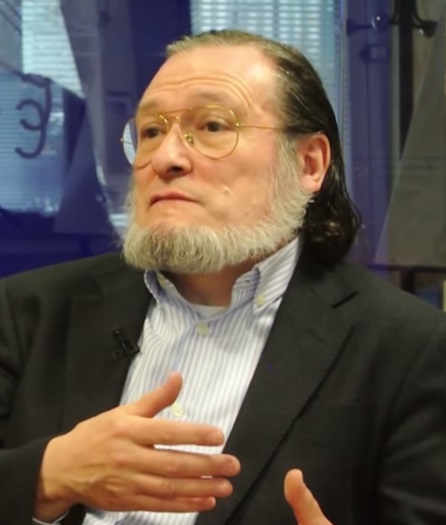
There is an objective fact that is on the table. Currently, the Social Security debt exceeds 130 billion euros. This is explained quickly and simply by the economist Santiago Niño Becerra, who provides clarifying figures in his analysis on 'La Ventana' of Cadena SER. #Pensiones #SeguridadSocial #EconomíaEspaña (translated)
The author pointed out that, in his opinion, the market was shifting from rewarding AI growth at any cost to wondering who would finance that growth and what real profitability it would generate. He added that some people had already made a lot of money with AI. (translated)
El autor citó a la economista jefe del FMI, Silvana Tenreyro, quien afirmó que la resiliencia de la economía mundial empezaba a alcanzar sus límites y que era necesario pasar de sobrellevar la situación a reconstruir. Añadió que el mensaje resultaba algo inquietante.
The author noted that, according to Cinco Días, halving tax fraud and evasion would yield 30 billion euros in Spain. He cited a publication from October 13, 2026. https://t.co/bzCwbCg4Ef #Fiscalidad #FraudeFiscal #ElusiónFiscal #ESP (translated)
The author wrote that, according to Bill Gates, artificial intelligence would exponentially increase cyberattacks and the risk of bioterrorism in 2027. He also stated that Gates was not doing enough to combat those dangers. (translated)
The author wrote that dynamic pricing could be set according to each person's income, inferred from different parameters, or according to the need that the system attributed to them. He described that possibility as a further step within dynamic pricing. #PreciosDinámicos #Economía #Renta #ES (translated)
The author wrote that 2026 was the hottest year ever experienced up to that point, but it could end up being one of the coolest in people's lifetimes. He added that although some years in the future might be a little less hot, each new extreme record would be higher as long as CO₂ continued to be emitted into the atmosphere. He presented it as a reflection. (translated)
The author added that the Social Security debt in Spain then stood at 136 billion euros, compared to 20 billion euros in 2017. He also pointed out that the payment of pensions accounted for 13% of GDP and estimated that it could represent 16.4% by 2050. https://t.co/x9trS7rIwj #Economía #Pensiones #DeudaPublica #ESP (translated)
The author pointed out that the European Commission had urged governments to apply fiscal prudence, something he interpreted as spending restraint, but he stated that it had not mentioned tax fraud. According to the figures he cited, it was estimated to be between €824 and €864 million annually in the EU, equivalent to 5%-6% of GDP, and €60 million a year in Spain. #Fiscalidad #FraudeFiscal #Economía #EU #ES (translated)
The author pointed out that a wave of bank failures that caused panic would, in his opinion, necessitate resorting to extraordinary levies, issuing public debt —something that, he indicated, the DGF could do— having the backing of the state, and requesting interventions from the ECB and other European entities. #Bancario #CrisisFinanciera #Economía #EU #ES (translated)
Claim it. Contact us at [email protected]
