WRLD

Aggregated public profile · Not an official account.

Sylvain Catherine

@sc_cath wrld.org
French economist
1 followers
Sylvain Catherine 3w
French economist

Sylvain Catherine argued that the interest rate is an equilibrium price, not an initial parameter of the problem. According to him, since German debt is more attractive at the same rate, France needs to propose a higher rate so that investors are, on average, indifferent between the bonds of the two countries. He described the rate spread as the market price of the French disadvantage, rather than as an advantage or disadvantage in itself. He found the original tweet absurd, accusing it of confusing the rate, which he presented as a free variable, with the risk taken by the lender. He compared this reasoning to the idea that the salary gap between a graduate from HEC and a graduate from the Paris School of Business would be a problem for HEC if both schools were of equal quality, since employers would then prefer to recruit the less expensive graduates. #Économie #TauxDIntérêt #Obligations (translated)
3011
Sylvain Catherine 3w
French economist

Sylvain Catherine wrote that Germany was going to issue bonds called "FSIB" to compete with France in the bond market. He stated that these securities would address a problem raised by economist Thomas Porcher, predicting that Germany would not repay its creditors if France defaulted. According to him, the initiative could provoke anger in Paris by challenging the French advantage in the sovereign debt market. He added that the German Ministry of Finance justified this innovation by denouncing unfair competition from France. #Obligations #MarchéFinancier #Économie (translated)

3710
Sylvain Catherine 4w
French economist

Sylvain Catherine judged a response to his tweet to be of poor quality, considering that it already addressed most of the points raised. He particularly disputed the comparison between the France-Germany and U.S.-Germany spreads: according to him, the U.S. borrows in dollars while Germany borrows in euros. The spread between these two countries would therefore also reflect a gap in anticipated inflation — about 0.5 points higher in the U.S. over the past three years — and the policies of two distinct central banks. He noted that the Federal Reserve's key rate was between 3.75% and 4%, compared to 2.5% for the ECB. In his view, comparing France to Germany would actually neutralize these differences. Catherine also rejected the accusation that his estimate of an additional 60 billion in interest would immediately apply the cost of the spread to the entirety of the debt. He clarified that he had written that this amount "would eventually" be reached, without assuming an immediate effect. Regarding the liquidity of the French and German bond markets, he stated that both were among the most liquid. He acknowledged that the Bund constituted better collateral but believed that this was precisely because it was less risky. According to him, a liquidity gap could not explain a spread of 1.6 points and stemmed from the difference in risk between the two countries. He added that the spread did not directly correspond to a probability of default, as it combined default risk with liquidity or "convenience" premium. However, these components would nonetheless reflect the underlying risk gap between the bonds. Finally, he estimated that French bonds could benefit from the same advantages as German ones if they were equally safe and criticized the idea that the spread arose from Germany's greater perceived safety rather than the risk attributed to France. (translated)

3017
Sylvain Catherine Oct 15
French economist

Sylvain Catherine believed that the main problem was related to public revenues and added that this seemed obvious to him. https://t.co/RPKGungEMm #Économie #FinancePublique #Fiscalité (translated)

3030
Sylvain Catherine Oct 14
French economist

Sylvain Catherine wrote that he had asked Opus to summarize this matter from various sources, including the part dedicated to him in his book due out next January. https://t.co/xN5Txfg3NK #Résumé #Livre #Affaire (translated)

3148
Sylvain Catherine Oct 13
French economist

Sylvain Catherine felt that young people lacked political and economic experience. He added that they could not be blamed for not understanding an opaque system or for not suspecting that the generations of their parents and grandparents acted against their interests, whether consciously or not. #jeunesse #politique #économie (translated)

3149
Sylvain Catherine Oct 13
French economist

Sylvain Catherine wrote that he was not unhappy to have taken part in this battle. He indicated that, 18 months earlier, his calculation had been close, even though his scope focused on public education spending rather than just the ministry. He called for returning this money to the youth. https://t.co/JiLFUqmceY #Éducation #Bataille #Jeunesse (translated)

3033
Sylvain Catherine Oct 8
French economist

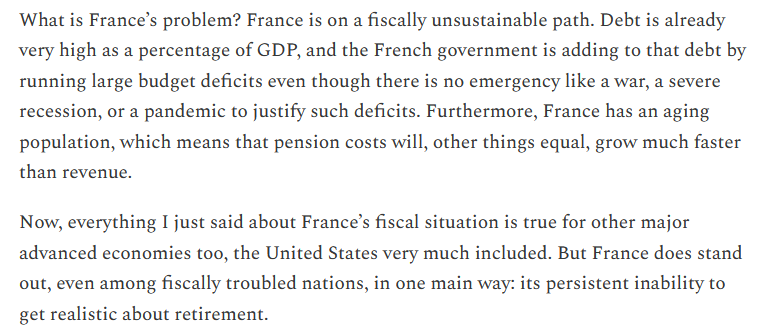
Sylvain Catherine wrote that Krugman believed that his observations on French public finances also applied to other major advanced economies, starting with the United States. He attributed to him the idea that France stands out among countries with budgetary difficulties due to its persistent inability to confront the realities of its pension system. #FinancesPubliques #Retraite #Économie (translated)

3040
Sylvain Catherine Oct 7
French economist

Sylvain Catherine considered that a person living in a nursing home and receiving rental income could sell the concerned property to finance their needs. He believed that increasing the return on this capital was artificial and that it would be more logical to consume it at this stage of life. He wondered whether the heirs were not the only beneficiaries of measures allowing for the preservation of the property. #EHPAD #finances #patrimoine (translated)

2807
Sylvain Catherine Oct 7
French economist

Sylvain Catherine mentioned the upcoming creation of a sovereign AI intended to manage the rules for using meal vouchers, holiday vouchers, sock discounts, pony deductions, cultural vouchers, and training accounts. He named the model "Le Matou mega fat" and assigned it a trillion parameters to understand these rules. #IA #Technologie #Finance (translated)

2924
Sylvain Catherine Sep 25
French economist

Défendre l'intégrité politique du continent contre une puissance belliqueuse ou indexer les retraites ? Voilà un arbitrage civilisationnel qui donne le vertige. Qu'aurait fait Churchill? #Politique #Intégrité #Civilisation

14219
Sylvain Catherine Sep 23
French economist

On pourrait payer les salariés en billets bleus universels, sans date de péremption. Mais non, il faut des chèques, des tickets, des comptes bidules, des dispositifs trucs. Ensuite, il faut trouver la bonne manière de les dépenser auprès du réparateur de chaussettes agréé, du formateur stratégique… sinon on écope d'un malus forfaitaire, d'une déduction écotruc, d'une contribution machin… C'est pour ça qu'il fallait passer aux 35 heures : pour libérer 4 heures à consacrer à ce bordel. #Travail #Économie #Système

12698
Sylvain Catherine Sep 23
French economist

Ce qui est tout de même délicieux, dans ces affaires d'IA et de plagiat, c'est la mise à nu du théâtre social qui entoure certains milieux bien tolérants envers le charlatanisme. Une grande partie de l'équilibre existant repose sur la peur de passer pour un plouc (ou pire) si l'on rejette certains codes culturels. La machine, elle, s'en balance et passe le bullshit au broyeur. C'est salutaire. #IA #plagiat #culture

14814
Sylvain Catherine Sep 17
French economist

Le débat semble s’être intensifié ces dernières semaines, mais il faudra attendre janvier pour lire mon premier livre. https://t.co/WEjIPMJmDd #livre #débat #lecture

12605
Sylvain Catherine Sep 14
French economist

Le prêt sera à taux zéro mais l’emprunt de l’Etat lui sera à 5%. La France se prépare à un virage à 360 degrés de sa politique d’infantilisation économique. Les tickets deviendront primes et les primes tickets. Et le fléchage de la consommation adapté aux lubies du nouveau chef. #Economie #France #Politique

17921
Sylvain Catherine Sep 10
French economist

Le niveau de vie des retraités n’a pas seulement doublé depuis: il a probablement quadruplé ou quintuplé. Quasiment la moitié des plus de 65 ans étaient au minimum vieillesse en 1960. C’était moins de 250 euros après correction de l’inflation. #Retraités #NiveauDeVie #Economie

14517
Sylvain Catherine Sep 7
French economist

Les salaires captent une part bien plus importante de la valeur ajoutée que les actionnaires. Simplement, la rémunération du capital est fluctuante, tandis que celle du travail est déterminée par le contrat de travail de chacun. Que souhaite Olivier Faure ? Que la part fixe de la rémunération soit plus faible et que les revenus des salariés varient au gré des vents de la politique de dividendes de leur entreprise ? Pourquoi ? Quel en serait l’avantage pour les salariés ? Pourquoi ne pas obliger, dans ce cas, les entreprises à verser une partie des salaires en stock-options ? Après tout, si l’on suit la logique de ce qu’il appelle « équitable », le patrimoine des salariés devrait lui aussi augmenter lorsque celui des actionnaires augmente. Pourquoi s’arrêter aux dividendes ? Curieux, pour des gens qui s’opposent par ailleurs à la capitalisation. #salaires #dividendes #capital

13463
Sylvain Catherine Sep 7
French economist

L’arithmétique de la répartition est dure mais intuitive. Admettons une quarantaine d’années de cotisations — ce qui suppose d’avoir commencé à travailler à 18 ans — et un taux de cotisation moyen de 25 % (correspondant à peu près à celui de la cohorte de 1960). On arrive à 25 % × 40 = 10 années de salaire versées en cotisations. L’espérance de vie des femmes à 60 ans est de 28 ans. Un départ à 58 ans implique donc une espérance de vie de 30,6 années à la retraite. Avec une pension moyenne représentant environ 55 % du salaire moyen des actifs actuels, on arrive à 17 années de salaire prélevées sur la génération suivante. Attention : ici, on ne parle pas du fameux taux de récupération de 2×. Mon calcul est déjà net des gains de productivité, puisqu’on raisonne en années de salaire de personnes appartenant à des générations séparées d’une trentaine d’années. Seule la croissance démographique peut financer cet écart sans augmentation des taux de cotisation d'une génération à l'autre. Comment le système peut-il accorder à un retraité le quasi double de l’effort qu’il a lui-même consenti, mesuré en années de salaire, sans devenir un énorme fardeau ? C’est simple : il faut que la population croisse de 70% d’une génération à l’autre. Ainsi, Sylvie et son mari peuvent demander dix années de salaires à chacun de leurs 3,4 enfants, soit 34 années au total, et donc 17 années par parent retraité. Il faut 3,4 enfants par femme : la démographie du Gabon. Un tout petit peu moins si on ajuste de l'espérance de vie un peu plus faible de son mari. #Retraite #Démographie #Économie

14646
Sylvain Catherine Sep 6
French economist

Lorsqu’il y a un krach boursier, vous perdez environ un quart de votre investissement en actions. C’est le même ordre de grandeur qu’à chaque fois que vous cotisez aux régimes complémentaires Agirc-Arrco. Pour chaque euro ouvrant un droit, vous payez 27 centimes en pure perte. Cela s’appelle le taux d’appel. C’est comme si chaque euro, sans exception, était investi juste avant un krach boursier. Ensuite, vous bénéficiez du taux de rendement interne quasi nul des complémentaires. C’est comme si vous entriez sur le marché à la veille d’un krach, sortiez après le krach, puis placiez l’argent restant sur un livret A jusqu’à votre retraite. #bourse #investissement #retraite

12050
Sylvain Catherine Sep 3
French economist

Le principe même du taux est qu’il s’ajuste pour que la demande des investisseurs se maintienne. Si les taux montent, c’est bien que les émissions ne trouveraient pas assez d’acheteurs à l’ancien taux. #taux #investissement #économie

12767