BETA nonprofit public democratic european moderated

Search

#Advocacy

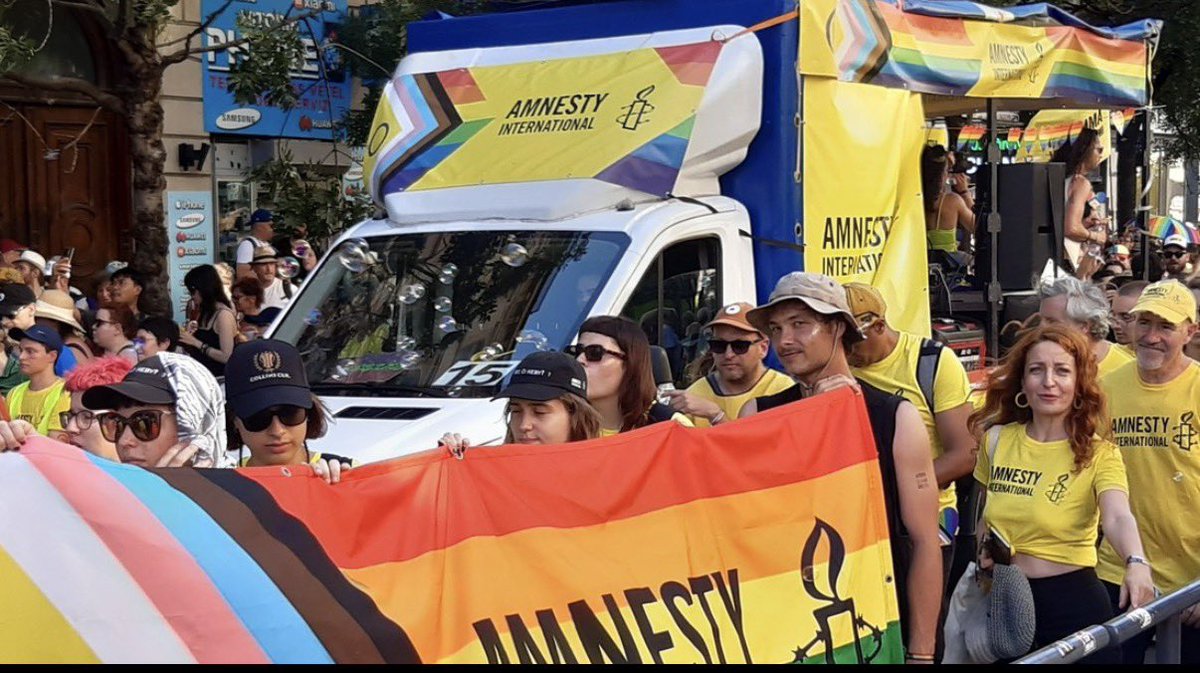
Hungary’s new government is reopening schools to gender activist NGOs previously kept out of classrooms. Among them are Amnesty International Hungary, Labrisz Lesbian Association and Háttér Society, two of Hungary’s leading LGBTQ and gender advocacy organisations, as well as https://t.co/HbKbiT26nF #Hungary #LGBTQ #GenderEquality #HU

8/17/2026: FORMAL COMPLAINT — VERBAL AGGRESSION & INTIMIDATION IN FINLAND COURT — On behalf of PM Simon Ekpa supporters in Finland Date: 17 August 2026 Location: Itä-Suomen hovioikeus, Istuntosali 2, Finland (Appeal from Lahti Magistrate Court — Päijät-Häme District Court) Purpose of Attendance: A delegation of Biafran supporters, attended court peacefully on 17.08.2026 in solidarity as PM Simon Ekpa's appeal continues. Incident Reported: Two individuals engaged in verbal aggression and intimidation directed at members of the delegation who had come to support PM. The individuals identified by witnesses as: Individual 1: Mary Ike Lasuba aka Adadioranma (France-based) Individual 2: Madam NkyNky @deborahsal82 (Evidences and Exhibits attached) The alleged conduct included insulting , demeaning languages, verbal aggression, crossing boundaries, intimidating remarks toward innocent Biafran supporters inside/near the courthouse area. Impact: The supporters felt harassed, unsafe and discouraged. Such conduct, if confirmed, undermines safety, unity and peaceful advocacy required during an active appeal, especially if confirmed that one of the women involved has verbally attacked our PM Simon Ekpa in the past (exhibits attached). Requested Action by USB Administration for; - Impartial fact-finding — obtain witness statements, camera exhibits from those present in Istuntosali 2 and the court house - Whom these 2 women represents and Caution to them to refrain from aggressive conduct during PMs court process moving forward. Assurance from Finland government of safety and respect for all supporters who travel for court solidarity. Resolution and commitment to non-violence and rule of law. Dr Ngozi Orabueze DPM USB/Head of BRGIE/DEFACTO @alexstubb @yleuutiset @Huuhkajat @MobilePunch @channelstv @SaharaReporters #HumanRights #Justice #PeacefulProtest

For too long, adults with intellectual disabilities and their parents have faced the future with dread, not knowing what will happen after their parents pass away. The successive cruel FF & FG governments will never act unless they are forced to by campaigns like this. #IntellectualDisabilities #DisabilityRights #Advocacy #Therearenospecificcountriesmentionedinthetweet.

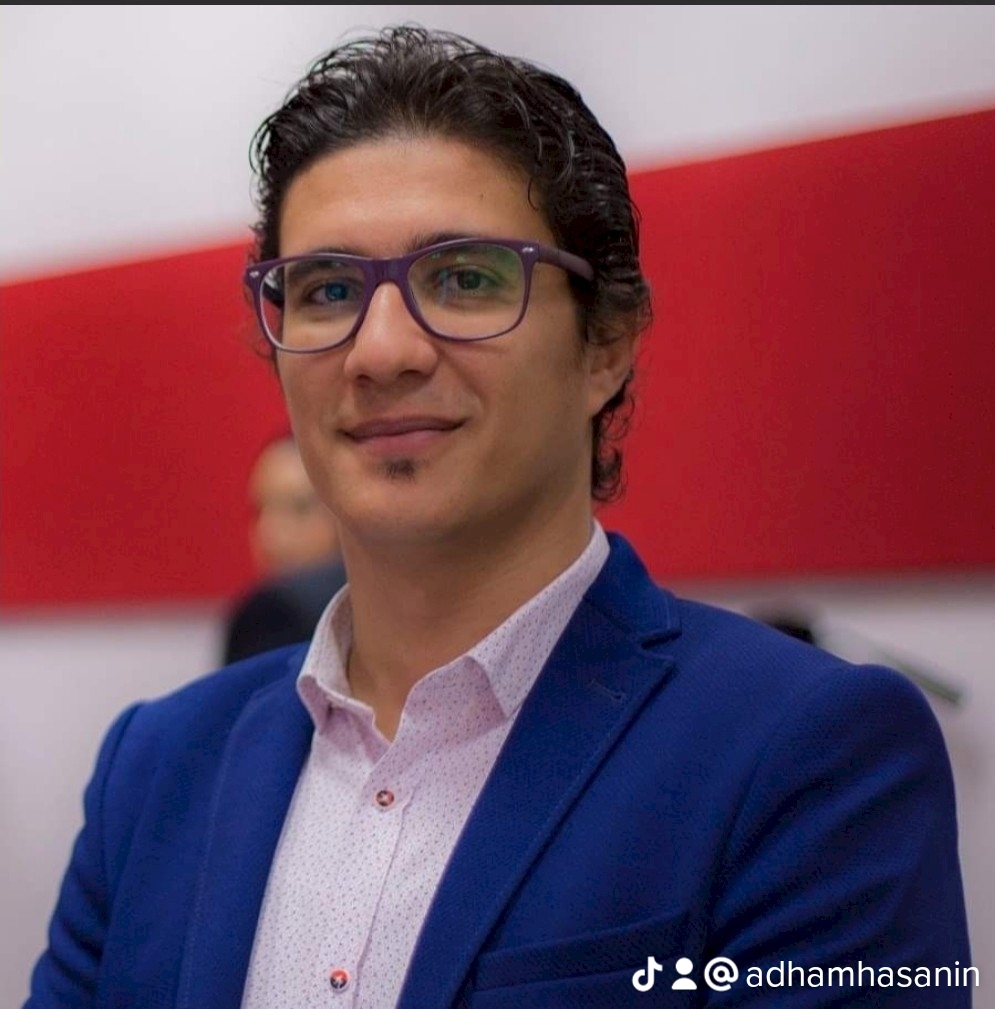
A Crown Instead of the Barracks: An Idea From Outside the Box Could Egypt’s exiled opposition use constitutional monarchy to dismantle the legitimacy of the 1952 coup? By Adham Hasanin Egyptian journalist and political writer, based in the Netherlands To understand what follows, a reader unfamiliar with Egypt needs one basic fact: since 1952, Egypt has never been governed by anyone who did not first wear a military uniform. Gamal Abdel Nasser, Anwar Sadat, Hosni Mubarak, and today Abdel Fattah el-Sisi four men, four eras, one common origin. All rose through the armed forces. All inherited a state built by a coup that year, when a group of officers calling themselves the "Free Officers" overthrew King Farouk I and, within a year, abolished the monarchy altogether and declared a republic. For seventy-three years, the underlying equation has not changed: the army rules, power passes from one officer to the next, and legitimacy is drawn from the barrel of a gun rather than the ballot box. Every conceivable form of opposition has been tried legal parties and banned ones, Islamist movements, liberal and leftist coalitions, the 2011 popular uprising, and the 2013 elections whose result was overturned by force within a year. All of them hit the same wall: a military institution that reproduces itself under different names, while the core of the system remains untouched. So what if the problem, all along, has not simply been who rules, but the constitutional framework that makes military rule possible in the first place? And what if the answer lies not in swapping one president for another, but in dismantling the underlying equation itself, through a framework Egyptian opposition movements have never seriously tried: a purely ceremonial constitutional monarchy, on the model of Belgium, the Netherlands, or Spain where the head of state becomes a symbol above the political fray, while the army is permanently expelled from politics and returned to its barracks. This is not a call to revive a particular family, nor nostalgia for a golden age that never quite existed. It is a proposal for a political and strategic tool that has not yet been used in the intellectual arsenal of Egypt’s opposition in exile a tool that deserves serious discussion, regardless of whether it is ever literally realised or simply serves to expand the boundaries of what is politically thinkable. I. Why 1952, Not 2013 or 2011, Is the Root The strategic error made by most Egyptian opposition movements from the Muslim Brotherhood to the April 6 Youth Movement to the various civil opposition parties has been treating each political crisis as an isolated case: Mubarak was corrupt and had to be toppled; Sisi staged a coup that must be condemned; the interim military council was a transitional phase to be endured. This piecemeal approach treats the symptoms while leaving the original illness untouched. That original illness is the very structure of legitimacy established by the coup of 23 July 1952. The Egyptian republican system, from Nasser to today, has never built its legitimacy on a genuine democratic social contract. Instead, it has rested on a fixed trinity: the rhetoric of "revolution against feudalism and colonialism," charismatic individual leadership, and military protection of the regime framed as the guarantor of stability. This trinity has repeated itself from Nasser to Sadat to Mubarak to Sisi, with only cosmetic variations. Each new president was never a break from the system he was its continuation. When the opposition says "let us return to the constitutional framework that preceded the coup," it is not criticising a particular policy. It is declaring that the legal foundation of everything that came after 1952 was illegitimate from the start. Here lies the rhetorical power of "returning to the pre-1952 order": it does not merely demand swapping one ruler for another. It withdraws historical legitimacy from the entire republican military system including today’s regime, which draws its own declared legitimacy from that same "1952 legacy." II. Why a "Ceremonial Crown," Not "the Return of a Ruling Family" Here is the most important distinction anyone advocating this idea seriously must grasp: the project does not rest on restoring any particular individual from the Muhammad Ali dynasty, nor on nostalgia for King Farouk or his ancestors. The real power of the idea lies in the constitutional form, not in the person who happens to sit on the throne. Three successful European democracies illustrate the model clearly. Belgium, where King Philippe is a purely constitutional symbol with no real executive power, while the state is run through an elected parliament and a complex coalition government reflecting the country’s linguistic and political diversity. The Netherlands, where King Willem-Alexander formally opens the parliamentary year and signs laws, but where actual decision-making rests with the prime minister and the elected parliament. And Spain, where the king represents symbolic continuity of the state above party politics, while the military and security services answer entirely to civilian authority a transition achieved after the death of the dictator Francisco Franco in 1975, when King Juan Carlos I voluntarily relinquished the extensive executive powers he had inherited and backed free elections, most dramatically in February 1981, when he personally ordered the armed forces to remain loyal to the constitution during an attempted military coup, causing it to collapse within hours. The common thread across these three models is not "the presence of an ancient royal family." It is the principle of separating symbol from power. The monarch in these countries does not rule; he represents. He issues no political decisions; he provides the continuity and symbolic stability that allows party political competition to revolve beneath him, without every transfer of power becoming an existential crisis of legitimacy. This is precisely what Egypt’s military republican system lacks: a neutral mechanism for guaranteeing state continuity that does not depend on the person of the ruler or his security apparatus. When Egypt’s military-republican president is absent, it is always the army that fills the vacuum, because it is the only institution built to be the "guarantor of stability." Under a ceremonial monarchical model, by contrast, it is the king not the army who represents that symbolic guarantee, genuinely opening the door to removing the military institution from the political equation altogether. III. Egypt’s Standing Under the Monarchy: An Honest Reckoning, Not Blind Nostalgia For a Western reader with little prior knowledge of Egypt’s monarchical period (1922–1952), it helps to know this: Egypt was nominally independent under its own king from 1922, but Britain retained enormous informal control over the country’s foreign policy, military bases, and the Suez Canal throughout the period a reality that shaped everything that follows. Any honest invocation of "Egypt’s standing under the monarchy" must avoid the trap of mythologised nostalgia that many advocates of this idea fall into. Egypt in that era was no lost paradise, and any honest article must say so plainly. The Egyptian pound, for instance, often invoked as a symbol of "national currency strength" in that period, was not strong because of independent Egyptian monetary policy. It was pegged to the British pound sterling as part of Egypt’s complete colonial financial dependency until 1947, with Egypt exercising no independent oversight of its own currency whatsoever. The pound’s strength, in other words, was not a sovereign Egyptian achievement it was a reflection of British imperial power ruling Egypt from behind the throne. But this does not mean Egypt lacked a genuine regional standing worth studying. Cairo, in the 1930s and 1940s, was the undisputed cultural capital of the entire Arab world: the Egyptian film industry produced more than half of all Arabic-language cinema; its theatre scene, led by figures like Youssef Wahbi and Naguib al-Rihani, and its music, with Umm Kulthum and Mohammed Abdel Wahab, set the standard across the region; Cairo University was the first modern university in the Arab world; and the Egyptian press was the reference point for Arab public opinion from the Atlantic to the Gulf. Cairo was, quite simply, to the Arab world what Paris was to Francophone Europe: an unrivalled centre of cultural and intellectual gravity. This standing was not necessarily a product of monarchy itself, so much as a product of a relative space of political and press pluralism that allowed Egyptian civil society to flourish, despite all the flaws of the political system and the interference of both palace and occupier. The lesson here is not "bring back the king and the standing will return." It is: when even a limited margin of civic freedom exists, Egypt flourishes culturally and intellectually almost by its own nature. And that margin is precisely what has been entirely absent across the past seven decades of unchallenged military rule. IV. What Reform Would Actually Require Not Repeating the Old Mistakes Any serious advocacy of this model must include, even briefly, a clear vision for avoiding the flaws of the old monarchical system itself otherwise the proposal collapses into simply replacing one form of authoritarianism with another wearing a different crown. First, the armed forces would need to be placed fully under a civilian ministry of defence, with its budget subject to transparent parliamentary oversight the exact opposite of its current status as a state-within-a-state, and equally opposed to its role under the monarchy, when it often served as an instrument of British influence. Second, a judiciary fully independent of both palace and government alike, unlike the old model, which saw direct royal interference in political life as when King Fuad I dismissed the elected government of Prime Minister Saad Zaghloul’s successor, Mustafa al-Nahhas, in 1928, in one of the clearest "constitutional coups" in modern Egyptian history. Third, a parliament that genuinely represents the people rather than landowners and the aristocracy, as was the case before 1952, when membership in the Senate was effectively conditional on the ability to pay land taxes meaning political representation was, by law, restricted to the wealthy. Fourth, genuine economic sovereignty, with a truly independent national currency rather than one pegged to a foreign power’s currency, unlike the historical dependency of the Egyptian pound on sterling. These four principles are enough to clarify that the project on offer is not a literal "return to the past," but a borrowing of the constitutional form (symbolic monarchy) combined with an explicit rejection of its old substance (colonial dependency, palace interference, parliamentary feudalism). V. The Role of Egyptian Movements in Exile: Between Goal and Instrument This raises the most practical question of all: how might Egypt’s opposition abroad actually adopt this idea, and in what capacity? The honest answer is that the power of this proposal does not necessarily lie in its literal fulfilment, but in its dual strategic function. On one hand, it can be advanced as a genuine political goal adopted by broad coalitions of Egyptian movements coalitions that might include Islamists, liberals, leftists, and traditional monarchists, united around a single shared premise: rejecting the legitimacy of the 1952 order and everything that followed from it, even if they later disagree over the precise final shape of the state. On the other hand and this matters more in practice the idea can be deployed as a rhetorical instrument of pressure to widen a Egyptian political debate currently trapped between two false choices: "continued military rule" or "no alternative, chaos awaits." When the opposition puts forward a clearly defined third model a European-style constitutional monarchy it breaks this false binary and opens new intellectual space in Egyptian public discourse, even if the project is never realised in its literal form. This kind of "leverage idea" is common in the history of political movements worldwide: it is not necessarily proposed to be fulfilled immediately in full, but to redraw the boundaries of the politically possible, and to force the existing regime to defend its legitimacy rather than simply assume it. Conclusion: An Invitation to Debate, Not a Ready-Made Prescription This article does not claim that restoring a monarchical form would magically resolve Egypt’s chronic crisis of legitimacy, nor does it ignore the immense difficulties facing any transformative project under a military institution as economically and securitywise entrenched as Egypt’s is today. But it raises a question that deserves serious debate among Egypt’s opposition in exile, rather than automatic dismissal simply for being unfamiliar: Has the Egyptian opposition exhausted every available tool for dismantling the legitimacy of 1952, or has it remained trapped in the same old binary swapping one ruler for another while the framework that makes military rule possible remains untouched? The idea is on the table now, not as a finished solution, but as an overdue invitation to think outside the box.

AfD-Gutachten: Wer prüft eigentlich die Prüfer? Das neue, rund 1.500 Seiten starke AfD-Gutachten stammt nicht von einem Gericht, einer Behörde oder einem parlamentarischen Wissenschaftlichen Dienst. Erstellt wurde es von einem achtköpfigen Team der Gesellschaft für Freiheitsrechte e. V. (GFF) – einer politisch operierenden NGO, die das Ergebnis nun ausdrücklich als Grundlage für ein AfD-Verbotsverfahren vermarktet. Zur Finanzierung erklärt die GFF: ermöglicht durch rund 20.000 Einzelspender. Campact bestätigt zugleich, dass auch die Demokratie-Stiftung Campact „bei der Finanzierung geholfen“ habe. Eine projektgenaue Aufschlüsselung – welcher institutionelle Akteur wie viel zahlte – ist bislang nicht veröffentlicht. Und dann wird es interessant: Die GFF führt die Open Society Foundations ausdrücklich als institutionelle Geldgeberin auf – für eine Verfassungsbeschwerde und „allgemeine Förderung“. Zusätzlich nennt sie das Foundation Open Society Institute, die Open Society Initiative for Europe und die Open Society Foundations für Arbeiten zu zivilgesellschaftlichen Handlungsspielräumen und Whistleblowing. Open Society ist keine nebulöse Verschwörungsformel, sondern das von George Soros aufgebaute internationale Stiftungsnetzwerk. Soros hat nach eigenen Angaben der Organisation mehr als 32 Milliarden Dollar dafür bereitgestellt; Vorsitzender ist heute sein Sohn Alex Soros. Journalistisch sauber muss man unterscheiden: Bislang ist nicht belegt, dass Open Society unmittelbar das konkrete AfD-Gutachten bezahlt hat. Belegt ist aber, dass die herausgebende Organisation institutionell und allgemein aus dem Soros-Stiftungsnetzwerk gefördert wurde. Gerade deshalb wäre eine vollständige, projektbezogene Finanzierungsaufstellung zwingend. Denn hier arbeitet ein geschlossenes Advocacy-Ökosystem: GFF erstellt das Gutachten. Campact hilft bei der Finanzierung und fordert anschließend den „Startschuss“ für das Verbotsverfahren. Der RAV, bereits Unterstützer der Gutachtenkampagne, organisiert danach den offenen Brief von inzwischen mehr als 1.000 Juristen und beruft sich auf das GFF-Gutachten. Das beweist nicht, dass das Gutachten juristisch falsch ist. Es widerlegt aber die Inszenierung einer politisch und institutionell voraussetzungslosen Expertise. Wer mit einem privat finanzierten NGO-Gutachten das schärfste Instrument des Parteienrechts legitimieren will, muss Autoren, Geldflüsse, Unterstützer und personelle Netzwerke maximal transparent machen. Ich prüfe deshalb jetzt sämtliche Unterzeichner: RAV, GFF, VDJ, ECCHR, Amnesty, Refugee Law Clinics, „Kritische Jurist*innen“, Parteien, Ministerien, Hochschulen, staatliche Prüfungsausschüsse, Stiftungsförderungen sowie Studienstiftung des deutschen Volkes und DAAD. Nicht, um anwaltliches Engagement zu skandalisieren – sondern um sichtbar zu machen, ob hier tatsächlich mehr als 1.000 unabhängige Einzelstimmen sprechen oder ein seit Jahren personell und finanziell verflochtenes juristisch-politisches Milieu mobilisiert wurde. Analyse aller Anwälte: in the making. Follow the money. Follow the careers. Follow the network. #AfD #Transparenz #NGOs

Bistanden på 23 mia. kr. årligt er venstrefløjes private hæveautomat. Her er således Groks oversigt over Trine Pertou Machs (Enh.) hovedpositioner i NGO'ere og NGO-lignende organisationer baseret på hendes officielle CV fra Folketinget og andre biografier: - WWF (Verdensnaturfonden) – Project manager (2003-2004) - Mellemfolkeligt Samvirke (MS) – Middle East adviser (2004-2006) + tidligere programkoordinator + forkvinde/bestyrelsesmedlem (2007-2013/14) - Folkekirkens Nødhjælp – Middle East programme officer (2006-2007) - Institut for Menneskerettigheder – Programme officer (2007-2009) - International Media Support (IMS) – Konsulent (2009) - International Alert (London) – Leder af “Economic Development for Peace” (2018-2020) - Oxfam Ibis / Oxfam Danmark – Director of Policy, Advocacy and Media / politisk chef (2020-2022) Derudover har hun haft bestyrelsesposter, bl.a. i ActionAid International og som forkvinde for MS. #dkpol #NGO #menneskerettigheder #socialretfærdighed

“Fossil fuel subsidies must end”👩‍⚖️⁣ ⁣ Mariana Paoli, Global Policy & Advocacy Climate Lead at @Oxfam, talks about the climate winnings in taxing fossil fuel companies. ⁣ ⁣ Watch more from @london_climate on @WeDontHaveTime https://t.co/fPpPTlQ06b #FossilFuels #ClimateAction #TaxTheRich #Therearenospecificcountrymentionsinthetweetprovided.

BBC Jun 20

Lebanese turtle conservationist Mona Khalil, known for her dedication to protecting endangered sea turtles along Lebanon's southern coast, died from injuries sustained in an Israeli strike that hit her home, highlighting the ongoing violence in the region despite her lifelong commitment to environmental conservation and community advocacy. #EnvironmentalActivism #ConservationLegacy #SeaTurtleProtection

Lebanese turtle conservationist Mona Khalil killed by Israeli strike

Princess Bajrakitiyabha of Thailand, renowned for her advocacy for women's rights and justice, passed away at the age of 47 after a three-year struggle with a mycoplasma infection that had left her reliant on medical devices for lung and kidney support. #Thailand #PrincessBajrakitiyabha #DomesticViolence

Princess Bajrakitiyabha the 'pride of Thailand' dies aged 47 after three-year battle with infection

On the website of Reichman University (formerly IDC Herzliya), the new app presents itself with polished corporate language: "verified answers from experts" for "social media discussions," proactive advocacy, support for North American Jewish communities. It's called RiseApp and (translated)

BBC May 20

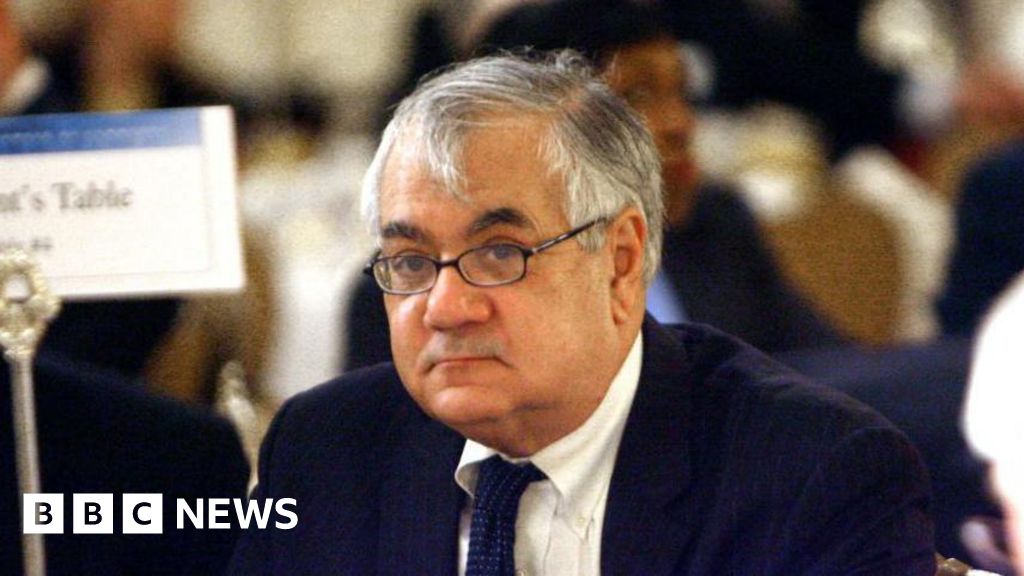
Barney Frank, a pioneering openly gay former US congressman known for his advocacy for LGBT rights and significant role in crafting the Dodd-Frank Act following the 2008 financial crisis, passed away at 86 while in hospice care in Maine. #LGBTQrights #BarneyFrank #USpolitics

Barney Frank: One of the first openly gay US congressmen dies aged 86

On Saturday, a gathering on the Edmund Pettus Bridge in Selma, Alabama, served as a poignant reminder of the ongoing struggle for civil rights, as activists, clergy, and community members expressed outrage over a recent Supreme Court decision weakening the Voting Rights Act while reaffirming their commitment to civic engagement and moral advocacy in the face of political setbacks. #CivilRights #VotingRights #SocialJustice #US #LA #AL

The Fight for Voting Rights Returns to Selma
BBC May 16

Claire Brosseau, a 49-year-old Canadian woman with severe mental illnesses, is advocating for access to medically assisted dying (MAID) after exhausting all treatment options, as current laws exclude psychiatric patients and she believes this reflects societal stigma against mental illness. #MentalHealth #Euthanasia #Advocacy #CA #NL #BE #LU

What is a 'safe death'? Mentally ill woman asks for assisted dying in Canada
BBC May 16

Claire Brosseau, a 49-year-old woman from Toronto suffering from severe, treatment-resistant mental illness, is advocating for access to medically assisted dying in Canada, as she believes the current laws exclude individuals with mental health conditions and reflect societal stigma, while her personal battle with debilitating bipolar disorder and PTSD has left her feeling "functionally terminal" and without hope for recovery. #MentalHealth #AssistedDying #Advocacy #CA #NL #BE #LU

What is a 'safe death'? Mentally ill woman asks for assisted dying in Canada
BBC May 15

In an interview with BBC News Brasil, Pastor Helena Raquel emphasized the need to address domestic violence within churches while criticizing the culture of silence among congregations, highlighting that her advocacy is rooted in a spiritual calling to support women who suffer abuse, regardless of political affiliation, as demonstrated by the praise she received from both former First Lady Michelle Bolsonaro and current First Lady Janja. #DomesticViolence #ChurchAccountability #WomenEmpowerment #BR #US

A pastora que denunciou violência contra mulheres e uniu Janja e Michelle Bolsonaro - BBC News Brasil
BBC May 15

Angela Rayner, who resigned from her government roles last year due to a tax investigation related to her home purchase, has resolved the issue and emerged as a potential contender for Labour Party leadership amidst ongoing challenges for Prime Minister Sir Keir Starmer, highlighting her resilience and political significance after a tumultuous career shaped by her working-class background and advocacy in social care and trade unionism. #Politics #Leadership #LabourParty #GB

Angela Rayner: Labour's working-class warrior who is once again a power player
BBC May 15

An inquiry has been launched into whether Nigel Farage failed to declare a £5 million gift from British cryptocurrency investor Harborne in the MPs' register of interests, amid claims that the financial support for his Brexit advocacy could influence his political career, while Farage maintains that the gift did not impact his decision to return to public life and insists he cannot be bought. #UKPolitics #Brexit #ParliamentaryStandards #GB #TH

Nigel Farage says £5m gift a reward for Brexit campaigning

Jason Collins, the first openly gay male athlete in North America's major professional sports, passed away at 47 from brain cancer, prompting discussions about his significant impact on gay rights in sports and the ongoing struggles for acceptance in society, as highlighted by the "Inside the NBA" crew. #LGBTQ #SportsHistory #Advocacy #US

'Inside the NBA' on Jason Collins' death: 'It was a terrible day for the NBA'
BBC May 14

Seventeen years after suffering a traumatic childbirth injury, Geeta Nayar continues to struggle with bowel incontinence, a condition that affects 20% of women and is often caused by similar birth-related injuries, yet remains shrouded in stigma and secrecy, as highlighted by her and fellow sufferer Rhi's advocacy for increased awareness and support for affected individuals. #PelvicHealth #WomensHealth #BirthInjury #GB #WLS

Giving birth left me with bowel incontinence - women shouldn't suffer silently