BETA nonprofit public democratic european moderated

Search

#Belief

Viewing one's own suffering as no greater than the common human lot fostered deeper emotional and social well-being. Although suffering is a universal aspect of human life, surprisingly little research has examined people’s general beliefs about suffering—its #Suffering #EmotionalWellBeing #HumanExperience #Thetweetdoesnotmentionanyspecificcountries.

H

Where the Clinic Meets the Movement: Does Gender Ideology Arm Left-Wing Authoritarian Psychology? “CGAS (Clinical Gender Affirmation Scale) and related gender ideological-belief measures were strongly associated with left-wing authoritarianism” - Where the Clinic Meets the Movement: Does Gender Ideology Arm Left-Wing Authoritarian Psychology? “CGAS (Clinical Gender Affirmation Scale) was not simply standing in for being politically left-wing” - Where the Clinic Meets the Movement: Does Gender Ideology Arm Left-Wing Authoritarian Psychology? “Support for coercion, punishment, and violence appears to be tied less to liberalism generally than to an authoritarian disposition organized around left-wing ideological content” - Where the Clinic Meets the Movement: Does Gender Ideology Arm Left-Wing Authoritarian Psychology? “Gender ideology may function as an ideological accelerant” - Where the Clinic Meets the Movement: Does Gender Ideology Arm Left-Wing Authoritarian Psychology? “Gender ideology may supply authoritarian psychology with a structured map of perceived outgroups, threat sources, and oppressor classes” - Where the Clinic Meets the Movement: Does Gender Ideology Arm Left-Wing Authoritarian Psychology? “Dissent becomes not a legitimate position but a failure of professional duty or an act of harm” - Where the Clinic Meets the Movement: Does Gender Ideology Arm Left-Wing Authoritarian Psychology? “The same psychological machinery operates on the extreme left”- Where the Clinic Meets the Movement: Does Gender Ideology Arm Left-Wing Authoritarian Psychology? “Violence can come to seem permissible or necessary” - Where the Clinic Meets the Movement: Does Gender Ideology Arm Left-Wing Authoritarian Psychology? “Three findings pull in the same direction. People who strongly endorse gender ideology positions score dramatically higher on left-wing authoritarianism than their political identity alone would predict. Furthermore, both LWA (Left-Wing Authoritarianism) and CGAS (Clinical Gender Affirmation Scale) predicted support for political violence” - Where the Clinic Meets the Movement: Does Gender Ideology Arm Left-Wing Authoritarian Psychology? “Together, these findings support the paper's core claim: gender ideology may function as an ideological accelerant, telling left-wing authoritarian psychology who the enemy is, why the situation is urgent, and—in those already disposed toward force—that violence is legitimate” - Where the Clinic Meets the Movement: Does Gender Ideology Arm Left-Wing Authoritarian Psychology? “One mechanism by which clinical content may translate into violence permission deserves note. Trans-Genocide Belief—the perceived likelihood that a genocide of individuals that identify as transgender is currently underway in the United States—is predicted to more strongly relate to CGAS (Clinical Gender Affirmation Scale) and LWA (Left-Wing Authoritarianism) than to political identity and to be associated with elevated justification for political violence” - Where the Clinic Meets the Movement: Does Gender Ideology Arm Left-Wing Authoritarian Psychology? “This prediction is consistent with broader research showing that perceived threat, existential threat, and collective victimhood can increase support for hardline, punitive, or exclusionary action against outgroups, particularly when paired with authoritarian dispositions or strong moral conviction (Armaly & Enders, 2022; Carriere et al., 2022; Hirschberger et al., 2016; Kljajić et al., 2025; Schori-Eyal et al., 2014; Skitka, 2010)” - Where the Clinic Meets the Movement: Does Gender Ideology Arm Left-Wing Authoritarian Psychology? “Related work on moralization and violent intergroup conflict further suggests that when a political conflict is framed as a moral emergency involving dangerous or demonized outgroups, violence can come to seem permissible or necessary (Mooijman et al., 2018; Saguy & Reifen-Tagar, 2022)” - Where the Clinic Meets the Movement: Does Gender Ideology Arm Left-Wing Authoritarian Psychology? “The practical stakes are straightforward. Research frameworks for understanding authoritarianism have historically focused overwhelmingly on the political right, while analogous left-wing pathways have received far less attention. Yet federal agencies and public safety officials are concerned not only with ideology in the abstract, but with radicalization pathways: the content that tells people who to fear, why the situation is urgent, and when force becomes acceptable” - Where the Clinic Meets the Movement: Does Gender Ideology Arm Left-Wing Authoritarian Psychology “This study suggests that the same psychological machinery operates on the extreme left, and that it may be running through institutional channels—clinical guidelines, professional standards, credentialed expertise—that current threat-detection frameworks are not well designed to recognize” - Where the Clinic Meets the Movement: Does Gender Ideology Arm Left-Wing Authoritarian Psychology? “Violence connected to gender ideology remains largely undocumented in the academic literature. This study provides a first systematic empirical look at the psychological infrastructure that makes such violence conceivable” - Where the Clinic Meets the Movement: Does Gender Ideology Arm Left-Wing Authoritarian Psychology? “Both LWA (Left-Wing Authoritarianism) and CGAS (Clinical Gender Affirmation Scale) were significantly positively correlated with justification for political violence across all six targets” - Where the Clinic Meets the Movement: Does Gender Ideology Arm Left-Wing Authoritarian Psychology? “Our main findings for youth starting treatment with blockers include: At baseline, about one-quarter of these youth had clinically concerning scores for depression and anxiety. About one-quarter reported having thought about suicide, and 8% reported having attempted suicide in the past. These numbers are on par with the population of middle school youth at large” - The Trans Youth Care - United States “Our main findings for youth starting treatment with GAH include: At baseline, about half of these youth had clinically concerning scores for depression and anxiety. About two-thirds reported having thought about suicide, and one-quarter reported having attempted. By two years after starting GAH, these youth showed increased scores for life satisfaction, appearance congruence (having the physical appearance of one's body match one's gender identity), positive emotions, and psychological well-being and decreased scores for depression and anxiety” - The Trans Youth Care - United States

"Their Christianity is not simply a religious belief imposed upon politics. Increasingly, it is a way of making political grievances feel sacred." An excellent insight into the new British Christian far right. 👇 https://t.co/UYUlfrj5dw #ChristianFarRight #PoliticalBeliefs #SacredGrievances #GB

H

The Politics of Pity For a decade, the West has argued whether empathy should be its highest value. Some praise it as a superpower; others call it harmful. Gad Saad’s “Suicidal Empathy” topped the New York Times list. Elon Musk called empathy a weakness; John C. Reilly called it a superpower. Ideas should be judged by consequences. Compassion-justified policies have coincided with worse addiction and homelessness, rising crime, mass migration, social fragmentation, higher living costs, and controversial medical interventions for gender-dysphoric minors. When these fail, advocates often claim it was not implemented “strongly enough.” ## An Inversion of Truth A quote often attributed to Hannah Arendt claims “the death of human empathy” precedes barbarism, but no source supports it, and her writings argued almost the opposite. Arendt contrasted the American Revolution’s institutions and law with the French revolutionaries’ “politics of pity.” Pity is not compassion: it ranks “fortunate” and “unfortunate,” grants the pitier moral authority, and overrides rights. Arendt argued this enabled Robespierre’s Terror. ## The Trojan Horse Empathy can become projection—imposing your values as if they were others’ needs. Adam Smith warned about the “man of system.” Nietzsche described societies so “soft and tender” they side with those who harm them. Orwell noted equality preaching alongside elite privilege. Rob Henderson calls these “luxury beliefs.” I call it suicidal narcissism: acquiring moral status by appearing compassionate while policies erode the foundations others rely on. The reward is immediate; the damage comes later.

H

The Sweetened Lie I once dated a girl who said she’d go along with “2+2=5” if someone truly believed it—she wouldn’t correct them if it might upset them. In her mind, sharing a delusion was safer than truth and conflict. This mirrors what’s happening in the West: we’re losing the capacity to seek truth. Two forces may play roles: declining testosterone among young men and the feminization of institutions. Testosterone is linked to assertiveness and resistance to social pressure, and research suggests it can reduce short-term deception and conformity to group norms. Testosterone has also fallen in men across wealthy nations since the late twentieth century, making pressure easier to accept. Meanwhile, healthcare, universities, media, and other institutions are increasingly female-dominated. Critics argue that female-led cultures may prize consensus and harmony, making dissent costlier. Combined with less internal resistance, external penalties for resisting pressure can produce enforced conformity. Jung warned that failing to integrate the “masculine” side of the psyche can lead to rigidity and ideological capture. Arendt noted that totalitarianism doesn’t require belief in lies—only behavior that acts as if one believes. My ex embodied that dynamic. Nietzsche argued strength is tolerating truth, while the weak require truth diluted and sweetened. The first step is personal: refuse to participate. Accept the cost of nonconformity, build physical strength to support mental strength, and above all, refuse to tell the lie.

H

When Morality Becomes a Weapon Having the “correct” opinion doesn’t make you a good person. Our age is increasingly ruled by those who believe it does. In *The Brothers Karamazov*, Dostoevsky shows this through the Grand Inquisitor, who imagines Christ returning during the Spanish Inquisition. He arrests Him for threatening an institution that claims to represent Him. The Inquisitor argues people don’t truly want Christ’s freedom; they want bread, certainty, and someone to carry the burden of choice. He eventually admits they don’t need Christ’s teachings—only His moral authority. Dostoevsky reveals how power works: dominators can hide behind morality, while the dominated may trade freedom for the comfort of having others decide. Later, Polish psychiatrist Andrew Lobaczewski observed communism invoking “the people” to justify terror and execution. He argued that a small minority without conscience can rise during revolutionary upheavals, with ideology serving as moral camouflage. The lesson: moral language can be weaponized by those lacking moral character. Words like justice, equality, safety, harm, care, and compassion can become tools of control. Return to Aristotle’s view of virtue: virtue isn’t a belief you hold but a habit you practice. We become just by repeatedly doing just things; bravery comes from doing brave things. No slogan can replace character.

H

Leftist “Empathy” Is Actually Narcissism Leftist “empathy” is often narcissism, not real compassion. Over the past decade, Western politics has debated whether empathy is the highest value—yet many policies justified in its name have produced serious unintended consequences: safe-supply programs, lenient bail, mass migration, identity-based social policy, and gender medicine for minors. Hannah Arendt helps explain why. In *On Revolution*, she contrasted the American Revolution’s focus on institutions and limits on power with the French Revolution’s “politics of pity,” an effort to eliminate suffering through political action. Robespierre’s compassion for the masses helped justify terror. Pity isn’t compassion: it creates a hierarchy between the person who pities and the person pitied. Once you claim to represent “the oppressed,” you can stop listening to real people. Much progressive “empathy” projects idealized versions of others, erasing cultural differences and treating disagreement as ignorance or prejudice. Adam Smith warned about the “man of system,” who thinks society can be rearranged like chess pieces, ignoring human wills. Dostoevsky argued abstract love is easy; loving real people is hard. Nietzsche described a morality that flatters weakness and condemns what rises above the herd, while Orwell questioned whether some socialist intellectuals truly loved workers or simply used them to vent resentment. Rob Henderson calls these “luxury beliefs”: status-providing ideas for elites that impose costs on those below them. The moral prestige is immediate; the damage unfolds over decades. So “suicidal narcissism” may fit better than “suicidal empathy”: projection, superiority, and power disguised as compassion.

H

A Culture of Violent Ressentiment A lust for violence is spreading through the worst among us. After shootings, murders, and attempted political violence, some celebrate and idolize the attackers—while others online applaud harm done to those deemed deserving, even for things like “misgendering.” People claim these are unrelated, but I see a shared conviction: blood is the only route to a better world. We debate which ideology “caused” a given attack—incel culture, Marxism, anti-Zionism—but the pattern is similar. Radicalization is often treated like infection: belief first, impulse second. I think the reverse is more common. Corrupted people don’t stumble into dangerous ideas. They go looking for them. Ressentiment—Nietzsche’s term for the slow poison of hopeless victims—builds moral systems that make a grudge feel like justice. The feeling takes the throne first; philosophy follows, recruiting whatever justifies what the person already wants. Ressentiment focuses on enemies and punishment while offering vague utopias. It subtracts, locating suffering entirely outside the self and proposing removal of its “source.” That’s why it rejects self-improvement: it requires agency. What we face is not one ideology, but the spirit that turns failure and frustration into someone else’s crime—and therefore treats violence as justice.

H

The Pinnacle of Tyranny The pinnacle of tyranny would allow politicians, elites, and bureaucrats to control a population without force or coercion—because the people love their servitude. Aldous Huxley’s *Brave New World* explores this idea through an eerily relatable dystopian society. Unlike Orwell’s *1984*, Huxley’s world contains no obvious oppression. The state does not need to “stamp on a human face—forever.” Instead, citizens willingly chain themselves to pleasure and distraction. Authorities do not rule through terror, but by giving people everything they think they want. Soma, a government-approved drug, becomes the opiate of the masses. Mustafa Mond, the World Controller, compares it to Christianity without the suffering. By swallowing a few tablets, citizens can escape reality—a temporary holiday from the facts. Lenina cannot understand why Bernard refuses Soma, preferring discomfort to something that can remove it. When Bernard says, “I’d rather be myself, myself and nasty, not somebody else, however jolly,” Lenina views his desire for authenticity as a kind of illness. Bernard wants to experience passion and recognizes that life involves more than contentment. He craves genuine experience, including suffering and intensity, rather than emotional regulation by the World State. Lenina’s confusion results from her conditioning, which teaches her to view unhappiness as a technical problem. This belief is captured by the saying, “A gram is better than a dam.” The citizens of *Brave New World* are not captives but satisfied customers. Children are produced by the state, relieving people of the responsibilities of parenthood. Their free time is filled with promiscuity, cheap entertainment, and endless sporting events—what might be called “slop” today. As Neil Postman observed, Orwell saw totalitarianism through fear, while Huxley imagined a society where oppression would be unnecessary because people would willingly surrender themselves to pleasure. There would be no need to ban books, because no one would want to read them. An abundance of low-quality information would make censorship unnecessary; the truth would be drowned out by noise. Huxley warned that people’s “almost infinite appetite for distractions” could make tyranny not only possible, but welcome.

H

Marxism as a Secular Religion A traditionally religious person accepts that they inhabit a world of scarcity and suffering, finding peace through belief in salvation from God. The affluent atheist, encountering hardship and personal responsibility for the first time, may instead become overwhelmed by anxiety. Marxism, disguised as economic theory, promises to relieve individuals of responsibility by transferring it to the system. It offers the religious concepts of a fallen world, a chosen people, certainty, and moral status, while removing Christianity’s most difficult demands: repentance and forgiveness. Rather than locating sin within each individual, Marxism assigns it to a class: the bourgeoisie. Salvation is no longer a process of personal transformation but something achieved by acting against others. The individual is not asked to examine himself, because guilt is always assigned to another class. This helps explain why Marxist revolutions so often end in mass graves. If evil is viewed as a property of a class, then eliminating that class becomes an act of purification. Mass murder is not treated as a betrayal of the doctrine but as its ultimate fulfillment. Marxism elevates resentment to a virtue. It portrays inequality as a cosmic injustice and suggests that hatred of those who possess more is morally justified. Ironically, although it rejects God, it borrows religious language. In a purely material world of atoms colliding randomly, no arrangement of matter can be inherently unjust. Class origin becomes a crime inherited from one’s ancestors, and forgiveness has no meaningful place. When salvation is promised through the violent removal of an entire class, the result is tragically predictable. Marxism is not merely an economic theory; it is a secular religion of resentment and destruction.

You have a historic opportunity to undo the terrible harm you did while in office @JuliaGillard. Speak up for women now that you know the true cost of your luxury beliefs #WomenEmpowerment #LuxuryBeliefs #Accountability #AU

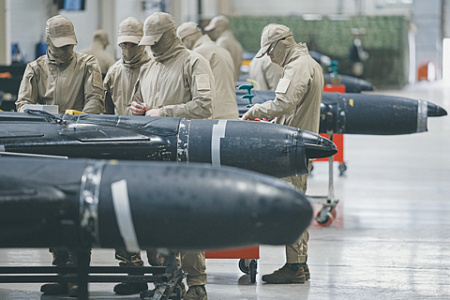
Arson attack on an Estonian UGV manufacturer in Tallinn, which supplies, among others, Ukraine. Many still do not understand what it means to be in a hybrid war. Russia is attacking us, also kinetically. We must finally strike back! (translated)

Deutscher Maschinenbauer macht endgültig dicht. 150 Mitarbeiter verlieren ihren Arbeitsplatz und mehr als 30 Jahre Firmengeschichte enden. #Engmatec #Maschinenbau #Insolvenz #Industrie Standort vor dem Aus: Die Engmatec GmbH aus Radolfzell wurde 1994 gegründet und beschäftigt rund 150 Mitarbeiter. Nach der Insolvenz wird die Produktion bis Oktober 2026 vollständig eingestellt. Sämtliche Arbeitsverträge wurden bereits gekündigt. Das Unternehmen entwickelte Prüfgeräte und automatisierte Montageanlagen für elektronische Baugruppen und belieferte internationale Kunden. Kein Investor gefunden: Trotz eines umfassenden Investorenprozesses konnte kein Käufer für Engmatec gewonnen werden. Als Ursachen nennt das Unternehmen eine schwierige Marktlage, reduziertes Projektvolumen sowie verschobene oder gestrichene Kundenprojekte. Zusätzlich verweist der Bericht auf starken Preisdruck durch asiatische Wettbewerber. Bis zur Schließung sollen bestehende Kundenaufträge noch abgearbeitet werden. 150 Arbeitsplätze weg, kein Investor und ein weiterer deutscher Maschinenbauer verschwindet vom Markt. @HotManufaktur vielen Dank für den wichtigen Hinweis! Quelle: Frankfurter Rundschau https://t.co/Bm8MH757Co #Maschinenbau #Insolvenz #Industrie

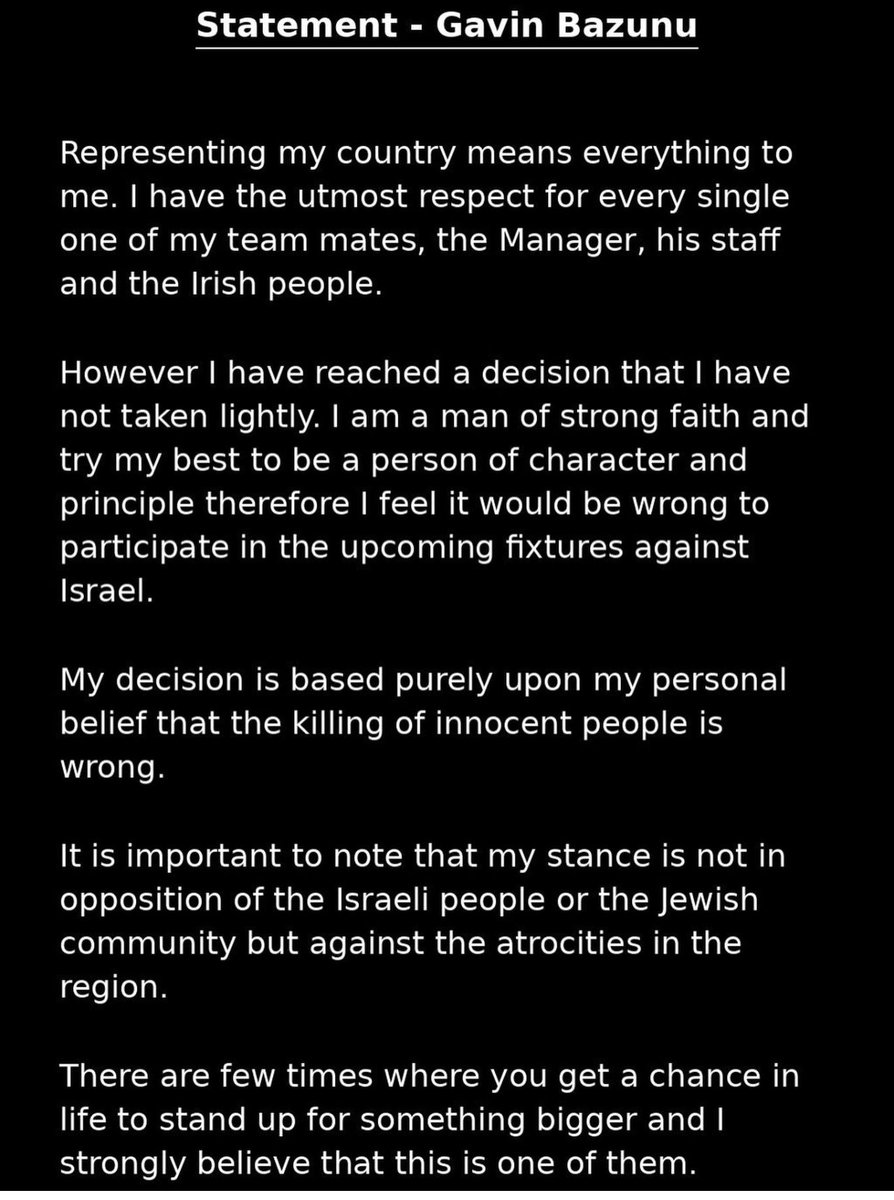
It beggers belief that the Irish Government can be so openly Zionist in their treatment of Palestinians. Just as they've helped fund the Israeli Genocide by continuing to do Business with Israel... #IrishGovernment #Palestine #Zionism #IE #IL #PS

Fierce fight, strong belief and precious 🇺🇦 freedom in one picture. #Kyiv #StandWithUraine wherever you are https://t.co/G01hXuP8zS #StandWithUkraine #Kyiv #Freedom #UA

The Horizon of Reason: Finding Meaning in Atheism. Good day, everyone. When people hear the word "atheism," they often think of what it lacks. They focus on the prefixes and the definitions: a lack of belief in a deity. But to view atheism only as an absence is to miss the entire landscape of what it actually builds. Today, I want to talk about atheism not as a void, but as a vibrant, deeply responsible, and profoundly hopeful way of looking at our universe. At its core, atheism is a commitment to radical honesty. It is the decision to look at the vast, beautiful, and sometimes terrifying cosmos and say, "I do not know all the answers, and I will not invent stories to fill the gaps." Atheism relies on evidence, reason, and the scientific method. It is driven by the same curiosity that makes a child look through a microscope or a scientist peer through a telescope. It embraces uncertainty. In uncertainty, there is room for growth, discovery, and learning. When we accept that we do not have a cosmic blueprint, we become actively responsible for writing our own stories. A common misconception is that without a divine entity, there can be no morality. But atheism flips this dynamic. It suggests that kindness, empathy, and justice do not come from a fear of cosmic punishment or a desire for a heavenly reward. They come from us. We are kind to one another because we are social creatures who share this planet. We care for the sick because we know what pain feels like. We fight for justice because we want to live in a fair world. Our morality is human-centered. It is born from the profound realization that this life is all we have, and therefore, how we treat each other right now matters more than anything else. To an atheist, this life is not a dress rehearsal for an afterlife. It is the main event. This realization does not make life meaningless; it makes life infinitely more precious. Think about a rare gem. It is beautiful precisely because it is scarce. In the same way, a single human life—spanning just a few decades on a tiny blue planet—is a rare, breathtaking miracle of biology and physics. Because we believe this is our only chance, the time we spend with our families, the art we create, and the love we give become urgently important. We cannot afford to waste a single day. Atheism is not about tearing down anyone else's faith. It is about building up human potential. It is the belief that humanity is strong enough, smart enough, and kind enough to navigate the dark corners of the universe together, guided by reason and compassion. We are the authors of our purpose, the journey, life itself. We are the guardians of this planet. And we are the keepers of one another. Thank you.

The whole situation in the Strait is driven by Trump’s belief you can artificially manipulate oil prices forever. We are in a completely crazy and unprecedented situation. 🇺🇸🇮🇷 https://t.co/TiIv7SXjS0 #OilPrices #StraitSituation #TrumpPolicy #US #IR

People overestimate the unethical actions of others while undervaluing their virtues, particularly when it comes to men. Accurate beliefs about the social world are essential to adaptive social functioning. However, people's perceptions of the social world are often #Perception #SocialPsychology #Ethics #Thetweetdoesnotmentionanyspecificcountries.Therefore #therearenocountrycodestoreturn.

H

Elon Musk reveals what happens when a rocket launch needs approval from Fish and Wildlife Elon: "Nonetheless, we were forced to kidnap a seal, strap it to a board, put headphones on the seal and play sonic boom sounds to it to see if it would be distressed." Elon: "This is an actual thing that happened. This is actually real. I have pictures." Before the seal, there was a shark. Elon: "One of the things that was a bit of a challenge at one point is that they were worried about our rocket hitting a shark." He asked for the data to calculate the odds. They refused, in case shark hunters got hold of it. Elon: "Then they said, well, there's another part of Fish and Wildlife that can do this analysis. I'm like, well, why don't you give them the data? They don't, we don't trust them. Like, excuse me, but they're literally in your department." Then a second agency raised whales. Elon: "If our rocket does hit a whale, which is extremely unlikely beyond all belief, that whale has some seriously bad luck. It's the least lucky whale ever." The seal test was for launches out of Vandenberg, where the seal population has been rising for years. Elon: "So if anything, rocket booms are an aphrodisiac based on the evidence." Elon: "The amazing part is how calm the seal was. Because if I was a seal, I'd be like, this is the end. They're definitely gonna eat me." Elon: "Its seal buddies are never gonna believe him that he got strapped to a board and they put headphones on his ears." They did it twice. Elon: "I don't think the public is quite aware of the madness that goes on." https://x.com/NarutoNolimits/status/2084355472723968245

Naruto (@NarutoNolimits) on X

"When a Hutu movement embarked on violent revolution in 1959, it framed the Tutsi minority as proxy Europeans who didn’t belong in Rwanda. This belief had a name and a pedigree: the Hamitic hypothesis, a colonial-era theory that held that Africa’s advanced civilizations were the #Rwanda #HamiticHypothesis #Colonialism #RW