BETA nonprofit public democratic european moderated

Search

#Choices

Asia's next growth chapter is still being written. In a world of technological change, demographic shifts, and uncertainty, opportunity abounds. The latest F&D magazine explores the choices that can shape the region’s future. Read it here: https://t.co/d64wRGN20J https://t.co/Rlz78FIJtk #AsiaGrowth #Innovation #FutureTrends #Thetweetdoesnotmentionanyspecificcountries.Therefore #therearenocountrycodestoreturn.

H

Five Thomas Sowell Lessons the West Refuses to Learn The West has proven Thomas Sowell right: “compassionate” policies often ignore trade-offs and incentives. Sowell offers no villains—only reality. 1) **Ask the right question.** Poverty is the default; prosperity is what needs explaining. Study what creates abundance, not inequality as automatic proof of injustice. 2) **Pick your poison.** There are no perfect solutions, only costs and benefits. Every policy uses scarce resources and shifts who pays. No free lunch. 3) **Leaders need skin in the game.** It’s dangerous to grant power to people insulated from consequences. When decision-makers aren’t harmed by error, bad choices spread. 4) **Keeping what you earn isn’t greed.** Treating production as selfish and redistribution as virtue inverts morals—and concentrates power in those who control taking and giving. 5) **Judge ideas by outcomes, not vibes.** The West keeps discarding institutions that worked because their reasoning feels unfashionable. Sowell’s core point: reality ignores intentions—scarcity, incentives, and consequences still rule.

H

The Therapy State Western society has traded moral language for therapy-speak, losing moral grammar and replacing it with clinical categories that don’t work the same way. About 25% of American adults suspect they have ADHD, though prevalence is 6%; on TikTok, most top ADHD videos include unsupported claims. People misdiagnose themselves far more often than they correctly identify mental illness—and yet self-diagnosis persists because it serves a social function. Moral categories allow disagreement: you can argue about right and wrong, measure choices against standards, and debate what those standards require. Psychological categories pathologize disagreement: diagnosis becomes identity, and identity becomes a shield. When someone claims ADHD, anxiety, or trauma, they’re not just describing symptoms—they’re setting a boundary you’re not allowed to question. The shift from “what we should aim for” to “what we are” ends the conversation. Jung saw this displacement mechanism: modern gods and demons don’t vanish; they become neuroses, anxieties, addictions, and therapeutic labels. The question of conscience and choice becomes a fixed identity that must be accepted. Unlike religious frameworks that locate forces outside you and invite struggle, therapy culture internalizes the forces—so the label replaces agency. You don’t resist weakness; you *are* it. And because boundaries can’t be crossed, change becomes harder. When a civilization loses the ability to say “wrong,” it doesn’t become more tolerant—it becomes more rigid. The therapy state replaces moral authority, with disastrous results.

The Choices We Make About AI Are Critical: Gerd’s comments on the Bill Gates AI and Humanity Manifesto (5* must-read, btw) https://t.co/L8B9RRFnZe #thegoodfuture #techvshuman https://t.co/xAn8HaNBDR #AI #BillGates #Humanity #Therearenospecificcountryreferencesinthetweetprovided.

The question isn't whether institutional childcare or home care is "better." The question is whether public policy treats families fairly when they make different choices about caring for their children. #FamilyPolicy #ParentalLeave #Childcare #ChildRights #FamilyPolicy #Childcare #ChildRights #Nospecificcountriesarementionedinthetweet.

What if Charles Dickens could also be read as an economist? In Hard Times, wages, employer power, education, debt, inequality and collective action are not abstract concepts — they shape the lives of the characters. Literature can reveal how economic systems feel from the inside, and how microeconomic forces influence everyday choices, opportunities and power. #CharlesDickens #HardTimes #Victorianliterature #Microeconomics #books #reading #ReaderPsychology #CriticalThinking #EconomicsAndLiterature #ReadingMotivation #English #0004= #ArthurWren

Cold Beer and Hot Showers - Not Kilowatt-Hours All That Consumers Want The energy sector spends an extraordinary amount of time talking about generation, transmission, storage, flexibility, markets, tariffs, balancing, ancillary services, carbon emissions, batteries, hydrogen, demand response, electrification pathways, system costs, capacity mechanisms, investment signals, market design and regulation. All of these things matter. Some of them matter enormously. But there is a simple question that often disappears somewhere between the conference room, the policy paper and the technical model: What does the customer actually want? The answer is surprisingly simple. Most people do not wake up in the morning thinking about kilowatt-hours. They do not dream about capacity markets. They do not worry about frequency stability. They do not spend their evenings comparing balancing mechanisms. They want cold beer and hot showers. They want a warm home in winter and a cool home in summer. They want the lights to turn on when they press the switch. They want their phone charged, their food refrigerated and their car ready when they need it. In other words, they do not want energy. They want what energy allows them to do. That distinction may sound trivial, but it changes almost everything. For more than a century, the energy industry has been organized around the production, transportation and sale of energy itself. Electricity became measured in kilowatt-hours. Gas became measured in cubic meters. Fuel became measured in litres or tonnes. Markets, regulations and business models were built around those units. The customer, however, never experienced life in kilowatt-hours. The customer experienced comfort. Convenience. Mobility. Reliability. Security. The units used by the industry and the outcomes desired by the customer were never the same thing. For a long time, this mismatch was not particularly important. Energy was relatively scarce, flexibility was limited, and the dominant challenge was supplying enough fuel to satisfy demand. The system could afford to focus on production because production was the central problem. Today the situation is changing. Electrification is transforming energy systems around the world. Renewable generation is increasing rapidly. Batteries are appearing in homes, businesses and vehicles. Buildings are becoming smarter. Heat pumps are replacing boilers. Electric vehicles are becoming mobile storage assets. Customers are increasingly able not only to consume energy but also to store it, shift it, manage it and sometimes even sell it. As this happens, the most valuable question is no longer simply how much energy is produced. The more important question becomes: How well is energy aligned with what people actually need? A family does not care whether its water heater operates at noon or at two in the afternoon if hot water is available when someone steps into the shower. A homeowner does not care whether a battery charges at 1 p.m. or 3 p.m. if electricity costs less and reliability improves. An electric vehicle owner does not care when charging occurs as long as the vehicle is ready when needed. The objective is not the kilowatt-hour. The objective is the service. This is why many of the most important developments in modern energy systems are not really about producing more energy. They are about matching energy to the service required, at the right time, in the right place and in the right form. The technical term for this is often hidden behind complicated language. Experts discuss flexibility, demand management, dynamic pricing, distributed energy resources and system optimization. Consumers experience something much simpler. They experience agency. They experience the ability to save money without sacrificing comfort. They experience the ability to make choices. They experience the ability to benefit from technologies that work for them rather than asking them to work for the technology. This is where many debates become confused. Consumers do not want to be coordinated. They want agency. Good energy systems do not force people to behave differently. They make beneficial behaviour easier, more natural and more rewarding. The best systems do not rely on control. They rely on alignment. When the customer’s interest aligns with the system’s interest, remarkable things become possible. Demand shifts naturally. Storage becomes useful. Flexibility appears. Costs decline. Reliability improves. The customer does not need to understand the complexity underneath. Just as nobody needs to understand how the internet routes packets around the globe in order to send a message, nobody should need to understand wholesale electricity markets in order to enjoy affordable energy services. Success is not measured by how much complexity consumers are asked to absorb. Success is measured by how much complexity the system absorbs on their behalf. The future energy system will undoubtedly involve more digital technology, more electrification, more storage, more automation and more coordination. But none of those are the destination. They are merely tools. The destination remains exactly what it has always been. Cold beer. Hot showers. Comfortable homes. Reliable mobility. Affordable bills. Everything else is infrastructure. And perhaps that is the simplest way to understand the energy transition. People do not want kilowatt-hours. They want the life that kilowatt-hours make possible.

Hard choices to be made under authoritarian rule. Do you preserve institutions that can never be rebuilt and that are not wholly corrupted? A great part of the Kennedy Center audience chose symbolic resistance over institutional preservation: the boycott https://t.co/Blw8vBEJhh #Authoritarianism #SymbolicResistance #Boycott #Nocountrycodesidentifiedinthetweet.

There are forces we cannot control. But we can control our policies. Strong fundamentals, resilient institutions, and sound policy choices are the best defense against shocks and the key to sustainable growth. From my Spring Meetings speech in April: https://t.co/fHYzyuzTOb https://t.co/GNJelmDknX #SustainableGrowth #EconomicPolicy #Resilience #Nospecificcountriesarementionedinthetweet.Therefore #therearenocountrycodestoreturn.

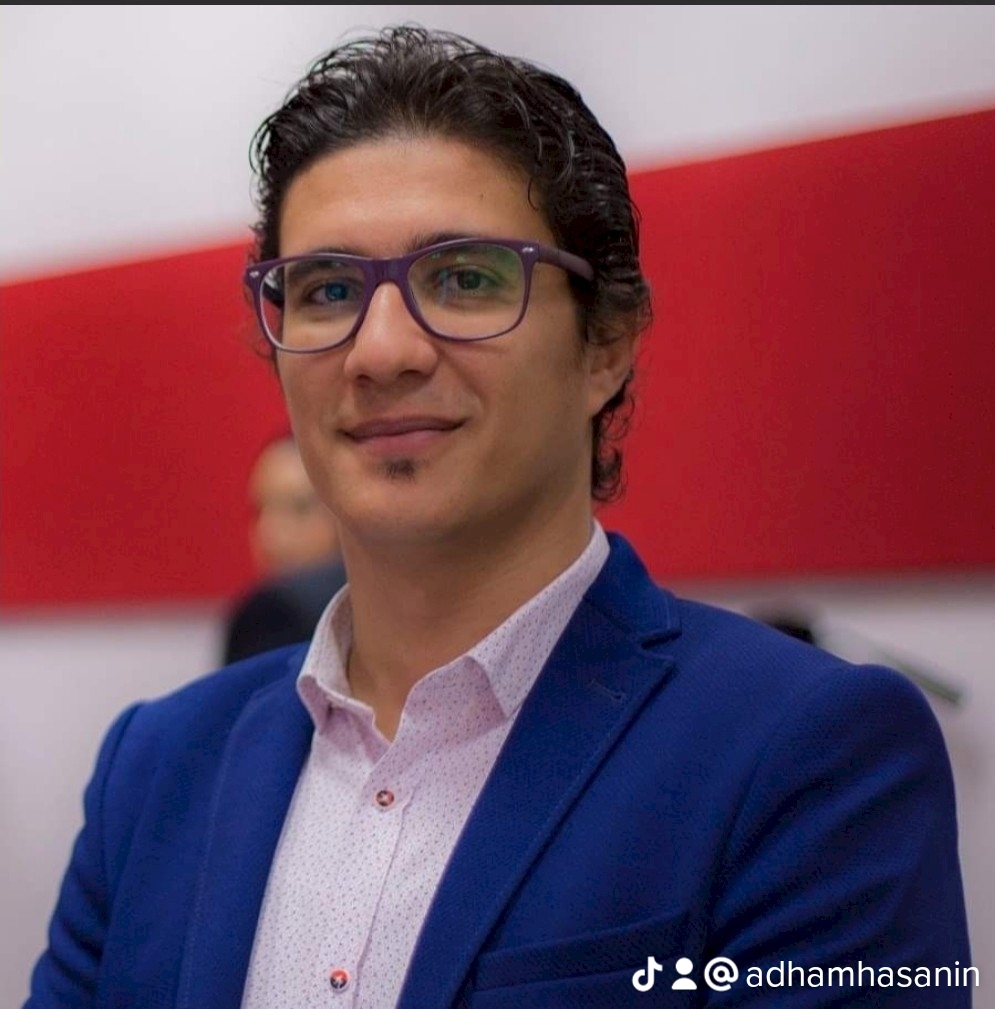
A Crown Instead of the Barracks: An Idea From Outside the Box Could Egypt’s exiled opposition use constitutional monarchy to dismantle the legitimacy of the 1952 coup? By Adham Hasanin Egyptian journalist and political writer, based in the Netherlands To understand what follows, a reader unfamiliar with Egypt needs one basic fact: since 1952, Egypt has never been governed by anyone who did not first wear a military uniform. Gamal Abdel Nasser, Anwar Sadat, Hosni Mubarak, and today Abdel Fattah el-Sisi four men, four eras, one common origin. All rose through the armed forces. All inherited a state built by a coup that year, when a group of officers calling themselves the "Free Officers" overthrew King Farouk I and, within a year, abolished the monarchy altogether and declared a republic. For seventy-three years, the underlying equation has not changed: the army rules, power passes from one officer to the next, and legitimacy is drawn from the barrel of a gun rather than the ballot box. Every conceivable form of opposition has been tried legal parties and banned ones, Islamist movements, liberal and leftist coalitions, the 2011 popular uprising, and the 2013 elections whose result was overturned by force within a year. All of them hit the same wall: a military institution that reproduces itself under different names, while the core of the system remains untouched. So what if the problem, all along, has not simply been who rules, but the constitutional framework that makes military rule possible in the first place? And what if the answer lies not in swapping one president for another, but in dismantling the underlying equation itself, through a framework Egyptian opposition movements have never seriously tried: a purely ceremonial constitutional monarchy, on the model of Belgium, the Netherlands, or Spain where the head of state becomes a symbol above the political fray, while the army is permanently expelled from politics and returned to its barracks. This is not a call to revive a particular family, nor nostalgia for a golden age that never quite existed. It is a proposal for a political and strategic tool that has not yet been used in the intellectual arsenal of Egypt’s opposition in exile a tool that deserves serious discussion, regardless of whether it is ever literally realised or simply serves to expand the boundaries of what is politically thinkable. I. Why 1952, Not 2013 or 2011, Is the Root The strategic error made by most Egyptian opposition movements from the Muslim Brotherhood to the April 6 Youth Movement to the various civil opposition parties has been treating each political crisis as an isolated case: Mubarak was corrupt and had to be toppled; Sisi staged a coup that must be condemned; the interim military council was a transitional phase to be endured. This piecemeal approach treats the symptoms while leaving the original illness untouched. That original illness is the very structure of legitimacy established by the coup of 23 July 1952. The Egyptian republican system, from Nasser to today, has never built its legitimacy on a genuine democratic social contract. Instead, it has rested on a fixed trinity: the rhetoric of "revolution against feudalism and colonialism," charismatic individual leadership, and military protection of the regime framed as the guarantor of stability. This trinity has repeated itself from Nasser to Sadat to Mubarak to Sisi, with only cosmetic variations. Each new president was never a break from the system he was its continuation. When the opposition says "let us return to the constitutional framework that preceded the coup," it is not criticising a particular policy. It is declaring that the legal foundation of everything that came after 1952 was illegitimate from the start. Here lies the rhetorical power of "returning to the pre-1952 order": it does not merely demand swapping one ruler for another. It withdraws historical legitimacy from the entire republican military system including today’s regime, which draws its own declared legitimacy from that same "1952 legacy." II. Why a "Ceremonial Crown," Not "the Return of a Ruling Family" Here is the most important distinction anyone advocating this idea seriously must grasp: the project does not rest on restoring any particular individual from the Muhammad Ali dynasty, nor on nostalgia for King Farouk or his ancestors. The real power of the idea lies in the constitutional form, not in the person who happens to sit on the throne. Three successful European democracies illustrate the model clearly. Belgium, where King Philippe is a purely constitutional symbol with no real executive power, while the state is run through an elected parliament and a complex coalition government reflecting the country’s linguistic and political diversity. The Netherlands, where King Willem-Alexander formally opens the parliamentary year and signs laws, but where actual decision-making rests with the prime minister and the elected parliament. And Spain, where the king represents symbolic continuity of the state above party politics, while the military and security services answer entirely to civilian authority a transition achieved after the death of the dictator Francisco Franco in 1975, when King Juan Carlos I voluntarily relinquished the extensive executive powers he had inherited and backed free elections, most dramatically in February 1981, when he personally ordered the armed forces to remain loyal to the constitution during an attempted military coup, causing it to collapse within hours. The common thread across these three models is not "the presence of an ancient royal family." It is the principle of separating symbol from power. The monarch in these countries does not rule; he represents. He issues no political decisions; he provides the continuity and symbolic stability that allows party political competition to revolve beneath him, without every transfer of power becoming an existential crisis of legitimacy. This is precisely what Egypt’s military republican system lacks: a neutral mechanism for guaranteeing state continuity that does not depend on the person of the ruler or his security apparatus. When Egypt’s military-republican president is absent, it is always the army that fills the vacuum, because it is the only institution built to be the "guarantor of stability." Under a ceremonial monarchical model, by contrast, it is the king not the army who represents that symbolic guarantee, genuinely opening the door to removing the military institution from the political equation altogether. III. Egypt’s Standing Under the Monarchy: An Honest Reckoning, Not Blind Nostalgia For a Western reader with little prior knowledge of Egypt’s monarchical period (1922–1952), it helps to know this: Egypt was nominally independent under its own king from 1922, but Britain retained enormous informal control over the country’s foreign policy, military bases, and the Suez Canal throughout the period a reality that shaped everything that follows. Any honest invocation of "Egypt’s standing under the monarchy" must avoid the trap of mythologised nostalgia that many advocates of this idea fall into. Egypt in that era was no lost paradise, and any honest article must say so plainly. The Egyptian pound, for instance, often invoked as a symbol of "national currency strength" in that period, was not strong because of independent Egyptian monetary policy. It was pegged to the British pound sterling as part of Egypt’s complete colonial financial dependency until 1947, with Egypt exercising no independent oversight of its own currency whatsoever. The pound’s strength, in other words, was not a sovereign Egyptian achievement it was a reflection of British imperial power ruling Egypt from behind the throne. But this does not mean Egypt lacked a genuine regional standing worth studying. Cairo, in the 1930s and 1940s, was the undisputed cultural capital of the entire Arab world: the Egyptian film industry produced more than half of all Arabic-language cinema; its theatre scene, led by figures like Youssef Wahbi and Naguib al-Rihani, and its music, with Umm Kulthum and Mohammed Abdel Wahab, set the standard across the region; Cairo University was the first modern university in the Arab world; and the Egyptian press was the reference point for Arab public opinion from the Atlantic to the Gulf. Cairo was, quite simply, to the Arab world what Paris was to Francophone Europe: an unrivalled centre of cultural and intellectual gravity. This standing was not necessarily a product of monarchy itself, so much as a product of a relative space of political and press pluralism that allowed Egyptian civil society to flourish, despite all the flaws of the political system and the interference of both palace and occupier. The lesson here is not "bring back the king and the standing will return." It is: when even a limited margin of civic freedom exists, Egypt flourishes culturally and intellectually almost by its own nature. And that margin is precisely what has been entirely absent across the past seven decades of unchallenged military rule. IV. What Reform Would Actually Require Not Repeating the Old Mistakes Any serious advocacy of this model must include, even briefly, a clear vision for avoiding the flaws of the old monarchical system itself otherwise the proposal collapses into simply replacing one form of authoritarianism with another wearing a different crown. First, the armed forces would need to be placed fully under a civilian ministry of defence, with its budget subject to transparent parliamentary oversight the exact opposite of its current status as a state-within-a-state, and equally opposed to its role under the monarchy, when it often served as an instrument of British influence. Second, a judiciary fully independent of both palace and government alike, unlike the old model, which saw direct royal interference in political life as when King Fuad I dismissed the elected government of Prime Minister Saad Zaghloul’s successor, Mustafa al-Nahhas, in 1928, in one of the clearest "constitutional coups" in modern Egyptian history. Third, a parliament that genuinely represents the people rather than landowners and the aristocracy, as was the case before 1952, when membership in the Senate was effectively conditional on the ability to pay land taxes meaning political representation was, by law, restricted to the wealthy. Fourth, genuine economic sovereignty, with a truly independent national currency rather than one pegged to a foreign power’s currency, unlike the historical dependency of the Egyptian pound on sterling. These four principles are enough to clarify that the project on offer is not a literal "return to the past," but a borrowing of the constitutional form (symbolic monarchy) combined with an explicit rejection of its old substance (colonial dependency, palace interference, parliamentary feudalism). V. The Role of Egyptian Movements in Exile: Between Goal and Instrument This raises the most practical question of all: how might Egypt’s opposition abroad actually adopt this idea, and in what capacity? The honest answer is that the power of this proposal does not necessarily lie in its literal fulfilment, but in its dual strategic function. On one hand, it can be advanced as a genuine political goal adopted by broad coalitions of Egyptian movements coalitions that might include Islamists, liberals, leftists, and traditional monarchists, united around a single shared premise: rejecting the legitimacy of the 1952 order and everything that followed from it, even if they later disagree over the precise final shape of the state. On the other hand and this matters more in practice the idea can be deployed as a rhetorical instrument of pressure to widen a Egyptian political debate currently trapped between two false choices: "continued military rule" or "no alternative, chaos awaits." When the opposition puts forward a clearly defined third model a European-style constitutional monarchy it breaks this false binary and opens new intellectual space in Egyptian public discourse, even if the project is never realised in its literal form. This kind of "leverage idea" is common in the history of political movements worldwide: it is not necessarily proposed to be fulfilled immediately in full, but to redraw the boundaries of the politically possible, and to force the existing regime to defend its legitimacy rather than simply assume it. Conclusion: An Invitation to Debate, Not a Ready-Made Prescription This article does not claim that restoring a monarchical form would magically resolve Egypt’s chronic crisis of legitimacy, nor does it ignore the immense difficulties facing any transformative project under a military institution as economically and securitywise entrenched as Egypt’s is today. But it raises a question that deserves serious debate among Egypt’s opposition in exile, rather than automatic dismissal simply for being unfamiliar: Has the Egyptian opposition exhausted every available tool for dismantling the legitimacy of 1952, or has it remained trapped in the same old binary swapping one ruler for another while the framework that makes military rule possible remains untouched? The idea is on the table now, not as a finished solution, but as an overdue invitation to think outside the box.

AI development will affect the very core of our society, but private companies don’t want a public representative’s influence on it. And western governments are giving up a fundamental and strategic tool just to please big-tech lobbies. We’ll pay the price of the bad choices made #AI #BigTech #Governance #Nospecificcountrycodescanbeidentifiedinthetweet.

Basement Saints: Simon Molly (CH) Drums Anton Delen (RSA) Guitar & Vocals Robby Keys (AT) Hammond & Vocals Guitar, bass, and drums — the so-called holy trinity of rock ’n’ roll. That’s the legend, anyway. Basement Saints couldn’t care less. They show up without a bassist, dragging along a snarling Hammond organ and two damn Leslie cabinets, as if subtlety died sometime around 1973 and no one bothered to bury it. The whole thing feels hijacked straight out of the wild seventies. Ten minutes in and you’re itching to climb onto a chopper without a helmet, chain-smoke unfiltered cigarettes, and make questionable life choices in the company of unshaven strangers. The fingerprints of ’70s and Southern rock are everywhere — loud, greasy, and impossible to deny. A Basement Saints show leaves you vibrating, slightly rattled, and painfully aware that you were born too late — stranded in the wrong decade, ears ringing, heart racing, wondering how the hell this still feels so alive. https://hvdommelen.nl/b/BasementS.html

I couldn't put it better why the choice between western Europe and Russia for people in my part of the world has always been so unambiguously clear #WesternEurope #Russia #Choices #EU #RU

A welcome initiative from Rome🇮🇹 to use public procurement for healthier school meals&fewer ultra-processed foods. Better information, healthier choices & links between local production & public catering can make a real difference for children’s health. 🔗https://t.co/AzHUpQHOVT https://t.co/hJJIZ92xPs #HealthySchoolMeals #LocalFood #PublicProcurement #IT

Tokenization is not just a technological upgrade, it’s a structural shift in how finance works. The key question is whether it will strengthen or fragment the system. Policy choices that we make today will determine the outcome tomorrow. Read more: https://t.co/t5K9FDt9Ta https://t.co/5IZ5jhrPeW #Tokenization #Finance #Blockchain #Nospecificcountriesarementionedinthetweet.

Systems of oppression endure bcs ordinary people sustain them. No one is powerless. People have the power to defeat Apartheid. Check your groceries. Check your insurance company. Check your medications. Check your bank. Make informed choices. Stop financing apartheid and war. #EndApartheid #PowerToThePeople #MakeInformedChoices #ZA

Putin now has two choices: say yes and risk losing face at home - perhaps even his grip on power - or say no and keep fighting on multiple fronts until exhaustion sets in. #Putin #PowerStruggle #Geopolitics #Therearenospecificcountriesmentionedinthetweet.

Three scenarios discussed in our article illustrate the choices and risks we face. Let's aim for the green one. We still have a choice, and are not yet destined to bequeath a much less habitable planet to future generations. Our children and grandchildren deserve a fair chance. https://t.co/RqCvb93uGx #GreenFuture #ClimateAction #SustainableChoices #Nospecificcountriesmentionedinthetweet.

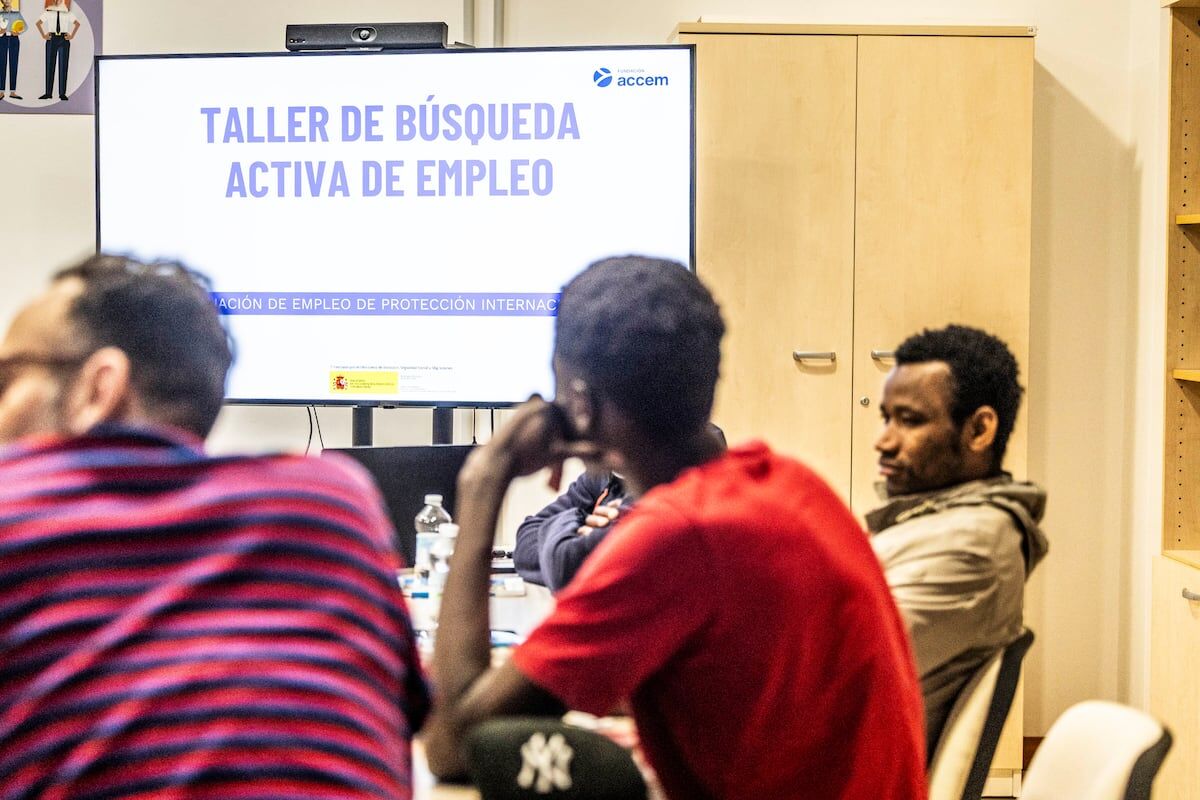
Qué mueve a los trabajadores a buscar otro empleo: más sueldo en Estados Unidos y miedo al despido en Europa
Dan Barna Jun 6

Today, as we honor the heroes of D-Day, we must understand a fundamental truth: freedom is not free, and it is not guaranteed forever. It must be defended every single day, through our choices, through European solidarity, and through an absolute refusal to yield to dictatorship https://t.co/ePwyAN3avb #DDay #Freedom #EuropeanSolidarity #EU

It's ITALY's economic failure. The other European countries bear no responsibilities for the wrong choices Italian politicians (and voters) have been doing for about half a century! And they keep doing, in spite of repeated invitations to change course coming from the Union. #Italy #EconomicCrisis #EuropeanUnion #IT