🚨 Le Real Madrid et adidas sortiront deux maillots pour le 125e anniversaire du club en mars 2027. 🤍 👕 L'édition lifestyle 👕 L'édition spéciale 📸 @Footy_Headlines https://t.co/th2odPKAZL #RealMadrid #adidas #football
Kassenärzte-Chef Andreas Gassen stellt fest: „ Die Menschen in Deutschland sind im internationalen Vergleich häufig dicker,rauchen mehr und treiben weniger Sport.“ Deswegen soll der neue Gesundheitsminister Carsten Linnemann dringend Maßnahmen ergreifen, zum Beispiel Kinder aus selbstzerstörerischen Konsummustern befreien oder die Steuern auf Tabak und Alkohol noch weiter drastisch yerhöhen. Der letzte Arzt, der mir vor ein paar Jahren dringend geraten hat, mindestens 10 Kilo abzunehmen, brachte selbst rund 135 Kilo auf die Waage. Ich schaute ihn an und fragte: „ Und was ist mit Dir?“ Seine trockene Antwort: „ Ich bin der Doktor. Ich gebe hier die Ratschläge.“ Wir lachten uns kaputt und gingen in einen Biergarten. Also , Herr Dr. Gassner, behandeln und heilen Sie und lassen die Menschen nach nach dem Wort von Preußenkönig Friedrich ll. Dem Großen in Ruhe: „ Jeder soll nach seiner Fasson glücklich werden. Uns nerven schon die Regulierungs- und Verbotspolitiker, da müssen jetzt nicht auch noch die Heilberufe den Finger heben. #Gesundheit #Lifestyle #Doku
Metaphysics of the Solitary Absolute: Philosophical and Legal Analysis of the Thesis of Solitary Amorality The Thesis of Solitary Amorality, formulated by Tom Nesky under the banner of the Axiom of Relationality of Law and Being, constitutes a radical challenge to classical and contemporary normative theories. Its central premise—stating that law, morality, and the category of crime are not inherent properties of reality, but artificial products of social relations—requires a rigorous deconstruction at the intersection of legal positivism, phenomenological existentialism, ontological anarchism, and monistic metaphysics. This paper attempts a systematic analysis of the intellectual pillars of this thesis, examining its internal coherence, genealogical roots, and consequences for the understanding of freedom and human subjectivity. The Systemic Construction of Crime vs. Pure Theory of Law The first pillar of the Thesis of Solitary Amorality, designated as Nullum Crimen Sine Systema, posits that law does not discover pre-legal categories of evil, but brings them into existence through the very act of establishing a boundary of permissibility. This assertion exhibits a profound convergence with 20th-century legal positivism, particularly with Hans Kelsen's Pure Theory of Law (Reine Rechtslehre). Kelsen advocated for a methodological purification of legal science from ethical, sociological, and political elements, defining law as a normative system founded upon a hypothetical basic norm (Grundnorm). In the Kelsenian view, the legal system functions as a coercive apparatus devoid of inherent moral value. A crucial point of intersection with Nesky's thesis is the elimination of the traditional dualism between acts that are inherently evil (mala in se) and acts prohibited merely by law (mala prohibita). Kelsen argued that an act becomes unlawful solely when a legal norm attaches state-enforced coercion to it. Unlawfulness is not an ontological property of the act, but the result of a relationship of normative imputation. This implies that the law does not penalize an act because it is intrinsically evil; rather, an act is considered evil solely because it has been subjected to systemic penalization. This clash became prominent during the debates surrounding the Nuremberg trials, where positions based on natural law and legal positivism collided. While prosecutors such as Robert Jackson invoked universal moral norms (mala in se) as the basis for punishing criminals despite the previously binding positive law of the Third Reich, Kelsen pointed out the theoretical inconsistency of such an approach. He argued that judging on the basis of retroactive law (ex post facto) constitutes a breach in the systemic coherence of positivism, even if it might be justified by political and historical necessity. Nesky's project imparts an existential dimension of oppression to this structure, bringing it close to the critique of the state formulated by Friedrich Nietzsche. Nietzsche famously described the state as "the coldest of all cold monsters," which devours the individual's singularity and imposes herd morality upon them. The gaze of the state, mediated through the Other, paralyzes the sovereignty of the individual and forces them to navigate within arbitrarily designated normative boundaries. Every stroke drawn across the chaos of reality establishes a boundary, and every boundary instantly creates the concept of its transgression. The Paradox of the Systemic Cage and the Limits of Ontological Anarchism The second pillar of the thesis—The Paradox of the Systemic Cage—points to the impossibility of escaping the system through rules alone. Every attempt to negate the existing order, from establishing anarchist structures to escaping into geographical isolation, immediately transforms into a new system whose primary imperative becomes the defense and maintenance of that very absence of rules. This process of structural looping finds its reflection in the current of ontological anarchism formulated by Hakim Bey (pseudonym of Peter Lamborn Wilson). Bey, drawing on a synthesis of Nietzscheanism, Situationist theory of the spectacle, and chaos esotericism, recognized that classical revolutions striving to overthrow the state inevitably reproduce structures of domination, becoming new forms of confinement. As an alternative, he proposed the concept of the Temporary Autonomous Zone (TAZ). TAZ is a tactic for creating temporary, non-hierarchical spaces that deliberately evade formal structures of state control. The key element of TAZ is its ephemerality: before the system can map, define, and absorb the autonomous zone, it must dissolve itself and relocate to another point in space-time. Attempts to transform TAZ into Permanent Autonomous Zones (PAZ) immediately encounter the paradox noted by Nesky. The need to defend and codify freedom within a lasting community gives rise to internal rules, mechanisms of exclusion, and hierarchy. For this reason, Murray Bookchin criticized ontological anarchism (calling it "lifestyle anarchism" or "bourgeois anarchism") for its lack of political realism and its flight from systemic struggle against capital and state in favor of aesthetic rebellion. The convergence of these perspectives demonstrates that freedom defined as reactive resistance to a system remains structurally determined by it. The Dissolution of the Relational Mirror: The Existential Gaze and the Collapse of Morality The third pillar of the thesis, designated as The Dissolution of the Mirror (L'Autre), posits that good and evil require the presence of an external witness and judge. This assertion represents a direct application of Jean-Paul Sartre's existential phenomenology, particularly his analysis of the Gaze (le look / le regard) and the relation to the Other (l'Autre) presented in Being and Nothingness. Sartre illustrates the constitutive role of the Other through an analysis of the voyeur's situation. At the moment of complete absorption in the act of peeping through a keyhole, the subject's consciousness is pre-reflective—the voyeur does not reflect on himself; his consciousness completely merges with the act being performed. Only the sudden sound of footsteps in the hallway shatters this unity. The voyeur realizes that he himself is seen, and is instantly paralyzed by shame. For Sartre, shame is not a purely internal emotion; it is shame of oneself before the Other. The Gaze of the Other objectifies the free subject (being-for-itself—pour-soi), freezing them into a specific role and moral evaluation (being-for-others—pour-autrui). As Ellie Anderson points out, Descartes' formula "I think, therefore I am" is replaced in Sartre by "I feel shame, therefore Others exist." The Gaze of the Other marks the birth of social morality, wherein the individual learns to view themselves from a third-person perspective. This existential dynamic corresponds to the Nietzschean genealogy of "bad conscience." Nietzsche demonstrates that morality and guilt are products of the forced internalization of human instincts that could no longer be discharged outwardly due to social barriers. Forced into the constraints of society, man turns against himself, creating an internal judge (conscience) modeled on the external tyrant. This vision also resonates with the classical theory of Thomas Hobbes. In Leviathan, Hobbes explicitly declares that in the state of nature, where there is no common power, there is no law, and where there is no law, no notion of injustice exists. Concepts of good, evil, justice, and property are attributes of man living in society, not in solitude. Removing the social fabric reverts the individual to a state in which theft and injury lose their raison d'être due to the absence of relational reference to the Other. #philosophy # metaphysics # thesis # morality
The article discusses the possibility that statutory health insurance companies in Germany could start covering the costs of obesity medications like Wegovy and Mounjaro, which are currently considered lifestyle products and are usually paid for by patients themselves, while the new chairwoman of G-BA, Sonja Optendrenk, indicated that it might be reasonable to change regulations and recognize these medications as part of treatment. (translated)
Porter une montre à 60 000€ à Marseille, ne l'aurait-il pas un peu cherché ? https://t.co/xXkAmU1nzv #MontreLuxueuse #Marseille #Lifestyle
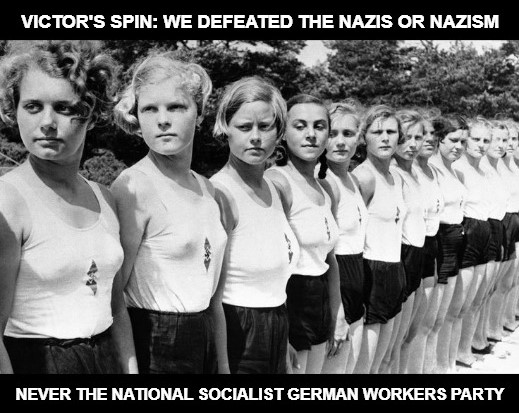
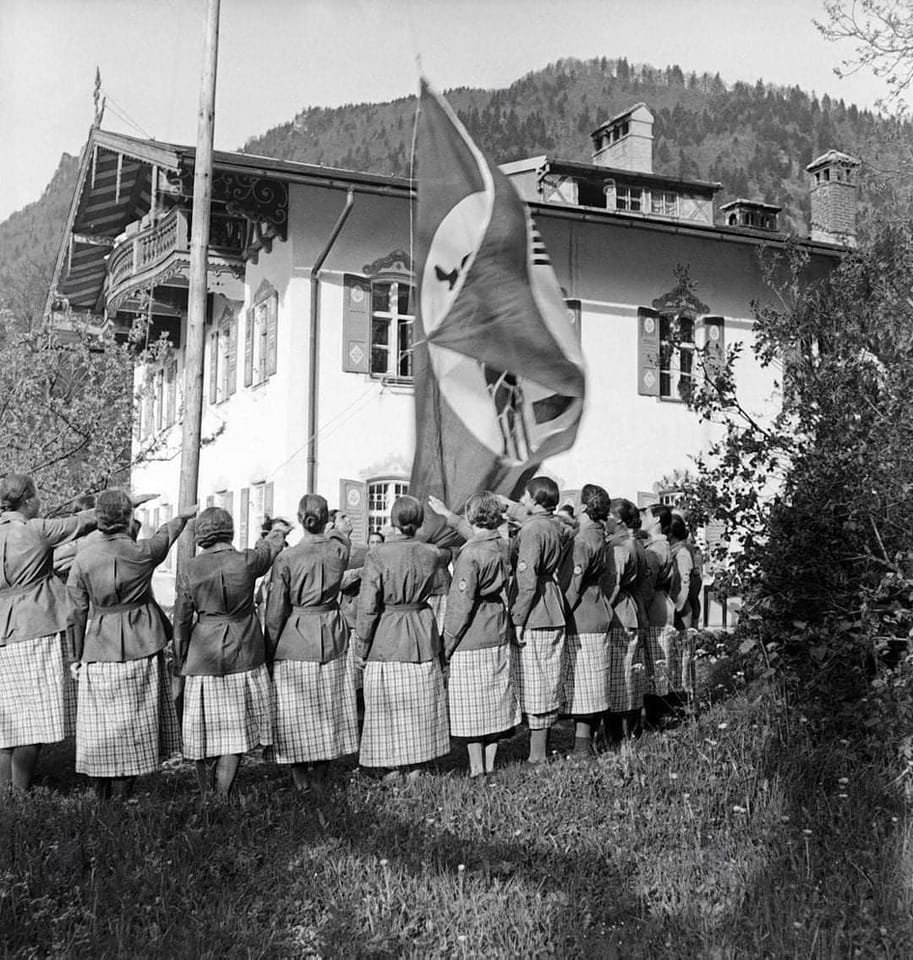
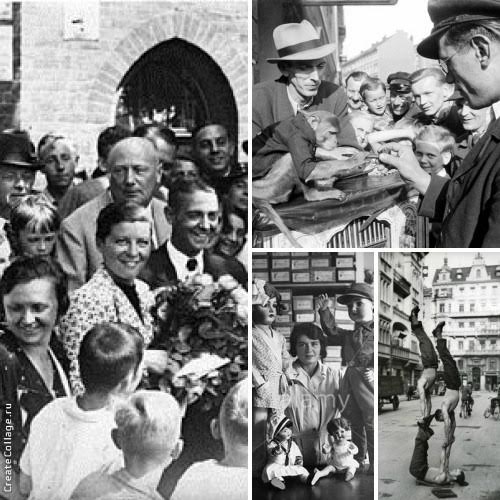
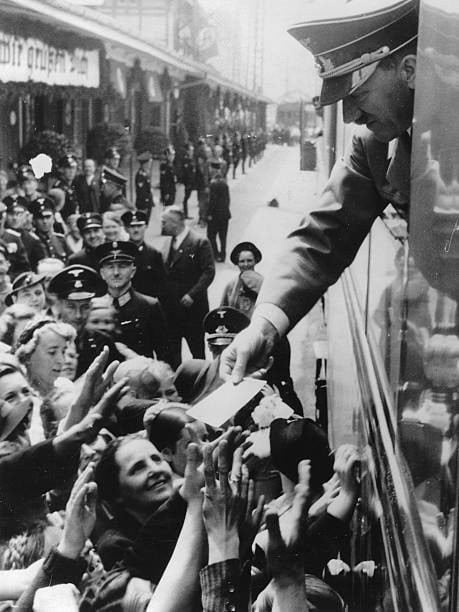
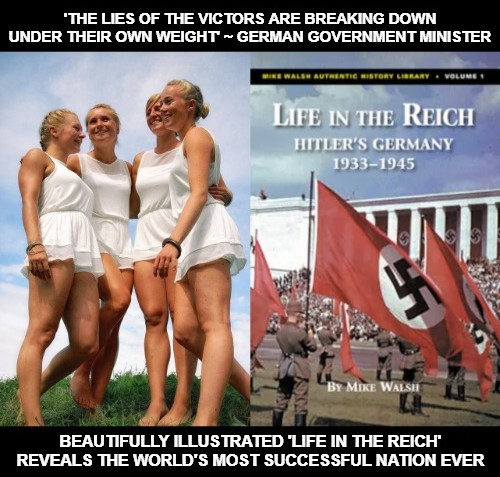
THE GOOD LIFE IN THE REICH. Mike Walsh: FORBIDDEN HISTORY: The standard of living in Hitler’s Third Reich surpassed that of the developed world. German workers enjoyed a lifestyle comparable to that of movie stars. Germany led the world in fashion, medicine, cinema, lifestyle, manufacturing, transport infrastructure, public facilities, cutting-edge science, healthcare and education. Amazon removed Life in the Reich. The book dared to show Hitler’s Germany as it was. It did not follow what the propagandists would have us believe. A real eye-opener: https://barnesreview.org/product/life-in-the-reich-hitlers-germany-1933-1945/
Top 10 schlimmsten Trends der letzten Jahre 1. Dubai Schokolade 2. 67 3. Du bist gut genug 4. Skyr mit weiße Monster 5. Labubu 6. Fortnite Tänze 7. Fidget Spinner 8. KI 9. Lotus Cheesecake 10. Sich selber anzünden #Trends #Lifestyle #Popkultur
THE GOOD LIFE IN THE REICH. Mike Walsh: FORBIDDEN HISTORY: The standard of living in Hitler’s Third Reich surpassed that of the developed world. German workers enjoyed a lifestyle comparable to that of movie stars. Germany led the world in fashion, medicine, cinema, lifestyle, manufacturing, transport infrastructure, public facilities, cutting-edge science, healthcare and education. Amazon removed Life in the Reich. The book dared to show Hitler’s Germany as it was. It did not follow what the propagandists would have us believe. A real eye-opener: https://barnesreview.org/product/life-in-the-reich-hitlers-germany-1933-1945/
Meghalt egy 27 éves nő, miután „öregedésgátló” kezelést kapott a Bereshit Lifestyle Center nevű wellness-klinikán, és a rendőrség gondatlanságból elkövetett veszélyeztetés miatt vádat emelt az intézmény állítólagos orvosával szemben, Luis Rojas Cabrerával. #természetgyógyász #öregedésgátló #halál
The fetish of a sterile lifestyle filled with overpriced luxurious products being considered "rich" is a direct result of Steve Jobs minimalism and should have ended with his death. It touches everything. From modern architecture, gardens, cars, clothing up to the behavior of #Minimalism #LuxuryLifestyle #DesignTrends #Thetweetdoesnotmentionanyspecificcountries.Therefore #theresponseis:
A brazil first lady, Janja Lula, defended her luxury travels as essential to her role, while critics label her a hypocrite and accuse her of promoting misogyny, revealing the tension between her lavish lifestyle and her husband's anti-poverty messaging amidst ongoing public scrutiny. #JanjaLula #brazilpolitika #luxusköltekezés

THE GOOD LIFE IN THE REICH. Mike Walsh: FORBIDDEN HISTORY: The standard of living in Hitler’s Third Reich surpassed that of the developed world. German workers enjoyed a lifestyle comparable to that of movie stars. Germany led the world in fashion, medicine, cinema, lifestyle, manufacturing, transport infrastructure, public facilities, cutting-edge science, healthcare and education. Amazon removed Life in the Reich. The book dared to show Hitler’s Germany as it was. It did not follow what the propagandists would have us believe. A real eye-opener: https://barnesreview.org/product/life-in-the-reich-hitlers-germany-1933-1945/
Olen pudonnut "Minja Koskela tänään" -jutuissa laskuista, mutta onhan tämä posketonta 😂 Ei Koskela ainakaan vaalimainontaa tarvitse, kun HS tarjoaa puhtaita political lifestyle -juttuja kuin sattumalta vain yhden puolueen lehden profiiliin sopivasta naispuheenjohtajasta (€). https://t.co/JlwXQzrKOs #politics #media #Finland
Egy 27 éves nő a bronxi Bereshit Lifestyle Centerben végzett öregedésgátló terápia után halt meg New Yorkban, ami miatt gondatlan veszélyeztetés és jogosulatlan szakmagyakorlás miatt vádat emeltek a kezelőorvosa ellen, miközben a központ hirdetett kezelései nem garantálnak egészségügyi hatásokat. #öregedésgátlás #NewYork #alternatívgyógyászat

Chegaram as novas peças de Gávea: a marca de lifestyle da torcida rubro-negra! A coleção leva o espírito rubro-negro para além dos estádios com novas opções de polos, t-shirts e modelos femininos, com peças que transitam entre o casual e o premium. 🔗Acesse https://t.co/dUhIRwBsjz e escolha a sua! #Gávea #RubroNegro #Moda
Du fliegst in den Urlaub, massive Belastung durch Steuern & Abgaben. Du fährst in den Urlaub, Sprit wird unfassbar stark besteuert. Du fährst mit der Bahn in den Urlaub, Tickets extrem teuer, unzuverlässig, unsicher. Du machst Urlaub in Deutschland, Mindestlohn und hohe Steuern machen Hotels sowie Restaurants zur Luxus-Experience. Geschichten aus einem Land, das Mittelschichtsfamilien keinen Sommerurlaub gönnt. #Urlaub #Steuern #Lifestyle