
my cousin who put on the swimsuit to go to the sauna strangely just now, and luckily the ridiculous little girl was Federica, huh (translated)
my cousin who put on the swimsuit to go to the sauna strangely just now, and luckily the ridiculous little girl was Federica, huh (translated)
#Anton from the boy band #RIIZE made an impression in a black suit more elegant than ever at the @YSL spring-summer 2027 show by #AnthonyVaccarello. (translated)

Everyone who is outraged in the name of morals and good customs should search like this on Google: "Does Flavio's vice have any accusations?" Wait and see the magic happen. (translated)

Everyone who is outraged in the name of morality and good customs should type this into Google: "Does Flavio's vice have any accusations?" Wait and see the magic happen. (translated)

🚨 ALERTE – Marine Le Pen PETE UN CÂBLE et affirme que les journalistes de Mediapart doivent enfiler leurs GILETS PARE -BALLE. « C’est à Mediapart, je crois, qu’il va falloir dire d’enfiler son costard en kevlar parce qu’il y aura évidemment une réponse à la manière dont ils se comportent », a-t-elle affirmé. Le kevlar est la matière des gilets pare-balles. Plus tôt dans la conférence de presse, elle affirmait que Jordan et elle avaient enfilé leurs gilets en kevlar. À l’issue d’une démonstration où elle s’en prend longuement à Mediapart (mise en X2, son blabla n’étant pas très intéressant), elle affirme que c’est à leur tour d’enfiler leur costume en kevlar. Une députée écologiste a saisi le procureur de la République. #MarineLePen #Mediapart #République

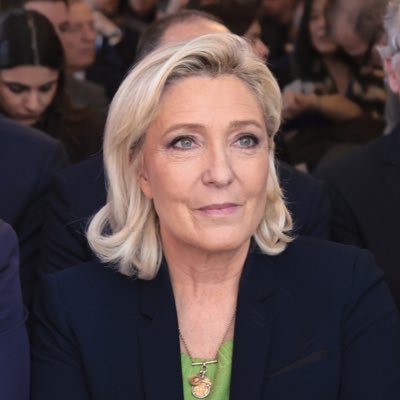
« Jordan l'a dit, nous avons, lui et moi, enfilé nos costards en Kevlar, parce que là, c'est du lourd qui tombe. Maintenant, c'est à Mediapart, je crois, qu'il va falloir dire d'enfiler son costume en Kevlar, parce qu'il y aura évidemment une réponse à la manière dont ils se comportent. » #RassemblementNational #Antisémitisme #JordanBardella
⚡️🇫🇷FLASH - Dans une formule à tonalité menaçante, Marine #LePen appelle le journal indépendant #Mediapart à « enfiler un costume en Kevlar [fibre utilisée notamment pour se protéger des tirs d’armes à feu] ». (déclaration) #MarineLePen #Mediapart #Politique
«Ho la certezza granitica di poter escludere qualsiasi manipolazione, qualsiasi depistaggio, qualsiasi accantonamento di atti che non era e non è nel nostro costume»L'allora capo del Ris di Parma Luciano Garofano, sentito dai pm lo scorso 25 settembre, intanto, ribadisce la fiducia nei suoi uomini ed esclude qualsiasi tipo di manipolazione: «Non ci sarebbe stato alcun motivo». #Garlasco #ChiaraPoggi #Depistaggio
Criitiquer les costumes du spectacle du pape au Stade de France quand on vient habillée avec une nappe de table à la télé c'est osé, même pour Libération. https://t.co/gf2VM1LIBZ #Costumes #Critique #Spectacle

🇩🇪 Aus dem Alltag. Mitten ins Nacktsein. Erst Alltagsklamotten. Dann Stück für Stück weg. Dann ich – nackt, präsent, ohne Verstecken. Kein Show-Kostüm. Kein großen Auftritt. Nur der Weg von Jeans und Oberteil zu weicher, echter Haut. Über 40. Verheiratet. Und trotzdem so: Körper zeigen, bleiben, nicht klein machen. Was bleibt bei euch stärker hängen – der Moment des Ausziehens oder ich ganz nackt am Ende? 👀👇 🇬🇧 From everyday clothes. Straight into being naked. First the daily outfit. Then piece by piece it comes off. Then me – naked, present, not hiding. No costume. No big performance. Just the path from jeans and a top to soft, real skin. Over 40. Married. And still like this: showing my body, staying, not making myself smaller. What stays with you more – the undressing or me fully naked at the end? 👀👇 #FettiAdventures #Over40 #RealBody #BodyConfidence #NoHiding #Hotwife #BodyConfidence #RealBody #NoHiding


🚨 SURRÉALISTE ! LE RAPPEUR DRAKE S’EST DÉGUISÉ EN IRON-MAN POUR LA SORTIE DE SON NOUVEAU CLIP CETTE NUIT 😭 IL A PAYÉ 150.000 EUROS POUR LE COSTUME. https://t.co/v2K2APdJ1k #Drake #Rap #Surréaliste

Macklemore apparaît sur scène avec une perruque noire, une barbe noire et un énorme faux nez. Mais il l’assure : c’est juste un « random costume »… C’est comme si quelqu’un se faisait un blackface tout en jurant qu’il ne se moque pas des Noirs. #Macklemore #costume #blackface #Aucuncodedepays.
Consensus Is Not an Argument “Historians agree that Nazism was right-wing” is not an argument. It is intellectual outsourcing: replacing evidence with the number of authorities who repeat the same conclusion. Ideologies require criteria. You cannot cherry-pick political characteristics, notice that they fit your preferred category, and then pretend the classification has been demonstrated—especially when virtually every item on the list exists on both sides. Nationalism? Both. Militarism? Both. Protectionism? Both. State intervention? Both. Economic planning? Both. Collectivism? Both. Welfare policy? Both. Authoritarianism? Neither side has a monopoly. So what actually makes Nazism “right-wing”? The economic argument collapses even faster. Nazi Germany heavily directed its economy. So did the United States and Britain during the same period of war preparation and total war. If state direction proves socialism, then your criterion suddenly makes the Allies socialist too. If it doesn’t, stop using it selectively to classify Nazism. You cannot rig the test and then celebrate the result. And here is the inconvenient part: if economic policy cannot independently resolve the question, then the Nazis’ own ideological claims cannot simply be dismissed because they are inconvenient. Their party was literally called the National Socialist German Workers’ Party, and they repeatedly described their movement as socialist. No, self-description does not automatically make them socialist. Political movements can lie. But rejecting their description requires an actual criterion demonstrating why it was false. “Because historians say so” is not a criterion. It is an evasion. The deeper problem is that modern political taxonomy often works backwards: decide the label first, then curate the evidence until the label looks inevitable. That is not historical analysis. It is circular reasoning wearing an academic costume. So ask the question that actually matters: was Nazism committed to individual liberty—or to subordinating the individual to the collective, the state, and the nation? If Nazism is right-wing, prove it from coherent ideological principles

Riyad arrive en costume de Vinicius pour rencontrer Roji pour la première fois… Le date s’annonce DINGUE MDDDDR 😭 https://t.co/D8tF5PBE6n #Riyad #Vinicius #DINGUE

A Gaza, Ahmed Abu Sukkar indossa il suo costume da clown salvato dalle macerie per portare sorrisi e momenti di gioia ai bambini segnati dalla guerra. #Gaza #clown #bambini

“Consensus Is Not an Argument “Historians agree that Nazism was right-wing” is not an argument. It is intellectual outsourcing: replacing evidence with the number of authorities who repeat the same conclusion. Ideologies require criteria. You cannot cherry-pick political characteristics, notice that they fit your preferred category, and then pretend the classification has been demonstrated—especially when virtually every item on the list exists on both sides. Nationalism? Both. Militarism? Both. Protectionism? Both. State intervention? Both. Economic planning? Both. Collectivism? Both. Welfare policy? Both. Authoritarianism? Neither side has a monopoly. So what actually makes Nazism “right-wing”? The economic argument collapses even faster. Nazi Germany heavily directed its economy. So did the United States and Britain during the same period of war preparation and total war. If state direction proves socialism, then your criterion suddenly makes the Allies socialist too. If it doesn’t, stop using it selectively to classify Nazism. You cannot rig the test and then celebrate the result. And here is the inconvenient part: if economic policy cannot independently resolve the question, then the Nazis’ own ideological claims cannot simply be dismissed because they are inconvenient. Their party was literally called the National Socialist German Workers’ Party, and they repeatedly described their movement as socialist. No, self-description does not automatically make them socialist. Political movements can lie. But rejecting their description requires an actual criterion demonstrating why it was false. “Because historians say so” is not a criterion. It is an evasion. The deeper problem is that modern political taxonomy often works backwards: decide the label first, then curate the evidence until the label looks inevitable. That is not historical analysis. It is circular reasoning wearing an academic costume. So ask the question that actually matters: was Nazism committed to individual liberty—or to subordinating the individual to the collective, the state, and the nation? If Nazism is right-wing, prove it from coherent ideological principles” - ChatGPT
🚨 C’EST LE MVP DU ZEVENT 2026 !! Mastu vient de récolter 190 000€ en seulement 10 minutes pour le véritable pied de costume porté par Tobey Maguire dans Spider-Man 2 😱 LE GAGNANT DU LOT L’A REMPORTÉ AVEC UN DON DE SEULEMENT 5 €… https://t.co/sQBAVaPzxQ #ZEvent #SpiderMan #MVP

After “Broadway World”, Marina (1888) from the Teatro Umberto Giordano’s “GIO Festival” in Foggia now reaches the Belgian “Opera Gazet” SOURCE: https://medium.com/@ingnucllms/after-broadway-world-marina-1888-from-the-teatro-umberto-giordanos-gio-festival-in-foggia-73ba01e5f50a SOURCE: https://www.operagazet.com/marina-by-giordano-its-world-stage-premiere-in-foggia/ SOURCE: https://www.operagazet.com/marina-by-giordano-its-world-stage-premiere-in-foggia/ From the homepage of “Broadway World” to the pages of an authoritative international magazine: the world stage première of Umberto Giordano’s youthful melodrama now consecrates Foggia as the capital of a “rediscovered verismo”. There is a destiny that waits, patiently, to be fulfilled. It is the destiny of Marina, a one‑act melodrama with music by Umberto Giordano and a libretto by Enrico Golisciani, composed in 1888 for the celebrated Sonzogno competition and subsequently withdrawn by the composer himself, falling into an oblivion that lasted 138 years. That destiny was fulfilled on 5 June 2026 at the Teatro Umberto Giordano in Foggia, with the World Staging Première of the opera, the inaugural event of the first edition of the “GIO Festival” — “Giordano International Opera Festival”, the new international showcase which, from 5 to 20 June, transformed the Capitanata into a widespread stage devoted to the Maestro from Foggia. A cultural enterprise of European breadth, promoted by the Chamber of Commerce of Foggia together with the Municipality and the Province, supported by the Region of Puglia and the Fondazione Monti Uniti, and capable of restoring to history a fundamental fragment of nascent verismo. The Foggia production — directed by Giandomenico Vaccari, conducted and coordinated by Matteo Dal Maso, with sets and costumes by Alfredo Troisi, lighting by Massimo Russo, and soprano Valeria Sepe in the eponymous role — represented not a mere performance, but the scenic resurrection of an opera long believed lost. Its autograph score was rediscovered only recently at Yale University’s “Beinecke Rare Book and Manuscript Library”, within the “Frederick R. Koch” Collection, thanks to the philological work of the conductor and musicologist of Venetian and German heritage, Andreas Gies, who prepared its critical edition. After the transatlantic resonance that saw the “GIO Festival” reach the homepage of “Broadway World” thanks to the world première of Marina, complete with exclusive photographs of the historic debut, a new and prestigious international recognition now arrives. The authoritative Belgian opera magazine “Opera Gazet” dedicates an extensive musicological review to the Foggia event with the article: “ “MARINA” (by Giordano) — ITS WORLD STAGE PREMIÈRE IN FOGGIA”. An arrival far from secondary. If “Broadway World” marked the opera’s transatlantic debut, “Opera Gazet” now seals its critical consecration among the most discerning and specialised audiences: the melomaniacs, scholars, and professionals of the operatic world. From Foggia to New York, from New York to the circuit of the international opera press. The trajectory of Marina confirms what the “GIO Festival” has sought to demonstrate since its inception: Giordano’s legacy is not a local memory, but a living repertoire, capable of conversing with major stages and with the world’s most prestigious cultural outlets. The rediscovery born in Foggia is now a heritage shared by all.
The Vindication of the “GIO Festival”: “BroadwayWorld” Celebrates Marina and the Umberto Giordano Theatre of Foggia SOURCE: https://www.linkedin.com/pulse/vindication-gio-festival-broadwayworld-celebrates-sardella-ph-d--8zzce/ SOURCE: https://www.letteremeridiane.org/2026/08/la-rivincita-del-gio-festival-broadwayworld-celebra-marina-e-foggia/ The GIO Festival has been, to put it mildly, overlooked by Rai3 Puglia and several regional outlets. Yet the festival dedicated to Umberto Giordano — promoted by the Chamber of Commerce of Foggia together with the Municipality and the Province, and supported by the Apulia Region and the Fondazione Monti Uniti — has achieved a remarkable vindication, landing on the homepage of BroadwayWorld thanks to the world première of the opera Marina, staged on 5 June at the Umberto Giordano Theatre in Foggia. This is no small feat, considering that BroadwayWorld is among the most influential American platforms devoted to theatre and the performing arts. The transatlantic debut of the opera by Foggia’s great composer did not escape the attention of Luciano Magaldi Sardella, who submitted to the editorial board of Lettere Meridiane an in‑depth and compelling contribution, reproduced below. In the article, the author masterfully reconstructs the extraordinary story of Giordano’s first opera, composed in 1888 and left without a staged production for 138 years, until its historic performance on 5 June at the Giordano Theatre. Above all, he recounts how the inaugural edition of the GIO Festival has restored Foggia to the centre of the international operatic stage, through the rediscovery and valorisation of Marina, the involvement of major musical institutions, and the attention of the American press. It is a stimulating reflection on the cultural and identity‑driven renaissance of a city that, for far too long, bore Giordano’s name on the façade of its theatre without managing to turn it into a lever of international visibility. (g.i.) + + + + + There are moments in the life of a city when past and future clasp hands upon the stage of the present. Foggia experienced one of these moments on the evening of 5 June 2026, when the curtain of the Umberto Giordano Theatre rose upon Marina, an opera composed in 1888 by a young man of twenty‑one — Umberto Giordano — then a student at the San Pietro a Majella Conservatoire in Naples. After one hundred and thirty‑eight years of silence, that score finally found its first scenic breath in the world. “It is not an ordinary event. It is a turning point. A void filled. A story rewritten.” Umberto Giordano, one of the most celebrated verismo composers of the fin‑de‑siècle — born in Foggia, author of masterpieces such as Andrea Chénier, Fedora, Siberia — had remained, until now, the only great Italian opera composer without a festival entirely dedicated to his oeuvre. A paradox that weighed like a historical injustice upon a city that bears his name engraved on the pediment of its most beautiful theatre. This is the extraordinary journey of Marina, Giordano’s first opera, which after 138 years of oblivion received its world première in scenic form on 5 June 2026 at the Umberto Giordano Theatre in Foggia, as the opening event of the GIO Festival — the inaugural edition of the Giordano International Opera Festival. The manuscript, preserved in the Frederick R. Koch Collection at Yale University’s Beinecke Rare Book and Manuscript Library, has travelled an astonishing path: from the elite libraries of America’s East Coast to the beating heart of the Daunia. On the night of 5 June 2026, at the Umberto Giordano Theatre, that silence was finally broken. The GIO Festival was conceived in Foggia as an ambitious cultural project promoted by the Chamber of Commerce, the Municipality, and the Province, with the support of the Apulia Region, aiming to transform the artistic legacy of the verismo composer into a driver of territorial development and cultural tourism. Under the artistic direction of conductor Gianna Fratta and violinist Dino De Palma, the event at last fills a historical void. Its model is explicit and ambitious: a project inspired by the great festivals dedicated to Italian composers — such as the Verdi Festival, the Puccini Festival, the Rossini Opera Festival — while maintaining a strong territorial and participatory dimension. In other words, Foggia formally claims its seat at the table of the greats. And it does so with the credentials required: an unrepeatable world scenic première (parallel to the concert première at Milan’s Teatro Dal Verme, recorded by the prestigious opera label Decca Classics), a high‑quality operatic production, and the support of leading cultural institutions (Teatro dell’Opera di Milano, Fondazione Teatro Petruzzelli of Bari). The festival benefitted from the collaboration of the Orchestra of the Conservatoire and the Chorus of the Fondazione Teatro Petruzzelli of Bari, the Umberto Giordano Conservatoire of Foggia, the Fondazione Monti Uniti, and the Fondazione Apulia Felix. A network of excellence that lent the event national resonance and stature. The Umberto Giordano Theatre is a nineteenth‑century jewel of rare beauty — the oldest functioning horseshoe‑shaped historic theatre in Apulia. Yet for decades it lived in a state of semi‑clandestine cultural marginality, relegated to the periphery of the operatic routes that matter, hindered by long interruptions in its use from 2007 to 2014, including recent fire‑safety compliance requirements. Some referred to it, with a mixture of condescension and provincial resignation, as a “provincial theatre”, destined merely to bear Giordano’s name. That label is now destined to fall. It is precisely in Foggia that this youthful gem received its first scenic staging, placing the city on the international map of opera. A positioning without precedent in the city’s recent history. The Giordano Theatre recorded a full house for the historic première of Marina, welcoming hundreds of spectators, while many more followed the performance from outside via a large screen installed for the occasion. The production met expectations with full artistic dignity: the staging transposed the narrative to the First World War, heightening the opera’s dramatic and realist character. On the podium, the Symphony Orchestra of the Umberto Giordano Conservatoire conducted by Matteo Dal Maso. Sets and costumes by Alfredo Troisi; lighting by Massimo Russo. An ensemble of talents worthy of the name the theatre proudly bears. The definitive seal of this moment’s historical significance arrived from across the Atlantic. BroadwayWorld, the world’s most influential outlet for live performance criticism and reporting — with over 5.5 million monthly views — dedicated exclusive coverage to the event, publishing a complete photographic gallery of the world scenic première curated by Chloe Rabinowitz and a substantial critical review by Rachel Stone. The American article emphasised the historical value of the undertaking and the bond between the composer and his native city, highlighting the musical quality of the score, deemed surprisingly mature for the composer’s age. For the first time, the Umberto Giordano Theatre appeared on the New York‑based site alongside institutions such as the Los Angeles Opera House, Houston Opera, and BBC Classical Music at the Royal Opera House. It is its natural place. It should have been there decades ago. Until now, the world knew Giordano through his Milanese triumphs, not through the youthful opera written between Foggia and the Naples Conservatoire — the lost (and later rediscovered) Marina of 1888. Let us be clear: this is no minor detail. BroadwayWorld does not grant exclusive galleries to provincial theatres. It does so for events that shift the coordinates of musical and theatrical history within the circuits that matter. This time, those coordinates shifted to Foggia thanks to the GIO Festival, in the name of Umberto Giordano. For the record — and for those who may not yet know — the GIO Festival is a new and ambitious biennial event conceived by the Chamber of Commerce of Foggia, with the aim of celebrating the genius of Umberto Giordano and transforming it into a powerful engine of development for the entire Capitanata. Biennial means continuity, planning, vision. It means that Foggia does not intend to be a meteor in the operatic firmament, but a stable and recognisable presence within the international festival circuit. Andrea Chénier, Siberia, and Fedora had already carried Giordano’s name to the Metropolitan Opera House in New York for more than a century, where his works are still performed to great acclaim. Now Foggia itself — not merely its scattered operatic legacy — claims its rightful “place in the sun”. The composer whom his city struggled to recognise in life, and whose name it preserves on its theatre, its square, and its conservatoire, may finally become the lever of an unprecedented cultural, economic, and identity‑driven renaissance. The GIO Festival 2026 is not, one hopes, a point of arrival. It should be the first chapter of a new story for Foggia, for the Capitanata, and for the cultural South of Italy. The Umberto Giordano Theatre is no longer merely an architectural jewel to be preserved: it has now become a place of creation and inspiration, capable of attracting international press attention and hosting events that enter the annals of world opera. To those who still whisper that Foggia is a provincial city, the answer is now written upon the world’s stages: on the evening of 5 June 2026, the periphery became the centre.

“BROADWAY WORLD”, NEW YORK, PUBLISHES EXCLUSIVE PHOTOS OF GIORDANO's MARINA's WORLD STAGE PREMIERE IN TEATRO UMBERTO GIORDANO IN FOGGIA SOURCE: https://www.linkedin.com/pulse/broadway-world-new-york-publishes-exclusive-photos-sardella-ph-d--uxaie/ SOURCE: https://www.broadwayworld.com/bwwopera/article/Photos-MARINA-Umberto-Giordanos-Lost-Opera-Receives-World-Stage-Premiere-at-GIO-Festival-20260821 Has the "GIO Festival" of Foggia now entered the circuits of the international operatic press and the network of theatres that truly matter? This is, by every measure, an excellent beginning. The Umberto Giordano Theatre can no longer be dismissed as a provincial venue, as some once contended; it now emerges as a historic operatic institution of rising international stature. Broadway World itself has described the event as a global exclusive: “Exclusive 2026 Gran Gala Opening of Giordano’s Marina (1888) at the World Staging Premiere of the Giordano International Opera Festival (GIO Festival) in Foggia’s Umberto Giordano Theatre.” The "Giordano International Opera Festival (GIO Festival)" now possesses every requisite hallmark of a major cultural institution: - the world staging premiere of Marina (1888) by Umberto Giordano, marking a turning point in global operatic history; - Umberto Giordano, a verismo composer of international renown, born in Foggia; - world‑class operatic press coverage through Broadway World; - an international operatic event, emerging yet already significant in its inaugural edition; - national‑level collaborations with Teatro alla Scala and Fondazione Teatro Petruzzelli; - the Umberto Giordano Theatre, now making a decisive leap into the sphere of international opera. Here are the exclusive photographs from the world premiere of Marina (1888) at the Umberto Giordano Theatre in Foggia, marking a historic turning point in the annals of world opera and in the cultural history of Foggia, Italy, and the global legacy of Umberto Giordano. All of this has been formally acknowledged and underscored by "Broadway World", which has published an exclusive photographic gallery documenting, with remarkable completeness and precision, the historic world premiere of Giordano’s Marina, presented at the Umberto Giordano Theatre as part of the "GIO Festival" 2026. The visual collection constitutes a contribution of considerable value for scholars, opera enthusiasts and professionals, offering an in‑depth perspective on every element of the production. – Staging and Production: The gallery clearly reveals the director’s vision: First World War atmospheres, dramatic tensions, familial dynamics and the construction of a visual world fully coherent with the contemporary reading of the opera. The images capture the narrative strength of the staging choices and the meticulous attention to detail that distinguished this unprecedented premiere. – The Cast: The photographs portray the principal artists in their most intense moments: - Marina, performed by Valeria Sepe; - Giorgio Lascari, sung by Samuele Simoncini; - Lambro, portrayed by Elia Fabbian; - Daniele, interpreted by Cüneyt Ünsal. Each image conveys the interpretative quality of the performers and the emotional depth of their characters. – Scenery and Costumes: The visual documentation highlights the work of Alfredo Troisi, responsible for sets and costumes, and the lighting design by Massimo Russo. The images display carefully crafted environments, fabrics, colours and scenic solutions that recreate a historically credible and evocative context. – Highlights of the Inaugural Evening: The gallery also includes photographs capturing the atmosphere of the packed theatre, the participation of the audience, the emotion of the premiere and the city’s enthusiastic response. These images bear witness to a cultural event of notable significance, capable of uniting communities, institutions and admirers of the operatic art.






