The Return to Feudalism in 21st Century Garb A simple observer's viewpoint, with no claim to hold any absolute truth. The Veneer Cracks There is something strangely archaic about the world unfolding before our eyes, despite its satellites, artificial intelligence, and promises of infinite progress. Here and there, we witness heads of state behaving like feudal lords of another age, patiently nibbling away at the neighboring territory, redrawing borders through force rather than law, as if governing a nation mattered less than expanding one's fiefdom. No names need be mentioned here: current events provide plenty of illustration, and each reader will recognize, according to their own geography and moment of reading, the faces that embody this observation. But this return to the archaic is not confined to grand geopolitical stages. It also permeates the most ordinary daily life—that of social media, where anyone can pour out venom against another without filter, without form, and often without the slightest argument. The verbal jousting of yesteryear, with its codes, its rhetoric, its tacit limits, has given way to raw invective, snap judgment, instant condemnation. We no longer debate: we execute, verbally—and sometimes it doesn't stop at words. The Vanished Inhibition What strikes one, in this dual observation—macro-political and micro-social—is the lifting of an inhibition we thought firmly anchored. Centuries of cultural construction, education, philosophy, sometimes religion, had patiently shaped mechanisms of restraint: politeness as social ritual, argumentation as a mode of resolving disagreement, respect for one's opponent as the very foundation of democratic debate. This civilizational veneer, however fragile it always was, seemed to hold. Today it is cracking, and the question—which for me remains a simple hypothesis, not a certainty—is why. A convenient explanation would blame social media: anonymity, the distance of the screen, the instantaneousness of publication would favor verbal acting-out without the usual mediation of reflection. This is probably true, but likely insufficient. For technology here is only an accelerant, an amplifier—not necessarily a root cause. A Poorly Formatted Neocortex? The more unsettling hypothesis—and I frame it explicitly as hypothesis, not scientifically established fact—is that of a failure in the formation of moral judgment and tolerance toward otherness. The human brain possesses the neural structures enabling empathy, the distancing of impulsive reaction, the acceptance of difference—but these capacities are not innate in their full exercise: they must be built, educated, cultivated, like a muscle that needs patient training from childhood onward. If this education in otherness, nuance, and tolerance of disagreement erodes—for multiple and undoubtedly complex reasons that are not mine to settle here—then older reflexes resurface: instinctive distrust of the stranger outside the clan, the law of the strongest, the logic of territorial or symbolic predation. The other ceases to be a possible interlocutor and becomes once again a potential threat, unless they belong to my tribe, my clan, my party, my digital bubble. Two Scales, One Logic What is striking, in this deliberately provocative reading, is the structural similarity between these two scales. The leader who invades a neighbor in the name of a rediscovered greatness or a reinvented historical right, and the anonymous internet user who insults a stranger in the name of an unnegotiable conviction, may obey the same underlying grammar: that of territory to defend, clan to protect, the other to subdue or exclude rather than understand. The form has changed—satellites instead of horses, tweets instead of heralds—but the substance, in this reading that remains mine alone and commits no one else, seems strangely identical to that of feudal rivalries: the absence of a recognized third party, of an accepted common rule, of a respected arbitrating authority. Everyone becomes judge and party, lord of their own digital or territorial fiefdom. A Civilization on a Knife's Edge Norbert Elias, in his Civilizing Process, showed how Western societies had historically built, with remarkable slowness, an increasing control over impulses and direct violence, in favor of more sublimated forms of social regulation. What we may be observing today—and I stress again the conditional—is a form of regression in this process, or at least a fragilization of the veneer it had patiently laid down. Should we see this as an effect of great technological accelerations, which shake up our cognitive rhythms without leaving education time to adapt? A deeper crisis of the institutions tasked with transmitting these values of tolerance—school, family, religion, the rule of law? Or simply a cyclical movement of human history, where phases of policed civilization alternate with darker backlashes? I have no certain answer, and I would be wary of anyone claiming to hold one. In Conclusion, a Shared Concern This text is only a viewpoint, necessarily partial and subjective, on a world that sometimes seems to replay ancient logics in new clothing. Perhaps I am wrong to perceive a continuity between the feudal lord and the contemporary dictator, between the anonymous online insult and the absence of education in nuance. Perhaps these phenomena are unrelated, or too complex to be thus summarized. But if this reading, even partially, hits the mark, then the question that arises is less one of technological regulation—though necessary—than the far more arduous question of how to rebuild, generation after generation, this capacity to accept the other in their difference, to debate without destroying, to coexist without necessarily dominating. This undertaking, if it exists, will not be resolved by an algorithm nor by an international treaty. It plays out, patiently, in the most elementary education—the one that teaches a child that the other is not a threat, but a possibility. Bibliography Elias, N. (1939). Über den Prozess der Zivilisation [The Civilizing Process]. Oxford: Blackwell (Eng. trans. 1978-1982). Lorenz, K. (1963). Das sogenannte Böse [On Aggression]. London: Methuen (Eng. trans. 1966). Arendt, H. (1970). On Violence. New York: Harcourt, Brace & World. Han, B.-C. (2013). Im Schwarm [In the Swarm: Digital Prospects]. Cambridge, MA: MIT Press (Eng. trans. 2017).
🚨MILAN! According to Variety India, tonight Dua Lipa will participate in the VOGUE WORLD: MILAN 🇮🇹 parade. The event will be broadcast starting at 8:00 PM at this link: https://t.co/J8MR8zItOm https://t.co/mZsbUZd0V8 (translated)
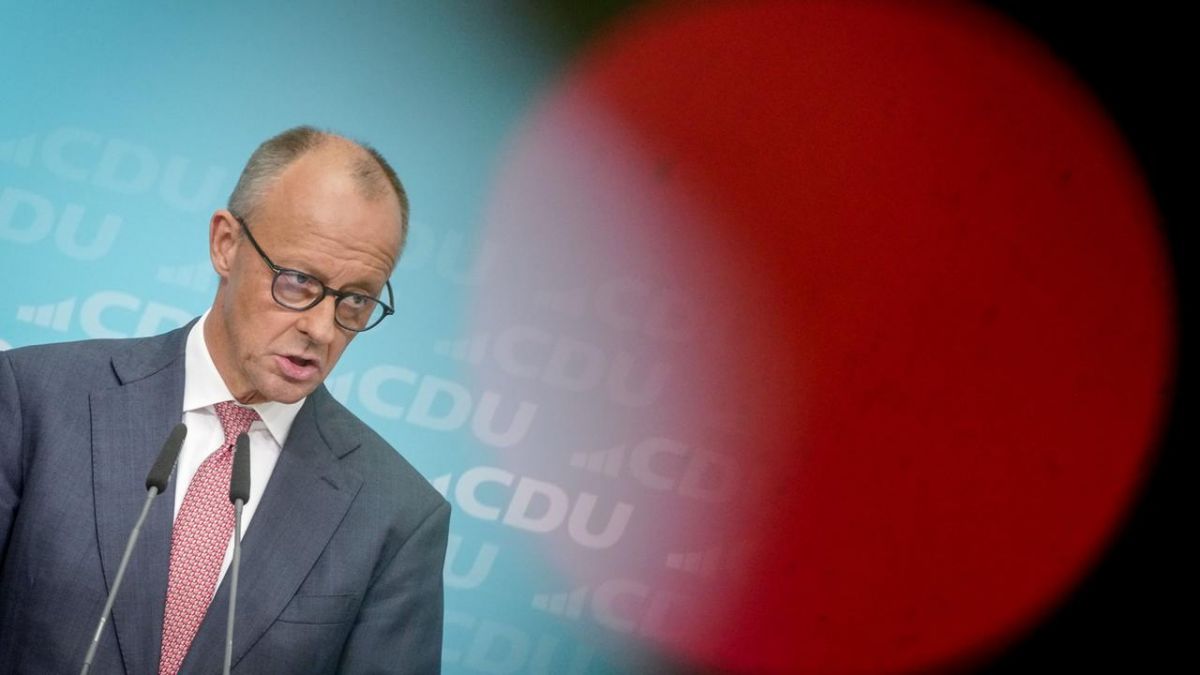
Chancellor Merz has surprisingly sparked the debate about the dual system of health insurance and addressed an issue of equity regarding the gap between private and statutory health insurance, which has led to both praise and criticism. (translated)

"I don't know. There is a curious episode from last season in Guimarães, between Sudakov and a player from Vitória. I don't know if it's about that duality of criteria you are referring to. The team that commits the most fouls and receives the fewest cards? The statistic I know is that FC Porto has 21 points and seven victories in seven games. It's that statistic I want to hold on to." (translated)

Nuevo Dualsense de edición limitada anunciado, en colaboración con LISA. Se podrá reservar a partir del 2 de octubre en la web de PlayStation. https://t.co/bdSlUzvyyN #DualSense #PlayStation #LISA
¡Todo lo que pasó en Premios Juventud 2026! DUAL, hicimos este video para ustedes, gracias por ese 2/2 ❤️🔥 https://t.co/wvRdqn5yAX #SANTOSBRAVOS #STBV #SANTOSBRAVOSenEspaña #PremiosJuventud #SantosBravos #Dual
Cerrando con KAWASAKI en ES LATINA 🇪🇸🔥 ¡Muchas gracias por tanto amor, Madrid! Tenemos que regresar. Gracias a @shakira por permitirnos ser parte de su residencia europea en España, esto fue un sueño cumplido más. ¡DUAL, GRACIAS! #SANTOSBRAVOS #STBV #SANTOSBRAVOSenEspaña https://t.co/5IzAnM2E3R #Kawasaki #Madrid #Shakira
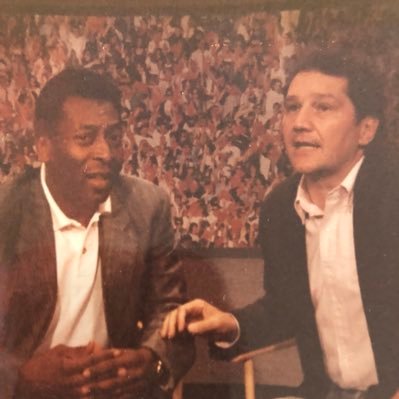
Lo incrociavo sullo stesso filobus che andava da Via Larga a Rogoredo, campo d’allenamento delle giovanili dell’Inter.Non aveva ancora esordito in serie A ma era già un esempio per quelli come me.Era Sandro Mazzola. Poi una lunga bellissima storia che si è conclusa oggi proprio nel giorno in cui San Siro compie 100 anni. Nel suo lungo percorso ha mietuto allori e successi, ha incantato il Real di Di Stefano, ha stordito la difesa del Vasas, ha palleggiato 6 volte prima di infilare il portiere svizzero, ha diviso l’Italia con quello strano dualismo con Rivera.Ha vinto l’Europeo e’ stato uno dei “messicani”, ha portato da dirigente l’Inter dei giovani, tutta italiana, a vincere lo scudetto dell’80. Ciao “Baffo”, mi mancherai. Ti sia lieve la https://t.co/Q9O2F3lECk #Inter #Calcio #SanSiro
The article by Francisco Camacho discusses the duality of the Volta initiative in Lisbon, which, despite helping with recycling, exposes the social vulnerabilities related to poverty, suggesting that ending the program would not solve the underlying issues and proposing an integration with social institutions to ensure support for those in need. (translated)

Finland has a special place in the history of EU enlargement. In 1999, here in Helsinki, EU leaders set the Union on the path towards its biggest enlargement ever. Today, we are again faced with the dual challenge of preparing candidate countries for membership and our Union to https://t.co/L0YdNnvPoB #EUnenlargement #Finland #HelsinkiSummit #FI #EU
The Polish Agency for Enterprise Development (PARP) announces that it will soon start supporting defense-related projects, offering 500 million PLN for innovations for large and small enterprises, with an emphasis on dual-use technologies and strictly military ones, as part of cooperation with the Ministry of National Defense. (translated)

Me fascina esta dualidad: esta postura sólo es válida para españoles nacidos en España que se van fuera. Pero si hablamos de nietos argentinos que no han pisado España en la vida, entonces el discurso es justo el contrario. Hacéoslo mirar. #España #Dualidad #Identidad
L’esperienza di “essere io” è la conoscenza che la coscienza ha di se stessa. Significa che io mi sento esistente come individuo grazie al fatto che la coscienza - impersonale - è cosciente di sé. Succede perché la coscienza diventa cosciente di sé passando attraverso la mia mente duale. Ecco perché la coscienza viene definita impersonale e individuale allo stesso tempo. #Coscienza #Identità #Filosofia
À partir d'aujourd'hui vous pouvez précommander les manettes DualSense Édition Limitée Grand Theft Auto VI, qui seront disponibles le 19 novembre : https://t.co/NXtWdEUTOK https://t.co/W6rHocenyH #GTA6 #DualSense #JeuxVidéo
The article by Paulo Pinto explores the relationship between nature and spirituality, arguing that a conservative and cautious approach, inspired by the duality of Saint Francis of Assisi, is essential to respect and embrace nature, while criticizing both radical environmentalism and unbridled capitalism. (translated)

muito emocionado com o elton john sentadinho no piano pra fazer o remix com a dua, fazendo um momento pista pro show, que honra ver alguém apaixonado pelo que faz até as últimas consequências, é para POUCOS!!!!!!! #EltonJohn #DuaLipa #Música
dua lipa presente em dois dias de rock in rio com calvin harris e elton john eu grito hit e vocês maker 🗣️ https://t.co/LSidQHcuar #DuaLipa #RockInRio #Música
QUEM DISSE QUE ELA NÃO VEIO? Dua Lipa dando as caras durante “Cold Heart” no show de Elton John no #RockInRio 🥺🤍 https://t.co/cT2TaQ71Xa #DuaLipa #RockInRio #EltonJohn