BETA nonprofit public democratic european moderated

Search

#End

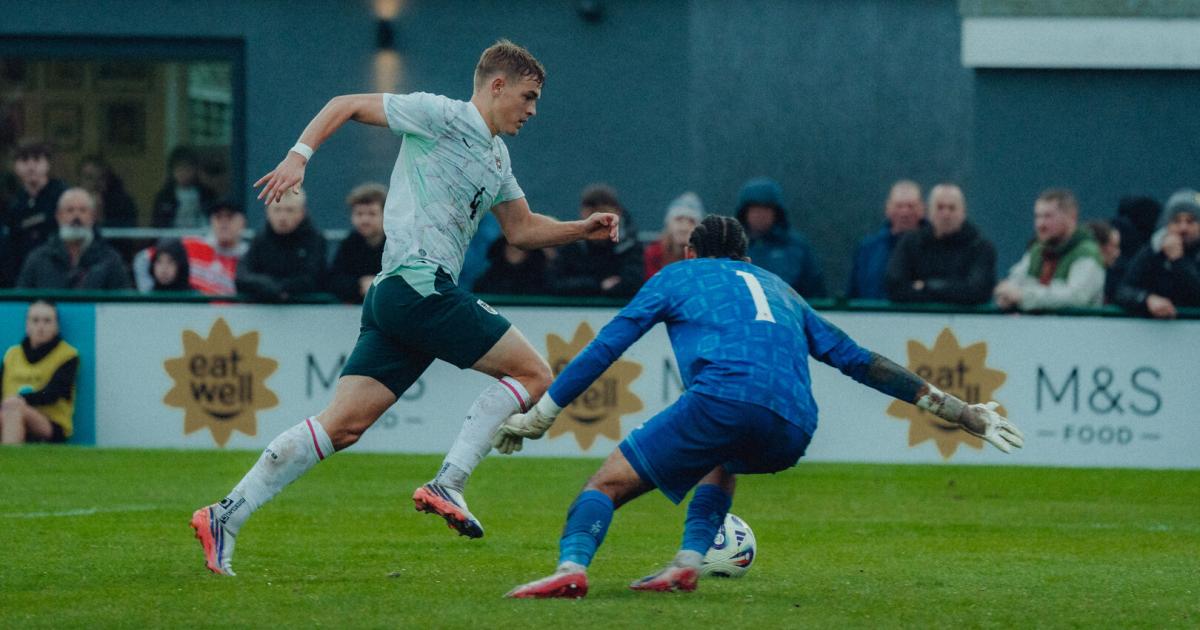
🚨Enligt norska TV2 ska den 26-årige yttern Sander Ringberg vara ytterst nära en övergång till Djurgården. Endast läkarundersökningen återstår. Ringberg har sprutat in assist i norska tredjeligan under säsongen, där han till vardags spelar för Hønefoss. https://t.co/92ViGynxVn #Fotboll #Transfernytt #Djurgården

Aprenda esta: há duas Farias Limas. Uma ganha dinheiro quando o Brasil dá certo. A outra ganha dinheiro quando o Brasil dá errado. O endereço pode ser o mesmo. Os interesses, não. Ambas são legítimas e devem ser respeitadas. Mas, na hora de ouvir conselhos, convém saber com quem você fala. #Brasil #Financeiras #Conselhos

Aus den gerade gemeldeten Quartalszahlen von @SpaceX geht hervor, dass das Unternehmen von @ElonMusk weiterhin 18.712 Bitcoin hält, die Ende Q2 1,098 Milliarden US-Dollar wert waren. 🔥 https://t.co/yhqrxYYyig #SpaceX #Bitcoin #ElonMusk

Ein Facharzt riet seiner Asthma-Patientin, die Cortison-Dosis zu erhöhen – damit sie die Maske tragen könne. Dr. med. Cornelia Wehr, Wiener Allgemeinmedizinerin, stellte ihr stattdessen eine Maskenbefreiung aus. Nach 15–30 Minuten Anamnese, körperlicher Untersuchung, Befund. Dafür verfolgte die Ärztekammer sie – jahrelang: ▪️ 2 Disziplinarverfahren wegen "unzureichender Dokumentation" (§ 18 Ärztegesetz) ▪️ Androhung des Berufsverbots ▪️ Überprüfung ihrer "Vertrauenswürdigkeit" – mit drohender Streichung aus der Ärzteliste ▪️ 12 Anzeigen insgesamt ▪️ 5.000 € Strafe + 4.000 € Anwaltskosten ▪️ eine Anzeige, weil sie auf ihrer Website erwähnte, dass schamanisches Wissen in ihre Behandlung einfließt Zu ihr kamen Menschen, deren eigene Ärzte sich nicht mehr trauten: Asthmatiker, Klaustrophobiker, Kinder mit Kopfschmerzen unter der Maske. Weil die Kollegen Sanktionen der Kammer fürchteten. Der Druck endete erst, als Wehr zusicherte, keine COVID-Bescheinigungen mehr auszustellen. 2023 ging sie vorzeitig in Pension und trat aus der Ärztekammer aus – von der sie sich "in keiner Weise vertreten" fühlte. Ihr Fazit: "Trotz allem würde ich unbedingt wieder so handeln. Der Arzt soll selbst entscheiden können, wie und womit er behandelt – Freiheit ist die Grundlage eines menschenwürdigen Lebens." #ÄrzteMitGewissen #DoctorsOfConscience #Ärzte #Gesundheit #Freiheit

S

Polen macht deutlich, dass es seine Migrationspolitik selbst bestimmen will – und lehnt eine verpflichtende Verteilung von Migranten innerhalb der EU ab. Die entscheidende Frage ist doch: Warum sollen Länder, die ihre Grenzen konsequent schützen, am Ende dieselben Folgen tragen wie Staaten, die ihre Grenzen über Jahre nicht ausreichend gesichert haben? Migration kann auf Dauer nur funktionieren, wenn ein Staat selbst entscheidet, wen er aufnimmt, wen er schützt und wo klare Grenzen gezogen werden. Eine ehrliche Debatte darüber ist längst überfällig! #Migration #Asylpolitik #Europa #Grenzschutz #Politik #Migration #Asylpolitik #Europa

BFMTV 6h

The latest Spider-Man movie: Brand New Day, featuring Tom Holland, broke records at the North American box office with 360 million dollars during its opening weekend, and attracted more than 2.5 million viewers in France in just five days, thanks to very positive critical reception and the enduring popularity of the Spider-Man character. (translated)

"Spider-Man: Brand New Day": comment expliquer le démarrage fulgurant du super-héros au box-office?

”Året är 2018. Du har precis sett Arga Blattens senaste YouTube-video och skrattat högt åt hans ägningar av vänstern. Solen skiner. Du sätter på dig din “Gör Sverige lagom igen”-keps, stoppar i hörlurarna och startar Navid Modiris senaste avsnitt av Hur Kan Vi, Aron Flam gästar. Public service måste verkligen skrotas… Du slår dig ner på en parkbänk och ser att DN återigen attackerar Hanif Bali, den här gången över en Call of Duty-meme. Du skriver snabbt en kommentar på DN’s twitterinlägg. Ett enda ord: ”Snöflinga.” Lajksen börjar rulla in. Livet är bra.” #Sverige #Politik #Humor

The US Judiciary Committee has voted 12 to 10 in favor of Todd Blanche, the former lawyer of Donald Trump, as US Attorney General, after he renegotiated controversial issues such as a compensation fund for Trump allies and protection during tax audits, while the final decision in the Senate could take place later this week. (translated)

Ex-Anwalt von Donald Trump: Senatsausschuss stimmt für Todd Blanche als US-Justizminister

Spider-Man: Brand New Day has become a box office phenomenon by exceeding one billion dollars in just six days, positioning itself as the second most successful opening in history worldwide, just behind Avengers: Endgame. (translated)

'Spider-Man' pulveriza la taquilla: lleva más de mil millones de dólares en seis días

“Escuché a Milei diciendo que endeudarse es problema de cada uno, si MILLONES de argentinos tienen ese problema no es un problema micro, es un PROBLEMA DE TU GOBIERNO” El problema es Milei, el primer ANTI-ARGENTINO https://t.co/4kPJltBUuy #Argentina #Milei #Gobierno

Die Krise der deutschen Autoindustrie trifft den nächsten Zulieferer. Bei Hess Plastics sind 290 Arbeitsplätze gefährdet. #HessPlastics #Autoindustrie #Insolvenz #Arbeitsplätze Insolvenzantrag: Die Karl Hess GmbH und Co. KG meldete Ende Juli 2026 beim Amtsgericht Siegen Insolvenz an. Im Werk in Neunkirchen sind rund 290 Arbeitsplätze gefährdet, während die Firmengruppe insgesamt etwa 550 Mitarbeiter beschäftigt. Marktdruck: Rund drei Viertel des Umsatzes stammen aus der Autoindustrie, deren Nachfrage deutlich eingebrochen ist. Zugleich belasten höhere Kosten für Energie und Rohstoffe die energieintensive Kunststoffproduktion, obwohl die Verwaltung verschlankt, Personal abgebaut und unrentable Projekte beendet wurden. Die Insolvenz zeigt, wie stark sinkende Nachfrage und hohe Standortkosten selbst etablierte industrielle Arbeitgeber unter Druck setzen. Vielen Dank für den wichtigen Hinweis! Quelle: (BILD) https://t.co/tZpLErw6nd #Autoindustrie #Insolvenz #Arbeitsplätze

Aro10 8h

🗣️Ein möglicher Transfer von Said #ElMala würde nicht das Ende der Transferaktivitäten von Borussia Dortmund bedeuten, da dies noch nicht alle Lücken im Kader schließen würde. 1/2 🗞 Rn #BVB https://t.co/Q3yD4p1yUH #Transfergerüchte #BorussiaDortmund #Fußball

Tag team generazionale. Dovrebbero organizzarsi e creare una specie di equivalente degli Avengers, fai tipo la battaglia finale di Endgame dove arrivano pure Rosa e Olindo, i fratelli Bianchi ecc https://t.co/lZ5jwJMgPh #TagTeam #Generazione #Avengers

A Generation That Forgot the Shape of the Square On memory left to die alone By Adham Hasanin Egyptian journalist and political writer, based in the Netherlands In a house near mine, there is a boy of thirteen. Born in 2013 just a few months younger than the July coup itself, younger than the new republic under whose shadow we now live. I asked him once, with no preamble, no test, out of nothing more than passing curiosity: do you know what January was? He answered simply, without hesitation, without any sense that he was missing something: "An old revolution, against Mubarak, right?" Not entirely wrong. But it is everything he knows. The name Tahrir Square means nothing specific to him. The sound of the crowd chanting has no echo in his mind. He does not know that his own family whom he sees every day saying "thank God for stability," who warn him against "chaos" whenever a political headline crosses the screen once, at a moment two years before he was born, went down into the street, betting their entire lives on the possibility that something might change. This article is not about politics. It is about memory, and about who decides what gets told and what is left to die in silence. I. Who Erases the Picture? The first question that comes to mind is the easiest and most deceptive one: who erases this memory? And where do we begin holding them accountable? But the truth is too complex to reduce to a single actor. No one actually erases memory, in the literal sense of the act. There is no ministry called the "Ministry of Forgetting," no presidential decree ordering January struck from the collective consciousness. What happens is simpler than that, and more dangerous at once: the subject is simply never told. School says nothing. The textbook leaps from one period to another without pausing on January for more than two faded lines, composed with deliberate neutrality, devoid of any detail that might make the event feel alive to its young reader. Television no longer has any reason to return to it; the programmes that once hosted witnesses and activists stopped years ago, replaced by an official discourse that mentions January only in passing, as an unfortunate prelude to the "stability" that supposedly followed. And the home the most dangerous link of all has become afraid of the subject. Speech now carries a price, and many families, whether consciously or by sheer survival instinct, have decided that silence is safer than the story. The father who marched fears passing on to his son a curiosity that might one day lead him into trouble the family cannot afford. The mother who lost a friend in the events prefers not to reopen the wound before a child who does not yet grasp the weight of loss. And so, generation after generation, the circle of those who know shrinks, and the circle of those who do not even ask because they do not know there is anything worth asking widens. No one decided to erase the memory through an explicit decision. The memory was simply left to die alone, with no one tending it. And it is precisely this decentralised absence of responsibility that makes this kind of erasure more dangerous than any direct official ban: there is no single decision to challenge, no single body to hold accountable. Responsibility is distributed across thousands of small decisions made by thousands of individuals, each within their own context, each seeming reasonable when viewed in isolation. II. Why This Is More Dangerous Than Direct Repression An objection might be raised: is direct repression arrest, imprisonment, publishing bans not far more lethal than mere gradual forgetting? The answer is complex, and deserves calm unpacking. Direct repression can be seen. It can be documented, and the victim can know they are a victim, can tell their story, and their pain can become a testimony added to the collective memory, even if it never reaches justice. The political prisoner knows he is a political prisoner. The journalist banned from writing knows he is banned, and can tell the world he is banned. Direct repression, for all its cruelty, leaves a trace that can be followed. But a generation that has forgotten something happened at all does not even have a starting point from which to ask. This thirteen-year-old boy will never ask "why were we repressed?" because he does not know there is anything deserving that question in the first place. He feels no absence, because he does not know there is anything absent. He simply lives in a version of reality stripped of an entire chapter of his country’s history, and never for a moment suspects that this void is a void at all. Here lies the essence of the danger: direct repression creates victims who know they are victims. Erasure of memory, when it succeeds, creates a generation that does not even know it has been deprived of anything. And deprivation that is not felt cannot be resisted, because resistance always begins with an awareness of loss. The regime that came after 2013 does not need to convince the new generation that January was a mistake. That would be an arduous, costly task, requiring sustained propaganda and continuous effort to persuade each individual one by one. It is far easier, and strategically far more efficient, simply to ensure they never know it was anything at all. The void requires no defence; it requires only silence, and silence is free and always available. III. The Four Mechanisms of Erasure Four complementary mechanisms can be identified working together to produce this collective void not as an organised conspiracy, but as a system of incentives that pushes each party, consciously or not, to contribute to the same process. The first mechanism: formal education. The curriculum, as currently designed, treats January as a passing footnote rather than a founding event deserving detail and analysis. The student memorises two dates the start of the revolution and its presumed end without understanding why people took to the streets, what they were demanding, or how they felt in that pivotal moment. The second mechanism: broadcast media. The channels that once hosted live discussions on January, featuring varied perspectives, have gradually disappeared, or transformed their discourse entirely. Today’s televised image either ignores the anniversary altogether, or invokes it only to frame it as a prelude to chaos that must be avoided. The third mechanism: the silence of homes. This is the most dangerous of all, precisely because it is the most human and understandable. Parents who lived through the experience protect it with silence, not out of aversion to the story, but out of fear of its price. This silence, however legitimate its motives, achieves exactly the same effect as official censorship: it blocks the transmission of knowledge from one generation to the next. The fourth mechanism: the absence of alternative spaces. Even those among the new generation who wish to know cannot easily find places to look. Archives are scattered, trustworthy websites are blocked or require effort to reach, and personal testimonies are dispersed across corners of the internet that an ordinary student at an ordinary school will never stumble upon. These four mechanisms require no central coordination to work together. Each naturally serves the others, and all converge on a single result: a growing void in the consciousness of every new generation. IV. Memory as an Act of Resistance If erasure operates without a centre, then resisting it must also be decentralised. No one waits for a government decision to restore January to the curriculum, nor for a television programme to revive the testimonies. Resistance here is necessarily individual, happening in small details, in passing conversations, in the simple decision to tell rather than to stay silent. This is exactly what I try to do, without any claim to heroism, without any grand mission. I try, whenever I can, to tell the thirteen-year-old boy and others like him details that are never written in official reports or in schoolbooks: what the voices in the square sounded like, how someone felt the first time they realised change was possible, what that moment of hope was like before everything changed. The goal is not to bring back the past; the past cannot be brought back. The goal is that this boy, when he grows older and asks again and he will ask, because the questions always return at some point finds someone to tell him the full story, not two faded lines in a schoolbook. That he knows the stability he is told is the fruit of "wisdom" has a prior history, that this history carried other possibilities, and that real people bet their lives on those possibilities. V. Why This Matters Now Talking about the memory of a generation not yet aware might seem an intellectual luxury next to more urgent matters: arrests, a collapsing economy, regional wars. But the truth is that this issue is the foundation on which every other issue is built. A people who do not know they once rose up will not understand why they should ever think of rising again. A generation raised to believe "stability" is the only natural state possible will never ask itself what drove its own parents, shortly before it was born, to risk everything for an alternative that was never guaranteed. Memory is not a luxury; it is the reference point by which every generation measures its present, and through which it determines what is possible and what is not. And whoever understands this understands why erasing memory, not direct repression alone, is among the most important tools of any regime seeking to guarantee its permanence: because a people who have forgotten they were once free will not even know they are missing freedom. Memory, like the word, needs someone to tell it in order to survive. And when the tellers stop, memory does not die suddenly; it withers slowly, generation after generation, until the day comes when a boy asks an innocent question, and finds no one to answer him but two faded lines in a schoolbook.

Ob mit Jetski oder irgendwie anders, sie werden nach Europa gelangen! Natürlich werden die Altparteien-Politiker wieder behaupten, dass es nicht vorhersehbar war und dass wir uns jetzt um sie kümmern müssen, da sie nun einmal da sind! Könnte nur noch 🤮! Unser Land ist so schon überfordert und am Ende! #Europa #Migration #Politik

More than a month after his disappearance in Lake Vico, the husband of Italy's Family Minister Eugenia Roccella, the 84-year-old Luigi Cavallari, was recovered dead from the water after he did not resurface while swimming in the lake at the end of June. (translated)

Ehemann von italienischer Ministerin tot aus See geborgen

Due to the intensified Russian attacks on Ukrainian Black Sea ports, Kyiv warns of a dramatic decline in grain exports, as alternative transport routes are not expected to reach the necessary capacity until the end of August, which could lead to a loss of up to three billion dollars in the agricultural sector. (translated)

Kiew warnt vor Einbruch von Getreideexporten
Bild 9h

Apple plans to simplify the copying and pasting of text and files between iPhone and Windows PCs after Microsoft requested more access to the iOS clipboard in an application, which is in line with EU regulations for open interfaces, with the new feature expected to be available no earlier than the end of 2027. (translated)

Microsoft fordert Zugriff - Apple öffnet iPhone-Funktion für Windows-PCs

Getting medical care should never depend on where you live! (translated)

ERR 11h

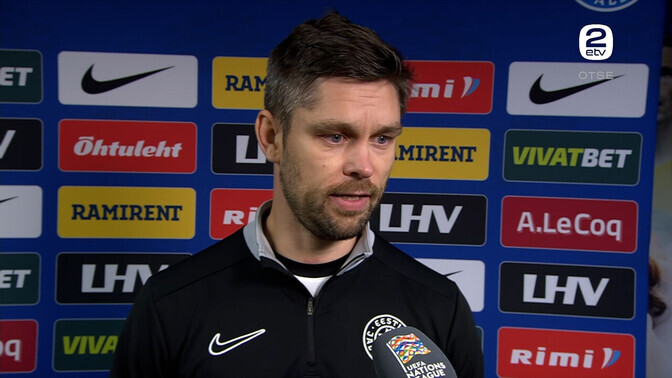
Former FIFA president Sepp Blatter believes that the president of the Norwegian Football Federation, Lise Klaveness, is the best candidate for the next FIFA leader, emphasizing that it is time for a woman to take over the leadership of the organization. (translated)

Blatter näeb FIFA järgmise juhina norralannat: on aeg, et FIFA-t juhib naine