BETA nonprofit public democratic european moderated

Search

#Flexibility

It will bring different types of investments together in one account, take the tax administration away from the individual and give people flexibility to access their money when they need it. #Investments #FinancialFreedom #TaxSimplification #Therearenospecificcountriesmentionedinthetweetprovided.

**Load Is Not the Enemy. Unstructured Load Is.** Europe does not need to make industry consume less electricity simply for the sake of consuming less. It needs to make electricity demand more intelligent in time. Industrial flexibility means shifting, shaping and coordinating loads around electricity prices, grid conditions and production needs — without compromising the output the customer actually wants. That can mean demand response. It can mean BESS. It can mean thermal storage, EV charging, process scheduling or combining several flexible assets behind the meter. The value does not come from any single technology. It comes from **coordination**. As electricity markets become more dynamic, flexibility turns consumption from a passive cost into an actively managed energy profile. The next efficiency frontier is therefore not only about using fewer kilowatt-hours. It is about deciding **which kilowatt-hours, when, and for what purpose.** #Energy #Flexibility #Electricity

Cold Beer and Hot Showers - Not Kilowatt-Hours All That Consumers Want The energy sector spends an extraordinary amount of time talking about generation, transmission, storage, flexibility, markets, tariffs, balancing, ancillary services, carbon emissions, batteries, hydrogen, demand response, electrification pathways, system costs, capacity mechanisms, investment signals, market design and regulation. All of these things matter. Some of them matter enormously. But there is a simple question that often disappears somewhere between the conference room, the policy paper and the technical model: What does the customer actually want? The answer is surprisingly simple. Most people do not wake up in the morning thinking about kilowatt-hours. They do not dream about capacity markets. They do not worry about frequency stability. They do not spend their evenings comparing balancing mechanisms. They want cold beer and hot showers. They want a warm home in winter and a cool home in summer. They want the lights to turn on when they press the switch. They want their phone charged, their food refrigerated and their car ready when they need it. In other words, they do not want energy. They want what energy allows them to do. That distinction may sound trivial, but it changes almost everything. For more than a century, the energy industry has been organized around the production, transportation and sale of energy itself. Electricity became measured in kilowatt-hours. Gas became measured in cubic meters. Fuel became measured in litres or tonnes. Markets, regulations and business models were built around those units. The customer, however, never experienced life in kilowatt-hours. The customer experienced comfort. Convenience. Mobility. Reliability. Security. The units used by the industry and the outcomes desired by the customer were never the same thing. For a long time, this mismatch was not particularly important. Energy was relatively scarce, flexibility was limited, and the dominant challenge was supplying enough fuel to satisfy demand. The system could afford to focus on production because production was the central problem. Today the situation is changing. Electrification is transforming energy systems around the world. Renewable generation is increasing rapidly. Batteries are appearing in homes, businesses and vehicles. Buildings are becoming smarter. Heat pumps are replacing boilers. Electric vehicles are becoming mobile storage assets. Customers are increasingly able not only to consume energy but also to store it, shift it, manage it and sometimes even sell it. As this happens, the most valuable question is no longer simply how much energy is produced. The more important question becomes: How well is energy aligned with what people actually need? A family does not care whether its water heater operates at noon or at two in the afternoon if hot water is available when someone steps into the shower. A homeowner does not care whether a battery charges at 1 p.m. or 3 p.m. if electricity costs less and reliability improves. An electric vehicle owner does not care when charging occurs as long as the vehicle is ready when needed. The objective is not the kilowatt-hour. The objective is the service. This is why many of the most important developments in modern energy systems are not really about producing more energy. They are about matching energy to the service required, at the right time, in the right place and in the right form. The technical term for this is often hidden behind complicated language. Experts discuss flexibility, demand management, dynamic pricing, distributed energy resources and system optimization. Consumers experience something much simpler. They experience agency. They experience the ability to save money without sacrificing comfort. They experience the ability to make choices. They experience the ability to benefit from technologies that work for them rather than asking them to work for the technology. This is where many debates become confused. Consumers do not want to be coordinated. They want agency. Good energy systems do not force people to behave differently. They make beneficial behaviour easier, more natural and more rewarding. The best systems do not rely on control. They rely on alignment. When the customer’s interest aligns with the system’s interest, remarkable things become possible. Demand shifts naturally. Storage becomes useful. Flexibility appears. Costs decline. Reliability improves. The customer does not need to understand the complexity underneath. Just as nobody needs to understand how the internet routes packets around the globe in order to send a message, nobody should need to understand wholesale electricity markets in order to enjoy affordable energy services. Success is not measured by how much complexity consumers are asked to absorb. Success is measured by how much complexity the system absorbs on their behalf. The future energy system will undoubtedly involve more digital technology, more electrification, more storage, more automation and more coordination. But none of those are the destination. They are merely tools. The destination remains exactly what it has always been. Cold beer. Hot showers. Comfortable homes. Reliable mobility. Affordable bills. Everything else is infrastructure. And perhaps that is the simplest way to understand the energy transition. People do not want kilowatt-hours. They want the life that kilowatt-hours make possible.

Are you holding onto a strategy just because you’ve spent a lot of time on it? 🛑 Psychologists call it the "sunk cost fallacy." Chess teaches us the value of flexibility: the moment a strategy stops working, you need to let it go and find a new approach. Train your mind to think https://t.co/gskiAXoaJp #SunkCostFallacy #Flexibility #ChessWisdom #Therearenospecificcountriesmentionedinthetweet.Therefore #theresultis:

The populist spiral: How populist rethoric spreads within party systems — Populism's simplicity and flexibility make it an attractive tool for parties seeking to mobilize voters, disrupt competitors, and respond to systemic pressures https://t.co/Rqneyilhi1 #Populism #PoliticalStrategy #VoterMobilization #Nospecificcountrycodesarementionedinthetweet.

Sven Clement Jul 9

Flexibility at work shouldn't mean: Employer: "Can you stay two extra hours?" Employee: “Sure. Can I leave early Friday?" Employer: "Absolutely not." Employee: 😒 #LabourRights #WorkLifeBalance #Homeoffice #LabourRights #WorkLifeBalance #Flexibility #Nospecificcountriesarementionedinthetweet.Therefore #therearenocountrycodestoreturn.

Sven Clement Jul 9

If companies can ask for flexible working hours, employees should also have the right to temporarily reduce their hours and later return to full-time work. Flexibility must go both ways. 🔄 #LabourRights #WorkLifeBalance #Homeoffice #LabourRights #WorkLifeBalance #Flexibility #Thetweetdoesnotmentionanyspecificcountries.Therefore #theresponseis:

Článek kritizuje český rodičovský systém, který, ačkoliv poskytuje delší dobu podpory než v mnoha jiných zemích, selhává v nabídce flexibility a dostupnosti služeb pro rodiče, čímž přispívá k neefektivnímu využívání těchto prostředků a omezuje možnost žen vrátit se do práce. #RodičovskáPodpora #SociálníPolitika #ČeskáRodina

Rodičovská? Pusťte matky do práce. A otce pusťte domů!
Sven Clement Jul 8

Flexibility at work should benefit both employers and employees. Modern labour policy isn't about choosing sides, it's about creating balance. ⚖️💼 #LabourRights #WorkLifeBalance #Homeoffice #WorkLifeBalance #LabourRights #Flexibility #Therearenospecificcountrymentionsinthetweet.Therefore #therearenocountrycodestoreturn.

The #NATOSummit delivered concrete results for Estonia. NATO is transitioning the Baltic Air Policing mission into an air defence mission, giving the Alliance greater flexibility and faster response to air threats. At the same time, Ämari Air Base will become an official NATO https://t.co/5YBmv4qoJC #NATOSummit #AirDefence #Estonia #EE

Sven Clement Jul 6

Civil servants doing the same job should have the same opportunities. Today, cross-border staff often can't enjoy the same home office flexibility as resident colleagues because of tax rules… That's an inequality worth addressing. ☝🏻 #PublicSector #Frontaliers #Homeoffice #Inequality #PublicSector #Homeoffice #Nospecificcountrycodesarementionedinthetweet.

Bayern have registered for the new U21 league, called "Bundesliga Talent Series". Union Berlin, Werder Bremen, Borussia Dortmund, SV Elversberg, Eintracht Frankfurt, HSV, RB Leipzig, Borussia Mönchengladbach, SC Paderborn and Schalke 04 are the other Bundesliga clubs set to take part. From the 2. Bundesliga, there's Hertha BSC, Arminia Bielefeld, VfL Bochum, Eintracht Braunschweig, Energie Cottbus, Darmstadt 98, Dynamo Dresden, Greuther Fürth, Hannover 96, FC Heidenheim, Holstein Kiel, FC Magdeburg, FC Nürnberg, FC St. Pauli and VfL Wolfsburg. The league begins in September in the form of two halves of a season, using a Swiss league format, similar to the new Champions League format. The top teams from each half of the season, which runs from September to December and February to April, will qualify for a final tournament The regular league matches will be played behind closed doors in order to keep costs and organizational effort low. The final tournament will be played in front of fans Clubs have considerable flexibility in selecting their squads, although it is clear that players from the U17 to U21 age groups should be given priority. In addition, a limited number of older players will be granted access to provide match practice for those recovering from injuries and to facilitate their return to the first team [@kicker] #Bundesliga #U21 #Football

Novinky Jun 17

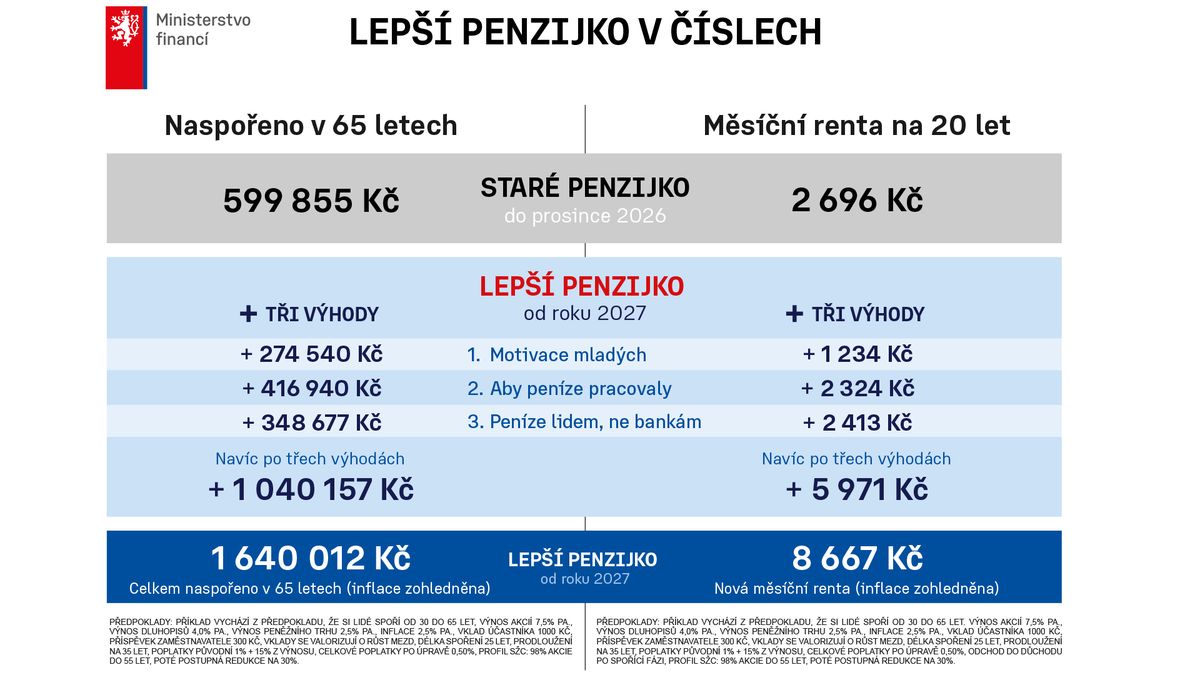
Reforma penzijního spoření, kterou představila ministryně financí Alena Schillerová, zavádí nová zvýhodnění pro mladé účastníky a podporu životního cyklu investic, ačkoliv opozice navrhuje další změny pro zvýšení flexibility a konkurence v systému, zahrnující větší motivaci pro mladé spořitele a úpravy v poplatcích. #penzijnireforma #mladistav #investice

Reforma penzijního spoření má podporu opozice. Ta chce zapojit fondy i do výstavby bytů

Vyžaduji řídicí model schopný vyvážit potřebu flexibility a pohody zaměstnanců s nutností zajistit včasné reakce na institucionální priority.

Italové se bouří proti Meloniové. Nutí je chodit do práce čtyři dny v týdnu 
zpravy.aktualne.cz
E15.cz May 20

Článek se zabývá debatou o regulaci platformové práce v Česku, přičemž manažerka Woltu, Veronika Bush, upozorňuje na důležitost zachování flexibility, kterou si kurýři vybírají, a varuje před možnými negativními dopady přísnějších pravidel na celý trh práce, když většina kurýrů preferuje zůstat nezávislými živnostníky. #platformováPráce #flexibilita #Wolt

Práce na šest hodin týdně. Většina kurýrů nechce klasické zaměstnání, tvrdí manažerka Woltu

In today’s volatile geopolitical context, Europe needs both financial flexibility and predictability in its external action - a key point in my discussion with @gahler_michael and @RobertBiedron today. #GlobalEurope: investing in the Mediterranean means investing in Europe’s own https://t.co/YHq3DX2R40 #GlobalEurope #Geopolitics #FinancialFlexibility #EU #MT

Seasonal shellfish exploitation by Neanderthals 115,000 years ago — Los Aviones Cave (Iberian Peninsula), demonstrates that they primarily exploited intertidal mollusks during the colder months of the year, highlighting a degree of behavioral flexibility https://t.co/EqpLylAc2N #Neanderthals #Paleoanthropology #SeasonalExploitation #ES

Mark Zuckerberg: I defend high expenditures as necessary for future growth and maintaining strategic flexibility.

Donald Trump: the time is running out and if Iran does not show flexibility, it will be hit much harder.

Donald Trump: Time is passing. If Iran does not show flexibility, they will be hit much harder.