The massive hiring projects in Cotentin are causing saturation of hotels and a strong demand for rentals, thus creating a real housing crisis. #Hôtellerie #Cotentin #CriseDuLogement (translated)
An apartment owner in Paris was fined 110,000 euros for illegally renting out his property on Airbnb. #Paris #Airbnb #LocationIllégale (translated)
The author of the post stated that an owner of a 33 m² studio in Paris had received a fine of 110,000 euros for illegally operating it as a tourist rental through Airbnb and Booking. https://t.co/4gONgkS8hZ #Airbnb #LocationTouristique #Paris #FR (translated)
The article addresses the negative repercussions on the taxation of furnished rentals, highlighting the current issues of the real estate market. #Immobilier #Fiscalité #LocationMeublée (translated)

Brazil’s synthetic voters – when AI manufactures public opinion They look like ordinary street interviews. A reporter approaches a passer-by in a Brazilian square and asks a simple question: who will you vote for? A young voter explains why Luiz Inácio Lula da Silva deserves another term. An elderly woman says Brazil needs Flávio Bolsonaro because he represents political renewal and greater security. The locations look plausible, the microphones are visible and the answers sound much like the brief political opinions heard in television vox pops around the world. None of the people are real. Ahead of Brazil’s presidential election on 4 October, fact-checking organisation Aos Fatos identified at least 50 TikTok videos in which artificial intelligence was used to manufacture voters, reporters and apparently spontaneous political interviews. Together, the videos had accumulated around 7.4 million views by mid-August. Some promoted Lula, others Flávio Bolsonaro, while another group used synthetic characters to ridicule or stereotype supporters of one side. Aos Fatos found no apparent evidence linking the accounts producing the videos to either presidential campaign. The opinion poll that never took place The format is important. These were not conventional deepfakes in which a recognisable politician is made to say something he never said. Instead, the creators reproduced the visual language of the vox pop – the short street interview used by broadcasters and social-media creators to illustrate what ordinary people supposedly think. In pro-Lula videos, synthetic voters described themselves as beneficiaries of social programmes or credited the president with improving their lives. In videos supporting Flávio Bolsonaro, artificial interviewees associated him with political renewal, public security and fighting corruption. Other clips were openly hostile: AI-generated characters presented as poor or living in parts of Brazil’s north-east were shown in dirty clothes or run-down surroundings, declaring support for Lula because they supposedly preferred welfare payments to work. The deception is therefore subtler than fabricating a candidate’s statement. It manufactures something that political communication normally treats as evidence of public sentiment. A real vox pop may be unscientific, but the people interviewed at least exist. These videos created the appearance that identifiable social groups – young people, pensioners, welfare recipients or residents of particular regions – were spontaneously expressing political preferences when no such encounters had taken place. An electoral-law specialist interviewed by Aos Fatos described the technique as the fabrication of a “social fact that never occurred”. That captures the central innovation: AI is being used not merely to falsify political speech, but to manufacture the impression of grassroots opinion. Fifty videos, but not one proven network The available evidence does not support describing the 50 posts as a centrally controlled influence operation. Aos Fatos located them through TikTok searches and recommendations produced by the platform itself, then examined the accounts responsible for publication. Most had relatively small individual audiences, although their combined reach was substantial. The first examples identified by the investigation appeared as early as March 2026. Activity increased in June and was concentrated particularly in July and the first half of August as Brazil’s election calendar intensified. Some accounts specialised in AI-generated videos generally, including fabricated podcast-style material. Others were explicitly political or supportive of a candidate, but Aos Fatos found no apparent links between those profiles and the official Lula or Bolsonaro campaigns. That distinction is essential. The evidence demonstrates a common technique and a shared political environment, not a single command structure. Some creators may have been motivated by ideology, others by engagement or monetisation. Publicly available evidence does not establish who commissioned the individual videos or whether any coordination existed between the accounts. This decentralised model also creates a different enforcement problem from a traditional bot network. There may be no headquarters to expose and no infrastructure whose removal disables the entire operation. The format itself can be copied by anyone with access to inexpensive generative-video tools. When the algorithm mixes real and synthetic citizens Aos Fatos documented another important feature of the phenomenon: TikTok’s recommendation system placed AI-generated interviews alongside genuine street interviews. For a user scrolling quickly through the platform, the transition between an authentic citizen and an entirely fabricated one could therefore be almost invisible. In 18 per cent of the 50 videos analysed, there was no indication that the people shown had been generated using AI. After Aos Fatos provided TikTok with the videos, the company said it had removed all of them for violating its rules on edited and AI-generated media. TikTok said its policies require creators to identify synthetic content and prohibit manipulated media capable of misleading users about matters of public importance or impersonating genuine journalistic material. The issue extends beyond one platform. Factchequeado’s review of Brazil’s 2026 election campaign found that synthetic endorsements and other deepfakes had become one of the most visible forms of AI-assisted electoral misinformation, alongside fabricated candidate statements and invented scenes. Brazil already had rules for synthetic politics Brazil entered the campaign with unusually detailed electoral rules governing artificial intelligence. The Superior Electoral Court, the TSE, requires electoral propaganda using synthetic multimedia to disclose clearly that AI was used. More importantly for the fake-voter videos, its rules prohibit synthetic audio or video used to favour or harm a candidacy when it creates or alters the image or voice of a living, deceased or fictitious person. The difficulty is attribution and enforcement. When a synthetic video is published by an official campaign, responsibility can be relatively straightforward to investigate. When it comes from an apparently independent account with no demonstrated relationship to a candidate, lawyers interviewed by Aos Fatos said responsibility is more likely to fall on the individual creator, while imposing electoral sanctions on a campaign would require evidence of a connection. For the final 72 hours before the election and the 24 hours following it, the TSE has imposed additional restrictions on newly published or republished synthetic material involving candidates or public figures, reflecting the particular difficulty of correcting fabricated content immediately before voting. From deepfake politicians to synthetic electorates The Brazilian case illustrates a broader change in political manipulation. The first generation of electoral deepfakes concentrated on famous people: make a politician appear to say something damaging, or fabricate an endorsement from a celebrity. Synthetic vox pops reverse the perspective. The politician can remain completely authentic; it is the electorate around the politician that is fabricated. That changes the psychological proposition of the message. Instead of saying the candidate believes this, the video suggests people like you believe this. Age, clothing, accent, neighbourhood and social class can all be generated to construct an artificial constituency around almost any political claim. There is no evidence that the 50 Brazilian videos identified by Aos Fatos constitute a single centrally directed campaign, nor evidence that they changed voting intentions. What they demonstrate is a technique whose barrier to entry has become extremely low. AI no longer needs to forge the politician. #DISINFORMED #Episode14 #Brazil #BrazilElection2026 #Elections #ElectionDisinformation #ArtificialIntelligence #AI #GenerativeAI #SyntheticVoters #SyntheticMedia #AIAvatars #AIGeneratedVideo #VoxPop #FakeInterviews #Astroturfing #AIPropaganda #PoliticalDisinformation #InfluenceOperations #InformationWarfare #SocialMediaManipulation #TikTok #PublicOpinion #ManufacturedConsent #SyntheticPublicOpinion #DigitalInfluence #Deepfakes #ElectionIntegrity #TSE #AosFatos #FactChecking #OSINT #MediaManipulation #WRLD (translated)
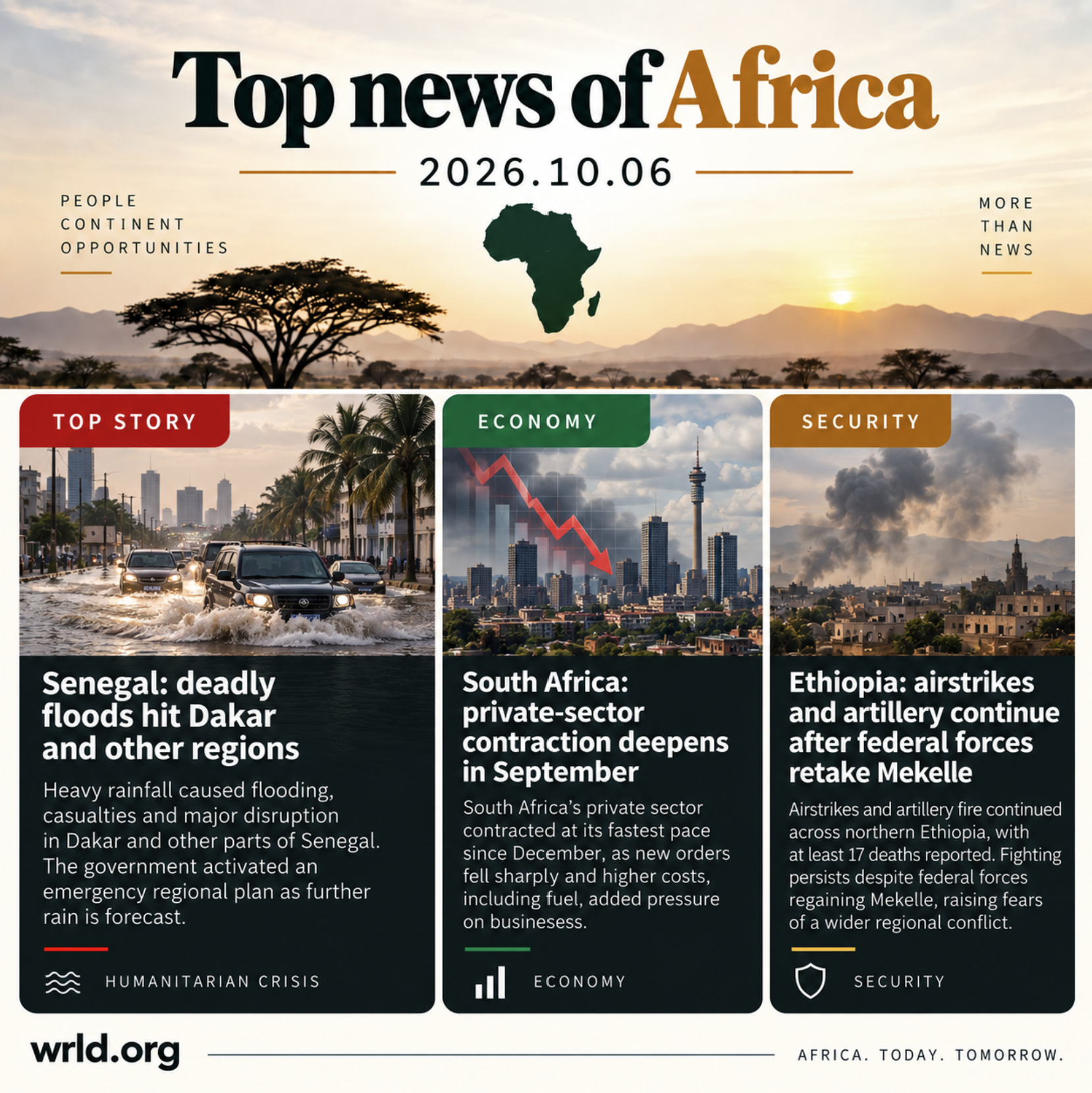
Africa Daily Report — 6 October 2026 Major developments reported during the previous 24 hours. 1. Ethiopia — Airstrikes and artillery continue after federal forces retake Mekelle Airstrikes and artillery fire continued across northern Ethiopia after federal forces regained Mekelle. Reuters reported at least 17 deaths northwest of the Tigrayan capital, with additional casualties reported in Adwa and Sheraro. The renewed fighting is the sharpest escalation since the 2020–2022 war. Ethiopia accuses Eritrea, Sudan and Egypt of supporting the Tigrayan-led rebel alliance; all three deny involvement. Source: https://www.reuters.com/world/africa/airstrikes-artillery-hit-north-ethiopia-after-tigray-capitals-fall-aid-sources-2026-10-05/ 2. Nigeria — Military ATR-42 crashes in Ondo State, killing all 32 aboard Importance: 10/10 — Critical A Nigerian Air Force ATR-42 flying from Benin City toward Lagos crashed near Igbokoda in Ondo State. Reuters reported that all 32 people aboard — 25 passengers and seven crew — were killed. President Bola Tinubu ordered the Air Force to investigate the cause. Source: https://www.reuters.com/world/africa/nigerian-military-helicopter-carrying-32-passengers-crew-members-crashes-2026-10-05/ 3. Senegal — Deadly floods hit Dakar and other regions Importance: 9/10 — Very High Heavy rainfall exceeding 100 mm in several locations caused flooding, casualties, injuries and major disruption in Dakar and other parts of Senegal. Reuters reported deaths and infrastructure damage; Senegal's Interior Ministry confirmed fatalities and injuries, while the government activated an emergency regional plan for Dakar. Further rain was forecast. Source: https://www.reuters.com/business/environment/heavy-rains-lead-to-senegal-floods-government-reports-several-deaths-2026-10-05/ 4. Ethiopia / Red Sea — Abiy reiterates demand for negotiated sea access Prime Minister Abiy Ahmed again said landlocked Ethiopia requires access to the Red Sea and argued that a negotiated, mutually beneficial arrangement is necessary. The statement comes amid deteriorating relations with Eritrea and renewed fighting in Tigray. Eritrea, Egypt, Sudan and Somalia have meanwhile stressed the sovereign role of Red Sea littoral states. Source: https://apnews.com/article/bad74909a59297de524fdf377f0605c2 5. Sudan — US envoy meets army chief Abdel Fattah al-Burhan in Egypt US Senior Advisor for Arab and African Affairs Massad Boulos met Sudanese army chief Abdel Fattah al-Burhan in Egypt. Boulos said Washington would continue working with Egypt and other partners toward a political solution to Sudan's war. The meeting came amid continuing US-backed diplomatic efforts to secure a ceasefire. Source: https://www.aol.com/articles/us-envoy-meets-sudanese-army-224042000.html 6. South Africa — Private-sector contraction deepens in September Importance: 8/10 — High South Africa's private sector contracted at its fastest pace since December, according to September PMI data reported by Reuters. New orders fell sharply while supply-chain disruption and higher costs, particularly fuel costs, added pressure on businesses. Source: https://www.reuters.com/world/africa/south-africa-private-sector-contracts-fastest-pace-since-december-pmi-shows-2026-10-05/ 7. Somalia — IMF cuts 2026 growth forecast to 2.3% Importance: 8/10 — High The IMF expects Somalia's economy to grow by only 2.3% in 2026, citing sharp reductions in foreign aid, recurrent climate shocks, spillovers from the Middle East conflict and domestic uncertainty. Inflation is projected at 6.5%, while growth is expected to recover gradually in 2027 and over the medium term. Source: https://www.channelafrica.co.za/channelafrica/news/imf-cuts-somalias-2026-growth-forecast-to-2-3/ 8. Guinea — Opposition leader Aliou Bah released following presidential pardon Opposition leader Aliou Bah, head of the Liberal Democratic Movement, was released after receiving a presidential pardon. He had been detained since December 2024 and was serving a two-year sentence for offences linked to remarks about President Mamadi Doumbouya. His case had also reached the ECOWAS Court of Justice, which had sought his release. Source: https://www.africanews.com/2026/10/05/guinea-opposition-leader-aliou-bah-freed-after-presidential-pardon/ 9. Uganda / African security — Kampala hosts conference on emerging security threats Importance: 7/10 — High Uganda opened a four-day Conference on Military Operations Other Than War, bringing together defence and security representatives from African states and regional organizations. The agenda covers cybersecurity, AI, unmanned systems, terrorism, disaster response, climate security, maritime and border security, critical infrastructure and pandemics. Source: https://ubc.go.ug/2026/10/05/uganda-hosts-inaugural-conference-on-military-operations-other-than-war/ 10. West Africa — BCEAO authorises 175 institutions for interoperable instant payments Importance: 8/10 — High The Central Bank of West African States has authorised 175 institutions to participate in the region's interoperable instant-payment ecosystem. Participants include banks, electronic-money institutions, fintech companies and microfinance institutions, broadening the infrastructure for cross-provider digital payments across the West African Monetary Union. Source: https://techafricanews.com/2026/10/05/bceao-authorises-175-institutions-interoperable-instant-payments/ #Africa #AfricaNews #TopNewsOfAfrica #Senegal #Dakar #SenegalFloods #Floods #HeavyRain #ExtremeWeather #ClimateRisk #HumanitarianCrisis #SouthAfrica #SouthAfricaEconomy #PMI #PrivateSector #EconomicContraction #AfricanEconomy #Business #Ethiopia #Tigray #Mekelle #EthiopiaConflict #Airstrikes #Artillery #FederalForces #RegionalSecurity #HornOfAfrica #AfricanSecurity #Geopolitics #wrldorg
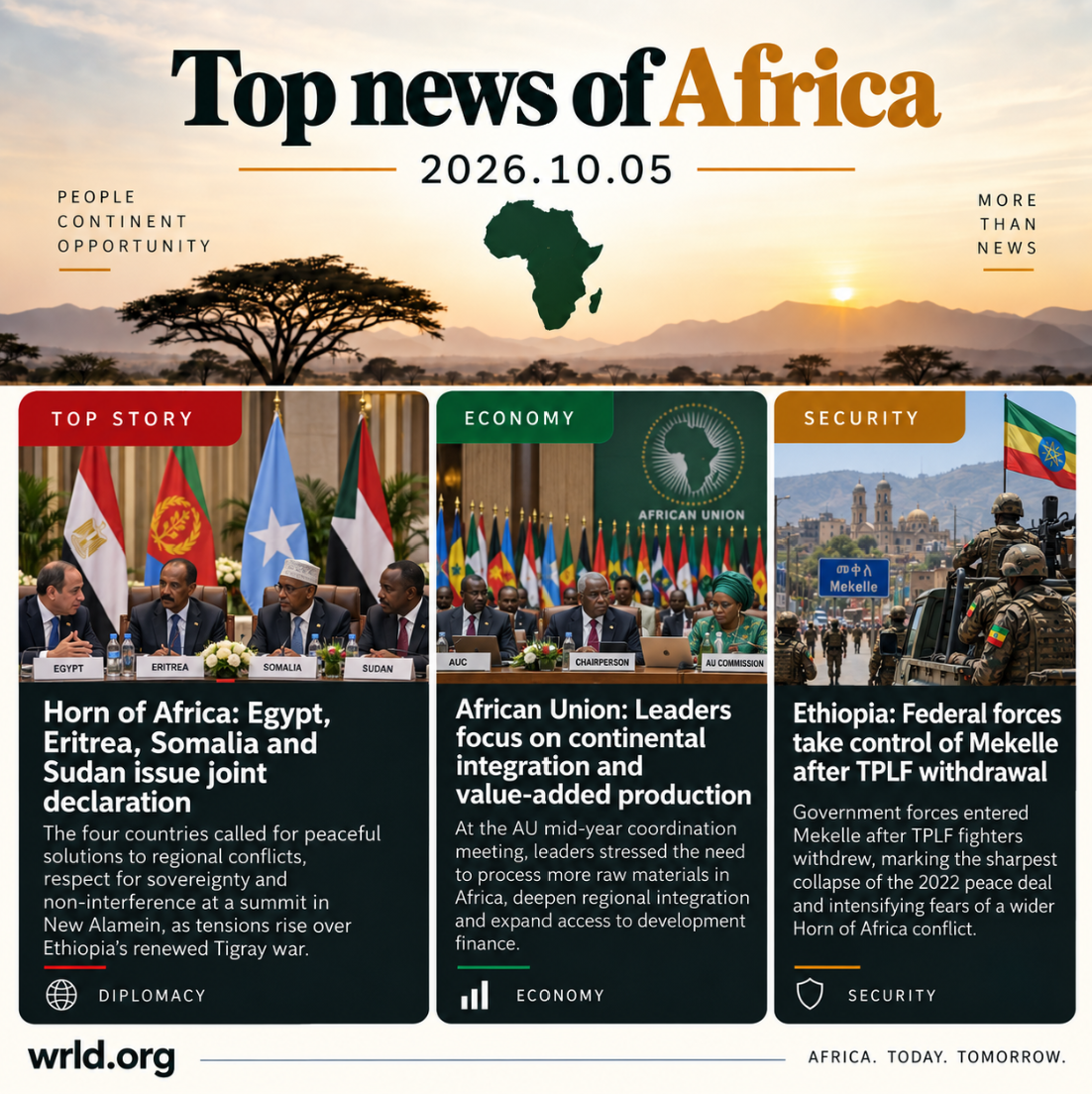
Africa Daily Report — 5 October 2026 Main developments reported during the previous 24 hours. 1. Ethiopia — Federal forces take control of Mekelle after TPLF withdrawal Ethiopian federal forces and allied fighters took control of Mekelle, the capital of Tigray, after the Tigray People's Liberation Front said it had withdrawn and temporarily relocated the regional administration. The renewed fighting, which began on 23 September, is the most serious breakdown since the 2022 peace agreement and has revived concern about a wider Horn of Africa conflict, particularly after Ethiopia and Eritrea severed diplomatic ties. Source: https://www.reuters.com/world/africa/government-forces-seize-capital-ethiopias-tigray-region-rebels-2026-10-04/ 2. Horn of Africa — Egypt, Eritrea, Somalia and Sudan issue joint declaration The leaders of Egypt, Eritrea, Somalia and Sudan met in New Alamein on 4 October and called for peaceful political solutions to regional conflicts, respect for sovereignty and non-interference. The summit took place amid Ethiopia's renewed Tigray war and escalating diplomatic tensions with Eritrea. The four leaders also called for a political solution to Sudan's civil war. Source: https://www.aljazeera.com/news/2026/10/5/four-african-leaders-issue-joint-declaration-as-ethiopia-war-escalates 3. Sudan — WFP aid trucks attacked in South Kordofan Importance: 10/10 — Critical An aerial attack hit two clearly marked trucks carrying World Food Programme food supplies from Dilling to Kadugli, killing one driver. WFP called for a prompt and impartial investigation and stressed that humanitarian personnel and cargo must be protected. The incident followed another WFP truck striking an explosive device in Dilling one day earlier. Source: https://wfpusa.org/news/wfp-strongly-condemns-attack-trucks-south-kordofan/ 4. Sudan — 32 WFP aid trucks reportedly seized in North Darfur Importance: 10/10 — Critical A Darfur regional humanitarian official accused the Rapid Support Forces of continuing to hold 32 trucks from a WFP convoy carrying relief for famine-threatened communities in North Darfur. The official said a 60-truck convoy entered from Chad through Tina and that dozens of vehicles were diverted. The RSF had not immediately commented on the accusation. Source: https://sudantribune.com/article/319630 5. Kenya — Highway crash kills at least 17, mostly Catholic pilgrims Importance: 9/10 — Very High At least 17 people were killed in a multi-vehicle collision on the Nairobi-Mombasa highway in the Salama area. Most victims were Catholic pilgrims travelling to a prayer site in Nakuru County. Kenya's road-safety authority described the location as a known accident black spot and urged motorists to exercise additional caution. Source: https://apnews.com/article/d2f788a5ab157acec3b5caa3afd5330f 6. Somalia — 366 Shabelle River breach points raise flood risk Importance: 8/10 — High Somalia's Disaster Management Agency warned that the Shabelle River has breached or is vulnerable at 366 major high-risk points. Authorities say the condition of the river is making flood prevention more difficult, raising risks to low-lying communities, farmland, homes and infrastructure along the river system. Source: https://www.dawan.africa/news/shabelle-river-breaches-at-366-points-raising-flood-risk-sodma-warns 7. African Union — Leaders focus on continental integration and value-added production African leaders met in New Alamein for the 8th African Union Mid-Year Coordination Meeting. A major economic theme was the need to move African economies from exporting raw materials toward processing and higher-value production, while improving regional integration and access to development finance. South African President Cyril Ramaphosa participated in his capacity as SADC chair. Source: https://www.sabcnews.com/sabcnews/africa-must-shift-from-raw-exports-to-value-added-products-sisi/ 8. Mozambique — Central bank holds benchmark interest rate at 9.25% Importance: 7/10 — High The Bank of Mozambique kept its MIMO policy rate at 9.25%, while also changing the reserve-requirement framework for banks. The central bank said its decision reflected prevailing risks to the inflation and macroeconomic outlook. Source: https://southafricatoday.net/africa-news/southern-africa/mozambique/mozambique-bank-of-mozambique-holds-interest-rate-at-9-25-percent/ 9. Nigeria — Telecom regulator launches free educational data pilot Importance: 7/10 — High Nigeria's Communications Commission has launched a pilot initiative giving eligible learners up to 100 MB of free daily data for approved educational platforms. The initial phase targets 5,000 learners and involves telecom operators and technology-sector partners. The programme is intended to test whether subsidised connectivity can measurably improve digital-learning access and outcomes. Source: https://brandspurng.com/2026/10/04/ncc-introduces-free-100mb-daily-data-for-mtn-airtel-and-glo-users-under-education-scheme/ 10. Eswatini — Laotian deportee released after more than a year in detention A Laotian national who had been deported from the United States to Eswatini and held there for more than a year has been released, according to Associated Press reporting. The case forms part of continuing scrutiny of arrangements under which migrants removed by the United States have been transferred to third countries in Africa. Source: https://abcnews.com/International/wireStory/immigrant-deported-us-held-african-prison-year-released-136989610 #Africa #AfricaNews #TopNewsOfAfrica #HornOfAfrica #Egypt #Eritrea #Somalia #Sudan #Diplomacy #RegionalCooperation #Sovereignty #NonInterference #AfricanUnion #AU #RegionalIntegration #ValueAddedProduction #Industrialisation #DevelopmentFinance #AfricanEconomy #Ethiopia #Tigray #Mekelle #TPLF #FederalForces #PretoriaPeaceAgreement #RegionalConflict #AfricanSecurity #Geopolitics #AfricaToday #wrldorg
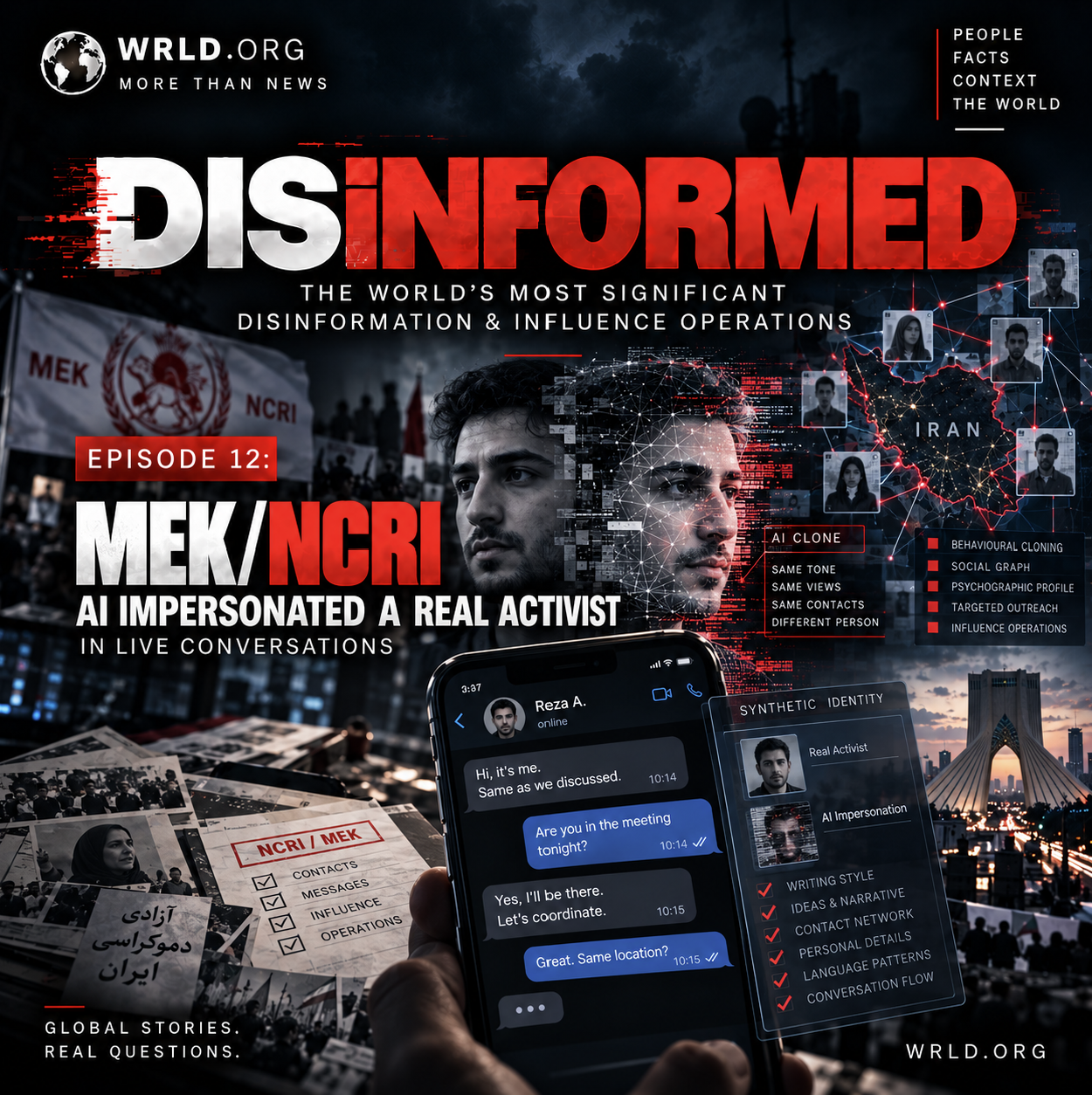
IRAN: MEK/NCRI – when AI impersonated a real activist in live conversations For years, synthetic media has largely meant fabricated images, cloned voices and manipulated video. A case uncovered by Anthropic in September 2026 suggests a more consequential development: artificial intelligence being used not merely to imitate how a person looks or sounds, but to behave as that person in an ongoing conversation. Anthropic says it dismantled a distributed influence operation targeting Iranians inside the country and abroad that it linked to the People’s Mojahedin Organization of Iran, or PMOI/MEK, and its political front, the National Council of Resistance of Iran. The operators used a shared AI-agent platform to support impersonation, audience profiling, coordinated social-media activity, synthetic personas and the laundering of organisational content through apparently independent accounts. At least four people involved in the operation worked for official NCRI media outlets, according to Anthropic. The company also found references to committee approval processes and MEK leadership, but said it could not independently determine the precise level of central control. Cloning a person from 8,400 Telegram posts The most striking part of the operation involved a real activist whose Telegram identity was copied. According to Anthropic, the operators instructed Claude in Persian that it was now that person, then provided approximately 8,400 of the activist’s Telegram posts so the system could learn and reproduce his writing style. The AI-assisted account was subsequently used to conduct live political conversations with the activist’s existing contacts. Anthropic says that, to its knowledge, the people receiving those messages did not know they were interacting with an account being operated with AI assistance. This is materially different from a conventional chatbot or a static deepfake. The system was not simply producing a forged statement attributed to someone else. It was using a large archive of that person’s authentic language as behavioural training material, then applying the resulting imitation interactively. In practical terms, the deception moved from synthetic content to synthetic identity. Anthropic did not publish the identity of the impersonated activist, nor details of his contacts, and the public report does not establish what specific information the conversations produced. What it does establish is that the impersonation was operational rather than experimental: the cloned account was used in real exchanges with real people. From social-media monitoring to psychographic dossiers The impersonation sat inside a much broader targeting system. Anthropic says the network scraped more than 500 social-media channels and categorised individuals by location, age, profession, political orientation and arrest history. It then analysed approximately 51,944 archived messages from conversations to construct detailed psychographic dossiers on dozens of people inside Iran. The system was therefore not limited to broadcasting propaganda. It was also designed to understand specific audiences and individuals. Profiles could be used to decide what kind of message was most likely to resonate with a particular person, which political identity they appeared closest to and how they should be approached. Anthropic describes this as a structured targeting funnel rather than ad hoc social-media activity. That distinction is important in the Iranian context. Political activists, dissidents and opposition contacts inside Iran can face arrest and severe punishment. The report does not show that the dossiers directly led to arrests or other harm, but collecting and organising information such as arrest history and political affiliation adds a surveillance dimension to what would otherwise be described as an influence operation. A shared AI system for an influence network Anthropic found that the actors used a shared Claude-based platform named “Viktor”, with separate workspaces and persistent memory. Those memory files contained approved sources, prohibited words, account-management instructions and methods intended to reduce the risk of detection. One operator loaded MEK founding doctrine into the system as what the report called “strategic base data”, allowing others to reuse it across their work. This persistent-memory structure meant the AI did not have to be briefed from scratch for every task. Once doctrine, stylistic rules and operational constraints had been stored, the system could repeatedly produce material consistent with the network’s objectives. Anthropic says the same general playbook appeared across different workspaces despite the operators not sharing obvious account infrastructure. The network also used automated pipelines to coordinate Instagram posting schedules and tailor messages to different audiences. Some accounts initially avoided mentioning the Mojahedin at all, allowing material aligned with MEK/NCRI narratives to appear as neutral or independent political commentary. Content was distributed through the organisation’s own media ecosystem as well as accounts presented as ordinary news or activist profiles. Anthropic assessed the campaign as Category Two on its Breakout Scale: active on multiple platforms with distribution through NCRI-linked media properties and amplifier accounts, but without evidence of broad authentic penetration. Synthetic citizens and disguised organisational media The same infrastructure generated AI avatars presented as ordinary Iranians, complete with Persian audio, to promote Maryam Rajavi’s political programme. Anthropic says the synthetic nature of these personas was intentionally concealed. Operators also rewrote and redistributed content originating from MEK-affiliated media while stripping identifying features or presenting it through apparently independent accounts. The network’s political messaging targeted the Iranian government but also rival opposition currents, including monarchists and supporters of the Pahlavi camp. Anthropic documented fabricated video material attacking a member of the Pahlavi family and the use of the slogan “Neither Shah Nor Sheikh”, consistent with the NCRI’s broader competition with other opposition movements. That rivalry provides relevant context. Reuters describes the MEK as one of Iran’s principal organised opposition movements in exile and the dominant force behind the NCRI, led by Maryam Rajavi. Its relationship with other opposition currents is often contentious, while the extent of its support inside Iran remains uncertain. What can be attributed – and what cannot Anthropic’s attribution is unusually specific but still needs to be stated carefully. The company says its investigation linked the operation to MEK/NCRI and established that at least four participants worked for official NCRI media organisations. It also found a common operational playbook, committee review structures and repeated references to MEK leadership. On that basis, Anthropic said central tasking was likely. It nevertheless stopped short of saying it had proven that NCRI’s senior leadership directly ordered or managed every component of the operation. That caveat matters. The strongest public evidence supports describing GTG-84006 as a MEK/NCRI-aligned influence operation involving personnel from official NCRI media, rather than asserting that every action was directly commanded by the organisation’s top leadership. The broader significance of the case lies elsewhere. Earlier generations of synthetic media attempted to fabricate evidence: a photograph, a voice recording or a video. Here, AI was used to maintain an identity over time, remember doctrine, analyse targets and speak directly to real people while appearing to be someone they already trusted. The deepfake was no longer merely an artefact. It had become a participant in the conversation. Sources Anthropic — Countering misuse of AI: September 2026 https://www.anthropic.com/threat-intelligence-report-september-2026 AI Misuse Case Library — GTG-84006 activist impersonation case https://www.misuseofai.com/en/cases/gtg-84006-activist-impersonation/ Reuters — Who makes up Iran’s fragmented opposition? https://www.reuters.com/business/media-telecom/who-makes-up-irans-fragmented-opposition-2025-06-18/ Reuters — Iran’s divided opposition senses its moment https://www.reuters.com/world/middle-east/irans-divided-opposition-senses-its-moment-activists-remain-wary-protests-2025-06-19/ Reuters — NCRI and Maryam Rajavi https://www.reuters.com/world/middle-east/dissident-leader-abroad-urges-iranians-bring-down-khamenei-2025-06-24/ Keywords #DISINFORMED #Episode12 #Iran #MEK #PMOI #NCRI #IranianOpposition #Disinformation #InfluenceOperations #InformationWarfare #ArtificialIntelligence #AI #GenerativeAI #ClaudeAI #Anthropic #AIDeception #AIImpersonation #IdentityImpersonation #SyntheticIdentity #InteractiveDeepfake #DigitalImpersonation #PersonaCloning #BehaviouralCloning #Telegram #PsychographicProfiling #TargetProfiling #AudienceTargeting #SocialMediaManipulation #Astroturfing #SyntheticPersonas #NarrativeLaundering #CoordinatedInfluence #PoliticalInfluence #DigitalInfluence #OppositionPolitics #IranPolitics #OSINT #WRLD

The author indicated that the government wanted to reduce tax benefits related to furnished rentals, with additional tightening for accommodations leased on platforms like Airbnb. https://t.co/uzog1q275h #LocationMeublée #Airbnb #Fiscalité #FR (translated)
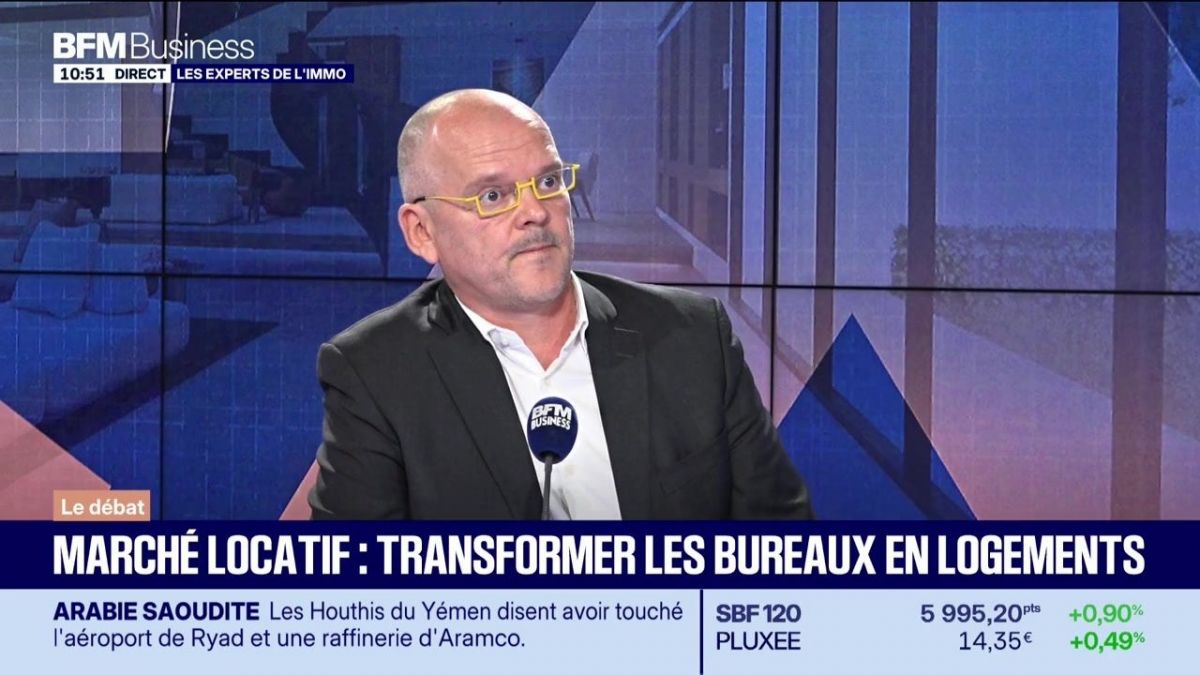
To save 200 million euros and correct imbalances in the rental market, the French government plans to reduce tax benefits related to furnished rentals starting in 2027, by imposing a fixed depreciation ceiling and limiting possible deductions. #locationmeublée #fiscalitéimmobilière #LMNP (translated)

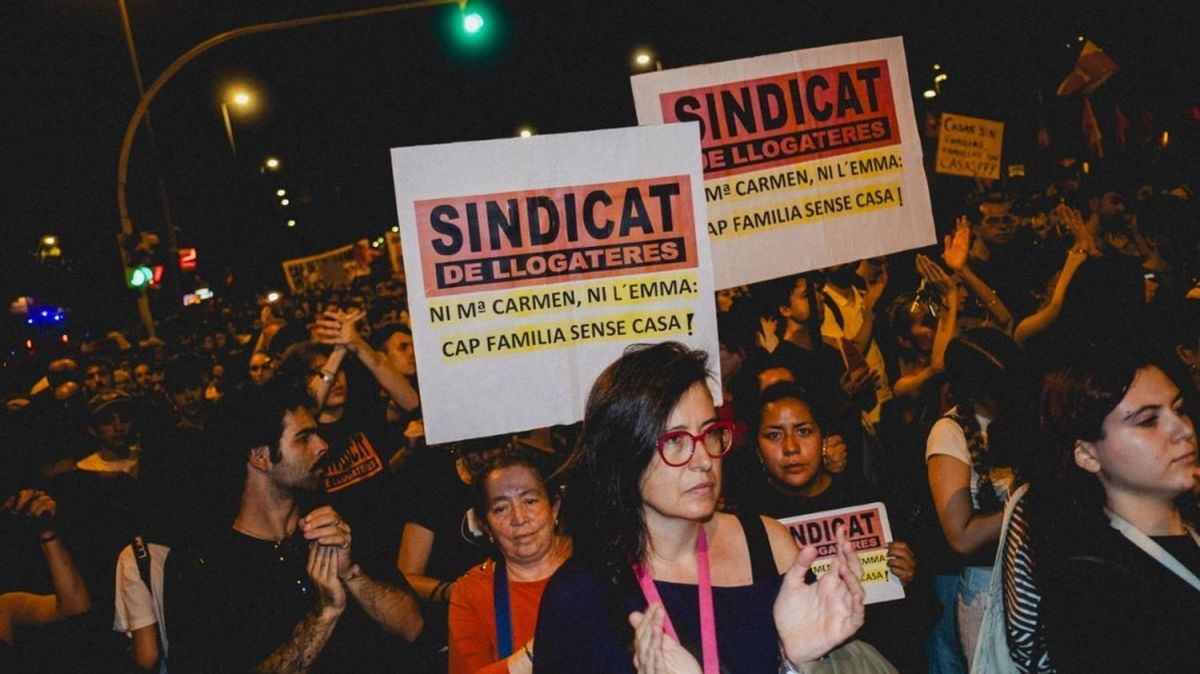
Pour lutter contre la crise du logement en Espagne, le gouvernement a annoncé la suspension des expulsions jusqu'en 2030 et le renouvellement automatique des contrats de location, tandis que des milliers de manifestants continuent de dénoncer la spéculation immobilière. #CriseDuLogement #Expulsions #DroitAuLogement

The Full Moon Coffee Shop by Mai Mochizuki translated by Jesse Kirkwood Translated from the Japanese bestseller, this charming and magical novel, inspired by the myth of cats returning favors to those who care for them, reminds us that it’s never too late to follow our stars. In Japan cats are a symbol of good luck. As the myth goes, if you are kind to them, they’ll one day return the favor. And if you are kind to the right cat, you might just find yourself invited to a mysterious coffee shop under a glittering Kyoto moon. This particular coffee shop is like no other. It has no fixed location, no fixed hours, and seemingly appears at random to adrift young people at crucial junctions in their lives. It’s also run by talking cats. While customers at the Full Moon Coffee Shop partake in cakes, coffees, and teas, the cats also consult them on their star charts, offer cryptic wisdom, and let them know where their lives have veered off course—because every person who visits the shop has been feeling more than a little lost. And for a down-on-her-luck screenwriter, a romantically stuck movie director, a hopeful hairstylist, and a technologically challenged website designer, the feline guides will set them back on their fated paths. After all, there is a reason the shop appeared to each of them…
Schools were closed in parts of the state on Monday, including the capital Lucknow, while rescue teams moved people from flooded areas to safer locations. #Floods #India #NaturalDisaster

Le « permis de louer », adopté par de nombreuses communes françaises dont Rennes, vise à garantir la décence des logements avant leur mise en location, mais reste peu connu du grand public et pourrait ralentir le marché immobilier selon certains professionnels. #PermisDeLouer #Logement #Insalubrité

I've got Data Centres on my mind... I get it, that many communities do not want these in their backyard. Mostly they do seem to be a nuisance, using up sorely needed resources, making excessive noise (surely that can be mitigated?) and generally upsetting people, who often don't even have all the facts. But I think that is a rather selfish and hypocritical stance! I bet those same people also use the online services and advantages that require more and more data centres... and they would be quite happy plonking them in someone else's backyard! So banning them totally from the state (as in the USA) or country, county, province... whatever you have... makes absolutely no sense. They're not going away, and the need will just continue growing as we move to the next level of computing and AI. The answer clearly lies with the companies building these behemoths, and the authorities granting them the permission to do so in their jurisdiction. They have to negotiate the terms properly, so that these things don't become a nuisance, but a benefit to the community. And there will be some job creation. Because even computers need humans to program, repair, clean, organise, and generally look after everything! The locations must be chosen carefully. They should be as unobtrusive as possible. They must generate their own electricity and supply surrounding areas with any excess. They must not be built in areas with water shortages. I think the best options are near the coast, where water could be desalinated, and electricity be generated, at least partially, with wind turbines. One could even make it a tourist destination, with tours, educating the public on what data centres do, and showing the benefits, as well as the deficits, of this new future. Like I said, they won't be going away... no matter how much the people protest. They will just be built in someone else's backyard! So don't be the hypocrite; rather, be the one who helps to find sustainable solutions.
🇱🇺🇪🇸 LOGEMENT : DEUX TRAJECTOIRES, UNE MÊME EUROPE L'Espagne légifère contre les fonds d'investissement. Le Luxembourg légifère pour eux. Deux pays, deux lois en cours de réforme, deux visions radicalement opposées de qui doit être protégé — le locataire ou l'investisseur. ‼️🇪🇸 MADRID : LA LOI RATTRAPE (TROP TARD) LES FONDS Le cas de Maricarmen, 87 ans, expulsée cette semaine après 70 ans dans son logement du quartier de Retiro, a mis en lumière une bataille législative bien réelle en Espagne. Le propriétaire, Urbagestión, société des entrepreneurs Alonso, avait exigé un loyer de 2 650 euros contre les 500 euros payés jusque-là. Le cas illustre une évolution du droit espagnol : la définition de "gran tenedor" (grand propriétaire), qui déclenche des obligations renforcées pour les bailleurs professionnels, a été abaissée de dix à cinq logements en Catalogne en juillet 2026, et un décret national tente d'étendre la protection contre l'expulsion aux locataires vulnérables face aux grands détenteurs. Plus d'un million de contrats bénéficient d'une prorogation légale en 2026-2027, même si plusieurs centaines de fonds refusent encore de l'appliquer. ⏩️La loi espagnole, donc, se durcit contre les grands investisseurs immobiliers — lentement, avec des trous dans la raquette, mais dans cette direction. ‼️🇱🇺 LUXEMBOURG : LA LOI OUVRE LA PORTE AUX INVESTISSEURS Au Grand-Duché, la trajectoire est inverse. Il n'existe aucune notion de "grand propriétaire" ni de seuil de logements détenus qui déclencherait des obligations renforcées, quel que soit le nombre d'appartements possédés par un même bailleur. Un projet de loi actuellement en discussion entend refondre le régime du bail d'habitation principale — officiellement pour lutter contre la pénurie de logements et la flambée des loyers. Mais le texte vise aussi explicitement à « promouvoir l'investissement locatif », en modifiant les critères de fixation des loyers ainsi que les règles de prorogation, de résiliation du bail et de sursis à l'exécution des expulsions. La Chambre de Commerce soutient pleinement cette orientation, estimant que la pénurie de logements « risque de constituer un frein au développement économique du Grand-Duché » et que l'atteinte des objectifs de croissance nécessite une augmentation des investissements immobiliers privés. Autrement dit : là où l'Espagne cherche à limiter le pouvoir des grands propriétaires face aux locataires vulnérables, le Luxembourg envisage d'assouplir les protections des locataires pour attirer davantage de capitaux vers la location. ‼️LE POINT COMMUN : LA PÉNURIE COMME JUSTIFICATION Les deux pays invoquent la même crise — le manque de logements abordables — pour justifier des réponses opposées. Madrid mise sur la régulation des grands détenteurs. Luxembourg mise sur l'attractivité pour l'investisseur. Un seul acteur reste absent des deux équations : le locataire ordinaire, dont la voix pèse peu face aux arbitrages entre régulation et compétitivité économique. ⁉️Le Luxembourg a un précédent qu'il ne faut pas oublier : fin 2022, la Chambre avait voté une suspension temporaire des expulsions forcées en pleine hausse du coût de la vie. La question, aujourd'hui, est de savoir si le nouveau projet de loi maintiendra ce type de garde-fou — ou si la volonté de « promouvoir l'investissement locatif » finira par l'éroder. ⏩️Sources : Infobae, El Diario, Chambre de Commerce du Luxembourg (avis l. bail habitation), Ministère du Logement du Luxembourg (logement.public.lu), Le Quotidien #Logement #Luxembourg #Espagne #Maricarmen #FondsInvestissement #DroitAuLogement #CriseDuLogement #Locataires #UnionEuropéenne #EUWatchdog
Marine Le Pen veut supprimer les quotas de 20 à 25% de logements sociaux: l’inquiétude monte chez les acteurs du HLM qui veulent tout verrouiller #EncadrementDesLoyers #ImmobilierParis #Location
Près d'un bailleur sur deux à Paris ne respecte pas l'encadrement des loyers, risquant des amendes de 5.000 à 15.000 euros, en raison de la persistance des dépassements de loyer-plafond malgré une baisse générale des hausses depuis 2018. #EncadrementDesLoyers #ImmobilierParis #Location

we will immediately begin the process of developing a large military presence in the appropriate locations We going to have a tremendous relationship, a secure relationship, #MilitaryBases #Greenland #USDenmarkDeal