WRLD

Search

#Nagranie
Służby w akcji 8h

The services in action asked Waldemar Żurek whether the prosecutors under his authority did not want to initiate proceedings ex officio regarding the man with the Porsche, who — according to the author — beat up an elderly couple after they pointed out his driving. The author described that in the recording, the older woman was struck in the face, attacked with an elbow, and kicked, while the older man was beaten and hit by a vehicle. He also asked where the important public interest was in this case and criticized the response of the services and the statement of the police spokesman. https://t.co/ojuMHHLSwU #bezpieczeństwo #sprawiedliwość #prawo (translated)


1975
Konrad Berkowicz 8h

Konrad Berkowicz asked Żurek if the footage from the body camera of yesterday's incident, which he described as an "attack" on a policewoman, had been accidentally deleted. He suggested that if the recording still existed, it would have already been published. #policja #bezpieczeństwo #media (translated)

1787
Piotr Kusznieruk 10h

Piotr Kusznieruk stated that the footage from the body camera raised serious suspicions that the man may have been previously monitored as someone associated with the protest organization. He claimed that the police had been trying from the beginning to establish his identity and asked whether they were acting on orders, who issued those orders, and on what legal basis. Kusznieruk emphasized that the systematic gathering of data by the police on individuals participating in legal protests, without specific grounds for identification, would signify practices characteristic of an authoritarian state. He pointed out that participating in a protest is not a crime, and the police should protect the constitutional freedoms of citizens. He asked the police who ordered the identification of this man and why the officers were interested in him even before the intervention. #protesty #wolność #Polska (translated)

2382
Pan Cezary Krysztopa #BabiesLivesMatter 10h

Mr. Cezary Krysztopa asked why the recording from the police body camera started during the chase and what had happened earlier. #policja #pościg #monitoring (translated)

1890
Sebastian Kaleta 12h

Sebastian Kaleta called the publication of the recording another disgrace and wondered why it was released only after more than a day. He claimed that the material undermines previous reports of an alleged attack on the officer and shows an unjustified attempt to identify a citizen. According to Kaleta, the officer did not provide a reason for taking action, which allegedly violated internal procedures. Citing established case law from the Supreme Court, he called for an investigation into the suspicion of exceeding authority — if the identification occurred without reason or for the unlawful purpose of establishing a list of assembly participants. Kaleta wrote that the man was alone and had no witnesses. He also claimed that the protesters outside the Constitutional Tribunal felt besieged by the police and feared the creation of a list of participants, for which, as he emphasized, the police had no right. He admitted that the man quickly moved to the office so that further actions took place in the presence of witnesses. He assessed that the police directed at the Constitutional Tribunal did not have the trust of the protesters. #Polska #protesty #policja (translated)

2122
Wolność__Słowa 12h

Freedom of Speech wrote that the police officer should state the reason before demanding documents and identification. In his opinion, the recording lacked such an explanation, and the policewoman should undergo retraining. The author also believed that the visible physical contact from the police in the video was unnecessary. He added that when the man started attacking the officers and fleeing, it was hard to blame the police for the pursuit and taking him down. However, he emphasized that the recording does not resolve media allegations regarding the knife or the policewoman's head hitting the door glass: according to him, there is no visible or audible impact, and the knife is not present at all. He accused PAP, TVP, and politicians from the ruling coalition of using this information for disinformation. The author assessed that the publication of the recording by the police was beneficial, as it allowed for a better understanding of the officers' behavior and expressing one's own opinion. https://t.co/m33wH9PD5u #policja #bezpieczeństwo #media (translated)

1819
Karolina Gałecka 12h

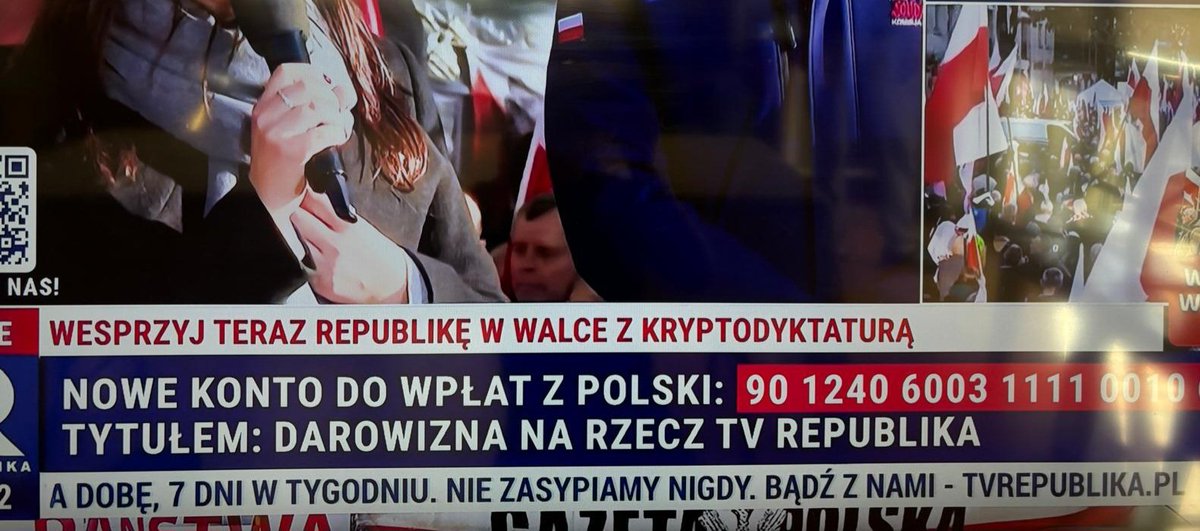
Karolina Gałecka appealed to TV Republika to show a recording of the intervention published by the Polish Police before asking viewers for donations again. She wrote that viewers should see for themselves how it went. She suggested that even fear was associated with the account number at the station and asked where the fight for values ended and the fight for transfers began. #media #polityka #spoleczenstwo (translated)

1976
rmf24.pl 12h

The police published a recording of an intervention on Marszałkowska Street in Warsaw, where a man was arrested who, according to reports, had attacked a policewoman, but it later turned out that it was not a knife attack and the man only had a folding knife used for everyday tasks. #Warszawa #policja #protest (translated)

www.rmf24.pl
Policja opublikowała nagranie z kontrowersyjnej interwencji przy Marszałkowskiej
1673
Piotr Kusznieruk 13h

Piotr Kusznieruk stated that the recording from the police officer's camera raises questions about the reasons why the officers wanted to identify the man, as well as about his aggressive reaction and attempt to escape. He claimed that at the moment the window was broken, the man was already incapacitated on the ground, and asked how he could have then caused the policewoman's head to hit the window. He appealed to the Chief Police Headquarters to present the facts instead of further versions of events. #policja #bezpieczeństwo #prawaobywatelskie (translated)

2379
Bartosz Malewski 13h

Bartosz Malewski wrote that he recognized an officer in the recording who the day before had stated that the detainee was refusing the assistance of a defender. According to Malewski, the policeman claimed at that time that he had not spoken to the detainee and transmitted information on the orders of superiors, whom he could not identify. Malewski noted that in the recording, the officer informs the detainee about the appointed lawyer, whom the detainee does not know, but does not say that the authorization came from the detainee’s wife. He wrote that the detainee did not trust the police officers and therefore refused, and he described the conditional access to a lawyer based on providing personal information as scandalous. He added that the officer's final words indicated his self-satisfaction. He also stated that the publication of the recording by the Police KSP, which — as he wrote — was supposed to be considered a strong argument, showed that such practices are standard there. #policja #prawonaprawde #sprawiedliwość (translated)

2226
chrzanik 13h

Chrzanik wrote that the recording from the body camera raises questions about the reason for detaining the person walking on the sidewalk and why the police did not provide it. He also criticized the statement of the policewoman, who reportedly asked the man with sarcasm if he was mute. The author deemed the information that the policewoman was injured when the man hit her head against the window to be false. According to him, it was the police who threw the man to the ground. He added that there was no mention of a knife in the recording, and the information about it was intended to build a narrative about a dangerous knife-wielder, which was later fueled by "Tuski TVP." Chrzanik pointed out that the man unnecessarily broke free, pushed the police officer, and fled, but in his opinion, the whole situation looked at least bad for the police. https://t.co/DPJj9kDpPF #policja #protest #bezpieczeństwo (translated)

2379
Joanna Pinkwart 14h

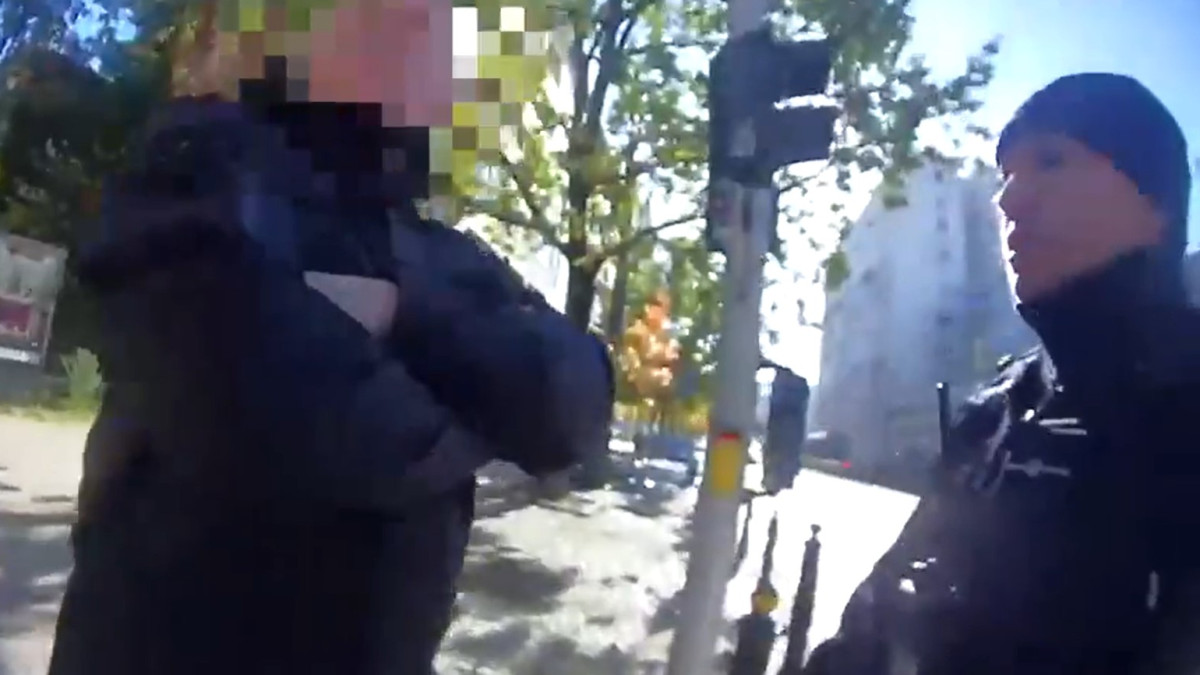
Joanna Pinkwart wrote that the recording from the police officer's camera showed the beginning of the intervention. According to her, the officers wanted to identify the man but did not explain the reason to him, and the recording showed him walking while the police were running after him. Pinkwart added that the man did not respond, but after the female officer instructed him to move aside, he attacked the officers, pushed them, and began to flee. The author wrote that the officer immediately knocked the man to the ground. In her opinion, this undermined the version that the man had lunged at the female officer, causing her to hit her head against the window; Pinkwart noted that earlier recordings had already challenged this account. She added that at the moment the window was broken, the man was incapacitated and lying on the ground. Pinkwart also asked why the police wanted to identify the man and why he reacted so aggressively to the attempt to move him away from the crosswalk. #policja #interwencja #sprawiedliwość (translated)

1942
Onet.pl 14h

The police published footage of the intervention, showing a man resisting during the arrest, violating the bodily integrity of the policewoman. #policja #interwencja #nagranie (translated)

www.onet.pl
Policja opublikowała film z interwencji w pobliżu TK. "Nagranie z kamery nasobnej"
1710
Policja Warszawa 14h

The Warsaw Police published a recording of an intervention on Marszałkowska Street in Warsaw, which took place on Friday, October 16. According to the police, the footage came from the body camera of one of the officers and showed the course of the event. The police stated that the detained man was initially passive and actively resisted, did not follow commands, refused to provide his personal information or show identification, and then attempted to flee into a building. According to their report, during the arrest he violated the bodily integrity of a policewoman who suffered injuries, received medical assistance, and was taken to the hospital. The police also assessed that the people present in the building hindered the intervention, did not maintain the required distance, and increased the sense of threat. They explained that the publication of the recording was meant to allow the public to familiarize themselves with the course of the event, in connection with the emerging reports and comments which, they claimed, could serve to spread misinformation. #policja #Warszawa #interwencja (translated)

2031
Max Hübner 14h

Max Hübner wrote that the recording published by the recipients was supposed to show how they were blackmailing the injured detainee. He claimed that the man was so confused that even their representative could not understand him. He asked why the detainee suddenly changed his mind that day and wanted to meet with the representatives. He also warned the recipients that they might soon find themselves in his position. #szantaż #sprawiedliwość #prawaCzłowieka (translated)

2109
Max Hübner 14h

Max Hübner accused the Warsaw police of releasing a recording showing how they blackmailed an injured detainee. He wrote that the man was so dazed that even the police officer could not understand him. He asked why the detainee suddenly "changed his mind" that day and wanted to meet with the attorneys. He warned the police officers that they might soon find themselves in his position. #policja #prawo #sprawiedliwość (translated)

2110
Małgorzata Gałka 14h

Małgorzata Gałka wrote that the police released a recording involving Mr. Piotr as evidence that the man refused contact with a lawyer. According to her, in the recording he set a condition that he be provided with the lawyer's details, but he did not receive information on where it came from. Gałka suggested that she might have been planted. She added that the police officers attempted to persuade the man to sign documents without explaining what they were about and emphasized that the conversation was being recorded. Gałka assessed that describing this action as an attempt to protect themselves from liability would be too lenient. She also recalled that Bartosz Malewski spoke the day before in wPolsce.pl about the course of the situation and how often the police in similar cases cite the argument that someone did not want a lawyer. #policja #prawo #sprawiedliwość (translated)

2352
Kot Behemot 14h

The Behemoth cat contacted the police with a comment about the recording, mentioning blackmail and "data for the proxy." He also wrote that after the blackmail, the policeman added that the interlocutor did not want to see her. https://t.co/5Z8eoANw85 #policja #szantaż #bezpieczeństwo (translated)

2117
Patryk Słowik 14h

Patryk Słowik assessed that the situation looked bad for the police. He wrote that the detained person's access to a lawyer was conditioned on providing information, including personal data, although — as he noted — a conversation with a representative might be needed even before answering the police questions. He added that the officer should inform the detainee that the lawyer was appointed by his wife, rather than merely providing an unknown name. Słowik specified that the recording was imperfect and did not allow for determining whether it was the detainee or the police officer who first stated that the man did not want contact with a lawyer. If it was the police officer who did so, it would, in his opinion, be contrary to the standards. #policja #prawo #adwokat (translated)

2045
Jerzy Kwaśniewski 14h

The post's author stated that the recording published by the Police was supposed to prove manipulation and the unacceptable conditioning of contact with the lawyer on the performance of actions demanded by the officers. He also claimed that the police officer was prompting the detainee with answers. In the further part, he began an argument regarding the lawyer presenting a power of attorney from the detainee, but the post was cut off in the middle of a sentence. #policja #prawo #sprawiedliwość #PL (translated)

2051