WRLD

Search

#Replay
Chicago Boy Wrld summary 4w

Chicago Boy indicated that he watched the replay of David Lisnard on CNEWS and found it very good, especially on the organization of the State and public management. He estimated that artificial intelligence could better respond to questions than graduates of the ENA, and that public services rather needed managers capable of leading teams to improve their performance. #État #Management #IA (translated)

3375
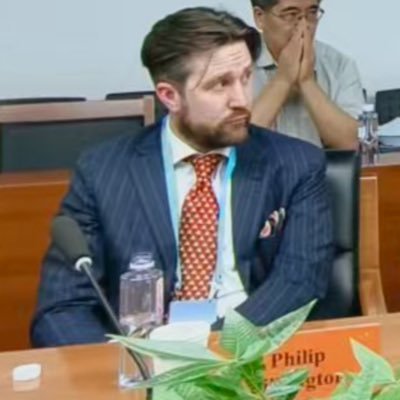
Philip Pilkington Wrld summary Oct 21
Irish economist

The author claimed Russia was behind the riots and said attention would next turn to the US midterms, followed by “Russiagate 2.0”. They described the developments as desperate repetition of an old narrative while the continent collapsed. #Russia #USMidterms #Russiagate #RU #US #EU

2803
Rodolfo vulgo Advogado do Diabo com OAB e td Wrld summary Oct 21

Rodolfo, known as the Devil's Advocate, claimed that Flávio Bolsonaro had contacted the TSE and threatened to silence and deactivate the channel. He said that the initiative had occurred a few days before the election and that, in response, Lula's "Army" had reached 6 million followers. The author stated that the goal now was to reach 7 million and asked people to follow him and share the post. #Lula #LiberdadeDeExpressão #Mobilização (translated)
3622
Nils Wilcke Oct 20

On Radio France, not a word about the attempt to instrumentalize the intelligence services to implicate LFI in the violence; Renaud Dély prefers to accuse Mélenchon of stoking the violence. I am pained for my public service. (translated)

2571
TANO® Wrld summary Oct 18

TANO® has stated that from the referee's viewpoint, a handball and a deflection were clearly visible. He added that the referee had not awarded a corner kick and that no replay of Pulisic's disallowed goal had been shown. He concluded by wishing good continuation of the match. #calcio #arbitraggio #Pulisic (translated)

2807
Daniele Mari Wrld summary Oct 17

Daniele Mari reported that Marelli had defined both the referee Doveri's decision and his own assessment as an error. According to Marelli, Thuram did not simulate and the contact, evident in the last replay, should have led to the awarding of a penalty for Inter. He added that the VAR should have called Doveri and that the yellow card for simulation was unjustified. #Calcio #Arbitro #Inter (translated)

3276
Irish Independent Oct 12

Naomh Fionnbarra and Young Irelands will face each other again in a final replay after a late point from Jordan O’Donoghue secured a draw for the Dundalk team. #cookies #security #Cloudflare

www.independent.ie
Naomh Fionnbarra and Young Irelands to do it again after late Jordan O’Donoghue point saves Dundalk men to set up final replay
2697
Tear Off Wrld summary Oct 4

Tear Off attributed Carlos Sainz's drop in the standings to contact with Gabriel Bortoleto, adding that the incident had been reported. The account also noted that the replay had still not been broadcast on the international feed, accompanying this remark with a mocking emoji. #F1 #BahrainGP https://t.co/SeUMENfzC6 #F1 #Formule1 #BahrainGP (translated)

17636
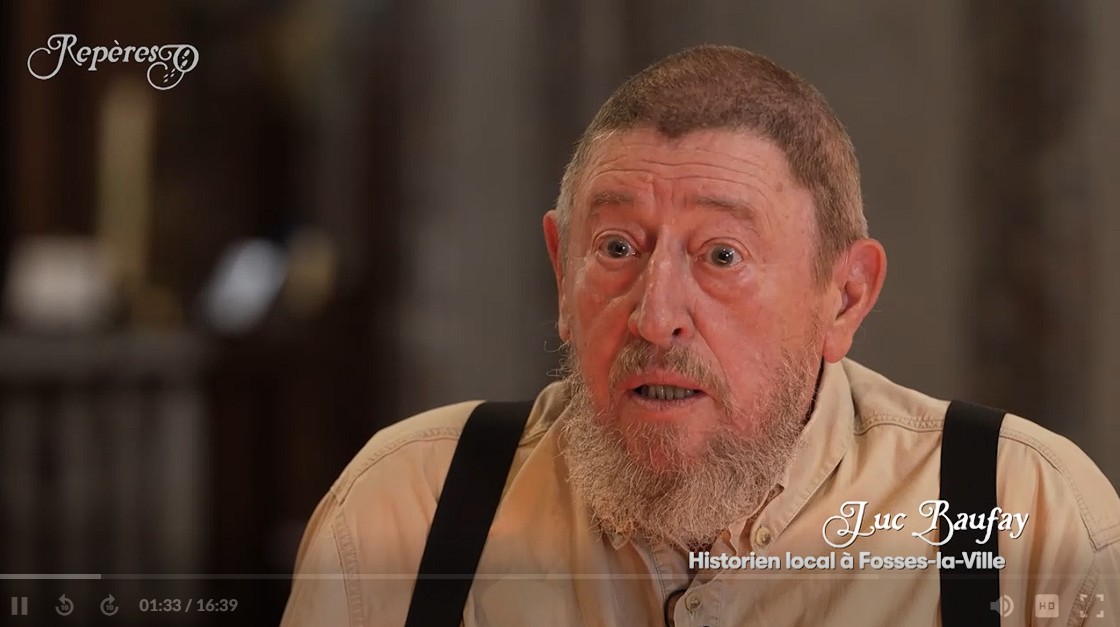
Luc Baufay Sep 29

L'émission "Repères" à laquelle j'ai eu le plaisir de participer au sujet de la Collégiale de Fosses. https://www.bouke.media/replay/emission/reperes/reperes/23792

www.bouke.media
Émission - Repères
706
Tear Off Wrld summary Sep 25

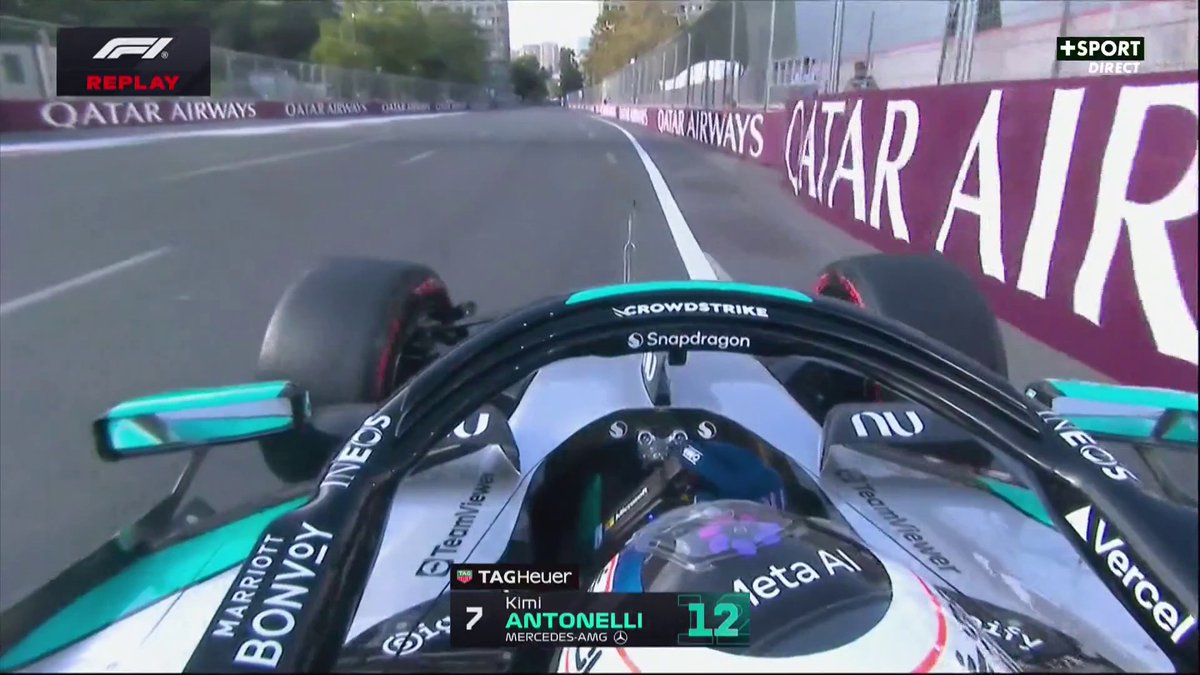
🔙 REPLAY 🔙 Kimi Antonelli a tapé le mur au virage 1, cassant sa direction, et mettant fin à sa séance dès la Q1. #F1 #AzerbaijanGP https://t.co/A0qn9eGLKE #F1 #AzerbaijanGP #KimiAntonelli

13910
Flamengo Wrld summary Sep 24

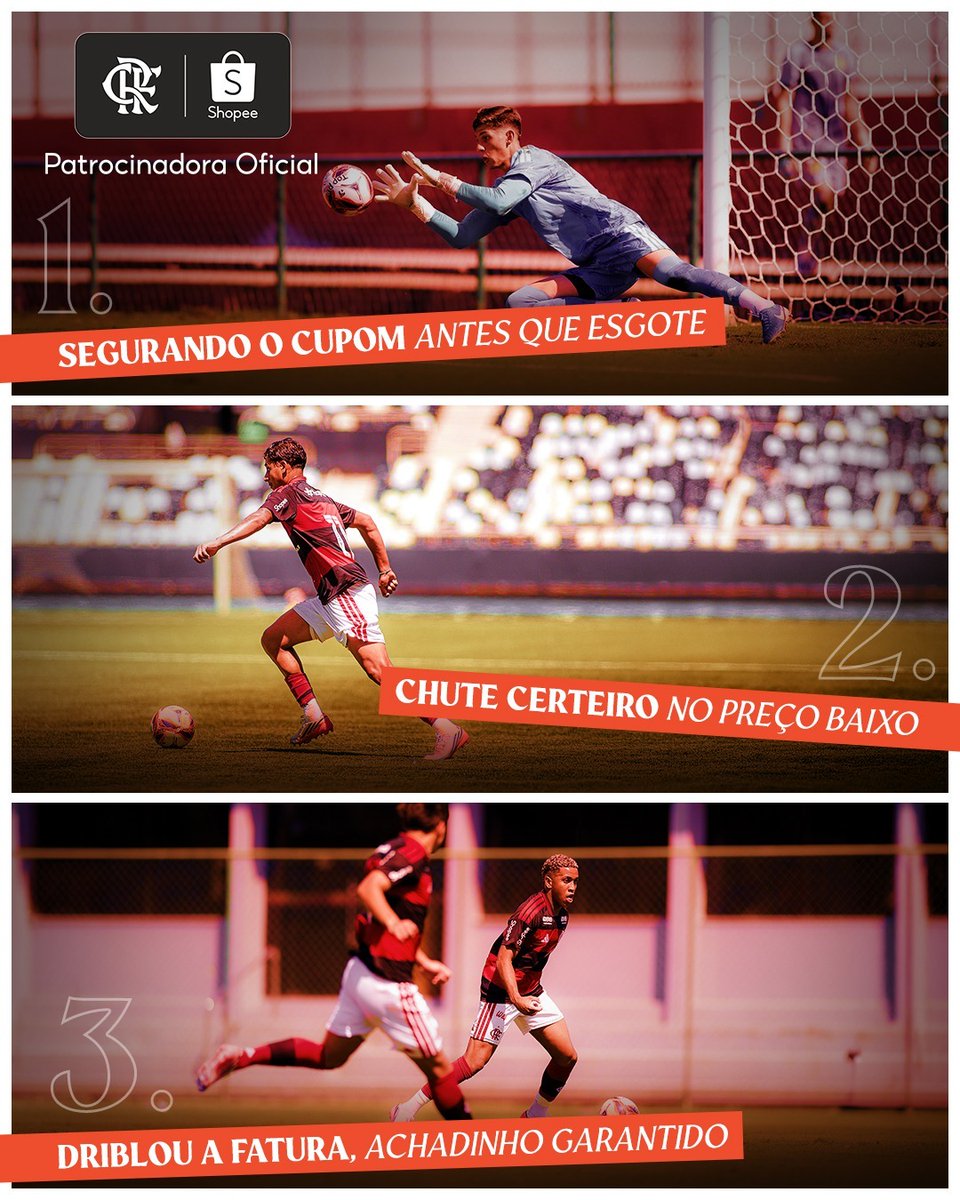
Segurando o cupom, acertando o preço baixo e driblando a fatura. 😂 Cada lance da base também tem seu replay favorito. ❤️🖤 Qual desses três já foi você? 👇 #CRF #OlhaNaShopee #ShopeeFla #ad https://t.co/LGzWAsdUQW #CRF #ShopeeFla #Promoções

23698
Antoine Léaument 🇫🇷 Wrld summary Sep 23

100.000 vues sur YouTube pour le replay du cours d'économie à Julien Odoul. https://t.co/2E04CPQvL0 #YouTube #Économie #CoursEnLigne

15686
P
Patrice CUDICIO Sep 23

The Return to Feudalism in 21st Century Garb A simple observer's viewpoint, with no claim to hold any absolute truth. The Veneer Cracks There is something strangely archaic about the world unfolding before our eyes, despite its satellites, artificial intelligence, and promises of infinite progress. Here and there, we witness heads of state behaving like feudal lords of another age, patiently nibbling away at the neighboring territory, redrawing borders through force rather than law, as if governing a nation mattered less than expanding one's fiefdom. No names need be mentioned here: current events provide plenty of illustration, and each reader will recognize, according to their own geography and moment of reading, the faces that embody this observation. But this return to the archaic is not confined to grand geopolitical stages. It also permeates the most ordinary daily life—that of social media, where anyone can pour out venom against another without filter, without form, and often without the slightest argument. The verbal jousting of yesteryear, with its codes, its rhetoric, its tacit limits, has given way to raw invective, snap judgment, instant condemnation. We no longer debate: we execute, verbally—and sometimes it doesn't stop at words. The Vanished Inhibition What strikes one, in this dual observation—macro-political and micro-social—is the lifting of an inhibition we thought firmly anchored. Centuries of cultural construction, education, philosophy, sometimes religion, had patiently shaped mechanisms of restraint: politeness as social ritual, argumentation as a mode of resolving disagreement, respect for one's opponent as the very foundation of democratic debate. This civilizational veneer, however fragile it always was, seemed to hold. Today it is cracking, and the question—which for me remains a simple hypothesis, not a certainty—is why. A convenient explanation would blame social media: anonymity, the distance of the screen, the instantaneousness of publication would favor verbal acting-out without the usual mediation of reflection. This is probably true, but likely insufficient. For technology here is only an accelerant, an amplifier—not necessarily a root cause. A Poorly Formatted Neocortex? The more unsettling hypothesis—and I frame it explicitly as hypothesis, not scientifically established fact—is that of a failure in the formation of moral judgment and tolerance toward otherness. The human brain possesses the neural structures enabling empathy, the distancing of impulsive reaction, the acceptance of difference—but these capacities are not innate in their full exercise: they must be built, educated, cultivated, like a muscle that needs patient training from childhood onward. If this education in otherness, nuance, and tolerance of disagreement erodes—for multiple and undoubtedly complex reasons that are not mine to settle here—then older reflexes resurface: instinctive distrust of the stranger outside the clan, the law of the strongest, the logic of territorial or symbolic predation. The other ceases to be a possible interlocutor and becomes once again a potential threat, unless they belong to my tribe, my clan, my party, my digital bubble. Two Scales, One Logic What is striking, in this deliberately provocative reading, is the structural similarity between these two scales. The leader who invades a neighbor in the name of a rediscovered greatness or a reinvented historical right, and the anonymous internet user who insults a stranger in the name of an unnegotiable conviction, may obey the same underlying grammar: that of territory to defend, clan to protect, the other to subdue or exclude rather than understand. The form has changed—satellites instead of horses, tweets instead of heralds—but the substance, in this reading that remains mine alone and commits no one else, seems strangely identical to that of feudal rivalries: the absence of a recognized third party, of an accepted common rule, of a respected arbitrating authority. Everyone becomes judge and party, lord of their own digital or territorial fiefdom. A Civilization on a Knife's Edge Norbert Elias, in his Civilizing Process, showed how Western societies had historically built, with remarkable slowness, an increasing control over impulses and direct violence, in favor of more sublimated forms of social regulation. What we may be observing today—and I stress again the conditional—is a form of regression in this process, or at least a fragilization of the veneer it had patiently laid down. Should we see this as an effect of great technological accelerations, which shake up our cognitive rhythms without leaving education time to adapt? A deeper crisis of the institutions tasked with transmitting these values of tolerance—school, family, religion, the rule of law? Or simply a cyclical movement of human history, where phases of policed civilization alternate with darker backlashes? I have no certain answer, and I would be wary of anyone claiming to hold one. In Conclusion, a Shared Concern This text is only a viewpoint, necessarily partial and subjective, on a world that sometimes seems to replay ancient logics in new clothing. Perhaps I am wrong to perceive a continuity between the feudal lord and the contemporary dictator, between the anonymous online insult and the absence of education in nuance. Perhaps these phenomena are unrelated, or too complex to be thus summarized. But if this reading, even partially, hits the mark, then the question that arises is less one of technological regulation—though necessary—than the far more arduous question of how to rebuild, generation after generation, this capacity to accept the other in their difference, to debate without destroying, to coexist without necessarily dominating. This undertaking, if it exists, will not be resolved by an algorithm nor by an international treaty. It plays out, patiently, in the most elementary education—the one that teaches a child that the other is not a threat, but a possibility. Bibliography Elias, N. (1939). Über den Prozess der Zivilisation [The Civilizing Process]. Oxford: Blackwell (Eng. trans. 1978-1982). Lorenz, K. (1963). Das sogenannte Böse [On Aggression]. London: Methuen (Eng. trans. 1966). Arendt, H. (1970). On Violence. New York: Harcourt, Brace & World. Han, B.-C. (2013). Im Schwarm [In the Swarm: Digital Prospects]. Cambridge, MA: MIT Press (Eng. trans. 2017).

708
Aymeric Caron Wrld summary Sep 21
French journalist and writer

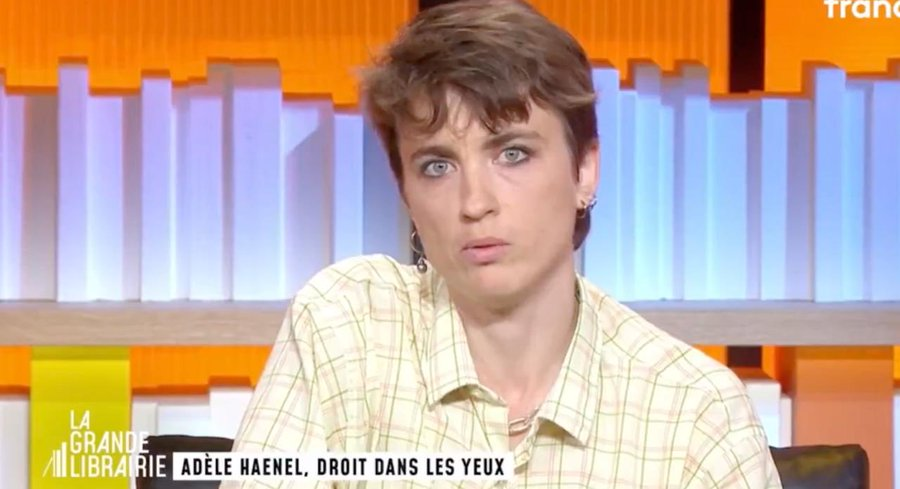
⚠️ Affaire de la carte blanche d’Adèle Haenel censurée par France Télé en replay. J'auditionnais cet après-midi, dans le cadre de mon rapport annuel sur l’audiovisuel public, la présidente de France Télévision @DelphineErnotte et le secrétaire générale de FTV Christophe Tardieu. https://t.co/hE7gT6cCLC #AdèleHaenel #FranceTélévision #censure #FR

1770
Aymeric Caron Wrld summary Sep 21
French journalist and writer

⚠️ Affaire de la carte blanche d’Adèle Haenel censurée par France Télé en replay. J’auditionnais ce matin, dans le cadre de mon rapport annuel sur l’audiovisuel public, le président de l’@Arcom_fr @martinajdari. Il confirme le rôle très trouble de France Télé et ses https://t.co/xrWyDOGImr #AdèleHaenel #FranceTélé #audiovisuel #FR

944
Daniel Schneidermann Wrld summary Sep 17
French journalist

Pas un mot sur la censure du replay de Adèle Haenel, dont même le nom est jugé imprononçable. Ca sent le texte négocié mot à mot avec la direction. La censure génère la censure. #Censure #LibertéDExpression #AdèleHaenel

14292
L'Obs Sep 11

Les propos d'Adèle Haenel sur la Palestine dans l'émission « la Grande Librairie » ont suscité une polémique après que le replay de son intervention a été dépublié par France Télévisions. #AdèleHaenel #ConflitIsraéloPalestinien #LibertéDExpression

www.nouvelobs.com
Les propos d’Adèle Haenel sur la Palestine dans « la Grande Librairie » ont-ils été censurés par France Télévisions ?
15967
Tear Off Wrld summary Sep 11

🔙 REPLAY 🔙 La sortie de piste d'Arvid Lindblad qui a perdu l'arrière de sa monoplace à la sortie de La Monumental. #F1 #SpanishGP https://t.co/FRPlCw2Hpx #F1 #Formula1 #SpanishGP

12301
BFMTV Sep 11

Après la suppression du replay de l'émission La Grande Librairie où Adèle Haenel a dénoncé le génocide en Palestine, France Télévisions a rejeté toute accusation de censure, affirmant avoir agi par mesure conservatoire suite à l'absence de points de vue contradictoires. #AdèleHaenel #Censure #GénocidePalestine

www.bfmtv.com
Tribune d'Adèle Haenel sur Israël: France Télévisions se défend de toute censure après avoir supprimé le replay de "La Grande Librairie"
17151