BETA nonprofit public democratic european moderated

Search

#ambiguity

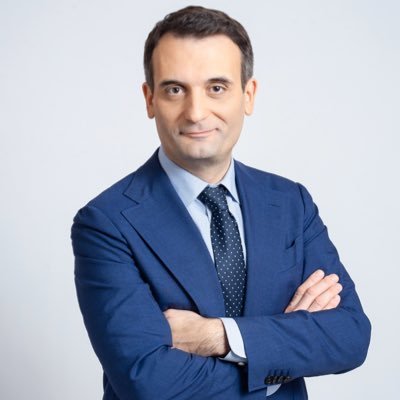
BOYCOTT QATAR — BREAK THE IRAN–QATAR NEXUS. Europe and America should stop accepting strategic ambiguity in the Gulf. Qatar wants Western security, Western investment, Western technology and privileged access to our economies — then Doha must make a clear strategic choice. https://t.co/WvQUomGAwF #BoycottQatar #IranQatarNexus #StrategicChoice #QA #IR #EU #US

🇮🇱 STRONG ISRAEL IN NATO AND IN THE EU 🇪🇺🛡️ Israel is not alone. Israel belongs firmly inside the democratic West. I support Benjamin Netanyahu and I support a clear strategic future for Israel: not permanent isolation, not endless ambiguity, but full integration into the https://t.co/Dkd7sKfrEv #Israel #NATO #EU #IL #EU

H

The Age of Experts Is Over If the past two decades—COVID-19, the 2008 financial crisis, and the net-zero charade—have taught us anything, it is this: the age of unquestioned experts is over. Authority issued by corrupt, bloated institutions no longer commands automatic respect. We are entering an era in which trust must be earned, not assumed. Credentials matter less than results. Expertise can become conformity wrapped in a credential; status is no substitute for trustworthiness. The future belongs to those with proven track records, not merely letters after their names. Friedrich Nietzsche warned of this more than a century ago. He distrusted experts who served the spirit of their age—those who mistook consensus for courage and conformity for principle. To Nietzsche, many authorities were functionaries of the status quo: too timid to challenge the sacred assumptions of their time. University professors, state philosophers, and moral enforcers wore obedience as a badge of honor. They did not think; they repeated. They did not challenge; they conformed. They made the ordinary seem profound through jargon, complexity, and ambiguity. Nietzsche saw these not as signs of insight, but as camouflage—cowardice in disguise. He also distinguished knowledge from wisdom. Knowledge can be taught, measured, and tested. Wisdom must be earned through suffering, struggle, and brutal self-examination. Nietzsche admired those who forged their own paths rather than simply climbing institutional ladders. Even in science, he saw a danger. He respected its methods but feared their sanctification. Science, he argued, still required justification; materialists confused method with meaning and data with truth. Experts who presented science as the only path to knowledge were, in Nietzsche’s eyes, dogmatists in lab coats. So the question is no longer, “What are your qualifications?” It is: What have you done? What have you risked? What have you proved? We must recover the courage to think for ourselves—and place our confidence only in those who have earned it through action, not appointment.

H

The End of Blind Authority If the past two decades—through COVID-19, the 2008 financial crisis, and the net-zero charade—have taught us anything, it is this: the age of unquestioned experts is over. Authority granted by corrupt, bloated institutions no longer commands automatic respect. We are entering an era in which trust must be earned, not assumed. Credentials alone are not enough. Results matter more. Expertise can become conformity wrapped in a credential. The age of trusting people solely because of their status is fading. What matters now is trustworthiness, not titles. The future belongs to those with proven track records, not simply to those with letters after their names. Friedrich Nietzsche warned about this more than a century ago. He distrusted experts who blindly served the spirit of their age—those who mistook consensus for courage and conformity for principle. To Nietzsche, many authorities were not pioneers of truth but functionaries of the status quo: people too timid to challenge the assumptions of their time. He mocked the bureaucrats of knowledge: professors, state philosophers, and moral enforcers. They wore intellectual obedience like a badge of honor. They did not think; they repeated. They did not challenge; they conformed. To Nietzsche, jargon, complexity, and ambiguity were not always signs of insight. They could also be camouflage—cowardice in disguise. He distinguished between knowledge, which can be measured, taught, and tested, and wisdom, which must be earned. Wisdom comes through suffering, struggle, and honest self-examination. Nietzsche admired those willing to rise above institutional thinking. Even in science, he saw a danger. He respected its methods but feared their sanctification. He believed materialists could confuse method with meaning and data with truth. Experts who presented science as the only path to knowledge were dogmatists in lab coats. The question is no longer, “What are your qualifications?” It is: What have you done? What have you risked? What have you proved? We must rediscover the courage to think for ourselves and trust those who have earned authority through action—not appointment.

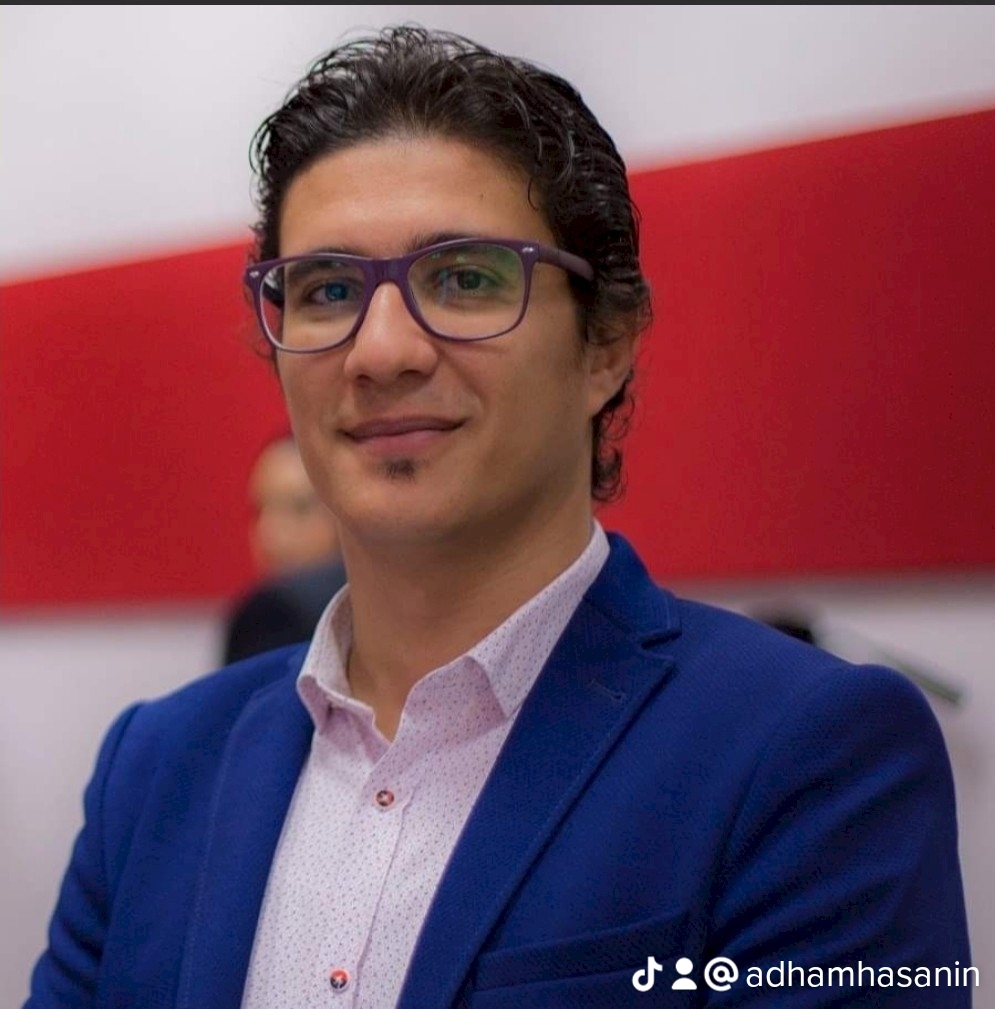
My Name Is on a File On a case I was never summoned to, and a price I do not pay alone By Adham Hasanin Egyptian journalist and political writer, based in the Netherlands | July 2026 In 2024, I learned that my name had been entered into a case. Case number 1282. Listed as a "defendant." I was never summoned, and no one called to tell me the exact charge. I found out the way anyone in my position finds out — from a colleague, from a quick search of my own name, from another journalist who called to ask: "Did you know your name is on file?" I do not want to overdramatise the story. No cinematic manhunt, no car tailing me down a European street. What happened is simpler and crueller than that: a state thousands of kilometres away opened a file bearing my name, without my knowledge, without any way for me to defend myself within it, without even anyone standing before me to answer. The charge is not based on any act I committed. The charge is that I wrote. An article, an opinion, a tweet — it makes no difference. What matters is that the words were read, and someone decided they were dangerous enough to become a case number. I. How Do You Know You Are Accused? This question seems like a technicality, but it is in fact the heart of the whole matter. I received no official letter. No lawyer knocked on my door carrying documents. No one from an embassy or consulate called to inform me. The knowledge itself arrived by accident — a passing search, or a message from a friend asking: "Where did you see your name?" This small detail reveals something far larger than a mere administrative oversight. When you are not formally notified that you are accused, you do not even have a clear starting point from which to act. You do not know exactly when the file was opened. You do not know who decided to include your name. You do not know whether a hearing was held, a decision was made, or even whether an investigation took place at all. You simply discover, one day, that you have become "accused" within a legal system that never gave you the chance to know its rules. This ambiguity is not a flaw in the procedure; it is the procedure itself. A case opened without a clear announcement, with no trial date set, performs its full function even while suspended indefinitely. It does not need a conviction to frighten; it is enough that it simply exists. II. The Charge That Needs No Crime In conventional legal systems, a case begins with an act: theft, assault, fraud — something material that can be proven or disproven. But my case, like many others, began with a word. I stole nothing. I assaulted no one. I incited no violence, called for no chaos. I wrote an opinion. I analysed a policy. I criticised a decision. That is the entirety of it. And yet this simple act — writing — became the basis for a legal file bearing a number and classified under a security heading. The paradox is that this kind of charge requires no fixed standard. What counts as "dangerous" today may not be tomorrow, and vice versa. There is no published list of forbidden words, no clear criterion distinguishing incitement from opinion. This deliberate ambiguity — or perhaps unintentional, but effective regardless — leaves every writer living in a state of permanent unease: will this sentence be the one that opens a file bearing my name? III. The Real Danger Is Not to Me Many ask me: "Can they reach you in the Netherlands?" The honest answer: no, not directly. I am here, in a country governed by the rule of law, physically protected by Dutch police, and no one can arrest me on the basis of a case in another country absent a valid extradition treaty and supporting facts. This is not my first concern. My real concern is that this case does not target me alone. It targets those around me. My family in Egypt. People walking down the street, opening their front door, with no connection to politics whatsoever — and suddenly someone is asking about them because I wrote a word from here. This is not a threat spoken aloud. No one calls to say: "If you continue, we will do such-and-such." The message arrives without anyone saying it — through the kind of questions asked of my family, through their timing, through the silence that meets me when I try to learn the details. Sometimes it is a "routine" phone call from some office, asking about my place of residence, my activities, or people I am in contact with. None of it is an explicit threat, but the timing alone is enough to deliver the message. This is precisely the mechanism by which this kind of pursuit operates: it does not need to touch me physically to affect me. It is enough to make me know that the people I love are exposed to harm because of what I write. IV. I Am Not an Exception It would be easy for an article like this to turn into a personal complaint, and I am careful that it should not. Case 1282 is not an isolated incident, and if I stay silent about it I become complicit — unintentionally — in concealing a pattern that genuinely exists. There are others like me — far more than me — whose names sit in similar files, some of whom have no platform to speak from as I do. Journalists, activists, even ordinary people who never practised journalism but shared a post or left a comment. Case 1282 is not an exception; it is a method of operation. Someone writes from abroad, someone else decides they are "dangerous," and the matter shifts from opinion to legal file, without a real trial, without even a clear official announcement that a charge exists at all. More dangerously, this pattern is not confined to Egyptians alone, nor to any single country. It is a recurring tactic used by several regimes seeking to pursue voices beyond their borders without bearing the burden of actual proof or a transparent legal process. The open, unannounced file serves the same purpose everywhere: it frightens without convicting, and keeps the writer in a permanent state of tension without ever offering him the chance to defend himself. V. What Has Actually Changed in Me I will not say this made me stronger. The phrase is worn out, usually deployed to prettify a painful experience, and I refuse to do that. What actually happened is simpler and more honest: I began writing more slowly. Not less candidly — I still say what I believe, still criticise what deserves criticism. But I have become more aware that every sentence I write from here may carry a price I am not the only one paying. This awareness slows the writing, not because I am censoring myself out of fear for my own safety, but because I am thinking about who might pay the price on my behalf. And this is precisely the point of such a case, whether intended or a by-product of a broader mechanism. Actual arrest is not required for censorship to function. No summons is required, no trial, not even a clear charge. It is enough to know your name is written on a piece of paper somewhere, to make you think twice before writing the next time. VI. Why I Continue Regardless A reader might ask: if the price is this clear, why keep writing? Would silence not be safer, for you and for your family? The answer is not as heroic as it might sound, but it is honest: because silence does not solve the problem, it postpones and expands it. If I stopped, and others like me stopped, the mechanism that produced Case 1282 would keep operating with no voice to expose it. Files would keep opening, names would keep being entered, families would keep being questioned, with no one outside the circle of direct victims ever knowing this was happening at all. Writing about this experience, for all its risks, is the only way I have to make this pattern visible. When an article like this is published, the file no longer remains a secret between a government body and an isolated writer; it becomes part of a public record that other journalists, human rights organisations, and even international institutions can follow and document. Conclusion: A Price Not Paid Once I am still writing. More slowly than before, but still writing. And Case 1282 remains open, suspended, with no set date for a hearing or a verdict, exactly as it began. This very ambiguity is the message. An authority that opens a file and never closes it, never tries its subject, never even clearly states what the charge is — is not pursuing justice. It is pursuing something else entirely: that everyone who thinks of writing knows the price is possible, even if not certain. And that everyone who has already written carries that price with them wherever they go, however far they travel from the source of the case. This is the true price of a single word: not one arrest at one moment, but a continuous state of uncertainty that lives with you every time you open a blank page to write. Adham Hasanin is an Egyptian journalist and political writer based in the Netherlands.

Hélène Jul 2

Ça n'a rien de stupide, c'est p1s le nom en latin m1is la nomenclature scientifique qui empêche de jouer sur des ambiguïtés #science #nomenclature #ambiguity

Rima Hassan Jun 12

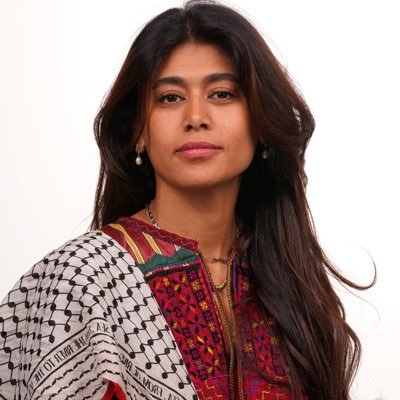
The symbolic recognition of the Palestinian state, coming more than 30 years too late, exposes the profound ambiguity of this stance: the same leaders who have invoked their commitment to the two-state solution since Oslo have, year after year, allowed settlement expansion to https://t.co/wX07NLGNID #Palestine #TwoStateSolution #SettlementExpansion #PS

🇲🇪 Montenegro vs 🇷🇸 Serbia 20 years later the results are clear. Montenegro chose: ✅ NATO ✅ Europe ✅ Euro ✅ Kosovo recognition ✅ Open economy ✅ Western integration Serbia chose: ❌ Strategic ambiguity ❌ Dependence on Russia ❌ Anti-Kosovo policy ❌ Military neutrality ❌ https://t.co/4sEG6DH3jQ #Montenegro #Serbia #WesternIntegration #ME #RS

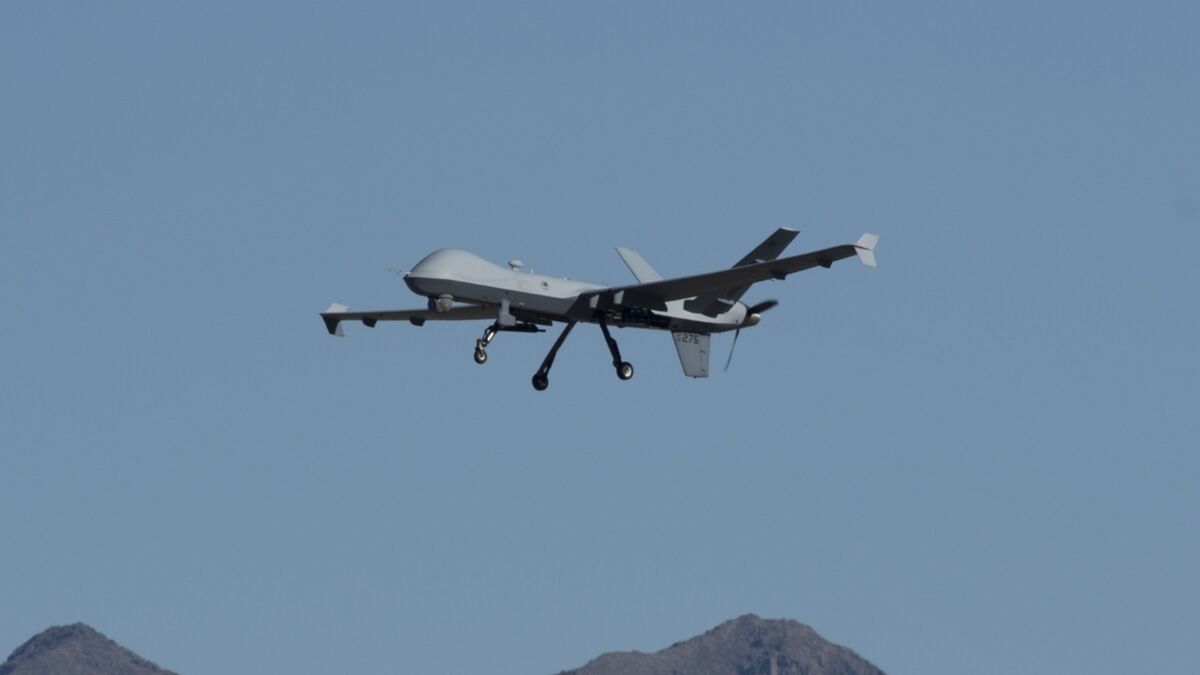
Втори дрон свален над Румъния само за два дни

ALERT! (see video ⤵️) Orwellian bill proposed by #Retailleau: any opposition, any opponent to the System could be arbitrarily ruined, destroyed if it passes! (Title II, article 6) The reign of ambiguity and arbitrariness to target whoever we want! STOP 🛑 (Original: ALERTE ! (cf vidéo ⤵️) Proposition de loi orwellienne de #Retailleau : toute opposition, tout opposant au Système pourra être arbitrairement ruiné, détruit, si elle passe ! (Titre II, article 6) Le règne du flou et de l’arbitraire pour cibler qui on veut ! STOP 🛑 https://t.co/TU2skrVlHe) #Orwellian #Oppression #Freedom verded #FR

Javier Portús Pérez describes the enduring mysteries of Diego Velázquez's iconic painting "Las Meninas," which provokes speculation about its meaning and composition even 360 years after its creation, highlighting its complex interplay between reality and fiction, the artist's presence within the scene, and the ambiguity surrounding the identities of its characters and the painting itself. #ArtMystery #Velázquez #Masterpiece

Os mistérios de 'As Meninas', a obra mais enigmática de Velázquez