BETA nonprofit public democratic european moderated

Search

#crédit
D

Amazon is restricting the payment method of monthly billing due to the Consumer Credit Directive 2 and is instead introducing invoice purchase with a 14-day period, which is expected to apply to all EU customers by November 20 at the latest. #Onlinehandel #Amazon #Rechnungskauf (translated)

Reaktion auf EU-Richtlinie: Amazon dreht Monatsabrechnung ab

NRC 4h

The African Union launches the Africa Credit Rating Agency (AfCRA) as an alternative to Western credit rating agencies, aiming for a better understanding of African economies and improving credit ratings for African countries. #AfryskeKredietbeoordeling #AfrikaanseEconomie #AfCARA (translated)

‘Een eigen kredietbeoordelaar begrijpt de Afrikaanse economie nu eenmaal beter’
Lucas 5h

Lucas presented the person mentioned as the greatest rockstar in the world and stated that families had sold their cars, taken out loans, or dipped into their savings to see her perform throughout her career. https://t.co/T89kp6yYez #rockstar #musique #concert (translated)

Miriam 7h

Miriam wrote that she received what she believed to be an attempted scam via WhatsApp. The message, sent in the name of a hotel where she actually had a reservation, contained all of her details, the arrival and departure dates, and the reservation number, and asked her to confirm with a credit card. #truffa #sicurezzaonline #frode (translated)

Gustavo Tutinha wrote that the information presented in the follow-up of the Judicial Recovery detailed the financial situation of Vasco and the SAF in 2026. According to him, the updated balance of loans was R$ 287.9 million: R$ 282.4 million in principal and R$ 5.5 million in interest and adjustment. Of this total, R$ 84 million corresponded to Crefisa and R$ 203.9 million to Almirante. Tutinha reported that the loan from Crefisa had a yield of CDI + 7% per year and quarterly amortizations until September 2028. Of the contracts with Almirante, R$ 156.5 million were updated by the CDI, maturing in December 2027, and R$ 47.4 million by the INPC, with maturities in July and August 2027. In July and August, according to him, two loans were contracted with Almirante Participações, of R$ 40 million and R$ 5.6 million, both with a single payment due in 2027. The operation of R$ 40 million also provided for a fiduciary assignment of part of the LFU receivables linked to the commercial appeal criterion. The consolidated tax debt of the recovering companies was approximately R$ 271 million and reached R$ 334 million with adjustments, fines, and interest, wrote Tutinha. During negotiations with the PGFN, Vasco and the Prosecutor's Office supposedly agreed to temporarily reduce the installments of the installments to R$ 580 thousand monthly until the consolidation of a new transaction. The cash balance reported on August 31 was R$ 5.6 million. Between January and August, the cash flow recorded R$ 201.4 million in receipts related to economic rights of athletes, according to Tutinha. Rayan accounted for R$ 171.9 million; Leandrinho was also mentioned with R$ 9.3 million; João Victor, with R$ 5.6 million; Luiz Gustavo, with R$ 5.3 million; Loide, with R$ 2.1 million; and Galarza, with R$ 2 million. Tutinha attributed the increase in marketing revenues in June to the receipt, in a single installment, of R$ 25 million from the master sponsorship contract with SportingBet. The SAF reported, according to Tutinha's account, that cash outflows in August were lower because R$ 46.6 million in payments were deferred to September: R$ 32.6 million in transfer fees, R$ 5.5 million in commissions, R$ 4.5 million in signing bonuses, R$ 3.4 million in taxes, and R$ 630 thousand in TEF. The cash flow recorded R$ 56.8 million in restructuring disbursements between January and August. The breakdown presented by the SAF, however, totaled R$ 59.1 million: R$ 21.9 million for the CNRD, R$ 19.5 million for tax installment plans, R$ 6.8 million related to Judicial Recovery, R$ 5.3 million for the Judicial Administrator and legal and financial advisors, R$ 4.3 million in transfers to the CRVG and R$ 1.3 million for BACEN. Tutinha observed that the itemized amounts did not match the total recorded in the cash flow. According to the numbers disclosed by him, the SAF had 46,347 active clients in the supporter program in January and 35,790 in August, a reduction of approximately 10.5 thousand. Of the clients registered in August, 35,214 were up to date with their payments. Tutinha also wrote that Vasco claimed to be meeting its obligations under the Judicial Recovery Plan on time and settling debts incurred after the recovery request and extrajudicial credits. In the CNRD, the club was to allocate R$ 15 million per year for the payment of three plans; the credits were adjusted by the IPCA and were not subject to discounts. Regarding the agreement concluded in September, Tutinha reported that 777 declared it did not oppose the establishment of the New SAF, the creation of the UPI Equity, the judicial sale of 90% of the shares, nor the transfer of the shares to the winner of the competitive process. The former controller also reportedly stated that it would withdraw from incidents and appeals related to Judicial Recovery and relinquish respective claims. Tutinha affirmed that the numbers outlined the financial operation of Vasco as the club moved towards a new phase of restructuring and the completion of the sale of the New SAF. #Vasco #Futebol #Finanças (translated)

The Lula Acervo profile stated that Flávio Bolsonaro intended to cut social programs and privatize state-owned companies. According to the author, the reduction of benefits would decrease the money available to families, harm commerce, and could increase credit card defaults and interest rates. The profile also mentioned that gasoline had become more expensive after Bolsonaro privatized the distributor. In defense of another economic policy, it attributed to Lula measures such as eliminating the income tax for the middle class, reducing the so-called "blusinhas tax," and eliminating the tax on basic food baskets. #Economia #ProgramasSociais #Privatização (translated)

The author said they had been warning for about a year that the Federal Reserve Bank of New York had been visiting major banks to review their loans to private credit firms. They named J.P. Morgan, Wells Fargo, Barclays and Morgan Stanley as banks whose officials had faced questions. #FederalReserve #Banking #Finance #US #GB

The author said Budget 27 offered ordinary people a tenner a week, while corporations received €186 million in Capital Gains Tax reductions and €120 million in R&D tax credits. They also wrote that a “shedsit” was now classed as a “Designated Auxiliary Dwelling” and was exempt from tax. #Budget #TaxReform #OrdinaryPeople #IE

Brazil’s synthetic voters – when AI manufactures public opinion They look like ordinary street interviews. A reporter approaches a passer-by in a Brazilian square and asks a simple question: who will you vote for? A young voter explains why Luiz Inácio Lula da Silva deserves another term. An elderly woman says Brazil needs Flávio Bolsonaro because he represents political renewal and greater security. The locations look plausible, the microphones are visible and the answers sound much like the brief political opinions heard in television vox pops around the world. None of the people are real. Ahead of Brazil’s presidential election on 4 October, fact-checking organisation Aos Fatos identified at least 50 TikTok videos in which artificial intelligence was used to manufacture voters, reporters and apparently spontaneous political interviews. Together, the videos had accumulated around 7.4 million views by mid-August. Some promoted Lula, others Flávio Bolsonaro, while another group used synthetic characters to ridicule or stereotype supporters of one side. Aos Fatos found no apparent evidence linking the accounts producing the videos to either presidential campaign. The opinion poll that never took place The format is important. These were not conventional deepfakes in which a recognisable politician is made to say something he never said. Instead, the creators reproduced the visual language of the vox pop – the short street interview used by broadcasters and social-media creators to illustrate what ordinary people supposedly think. In pro-Lula videos, synthetic voters described themselves as beneficiaries of social programmes or credited the president with improving their lives. In videos supporting Flávio Bolsonaro, artificial interviewees associated him with political renewal, public security and fighting corruption. Other clips were openly hostile: AI-generated characters presented as poor or living in parts of Brazil’s north-east were shown in dirty clothes or run-down surroundings, declaring support for Lula because they supposedly preferred welfare payments to work. The deception is therefore subtler than fabricating a candidate’s statement. It manufactures something that political communication normally treats as evidence of public sentiment. A real vox pop may be unscientific, but the people interviewed at least exist. These videos created the appearance that identifiable social groups – young people, pensioners, welfare recipients or residents of particular regions – were spontaneously expressing political preferences when no such encounters had taken place. An electoral-law specialist interviewed by Aos Fatos described the technique as the fabrication of a “social fact that never occurred”. That captures the central innovation: AI is being used not merely to falsify political speech, but to manufacture the impression of grassroots opinion. Fifty videos, but not one proven network The available evidence does not support describing the 50 posts as a centrally controlled influence operation. Aos Fatos located them through TikTok searches and recommendations produced by the platform itself, then examined the accounts responsible for publication. Most had relatively small individual audiences, although their combined reach was substantial. The first examples identified by the investigation appeared as early as March 2026. Activity increased in June and was concentrated particularly in July and the first half of August as Brazil’s election calendar intensified. Some accounts specialised in AI-generated videos generally, including fabricated podcast-style material. Others were explicitly political or supportive of a candidate, but Aos Fatos found no apparent links between those profiles and the official Lula or Bolsonaro campaigns. That distinction is essential. The evidence demonstrates a common technique and a shared political environment, not a single command structure. Some creators may have been motivated by ideology, others by engagement or monetisation. Publicly available evidence does not establish who commissioned the individual videos or whether any coordination existed between the accounts. This decentralised model also creates a different enforcement problem from a traditional bot network. There may be no headquarters to expose and no infrastructure whose removal disables the entire operation. The format itself can be copied by anyone with access to inexpensive generative-video tools. When the algorithm mixes real and synthetic citizens Aos Fatos documented another important feature of the phenomenon: TikTok’s recommendation system placed AI-generated interviews alongside genuine street interviews. For a user scrolling quickly through the platform, the transition between an authentic citizen and an entirely fabricated one could therefore be almost invisible. In 18 per cent of the 50 videos analysed, there was no indication that the people shown had been generated using AI. After Aos Fatos provided TikTok with the videos, the company said it had removed all of them for violating its rules on edited and AI-generated media. TikTok said its policies require creators to identify synthetic content and prohibit manipulated media capable of misleading users about matters of public importance or impersonating genuine journalistic material. The issue extends beyond one platform. Factchequeado’s review of Brazil’s 2026 election campaign found that synthetic endorsements and other deepfakes had become one of the most visible forms of AI-assisted electoral misinformation, alongside fabricated candidate statements and invented scenes. Brazil already had rules for synthetic politics Brazil entered the campaign with unusually detailed electoral rules governing artificial intelligence. The Superior Electoral Court, the TSE, requires electoral propaganda using synthetic multimedia to disclose clearly that AI was used. More importantly for the fake-voter videos, its rules prohibit synthetic audio or video used to favour or harm a candidacy when it creates or alters the image or voice of a living, deceased or fictitious person. The difficulty is attribution and enforcement. When a synthetic video is published by an official campaign, responsibility can be relatively straightforward to investigate. When it comes from an apparently independent account with no demonstrated relationship to a candidate, lawyers interviewed by Aos Fatos said responsibility is more likely to fall on the individual creator, while imposing electoral sanctions on a campaign would require evidence of a connection. For the final 72 hours before the election and the 24 hours following it, the TSE has imposed additional restrictions on newly published or republished synthetic material involving candidates or public figures, reflecting the particular difficulty of correcting fabricated content immediately before voting. From deepfake politicians to synthetic electorates The Brazilian case illustrates a broader change in political manipulation. The first generation of electoral deepfakes concentrated on famous people: make a politician appear to say something damaging, or fabricate an endorsement from a celebrity. Synthetic vox pops reverse the perspective. The politician can remain completely authentic; it is the electorate around the politician that is fabricated. That changes the psychological proposition of the message. Instead of saying the candidate believes this, the video suggests people like you believe this. Age, clothing, accent, neighbourhood and social class can all be generated to construct an artificial constituency around almost any political claim. There is no evidence that the 50 Brazilian videos identified by Aos Fatos constitute a single centrally directed campaign, nor evidence that they changed voting intentions. What they demonstrate is a technique whose barrier to entry has become extremely low. AI no longer needs to forge the politician. #DISINFORMED #Episode14 #Brazil #BrazilElection2026 #Elections #ElectionDisinformation #ArtificialIntelligence #AI #GenerativeAI #SyntheticVoters #SyntheticMedia #AIAvatars #AIGeneratedVideo #VoxPop #FakeInterviews #Astroturfing #AIPropaganda #PoliticalDisinformation #InfluenceOperations #InformationWarfare #SocialMediaManipulation #TikTok #PublicOpinion #ManufacturedConsent #SyntheticPublicOpinion #DigitalInfluence #Deepfakes #ElectionIntegrity #TSE #AosFatos #FactChecking #OSINT #MediaManipulation #WRLD (translated)

Eleitores gerados por IA fazem campanha no TikTok e põem em xeque regra do TSE

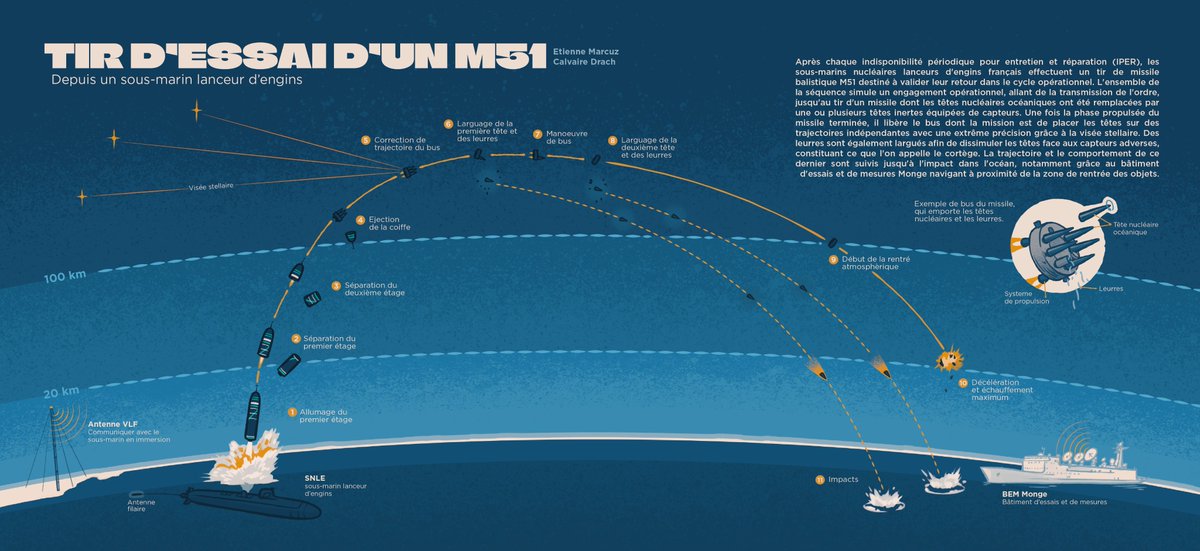
Etienne Marcuz wrote that the strategic oceanic force had conducted a launch of an M51.3 missile that very morning from the nuclear submarine Le Vigilant. According to him, this launch validated the ship's return to operational cycle after three years of maintenance and constituted the first operational launch of the M51.3 from a submarine. He specified that the launch in November 2023 was a qualification test conducted from the DGA land test center. Marcuz indicated that he created an infographic with CalvaireDrach, presenting the stages of the launch, from the transmission of the order to the impact of the re-entry vehicles — without their nuclear payload — in the Atlantic Ocean, 4,700 kilometers west of the launch area. He explained that the diagram was based on American documents and that differences might exist between the French M51 and the American Trident II D5 systems, even though their general principles were common. He added that the technical details concerned were protected by confidentiality and requested that CalvaireDrach be credited in case of reuse of the infographic. #M51 #Missile #ForceOcéaniqueStrategique (translated)

Digi24 18h

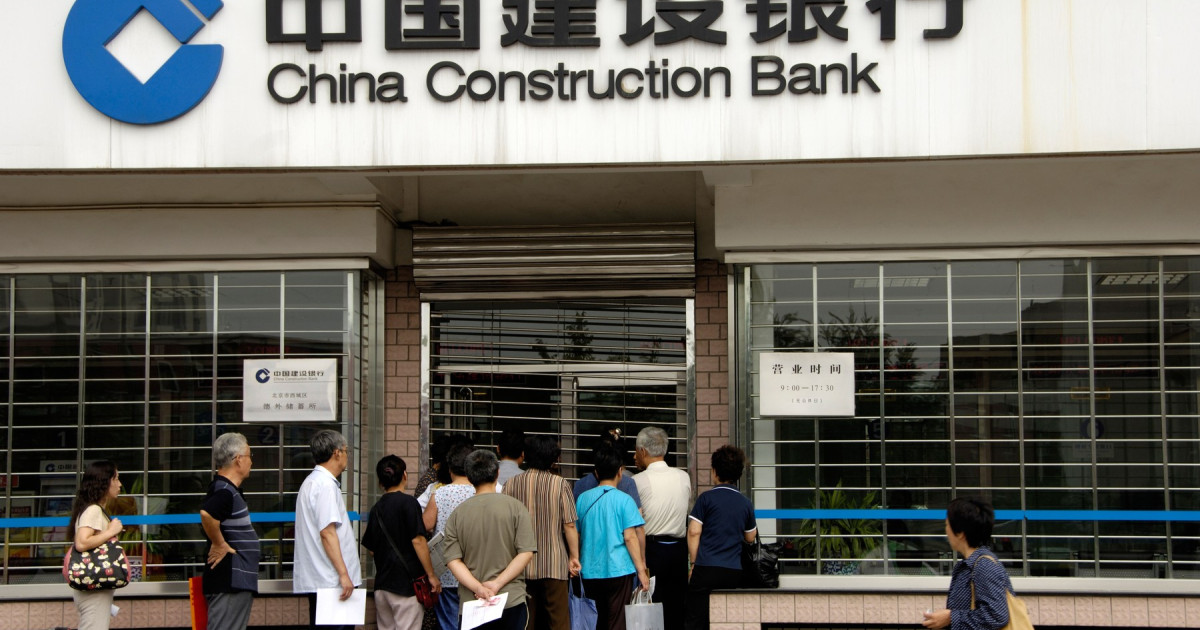
China has closed nearly a quarter of its banks to reduce vulnerabilities in the financial system, accelerating the mergers and dissolutions of smaller credit institutions amid a weakened economy. #china #banci #economiecina (translated)

China a închis aproape un sfert dintre băncile sale. De ce se teme Beijingul

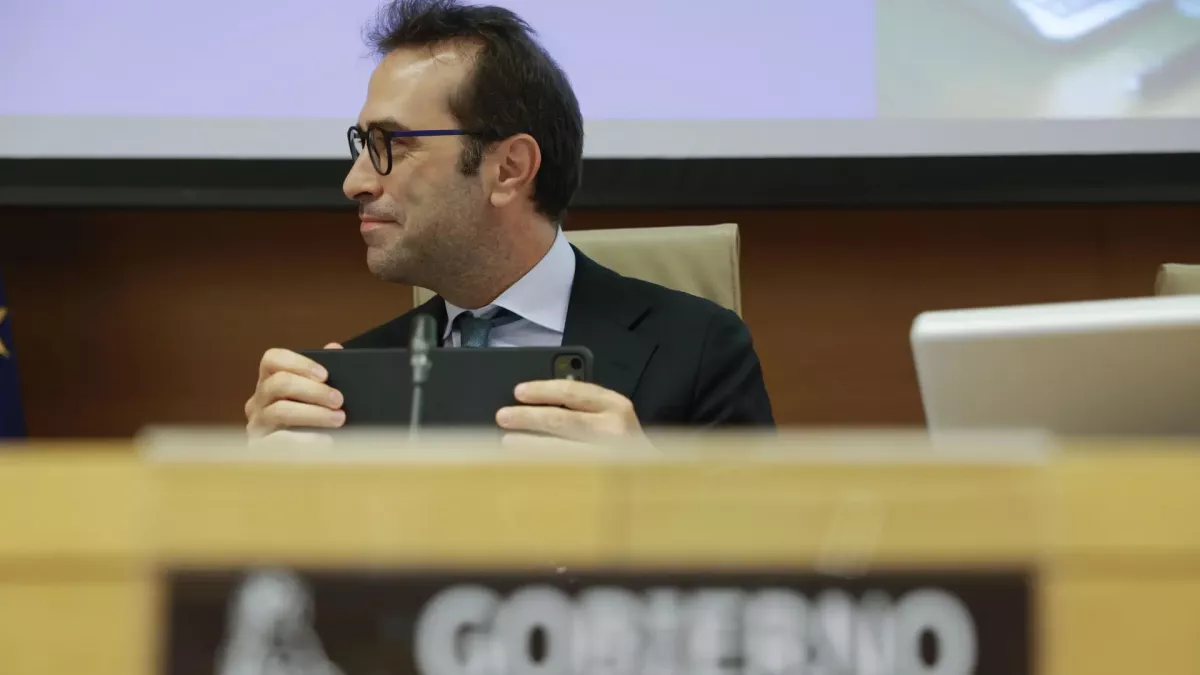
The advancement of the general elections to November 29 leaves the creation of the Financial Customer Protection Authority and the approval of the consumer credit law in limbo, exacerbating the legislative bottleneck in the financial sector. #Finanzas #Legislación #Consumo (translated)

El adelanto electoral deja en el aire la Autoridad del Cliente Financiero y la ley de crédito al consumo

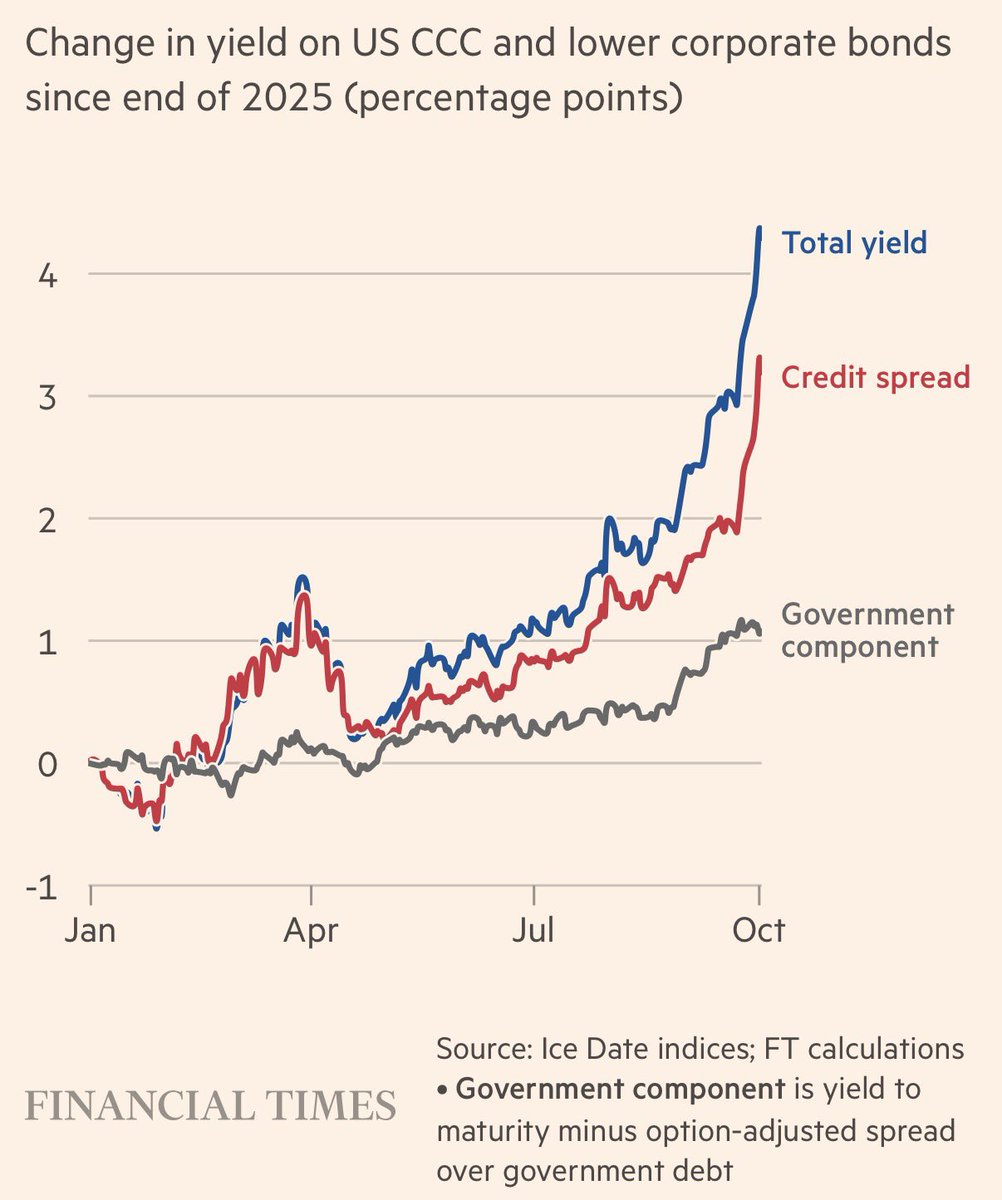
The author wrote that credit spreads on junk debt were rising sharply and that lending in that part of the market appeared to be seizing up.

The Tuesday brief said concerns about private credit had prompted a Federal Reserve review, questioned whether the European Central Bank should put quantitative tightening on hold, described German factory orders as collapsing, and said France and Germany were pushing for rapid EU trade defence. https://t.co/H7xOUMKXoD #Economy #Finance #Trade #USA #EU #DE #FR #CN

The recent budget tax cuts will result in couples being €1,500 better off due to an increased income band of €46,500 and a rise in tax credits by €125. #Cookies #OnlineSecurity #BlockedAccess

Budget tax cuts to leave couples €1,500 better off as income band rises to €46,500 and credits increase by €125

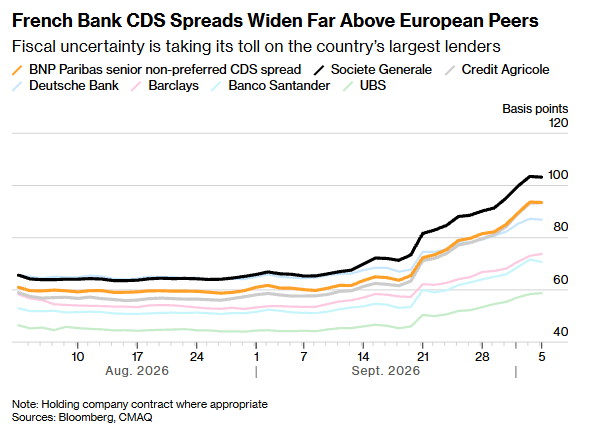
The post cited a Bloomberg report saying credit risk at French banks had risen above that of major European peers. https://t.co/GVvGU9VOvB https://t.co/eV2UJPvM4j #Finance #Banques #Crédit #FR #EU

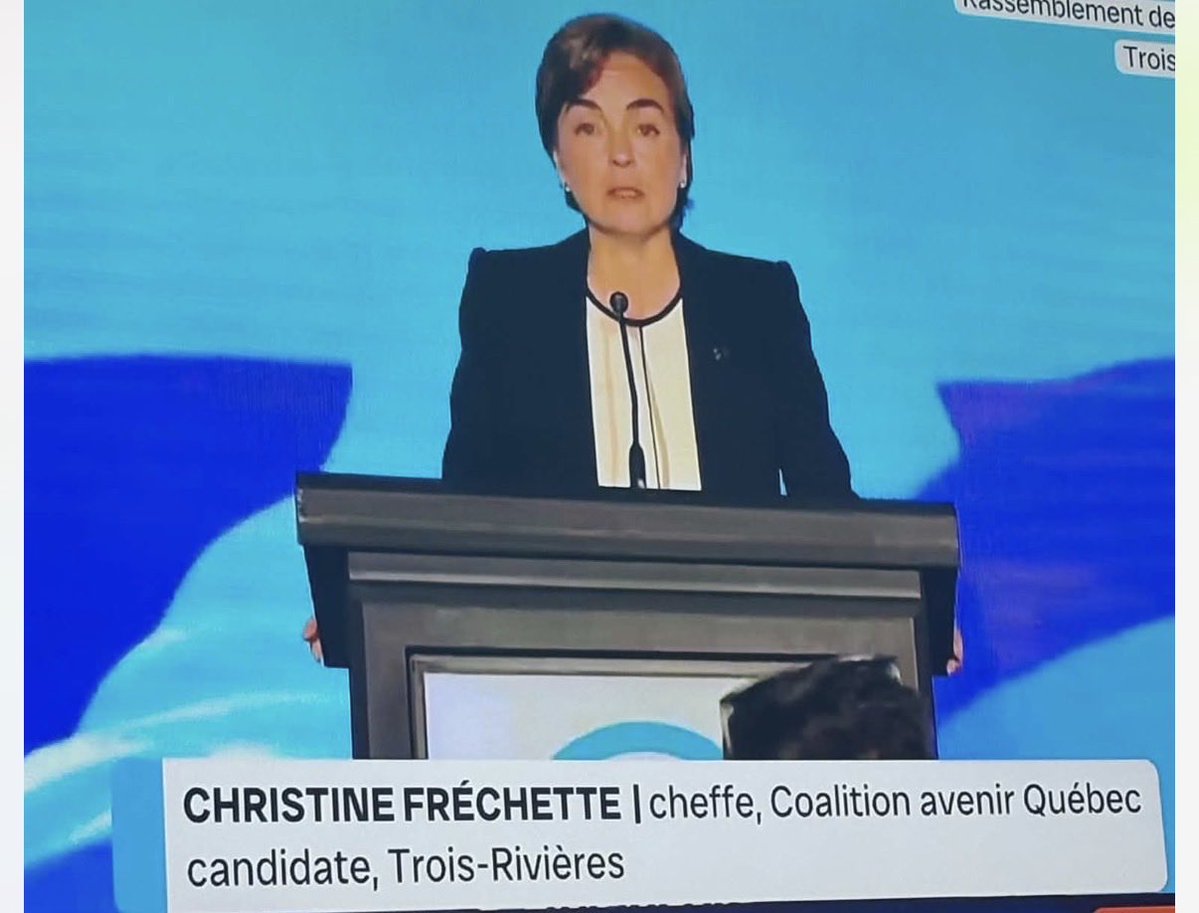
Pat Laliberté, from La Tribune du peuple, described a drop from 90 to zero seats in a single term in Quebec as a possible "first." He reminded that the CAQ had elected 90 members out of 125 on October 3, 2022, but clarified that the counting was not finished and that the result of zero was not yet official. According to the table from Elections Quebec he cited, the Liberal Party went from 102 seats in 1973 to 26 in 1976; the Union Nationale from 56 in 1966 to 17 in 1970, then to zero in 1973; the Parti Québécois from 80 in 1981 to 23 in 1985; and the Action Démocratique from 41 in 2007 to 7 in 2008, before merging into the CAQ. He also noted that the Ralliement Créditiste went from 12 seats in 1970 to zero in 1981. Laliberté emphasized that none of these parties started a term with as many seats as the CAQ before being reduced to zero four years later. #Québec #Politique #CAQ (translated)

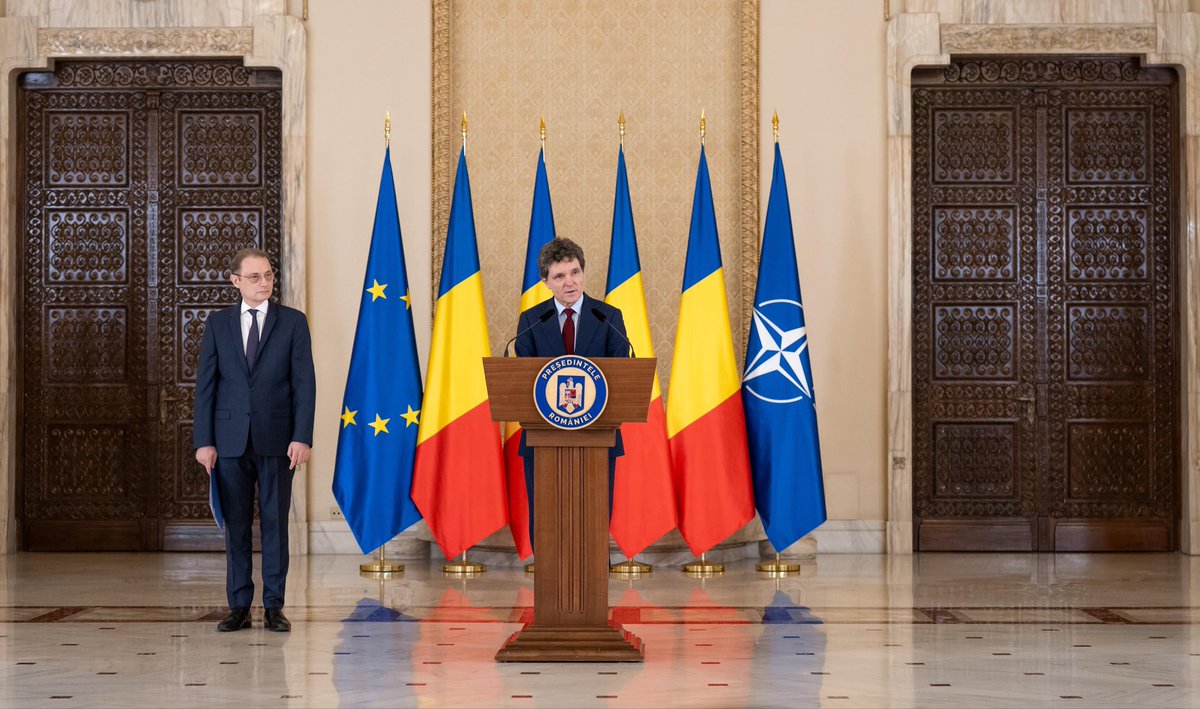
Nicușor Dan stated that his proposal for the position of prime minister was Luca Niculescu, whom he said, as a diplomat, knew how to harmonize different positions. According to Dan, Niculescu had been involved in the process of Romania's accession to the OECD over the past four years and had worked with institutions in the country, contributing to the drafting of 100 normative acts with the agreement of parliamentary parties. Dan claimed that accession to the OECD could allow the Romanian economy and administration to make a leap. He said he appointed Niculescu after consultations that day, believing that he had the best chance of securing a parliamentary majority. Following discussions with the parties, Niculescu was to be able to decide whether the government would be political or technocratic, Dan added. Dan also said that Romania needed a government as soon as possible for institutional rectifications and for preparing next year's budget. He warned that prolonging uncertainty could affect the lives of Romanians and cited the evolution of the exchange rate, credit interest rates, and investments, which, according to him, were waiting for the conclusion of this period and would mean jobs. Dan stated that he had the guarantee that a government led by Niculescu would maintain Romania's pro-Western direction and would respect the financial targets and commitments made by the country. #România #guvern #OCDE (translated)

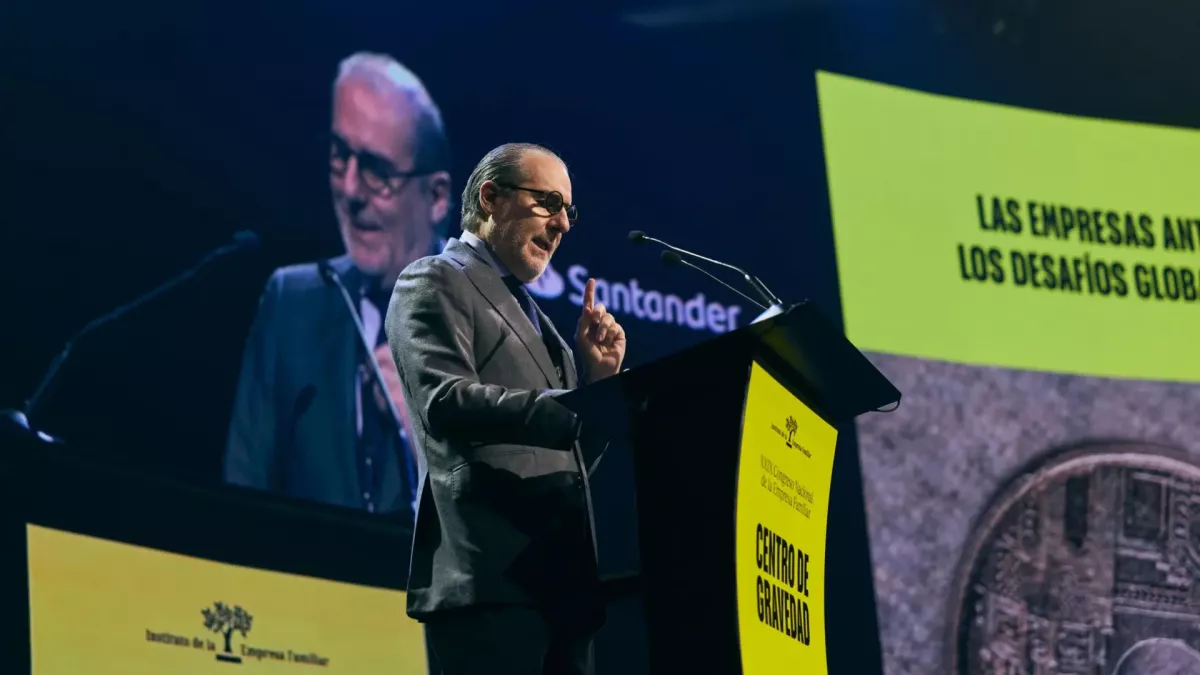
Héctor Grisi, CEO of Banco Santander, advocates for regulation that stimulates credit and increases the housing supply to address the housing crisis in Spain. #CrisisDeVivienda #RegulaciónFinanciera #BancoSantander (translated)

Héctor Grisi reclama una regulación que estimule el crédito para afrontar la crisis de vivienda

Mathilde Panot wrote to French teachers regarding a letter from Gabriel Attal, which she described as hypocritical. She stated that when he was Prime Minister, he cut 700 million euros from funding for the National Education, which she believes is equivalent to 10,000 teaching positions. #Éducation #Professeurs #France (translated)