
È morta "La Connie", addio alla content creator Costanza Cappelli: la malattia scoperta pochi mesi prima e la sfida «un giorno alla volta» https://t.co/wuccjNzxoW https://t.co/ofsxNad3Fd #CostanzaCappelli #ContentCreator #Addio
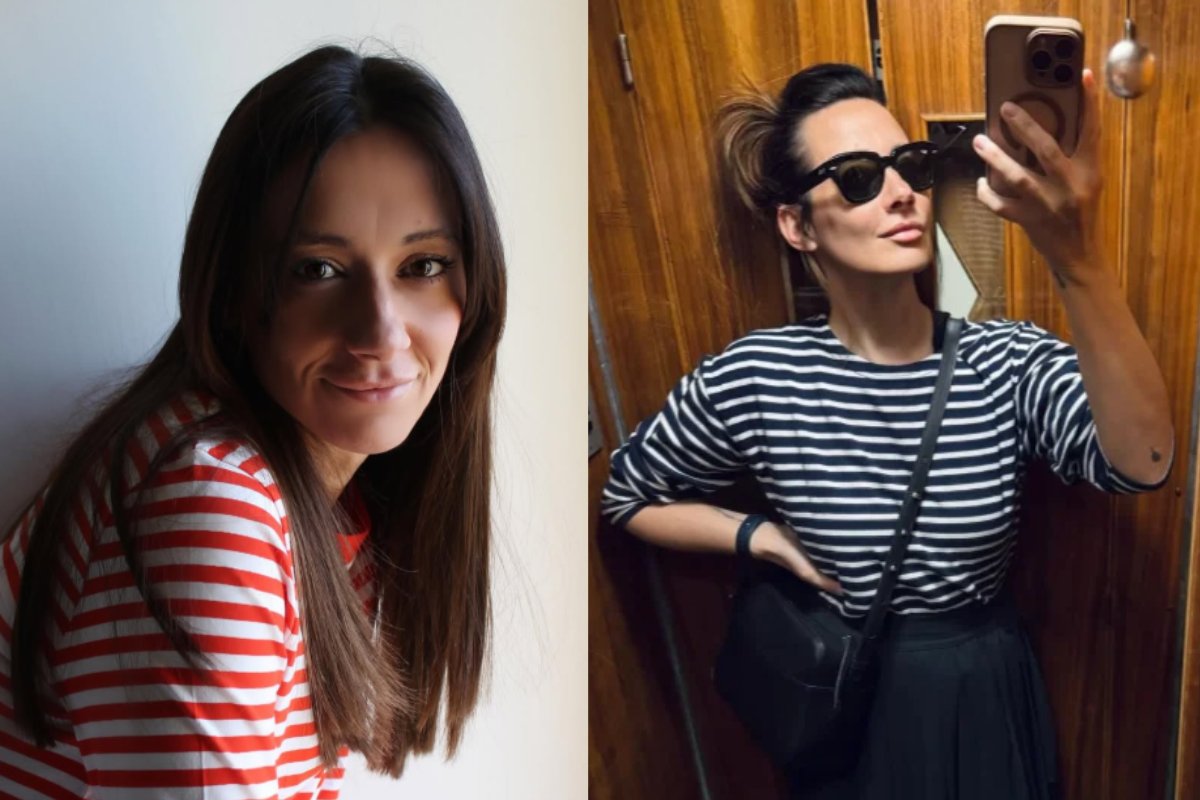
È morta "La Connie", addio alla content creator Costanza Cappelli: la malattia scoperta pochi mesi prima e la sfida «un giorno alla volta» https://t.co/wuccjNzxoW https://t.co/ofsxNad3Fd #CostanzaCappelli #ContentCreator #Addio
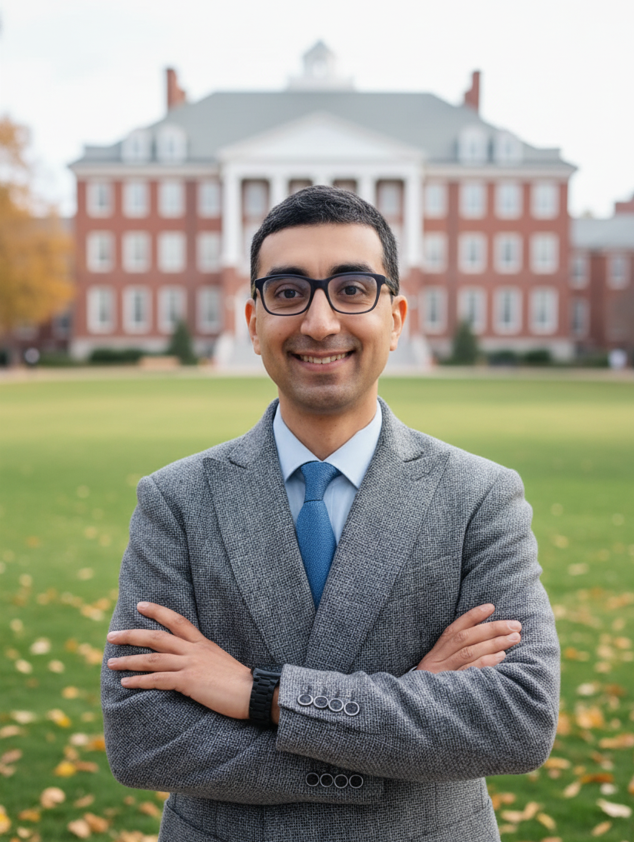
IL TEATRO-EDICOLA (FRANCESCO GRAVINO) SU “LA STAMPA (SPECCHIO)”, “SIX CHAIRS AT THE TEATRO-EDICOLA” by FRANCESCA TAMBURRINO SOURCE: https://www.lastampa.it/specchio/rubriche/segue-buffet/2026/09/27/news/sei_sedie_al_teatro_-_edicola-15748967/ To the delight of lovers of the genre, the news is reassuring: theatres are back in fashion. Perhaps they had never gone out of fashion but were slightly tarnished by interest in other genres considered more contemporary. Wrong, theatre after millennia withstands wear and negativity reinvigorates it. Halls thought lost are reopening and new spaces are flourishing. Because theatre can be made anywhere, in houses, in streets, on the ashes of spaces born for other purposes. For example in newsstands: in many cities these kiosks sell everything except what they were conceived for, newspapers. The ingenious wheeze is to be found in the Foggia area with the Teatro-Edicola, the smallest theatre in the world, six chairs, less than two square metres, careful programming, performances every fifteen minutes and sold-out is easily guaranteed. A happy experiment that has intrigued even the noble journal of the American Stanford University. The wheeze from San Severo in the Foggia area pleased the students of Stanford so much that they made it a case study. The result was published in the “Stanford Social Innovation Review (SSIR)” quarterly journal and award-winning website given its specific specialisation in covering multisectoral solutions to global problems, considered one of the world reference points for social innovation. The article “The Six-Seat Revolution”, that is to say the Revolution of the Six Chairs, was curated by the Foggian (Orta Nova) researcher Luciano Magaldi Sardella, supervised by editor David V. Johnson and can be retrieved in the Dispatches section of the “Stanford Social Innovation Review”. Imagine the satisfaction of the theatre company Foyer 97 which sees itself projected into global fame and planetary interest, matured into a shower of requests for duplication. After all, who does not have a disused space in a state of abandonment to be recovered worthy of rising to a cultural garrison? Meanwhile the meritorious creators of the winning idea will return to the stage in October and are already preparing the thirtieth anniversary of the company which falls next year. On those six chairs, they assure us, young and old have sat in equal albeit meagre measure. An experiment which in the universe of entertainment is followed with attention. So much so that Biagio Antonacci made a surprise stop at the Teatro-Edicola where he sang his “Iris”. Passers-by in a huddle beyond the sold-out.


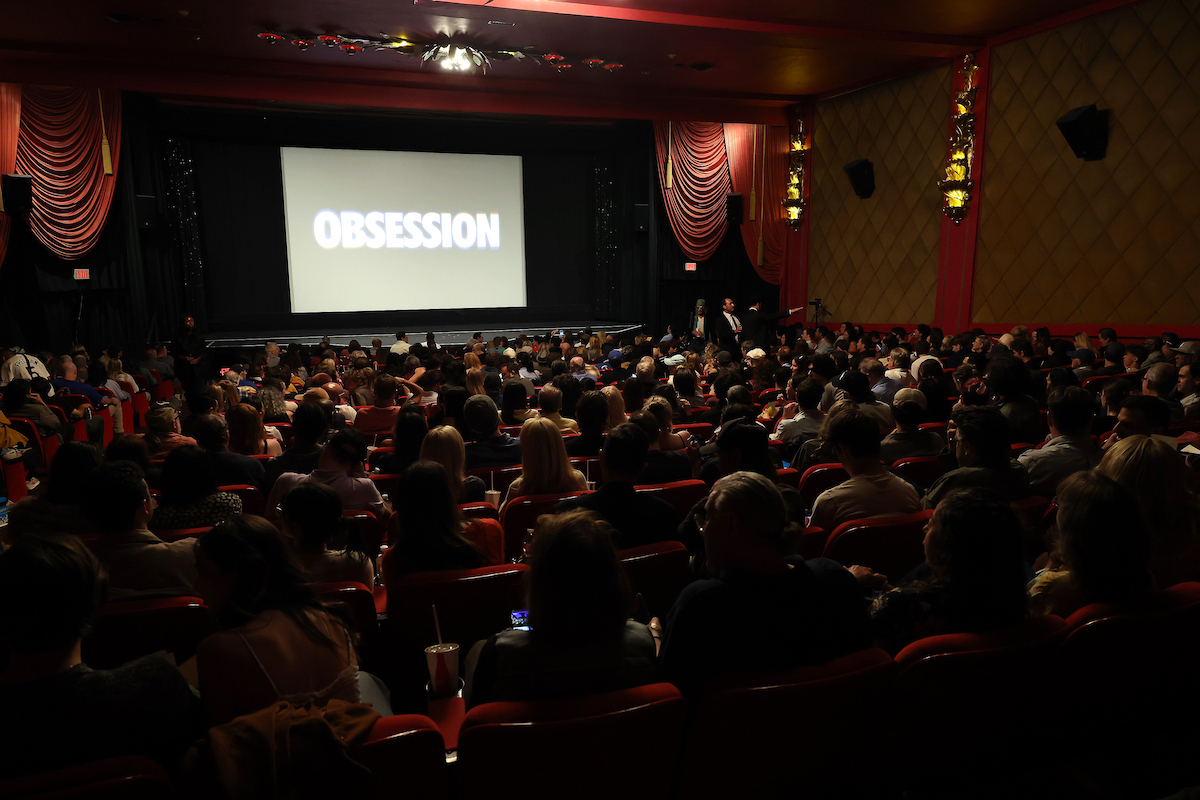
Le grandi società di Hollywood stanno sempre più cercando storie, idee e talenti originati su internet, ispirate dai successi recenti di film realizzati da creatori online. #Cinema #YouTube #Hollywood
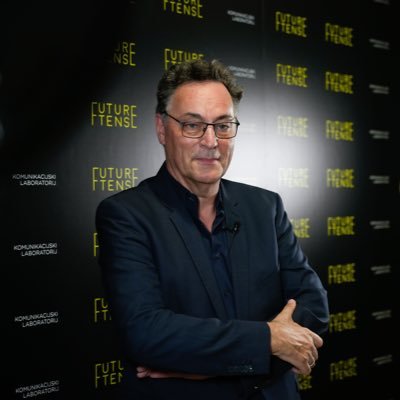
“There are two ways that an agentic AI can become dangerous. The first is when they are empowered to do something bad by a human being. The second is when they develop intentions that are “misaligned” with the aims of their human creators.” Why I Changed My Mind About AI Risk #AI #AIEthics #AIAlignment #Nospecificcountrycodesarementionedinthetweet.

Artiștii Ruxanda Ciupercă (Ruxy) și Dumitru Ștefănescu (Ștef) reprezintă municipiul Brăila la Salonul Internațional de Artă Naivă „Gheorghe Sturza”, eveniment de referință desfășurat în perioada 18 septembrie – 18 octombrie 2026 la Botoșani. Ajuns la cea de-a XIII-a ediție, salonul reunește 57 de creatori din opt țări și este găzduit în foaierul Casei de Cultură a Sindicatelor „Nicolae Iorga”. https://www.infoest.ro/stiri/cultura-brailei/articsti-braileni-la-botosani-sept-2026.htm

The era of AI warfare has arrived https://t.co/8KBvV2Uflg "L’era della guerra tramite IA è iniziata. I sistemi autonomi vengono rapidamente integrati sul campo di battaglia, mentre i modelli evolvono in modi che persino i loro creatori non riescono a prevedere appieno" è quanto https://t.co/eyy2Hy3r6W #AIWarfare #AutonomousSystems #FutureOfWar #Nospecificcountriesarementionedinthetweet.


👕 Raper Tyler The Creator ma szansę pojawić się na koszulce z okazji El Clásico. Logo mogłoby przedstawiać słowo „GOLF” – nazwę jego marki odzieżowej. [@monfortcarlos - @sport] (1️⃣) #TylerTheCreator #ElClasico #GOLF
Mali – a war where some of the people fighting do not exist In Mali's war, an apparently simple question is becoming increasingly difficult to answer: who exactly is speaking to us? A real person? A rebel organisation? A Russian influence operation? A supporter of the military junta? Or somebody who has never existed at all? In September 2026, the Dakar-based Timbuktu Institute published Des algorithmes en guerre, a report examining the use of generative artificial intelligence by actors involved in the Malian conflict. Its researchers describe the country as a potential laboratory for AI-assisted information warfare. Separatist networks are deploying synthetic fighters on TikTok. Jihadist propagandists are experimenting with AI-generated imagery. Pro-government accounts are producing large quantities of content celebrating the Malian armed forces. Russia, meanwhile, operates the most developed influence infrastructure of all: pseudo-media outlets, inauthentic accounts, AI-generated text, images and video, and systems designed to artificially amplify their visibility. Artificial intelligence did not create Mali's conflict. The war has been under way since 2012, and its participants have always fought with propaganda as well as weapons. What AI has changed is the economics of that struggle. A new “witness”, commentator, fighter, poster or video can now be produced in minutes. For audiences watching from a phone, distinguishing between genuine documentation, propaganda and material created entirely by an algorithm is becoming progressively harder. Azzghim – the fighter who cannot be killed or interrogated The most striking case documented by the Timbuktu Institute involves accounts associated with supporters of the Azawad Liberation Front, or FLA, a Tuareg separatist movement fighting the authorities in Bamako. A figure called “Azzghim” appeared on TikTok. He looks like a Tuareg fighter and regularly features in videos attacking Mali's government and Russia's Africa Corps, commenting on the conflict and promoting the cause of Azawad. There is one problem: Azzghim does not exist. Analysis of the videos identified anomalies characteristic of generative AI, including unnatural body movements, visual inconsistencies, irregular colouring and problems with audio synchronisation. According to the Timbuktu Institute, Azzghim is a synthetic character being used as the digital face of a political narrative. The propaganda advantages are considerable. An organisation no longer needs to expose a real spokesman. A synthetic personality can be designed to look exactly as its creators require, speak the appropriate language and appeal to a particular audience. Different characters could potentially be created for younger viewers, traditional communities or different ethnic and social groups. There is another advantage: a synthetic spokesman cannot be arrested, identified or interrogated. Researchers also identified accounts amplifying the material. At the time of the study, TikTok account @tawri.n.azawad had around 207,000 followers and was almost entirely devoted to publishing or repackaging content involving Azzghim. Another account, @asnan831, used a similar synthetic teenage character. An important distinction is necessary. Researchers describe these profiles as belonging to supporters or individuals associated with the FLA. The available evidence does not establish that every account is part of an operation centrally directed by the Front's leadership. The information effect, however, remains significant: a digital community can be constructed around the Azawad cause in which some of the apparent participants may not be real people at all. The jihadists are learning too The picture is different for Jama'at Nusrat al-Islam wal-Muslimin, or JNIM, the al-Qaeda-affiliated coalition that has become one of the most powerful armed groups in the Sahel. Its confirmed use of generative AI remains considerably less sophisticated. In June 2026, JNIM's Az-Zallaqa media apparatus published AI-generated posters promoting material about previous attacks. The images showed fighters in combat but contained familiar generative artefacts: buildings and vegetation merging unnaturally, blurred details and unnaturally smooth surfaces. More important than JNIM's current capabilities is what AI could add to an already sophisticated propaganda apparatus. The organisation already tailors communications to different audiences. UN reporting has documented its use of media channels for broader propaganda while other outlets increasingly distribute material in local languages, including Bambara. Generative AI could dramatically reduce the cost of this strategy, translating material into Fulfulde, Hausa, Zarma or Tamasheq, generating synthetic dubbing and producing multiple versions of the same message. The Timbuktu Institute also considers the future possibility of AI chatbots being used to personalise recruitment. That should not be presented as a capability JNIM has already demonstrated. At present, it is a risk scenario rather than a confirmed operation. Russia has the most sophisticated machine At the other end of the spectrum lies Russia's influence ecosystem. Here, AI is not an isolated experiment but another component of an infrastructure previously developed by Wagner-linked networks, Russian media operations and influence organisations operating across Africa. After Wagner's withdrawal from Mali in 2025, its military role was taken over by the Russian state-controlled Africa Corps. The information infrastructure evolved alongside it. Of particular importance is African Initiative, which presents itself as a news agency but has been identified by France's VIGINUM, the UK's Foreign, Commonwealth & Development Office and the European External Action Service as an important component of Russia's newer influence architecture in Africa. One of the most interesting elements of this ecosystem is a network researchers call AI-Freak. The operation uses generative AI to produce text, images and videos, places them on fake or apparently independent news websites and distributes them through inauthentic accounts. This is supplemented by so-called Black Hat SEO – techniques intended to artificially increase the visibility of content in search engines. Elements of this infrastructure have previously been identified by Meta and OpenAI. In 2024, OpenAI disrupted Russian accounts using ChatGPT to generate articles and comments in English, French and Russian. Some of the French-language content targeted audiences in West Africa. In a later iteration of the operation, AI models were also used to draft scripts for short videos praising the Russian Africa Corps, translate them into French and generate descriptions optimised for social media. This illustrates an important difference between the Russian approach and Azzghim. The separatist ecosystem uses AI primarily to manufacture convincing digital personalities. The Russian model increasingly resembles an industrial production line: text, image, video, pseudo-news website, distribution account, search optimisation and additional channels amplifying the narrative. The objective is not merely to convince someone of a single claim. It is to occupy as much of the information environment as possible with narratives advantageous to Moscow: Russia as an effective security partner, the West as a neo-colonial aggressor, France as a source of instability and Russian forces as defenders of African sovereignty. Yet VIGINUM also warns against equating technological sophistication with actual impact. Some Russian influence channels still attract relatively small audiences. A sophisticated operation is not automatically a successful one. The junta is building its own digital reality Mali's military authorities operate within the same contested information environment. Since breaking with France and moving closer to Moscow, Bamako has increasingly restricted independent media space while promoting a narrative built around restored sovereignty, military success and the benefits of its Russian partnership. The Timbuktu Institute highlights the TikTok account @6tm_officiel. At the time of the study, it had more than 436,000 followers and published substantial amounts of AI-generated material presenting Mali's armed forces, the FAMa, and the Africa Corps in a favourable light. One video concerning the battle for Kidal accumulated around 4.7 million views. Again, attribution requires care. Researchers describe the account as being operated by an individual based in Bamako; they do not provide evidence that it is officially managed by the Malian government. It is better understood as part of a wider pro-government information ecosystem in which the boundaries between state communications, supporters and co-ordinated propaganda can be difficult to establish. The Africa Center for Strategic Studies has previously identified the military regimes in Mali and Burkina Faso as important sources of disinformation campaigns in West Africa. Recurring narratives target France, the United Nations, ECOWAS, human-rights organisations and independent media, while presenting criticism of the authorities as part of a foreign conspiracy. Generative AI allows such narratives to be produced faster, more cheaply and in far more variations. Everyone is fighting over a different version of the same war What makes Mali particularly revealing is that multiple actors are using similar technology for very different objectives. FLA-linked networks need digital faces capable of humanising the Azawad cause and attacking Russia's presence. JNIM needs propaganda material and increasingly localised communications. The pro-government ecosystem seeks to portray Mali's armed forces as victorious and reinforce the junta's legitimacy. Russia possesses the broadest infrastructure, in which AI is merely one component of a larger system involving media outlets, websites, local partners, social-media profiles and technical amplification. The result is a war taking place simultaneously in two realities. In the first, soldiers and civilians are killed, towns change hands and the army, separatists and jihadists fight for territory. In the second, every side is trying to determine what the first reality will look like on a smartphone screen. Generative AI does not need to create a perfect deepfake to be effective. It merely needs to increase the number of competing versions of events until an ordinary viewer can no longer easily determine which one deserves to be trusted. That is why Mali matters. It is not showing us the future of information warfare. It is showing us its present. One TikTok video may feature a real soldier. Another may feature a propagandist. A third may feature a fighter who has never existed. And all three can tell completely different stories about the same war. Sources Timbuktu Institute – Des algorithmes en guerre: Comment l'IA générative rebat les cartes du conflit malien https://timbuktu-institute.org/index.php/toutes-l-actualites/item/1731-rapport-des-algorithmes-en-guerre-comment-l-ia-generative-rebat-les-cartes-du-conflit-malien AfricaNews/AFP – “Mali's information war is increasingly being shaped by AI” https://www.africanews.com/2026/09/09/malis-information-war-is-increasingly-being-shaped-by-ai/ OpenAI – research on Russia-origin influence activity and Operation Stop News https://openai.com/index/disrupting-malicious-uses-of-ai-stop-news-2024/ VIGINUM / FCDO / EEAS – technical report on African Initiative and the AI-Freak network https://www.sgdsn.gouv.fr/files/files/Publications/20250612_TLP-CLEAR_VIGINUM_FCDO_EEAS_Technical_Report_African_Initiative_EN.pdf Africa Center for Strategic Studies – Mapping a Surge of Disinformation in Africa https://africacenter.org/spotlight/mapping-a-surge-of-disinformation-in-africa/ Timbuktu Institute – analysis of AI use by JNIM https://timbuktu-institute.org/index.php/toutes-l-actualites/item/1735-artificial-intelligence-a-new-propaganda-lever-for-jnim-in-mali?print=1&tmpl=component #Disinformation #Mali #Sahel #Africa #ArtificialIntelligence #AI #GenerativeAI #AIPropaganda #InformationWarfare #InfluenceOperations #Propaganda #Deepfakes #SyntheticMedia #Azawad #FLA #JNIM #AfricaCorps #Russia #RussianInfluence #TikTok #DigitalWarfare #MediaManipulation #WRLD

L'IA sta evolvendo troppo rapidamente, causando preoccupazioni tra i suoi creatori, tra cui Dario Amodei ed Elon Musk, che chiedono di rallentare lo sviluppo per garantire maggiori controlli e sicurezza. #IntelligenzaArtificiale #SicurezzaTecnologica #ControlloIA


serhat che ha prima fa lo show per estorcere informazioni al professore e capire se c’è qualcosa tra lui e yildiz e dopo aver sentito quel si la amo inizia a tirare il suo lato possessivo psycho mi manda al creatore #lerede https://t.co/vgp3B8Ym8f #serieTV #drama #amore


Creatorii inteligenței artificiale avertizează că riscurile generate de dezvoltarea acesteia ar putea duce la dispariția speciei umane, subliniind necesitatea reglementărilor pentru a preveni posibilele daune asupra infrastructurii critice. #inteligentaartificiala #extinctie #riscuri
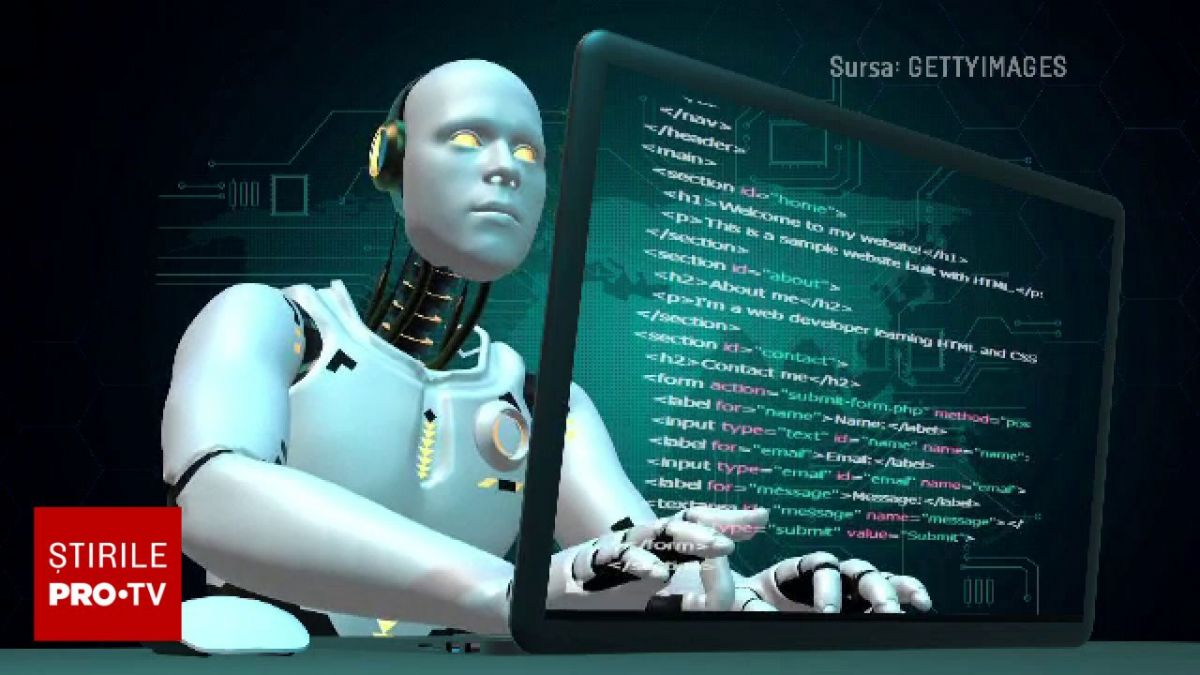

De creators van South Park hebben de naam van hun serie tijdelijk veranderd in South America als een satirische reactie op de recente naamsveranderingen door Trump, waaronder de hernoeming van de Golf van Mexico naar de Golf van Amerika. #SouthPark #Trump #naamsverandering


I creatori di South Park, Trey Parker e Matt Stone, hanno annunciato ironicamente che la serie animata satirica sarà ribattezzata “South America”, in riferimento alla recente politica di Donald Trump sui cambiamenti di denominazione geografica: “Ispirati dal coraggio e dal patriottismo di Apple e Google, stiamo cambiando il nome di South Park in South America. Vogliamo in particolare ringraziare la nostra casa madre Paramount — una Skydance Capitulation” #SouthPark #satira #Trump


X has ended its old Creator Program, replacing it with Original Content Rewards Program. Basically, monetization is available only for original content and news, meme and video aggregators are no longer viable for payouts. It'll be interesting to see whether they apply these https://t.co/MJZZglmkD7 #OriginalContent #CreatorProgram #Monetization #Nospecificcountriesarementionedinthetweet.


🚨 UPDATE 🚨 The leak was fake, and I was actually in on it... I was asked to participate in an upcoming YouTube video (alongside several other creators) to test whether or not the Geometry Dash community could be fooled by fake Update 2.21 leaks. I can't reveal the creator #GeometryDash #Update221 #YouTubeCollab #Thetweetdoesnotmentionanyspecificcountries.Therefore #therearenocountrycodestoreturn.

«La legittimazione del panenteismo da parte della Santa Sede non rappresenta un innocuo aggiornamento pastorale, bensì il culmine coerente di quella deriva modernista secolare che mira a dissolvere la Redenzione nel panteismo gnostico e la Grazia nell'autosufficienza pelagiana. Se il cosmo viene dichiarato intrinsecamente divino e l'umanità si redime attraverso il divenire di un'evoluzione collettiva, la Croce perde la sua tragica necessità e la Chiesa si riduce a cortigiana della storia, un'inutile agenzia di servizi sociali al servizio degli interessi del mondo. Contro questa sottile parodia gnostica della fede, che deifica la materia solo per celare la ferita del peccato originale e sminuire la Maestà divina, i cattolici sono chiamati oggi più che mai al dovere della resistenza. È necessario istruirsi e riaffermare con fermezza l'assoluta trascendenza del Creatore, la drammatica realtà della Caduta e la perfetta adeguatezza del Sacrificio di Cristo. In questo modo ogni fedele può contribuire a superare la grave crisi dell'autorità petrina che la Chiesa sta vivendo oggi, con l'incrollabile certezza che, nonostante i temporanei tradimenti delle sue gerarchie, le porte dell'inferno non prevarranno.» https://t.co/U82hHC3Ktz #Fede #Chiesa #Resistenza


Celebriamo oggi la nascita di una bambina chiamata a diventare la Madre del suo Creatore, la Madre di Dio. Eppure, nasce semplicemente una bambina, come le figlie e le nipoti che teniamo in braccio. Abbiamo per lei titoli nobili e altissimi, di Signora e Regina, ma la via di Dio è stata e rimane più semplice e silenziosa, eppure non meno potente e trasformativa. È la via di Gesù stesso. #NativitàdiMaria #NativitàdiMaria #MadreDiDio #Fede

O digital creator Hugo Barros, presente no stand da Tim falando que o trabalho realizou um sonho dele e que a Ana Paula “é tudo isso mesmo” 💙 LINK: https://t.co/nfij4S9C0r https://t.co/QgFNJc3LTE #DigitalCreator #Tim #SonhoRealizado


Wimbledon ha deciso di non concedere accrediti agli influencer. La decisione arriva dopo le polemiche per il rumore e le interruzioni di gioco causate dai content creator invitati agli US Open. Fonte: Tgcom24 https://t.co/Law4MAIXJz #Wimbledon #Influencer #Sport


Modemerk Martan, opgericht door Douwe de Boer en Diek Pothoven, heeft zich gespecialiseerd in het maken van mode van afgekeurd hotellinnen en heeft recentelijk de Grand Prize van het Visa Young Creators-programma gewonnen, terwijl hun opvallende ontwerpen steeds vaker op Nederlandse rode lopers verschijnen. #DuurzameMode #Martan #ModeAvantgarde






