WRLD

Search

#depression
Barbara Collevecchio 10h

The author argued that men's health is also influenced by gender norms, which lead them not to ask for help, to endure pain, and to hide their fragility. He added that high-risk jobs and chronic stress contribute to an increase in depression, anxiety, addictions, and early deaths. (translated)

2194
via.tt.se 2d

People with COPD and type 2 diabetes, depression, or anxiety have a higher risk of death and more cardiovascular diseases than expected, according to a new dissertation from Örebro University that investigated the relationships between these diseases. #KOL #diabetes #multisjuklighet (translated)

via.tt.se
KOL och diabetes kan vara en farligare kombination än väntat
3223
Actu Foot 4d

Actu Foot reported that Jérémy Mathieu went through four years of depression after his retirement. He explained that the support of his wife and his job at Intersport, which started two years earlier, helped him come out of this period by regaining a social life and an atmosphere reminiscent of a locker room. Mathieu also indicated that his wife had taken on small jobs and that working independently had done them good, as they used to spend all their time together. He added that he had started seeing friends again. These remarks were reported by So Foot. #Dépression #SantéMentale #BienÊtre (translated)

3483
Bild 7d

An Australian study shows that daily fruit consumption can reduce symptoms of depression and anxiety in adolescents, while the consumption of sugary drinks is associated with more frequent mental health issues. #Teenager #Ernährung #Stimmung (translated)

www.bild.de
Laut Studie - So beeinflusst Essen die Stimmung von Jugendlichen
3063
Luciano Magaldi Sardella (PhD) 7d

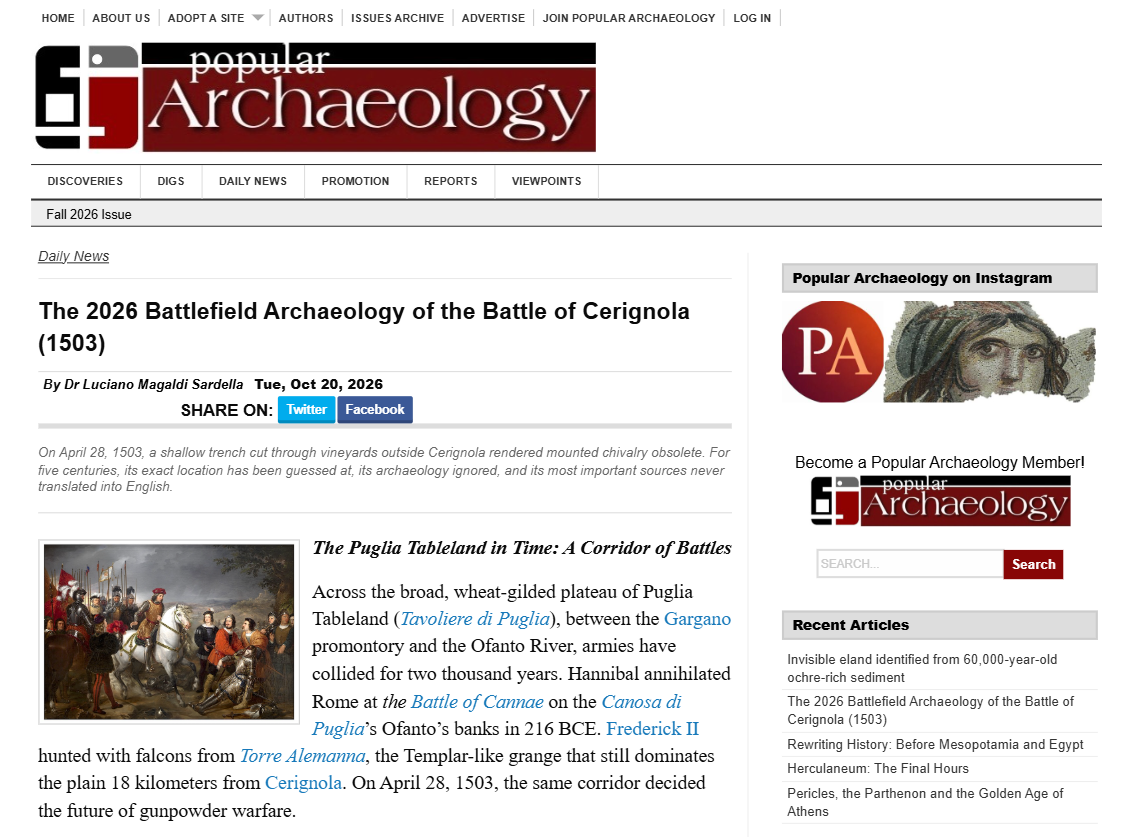
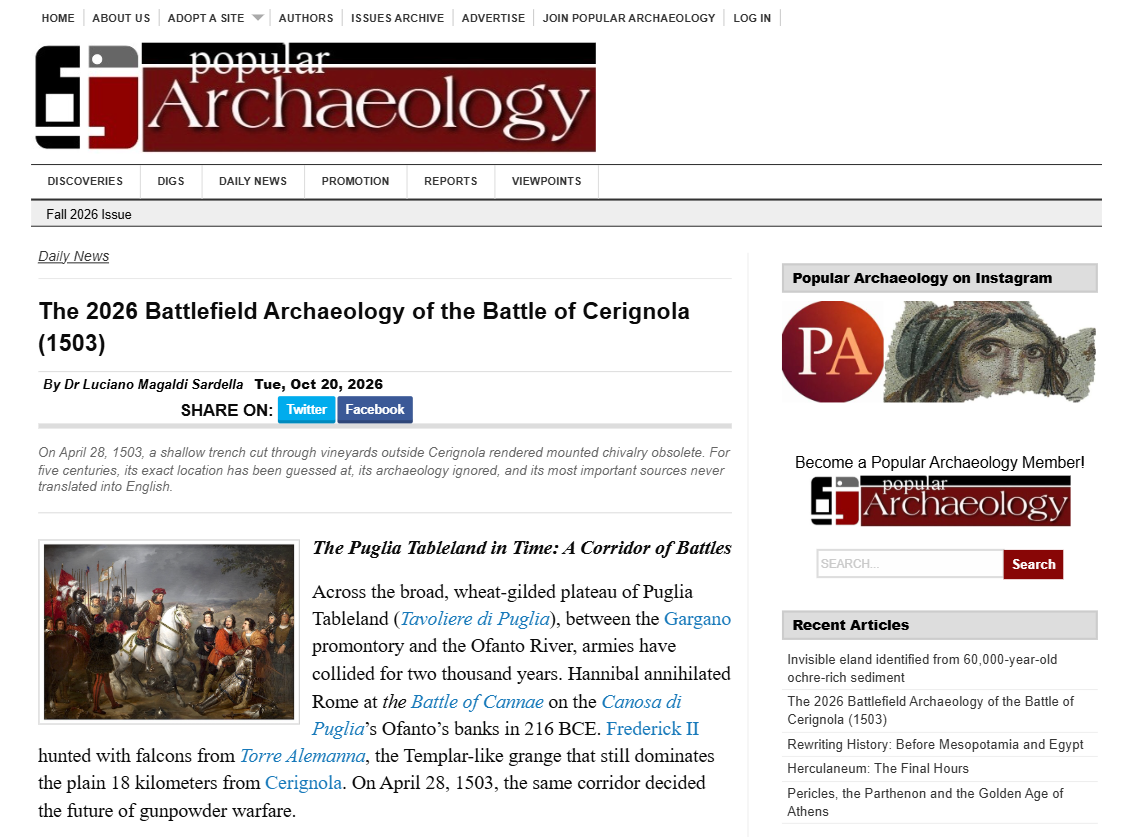
THE "BATTLE OF CERIGNOLA (1503)" ON "POPULAR ARCHAEOLOGY USA" (by LUCIANO MAGALDI SARDELLA) SOURCE 1: https://popular-archaeology.com/author/sardella/ SOURCE 2: https://popular-archaeology.com/article/the-2026-battlefield-archaeology-of-the-battle-of-cerignola-1503/ -------------------------------------------------------------------- CERIGNOLA (FG) — On April 28, 1503, at sunset, a shallow trench cut between the vineyards outside Cerignola rendered heavy cavalry obsolete. For five centuries, its exact location has only been conjectured, its archaeology ignored, its most important sources never translated into English. We are on the Tavoliere of Puglia, a corridor of battles for two thousand years: from Cannae in 216 BC to the falcon hunt of Frederick II from Torre Alemanna. Cerignola, at that time, was not a city but a rural village of 350 families at 120 meters above sea level, custodian of the Mena della Dogana delle Pecore, the great pastoral system of transhumance that financed the Kingdom of Naples. Its possession was fiercely contested. Facing each other were two worlds. Louis d’Armagnac, Duke of Nemours, Viceroy of Naples for Louis XII, in his thirties, splendidly armored, confident of victory. On the other side was Gonzalo Fernández de Córdoba, the Gran Capitán, who on April 27-28 marched from Barletta with about 9,000 exhausted men and decided to settle on a low ridge. He deepened what was already there: not an invention, but an agricultural ditch. The French gendarmes, the last heirs of the medieval knight, lowered their lances and never reached the line. From behind a parapet reinforced with vine stakes, over 1,000 Spanish arquebusiers opened fire. Nemours fell, almost certainly the first European army commander to die from a portable firearm. With him, the charge of cavalry as a dominant tactic died. And here is the scandal denounced by the article: no cartographer of the 17th-18th centuries ever mapped the battlefield. No monument commemorates it. It is not protected as a cultural landscape under the Code of Cultural Heritage. Every deep plowing of the Tavoliere, standard practice since the Bourbon reforms, destroys an archaeology never recorded. Yet the perimeter can be reconstructed. By cross-referencing the 16th-century descriptions of "vine-covered slopes fifteen miles north of the Ofanto" with the Via Traiana, the engagement area is a rectangle of 3-4 square kilometers northeast of the current settlement. With the 1m LiDAR DTM from ISPRA, it could reveal anomalous linear depressions, and the lower filling of a ditch 2-3 meters deep, under the plowed layer, is still readable with magnetometry and ground radar. Why did we arrive late? Not for lack of sources, but for lack of translation. The Municipality of Cerignola and the Torre Alemanna Research and Study Center of Prof. Matteo Stuppiello, who in 1978 obtained the first monumental protection for Torre Alemanna, have digitized a corpus that has never entered Anglophone historiography. Here are the 3 pillars: 1. The letter that still smells of gunpowder. The “Letter from Consalvo de Córdoba to the Spanish royals dated April 29, 1503,” edited by Stuppiello in 2003 and updated to 2025 on comune.cerignola.fg.it/biblioteche-digitali. A handwritten page written in Cerignola the day after the battle, “rich in flashes, twilight lights, and gunfire.” Not a polished chronicle like that of Giovio, but a field dispatch: the fatigue of the night march, the decision to entrench upon arrival, the recovery and honorable burial of Nemours, the intact capture of the French artillery. 2. The graffiti, a monument inside the monument. In the 14th-century church of Santa Maria delle Grazie, known as the Incoronatella, on the Via Trinitapoli Vecchia, where tradition holds that the body of Nemours was brought. On the triumphal arch, a 1503 graffiti gives, in almost notarized form, the date, sixth indiction, Friday at the hour XXIII-XXIIII. It was indeed Friday, as confirmed by the perpetual calendar of Cappelli. Decoded in 1995 by Prof. Francesco Magistrale, Latin paleographer at the University of Bari, in *The Battle of Cerignola (1993)* and in the municipal monograph *S.M. delle Grazie (1999)*. Today it is fading due to humidity and neglect. 3. The land registry that explains the ditch. The Survey of 1672 preserved at the State Archive of Naples, Pignatelli Aragona Cortes fund, Scanzia 63, fasc.1: “At the time of the battle, thick vineyards covered the hill reaching to the plain, and were distinctly separated from the rest of the countryside by a not very deep ditch.” Córdoba did not improvise; he adapted. This is confirmed by the catasti of the Giustiniani: 277 households in 1532, 699 in 1595. The landscape of 1503 was intensely horticultural, not the deeply plowed monoculture of today. In addition to these, there is the first monograph by Vincenzo Buonassisi, *The Battle of Cerignola* (1908, died in Via Fanfulla 10 on June 27, 1928), and the first modern military analysis by Piero Pieri, “Consalvo de Córdoba and the Battle of Cerignola,” Archivio Storico Pugliese 1952, which 30 years before the Anglophone rediscovery of the “pike-and-shot” defined Cerignola as an engineered killing ground. While Cerignola forgot, others remembered. The “Regimiento de Infantería Cerinola n.42”, later “Fuerteventura n.56”, carried the name of Cerignola until the 20th century. The coat of arms, described in *Heraldica e Historiales del Ejercito, Tomo V” (Madrid, 1981): silver field, dying white swan entangled in a hedge, golden wall crown, with the scroll “Cerignola.” Dossier officially transmitted on April 30, 1986, prot. 4565/509, from the Servicio Histórico Militar of Madrid to the Torre Alemanna Center thanks to Col. Alessio Antonutti and Gen. José Cifuentes. And in Amsterdam, at the Rijksmuseum, the anonymous bronze commemorative medal: Hercules with lion skin and club and Janus with the keys next to an eagle-armed coat of arms, legend “Consalvus Agidarius… Janum clausit,” on the reverse a battle scene “Consalvi Agidari Victoria de Gallis ad Cannas,” an artist's mistake that confuses Cerignola with Cannae. It belonged to Mrs. J.M. van Gelder-Nijhoff, donated in 1885. The author's conclusion is clear: Gonzalo's ditch is the most consequential earthwork in European military history. It inaugurates the infantry armed with firearm and conditions the Mediterranean for 160 years. It may still be there, filled, plowed, invisible to the naked eye but accessible to a magnetometer. It is not a matter of medieval archaeology but of the will to protect. (translated)

681
Luciano Magaldi Sardella (PhD) 7d

THE “BATTLE OF CERIGNOLA (1503)” ON “POPULAR ARCHAEOLOGY USA” (by LUCIANO MAGALDI SARDELLA) SOURCE 1: https://popular-archaeology.com/author/sardella/ SOURCE 2: https://popular-archaeology.com/article/the-2026-battlefield-archaeology-of-the-battle-of-cerignola-1503/ __________________________________________________________________ CERIGNOLA (FG) — On 28 April 1503, at sunset, a shallow trench cut through the vineyards outside Cerignola rendered heavy cavalry obsolete. For five centuries its exact position has been merely conjectured, its archaeology ignored, its most important sources never translated into English. We are on the Puglian Tablelanda, a corridor of battles for two thousand years: from Cannae in 216 BC to Frederick II’s falconry from Torre Alemanna. Cerignola, at that time, was not a town but a rural hamlet of 350 families at 120 metres above sea level, guardian of the Mena of the Dogana delle Pecore, the great customs system of transhumance that financed the Kingdom of Naples. It was for its possession that the battle was fought. Opposed, two worlds. Louis d’Armagnac, Duke of Nemours, Viceroy of Naples for Louis XII, thirty years old, splendidly armed, certain of victory. On the other side, Gonzalo Fernández de Córdoba, the Great Captain, who on 27–28 April marches from Barletta with some 9,000 exhausted men and decides to entrench himself upon a low ridge. In front of it he has deepened what was already there: not an invention, but an agrarian ditch. The French gendarmes, the last heirs of the mediaeval knight, lower their lances and never reach the line. From behind an embankment reinforced with vine stakes, more than 1,000 Spanish arquebusiers open fire. Nemours falls, almost certainly the first European army commander to die by a portable firearm. With him dies the cavalry charge as a dominant tactic. And here lies the scandal denounced by the article: no cartographer of the seventeenth or eighteenth century ever mapped the field. No memorial stone recalls it. It is not protected as a cultural landscape under the Code of Cultural Heritage. Every deep ploughing of the Tavoliere, standard practice since the Bourbon reforms, destroys an archaeology never recorded. Yet the perimeter is reconstructable. By cross-referencing sixteenth-century descriptions of “slopes covered with vineyards fifteen miles north of the Ofanto” with the Via Traiana, the engagement zone is a rectangle of 3–4 sq km to the north-east of the present settlement. With ISPRA’s 1m DTM LiDAR, anomalous linear depressions could be revealed, and the lower fill of a 2–3 metre ditch, beneath the ploughed layer, is still legible by magnetometry and ground-penetrating radar. Why have we arrived so late? Not for lack of sources, but for lack of translation. The Comune di Cerignola and the Centro Studi e Ricerche Torre Alemanna of Prof. Matteo Stuppiello, who in 1978 obtained the first monumental protection for Torre Alemanna, have digitised a corpus that has never entered Anglophone historiography. Here are the 3 pillars: 1. The letter that still smells of powder. The “Letter of Consalvo da Cordova to the Sovereigns of Spain of 29 April 1503,” edited by Stuppiello in 2003 and updated in 2025 on comune.cerignola.fg.it/biblioteche-digitali. A manuscript page written at Cerignola the day after the battle, “rich in flashes, twilight gleams, and gunfire.” Not a polished chronicle à la Giovio, but a field dispatch: the exhaustion of the night march, the decision to entrench upon arrival, the recovery and honourable burial of Nemours, the intact capture of the French artillery. 2. The graffito, a monument within the monument. In the fourteenth-century church of Santa Maria delle Grazie, known as the Incoronatella, on the Via Trinitapoli Vecchia, where tradition holds the body of Nemours was taken. On the triumphal arch, a graffito of 1503 gives in quasi-notarial form the date, sixth indiction, Friday at the twenty-third to twenty-fourth hour. It truly was a Friday, as confirmed by Cappelli’s perpetual calendar. Deciphered in 1995 by Prof. Francesco Magistrale, Latin palaeographer at the University of Bari, in La Battaglia di Cerignola (1993) and in the municipal monograph S.M. delle Grazie (1999). It is now fading through damp and neglect. 3. The cadastre that explains the ditch. The Apprezzo of 1672 preserved in the Archivio di Stato di Napoli, fondo Pignatelli Aragona Cortes, Scanzia 63, fasc.1: “At the time of the battle, dense vineyards covered the hill reaching down to the plain, and were clearly separated from the rest of the countryside by a not very deep ditch”. Córdoba did not improvise; he adapted. This is confirmed by the Giustiniani cadastres: 277 hearths in 1532, 699 in 1595. The landscape of 1503 was one of intensive horticulture, not the deep-ploughed cereal monoculture of today. To these are added the first monograph by Vincenzo Buonassisi, La Battaglia di Cerignola (1908, died at Via Fanfulla 10 on 27 June 1928), and the first modern military analysis by Piero Pieri, “Consalvo di Cordova e la battaglia di Cerignola”, Archivio Storico Pugliese 1952, which 30 years before the Anglophone rediscovery of “pike-and-shot” defined Cerignola as an engineered killing ground. While Cerignola forgot, others remembered. The “Regimiento de Infantería Cerinola n.42”, later “Fuerteventura n.56”, bore the name of Cerignola until the twentieth century. Its coat of arms, described in Heráldica e Historiales del Ejército, Tomo V (Madrid, 1981): argent field, a dying white swan entangled in a hedge, a gold mural crown, with scroll “Cerignola”. Dossier officially transmitted on 30 April 1986, prot. 4565/509, by the Servicio Histórico Militar in Madrid to the Centro Torre Alemanna through Col. Alessio Antonutti and Gen. José Cifuentes. And in Amsterdam, in the Rijksmuseum, the anonymous commemorative bronze medal: Hercules with lion-skin and club and Janus with keys beside an eagled coat of arms, legend “Consalvus Agidarius… Janum clausit”, on the reverse a battle scene “Consalvi Agidari Victoria de Gallis ad Cannas” — an error by the artist who confuses Cerignola with Cannae. It belonged to Mrs J.M. van Gelder-Nijhoff, donated in 1885. The author’s conclusion is unequivocal: Gonzalo’s ditch is the most consequential earthwork in European military history. It inaugurates the infantryman armed with a firearm and conditions the Mediterranean for 160 years. It may still be there, infilled, ploughed over, invisible to the naked eye but accessible to a magnetometer. It is not a question of mediaeval archaeology but of the will to protect.

908
FRENCHRAPUS 🇺🇸 2w

FRENCHRAPUS wrote that a recent survey showed Generation Z as the most unhappy generation. He claimed that nearly one in four young people was being treated for depression and that only 34% felt they were succeeding in life. https://t.co/FsH7DrdPRB #GenZ #SantéMentale #Dépression (translated)

3545
Kurier 2w

Researchers from Australia have identified a new subtype of depression called "circadian depression," which is associated with disruptions in the body's internal clock and may require more targeted therapies. #ZirkadianeDepression #Depression #PsychischeGesundheit (translated)

kurier.at
Forscher identifizieren neuen Subtyp von Depressionen
3432
Le Monde.fr 2w

The management of depression in pregnant women promotes the brain development of the newborn. #BrowserIssues #NetworkConnectivity #Troubleshooting (translated)

www.lemonde.fr
La prise en charge de la dépression de la femme enceinte profite au développement cérébral du nouveau-né
2975
L'Obs 2w

The "circadian depression," recently identified by Australian researchers, is a new form of depression that primarily affects young people and seems to be linked to a disruption of biological rhythms rather than a simple psychological disturbance. #DépressionCircadienne #SantéMentale #RythmesBiologiques (translated)

www.nouvelobs.com
Qu’est-ce que la « dépression circadienne », cette nouvelle forme de dépression tout juste identifiée ?
3319
newsORF.at 2w

A current health survey shows an increase in depression, particularly among young adults, while the general perception of the health status of the population is becoming more critical. #Gesundheitsbefragung #Depressionen #Gesundheitszustand (translated)

orf.at
Zunahme bei Depressionen
2748
newsORF.at 2w

The Health Survey 2025 by Statistics Austria shows worrying negative trends, especially a more critical self-assessment of health among young people, an increase in depression, and a deterioration in health-related quality of life. #Gesundheitstrends #Depressionen #Gesundheitsbefragung (translated)

orf.at
Gesundheitsbefragung 2025 ergab mehrere Negativtrends
2749
ANSA.it 2w

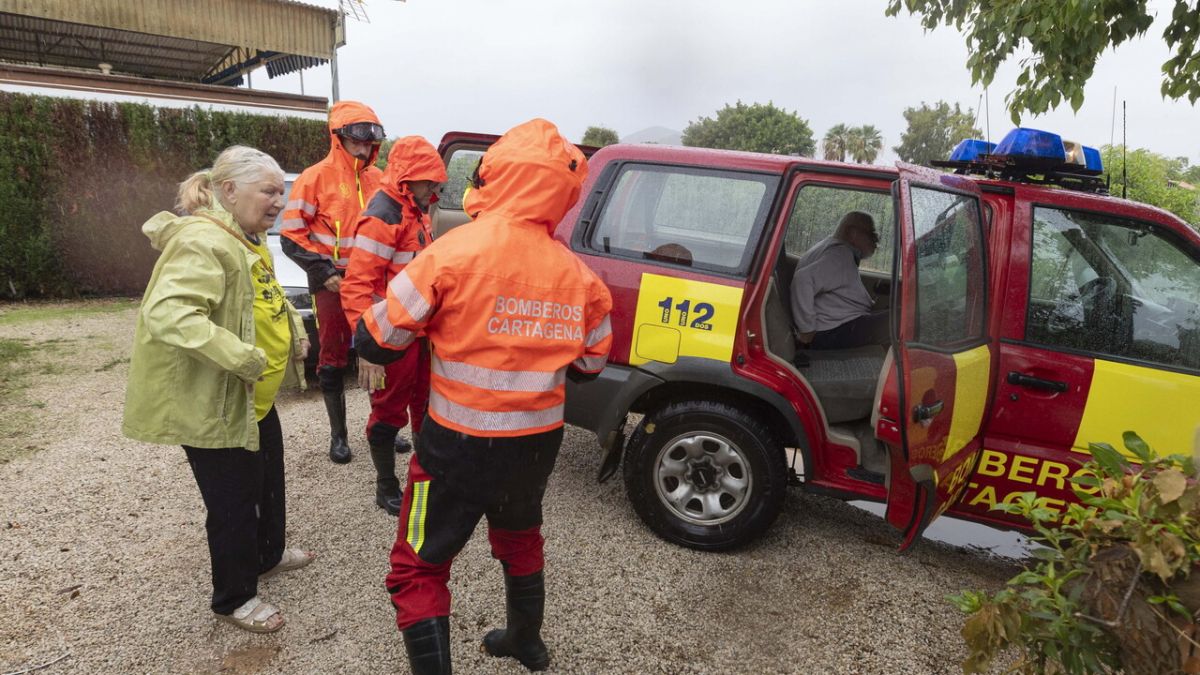
The heavy rains linked to the 'Adam' depression have caused severe flooding between Valencia and Alicante, leading to the evacuation of 2,000 people from campsites and declaring a state of emergency in the affected areas, while rescue operations are made difficult by impassable roads and flooding. #Alluvioni #Maltempo #Valencia (translated)

www.ansa.it
Alluvioni fra Valencia e Alicante, evacuati 2mila persone da camping
2639
Stephan Helm 2w

No one needs to believe that I fall into depression. #Bundesliga #AustriaWien #StephanHelm (translated)

Austria-Coach Helm nach der nächsten Pleite: "Verfalle nicht in Depressionen"
www.derstandard.at
2757
D
der Standard 2w

Austria coach Stephan Helm remains optimistic despite the sixth defeat in nine games and assures that he will not fall into depression. #Bundesliga #AustriaWien #StephanHelm (translated)

www.derstandard.at
Austria-Coach Helm nach der nächsten Pleite: "Verfalle nicht in Depressionen"
2757
Stephan Helm 2w

"No one needs to believe that I fall into depression." #Fußball #AustriaWien #Bundesliga (translated)

Austria-Coach Helm zur Krise: „Werde nicht in Depressionen verfallen“
kurier.at
2758
Kurier 2w

Austria coach Stephan Helm speaks fighting spirit regarding the current crisis situation of the club after the sixth defeat in nine games and emphasizes that he will not fall into depression. #Fußball #AustriaWien #Bundesliga (translated)

kurier.at
Austria-Coach Helm zur Krise: „Werde nicht in Depressionen verfallen“
2758
Bild 2w

A recent study shows that people with brown fat are less likely to suffer from type 2 diabetes and depression, suggesting a potential health benefit of increased activity of this fat tissue. #BraunesFett #Diabetes #Gesundheit (translated)

www.bild.de
Studie mit KI zeigt - Braunes Fett könnte vor Depressionen schützen
3224
Marco M.M. 2w

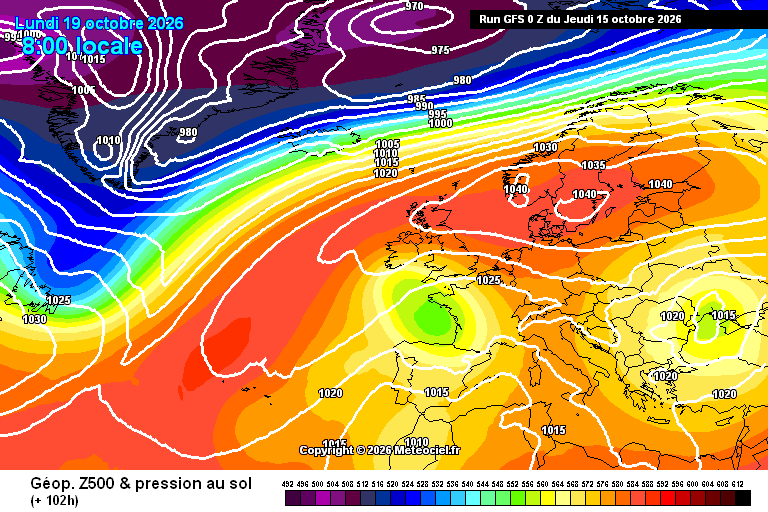
Marco M.M. had written that autumn was progressing in an unusual manner. After a few milder hours, according to his forecasts, an anticyclone between Scandinavia and the Baltic would reach peaks of 1040 hPa, while a large cold drop at altitude would affect the western Mediterranean, the Iberian Peninsula, and France. Between Sunday, October 18, and Tuesday, October 20, Italy would find itself between these two structures, with instability predicted in some western sectors of the peninsula. Marco M.M. had also predicted a decrease of 2-4 °C in maximum temperatures, especially in the Center-North, and had said that it remained to be seen whether the third decade of October would bring a more marked decrease. #meteo #autunno #Europa (translated)

2765
Bartosz Fiałek 2w

The author wrote that a standardized oral lavender oil preparation called Silexan significantly reduced depressive symptom severity compared with a placebo, but said the findings did not mean lavender could replace standard antidepressant treatment.

2766