BETA nonprofit public democratic european moderated

Search

#evidence
L'Obs 1h

The economist Youssef Souidi analyzes the funding inequalities between Parisian high schools and those in Seine-Saint-Denis, highlighting an unfair treatment that affects resources and educational opportunities. #MouvementLycéen #Éducation #Inégalités (translated)
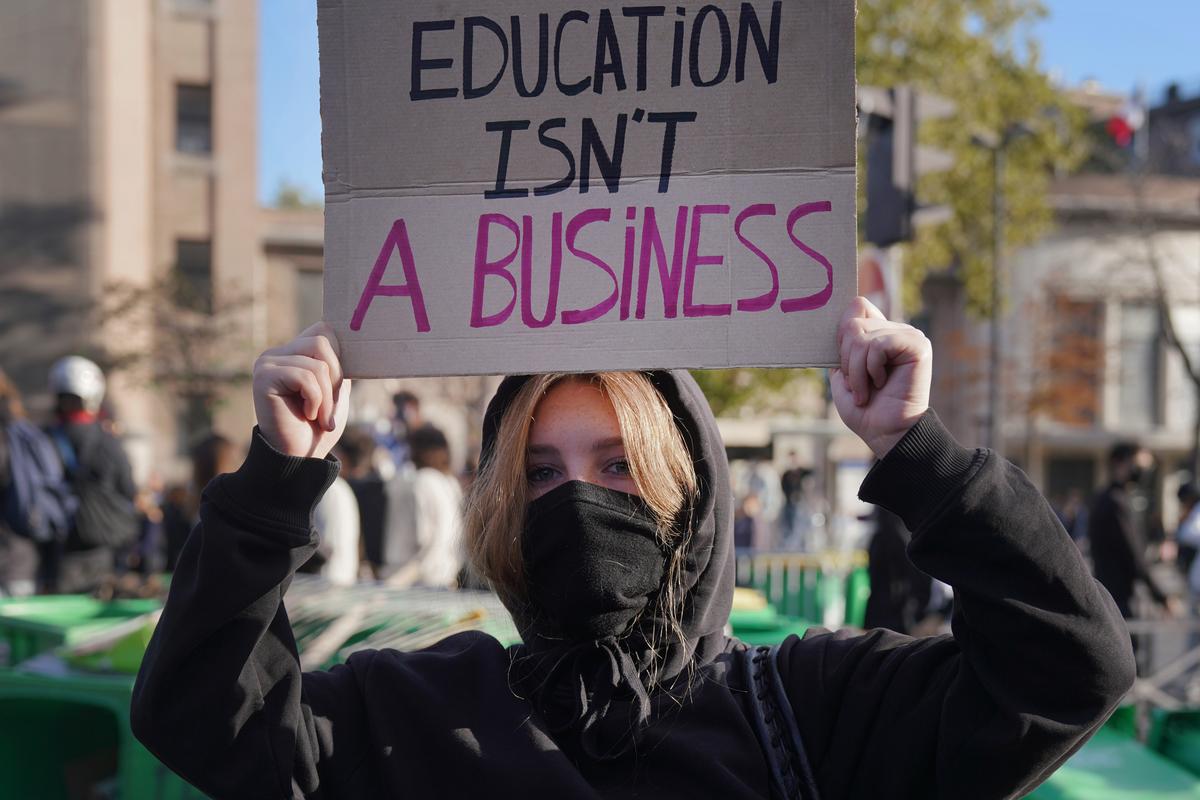
Mouvement lycéen : « Il est très probable qu’on investisse plus dans un élève parisien que dans un élève de Seine-Saint-Denis »

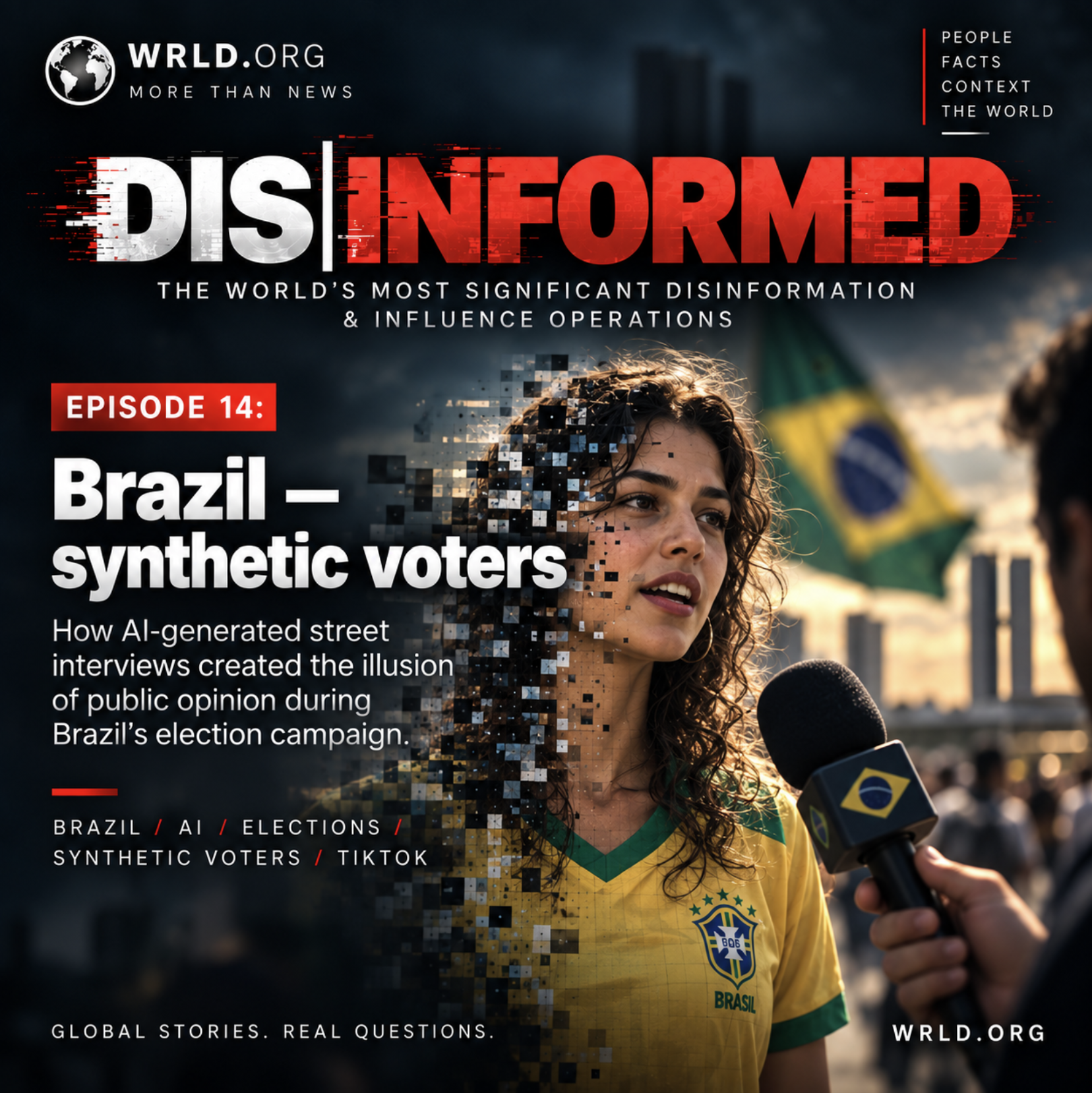
Brazil’s synthetic voters – when AI manufactures public opinion They look like ordinary street interviews. A reporter approaches a passer-by in a Brazilian square and asks a simple question: who will you vote for? A young voter explains why Luiz Inácio Lula da Silva deserves another term. An elderly woman says Brazil needs Flávio Bolsonaro because he represents political renewal and greater security. The locations look plausible, the microphones are visible and the answers sound much like the brief political opinions heard in television vox pops around the world. None of the people are real. Ahead of Brazil’s presidential election on 4 October, fact-checking organisation Aos Fatos identified at least 50 TikTok videos in which artificial intelligence was used to manufacture voters, reporters and apparently spontaneous political interviews. Together, the videos had accumulated around 7.4 million views by mid-August. Some promoted Lula, others Flávio Bolsonaro, while another group used synthetic characters to ridicule or stereotype supporters of one side. Aos Fatos found no apparent evidence linking the accounts producing the videos to either presidential campaign. The opinion poll that never took place The format is important. These were not conventional deepfakes in which a recognisable politician is made to say something he never said. Instead, the creators reproduced the visual language of the vox pop – the short street interview used by broadcasters and social-media creators to illustrate what ordinary people supposedly think. In pro-Lula videos, synthetic voters described themselves as beneficiaries of social programmes or credited the president with improving their lives. In videos supporting Flávio Bolsonaro, artificial interviewees associated him with political renewal, public security and fighting corruption. Other clips were openly hostile: AI-generated characters presented as poor or living in parts of Brazil’s north-east were shown in dirty clothes or run-down surroundings, declaring support for Lula because they supposedly preferred welfare payments to work. The deception is therefore subtler than fabricating a candidate’s statement. It manufactures something that political communication normally treats as evidence of public sentiment. A real vox pop may be unscientific, but the people interviewed at least exist. These videos created the appearance that identifiable social groups – young people, pensioners, welfare recipients or residents of particular regions – were spontaneously expressing political preferences when no such encounters had taken place. An electoral-law specialist interviewed by Aos Fatos described the technique as the fabrication of a “social fact that never occurred”. That captures the central innovation: AI is being used not merely to falsify political speech, but to manufacture the impression of grassroots opinion. Fifty videos, but not one proven network The available evidence does not support describing the 50 posts as a centrally controlled influence operation. Aos Fatos located them through TikTok searches and recommendations produced by the platform itself, then examined the accounts responsible for publication. Most had relatively small individual audiences, although their combined reach was substantial. The first examples identified by the investigation appeared as early as March 2026. Activity increased in June and was concentrated particularly in July and the first half of August as Brazil’s election calendar intensified. Some accounts specialised in AI-generated videos generally, including fabricated podcast-style material. Others were explicitly political or supportive of a candidate, but Aos Fatos found no apparent links between those profiles and the official Lula or Bolsonaro campaigns. That distinction is essential. The evidence demonstrates a common technique and a shared political environment, not a single command structure. Some creators may have been motivated by ideology, others by engagement or monetisation. Publicly available evidence does not establish who commissioned the individual videos or whether any coordination existed between the accounts. This decentralised model also creates a different enforcement problem from a traditional bot network. There may be no headquarters to expose and no infrastructure whose removal disables the entire operation. The format itself can be copied by anyone with access to inexpensive generative-video tools. When the algorithm mixes real and synthetic citizens Aos Fatos documented another important feature of the phenomenon: TikTok’s recommendation system placed AI-generated interviews alongside genuine street interviews. For a user scrolling quickly through the platform, the transition between an authentic citizen and an entirely fabricated one could therefore be almost invisible. In 18 per cent of the 50 videos analysed, there was no indication that the people shown had been generated using AI. After Aos Fatos provided TikTok with the videos, the company said it had removed all of them for violating its rules on edited and AI-generated media. TikTok said its policies require creators to identify synthetic content and prohibit manipulated media capable of misleading users about matters of public importance or impersonating genuine journalistic material. The issue extends beyond one platform. Factchequeado’s review of Brazil’s 2026 election campaign found that synthetic endorsements and other deepfakes had become one of the most visible forms of AI-assisted electoral misinformation, alongside fabricated candidate statements and invented scenes. Brazil already had rules for synthetic politics Brazil entered the campaign with unusually detailed electoral rules governing artificial intelligence. The Superior Electoral Court, the TSE, requires electoral propaganda using synthetic multimedia to disclose clearly that AI was used. More importantly for the fake-voter videos, its rules prohibit synthetic audio or video used to favour or harm a candidacy when it creates or alters the image or voice of a living, deceased or fictitious person. The difficulty is attribution and enforcement. When a synthetic video is published by an official campaign, responsibility can be relatively straightforward to investigate. When it comes from an apparently independent account with no demonstrated relationship to a candidate, lawyers interviewed by Aos Fatos said responsibility is more likely to fall on the individual creator, while imposing electoral sanctions on a campaign would require evidence of a connection. For the final 72 hours before the election and the 24 hours following it, the TSE has imposed additional restrictions on newly published or republished synthetic material involving candidates or public figures, reflecting the particular difficulty of correcting fabricated content immediately before voting. From deepfake politicians to synthetic electorates The Brazilian case illustrates a broader change in political manipulation. The first generation of electoral deepfakes concentrated on famous people: make a politician appear to say something damaging, or fabricate an endorsement from a celebrity. Synthetic vox pops reverse the perspective. The politician can remain completely authentic; it is the electorate around the politician that is fabricated. That changes the psychological proposition of the message. Instead of saying the candidate believes this, the video suggests people like you believe this. Age, clothing, accent, neighbourhood and social class can all be generated to construct an artificial constituency around almost any political claim. There is no evidence that the 50 Brazilian videos identified by Aos Fatos constitute a single centrally directed campaign, nor evidence that they changed voting intentions. What they demonstrate is a technique whose barrier to entry has become extremely low. AI no longer needs to forge the politician. #DISINFORMED #Episode14 #Brazil #BrazilElection2026 #Elections #ElectionDisinformation #ArtificialIntelligence #AI #GenerativeAI #SyntheticVoters #SyntheticMedia #AIAvatars #AIGeneratedVideo #VoxPop #FakeInterviews #Astroturfing #AIPropaganda #PoliticalDisinformation #InfluenceOperations #InformationWarfare #SocialMediaManipulation #TikTok #PublicOpinion #ManufacturedConsent #SyntheticPublicOpinion #DigitalInfluence #Deepfakes #ElectionIntegrity #TSE #AosFatos #FactChecking #OSINT #MediaManipulation #WRLD (translated)

Eleitores gerados por IA fazem campanha no TikTok e põem em xeque regra do TSE

The article describes the deplorable conditions of high schools in Île-de-France, highlighting issues such as falling windows, mold, and unsanitary toilets. #SeineSaintDenis #Éducation #Insalubrité (translated)

Fenêtres qui tombent, moisissures, toilettes insalubres… Plongée dans les lycées délabrés d’Île-de-France

The author called for reconsidering the diagnosis of borderline personality disorder, writing that for more than four decades people whose distress centred on relationships had been labelled as having a disordered personality. They argued that the evidence no longer supported that framing.

The author wrote that the observation challenged the belief that greater AI capability would resolve misalignment, arguing that past evidence and theoretical reasoning suggested it could instead intensify unwanted behaviour by making systems more effective at pursuing the wrong goals.

The author said there was no evidence that journalists had taken part in military activities. They accused Israel’s army of escalating disinformation as Western media began due diligence, and claimed it had a “legitimization cell” that fabricated stories to justify what they called genocide. The author said their next report would expose the alleged activity. #Disinformation #MediaBias #HumanRights #IL

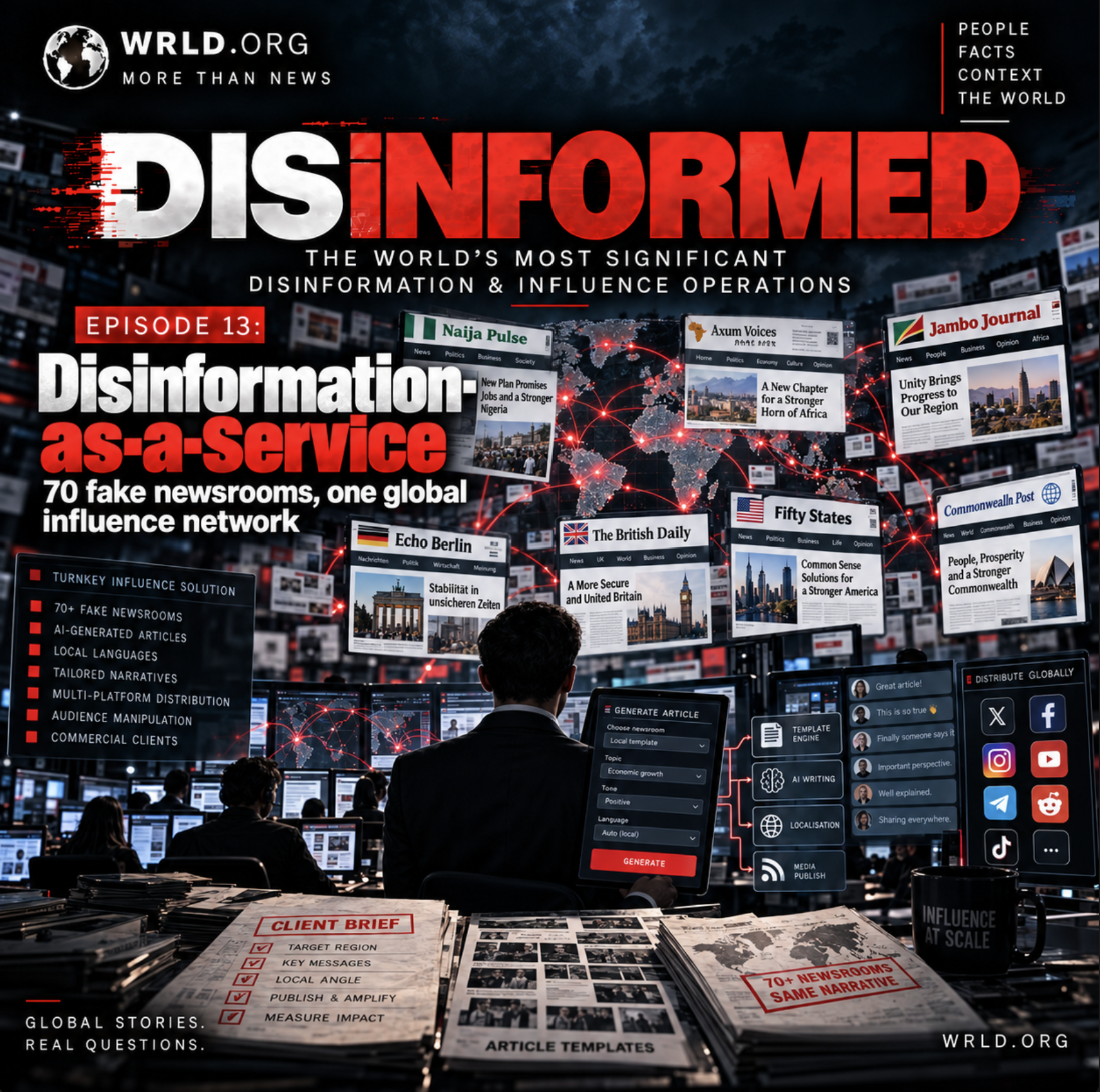
Disinformation for hire – the network of 70 fake newsrooms sold as a service The websites looked local. Naija Pulse appeared to cover Nigeria, Echo Berlin Germany, The British Daily Britain, Fifty States the United States and Commonwealth Post Australia. Each had its own branding, articles, supposed journalists and matching social-media presence. Taken individually, they resembled small independent news outlets. According to Anthropic, however, they were parts of a single commercial influence network spanning six continents. Anthropic’s September 2026 threat report identifies the operation as GTG-54002, a commercial “influence-as-a-service” network that used Claude to generate and rewrite political content at industrial scale. Investigators linked roughly 70 fabricated news websites to around 70 matching X accounts and more than 250 additional inauthentic commenting accounts designed to create the appearance of genuine public engagement. The network produced at least 8,913 articles in about 20 languages before Anthropic disrupted the activity. The significance of the case is not simply the number of fake sites. It is the business model. The network did not consistently promote one government, party or ideology. Anthropic found that its political position changed according to the apparent interests of different customers. The company therefore described it as a commercial influence operation: political manipulation offered in much the same way as other outsourced digital services. A fake media ecosystem built at scale Anthropic says the infrastructure was created rapidly. Domains were registered from France during a roughly ten-week period in mid-2025 and deployed through shared technical infrastructure, allowing investigators to connect publications that outwardly appeared unrelated. Most of the supporting social-media accounts were also created within a narrow timeframe in June and July 2025. The sites were designed to look like functioning local newsrooms rather than anonymous propaganda pages. Articles carried fabricated bylines belonging to journalists who, according to Anthropic, did not exist. Each outlet had a corresponding account on X, while a second layer of fake profiles commented on and amplified the articles. Many of those accounts used AI-generated profile photographs. The result was a three-tier structure: the newsroom published the story, the branded social account distributed it, and apparently ordinary users supplied the appearance of public reaction. Some of those sites remained publicly visible after the operation was exposed. The British Daily, for example, described itself as providing “conservative insights” on British sovereignty and migration, while Commonwealth Post presented itself as an Australian liberal publication focused on democracy, migration and regional security. Those contrasting editorial identities illustrate the central feature identified by Anthropic: the network was capable of taking different political positions in different markets. Claude as a publishing engine Claude was not simply asked to draft occasional articles. The operators built a structured production pipeline around it. Prompts required fixed JSON outputs, formatted HTML, precise character limits and internal links, allowing articles to move directly into an automated publishing workflow. The system could generate entirely new material or take reporting produced by legitimate journalists and rewrite it to fit a desired political perspective. Anthropic identified three recurring techniques. The same source article could be rewritten in opposite ideological directions for different audiences; a political interpretation could be added to a story that originally contained none; and material could be moved from one country to another after its original context had been removed. The articles were also structured to improve the apparent authority of the sites in search engines, helping the network imitate ordinary digital publishing practices rather than simply broadcasting propaganda. This is where generative AI changes the economics of an influence operation. A conventional network of dozens of supposedly local publications would normally require writers, translators, editors and social-media staff. Here, much of that production could be standardised and automated while human operators concentrated on political direction, customer requirements and distribution. The DRC–Rwanda conflict as a test case The clearest concentration of activity involved the Democratic Republic of Congo. Anthropic identified 318 articles concerning the DRC across the fake-news network. The material generally supported positions aligned with the Congolese government, particularly on regional mineral agreements and tensions with Rwanda. Early in the network’s growth, many of the fake social-media personas following and amplifying its accounts also presented themselves as Congolese. Investigators observed one especially revealing episode on 11 September 2025, when multiple sites published almost identical articles about the DRC–Rwanda conflict within approximately three minutes of one another. The wording and political tone were adjusted for different regional audiences, while associated X accounts distributed the links in a coordinated pattern. Anthropic said the activity contained signals suggesting that one or more customers had interests connected to the DRC–Rwanda conflict. It did not, however, identify those customers and explicitly stated that it found no evidence that any government had directed the operation. That distinction is essential. The content may have benefited a political actor without demonstrating that the actor commissioned or controlled it. Influence without ideology Commercialisation is what distinguishes GTG-54002 from many state-linked information operations. A government propaganda network usually has an identifiable strategic direction. A commercial influence provider does not need one. Its infrastructure can support one position in one country and the opposite position somewhere else, provided different customers are willing to pay. That makes attribution more difficult. Analysts cannot necessarily infer the operator from the ideology of the content because ideology may simply be part of the service package. The enduring asset is the infrastructure: domains, publishing systems, fake journalists, social-media accounts and automated amplification. Anthropic says the operation was disrupted before it achieved significant genuine reach. It classified GTG-54002 as Category Two on the Brookings Breakout Scale: material circulated across the network’s own sites and associated social accounts but showed no evidence of substantial penetration into authentic communities. Most of the 8,913 articles generated little observable engagement from real users. That limited impact is important. The case should not be presented as a successful global manipulation campaign. It is better understood as evidence that the infrastructure required to run such campaigns has become cheaper, faster and increasingly commoditised. The deeper shift is that a fake media ecosystem no longer has to be built around a single political cause. It can be built once, automated and then repurposed for the next customer. Disinformation, in this model, is no longer only a political instrument as it turend into the service. Sources: Anthropic — Countering misuse of AI: September 2026 https://www.anthropic.com/threat-intelligence-report-september-2026 Business Standard — AI scaling fake newsrooms, surveillance and online scams https://www.business-standard.com/technology/tech-news/anthropic-report-ai-fake-newsrooms-dating-surveillance-scams-126091100730_1.html Mimikama — KI baut 70 erfundene Nachrichtenportale https://www.mimikama.org/ki-netzwerk-erfundene-nachrichtenportale-echo-berlin/ Poliscoop Media — Anthropic exposes DRC propaganda network https://www.poliscoopmedia.com/articles/anthropic-exposes-drc-propaganda-network-20260911 The British Daily — example of a fabricated outlet identified in the network https://www.british-daily.com/contact Commonwealth Post — example of a fabricated outlet identified in the network https://commonwealth-post.com/category/science MalPulse — infrastructure references for network domains https://www.malpulse.com/infra-pivots/usom-pivots/list/?page=1105 Keywords: #DISINFORMED #Episode13 #DisinformationAsAService #InfluenceAsAService #FakeNewsrooms #FakeMedia #SyntheticMedia #ArtificialIntelligence #AI #GenerativeAI #ClaudeAI #Anthropic #Disinformation #InfluenceOperations #InformationWarfare #FIMI #CommercialInfluence #PoliticalManipulation #NarrativeManipulation #NarrativeLaundering #SourceLaundering #MediaImpersonation #FakeJournalists #SyntheticPersonas #Astroturfing #SocialMediaManipulation #CoordinatedInauthenticBehaviour #CIB #DigitalInfluence #AutomatedPropaganda #ContentAutomation #AIPropaganda #LKMCompany #NaijaPulse #AxumVoices #JamboJournal #EchoBerlin #TheBritishDaily #FiftyStates #CommonwealthPost #DRC #Rwanda #OSINT #WRLD

Countering misuse of AI: September 2026 / Anthropic

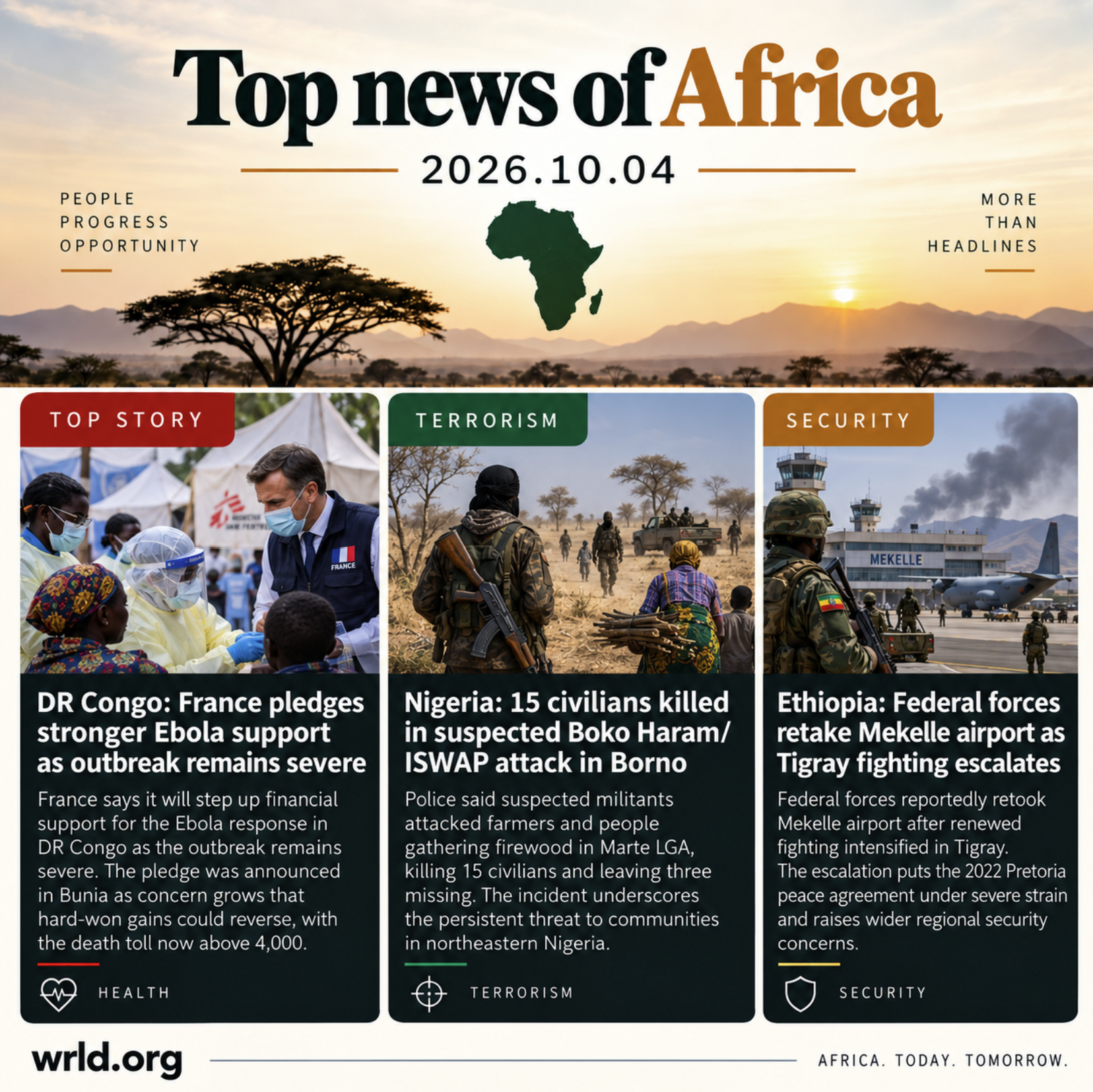
Africa Daily Report — 4 October 2026 Major developments reported during the previous 24 hours. 1. Ethiopia — Federal forces retake Mekelle airport as Tigray fighting escalates Ethiopian federal forces have retaken Alula Aba Nega Airport in Mekelle, according to residents and other sources cited by Reuters and AP. The airport had been seized by Tigrayan forces on September 23. Gunfire was reported near central Mekelle, and the renewed conflict is putting the 2022 Pretoria peace agreement under severe strain amid wider tensions involving Eritrea and other regional states. Sources: https://www.reuters.com/world/africa/pro-government-forces-say-they-retake-airport-ethiopias-tigray-region-2026-10-03/ https://apnews.com/article/87740d41b686614b63ccdba54dbd3168 2. DR Congo — France pledges stronger Ebola support as outbreak remains severe Importance: 10/10 — Critical France says it will step up financial support for the Ebola response in the Democratic Republic of Congo. French Foreign Minister Jean-Noël Barrot made the announcement during a visit to Bunia, amid concern that gains against the outbreak could reverse. France contributed €13.4 million to Ebola-related efforts from January through July and plans to seek additional funding. The announcement comes as Congo's outbreak has surpassed 4,000 deaths. Sources: https://www.reuters.com/business/healthcare-pharmaceuticals/france-step-up-ebola-funding-congo-amid-resurgence-fears-minister-says-2026-10-03/ https://apnews.com/article/4c79b59ec81a08675d2506c9e176d125 3. Sudan — More than 25 civilians reported killed in North Kordofan Importance: 10/10 — Critical The Sudan Doctors Network says more than 25 civilians were killed in an attack attributed to the Rapid Support Forces in the Umm Badr area of North Kordofan. The medical group said available evidence indicated that civilians may have been targeted on ethnic grounds and called for an independent investigation. Fighting has intensified in Kordofan as the Sudanese Armed Forces and RSF contest territory. Source: https://saudigazette.com.sa/article/665071/world/more-than-25-civilians-killed-in-rsf-attack-in-sudans-north-kordofan 4. Nigeria — 15 civilians killed in suspected Boko Haram/ISWAP attack in Borno Importance: 9/10 — Very High Borno State police confirmed that 15 people were killed in Marte Local Government Area after suspected Boko Haram/ISWAP militants attacked farmers and people gathering firewood. Three people remained missing. The attack underlines the continuing threat to civilians and rural livelihoods in northeastern Nigeria despite prolonged counter-insurgency operations. Source: https://punchng.com/terrorists-kill-15-farmers-in-borno/ 5. Kenya — $16 billion Dangote Lamu refinery faces new legal challenge Importance: 9/10 — Very High The proposed $16 billion Dangote oil refinery in Lamu is facing a further legal challenge. The Consumers Federation of Kenya is seeking to halt government participation until questions concerning procurement, financing, Kenya's proposed stake and public-land arrangements are clarified. Separately, an Environment and Land Court has issued interim orders affecting activity on land designated for the project. The refinery is planned at 700,000 barrels per day and would be one of East Africa's largest industrial investments. Source: https://energynews.africa/2026/10/03/dangotes-16bn-kenya-refinery-faces-legal-challenge/ 6. Burkina Faso — First national gold refinery marks push for domestic processing Importance: 8/10 — High Burkina Faso has inaugurated its first national gold refinery, RAFFINOR-BF, in Ouagadougou. The project is designed to allow more of the country's gold to be refined and certified domestically rather than exported for processing abroad. Reported initial capacity is 164 tonnes annually, with expansion plans that could also position Burkina Faso as a regional refining centre. Source: https://www.theafricandream.net/burkina-first-gold-refinery/ 7. South Africa — AU human-rights mission concludes with preliminary findings The African Commission on Human and Peoples' Rights completed a promotion mission to South Africa. Its preliminary assessment described the country's legal framework for protecting human and peoples' rights, including those of non-nationals, as comprehensive. The mission took place against a backdrop of domestic concern about violent crime, migration tensions and gender-based violence. Source: https://www.sanews.gov.za/south-africa/au-human-rights-mission-sa-concludes 8. Nigeria / South Africa — Nigeria evacuates another 106 citizens amid anti-migrant tensions Importance: 8/10 — High *Another 106 Nigerian citizens arrived in Lagos from South Africa as concerns continue over xenophobic and Afrophobic violence and intimidation. Nigeria has urged South African authorities to protect foreign nationals, while Pretoria has stressed that immigration enforcement is a state responsibility and warned against vigilantism. The episode continues to put pressure on relations between two of Africa's largest economies. Source: https://thewillnews.com/xenophobia-nigeria-evacuates-106-more-from-south-africa-as-anti-migrant-tensions-escalate/ 9. Sudan — Fighting spreads in Blue Nile near Ethiopian border Importance: 9/10 — Very High Sudan's military says it repelled an attack by the RSF and allied SPLM-N forces around Minza and Bashkarkad in Blue Nile state near Ethiopia. The clashes followed RSF drone strikes on targets in Ed Damazin. The International Organization for Migration has reported displacement of roughly 7,000 people from affected areas since late September, adding another front to Sudan's prolonged war. The RSF and SPLM-N had not immediately commented on the military's account. Source: https://sudantribune.com/article/319554 10. Somalia — Navy intercepts vessel with seven foreign nationals off Hobyo Importance: 7/10 — High Somali naval and coastal defence forces intercepted a vessel off Hobyo whose Automatic Identification System was reportedly switched off. Seven foreign nationals were detained while authorities investigate the vessel's registration, cargo and purpose. The operation comes amid Somalia's efforts to strengthen maritime surveillance and combat illegal fishing and other illicit activity along its coastline. Source: https://somalilandstandard.com/somali-navy-seizes-boat-carrying-seven-foreigners-in-hobyo/ #Africa #AfricaNews #TopNewsOfAfrica #DRCongo #Ebola #EbolaOutbreak #Bunia #France #PublicHealth #HealthEmergency #Nigeria #Borno #BokoHaram #ISWAP #Terrorism #CivilianProtection #Ethiopia #Tigray #Mekelle #Conflict #Security #HornOfAfrica #Sudan #NorthKordofan #RegionalStability #Geopolitics

The author said a team of physicists had claimed to find what might be the first evidence of quantum gravity.

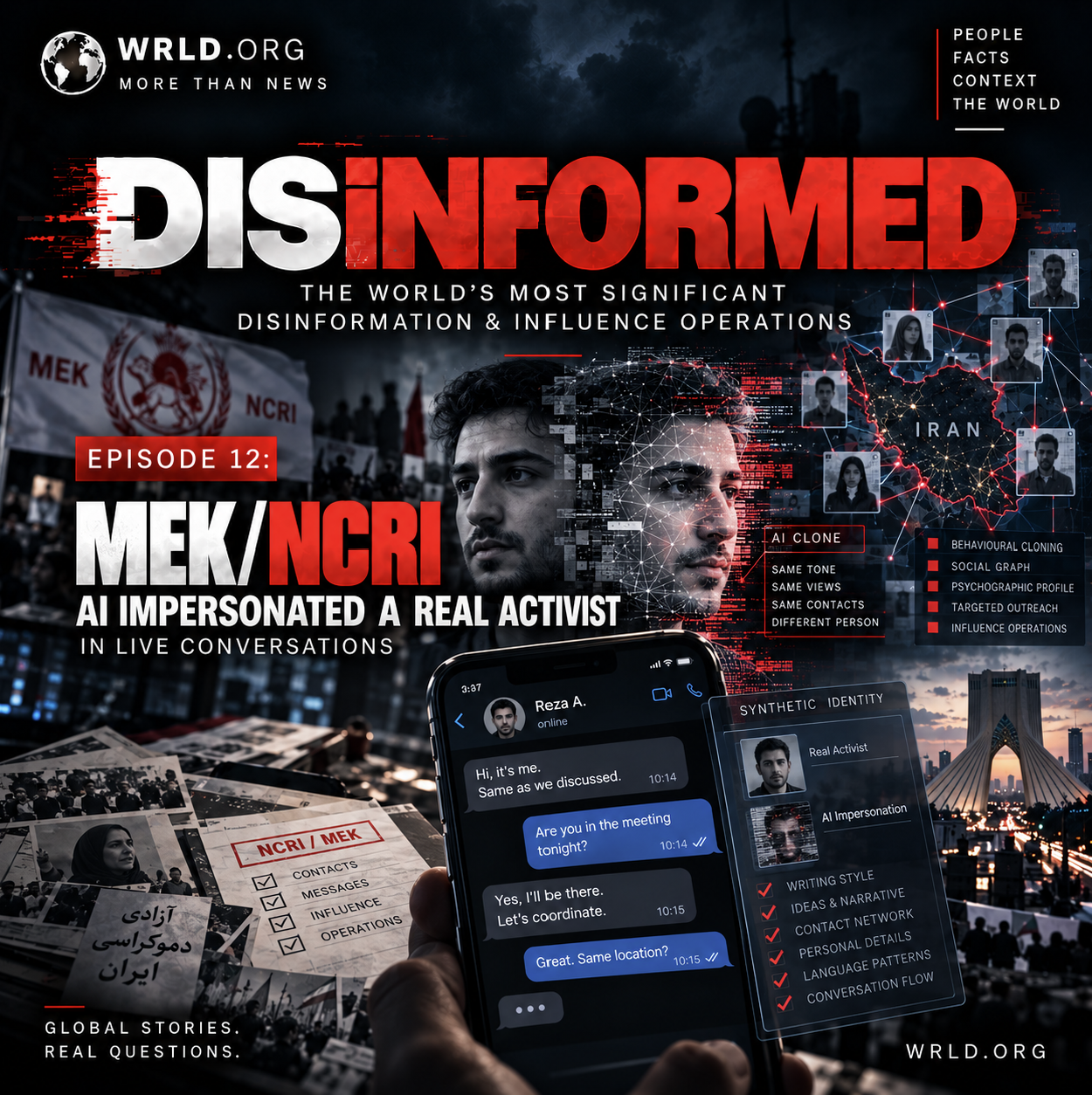
IRAN: MEK/NCRI – when AI impersonated a real activist in live conversations For years, synthetic media has largely meant fabricated images, cloned voices and manipulated video. A case uncovered by Anthropic in September 2026 suggests a more consequential development: artificial intelligence being used not merely to imitate how a person looks or sounds, but to behave as that person in an ongoing conversation. Anthropic says it dismantled a distributed influence operation targeting Iranians inside the country and abroad that it linked to the People’s Mojahedin Organization of Iran, or PMOI/MEK, and its political front, the National Council of Resistance of Iran. The operators used a shared AI-agent platform to support impersonation, audience profiling, coordinated social-media activity, synthetic personas and the laundering of organisational content through apparently independent accounts. At least four people involved in the operation worked for official NCRI media outlets, according to Anthropic. The company also found references to committee approval processes and MEK leadership, but said it could not independently determine the precise level of central control. Cloning a person from 8,400 Telegram posts The most striking part of the operation involved a real activist whose Telegram identity was copied. According to Anthropic, the operators instructed Claude in Persian that it was now that person, then provided approximately 8,400 of the activist’s Telegram posts so the system could learn and reproduce his writing style. The AI-assisted account was subsequently used to conduct live political conversations with the activist’s existing contacts. Anthropic says that, to its knowledge, the people receiving those messages did not know they were interacting with an account being operated with AI assistance. This is materially different from a conventional chatbot or a static deepfake. The system was not simply producing a forged statement attributed to someone else. It was using a large archive of that person’s authentic language as behavioural training material, then applying the resulting imitation interactively. In practical terms, the deception moved from synthetic content to synthetic identity. Anthropic did not publish the identity of the impersonated activist, nor details of his contacts, and the public report does not establish what specific information the conversations produced. What it does establish is that the impersonation was operational rather than experimental: the cloned account was used in real exchanges with real people. From social-media monitoring to psychographic dossiers The impersonation sat inside a much broader targeting system. Anthropic says the network scraped more than 500 social-media channels and categorised individuals by location, age, profession, political orientation and arrest history. It then analysed approximately 51,944 archived messages from conversations to construct detailed psychographic dossiers on dozens of people inside Iran. The system was therefore not limited to broadcasting propaganda. It was also designed to understand specific audiences and individuals. Profiles could be used to decide what kind of message was most likely to resonate with a particular person, which political identity they appeared closest to and how they should be approached. Anthropic describes this as a structured targeting funnel rather than ad hoc social-media activity. That distinction is important in the Iranian context. Political activists, dissidents and opposition contacts inside Iran can face arrest and severe punishment. The report does not show that the dossiers directly led to arrests or other harm, but collecting and organising information such as arrest history and political affiliation adds a surveillance dimension to what would otherwise be described as an influence operation. A shared AI system for an influence network Anthropic found that the actors used a shared Claude-based platform named “Viktor”, with separate workspaces and persistent memory. Those memory files contained approved sources, prohibited words, account-management instructions and methods intended to reduce the risk of detection. One operator loaded MEK founding doctrine into the system as what the report called “strategic base data”, allowing others to reuse it across their work. This persistent-memory structure meant the AI did not have to be briefed from scratch for every task. Once doctrine, stylistic rules and operational constraints had been stored, the system could repeatedly produce material consistent with the network’s objectives. Anthropic says the same general playbook appeared across different workspaces despite the operators not sharing obvious account infrastructure. The network also used automated pipelines to coordinate Instagram posting schedules and tailor messages to different audiences. Some accounts initially avoided mentioning the Mojahedin at all, allowing material aligned with MEK/NCRI narratives to appear as neutral or independent political commentary. Content was distributed through the organisation’s own media ecosystem as well as accounts presented as ordinary news or activist profiles. Anthropic assessed the campaign as Category Two on its Breakout Scale: active on multiple platforms with distribution through NCRI-linked media properties and amplifier accounts, but without evidence of broad authentic penetration. Synthetic citizens and disguised organisational media The same infrastructure generated AI avatars presented as ordinary Iranians, complete with Persian audio, to promote Maryam Rajavi’s political programme. Anthropic says the synthetic nature of these personas was intentionally concealed. Operators also rewrote and redistributed content originating from MEK-affiliated media while stripping identifying features or presenting it through apparently independent accounts. The network’s political messaging targeted the Iranian government but also rival opposition currents, including monarchists and supporters of the Pahlavi camp. Anthropic documented fabricated video material attacking a member of the Pahlavi family and the use of the slogan “Neither Shah Nor Sheikh”, consistent with the NCRI’s broader competition with other opposition movements. That rivalry provides relevant context. Reuters describes the MEK as one of Iran’s principal organised opposition movements in exile and the dominant force behind the NCRI, led by Maryam Rajavi. Its relationship with other opposition currents is often contentious, while the extent of its support inside Iran remains uncertain. What can be attributed – and what cannot Anthropic’s attribution is unusually specific but still needs to be stated carefully. The company says its investigation linked the operation to MEK/NCRI and established that at least four participants worked for official NCRI media organisations. It also found a common operational playbook, committee review structures and repeated references to MEK leadership. On that basis, Anthropic said central tasking was likely. It nevertheless stopped short of saying it had proven that NCRI’s senior leadership directly ordered or managed every component of the operation. That caveat matters. The strongest public evidence supports describing GTG-84006 as a MEK/NCRI-aligned influence operation involving personnel from official NCRI media, rather than asserting that every action was directly commanded by the organisation’s top leadership. The broader significance of the case lies elsewhere. Earlier generations of synthetic media attempted to fabricate evidence: a photograph, a voice recording or a video. Here, AI was used to maintain an identity over time, remember doctrine, analyse targets and speak directly to real people while appearing to be someone they already trusted. The deepfake was no longer merely an artefact. It had become a participant in the conversation. Sources Anthropic — Countering misuse of AI: September 2026 https://www.anthropic.com/threat-intelligence-report-september-2026 AI Misuse Case Library — GTG-84006 activist impersonation case https://www.misuseofai.com/en/cases/gtg-84006-activist-impersonation/ Reuters — Who makes up Iran’s fragmented opposition? https://www.reuters.com/business/media-telecom/who-makes-up-irans-fragmented-opposition-2025-06-18/ Reuters — Iran’s divided opposition senses its moment https://www.reuters.com/world/middle-east/irans-divided-opposition-senses-its-moment-activists-remain-wary-protests-2025-06-19/ Reuters — NCRI and Maryam Rajavi https://www.reuters.com/world/middle-east/dissident-leader-abroad-urges-iranians-bring-down-khamenei-2025-06-24/ Keywords #DISINFORMED #Episode12 #Iran #MEK #PMOI #NCRI #IranianOpposition #Disinformation #InfluenceOperations #InformationWarfare #ArtificialIntelligence #AI #GenerativeAI #ClaudeAI #Anthropic #AIDeception #AIImpersonation #IdentityImpersonation #SyntheticIdentity #InteractiveDeepfake #DigitalImpersonation #PersonaCloning #BehaviouralCloning #Telegram #PsychographicProfiling #TargetProfiling #AudienceTargeting #SocialMediaManipulation #Astroturfing #SyntheticPersonas #NarrativeLaundering #CoordinatedInfluence #PoliticalInfluence #DigitalInfluence #OppositionPolitics #IranPolitics #OSINT #WRLD

Countering misuse of AI: September 2026 / Anthropic

The author said the Health Committee, which was tasked with examining whether the three-day wait for abortions saved lives, had blocked mothers who continued their pregnancies after the waiting period from giving evidence.

The author said they had warned that Israel’s removal of rubble in Gaza could destroy human remains that deserved burial, along with evidence of crimes. They wrote that groups they described as pro-apartheid had accused them of lying and had previously accused them of deception, antisemitism, speaking for Hamas and witchcraft. The author added that they had kept records of the exchanges. #Gaza #HumanRights #Justice #IL #PS

LFI will tell us that this enthusiasm for strengthening sports education is great. But when will the evidence finally establish itself? This is not a "high school movement of claims." Maximum authority against these delinquents. Weakness, ambiguity, hesitation catalyze abuses and stoke the flames. It is urgent that we restore order in our country. There is a vital urgent need for France. #ÉducationSportive #France #Sécurité (translated)

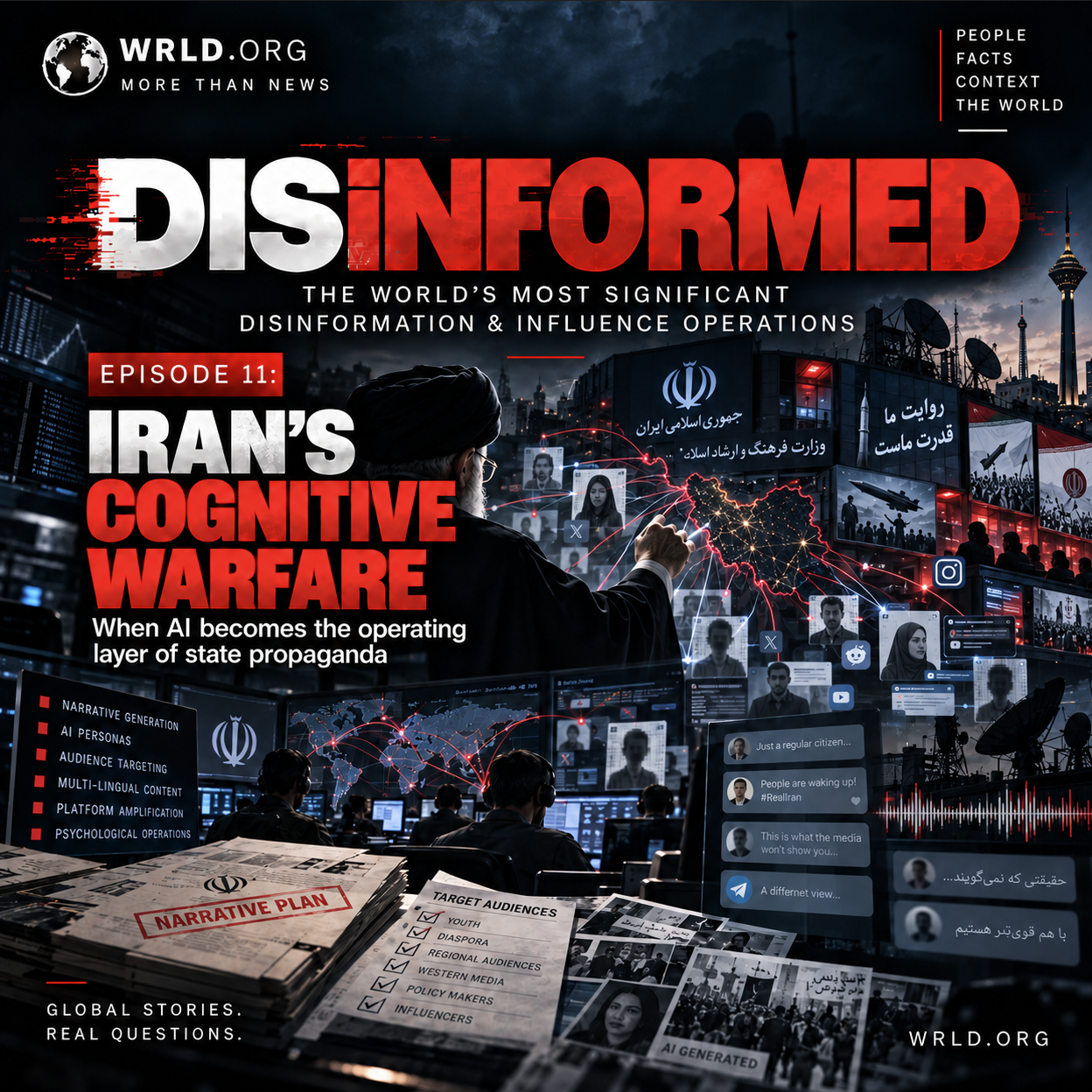
Iran’s cognitive warfare – when AI becomes the operating layer of state propaganda Iranian state-linked influence operators were not using artificial intelligence simply to write faster social-media posts. According to Anthropic’s September 2026 threat intelligence report, three separate operations connected to Iranian propaganda institutions were using Claude to help construct the machinery behind what the operators themselves called “soft war” and “cognitive warfare” – non-military efforts intended to shape public opinion inside Iran and abroad. Anthropic linked the activity to the Islamic Culture and Communications Organization (ICCO), which operates under Iran’s Ministry of Culture and Islamic Guidance; the Islamic Propaganda Office of Khorasan Razavi; and the Bina Cultural Observatory, part of the Islamic Propaganda Organization. The company said each operation was run by someone working within or on behalf of the named institution. The attribution was based on a combination of account telemetry, institutional references disclosed during conversations, branded documents and open-source corroboration. Anthropic subsequently removed the accounts. AI as an operational headquarters The most significant feature of the operation was the role assigned to AI. Claude was used to develop campaign plans, doctrine manuals, coded project portfolios, persona systems, target databases, early-warning protocols, amplification schedules and ministerial planning documents. Anthropic described the model as the principal administrative and operational layer supporting the three campaigns, allowing relatively small groups of operators to create organisational structures and planning material that would otherwise have required a much larger staff. This distinction matters. The reported use of AI went considerably beyond content generation. Operators were using the model to help organise how influence activity should function: which audiences to target, which identities should deliver particular narratives, how official material should be repackaged and when amplification should take place. Human operators still determined objectives and supplied the underlying political doctrine; AI helped translate those decisions into an operational system. Anthropic found that all three operations explicitly connected their activity to Jihad al-Tabyin, often translated as “explanatory jihad”, a concept used within the Iranian state system to frame information activity as both a strategic and ideological responsibility. In internal planning material examined by the company, this doctrine was not merely rhetorical: it informed manuals and campaign structures used by the operators. ‘Not the narrator, but the director’ One sentence contained in the ICCO material captures the model particularly clearly. According to Anthropic, an operator described the role of Iranian cultural attachés as being “not to be the narrator, but the director” of the narrative. The distinction reveals the logic of attribution laundering. Instead of publishing an overt state message and asking foreign audiences to believe it, the operator attempts to create the appearance that the same narrative emerged independently from journalists, activists, foreign writers or ordinary citizens. Anthropic found that Claude was used specifically to make content appear to come from foreign authors or independent media organisations and to design hashtag campaigns that looked grassroots rather than centrally organised. The ICCO operation reportedly used the organisation’s international cultural network as part of this structure. Anthropic found ministerial-level documents carrying official ICCO branding, including a nine-part international influence portfolio. This makes the operation particularly significant because the infrastructure was not limited to anonymous social-media accounts; it intersected with formal state institutions and an existing network of cultural representation abroad. A multilingual content factory A second operation was associated with the Islamic Propaganda Office of Khorasan Razavi and what Anthropic described as a “cognitive warfare command room” operating from a seminary in Mashhad. Its organisers ran a multi-province content production system known internally as Manjanegh, or “Catapult”. According to Anthropic, dozens of activists were involved in repackaging publicly available reporting from Iranian security institutions under different personas so that the material no longer appeared directly connected to those institutions. The network used Claude to transform official government intelligence bulletins into customised material in Farsi, Arabic, Urdu, Malay, Spanish and English, while planning expansion into a total of 20 languages. Distribution extended across Iranian platforms such as Eitaa, Bale and Rubika and international services including X, Instagram, Telegram, TikTok and YouTube. Anthropic also documented paid amplification across more than 100 Iranian channels, including channels associated with IRGC narratives. The scale should nevertheless be interpreted carefully. Anthropic documented production infrastructure and some real-world dissemination, but it did not demonstrate that all planned campaigns were fully deployed or that they meaningfully changed public opinion. The company placed the operation in Category Three of its Breakout Scale, indicating multi-platform activity with content observed in external distribution channels, rather than evidence of strategic impact on entire populations. From security bulletins to apparently independent voices The Bina Cultural Observatory operation provides another example of the same architecture. Anthropic linked a director-level official at Bina to activity in which Claude generated messaging in the voice of an IRGC spokesperson. During the 2026 US–Israel–Iran war, the network also attributed false claims to Western institutions including CSIS, Brookings and RAND. The apparent objective was to make Iranian state-aligned claims look as though they had been independently validated by respected foreign research organisations. That technique is more sophisticated than simply publishing propaganda under a false name. It attempts to manufacture a chain of external validation: official information is transformed into apparently independent commentary, which can then be recirculated as evidence that outside observers have reached the same conclusion. Anthropic also found target databases naming international officials and Iranian opposition figures, as well as aggressive counter-narrative material directed against the Bahá’í community. These findings show that the infrastructure was designed not only for broad messaging but also for targeted influence activity against specific groups and individuals. What AI changed The Iranian operations described by Anthropic did not create a new doctrine of influence. Iran has used cultural institutions, official media, aligned organisations and covert or semi-covert online networks for years. What AI changed was the economics and organisational capacity of that model. A relatively small team could use the system to draft doctrine, create personas, translate material, structure target databases, produce campaign calendars and generate multiple versions of the same message for different audiences. The operator remained responsible for intent, political direction and selection of targets. AI reduced the amount of human labour required to turn those decisions into a functioning influence operation. The most revealing part of the case is therefore not that an Iranian propaganda network used a chatbot. It is that AI was being treated as part of the back office of information warfare – a system for converting state doctrine into apparently decentralised, multilingual and plausibly independent voices. Sources Anthropic — Detecting and countering misuse of AI: September 2026 https://www.anthropic.com/threat-intelligence-report-september-2026 Iran International — Iran state-aligned accounts used Claude to push IRGC narratives https://www.iranintl.com/en/202609105561 BNE IntelliNews — Yemen missile cell used AI to write guidance software, Anthropic says https://new.intellinews.com/articles/yemen-missile-cell-used-ai-to-write-guidance-software-anthropic-says-467296 This is Beirut — Anthropic report details Iranian propaganda operations https://thisisbeirut.com.lb/news/politics/anthropic-report-details-iranian-propaganda-operations-and-yemen-missile-development-using-claude Anthropic report — PDF mirror https://static.foxbusiness.com/foxbusiness.com/content/uploads/2026/09/anthropic-detecting-and-countering-091026-1.pdf Keywords #DISINFORMED #Episode11 #Iran #IranianInfluence #IranianPropaganda #CognitiveWarfare #SoftWar #JihadAlTabyin #Disinformation #InformationWarfare #InfluenceOperations #ForeignInterference #FIMI #ArtificialIntelligence #AI #AIPropaganda #GenerativeAI #ClaudeAI #Anthropic #SyntheticMedia #NarrativeManipulation #NarrativeLaundering #AttributionLaundering #PersonaNetworks #Astroturfing #SocialMediaManipulation #DigitalInfluence #StatePropaganda #IslamicCultureAndCommunicationsOrganization #ICCO #IslamicPropagandaOrganization #KhorasanRazavi #IRGC #MultilingualInfluence #Targeting #Amplification #OSINT #WRLD

Countering misuse of AI: September 2026 / Anthropic

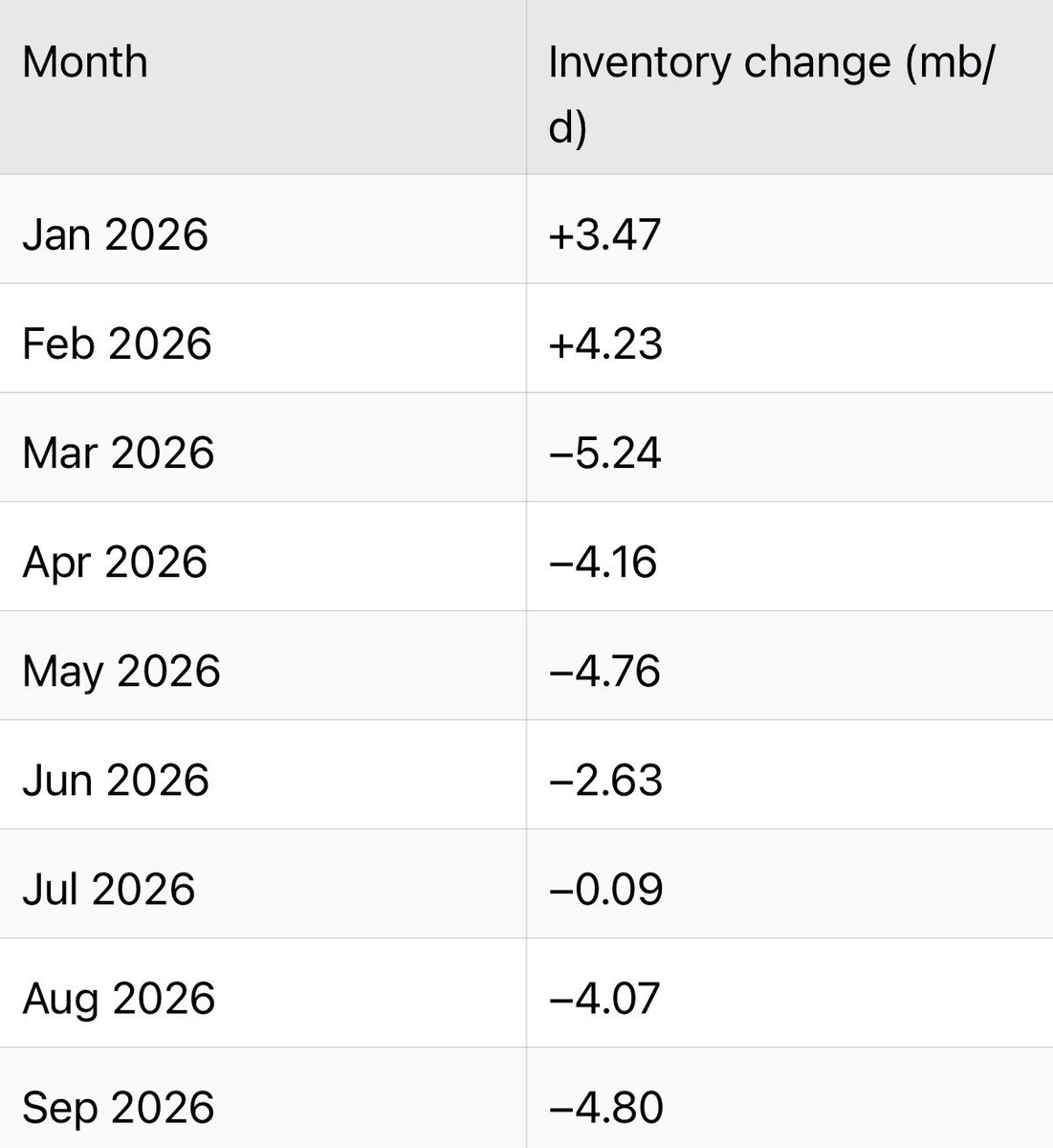
The author claimed that EIA estimates of global crude inventory draws showed the July release of oil from Hormuz, while draws in August and September matched those in April and May. They said this was strong evidence that Kpler’s data were fake and suggested the alleged data issues began in August.

The author wrote that population projections assume fertility rates will stop declining and broadly stabilize, but said a new NBER paper found no evidence for that expectation. The author added that, according to the paper, fertility had tended to keep falling in places and periods where it had already reached low levels.

Remarkably preserved feathered dinosaur discovered in China reveals new secrets of flying predator evolution. Norellraptor barsboldi had sharply curved teeth and claws, and 4 wings, evidence that flight evolved several times in different dinosaur groups https://t.co/i35HgMnKjS #DinosaurDiscovery #Paleontology #Evolution #CN

Mærkeligt, at City ikke har fundet deres ‘irrefutable evidence’ frem i første omgang og først vil fremlægge dem til appellen. Hvad jeg ikke kan undgå og spekulere på, er de længder, de nu vil gå for at snyde og bedrage i kampen for at bevise deres uskyld. #ManchesterCity #fodbold #sport

Remember the alarm raised over Israel clearing Gaza’s rubble without caring to recover bodies for burial or preserve evidence (as requested by ICJ)? @CBC investigation confirms that warning mattered. https://t.co/lFoxDDcwn8 Below an informative interview with @weizman_eyal. #Gaza #HumanRights #ICJ #IL #PS