“Socialism Was Good in Theory” That sentence assumes the theory was never seriously challenged. It was. Long before the Soviet Union existed, before Lenin seized power, and before socialism had been tested on a national scale, major thinkers were already attacking its foundations—from very different directions. Five of them stand out. Tocqueville: Equality Can Become Servitude In 1848, Alexis de Tocqueville drew a sharp distinction between democracy and socialism. Both spoke about equality. But Tocqueville believed they pursued it in fundamentally different ways. Democracy, in his view, sought equality while preserving individual freedom. Socialism risked achieving equality by expanding the power of the state over the individual. His warning was essentially this: equality is not automatically liberty. A society can pursue equality so aggressively that it begins sacrificing the independence that makes political freedom meaningful. Bastiat: Follow Where Redistribution Leads Two years later, Frédéric Bastiat attacked socialism from a different direction. His question was deceptively simple: What happens when the state acquires the authority to take from some people and give to others in the name of justice? Bastiat called this “legal plunder.” His concern was not merely that redistribution might be expensive. It was that once government becomes the instrument through which competing groups obtain benefits from one another, politics can turn into a permanent struggle over who controls the machinery of redistribution. The problem, therefore, wasn’t simply how much the state redistributed. It was the principle that made redistribution legitimate in the first place. (bastiat.org) Nietzsche: Equality Can Become Resentment Nietzsche approached socialism neither as an economist nor as a constitutional theorist. He attacked its psychology. He saw modern egalitarian movements as part of a much older moral impulse: resentment toward exceptional individuals and suspicion of strength, ambition and hierarchy. For Nietzsche, the danger was not simply that everyone might become economically equal. It was that a culture could begin treating excellence itself as something morally suspect. The goal would cease to be lifting people upward. It would become bringing the exceptional downward. Böhm-Bawerk: Challenge the Economics Then came Eugen von Böhm-Bawerk. In 1896, he turned his attention specifically toward Marx’s economic system. His criticism was not primarily moral or political. It was technical. Böhm-Bawerk argued that Marx’s theory of value did not adequately explain how the labor values developed in Capital could be reconciled with the actual prices Marx subsequently needed to explain. In other words, he attacked socialism where it claimed to possess a scientific economic foundation. The argument became one of the central criticisms of Marxian economics and helped launch a debate that would continue for generations. Mises: The Calculation Problem Then, in 1920, Ludwig von Mises attacked an even more fundamental question: Even if socialism is morally desirable, how would a socialist economy actually know what to produce? A functioning economy has millions of competing uses for scarce resources. Build a bridge or a hospital? Use steel here or there? Produce more machinery or more consumer goods? Under private ownership and markets, prices for capital goods provide information about relative scarcity and opportunity costs. Mises argued that abolishing private ownership of the means of production also removes the genuine market prices necessary for rational economic calculation. The problem wasn’t simply that socialist planners might make bad decisions. It was that the system deprived them of the very economic signals required to systematically compare those decisions. (Mises Institute) And that was the sequence. Tocqueville challenged the political premise. Bastiat challenged the moral and legal mechanism of redistribution. Nietzsche challenged the psychology behind egalitarianism. Böhm-Bawerk challenged Marx’s economic theory. Mises challenged the possibility of rational central economic calculation. Five different thinkers. Five different objections. And all of them came before the Soviet Union had demonstrated what large-scale socialist government would actually look like. So “socialism was good in theory, but bad in practice” is not an argument. It is a historical claim that requires you to explain why these theoretical objections were wrong. The interesting question isn’t whether socialism had critics. It did. The interesting question is whether socialism ever adequately answered them” - ChatGPT
32 years ago, the last Russian troops left Estonian soil and we secured our independence in full. Russia’s imperial project failed. Yet three decades later, its ambitions endure. The full‑scale assault on Ukraine is only one manifestation of the Kremlin’s drive to seize what #Estonia #Ukraine #Kremlin #EE #RU #UA
Today, we bid a final farewell to the dedicated statesman and visionary Siim Kallas whose commitment to restoring our independence, shaping Estonia and eventually Europe is invaluable. His service, integrity, and legacy will continue to guide and inspire. https://t.co/1psNAg358Z #SiimKallas #Estonia #Legacy #EE #EU
Daycare Governance and the Tyranny of Compassion Something sinister can hide behind compassion. Caring is virtuous, but it becomes pathological when institutions gain power by expanding the number of people who need care. Munchausen syndrome by proxy shows how: a caregiver fabricates or induces illness in a dependent person, then gains sympathy by performing devotion. The sickness is manufactured, but the care is real. The claim: modern society can scale this into governance. Call it the daycare governance model: (1) victims to protect, (2) caregivers to provide protection, (3) dissenters to remove. Health, therapy, NGOs, academia, media, and bureaucracy gain prestige, funding, and moral authority by managing ever-expanding categories of suffering. It unfolds in two stages. First, the victim class expands: “trauma” drifts from specific, severe harms to everyday experiences, lowering the threshold for suffering until demand is nearly limitless. Second, the perpetual patient forms: ordinary difficulties are medicalized—strength as toxicity, sadness as disorder, restlessness as pathology—creating a cycle where caretakers and victims gain status or protection. This drives a crisis of competence. Victimhood can shield accountability, and institutions are rewarded for treating problems rather than eliminating the need for themselves. Plato warned against doing for people what they can do for themselves: removing every burden removes the reason to grow stronger. True care aims to make itself unnecessary. That’s the difference between a good mother and a poisoning one: one allows appropriate hardship to build independence; the other denies it. Failing to distinguish these forms of care makes the pathology hard to recognize—and easy to applaud.
🇷🇴🇲🇩🇪🇺 Freedom and independence have always been earned through human sacrifice. Today marks 35 years since the Republic of Moldova chose to break away from its Soviet past. For 35 years, Moldovans have been fighting with dignity, day in and day out, against Russian pressure and https://t.co/V8oQONGrv0 #Moldova #Independence #Freedom #RO #MD #EU #RU
PAKISTAN IS NOT ETERNAL. #ExPakistan must become part of the international debate. Pakistan already broke apart once in 1971 when Bangladesh won independence. Today, deep national, ethnic and constitutional conflicts remain unresolved. I support the democratic right of the https://t.co/FTO4oqYZUH #ExPakistan #Pakistan #Democracy #PK #BD
United in our commitment to Ukraine. Determined to strengthen Europe’s security and resilience. Standing together in Kyiv, to mark Ukraine’s Independence Day and for the Coalition of the Willing. With 🇺🇦 President @ZelenskyyUa. https://t.co/1PaGMXU1b5 #StandWithUkraine #EuropeanSecurity #IndependenceDay #UA #EU
On 24 August 1991, Ukraine adopted its Declaration of Independence. In a nationwide referendum held on 1 December 1991, the people of Ukraine overwhelmingly supported that decision: 90% voted in favor of independence, with a high turnout of 84% of all eligible voters. Also in #UkraineIndependence #History #UkraineVotes #UA
35 years of independence. Today, the courage of the Ukrainian people inspires the whole world. Unbreakable resilience. Unshakeable spirit. A fight for our European way of life. Today, and every day, Europe stands with Ukraine. 🇪🇺🇺🇦 #StandWithUkraine #Independence #StandWithUkraine #EuropeanUnity #UA #EU
Thirty-five years ago, Ukrainians chose independence from the Soviet Union. To this day, they are still paying for that choice with their lives! Like defender Mykola Kravchenko, with call sign “Europe”. He was born in Berdyansk, became a lieutenant and platoon commander. The https://t.co/CHSJW5KP4l #Ukraine #Independence #MykolaKravchenko #UA #RU
It was a duty and an honor to participate today, at the Embassy of Ukraine in Bucharest, in marking Ukraine's Independence Day. https://t.co/i2Uf8OqMZ6 #UkraineIndependenceDay #EmbassyOfUkraine #Bucharest #UA #RO
🇺🇦 An independent and strong Ukraine is the essential guarantee for the security of Romania and the whole of Europe. Today, on Ukraine's Independence Day, it is important to remember: -> For 1,643 days, Russia has been waging a brutal and cynical war of aggression. Beyond https://t.co/5edk7VJGxI #UkraineIndependenceDay #StandWithUkraine #StopRussianAggression #UA #RO #RU #EU
13 years of independence war against Russia, which I followed in different positions. Amazed by a country that never gives up, despite all of its challenges and problems. Happy Independence Day, Ukraine. #SlavaUkraini https://t.co/1Ks3hH4i1U #IndependenceDay #Ukraine #SlavaUkraini #UA
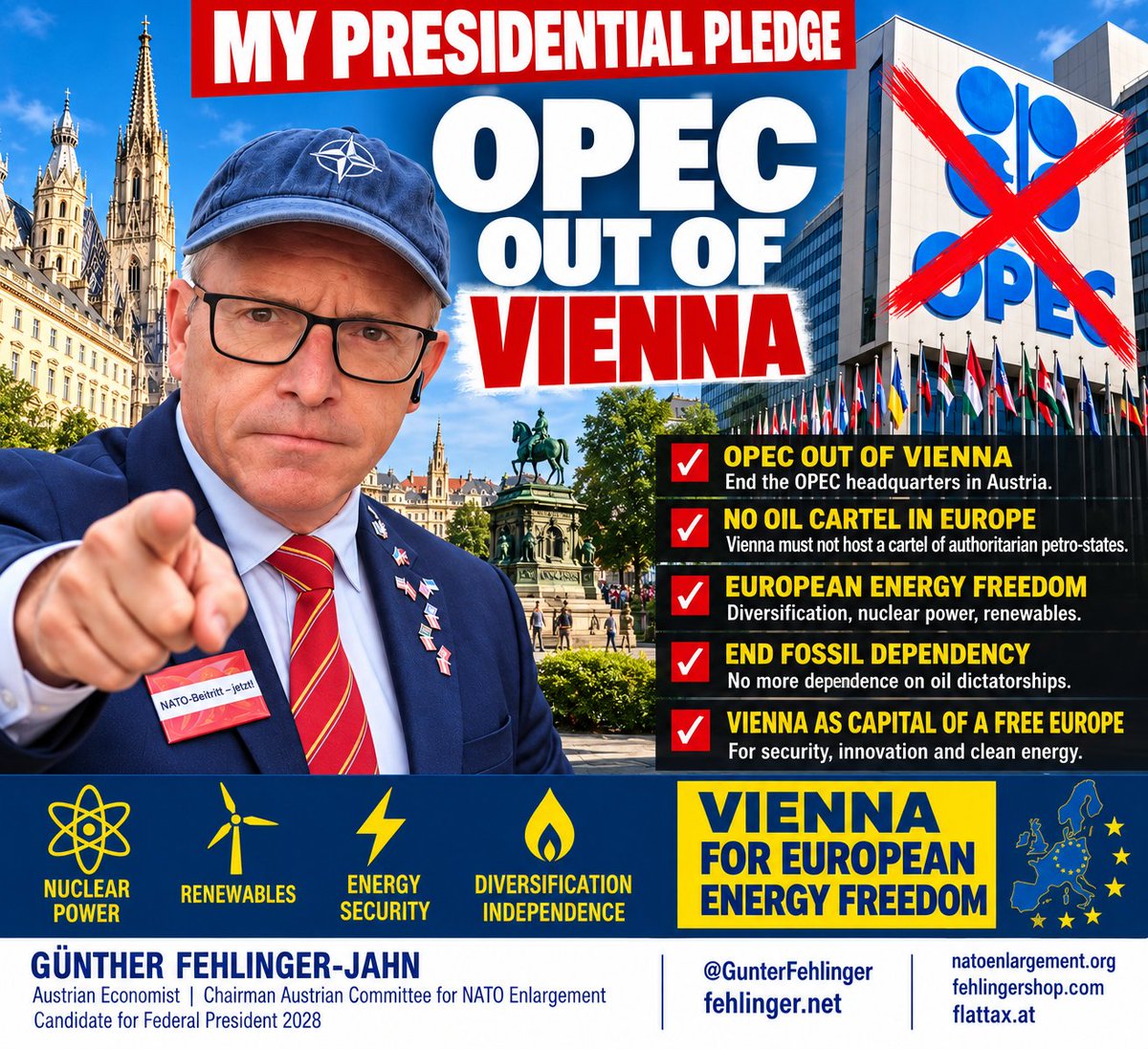
Thank you Mr Ambassador I pledge to fight for NATO Membership of Ukraine & Austria and for full liberation of Crimea Happy Independence Day @VKhymynets We will win! https://t.co/fZP4MkSPYy #NATO #Ukraine #IndependenceDay #UA #AT #RU
Ukraine independence means European independence. Let the blue and yellow of 🇺🇦 join the blue and yellow of the 🇪🇺 https://t.co/BesmBlLs97 #UkraineIndependence #EuropeanUnion #Unity #UA #EU
On Ukraine’s Independence Day, I joined other leaders of the Coalition of the Willing in voicing our steadfast support for Ukraine. https://t.co/hrhZmRM8rn #StandWithUkraine #IndependenceDay #SupportUkraine #UA
The Montenegrin Parliament voted with an overwhelming majority to strengthen the independence of the judiciary and the Central Bank in their constitution. This is another big step for Montenegro’s European path. It shows a broad consensus and is a major step towards closing the #Montenegro #Judiciary #EuropeanPath #ME