BETA nonprofit public democratic european moderated

Search

#italy

"We are ready to support the new revival plan, with all the tools, including extraordinary ones - said Urso - that we will put into action with the next budget law. On the other hand, the outcome of the Electrolux table at Mimit was different, in what the Minister of Enterprises and Made in Italy Adolfo Urso has defined as 'a step in the right direction'." #Ericsson #Electrolux #Lavoro (translated)

Meloni chiama l'ad di Ericsson, ritirati i licenziamenti
www.ansa.it
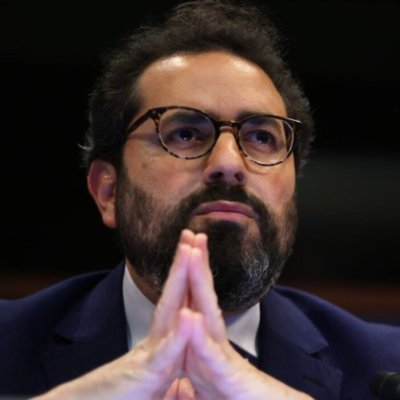
Hillel Neuer said he was disappointed that the Italian mission to the UN in New York hosted Reem Alsalem on October 7. He stated that Alsalem hated the United States and denied the atrocities of Hamas, and urged the mission to evaluate the actions of what he called a close ally of Albanese, while acknowledging that he could share with her positions on issues like women's sports. https://t.co/g8g5vlpx9R #Italia #ONU #Politica (translated)

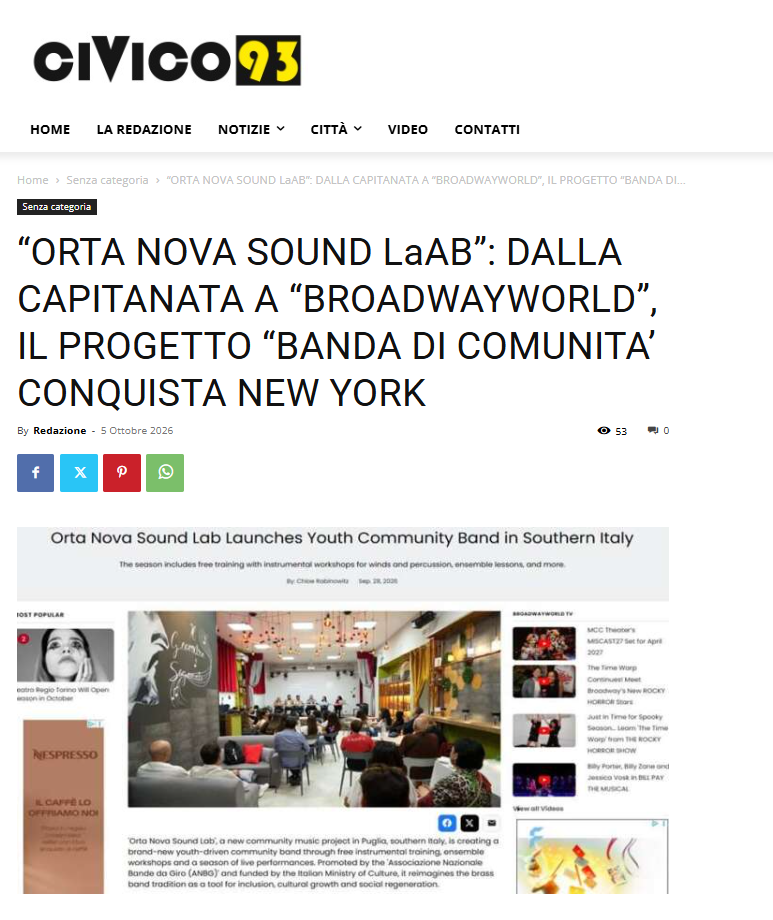
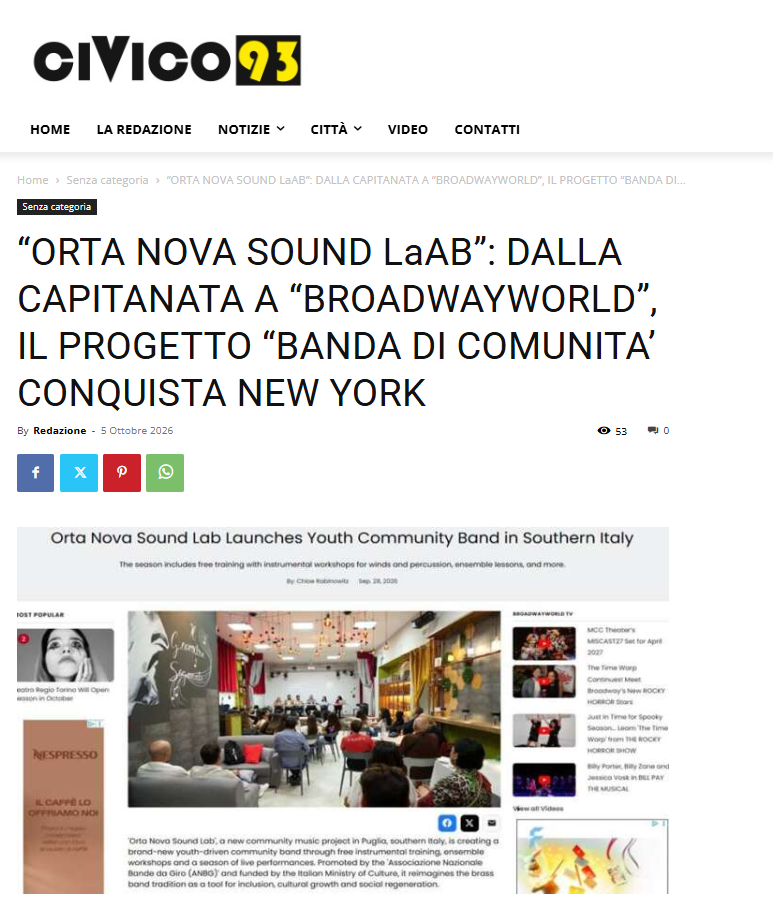
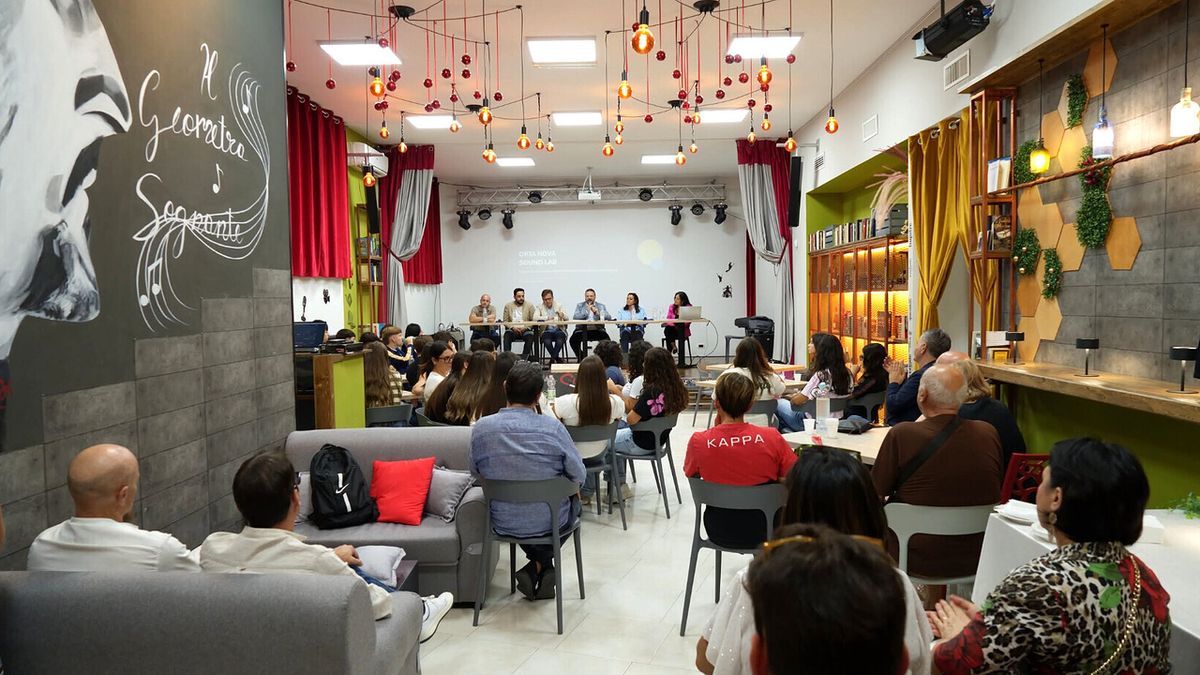
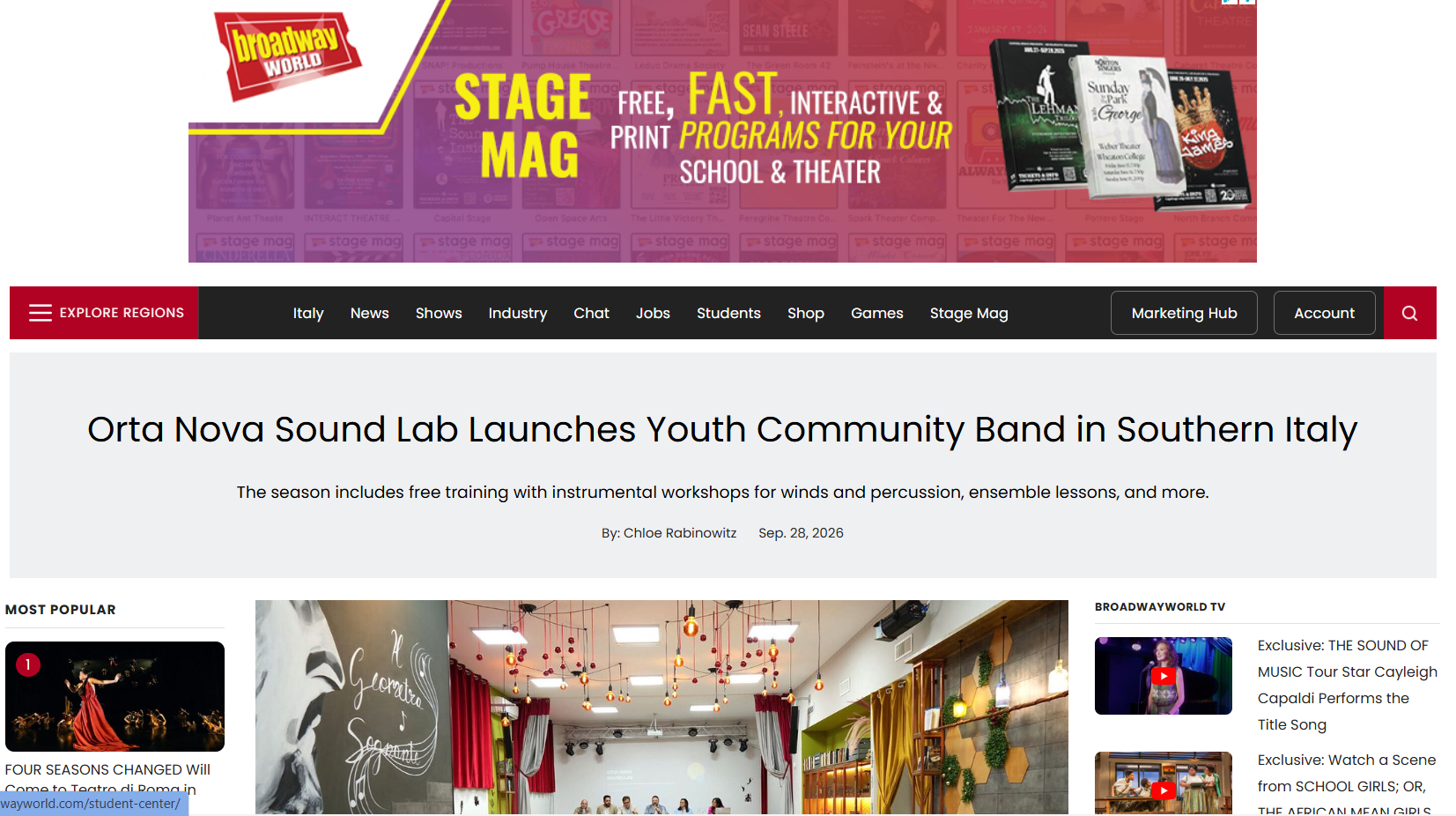
CIVICO 33 - "ORTA NOVA SOUND LAB": FROM CAPITANATA TO "BROADWAY WORLD", THE "COMMUNITY BAND" PROJECT CONQUERS NEW YORK The social laboratory promoted by ANBG and the Ministry of Culture lands on the largest theatrical network in the world thanks to the article co-written by Chris Rabinowitz and the Orthese author Luciano Magaldi Sardella. There is a brass thread connecting Piazza Mario Frasca to Broadway. "Orta Nova Sound Lab" is the Community and Social Regeneration Band through Music, the project officially presented on September 21 at the C-Lab MAO FM 19.77 by brothers Luca and Erminio Ferrandina, which is experiencing unprecedented media attention for a band initiative born in the province of Foggia. The journalistic success is marked by its appearance on September 28 in Broadway World, the most authoritative global portal dedicated to theater and live performance, based in New York with over 1.5 million monthly global visits. This is not an insignificant result, projecting a story from the Apulian periphery into the realm of international cultural information. The article, titled "Orta Nova Sound Lab Launches Youth Community Band in Southern Italy," is co-authored by New York editor Chris Rabinowitz, a journalist for the American publication, and his Italian co-author Luciano Magaldi Sardella, an international author originally from Orta Nova, an engineer, academic journalist, and researcher active between Italy and abroad. The dual Italian-American signature symbolizes how a "good local practice" can become global news when told with expertise and roots. The Project: the Band as Social Regeneration "Orta Nova Sound Lab" is promoted by the National Association of Marching Bands (ANBG), chaired by Benedetto Grillo, and has been approved for funding under the public notice of the Ministry of Culture as per D.D.G. April 7, 2026, rep. n. 149, aimed at "Enhancing research and dissemination of musical practices in peripheral and areas of high social vulnerability." It is realized with the support of the Municipality of Orta Nova and with the collaboration of a solid civic network: the A.P.S. MAO FM 19.77, the "A. Olivetti" Higher Education Institute, the "Sandro Pertini" Comprehensive Institute, the Music Art association, and the C.I.S.A. of Foggia. As highlighted by "Broadway World," this is the first initiative in Italy to reinterpret the distinctive tradition of marching bands and youth orchestras within a ministry grant dedicated to urban peripheries and social vulnerability. A model that explicitly dialogues with the spirit of the so-called "Caivano Decree" (D.L. 123/2023) for combating youth discomfort, educational poverty, and juvenile delinquency. The idea, in its disarming simplicity, was summarized by the project director for ANBG, Antonella Spagnoletti: "The band is aggregation! The band is cohesion. Bringing these kids together to learn and live differently from the social world is among the primary objectives of our association." This concept was reiterated by the Mayor of Orta Nova, Ing. Domenico Di Vito: "This is an important project that can definitely make a difference compared to the past because it has all the ingredients to connect the entire world of culture and social issues that exists in Orta Nova and needs to be valued. The administration's commitment is to ensure sustainability, structure, and continuity over time." At the press conference presentation, moderated by journalist Giuseppe Di Bisceglie, participated alongside President Grillo, Director Spagnoletti, and Mayor Di Vito, Regional Councillor Grazia Maria Starace, Councillor for relationships with the third sector Sebastiano Battista, Councillor for Culture Vittoria Mastrogiacomo, and educational professor Alfredo Coppola, delegate of the Olivetti Institute. Why the News Became International The "Orta Nova Sound Lab" marching band project demonstrates that when a project has anti-mafia roots, pedagogical value, and a credible institutional network, the press responds. From local and national outlets like Cassa Armonica, Ansa Puglia, TGNorba, Corriere della Sera Bari, RaiNews TGR Puglia, La Gazzetta del Mezzogiorno, Amica9TV, Brindisi In, Blasting News Italia, TRM Network, Secolo XIX, FoggiaToday, PlayNews24, Stato Quotidiano, and many others that well-documented the conference, it reached BroadwayWorld, which viewed the Orthese experience as a "social laboratory" capable of responding to the mafia with music. This leap in scale comes from joint efforts and the bridging work done by Luciano Magaldi Sardella, who managed to translate for the English-speaking audience alongside New York editor Chris Rabinowitz the deep meaning of a village band that in Apulia is not folklore, but a civil presence, a concrete alternative to screens and disintegration. In a South often narrated only for its emergencies, Orta Nova chooses to be told for its ability to generate community. And this time, the news has made its way around the world, starting from a square in Daunia. The Schedule The path, entirely free, includes instrumental workshops for brass and percussion, ensemble music lessons, and collective rehearsals with qualified teachers and conductors, open to aspiring musicians, families, schools, and citizens. The program that attracted the attention of national and now international press is organized as follows: October 2026: parade of bands marching through the streets and public spaces of Orta Nova, to recover the historical value of the band as a popular and identity expression. November-December 2026: high-profile concert season with the Grand Band Concert of Conversano and the Grand Band Concert "Biagio Abbate" City of Bisceglie, artistic training for the young students. Focus on inclusion: a special evening dedicated to female music with the Orchestra Note di Puglia, a formation composed entirely of professionals, to reinforce the values of equal opportunities. January 2027: first official concert of the newly formed Community Band of Orta Nova, a foundational act and public restitution of the work done. (translated)

"ORTA NOVA SOUND LaAB": DALLA CAPITANATA A "BROADWAYWORLD", IL PROGETTO “BANDA DI COMUNITA’ CONQUISTA NEW YORK - Civico93 | Be original

CIVICO 33 — “ORTA NOVA SOUND LAB”: FROM CAPITANATA TO “BROADWAYWORLD”, THE “COMMUNITY BAND” PROJECT CONQUERS NEW YORK SOURCE: https://www.civico93.it/orta-nova-sound-laab-dalla-capitanata-a-broadwayworld-il-progetto-banda-di-comunita-conquista-new-york/ The social laboratory promoted by ANBG and the Ministry of Culture has landed on the world’s largest theatre network, thanks to the article co-authored by Chris Rabinowitz and the Orta Nova-born author Luciano Magaldi Sardella. There is a brass thread linking Piazza Mario Frasca to Broadway. It is called “Orta Nova Sound Lab” — the Community and Social Regeneration Band through Music — the project officially presented on 21 September last at the C-Lab MAO FM 19.77 of brothers Luca and Erminio Ferrandina, which is enjoying unprecedented media coverage for a band-cultural initiative born in the Province of Foggia. Its journalistic success was sealed on 28 September last by its arrival on BroadwayWorld, the world’s most authoritative portal dedicated to theatre and live performance, based in New York with over 1.5 million global monthly visits. A result that was by no means a foregone conclusion, which projects a story from the Apulian periphery into the international cultural news circuit. The article, entitled Orta Nova Sound Lab Launches Youth Community Band in Southern Italy, is jointly by-lined by New York editor Chris Rabinowitz, journalist for the American publication, and his Italian co-author Luciano Magaldi Sardella, an international author originally from Orta Nova, engineer, academic journalist, and researcher active between Italy and abroad. The dual Italo-American by-line symbolises how a “local good practice” can become global news when it is recounted with expertise and rootedness. The Project: The Band as Social Regeneration “Orta Nova Sound Lab” is promoted by the Associazione Nazionale Bande da Giro (ANBG), chaired by Benedetto Grillo, and was admitted for funding under the public call of the Ministry of Culture pursuant to Director General Decree of 7 April 2026, reg. no. 149, aimed at the “Strengthening of research activities and dissemination of musical practices in peripheries and in areas of high social vulnerability”. It is realized with the support of the Comune di Orta Nova and with the collaboration of a solid civic network: A.P.S. MAO FM 19.77, the Istituto di Istruzione Superiore “A. Olivetti”, the Istituto Comprensivo “Sandro Pertini”, the Music Art association, and the C.I.S.A. of Foggia. As BroadwayWorld itself emphasised, this is the first initiative in Italy to reinterpret the distinctive tradition of touring bands (bande da giro) and youth orchestras within a ministerial call dedicated to urban peripheries and social vulnerability. A model that dialogues explicitly with the spirit of the so-called “Caivano Decree” (Law Decree 123/2023) for combating youth distress, educational poverty, and juvenile crime. The idea, in its disarming simplicity, was summarised by the project director for ANBG, Antonella Spagnoletti: “The band is aggregation! The band is cohesion. Bringing these youngsters together, educating them, and enabling them to live in a manner different from the social-media world is among the primary objectives of our association.” A concept reiterated by the Mayor of Orta Nova, Eng. Domenico Di Vito: “This is an important project that can certainly make a difference compared with the past, because all the ingredients are there to network the entire cultural and social world that exists in Orta Nova and that must be valorised. The administration’s commitment is to ensure sustainability, structure, and continuity over time.” Taking part in the launch press conference, moderated by journalist Giuseppe Di Bisceglie, in addition to President Grillo, Director Spagnoletti, and Mayor Di Vito, were Regional Councillor Grazia Maria Starace, Councillor for relations with the third sector Sebastiano Battista, Councillor for Culture Vittoria Mastrogiacomo, and educational professor Alfredo Coppola, contact person for the Olivetti Institute. Why the Story Went International The “Orta Nova Sound Lab” band project demonstrates that when a project has anti-mafia roots, pedagogical value, and a credible institutional network, the press responds. From local and national titles such as Cassa Armonica, Ansa Puglia, TGNorba, Corriere della Sera Bari, RaiNews TGR Puglia, La Gazzetta del Mezzogiorno, Amica9TV, Brindisi In, Blasting News Italia, TRM Network, Secolo XIX, FoggiaToday, PlayNews24, Stato Quotidiano, and many others, which thoroughly documented the conference, the coverage reached “Broadway World”, which read the Orta Nova experience as a “social laboratory” capable of answering the mafia with music. This change of scale derives from joint work and also from the liaison work carried out by Luciano Magaldi Sardella, who, together with New York editor Chris Rabinowitz, succeeded in translating for an Anglophone audience the profound meaning of a town band which, in Apulia, is not folklore, but a civil garrison, a concrete alternative to the screen and to social disintegration. In a South often narrated only for its emergencies, Orta Nova chooses to be recounted for its capacity to generate community. And this time, the news has travelled around the world, starting from a piazza in the Daunia. The Calendar The pathway, which is entirely free of charge, provides instrumental workshops for wind and percussion, ensemble music lessons, and collective rehearsals with qualified teachers and conductors, open to aspiring musicians, families, schools, and citizens. The programme that has attracted the attention of the national and now international press is structured as follows: October 2026: parade of marching bands through the streets and public spaces of Orta Nova, to recover the historic value of the band as a popular and identity-based expression. November–December 2026: high-profile concert season with the Gran Concerto Bandistico di Conversano and the Gran Concerto Bandistico “Biagio Abbate” Città di Bisceglie, an artistic training ground for young pupils. Inclusion Focus: a special evening dedicated to women in music with the Orchestra Note di Puglia, an ensemble composed entirely of professional women musicians, to reinforce the values of equal opportunities. January 2027: first official concert of the newborn Community Band of Orta Nova, a foundational act and public restitution of the work accomplished. (translated)

"ORTA NOVA SOUND LaAB": DALLA CAPITANATA A "BROADWAYWORLD", IL PROGETTO “BANDA DI COMUNITA’ CONQUISTA NEW YORK - Civico93 | Be original

The author wrote that pro-Kremlin commentators such as Tucker often described Russia as Europe’s largest economy, but argued that at market exchange rates Germany, the UK and France were much larger, while Italy was roughly comparable in size. The author added that purchasing power parity adjusts for local prices and placed Russia first in Europe by that measure. #Россия #Экономика #Европа #RU #DE #GB #FR #IT

AS reported that L’Équipe rated Jérémy Jacquet 7/10 for his performance against Italy, tying him for the highest score with Mike Maignan and Michael Olise. https://t.co/PXVcDmpmpZ #Équipe #Football #Sport (translated)

Rising Stars XI reported that 21-year-old Jérémy Jacquet recorded 79 accurate passes from 80 attempts, 90 touches, 11 passes into the final third, 100% accuracy on long balls, three tackles, two touches in the opposition box, two clearances and two interceptions against Italy. The account described his start to the season as “incredible.” #Football #Stats #JérémyJacquet (translated)

The post said Michael Olise had scored his 10th goal of the season in his 10th game, with a free kick against Italy, and had recorded 14 goal contributions in 10 games for club and country. https://t.co/bOr8dl30FR #Football #Goals #Talent #IT

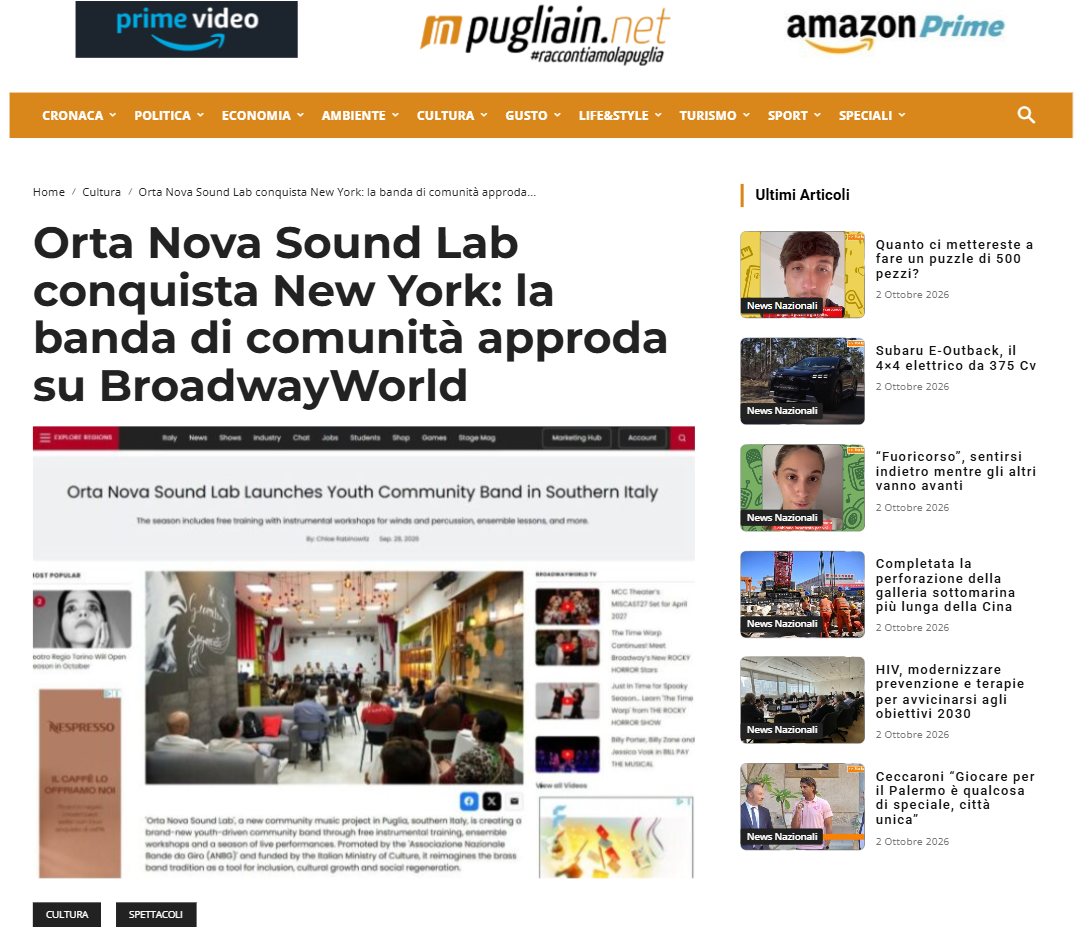
“PUGLIA IN”: “ORTA NOVA SOUND LAB” CONQUERS NEW YORK: THE “COMMUNITY BAND” LANDS ON “BROADWAY WORLD” SOURCE: https://www.pugliain.net/303862-orta-nova-sound-lab-new-york-banda/ I am delighted that my article submitted to editor Chloe Rabinowitz has been accepted and published. In any case, we are not talking about just any website, but the largest theatre website in the world on the internet, the one that covers Broadway, the West End and beyond, with over 6 million visitors per month, present in 100 US cities, 45 countries and in 12 languages worldwide. __________________________________________________________________________ Orta Nova (FG) — The social and musical project “Orta Nova Sound Lab” debuted last week on the prestigious US portal BroadwayWorld, an international live performance network based in New York. The initiative, born in Orta Nova in the heart of Capitanata, nothern Puglia region in South Italy, to create a youth community band, was presented overseas as an innovative model of inclusion and urban regeneration for the Mezzogiorno. The Pulgian model of social regeneration through music, promoted by the “Associazione Nazionale Bande da Giro (ANBG)” chaired by Benedetto Grillo and supported by the Municipality of Orta Nova, has been admitted for funding by the Ministry of Culture under the call for strengthening music in suburbs and vulnerable areas. The project follows in the wake of interventions to counter youth distress and educational poverty envisaged in the spirit of the “Caivano Decree”. The article published in the American outlet is co-authored by New York editor Chris Rabinowitz and by Orta Nova author and researcher Luciano Magaldi Sardella. The text illustrates how the centuries-old Puglian wind-band tradition has been reinterpreted as an instrument of prevention and civic cohesion, thanks to collaboration between the MAO FM 19.77 association, the Olivetti Institute, the Pertini Institute, Music Art and the C.I.S.A. of Foggia. Why the News Went International The “Orta Nova Sound Lab” band project demonstrates that when a project has anti-mafia roots, pedagogical value, and a credible institutional network, the press responds. From local and national outlets such as Cassarmonica, Ansa Puglia, TGNorba, Corriere della Sera Bari, RaiNews TGR Puglia, La Gazzetta del Mezzogiorno, Amica9TV, Brindisi In, Puglia IN, Blasting News Italia, TRM Network, Secolo XIX, FoggiaToday, PlayNews24, Stato Quotidiano, and many others, which thoroughly documented the press conference, coverage has now reached “Broadway World”, which has interpreted the Orta Nova experience as a “social laboratory” capable of answering the mafia with music. This leap in scale derives from joint work and from the liaison work carried out by Luciano Magaldi Sardella, who, together with New York editor Chris Rabinowitz, succeeded in translating for an Anglophone audience the profound meaning of a town band that in Puglia is not folklore, but a civic garrison, a concrete alternative to young people’s dependence on electronic screens and to social disintegration. In a southern Italy often narrated solely through its emergencies, Orta Nova chooses to be narrated for its capacity to generate community. And this time, the news has travelled around the world, starting from a square in the Basso Tavoliere. The Stages of the Programme and the Major Concerts in Capitanata The programme, entirely free of charge for participants, offers training courses for wind and percussion instruments alongside ensemble music lessons. During October 2026, the streets of Orta Nova will host band parades and processions, whilst between November and December the area will see performances by the prestigious Gran Concerti Bandistici of Conversano and Bisceglie. The bill will reserve a specific space for equal opportunities with the all-female performance of the Orchestra Note di Puglia. The journey will culminate in January 2027 with the first official concert of the newly formed Banda di Comunità of Orta Nova, the culmination of a training itinerary that projects the social redemption of the Province of Foggia onto the global cultural scene.

Orta Nova Sound Lab conquista New York: la banda di comunità approda su BroadwayWorld

The post said nine EU countries, including Bulgaria, Romania, Germany, Denmark, Sweden, and Lithuania, had called for a ban on tourist visas for Russian citizens. It also claimed that France and Italy issued the most visas to Russians and had watered down a proposal to restrict Russian soldiers from entering the EU. https://t.co/gLsF5Vradt #VisaBan #Russia #EuropeanUnion #BG #RO #DE #DK #SE #LT #FR #IT (translated)

AS wrote that L’Équipe had included Jérémy Jacquet in its probable France starting XI for the next day’s match against Italy. The predicted lineup was Maignan; Koundé, Jacquet, Upamecano and Truffert; Cherki, Da Cunha and Koné; Olise, Dembélé and Doué. https://t.co/lLgzEZqVew #France #Football #Equipe

The moment when you can only hope that Israeli passengers are on board. https://t.co/AbHCrTfddL #Italia #Calcio #Euro2024 (translated)

🥇 6d

In a normal country, one would inform psychiatry and encourage the affected person before help arrives. #Football #Results #Soccer (translated)

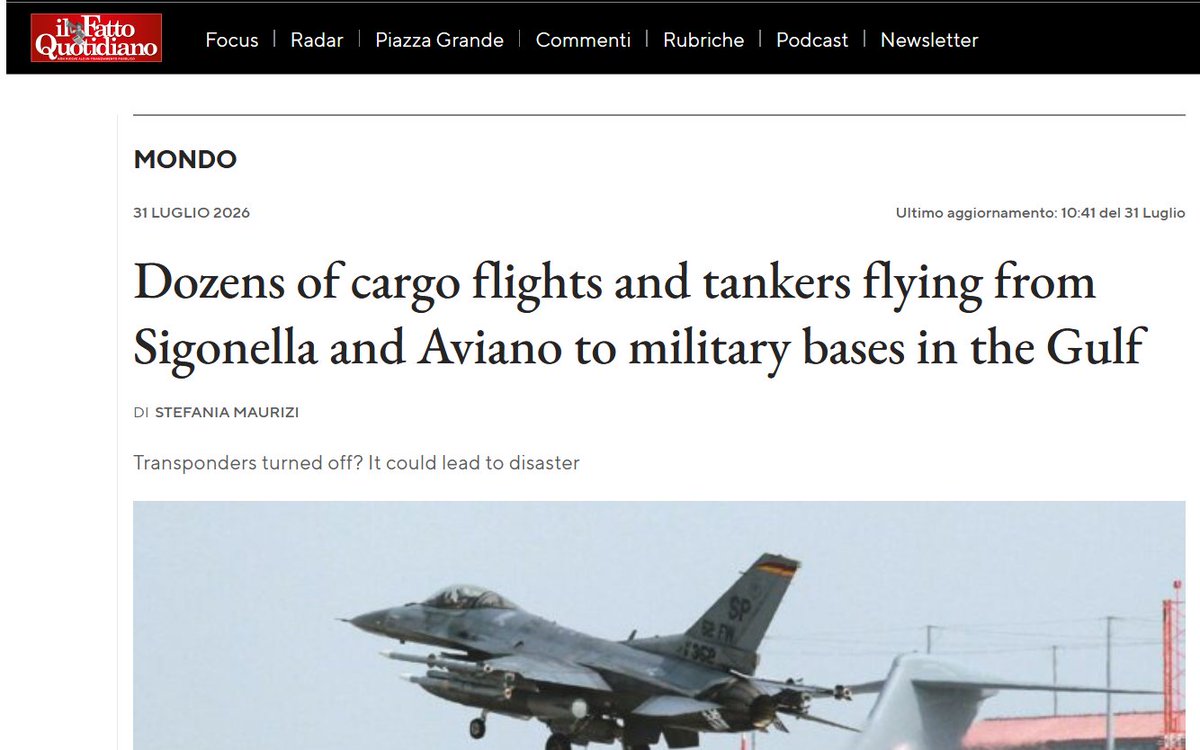
The author said they had spent the previous six months investigating how US military bases in Italy, particularly Aviano and Sigonella, supported the US war against Iran logistically. They invited people with restricted information to share it securely through the linked channels. https://t.co/PE8IRg9XZa https://t.co/hmNi3khsCj #USMilitary #Italy #Iran #US #IT #IR

Africa Daily Report — 30 September 2026 Major developments reported during the previous 24 hours. 1. Morocco — Fatima Ezzahra El Mansouri appointed first woman prime minister. King Mohammed VI appointed El Mansouri following the September 23 parliamentary election. Her Authenticity and Modernity Party won the largest number of seats, and she now has to form a coalition. The appointment is historic, while the next government will also inherit major economic reforms and preparations for the 2030 World Cup. Direct source: https://www.reuters.com/world/africa/moroccos-king-appoints-first-woman-pm-following-sept-23-election-2026-09-29/ 2. Ethiopia — Fighting intensifies around Tigray amid wider regional accusations. Fighting between federal and Tigrayan forces has escalated, with territorial shifts and concern that the conflict could again spread across northern Ethiopia. Ethiopian officials have accused regional rivals of supporting armed groups, while communications disruptions and displacement are complicating independent assessment and humanitarian access. The renewed conflict threatens the fragile post-2022 settlement. Direct source: https://www.aljazeera.com/news/2026/9/29/fighting-in-ethiopia-intensifies-whats-the-latest 3. Somalia/Puntland — Five tanker crew members killed in piracy incident. Puntland authorities said Somali pirates killed five crew members of the petroleum-products tanker MT Honour 25 before security forces rescued the hijacked vessel. The incident is a serious reminder that piracy remains an operational security threat off the Horn of Africa despite years of international maritime-security efforts. Importance: HIGH — maritime security and Red Sea/Indian Ocean trade routes. Direct source: https://www.reuters.com/world/africa/somali-pirates-killed-5-crew-members-hijacked-tanker-before-rescue-mission-2026-09-29/ 4. Kenya/Nigeria — Dangote advances $16 billion Lamu refinery. Dangote is moving ahead with the planned 700,000-barrel-per-day refinery at Lamu. The project is intended to reduce East Africa's dependence on imported refined fuels and could generate more than 50,000 jobs, but it faces infrastructure, environmental and land-rights challenges. A Kenyan court dispute could restrict some site activity pending an October 14 hearing. Importance: VERY HIGH — potentially transformative for East African energy supply, fuel imports, logistics and industrial development. Direct source: https://www.reuters.com/business/energy/dangote-begin-construction-16-billion-east-africa-refinery-kenya-2026-09-30/ 5. South Africa — Foreign direct investment more than doubles in Q2. South Africa's central bank reported FDI inflows of 49.8 billion rand in the second quarter, up from 20.3 billion rand in Q1. The increase is an encouraging investment signal, although it needs to be considered alongside the country's broader growth, fiscal and structural indicators. Importance: HIGH — investment flows are a key indicator for Africa's most industrialised economy. Direct source: https://www.reuters.com/world/africa/south-africas-foreign-direct-investment-inflows-pick-up-q2-2026-09-29/ 6. Ghana — Environmental regulator intensifies mining-sector enforcement. Ghana's Environmental Protection Authority issued a pre-closure notice to Chinese-owned Cardinal Namdini Mining over an alleged unreported incident and is reviewing an inspection of Gold Fields' Tarkwa operation. The regulator says it is moving from periodic inspections toward continuous monitoring and enforcement as Ghana seeks stronger environmental compliance, state revenue and local participation in its gold industry. Importance: HIGH — regulatory tightening can materially affect major international mining investors and Ghana's gold industry. Direct source: https://kfgo.com/2026/09/29/exclusive-ghanas-environmental-authority-targets-chinese-owned-cardinal-and-others-in-mining-crackdown/ 7. DR Congo — Annual audits of major miners planned from 2027. The DRC plans annual audits of major mining companies' subcontracting practices and compliance with local-content requirements beginning in 2027. The world's largest cobalt producer and Africa's leading copper producer is tightening oversight to direct more procurement and contracts toward Congolese-owned businesses. Importance: HIGH — potentially significant for global copper/cobalt supply chains and mining contractors operating in DRC. Direct source: https://ca.marketscreener.com/news/congo-to-audit-major-miners-annually-from-2027-as-part-of-local-content-drive-regulator-says-ce785adddc81f221 8. Tunisia/Mediterranean — Migrant shipwreck leaves at least two dead. Sea-Watch said it rescued 28 people after a shipwreck off Tunisia and recovered two bodies, including a child. Survivors reported at least six people missing, including three children. More than 1,970 people have died or gone missing attempting Mediterranean crossings in 2026, according to Sea-Watch, even as arrivals in Italy have fallen sharply from 2025. Importance: HIGH — migration, humanitarian protection and EU–North Africa policy remain closely linked. Direct source: https://www.straitstimes.com/world/europe/migrant-shipwreck-off-tunisia-leaves-at-least-two-dead-six-reported-missing 9. Guinea-Bissau — Ousted president plans return ahead of December election. Former president Umaro Sissoco Embalo, removed in the November 2025 coup, plans to return on October 4 and seek the presidency in elections scheduled for December 6, according to a source cited by Reuters. A recently approved constitutional residency requirement could become relevant to his eligibility. The military-led authorities have reportedly said he is welcome to return. Direct source: https://kfgo.com/2026/09/29/ousted-guinea-bissau-leader-to-run-in-december-election-source-says/ 10. Sudan — Currency collapse brings fuel queues back to Khartoum. Long fuel queues have returned in Khartoum and several other areas as the Sudanese pound reportedly weakened beyond 8,000 to the US dollar on the parallel market. The currency deterioration is adding to transport and commodity pressures in an economy already devastated by war and disrupted production and trade. Importance: VERY HIGH — the currency/fuel shock compounds Sudan's humanitarian and economic crisis. Direct source: https://sudantribune.com/article/319408 #TopNewsOfAfrica #Africa #AfricaNews #AfricaDaily #Morocco #FatimaEzzahraElMansouri #WomenInLeadership #FirstWomanPrimeMinister #MoroccanPolitics #NorthAfrica #Kenya #Nigeria #Dangote #LamuRefinery #EastAfrica #EnergySecurity #RefineryProject #IndustrialDevelopment #Infrastructure #Investment #Somalia #Puntland #Piracy #MaritimeSecurity #HornOfAfrica #ShippingSecurity #IndianOcean #RedSea #AfricanEconomy #AfricanSecurity #Geopolitics #wrldorg

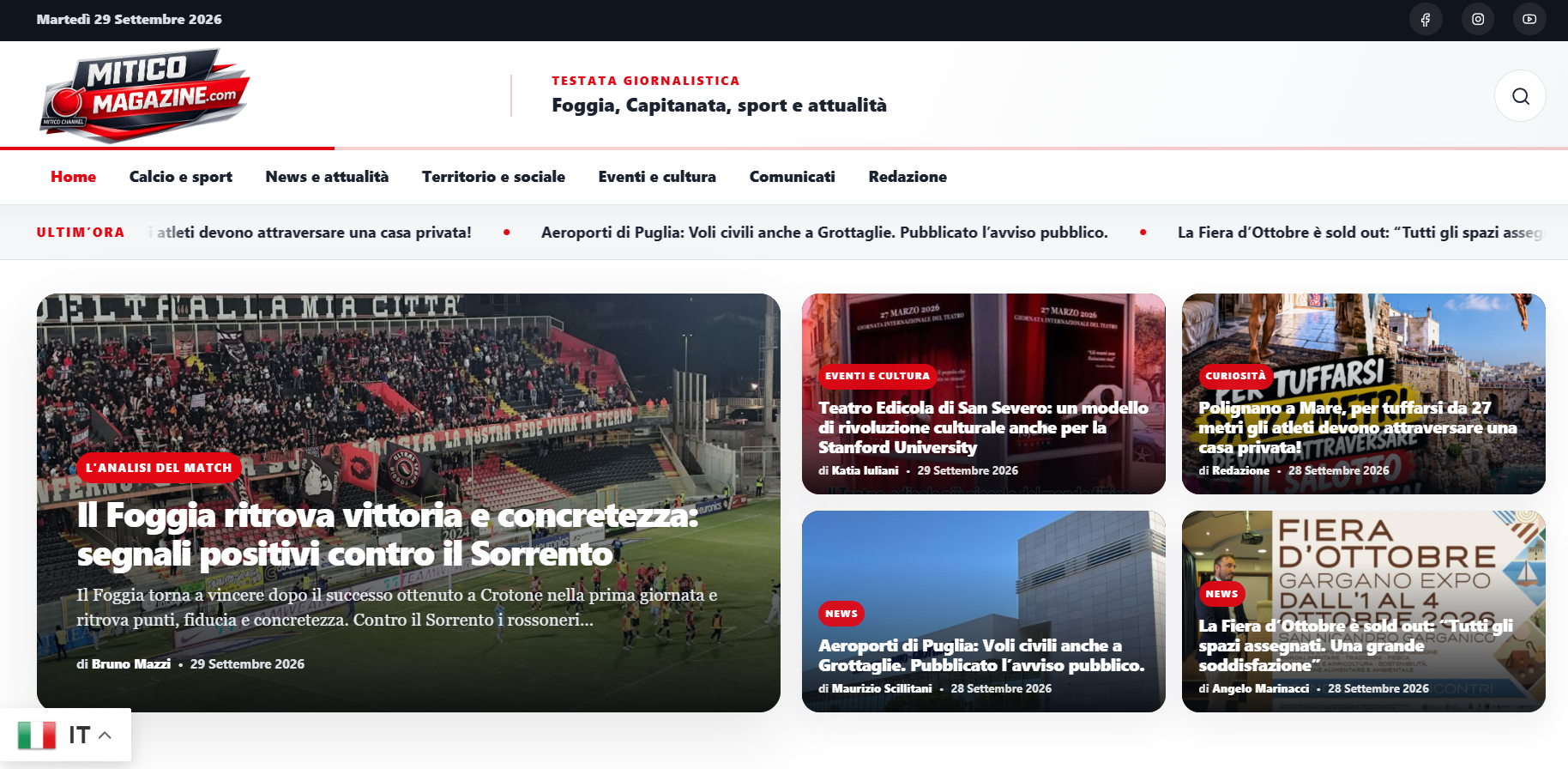
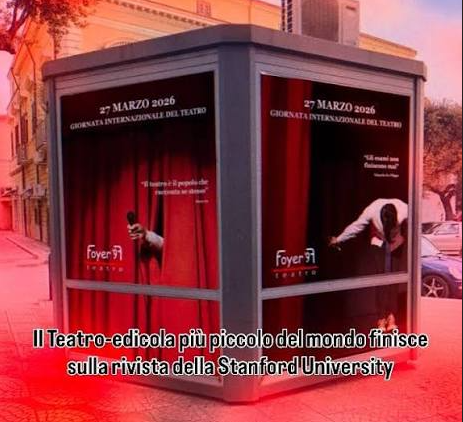
Mitico Magazine - The Teatro Edicola of San Severo: A Model of Cultural Revolution for Stanford University as Well Source: https://www.miticomagazine.com/territorio-e-sociale/teatro-edicola-di-san-severo-un-modello-di-rivoluzione-culturale-anche-per-la-stanford-university/ The Teatro Edicola in Via Tondi In San Severo, a singular metamorphosis has taken place: a newsstand abandoned for at least six years has found a new function and a new identity, transforming into one of the smallest and most unusual theatre stages in the world. An experiment born in the heart of the town which, in just a few months, has moved beyond local boundaries, attracting attention even overseas. It is called Teatro Edicola and it is a project conceived by the company Foyer '97, artistically directed by Francesco Gravino, which has brought the old newsstand in Via Tondi back to life through a formula that is both essential and surprising. Foyer '97 Foyer '97 APS was established as a formally constituted association active in the cultural sector in San Severo in 1997, born from the vocation of a group of actors, directors and theatre enthusiasts, with the aim of building a "living" and accessible theatre in the town. Over the years the company has developed a repertoire that includes texts from the classical tradition, contemporary dramaturgy, comedy and experimental projects, not limiting itself to the mere production of theatre shows, but also organising theatre courses and workshops and educational and cultural projects characterised by a strong inclusive ethos, particularly in schools. Foyer '97 does not always have a fixed artistic ensemble, but works with different performers and collaborators depending on the project; the only indispensable presence is that of Francesco Guido Gravino himself, actor, director and artistic director of the theatre company. The distinctive feature of Foyer '97 is certainly the value of social and cultural promotion attributed to theatre, the extremely close relationship with the audience and the search for a type of theatre outside conventional spaces, with cemeteries, trains, bell towers, and now a newsstand, as its backdrop. Six spectators, a few minutes and a minimal distance between stage and audience The project was launched on 27 March 2026, on the occasion of World Theatre Day, offering a theatrical experience built around a radical reduction of the conventional spaces and times of performance. The idea was born not only from the search for unconventional spaces, but also from "Edicola Fiore", the morning press review with a strongly ironic tone presented by Rosario Fiorello and Stefano Meloccaro, which was broadcast first only on Fiorello's social channels between 2011 and 2014, and then also on radio and television between 2016 and 2018. The review took its name from the diminutive of its founder, Fiore, and from the newsstand of a friend of Fiorello's in Via Flaminia Nuova in Rome, where the showman would meet early in the morning with a group of friends to read the newspapers. The San Severo newsstand was granted free of charge by its owner Pino Frau to the theatre group which, after obtaining temporary authorisation and institutional support from the Municipality of San Severo, refurbished it within two weeks at a cost of less than €3,000. Just six seats, a total surface area of 4 sq m, of which only 2 are for the stage area, less than a metre between actors and audience, a curtain, a lectern, two lights, performances lasting between 5 and 15 minutes, audience rotation every quarter of an hour: apparently minimal elements that end up subverting the usual relationship between stage and auditorium. Spectators, in fact, find themselves immersed in the stage action, in such proximity to the actors that every gesture, expression and word becomes immediately perceptible. In this way, theatre abandons its traditional spaces and insinuates itself into the everyday life of the street, becoming an intimate, concentrated and almost participatory experience. During the inaugural period admission was free with a subsequent voluntary donation from spectators; in the event of a more stable and longer-term concession, which could lead to seasonal theatre performances, the proposed ticket price would be €5. Audiences reward the experiment Foyer '97's gamble met with public interest right from the start: over 60 people attended the shows in a single afternoon, while the three days that inaugurated the season sold out. From a singular local experiment, the Teatro Edicola thus began to arouse curiosity even outside the province of Foggia, gradually transforming into a case of cultural and social interest, until it reached the American continent. From the province of Foggia to the "Stanford Social Innovation Review" The San Severo experience has now come under the international spotlight: in September 2026, the Stanford Social Innovation Review, an international journal and platform dedicated to social innovation published by the Stanford Center on Philanthropy and Civil Society at Stanford University in California, published on its website and in the Fall 2026 print edition the reportage "The Six-Seat Revolution", written by Dr Luciano Magaldi Sardella, independent journalist and researcher affiliated with the European Open University, and editorially supervised by deputy editor David V. Johnson. In the article, it is argued that the Teatro Edicola attracted attention overseas because the project concentrates cultural innovation, urban regeneration and proximity theatre into just a few square metres: starting from a real urban problem, it recovers an abandoned place with a modest investment, brings performance directly into public space and experiments with a much closer relationship between actors and spectators. From the point of view of theatrical representation, it also highlights how the format, based on micro-stories of five to twelve minutes, taken from great classics such as Goldoni, Chekhov, Ibsen, Euripides and Benni, and on audience rotation every fifteen minutes, transforms the physical limitations of the space into a precise dramaturgical choice, proving to be extremely innovative. All of this makes it possible to address some of the main critical issues in the sector: falling audience numbers, an exclusively elderly audience, reduced resources and distance from traditional cultural venues. The journal also highlights, however, the potential problems: economic sustainability, the need for stable institutional support and the difficulty of replicating the model, which is closely linked to the community and territory of San Severo. A model looking beyond San Severo Despite the difficulties, initial requests for information have already arrived from Lucca and Rome, where there is curiosity about the possibility of getting to know the model more closely and the steps needed to replicate it. The replicability formula, in fact, does not seem to require particularly costly infrastructure: an unused space, a targeted intervention, a cultural idea, in-depth knowledge of the surrounding area and a willingness to return that place to the community can be enough to trigger a new urban function. It is precisely in the disproportion between the modesty of the resources employed and the resonance generated by the initiative that perhaps the most original feature of the Teatro Edicola lies, certainly unique of its kind; there are, however, other examples in Italy of newsstands reused for other purposes: "Edicola 518", a twentieth-century kiosk abandoned in the centre of Perugia, now dedicated to independent publishing, art and cultural production; and in Rome itself, the abandoned newsstand in Piazza Testaccio used temporarily as a stage for a show by Fabio Morgan and the Erno newsstand in the Prati district, which almost every month offers a calendar of events, exhibitions, pop-ups and collaborations with artists and creative enterprises. Small revolutions, therefore, that tell stories of the reappropriation of urban spaces, of creativity and social innovation. And which, it is hoped, will take root in order to look ever further afield.

Teatro Edicola di San Severo: un modello di rivoluzione culturale anche per la Stanford University

Mitico Magazine - The Teatro Edicola of San Severo: A Model of Cultural Revolution for Stanford University as Well Source: https://www.miticomagazine.com/territorio-e-sociale/teatro-edicola-di-san-severo-un-modello-di-rivoluzione-culturale-anche-per-la-stanford-university/ The Teatro Edicola in Via Tondi In San Severo, a singular metamorphosis has taken place: a newsstand abandoned for at least six years has found a new function and a new identity, transforming into one of the smallest and most unusual theatre stages in the world. An experiment born in the heart of the town which, in just a few months, has moved beyond local boundaries, attracting attention even overseas. It is called Teatro Edicola and it is a project conceived by the company Foyer '97, artistically directed by Francesco Gravino, which has brought the old newsstand in Via Tondi back to life through a formula that is both essential and surprising. Foyer '97 Foyer '97 APS was established as a formally constituted association active in the cultural sector in San Severo in 1997, born from the vocation of a group of actors, directors and theatre enthusiasts, with the aim of building a "living" and accessible theatre in the town. Over the years the company has developed a repertoire that includes texts from the classical tradition, contemporary dramaturgy, comedy and experimental projects, not limiting itself to the mere production of theatre shows, but also organising theatre courses and workshops and educational and cultural projects characterised by a strong inclusive ethos, particularly in schools. Foyer '97 does not always have a fixed artistic ensemble, but works with different performers and collaborators depending on the project; the only indispensable presence is that of Francesco Guido Gravino himself, actor, director and artistic director of the theatre company. The distinctive feature of Foyer '97 is certainly the value of social and cultural promotion attributed to theatre, the extremely close relationship with the audience and the search for a type of theatre outside conventional spaces, with cemeteries, trains, bell towers, and now a newsstand, as its backdrop. Six spectators, a few minutes and a minimal distance between stage and audience The project was launched on 27 March 2026, on the occasion of World Theatre Day, offering a theatrical experience built around a radical reduction of the conventional spaces and times of performance. The idea was born not only from the search for unconventional spaces, but also from "Edicola Fiore", the morning press review with a strongly ironic tone presented by Rosario Fiorello and Stefano Meloccaro, which was broadcast first only on Fiorello's social channels between 2011 and 2014, and then also on radio and television between 2016 and 2018. The review took its name from the diminutive of its founder, Fiore, and from the newsstand of a friend of Fiorello's in Via Flaminia Nuova in Rome, where the showman would meet early in the morning with a group of friends to read the newspapers. The San Severo newsstand was granted free of charge by its owner Pino Frau to the theatre group which, after obtaining temporary authorisation and institutional support from the Municipality of San Severo, refurbished it within two weeks at a cost of less than €3,000. Just six seats, a total surface area of 4 sq m, of which only 2 are for the stage area, less than a metre between actors and audience, a curtain, a lectern, two lights, performances lasting between 5 and 15 minutes, audience rotation every quarter of an hour: apparently minimal elements that end up subverting the usual relationship between stage and auditorium. Spectators, in fact, find themselves immersed in the stage action, in such proximity to the actors that every gesture, expression and word becomes immediately perceptible. In this way, theatre abandons its traditional spaces and insinuates itself into the everyday life of the street, becoming an intimate, concentrated and almost participatory experience. During the inaugural period admission was free with a subsequent voluntary donation from spectators; in the event of a more stable and longer-term concession, which could lead to seasonal theatre performances, the proposed ticket price would be €5. Audiences reward the experiment Foyer '97's gamble met with public interest right from the start: over 60 people attended the shows in a single afternoon, while the three days that inaugurated the season sold out. From a singular local experiment, the Teatro Edicola thus began to arouse curiosity even outside the province of Foggia, gradually transforming into a case of cultural and social interest, until it reached the American continent. From the province of Foggia to the "Stanford Social Innovation Review" The San Severo experience has now come under the international spotlight: in September 2026, the Stanford Social Innovation Review, an international journal and platform dedicated to social innovation published by the Stanford Center on Philanthropy and Civil Society at Stanford University in California, published on its website and in the Fall 2026 print edition the reportage "The Six-Seat Revolution", written by Dr Luciano Magaldi Sardella, independent journalist and researcher affiliated with the European Open University, and editorially supervised by deputy editor David V. Johnson. In the article, it is argued that the Teatro Edicola attracted attention overseas because the project concentrates cultural innovation, urban regeneration and proximity theatre into just a few square metres: starting from a real urban problem, it recovers an abandoned place with a modest investment, brings performance directly into public space and experiments with a much closer relationship between actors and spectators. From the point of view of theatrical representation, it also highlights how the format, based on micro-stories of five to twelve minutes, taken from great classics such as Goldoni, Chekhov, Ibsen, Euripides and Benni, and on audience rotation every fifteen minutes, transforms the physical limitations of the space into a precise dramaturgical choice, proving to be extremely innovative. All of this makes it possible to address some of the main critical issues in the sector: falling audience numbers, an exclusively elderly audience, reduced resources and distance from traditional cultural venues. The journal also highlights, however, the potential problems: economic sustainability, the need for stable institutional support and the difficulty of replicating the model, which is closely linked to the community and territory of San Severo. A model looking beyond San Severo Despite the difficulties, initial requests for information have already arrived from Lucca and Rome, where there is curiosity about the possibility of getting to know the model more closely and the steps needed to replicate it. The replicability formula, in fact, does not seem to require particularly costly infrastructure: an unused space, a targeted intervention, a cultural idea, in-depth knowledge of the surrounding area and a willingness to return that place to the community can be enough to trigger a new urban function. It is precisely in the disproportion between the modesty of the resources employed and the resonance generated by the initiative that perhaps the most original feature of the Teatro Edicola lies, certainly unique of its kind; there are, however, other examples in Italy of newsstands reused for other purposes: "Edicola 518", a twentieth-century kiosk abandoned in the centre of Perugia, now dedicated to independent publishing, art and cultural production; and in Rome itself, the abandoned newsstand in Piazza Testaccio used temporarily as a stage for a show by Fabio Morgan and the Erno newsstand in the Prati district, which almost every month offers a calendar of events, exhibitions, pop-ups and collaborations with artists and creative enterprises. Small revolutions, therefore, that tell stories of the reappropriation of urban spaces, of creativity and social innovation. And which, it is hoped, will take root in order to look ever further afield.

Teatro Edicola di San Severo: un modello di rivoluzione culturale anche per la Stanford University

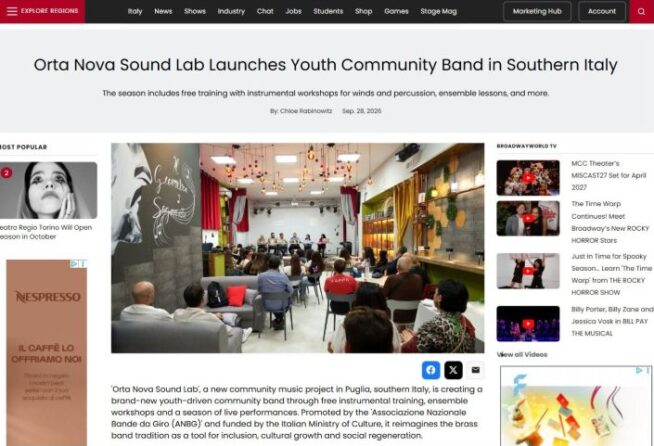
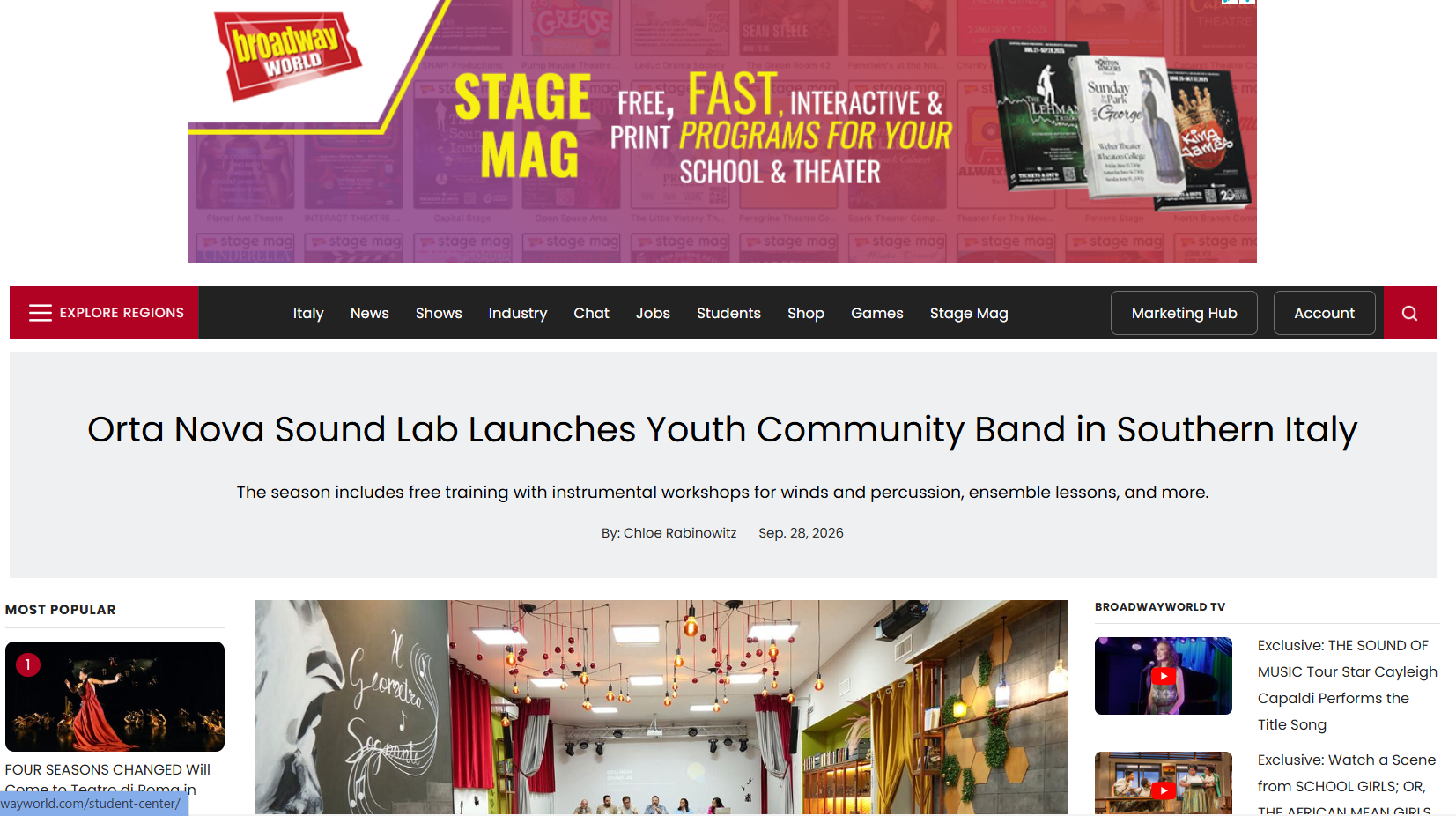
“ORTA NOVA SOUND LAB” FROM ORTA NOVA (PUGLIA) ON “BROADWAY WORLD,” NEW YORK, by LUCIANO MAGALDI SARDELLA SOURCE: https://www.broadwayworld.com/italy/article/Orta-Nova-Sound-Lab-Launches-Youth-Community-Band-in-Southern-Italy-20260928?fbclid=IwY2xjawUnzKtleHRuA2FlbQIxMABwZG9mAWJyaWQRMHZzU2xWWTdTNU5UMDFNY1lzcnRjBmFwcF9pZBAyMjIwMzkxNzg4MjAwODkyAAEeKFYDfacdBYHnYGZu4M9ZmxOT_wnVa7M53_p_1yfAmpSZSvn3ZDHF-BXqMr4_aem_Jd46xeSFwcUn5qapLvtu8w “Orta Nova Sound Lab Launches Youth Community Band in Southern Italy” The season includes free training with instrumental workshops for winds and percussion, ensemble lessons, and more. By: Chloe Rabinowitz ‘Orta Nova Sound Lab’, a new community music project in Puglia, southern Italy, is creating a brand-new youth-driven community band through free instrumental training, ensemble workshops and a season of live performances. Promoted by the ‘Associazione Nazionale Bande da Giro (ANBG)’ and funded by the Italian Ministry of Culture, it reimagines the brass band tradition as a tool for inclusion, cultural growth and social regeneration. Since the Italian government’s 2023 “Caivano Decree” (Decree-Law 123/2023), which targeted youth distress, educational poverty and juvenile crime, attention has turned to communities in Southern Italy where culture, education and public space can be rebuilt together. Orta Nova, in the Puglia region, is part of that broader conversation as ‘Orta Nova Sound Lab’ replying to local Mafia with music: a “social laboratory” that connects young people, schools, associations and institutions around a shared, tangible goal, a band of their own. It is the first initiative of its kind in Italy, to repurpose the distinctive tradition of the ‘touring brass bands’ and youth orchestra within a ministerial call devoted to urban peripheries and social vulnerability. Its explicit aim is to offer young people a real alternative to the screen and to the youth disenfranchisement associated with the anti-mafia “Caivano model”. The project was presented on September 21 at Luca ed Erminio Ferrandina C-Lab MAO facility and is funded under the Ministry of Culture’s public call for the promotion of musical practices in suburban and socially Mafia-rooted vulnerable areas, and it is supported by the Municipality of Orta Nova. Project partners include the cultural association APS MAO FM 19.77, the “A. Olivetti” secondary school, the “Sandro Pertini” comprehensive school, the Music Art association and C.I.S.A. Foggia. At the heart of the project is a simple idea: give young people a reason to be together, in person, making something real. “A music band is aggregation!,” said Antonella Spagnoletti, ANBG project director. She explained that the band means cohesion, and that bringing young people together to train and live differently from the social-media world is among the association’s primary goals. Mayor Domenico Di Vito called it an important project that can make a real difference, with all the ingredients to connect the town’s cultural and social networks with anti-mafia roots. He added that the administration is committed to making the initiative sustainable, structured and lasting. The presentation also involved Benedetto Grillo, president of ANBG; Grazia Maria Starace, regional councillor; Sebastiano Battista, councillor for relations with third-sector organizations; Vittoria Mastrogiacomo, councillor for culture; and Alfredo Coppola, representing the Olivetti school. Journalist Giuseppe Di Bisceglie moderated. The season ahead: Free training: instrumental workshops for winds and percussion, ensemble lessons and rehearsals led by qualified teachers and conductors, open to aspiring musicians, families, schools and citizens. October: a parade of marching bands and youth orchestra through the streets of Orta Nova, Puglia, southern Italy. November-December: concerts by the Gran Concerto Bandistico di Conversano and the Gran Concerto Bandistico “Biagio Abbate” of Bisceglie, giving the young musicians a chance to learn from professional ensembles. A special evening of women’s music with the all-female Orchestra Note di Puglia, reinforcing the project’s values of inclusion and equal opportunity. January 2027: the first concert of the new Orta Nova community band. In particular, ‘Orta Nova Sound Lab (Community Band and Social Regeneration through Music)’ is a project of the ‘Associazione Nazionale Bande da Giro (ANBG),’ a national association of bands active across south-Italians regions like Abruzzo, Basilicata, Calabria, Campania, Molise and Puglia. Funded by the Italian Ministry of Culture and supported by the Municipality of Orta Nova, it offers free music education and live performance opportunities to strengthen inclusion, cultural growth and community cohesion.

Orta Nova Sound Lab Launches Youth Community Band in Southern Italy

“ORTA NOVA SOUND LAB” DA ORTA NOVA (PUGLIA) SUL “BROADWAY WORLD” DI NEW YORK by LUCIANO MAGALDI SARDELLA SOURCE: https://www.broadwayworld.com/italy/article/Orta-Nova-Sound-Lab-Launches-Youth-Community-Band-in-Southern-Italy-20260928?fbclid=IwY2xjawUnzKtleHRuA2FlbQIxMABwZG9mAWJyaWQRMHZzU2xWWTdTNU5UMDFNY1lzcnRjBmFwcF9pZBAyMjIwMzkxNzg4MjAwODkyAAEeKFYDfacdBYHnYGZu4M9ZmxOT_wnVa7M53_p_1yfAmpSZSvn3ZDHF-BXqMr4_aem_Jd46xeSFwcUn5qapLvtu8w “Orta Nova Sound Lab Launches Youth Community Band in Southern Italy” The season includes free training with instrumental workshops for winds and percussion, ensemble lessons, and more. By: Chloe Rabinowitz ‘Orta Nova Sound Lab’, a new community music project in Puglia, southern Italy, is creating a brand-new youth-driven community band through free instrumental training, ensemble workshops and a season of live performances. Promoted by the ‘Associazione Nazionale Bande da Giro (ANBG)’ and funded by the Italian Ministry of Culture, it reimagines the brass band tradition as a tool for inclusion, cultural growth and social regeneration. Since the Italian government’s 2023 “Caivano Decree” (Decree-Law 123/2023), which targeted youth distress, educational poverty and juvenile crime, attention has turned to communities in Southern Italy where culture, education and public space can be rebuilt together. Orta Nova, in the Puglia region, is part of that broader conversation as ‘Orta Nova Sound Lab’ replying to local Mafia with music: a “social laboratory” that connects young people, schools, associations and institutions around a shared, tangible goal, a band of their own. It is the first initiative of its kind in Italy, to repurpose the distinctive tradition of the ‘touring brass bands’ and youth orchestra within a ministerial call devoted to urban peripheries and social vulnerability. Its explicit aim is to offer young people a real alternative to the screen and to the youth disenfranchisement associated with the anti-mafia “Caivano model”. The project was presented on September 21 at Luca ed Erminio Ferrandina C-Lab MAO facility and is funded under the Ministry of Culture’s public call for the promotion of musical practices in suburban and socially Mafia-rooted vulnerable areas, and it is supported by the Municipality of Orta Nova. Project partners include the cultural association APS MAO FM 19.77, the “A. Olivetti” secondary school, the “Sandro Pertini” comprehensive school, the Music Art association and C.I.S.A. Foggia. At the heart of the project is a simple idea: give young people a reason to be together, in person, making something real. “A music band is aggregation!,” said Antonella Spagnoletti, ANBG project director. She explained that the band means cohesion, and that bringing young people together to train and live differently from the social-media world is among the association’s primary goals. Mayor Domenico Di Vito called it an important project that can make a real difference, with all the ingredients to connect the town’s cultural and social networks with anti-mafia roots. He added that the administration is committed to making the initiative sustainable, structured and lasting. The presentation also involved Benedetto Grillo, president of ANBG; Grazia Maria Starace, regional councillor; Sebastiano Battista, councillor for relations with third-sector organizations; Vittoria Mastrogiacomo, councillor for culture; and Alfredo Coppola, representing the Olivetti school. Journalist Giuseppe Di Bisceglie moderated. The season ahead: Free training: instrumental workshops for winds and percussion, ensemble lessons and rehearsals led by qualified teachers and conductors, open to aspiring musicians, families, schools and citizens. October: a parade of marching bands and youth orchestra through the streets of Orta Nova, Puglia, southern Italy. November-December: concerts by the Gran Concerto Bandistico di Conversano and the Gran Concerto Bandistico “Biagio Abbate” of Bisceglie, giving the young musicians a chance to learn from professional ensembles. A special evening of women’s music with the all-female Orchestra Note di Puglia, reinforcing the project’s values of inclusion and equal opportunity. January 2027: the first concert of the new Orta Nova community band. In particular, ‘Orta Nova Sound Lab (Community Band and Social Regeneration through Music)’ is a project of the ‘Associazione Nazionale Bande da Giro (ANBG),’ a national association of bands active across south-Italians regions like Abruzzo, Basilicata, Calabria, Campania, Molise and Puglia. Funded by the Italian Ministry of Culture and supported by the Municipality of Orta Nova, it offers free music education and live performance opportunities to strengthen inclusion, cultural growth and community cohesion.

Orta Nova Sound Lab Launches Youth Community Band in Southern Italy

PUTIN’S 12 ELECTION TARGETS? EUROPE MUST WATCH 2027 CLOSELY. 🇱🇻 Latvia 🇨🇿 Czechia 🇧🇬 Bulgaria 🇪🇪 Estonia 🇫🇮 Finland 🇫🇷 France 🇵🇱 Poland 🇸🇰 Slovakia 🇸🇮 Slovenia 🇮🇹 Italy 🇪🇸 Spain 🇬🇷 Greece Europe is entering a dense 2026–2027 election cycle while Russia’s war against Ukraine https://t.co/ka1OyJBjqY #Putin2027 #EuropeanElections #UkraineWar #LV #CZ #BG #EE #FN #FR #PL #SK #SI #IT #ES #GR