WRLD

Search

#kulttuuri
Gilbert 1h

It is completely unacceptable to burn down the town hall! Those who did this must be punished. They must pay [the bill] out of their own pockets; it is not the state's responsibility, said a local named Gilbert, who only went by his first name, according to Reuters. #Ranska #mielenosoitus #kulttuuriperintö (translated)

Ranskalaiskaupunki suree palanutta historiaa: "Millaisessa maassa elämme – mitä jätämme lapsillemme?"
www.mtvuutiset.fi
1108
G
Guillaume Guérin 1h

It is intolerable what kind of logistics, organization, and advance planning is visible behind yesterday's attack, Guerin stated according to Reuters. #Ranska #mielenosoitus #kulttuuriperintö (translated)

Ranskalaiskaupunki suree palanutta historiaa: "Millaisessa maassa elämme – mitä jätämme lapsillemme?"
www.mtvuutiset.fi

1108
Maurice Barate 1h

Local prefect Maurice Barate calls the incident a "cultural heritage disaster." #Ranska #mielenosoitus #kulttuuriperintö (translated)

Ranskalaiskaupunki suree palanutta historiaa: "Millaisessa maassa elämme – mitä jätämme lapsillemme?"
www.mtvuutiset.fi
1108
mtvuutiset.fi 1h

The destruction of the Limoges city hall in a fire in France has raised concerns among locals, who wonder what kind of country they live in and what legacy will be left for future generations as a result of violent protests. #Ranska #mielenosoitus #kulttuuriperintö (translated)

www.mtvuutiset.fi
Ranskalaiskaupunki suree palanutta historiaa: "Millaisessa maassa elämme – mitä jätämme lapsillemme?"
1108
Mika Merano 1h

Mika Merano announced that he will be a candidate for the Finns Party in the upcoming spring parliamentary elections in the Uusimaa electoral district. He named his main themes as fighting corruption, reforming the use of tax funds, and strengthening the status of the Finnish language and Finnish culture. Merano opposed, among other things, the dual roles of politicians in organizations, political appointments, and directing tax funds to the close circles of politicians. He demanded public impact reports on taxpayer-funded projects and believed that tax funds should benefit Finnish taxpayers. He also opposed development aid, projects that he described as ideological, and unprofitable EU funding requests. In language policy, Merano opposed mandatory Swedish and multiculturalism, which he viewed as narrowing Finnish traditions. He supported a unilingual Finland, conducting business in one's native language, and preserving Finnish cultural heritage. He also suggested that cuts affecting citizens should be made only as a last resort. Merano asked people to spread the word about his candidacy, to join his campaign team, or to support his campaign. He stated that donations would go to the Mika Merano Support Association and would be used entirely for the campaign. According to him, donations could be made via MobilePay to the number 47188 or to the association's account FI19 8146 9710 4278 49. He mentioned that the names of donors contributing at least 1,500 euros would be public. The campaign manager, according to Merano, is marketing professional and Kouvola city councilor Suvi Karell, who coordinates the campaign work. #Suomi #Eduskuntavaalit #Perussuomalaiset (translated)

1412
Roni Arvonen 7h

Roni Arvonen wrote that the migration of people from developing countries to civilized countries, in his opinion, does not civilize the newcomers but makes the receiving country resemble a developing country. #kehitysmaa #sivistys #kulttuuri (translated)

1607
mtvuutiset.fi 13h

East Helsinki's Puhos, a former shopping center, has transformed into an oasis of cultures, where entrepreneurs with immigrant backgrounds play a significant role, despite the area's history being associated with a negative reputation and issues of integration and segregation. #Puhos #kulttuuri #maahanmuutto (translated)

www.mtvuutiset.fi

Itä-Helsingin Puhos taas tapahtumien ytimessä – no-go-zone vai kulttuurien keidas?
1768
Jussi Mäkinen 4d

Jussi Mäkinen wrote that the controversy surrounding the Helsinki Pride community would fit better into context if it were stated that it is the local association of Seta in the capital region and the former HeSeta ry. According to him, the association was established to do social and youth work, not to organize marches or engage in commercial activities. Mäkinen mentioned that the founding meeting was held at the restaurant Gambrinus in Helsinki on November 29, 1990. Mäkinen estimated that after the Tahdon2013 campaign, successful people from the upper middle class became involved in the association's activities, and its public image changed. He described the development such that marketing-oriented activities were built on top of an organization based on community and volunteer work. According to him, as organizations grow, politicians and other actors often seek positions in their administration, who are not familiar with the organization's rules or seek to change them. Mäkinen wrote that, in his opinion, neither STEA nor its predecessor RAY funded Pride events, but rather social and youth work. He described the Pride event as a demonstration and a fundraising channel for the organization's core mission. Mäkinen criticized the actors he characterized as event producers for deciding to stop social and youth work if funding were cut, according to him. He concluded by asking whether similar actors would next turn to veteran organizations or the Lotta Svärd organization. #HelsinkiPride #Seta #sosiaalityö (translated)

3488
Keijo Kaarisade 5d

Keijo Kaarisade apologized to Said Awmussel on behalf of his countrymen and said he was ashamed of his Finnish identity. He described the Finnish people as backward and hoped that one day they would be as advanced as the world's Islamic high cultures, but he said that it would be difficult. #Suomi #Kulttuuri #Yhteiskunta (translated)

2933
Nuorsuomalainen nupisee 5d

A young Finnish blogger wrote that Jussi Saramo belonged to the 167 members of parliament who voted against a resolution concerning the clarification of the Muslim Brotherhood's status as a terrorist organization. According to the writer, Saramo justified his stance by stating that Islamist terrorism was a serious threat, but far-right terrorism was a more acute problem in Europe at that time. The writer also mentioned that Saramo emphasized that threats should not be set against each other and that they should be countered through intelligence services. The writer denied that far-right terrorism was a significant phenomenon and claimed it primarily existed in the imaginations of the green-left. He described Islamic terrorism targeting Christians as part of a cultural war and the breaking of traditions through the exercise of power and violence, stating that it was a daily occurrence. The writer referred to Saramo's statement as "Jussi Saramo's Christmas greetings." #Terrorismi #Islam #Äärioikeisto (translated)

2598
Jarkko Tontti 5d

Jarkko Tontti asked why Europe, in his opinion, was ashamed of its cultural existence and apologized for it. He mentioned that he had been a guest on Eeropekka Rislak's new program together with Timo Vihavainen. https://t.co/S4blZDjgPh #Eurooppa #kulttuuri #anteeksi (translated)

2938
Päivän Byrokraatti 6d

The Day's Bureaucrat wrote to a user named Sukkola that in Europe, difficult decisions would have to be made in the future, which would hardly comply with current human rights treaties or constitutions. He suggested as an alternative the disappearance of European cultures. #Ihmisoikeudet #Eurooppa #Kulttuuri (translated)

3171
Martti Kosonen 6d

Martti Kosonen wrote that he was not aware of any Western country where an imam had moved to settle down. According to him, imams had other things to do. https://t.co/o0oTq7p7Iq #kotoutuminen #imaamit #kulttuurierot (translated)

2719
Jari Mäkäräinen 6d

Jari Mäkäräinen criticized an article in Helsingin Sanomat and said he had made corrections to it. According to him, the nonfiction writer Ari Haasio and Mattila had suggested that Finnish identity was ambiguous, compared the mistrust faced by evacuees from Karelia to current fears directed at Muslims, and stated that everyone was a descendant of immigrants. Mäkäräinen wrote that migration was an old phenomenon, but migrations from different times could not be equated. He noted that the first people arrived in what is now Finland about 11,000 years ago and believed that this did not provide a basis for equating the current migration from Afghanistan or Somalia with the arrivals of earlier traders, craftsmen, or industrial founders. He described Finlayson as an actor that built factories in capital-poor Finland, brought technology, and created jobs. Mäkäräinen compared him to a Mohammed coming from Somalia, who he described as illiterate and dependent on Kela support. He believed these examples illustrated different types of migration and claimed that there were differences in education, employment, cultural distance, and criminality. He also claimed that those coming from Afghanistan were overrepresented in rape statistics. Regarding the evacuees from Karelia, Mäkäräinen wrote that they had come from within Finland, spoke Finnish, and shared key features of Finnish culture. He said they had faced mistrust and derogatory name-calling, but believed they differed from current arrivals from Afghanistan, for example, in terms of adaptation, work ethic, and use of social security. Mäkäräinen also denied the comparison made by Haasio and Mattila between 19th-century antisemitism and the Somali discussions of the 1990s. According to him, the groups were not similar, and Jews had mostly integrated well. He argued that current migrations should be evaluated based on their impacts on employment, crime, and social security. Finally, he wrote that the continuity of society required, in his opinion, the adaptation of newcomers. #maahanmuutto #suomalaisuus #kulttuuri (translated)

3287
mtvuutiset.fi 7d

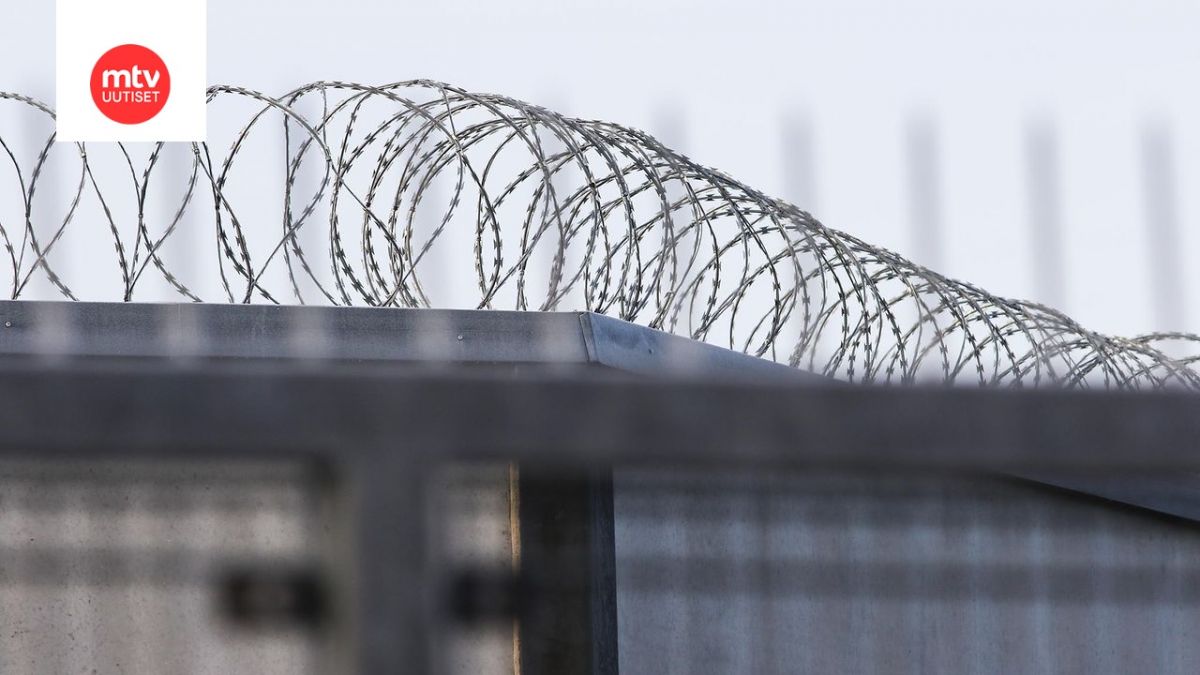
In prisons, employees generally experience inappropriate behavior and harassment, such as being called "girl," exclusion, and shouting, which raises concerns about the safety of the work environment and cultural change. #häirintä #työpaikkasyrjintä #vankila (translated)

www.mtvuutiset.fi
Tytöttelyä, ulkopuolelle jättämistä, huutamista – tällaista häirintää työntekijät kokevat vankiloissa
2608
Peter Vesterbacka 7d

Non-fiction writer Ari Haasio said that there would be no Finns without immigration. He described Finland's story as a narrative of its people: they had changed both society and the notion of Finnishness, and they did not remain stagnant. https://t.co/JVAY5tRSDC #maahanmuutto #Suomi #kulttuuri #FI (translated)

2951
Keijo Kaarisade 7d

Keijo Kaarisade wrote that when condemning the oppression of women, it was agreed, in his opinion, to speak vaguely about religions and cultures without referring to Islam. He criticized that a member of the National Coalition Party had been assigned to the matter and they themselves had followed along, and said that he would have to explain the issue to the imam again with Petteri. https://t.co/bbPqxHiqBm #naistenoikeudet #uskonto #kulttuuri (translated)

2952
Jari Sarasvuo 7d

Jari Sarasvuo asked what was going on and wrote that respecting different worldviews as well as commitment to common rules and culture helped build a better future without discrimination or forced relocations. According to him, Western culture was based on mutual respect, tolerance, and trust. Sarasvuo urged to hold on to these ideals and encouraged Sukkolaa and Juha Itkonen. #kulttuuri #suvaitsevaisuus #yhteisö (translated)

2953
Yaron Nadbornik 7d

Yaron Nadbornik criticized Heikki Hiilamo's column published in Yleisradio, stating that it presented a one-sided image connecting the actions of Israel's leadership, Finnish Christian groups, and Minister Antti Häkkänen's visit to the structures of oppression. Nadbornik argued that the column's treatment of Israel and Zionism made Jews collectively responsible and expanded the criticism to also include Israel's supporters and Jews in general. According to Nadbornik, Hiilamo's text divided the parties into white and Christian oppressors and non-white and Muslim victims. He said this framing overlooked the Jewish roots, history, and vulnerability in the Middle East, as well as the fact that millions of people from various backgrounds lived in Israel. He also believed that the framework wrongly fit the conflict into a narrative of Western colonialism and racism and presented Israel as a refuge for a people without another homeland. Nadbornik wrote that the prejudices against Jews were based on their otherness. He noted that studies had shown that Jews living in the diaspora were unjustly held accountable for the actions of the state of Israel. He argued that Hiilamo's rhetoric, which connected Christian groups and ministerial visits with the suffering in Gaza, reinforced this framework. Nadbornik recalled the Hamas attack on October 7, 2023, describing it as a massacre involving rapes, mutilations, and the abduction of civilians, including babies, festival-goers, and the elderly, into Israel. He called it the largest single act of violence against Jews since the Holocaust. According to Nadbornik, Hiilamo overlooked the fact that Hamas and Hezbollah openly sought the destruction of Israel in connection with Israel's military actions. He believed that framing the terror attack merely as a security threat or comparing it to Russia's invasion of Ukraine ignored the rights of Israeli citizens to exist and be protected. https://t.co/PFvBFdaoiQ #Israel #Juutalaiset #Rasismi (translated)

3521
Klaus 1w

Klaus said he had responded to a user named Sukkola, who he claimed had blocked him. He stated that his criticism was directed at Said Aw-Musse's position as a religious authority rather than at his personal actions. Klaus described classical Sunni Islam as a tradition in which sharia is seen as divinely ordained and as a legal system superior to human laws. According to him, it included legal, moral, and social rules regarding, among other things, testimony, inheritance, apostasy, and legislative authority. Klaus wrote that Aw-Musse had studied theology in Saudi Arabia and worked in a mosque where the teachings of Muhammad ibn Abd al-Wahhab had been used. He described this figure as an ultra-conservative thinker who demanded the return of Islam to its literal roots. According to Klaus, Aw-Musse's refusal to clarify his position on the primacy of Finnish law and the status of sharia justified suspicion. Merely following the law, in his opinion, did not indicate whether he considered the constitutional order of Finland to be just and final or a temporary imposition. Klaus expressed a desire to know what kind of Finland Aw-Musse envisioned in 50 or 100 years. Klaus believed that questions regarding women's rights, freedom of speech, freedom of religion, and criminal law were not leading him into a trap but were inquiries into whether Aw-Musse accepted the principles of the Finnish rule of law. He deemed Aw-Musse's public stance significant for its societal relevance due to his religious role. According to Klaus, integration required not only adherence to the law but also acceptance of fundamental values. #uskonto #oikeudet #kulttuuri (translated)

3298