BETA nonprofit public democratic european moderated

Search

#led
Pasi 1h

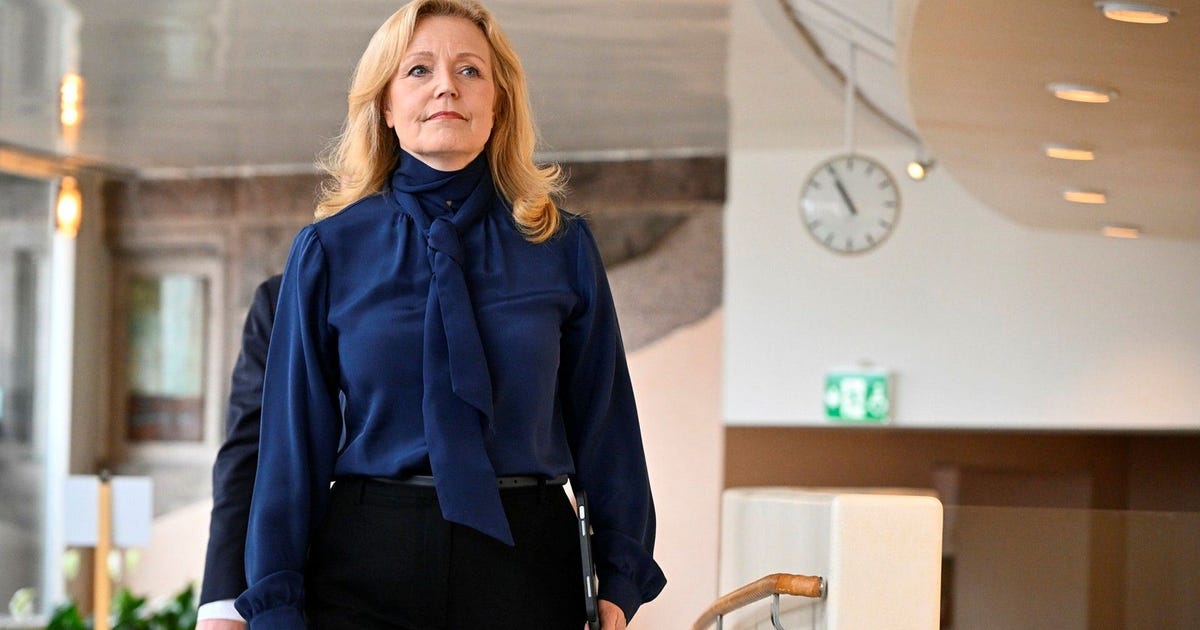
I dagens DN berättar Annika Strandhäll att hennes hårda ton på X var ett uppdrag från S-ledningen. Det visar sig att partiet inte bara analyserade polariseringen – de hade visst en projektledare för den. #politik #Sverige #polarisation

En man som spred antisemitiska flygblad utanför polishuset i Nyköping döms till rättspsykiatrisk vård efter att ha blivit filmad medan han kastade ut affischer med liknande budskap, och han erkänner inte brott trots att tingsrätten konstaterat att han led av en allvarlig psykisk störning vid tiden för brotten. #Nyköping #antisemitism #hetsmotfolkgrupp

Man spred antisemitiska budskap utanför polishuset i Nyköping – döms till vård

Arktički morski led dosegnuo je rekordno nisku razinu, završivši gotovo dvadesetogodišnje razdoblje usporenog otapanja, a znanstvenici upozoravaju da će posljedice ovog ubrzanog gubitka leda imati dalekosežne učinke na klimu i ekologiju cijelog svijeta. #klimatskepromjene #arktickiled #globalnozatopljenje

Kraj 'pauze' u otapanju: Arktički led pao na rekordno nisku razinu

På Facebook falder folk i svime over "Mohammad Akbari", der poster et hav af opslag om mere eller mindre samfundsrelevante emner. Opslagene er skrevet med åbenlyst dårlig AI og ledsages af AI-genererede billeder af "Akbari" i alverdens situationer. Blandt andet i Folketingssalen, mens han underskriver Grundloven og på en kirkegård blandt sørgende. Altid med det karakteristiske blå skær i brillerne, som dårlig AI ikke får fjernet fra originalbilledet. Alligevel ser det ikke ud til at vække mistanke hos de tusindvis af Facebook-brugere, der liker og deler indholdet i et omfang, som de fleste danske politikere kun kan drømme om. Profilen har på rekordtid fået 11.000 følgere. "Mohammad Akbari" og hans AI-genererede indhold kan meget vel udvikle sig til en reel magtfaktor i den politiske debat. Og profilen kan i princippet sælges til aktører, der ønsker at sprede bestemte budskaber til "Mohammads" loyale følgerskare. Vi kommer til at se meget mere af den slags i fremtiden. Desværre. #AI #SocialMedia #FakeNews

Ze zijn er allemaal niet meer! Bij de aanvallen op Israëlische burgers op 7 oktober ontvoerden deze vijf Hamas-leden deze oudere vrouw; ze mishandelden haar en dwongen haar in een kofferbak. Ze zijn inmiddels allemaal uitgeschakeld ❌ Netanyahu heeft zijn beloften waargemaakt🙏 https://t.co/xnDJ8nYQKl #Israël #Hamas #Oorlog

Vi leder vägen. Vi blir det första landet i Europa att införa en digital myndighetsålder för att bättre skydda våra barn på nätet.

Frankrike först i EU: sociala medier-förbud för barn
www.corren.se

I en kommentar beskriver Björn af Kleen hur den tillfälliga myndigheten Doge, som inrättades av Trump för att effektivisera den amerikanska statliga byråkratin under ledning av Elon Musk, har lett till hundratusentals dödsfall bland fattiga, vilket nu får allvarliga politiska konsekvenser för Trumpadministrationen. #ElonMusk #DonaldTrump #Bistånd

Björn af Kleen: Musks kvasidepartement går i graven efter att hundratusentals fattiga dött

70 procent av svenskarna vill att staten tar över sjukvården. DN:s ledarredaktion slår huvudet på spiken: ”Frågan borde därmed inte vara om vi ska förstatliga – utan hur länge vi kan fortsätta att låta bli.” https://t.co/NHGBHBl1HW #Sjukvård #Förstatligande #Sverige

Bild 6h

Nach dem Sieg Spaniens im WM-Finale gegen Argentinien feierte der Spieler Marc Cucurella ausgelassen und sorgte mit der Abbildung einer durchsichtigen Mülltüte, in der sich der vermeintliche WM-Pokal befand, für Aufsehen, wobei sich später herausstellte, dass es sich lediglich um eine Lego-Nachbildung handelte. #WM2026 #Cucurella #Spanien

Spanien-Star trug ihn aus dem Stadion - Was macht denn der WM-Pokal in der Mülltüte?

| JULY 2026 | The Guard State How the largest Arab nation became a security contractor at the gates of its own people By Adham Hasanin Egyptian journalist and political writer, based in the Netherlands In June 2025, hundreds of activists from forty countries landed at Cairo airport. Doctors from France, lawyers from Australia, students from the United States, pensioners from the Netherlands. They carried no weapons and no banned slogans; they carried backpacks, walking shoes, and a single intention: to march from Arish to the Rafah crossing — entirely on Egyptian soil — to demand that food be allowed through to a people starving behind the gate. Not one of them reached Rafah. More than two hundred were detained before the march could begin. Around five hundred foreign nationals were deported from airports, hotels, and checkpoints. Passports were confiscated, activists were pulled out of downtown Cairo cafés, and the Global March to Gaza was cancelled on 16 June without taking its first step. And the world watched. This was no secret operation in a dark basement; it happened in the open, documented by the deportees’ own phone cameras, carried by every international news agency. The world watched an Arab state arrest Europeans, Americans, and Africans for wanting to walk towards Palestine. A state guarding the gate of a siege — from the side that was supposed to be the side of rescue. Hold that image, because it is the key to everything that follows. This was not an aberration in Egyptian policy, nor an isolated security decision. It is the function — the complete function around which the Egyptian state has been redefined over the past decade, and which it is time to call by its proper name: the Guard State. I. The Name — What Do We Mean by the Guard State? Political economy has long described states that live off the rent of their location rather than the production of their people. But what has crystallised in Egypt over the past decade goes beyond traditional geographic rent — the Suez Canal, say — into something far graver: the conversion of sovereignty itself into a commodity for hire. The Guard State does not sell its location; it sells its function. It collects its wages not for what it produces, but for what it prevents: it prevents the refugee from reaching Europe, the activist from reaching Gaza, its own people from reaching politics, and the resistance’s weapons from reaching their destination. Four gates, guarded by a single machine, whose wages are paid in loans, deposits, and perpetually renewed rescue packages. This is not a rhetorical metaphor; it is an economic structure with numbers attached. When the Egyptian economy collapsed in 2024, it was rescued not by productive reform but by a single deal whose subject was location: Ras el-Hekma — thirty-five billion dollars for a stretch of coastline. And whenever negotiations with the IMF stall, the tranches are unlocked by explicit European pressure whose subject is migration: nine billion euros from the European Union in the 2024 “Strategic Partnership,” whose own documents place “migration management” at its core. Europe does not pay Egypt to prosper. It pays Egypt to guard. Thus the model is complete: income in exchange for prevention, external legitimacy in exchange for guarding, and international silence about domestic tyranny in exchange for keeping the gates controlled. To see how the model works on the ground, consider the bloodiest gate of all: the gate of Gaza. II. The Gaza Gate — The Guard Who Is Himself Searched The first paradox must be nailed down with facts: Egypt is not a sovereign guard of its own crossing; it is a searched guard. Egyptian relief trucks — ninety-two thousand food parcels in a single convoy this month — are subject to Israeli inspection before entering the Strip: from Egyptian soil, through a crossing that bears an Egyptian name. The state that guards the gate does not hold its key. It owns the threshold, but not the door. Then the October 2025 truce added a new layer to the function. Under the fifteen-point roadmap sponsored by the international envoy together with the “guarantor states” — Egypt foremost among them — Cairo is to train the civilian police force that will replace Hamas in administering the Strip, under the slogan of “one authority, one law, one weapon.” Let us call things by their names: the state that could not — or would not — deliver a loaf of bread without Israeli permission is now qualifying to graduate the security apparatus that will oversee the disarming of the resistance. From guarding the siege to administering what comes after the siege — a promotion within the same project. And meanwhile, what is happening behind the guarded gate? Since the truce, more than one thousand one hundred Palestinians have been killed by Israeli fire — the latest, just two days ago, a ten-year-old boy named Motaz Abu Shaar, carried to his grave in Khan Younis by his mother, Warda. A United Nations commission of inquiry has concluded that Israel is “deliberately targeting children in an ongoing genocide.” This is what the guarantors’ official language calls a “ceasefire.” What meaning is left in the word “guarantor”? A guarantor that the gate stays firmly shut — however high the dead pile up behind it. III. The Mediterranean Gate — The Guard Europe Pays For The second gate faces north. Since 2016, Cairo has boasted — through its officials at every European forum — that “not a single irregular migration boat has departed from Egyptian shores.” This is very nearly true. But the forbidden question is: at what political price has this “efficiency” become an instrument of mutual blackmail? Europe — which condemns Egypt’s human rights record in its parliamentary resolutions — is the same Europe that signed the nine-billion-euro partnership, and the same Europe that stays silent about sixty thousand political prisoners because the alternative, in its calculations, is boats that never stop. And Cairo understands the game and has mastered it: whenever human rights pressure intensifies, the official discourse turns up the volume on “Egypt hosts millions of refugees” and “the last line of defence.” The result is a perfect structure of mutual blackmail: Europe buys its conscience’s silence, the regime sells its location, and the people — Egyptian and refugee alike — are the commodity in the transaction. The democracies that lecture on values are financing the guard who keeps the victims from knocking on their doors. This is not passing hypocrisy; it is a structural partnership in the Guard State model — one that makes Brussels and Berlin shareholders in everything this state produces, from domestic repression to external siege. IV. The Interior Gate — Guarding the People Against Politics But the most dangerous gate is not on any border; it is inside. The Guard State cannot perform its external function unless it first guards an internal gate: the people’s gate to politics. The function requires a people that does not ask: why are we guarding the siege of our brothers? Why are our trucks searched on our own soil? Why are guests deported for coming to walk in peace? To guarantee the question is never asked, the largest silencing machine in the country’s history was built: sixty thousand prisoners of opinion, a press ranked 166th out of 180 worldwide, and a state security case number waiting for anyone who writes. I write these lines from experience, not from reading reports. When I continued writing from my Dutch exile, the machine reached me across continents: accounts shut down by coordinated mass-reporting campaigns, documented threats, a family harassed inside Egypt as leverage — and my name entered into Case 1282 of 2024, not for any act I committed, but for opinions written from free European soil. This is not a personal complaint; it is a job description: the Guard State guards even beyond its borders, because the free word — wherever it is written — threatens the entire contract of guardianship. The logic is perfectly self-consistent: a regime that sells “stability” abroad cannot tolerate a voice revealing that the stability on offer is the stillness of graveyards. This is why the arrest of the foreign activists in June 2025 was inevitable, not incidental: a peaceful march reaching Rafah would have revealed, before the world’s cameras, that the gate opens when it is wanted open — and that the one keeping it shut is a partner, not a mediator. V. What Has Egypt Lost? — The Guard’s Bill An apologist might argue: what is the harm? A state monetising its location as Norway monetises its oil. The answer lies in the essential difference: Norway sells a resource; Egypt leases its will. And the difference between the two is the difference between trade and bondage. Let us tally what Egypt has paid for this model, in bare facts. It lost its water sovereignty: the Renaissance Dam was completed and filled without the state — owner of “the largest defence headquarters in the world” — daring anything beyond statements of concern; for the guard does not make trouble for the international order that employs him. It lost its regional standing: in the Iran–America war halted just weeks ago, Cairo was neither party nor mediator nor even consultant — Pakistan brokered the deal, while Egypt absorbed the economic shrapnel of Hormuz’s closure like a bystander caught in a battle whose parties it does not know. It lost its place in the conscience of its nation: the state that liberated its land in 1973 and led the Arab world for a century has become, in the eyes of the Arab street from the Atlantic to the Gulf, the gatekeeper of the siege. This loss, specifically, no loan or deposit can repay — because it is the only capital that cannot be printed. And it lost — here is the crux — the very national security in whose name the guarding is justified. The model proved its fragility at the moment of testing: when Israel feared an Iranian response last year, it cut off Egypt’s gas by unilateral decision within hours. The guard who believed himself a partner discovered he was merely a hireling whose wages stop the moment danger arrives. VI. The Alternative Is Not a Slogan — It Is the Recovery of the Original Function I will not close with an essay on “the solution lies in Arab unity”; worn-out words kill more surely than silence. The alternative is specific, and it begins with redefining the function. The state is not a guard; the state is the agent of its people’s will. Every foreign policy not derived from that will is — by definition — functional servitude, however it is wrapped in the language of wisdom and moderation. And the Egyptian will is known and needs no referendum: no people in this region accepts that its country serve as warden of the siege of Gaza, or as Europe’s border post. Practically, the recovery begins with three measurable steps. Open the Rafah crossing fully and sovereignly, by purely Egyptian decision — that alone would overturn the equation of the siege. Break the negotiating bondage by linking any cooperation on migration to concrete European positions on Palestine, not statements of concern. And open the interior gate — release the prisoners and lift the hand from the written word — because a state that fears an article will never dare face an occupier. I know the current regime will do none of this; guarding is its founding contract and its financial artery. But this article is not written for the regime. It is written for memory, and for the generation that will inherit the gates — so that it knows that what is presented to it today as “the fate of geography” is no fate at all. It is an employment contract, signed by a regime without a mandate from its people. And contracts, however long they run, end when one of their parties does. And the world — I return to where I began — is a witness that requires no further proof. It watched the deportees at Cairo airport; it watched the searched trucks; it watched Warda Abu Shaar carry her son to his grave behind a firmly guarded gate. The question is no longer: what is happening? The only question left is: who dares to name it? This article is a naming. Adham Hasanin is an Egyptian journalist and political writer based in the Netherlands, covering Arab and European political affairs.

Sakine 7h

ETC:s Martin Aagard om dansbandsveckan: ”Och de liberala ledarsidornas popkulturexpert Sakine Madon, stoltserar på sociala medier med att hon också hittar till landsorten.” POPkulturexpert?! Kan vara det mest elaka någon någonsin anklagat mig för! #Dansbandsveckan #Popkultur #Sverige

Expressen avslöjade nyligen hur svenska influencerkonton sprider iransk propaganda och grov antisemitism. Ändå väljer den ledande vänsterpartisten Hashim Mohamed Jama – ordförande för Vänsterpartiet Södra Järva samt kommun- och regionpolitiker – att ge sitt fulla stöd till ett av dessa konton. “Stå på dig bror, du har mitt stöd”, skriver han till en av de ledande profilerna. Därmed ger han sitt stöd till ett konto som anklagats för att sprida antisemitism och iransk propaganda – propaganda från en regim som Säpo bedömer utgör ett av de allvarligaste hoten mot Sveriges säkerhet. Trots att detta blivit känt agerar Vänsterpartiet inte. Mönstret är detsamma gång på gång: partiet tiger tills en fråga blir ohanterbar efter massiv massmedial press. Om Nooshi Dadgostar menar allvar med den påstådda nolltoleransen mot rasism finns det inget utrymme för undanflykter. Hashim Mohamed Jama bör uteslutas ur partiet. #Antisemitism #Säkerhet #Vänsterpartiet

Snažno nevrijeme zahvatilo je Istru, posebno Rovinj, gdje su padale ledene gromade veličine teniske loptice, uz lakše ozlijeđene, a meteorolozi su izdala upozorenja zbog opasnosti od grmljavinskog nevremena i vrlo krupne tuče. #nevrijeme #Istra #tuča

FOTO Snažno nevrijeme pogodilo Istru, ledene gromade padale po Rovinju: 'Ne sjećamo se ovako krupne tuče'

Immer mehr Beschäftigte in Bayern wollen vorzeitig in Rente gehen. Während die Politik ein höheres Rentenalter vorbereitet, zeigt eine aktuelle Umfrage einen gegenteiligen Trend. #Rente #Bayern #DAK #Forsa Umfrage: Laut einer DAK Umfrage planen 47 Prozent der Beschäftigten in Bayern einen vorzeitigen Renteneintritt. Nur 31 Prozent möchten bis zum gesetzlichen Renteneintrittsalter arbeiten und lediglich neun Prozent darüber hinaus. Hintergründe: Der DAK Gesundheitsreport zeigt, dass gesundheitliche Belastungen ein wesentlicher Grund sind. Beschäftigte über 50 Jahre kamen 2025 im Durchschnitt auf 24 Fehltage, während Jüngere im Schnitt 15 Fehltage erreichten. Die geplante Anhebung des Renteneintrittsalters trifft auf den Wunsch vieler Beschäftigter nach einem früheren Ausscheiden aus dem Berufsleben. Vielen Dank für den wichtigen Hinweis! Quelle: Mittelbayerische Zeitung unter Berufung auf dpa und den DAK Gesundheitsreport https://t.co/01FXG5aJQq #Rente #Bayern #Gesundheit

Jungtinių Valstijų prezidentas Donaldas Trumpas paskelbė apie 50 proc. tarifus daugeliui Kanados prekių, siekiant išspręsti prekybos ginčą su šia šalimi, o muitai, kurie įsigalios rugpjūčio 19 d., apims prekes už maždaug 20 mlrd. JAV dolerių, tokius kaip ledo ritulio lazdos, vynas ir cementas. #Trumpas #Kanada #tarifai

Trumpas paskelbė apie naujus 50 proc. tarifus Kanados importui

JAV prezidentas Donaldas Trumpas pasirašė įsakymą, pagal kurį daugeliui kanadietiškų prekių, įskaitant vyną, baldus, drabužius ir ledo ritulio lazdas, bus taikomas 50 proc. muitas, motyvuojant tai diskriminaciniu Kanados požiūriu į amerikietiškas prekes, o tai tik dar labiau įtempia Vašingtono ir Otavos santykius. #DonaldTrump #JAVKanada #muitai

D. Trumpas mostelėjo iš peties: užkliuvo net ledo ritulio lazdos
Novinky 10h

V České republice se od 1. ledna 2026 legalizuje použití psychedelik, konkrétně psilocybinu, pro léčbu chronických úzkostí a srdečně-cévních onemocnění, což je součástí výzkumu studie RAFAEL, která zkoumá jeho terapeutické účinky na pacienty. #stres #psilocybin #kardiologie

Psychedelika legálně vstupují do české medicíny. Využívají se pro léčbu úzkostí a srdce

🇰🇷 South Korea’s Early Exports Jump to July Record on AI-Led Gains - Bloomberg https://t.co/Hf6sf7gW5f https://t.co/PC4Z0yndzv #SouthKorea #Exports #AI #KR

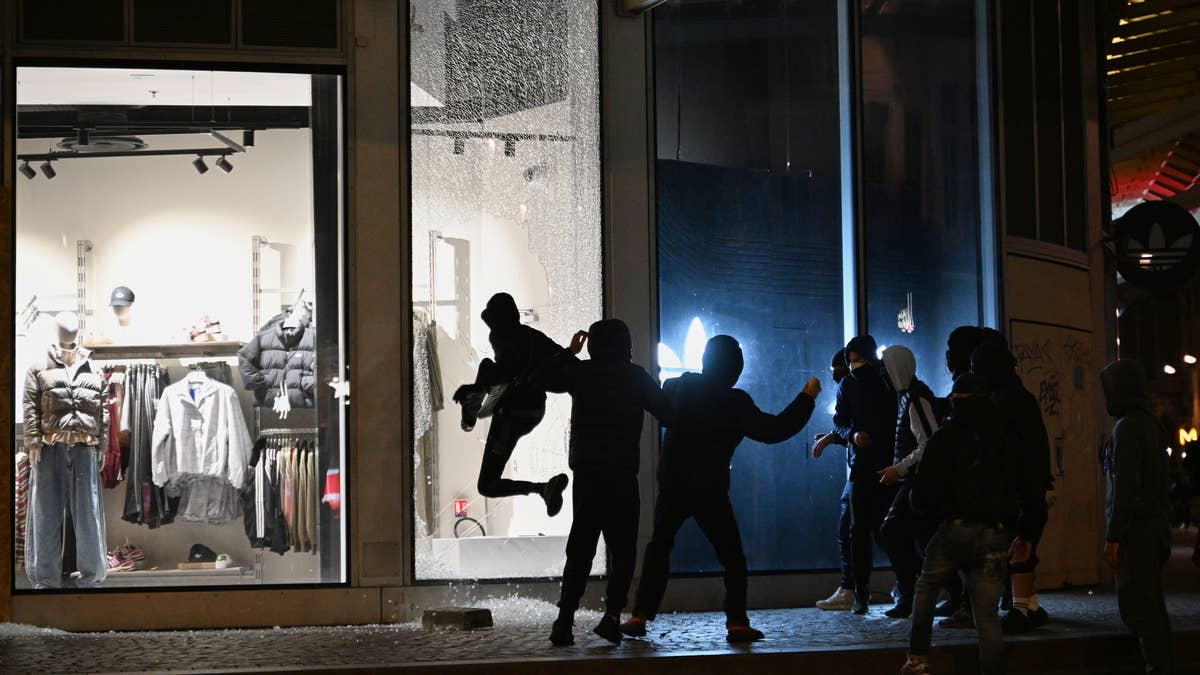
Efter ett brutalt knivdåd i Belfast sprids en attacklista i chattgrupper, vilket leder till att maskerade män riktar sin aggression mot invandrare och tänder på bilar, butiker och bostadshus, vilket indikerar att den gamla konflikten mellan protestanter och katoliker har fått en ny dimension. #Belfast #knivdåd #Nordirland

Knivdådet som satte Belfast i brand

Deze Leden van de Tweede Kamer, deze kampioenen van de vrije en open democratie die een voorbeeldfunctie zouden moeten hebben als bewakers van onze open democratie, van de vrijheid van meningsuiting en expressie, zullen willens en wetens de enige publieke omroep met een iets afwijkend geluid uit het publieke bestel jagen. Niet de omroepen die ons dag in dag uit, jaar in jaar uit, vergiftigen met de wokelinkse dogma’s rond klimaat, gender, westerse zelfhaat, open grenzen en massa-immigratie. Nee, het kleinste omroepje dat zich af en toe keert tegen het staatsnarratief, dat moet eraan geloven. Kennelijk allemaal geen herinneringen aan regimes die schrijvers en journalisten het leven zuur maakten, kranten verboden en tv-zenders uit de lucht haalden. Ze zullen het verwijt dat ze tiranniek en autoritair zijn en onliberaal tot in hun botten, verontwaardigd van de hand wijzen. Want hun motieven zijn nobel: zij sluiten een dissident omroepje om de persvrijheid en de vrijheid van meningsuiting te beschermen. Net zoals zij straks politieke partijen gaan verbieden om de democratie te beschermen. Oorlog is vrede, vrijheid is slavernij, onwetendheid is kracht, wie het verleden beheerst, beheerst de toekomst, wie het heden beheerst, beheerst het verleden. #ouafaoualhadj, @MoMohandis @EJvanderMaas en @HarmenKrul hebben geen idee waar ik het over heb als ze deze voorbeelden van omkering van de werkelijkheid lezen. We zullen hen niet vergeten. De parlementaire geschiedenis ook niet. En als laatste: alle ouders weten dat kinderen op de basisschool worden bestookt met gender- en transgenderpropaganda. Vraag voor de lol eens aan uw kind in de brugklas hoeveel van hun medescholieren twijfels hebben over hun gender. #persvrijheid #democratie #vrijheid