“Socialism Was Good in Theory” That sentence assumes the theory was never seriously challenged. It was. Long before the Soviet Union existed, before Lenin seized power, and before socialism had been tested on a national scale, major thinkers were already attacking its foundations—from very different directions. Five of them stand out. Tocqueville: Equality Can Become Servitude In 1848, Alexis de Tocqueville drew a sharp distinction between democracy and socialism. Both spoke about equality. But Tocqueville believed they pursued it in fundamentally different ways. Democracy, in his view, sought equality while preserving individual freedom. Socialism risked achieving equality by expanding the power of the state over the individual. His warning was essentially this: equality is not automatically liberty. A society can pursue equality so aggressively that it begins sacrificing the independence that makes political freedom meaningful. Bastiat: Follow Where Redistribution Leads Two years later, Frédéric Bastiat attacked socialism from a different direction. His question was deceptively simple: What happens when the state acquires the authority to take from some people and give to others in the name of justice? Bastiat called this “legal plunder.” His concern was not merely that redistribution might be expensive. It was that once government becomes the instrument through which competing groups obtain benefits from one another, politics can turn into a permanent struggle over who controls the machinery of redistribution. The problem, therefore, wasn’t simply how much the state redistributed. It was the principle that made redistribution legitimate in the first place. (bastiat.org) Nietzsche: Equality Can Become Resentment Nietzsche approached socialism neither as an economist nor as a constitutional theorist. He attacked its psychology. He saw modern egalitarian movements as part of a much older moral impulse: resentment toward exceptional individuals and suspicion of strength, ambition and hierarchy. For Nietzsche, the danger was not simply that everyone might become economically equal. It was that a culture could begin treating excellence itself as something morally suspect. The goal would cease to be lifting people upward. It would become bringing the exceptional downward. Böhm-Bawerk: Challenge the Economics Then came Eugen von Böhm-Bawerk. In 1896, he turned his attention specifically toward Marx’s economic system. His criticism was not primarily moral or political. It was technical. Böhm-Bawerk argued that Marx’s theory of value did not adequately explain how the labor values developed in Capital could be reconciled with the actual prices Marx subsequently needed to explain. In other words, he attacked socialism where it claimed to possess a scientific economic foundation. The argument became one of the central criticisms of Marxian economics and helped launch a debate that would continue for generations. Mises: The Calculation Problem Then, in 1920, Ludwig von Mises attacked an even more fundamental question: Even if socialism is morally desirable, how would a socialist economy actually know what to produce? A functioning economy has millions of competing uses for scarce resources. Build a bridge or a hospital? Use steel here or there? Produce more machinery or more consumer goods? Under private ownership and markets, prices for capital goods provide information about relative scarcity and opportunity costs. Mises argued that abolishing private ownership of the means of production also removes the genuine market prices necessary for rational economic calculation. The problem wasn’t simply that socialist planners might make bad decisions. It was that the system deprived them of the very economic signals required to systematically compare those decisions. (Mises Institute) And that was the sequence. Tocqueville challenged the political premise. Bastiat challenged the moral and legal mechanism of redistribution. Nietzsche challenged the psychology behind egalitarianism. Böhm-Bawerk challenged Marx’s economic theory. Mises challenged the possibility of rational central economic calculation. Five different thinkers. Five different objections. And all of them came before the Soviet Union had demonstrated what large-scale socialist government would actually look like. So “socialism was good in theory, but bad in practice” is not an argument. It is a historical claim that requires you to explain why these theoretical objections were wrong. The interesting question isn’t whether socialism had critics. It did. The interesting question is whether socialism ever adequately answered them” - ChatGPT
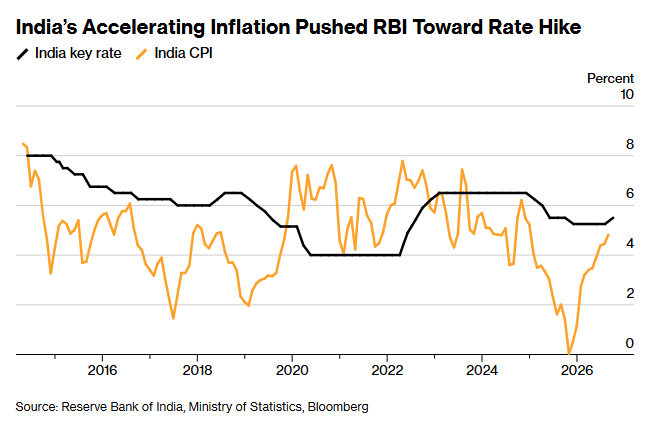
🇪🇺 *MAKHLOUF SAYS #ECB MUST BE PREPARED TO LIFT INTEREST RATES: FT *MAKHLOUF `UNEASY' OVER EUROZONE INFLATION, HE TELLS FT *MAKHLOUF TELLS FT ECB DECISION NEXT WEEK WON'T BE A SURPRISE *MAKHLOUF SAYS INFLATION EXPECTATIONS ARE 'IN GOOD PLACE': FT *MAKHLOUF EXPECTS ECB TO SLIGHTLY #ECB #Inflation #InterestRates #EU
Overnight, air alerts were activated in parts of Estonia after drones flew close to our border and entered Estonian airspace. @NATO fighter jets from Ämari Air Base were scrambled in response. The air alert was later lifted by the Estonian Defence Forces. NATO reacted swiftly #Estonia #NATO #AirAlert #EE
Megérkeztünk a Bledi Stratégiai Fórumra, a csodálatos Bledi-tó partjára. Szlovénia miniszterelnökének meghívására közép-európai kormányfőkkel tárgyalunk Európa jövőjéről. Az első megbeszélésnek helyet adó Vila Bled megérdemel egy részletes bemutatást. A története szinte leképezi a 20. századi Közép-Európa történelmét. A Bledi-tó partján eredetileg 1883–1885 között épített villát az osztrák arisztokrata Windischgrätz család, majd 1922-ben I. Sándor, a Szerb–Horvát–Szlovén Királyság későbbi jugoszláv királya vásárolta meg. A királyi család nyári rezidenciaként használta, és új palotát is terveztek ide Jože Plečnik tervei alapján, ám Sándor 1934-es meggyilkolása, majd a második világháború miatt az elképzelés nem valósult meg. A háború után Tito jugoszláv elnök nyári rezidenciájává alakították a birtokot; a ma látható épület Vinko Glanz tervei alapján 1947-re készült el. Tito itt nemcsak pihent, hanem valóságos diplomáciai központot működtetett: vendége volt többek között Nikita Hruscsov, Haile Selassie, Dzsaváharlál Nehru, Indira Gandhi, Gamal Abdel Nasszer és Kim Ir Szen. A villa ma is őrzi Tito lakosztályát, dolgozószobáját, privát liftjét és egykori mozitermét, amelynek monumentális, 1947-es falfestménye Jugoszlávia második világháborús történetét meséli el. A parkban álló Belvedere pavilon eredetileg a soha meg nem épült királyi rezidencia része lett volna, Tito idején pedig informális teázások és találkozók helyszíne lett. 1984-ben a Vila Bled szállodaként nyitotta meg kapuit, így ma különleges módon egyszerre luxushotel és a királyi Jugoszlávia, Tito állama és a modern Szlovénia történelmi emlékhelye. #BlediStratégiaiFórum #Szlovénia #KözépEurópa
Politiek opportunisme sluipt inmiddels ook de begrotingstoestanden in. Partijen tellen hun knopen. Hoeveel zetels heb ik nu en hoeveel denk ik er na eventuele verkiezingen te krijgen? Meer of minder? D66/VVD/CDA staan op verlies, het is hun begroting, zij willen blijven zitten. BBB heeft er 3 en staat op verlies, zou daarom voor de begroting kunnen gaan stemmen. Mona heeft meer tijd nodig voor haar nieuwe partij, richt zich op 2029, zou daarom voor kunnen gaan stemmen. Idem dito voor DNA. JA21 kan denken dat met de huidige 9 zetels de max mogelijk is bereikt en daarom voor stemmen. Op links zit alleen Pro in de lift, dat kan reden zijn tegen de begroting te stemmen. FvD op rechts idem dito. En als je dan voor stemt, pikt jouw achterban het op de langere termijn bij de volgende verkiezingen dan dat door jou het eigen risico naar 460 en in latere jaren naar 475, 490, 505, 520, 535, 550, etc. euro per jaar stijgt? Wordt je dan over drie jaar niet alsnog afgestraft voor het wegtrekken van belangrijke investeringen in de zorg waar onnodig door jou de personele tekorten tot ver boven de 100.000 gestegen zijn? #Politiek #Begroting #Verkiezingen
When the Fog Begins to Lift If you feel as though the world is going crazy, you’re not imagining things. Over the past decade, a media-driven “woke” movement gripped Western societies, creating what Michael Shellenberger calls “mass psychosis.” He argues that Democrats and media figures labeled opponents of DEI, racial quotas, and open borders as far-right—not because those people had changed, but because the political left had moved dramatically further left on cultural issues. Evidence continues to support this view. U.S. General Social Survey data suggests that center- and right-leaning opinions have remained relatively stable since the early 2000s, while left-wing views have shifted substantially. Meanwhile, publications such as *The New York Times* and *The Washington Post* sharply increased their use of terms like “racist” and “white privilege” after 2012. Shellenberger writes: “The media did this. The mass brainwashing came from college-educated elites in control of the most powerful propaganda machine in world history. These elites convinced the public that the West had grown more racist than ever, a blatant contradiction of the evidence. While the public was distracted by manufactured culture wars, governments exploited the chaos to consolidate power. Authoritarianism, spiraling debt, and economic devastation were the crippling costs of this deception.” He describes the political consequences just as bluntly: “By the time we got to 2016, Democrats had become completely unhinged. They made everything political, hunted heretics, and weaponized the government—three core characteristics of totalitarianism.” The fallout has been severe. Institutions lie in ruins, public trust has collapsed, and communities remain deeply divided. This was not simply a political miscalculation. It was ideological warfare, designed to divide and control. As the fog begins to lift, one question remains: Have we learned enough to resist the next wave of fearmongering and manipulation—or will we once again accept the same tactics from new faces?
Ukraine-Russia War and US-Israel-Iran War are really doing some heavy lifting here to help the average folks worldwide. #UkraineWar #USIranConflict #GlobalImpact #UA #RU #US #IL #IR
🚨 BREAKING: A federal judge has just LIFTED the FINAL block on Trump’s termination of TPS for third world illegals, giving the green light to deport ETHIOPIANS MAJOR WIN! 🔥 These people invaded our country EN MASSE, as captured by @AliBradleyTV, and they’re FINALLY on the verge of being sent back. GET ‘EM ALL OUT! https://x.com/nicksortor/status/2089720844712923522
Mijn volksvertegenwoordiger stond gisteren te liften op de parkeerplaats van de Toekan. Nou ja, dan neem je zo’n man toch mee naar het #boerenprotest https://t.co/xBIQILmvN7 #politiek #actie #boerenprotest
Υπάρχει προπονητικό ΚΑΛΟ staff Υπάρχουν μετρήσεις , GPS κτλ Λάθη θα γινουν , κακές αποφάσεις θα παρθούν, το σημαντικο είναι σιγα σιγα να μειώνονται Δεν γίνεται με ολικό lifting(έπρεπε να γίνει) και νεο προπονητή να πετάς απο day one , δεν ειναι φυσιολογικό Προχωραμε☘️ #paofc https://t.co/lPlpMh3RBc #football #training #teamwork
🇯🇵 #Japan margin trading doubles in 6 months, lifted by pricey #AI stocks – Nikkei https://t.co/Wov7v6aHlG #Japan #MarginTrading #AIStocks #JP
Lithuania has become a target of Russian propaganda due to its plans to lift a ban on nuclear weapons, with Kremlin officials making threats and suggesting that such actions could lead to a third world war while military analysts warn that Russia will likely continue to exploit this topic to sow discontent in Lithuania and hinder defense policy decisions. #Россия #Литва #ядерноеоружие

Meloni imposed passport, nationality, visa checks for visitors from Spain, and refuses to lift them Sánchez retaliates imposing passport, nationality, visa checks for visitors from Italy, "amid the persistent irregular migratory pressure" Italy experiences https://t.co/GdrI42LydO #Meloni #Sánchez #VisaPolicy #IT #ES
Madrid is now giving Rome an ultimatum: lift the border checks on Spaniards by Sunday, or face “proportional measures to protect the interests and dignity of its citizens.” Two of the EU’s four largest members, exchanging deadlines over a crisis the migrants themselves ended by #Madrid #Rome #EUcrisis #ES #IT
Scandal. If the reported facts are accurate, millions of dollars in public money were spent on lobbying in Washington to promote the secession of Republika Srpska and to seek the lifting of sanctions on Milorad Dodik. Taxpayers deserve investment in jobs, infrastructure, https://t.co/wTGzyrxMHV #Scandal #RepublikaSrpska #MiloradDodik #BA #US
O influenceriță trans franceză susține că a fost sedată și violată în București, iar ulterior, bătută în liftul secției de poliție, incidentul fiind legat de discriminare împotriva comunității LGBTQ, conform declarațiilor victimei și avocatei sale. #LGBTQ #viol #politie

| JULY 2026 | The Guard State How the largest Arab nation became a security contractor at the gates of its own people By Adham Hasanin Egyptian journalist and political writer, based in the Netherlands In June 2025, hundreds of activists from forty countries landed at Cairo airport. Doctors from France, lawyers from Australia, students from the United States, pensioners from the Netherlands. They carried no weapons and no banned slogans; they carried backpacks, walking shoes, and a single intention: to march from Arish to the Rafah crossing — entirely on Egyptian soil — to demand that food be allowed through to a people starving behind the gate. Not one of them reached Rafah. More than two hundred were detained before the march could begin. Around five hundred foreign nationals were deported from airports, hotels, and checkpoints. Passports were confiscated, activists were pulled out of downtown Cairo cafés, and the Global March to Gaza was cancelled on 16 June without taking its first step. And the world watched. This was no secret operation in a dark basement; it happened in the open, documented by the deportees’ own phone cameras, carried by every international news agency. The world watched an Arab state arrest Europeans, Americans, and Africans for wanting to walk towards Palestine. A state guarding the gate of a siege — from the side that was supposed to be the side of rescue. Hold that image, because it is the key to everything that follows. This was not an aberration in Egyptian policy, nor an isolated security decision. It is the function — the complete function around which the Egyptian state has been redefined over the past decade, and which it is time to call by its proper name: the Guard State. I. The Name — What Do We Mean by the Guard State? Political economy has long described states that live off the rent of their location rather than the production of their people. But what has crystallised in Egypt over the past decade goes beyond traditional geographic rent — the Suez Canal, say — into something far graver: the conversion of sovereignty itself into a commodity for hire. The Guard State does not sell its location; it sells its function. It collects its wages not for what it produces, but for what it prevents: it prevents the refugee from reaching Europe, the activist from reaching Gaza, its own people from reaching politics, and the resistance’s weapons from reaching their destination. Four gates, guarded by a single machine, whose wages are paid in loans, deposits, and perpetually renewed rescue packages. This is not a rhetorical metaphor; it is an economic structure with numbers attached. When the Egyptian economy collapsed in 2024, it was rescued not by productive reform but by a single deal whose subject was location: Ras el-Hekma — thirty-five billion dollars for a stretch of coastline. And whenever negotiations with the IMF stall, the tranches are unlocked by explicit European pressure whose subject is migration: nine billion euros from the European Union in the 2024 “Strategic Partnership,” whose own documents place “migration management” at its core. Europe does not pay Egypt to prosper. It pays Egypt to guard. Thus the model is complete: income in exchange for prevention, external legitimacy in exchange for guarding, and international silence about domestic tyranny in exchange for keeping the gates controlled. To see how the model works on the ground, consider the bloodiest gate of all: the gate of Gaza. II. The Gaza Gate — The Guard Who Is Himself Searched The first paradox must be nailed down with facts: Egypt is not a sovereign guard of its own crossing; it is a searched guard. Egyptian relief trucks — ninety-two thousand food parcels in a single convoy this month — are subject to Israeli inspection before entering the Strip: from Egyptian soil, through a crossing that bears an Egyptian name. The state that guards the gate does not hold its key. It owns the threshold, but not the door. Then the October 2025 truce added a new layer to the function. Under the fifteen-point roadmap sponsored by the international envoy together with the “guarantor states” — Egypt foremost among them — Cairo is to train the civilian police force that will replace Hamas in administering the Strip, under the slogan of “one authority, one law, one weapon.” Let us call things by their names: the state that could not — or would not — deliver a loaf of bread without Israeli permission is now qualifying to graduate the security apparatus that will oversee the disarming of the resistance. From guarding the siege to administering what comes after the siege — a promotion within the same project. And meanwhile, what is happening behind the guarded gate? Since the truce, more than one thousand one hundred Palestinians have been killed by Israeli fire — the latest, just two days ago, a ten-year-old boy named Motaz Abu Shaar, carried to his grave in Khan Younis by his mother, Warda. A United Nations commission of inquiry has concluded that Israel is “deliberately targeting children in an ongoing genocide.” This is what the guarantors’ official language calls a “ceasefire.” What meaning is left in the word “guarantor”? A guarantor that the gate stays firmly shut — however high the dead pile up behind it. III. The Mediterranean Gate — The Guard Europe Pays For The second gate faces north. Since 2016, Cairo has boasted — through its officials at every European forum — that “not a single irregular migration boat has departed from Egyptian shores.” This is very nearly true. But the forbidden question is: at what political price has this “efficiency” become an instrument of mutual blackmail? Europe — which condemns Egypt’s human rights record in its parliamentary resolutions — is the same Europe that signed the nine-billion-euro partnership, and the same Europe that stays silent about sixty thousand political prisoners because the alternative, in its calculations, is boats that never stop. And Cairo understands the game and has mastered it: whenever human rights pressure intensifies, the official discourse turns up the volume on “Egypt hosts millions of refugees” and “the last line of defence.” The result is a perfect structure of mutual blackmail: Europe buys its conscience’s silence, the regime sells its location, and the people — Egyptian and refugee alike — are the commodity in the transaction. The democracies that lecture on values are financing the guard who keeps the victims from knocking on their doors. This is not passing hypocrisy; it is a structural partnership in the Guard State model — one that makes Brussels and Berlin shareholders in everything this state produces, from domestic repression to external siege. IV. The Interior Gate — Guarding the People Against Politics But the most dangerous gate is not on any border; it is inside. The Guard State cannot perform its external function unless it first guards an internal gate: the people’s gate to politics. The function requires a people that does not ask: why are we guarding the siege of our brothers? Why are our trucks searched on our own soil? Why are guests deported for coming to walk in peace? To guarantee the question is never asked, the largest silencing machine in the country’s history was built: sixty thousand prisoners of opinion, a press ranked 166th out of 180 worldwide, and a state security case number waiting for anyone who writes. I write these lines from experience, not from reading reports. When I continued writing from my Dutch exile, the machine reached me across continents: accounts shut down by coordinated mass-reporting campaigns, documented threats, a family harassed inside Egypt as leverage — and my name entered into Case 1282 of 2024, not for any act I committed, but for opinions written from free European soil. This is not a personal complaint; it is a job description: the Guard State guards even beyond its borders, because the free word — wherever it is written — threatens the entire contract of guardianship. The logic is perfectly self-consistent: a regime that sells “stability” abroad cannot tolerate a voice revealing that the stability on offer is the stillness of graveyards. This is why the arrest of the foreign activists in June 2025 was inevitable, not incidental: a peaceful march reaching Rafah would have revealed, before the world’s cameras, that the gate opens when it is wanted open — and that the one keeping it shut is a partner, not a mediator. V. What Has Egypt Lost? — The Guard’s Bill An apologist might argue: what is the harm? A state monetising its location as Norway monetises its oil. The answer lies in the essential difference: Norway sells a resource; Egypt leases its will. And the difference between the two is the difference between trade and bondage. Let us tally what Egypt has paid for this model, in bare facts. It lost its water sovereignty: the Renaissance Dam was completed and filled without the state — owner of “the largest defence headquarters in the world” — daring anything beyond statements of concern; for the guard does not make trouble for the international order that employs him. It lost its regional standing: in the Iran–America war halted just weeks ago, Cairo was neither party nor mediator nor even consultant — Pakistan brokered the deal, while Egypt absorbed the economic shrapnel of Hormuz’s closure like a bystander caught in a battle whose parties it does not know. It lost its place in the conscience of its nation: the state that liberated its land in 1973 and led the Arab world for a century has become, in the eyes of the Arab street from the Atlantic to the Gulf, the gatekeeper of the siege. This loss, specifically, no loan or deposit can repay — because it is the only capital that cannot be printed. And it lost — here is the crux — the very national security in whose name the guarding is justified. The model proved its fragility at the moment of testing: when Israel feared an Iranian response last year, it cut off Egypt’s gas by unilateral decision within hours. The guard who believed himself a partner discovered he was merely a hireling whose wages stop the moment danger arrives. VI. The Alternative Is Not a Slogan — It Is the Recovery of the Original Function I will not close with an essay on “the solution lies in Arab unity”; worn-out words kill more surely than silence. The alternative is specific, and it begins with redefining the function. The state is not a guard; the state is the agent of its people’s will. Every foreign policy not derived from that will is — by definition — functional servitude, however it is wrapped in the language of wisdom and moderation. And the Egyptian will is known and needs no referendum: no people in this region accepts that its country serve as warden of the siege of Gaza, or as Europe’s border post. Practically, the recovery begins with three measurable steps. Open the Rafah crossing fully and sovereignly, by purely Egyptian decision — that alone would overturn the equation of the siege. Break the negotiating bondage by linking any cooperation on migration to concrete European positions on Palestine, not statements of concern. And open the interior gate — release the prisoners and lift the hand from the written word — because a state that fears an article will never dare face an occupier. I know the current regime will do none of this; guarding is its founding contract and its financial artery. But this article is not written for the regime. It is written for memory, and for the generation that will inherit the gates — so that it knows that what is presented to it today as “the fate of geography” is no fate at all. It is an employment contract, signed by a regime without a mandate from its people. And contracts, however long they run, end when one of their parties does. And the world — I return to where I began — is a witness that requires no further proof. It watched the deportees at Cairo airport; it watched the searched trucks; it watched Warda Abu Shaar carry her son to his grave behind a firmly guarded gate. The question is no longer: what is happening? The only question left is: who dares to name it? This article is a naming. Adham Hasanin is an Egyptian journalist and political writer based in the Netherlands, covering Arab and European political affairs.
Președintele Nicușor Dan a promulgat legea „Lift pentru viață”, prin care blocurile de trei sau mai multe etaje fără lift vor putea primi finanțare pentru instalarea de lifturi, program destinat să crească accesibilitatea locuințelor pentru persoanele vârstnice și cu dizabilități. #LiftPentruViață #Accesibilitate #NicușorDan