WRLD

Search

#pain
Mika Aaltola Just Now
Finnish political scientist (born 1969)

The author estimates that Russia would likely increase pressure during the negotiations. According to him, Russia's dirty war has worked well from the country's perspective, which could lead to an escalation of operations. He urged to be prepared and wrote that especially the E5 countries within the European negotiating team would be targets of intimidation. #Venäjä #sota #Eurooppa #FI #RU #EE (translated)

1200
Mika Aaltola Just Now
Finnish political scientist (born 1969)

The author estimates that Russia might increase pressure during the negotiations, as its dirty war has worked well from Russia's perspective. He urged to prepare for heightened pressure and specifically mentioned that the E5 countries, which are part of the European negotiating team, would be targets of intimidation. #Venäjä #sota #Eurooppa #FI #RU #E5 (translated)

1040
Mika Aaltola Just Now
Finnish political scientist (born 1969)

According to the author, Russia would likely increase pressure during the negotiations. He assessed that especially the E5 countries in the European negotiation team would become targets of intimidation. #Venäjä #E5 #neuvottelut #RU #E5 (translated)

1040
Postimees 1h

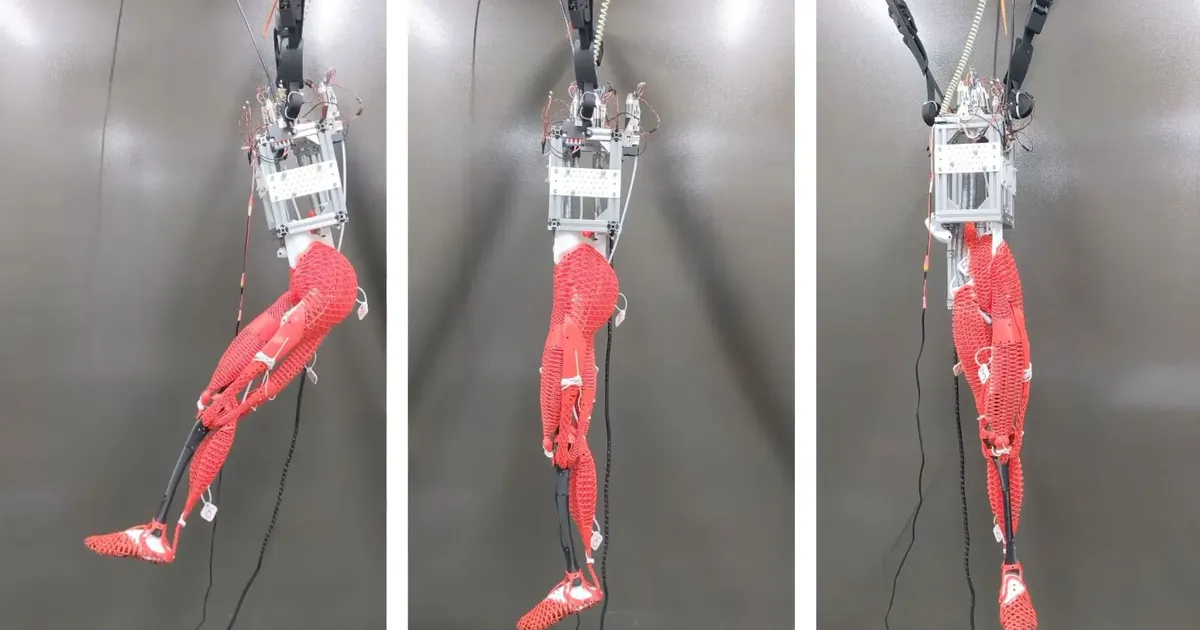
Japanese scientists have developed a method that allows the replication of the strength, flexibility, and elasticity of human legs using 3D-printed muscles made from only one type of flexible plastic. #3Dprintimine #robotika #materjaliteadus (translated)

pmo.ee
LISATUD VIDEOD ⟩ Täitsa jalad kohe – vaata, kuidas 3D prinditud lihased kunstjalgu liigutavad
1486
ERR 23h

Tiiu Hallapi's article discusses the need to define the concept of nation in the preamble of the Estonian Constitution, highlighting that this is not only a legal but also a philosophical question, while attempts to define culture and nation may be related to legislative flexibility and changes over time. #rahvus #põhiseadus #filosoofia (translated)

www.err.ee
Tiiu Hallap: rahvuse mõiste põhiseaduse preambulis
1959
Irish Independent 1d

The sale of a $180 million Van Gogh painting is in jeopardy due to allegations that it was obtained under duress during the Nazi era. #seguridad #bloqueo #navegación

www.independent.ie
Sale of $180m Van Gogh in doubt after Nazi duress claim
2013
rsvp 2d

A pharmacist has issued a serious warning about the risks of combining metformin with common painkillers like ibuprofen and diclofenac, emphasizing potential complications for kidney function and the importance of monitoring and consultation before taking additional medications. #Metformin #Ibuprofen #HealthWarnings

www.rsvplive.ie
Pharmacist 'serious' warning over metformin, ibuprofen and diclofenac
3002
Michael E. Mann 2d

The danger is that once in power, Democrats will revert to business as usual..from party insiders..canned talking points..Performative oversight..that feels disconnected from..pain Americans are feeling. Democratic power in waning days of..Trump..must..be..visible, participatory & consequential.

1780
Tehran Tadhg 2d
Irish comedian

The author wrote that they could not see how Paddy Cosgrave would recover from this, adding that the red background matched the paint and describing the material as “Pulitzer Prize territory.”

2894
Paddy Cosgrave 2d
Irish entrepreneur

The author said they wished to offer an unreserved apology for using red paint and putting up a sign in Ireland that read “Whistleblower”. #Ireland #Whistleblower #Apology #IE

3340
Luciano Magaldi Sardella (PhD) 2d

"GAZZETTA H24": STREET ART, STORNARA ENTERS THE WIPO REPORT ALONGSIDE THE GREAT CITIES OF THE WORLD SOURCE: https://www.gazzettah24.it/street-art-stornara-entra-nel-rapporto-wipo-accanto-alle-grandi-citta-del-mondo/ -------------------------------------------------------------------- From 'ghost town' to global model cited in Geneva: the cultural wager of Stornara Life APS wins the attention of WIPO. STORNARA (FG) - There is a Southern Italy that makes no little noise. It stands among the wheat fields and the rural roads of the Capitanata, far from the great routes of mass tourism. Until a few years ago Stornara, in the province of Foggia, was the typical town that statistics dismiss with a cruel adjective: 'peripheral'. Today its name appears in an analysis by WIPO, the 'World Intellectual Property Organization', the United Nations Agency of Europe headquartered in Geneva. 'Stornara Life APS' alongside Berlin, New York, Los Angeles, Paris, and Melbourne. -------------------------------------------------------------------- A report that looks at the walls of the world The text is entitled 'From Local Scenes to Global Recognition: Talent Mobility in Street Art'. It bears the signature of three WIPO economists, Egbert Amoncio, Alexander Cuntz, and Alessio Muscarnera, and was published in the series 'Creative Industries Insights'. To build it the authors started from the data of the platform 'Street Art Cities'. The technical note speaks of about 74,000 geolocalized works, collected and shared by street-art enthusiasts all over the world. The underlying questions are simple. Where is street art born? Who travels to paint it? Which cities manage to attract talent from outside? The first answer dismantles a commonplace. Street art is a profoundly local phenomenon. About one artist in five also works abroad, whereas the great majority paints in its own city or in those nearby.  Among the few who cross the borders, almost 40 per cent are 'highly mobile': they build an international artistic brand without severing their roots. They are the cases of Banksy, Os Gemeos, and Invader, whose walls appear on more than one continent. The authors use an effective term: street art is 'glocal', rooted in its own territory but capable of generating global circuits of talent and recognition. ---------------------------------------------------------------- The magnets of the world When one asks which cities attract foreign artists most, the map is fascinating. North America weighs by size, with New York, Los Angeles, and Miami. Western Europe offers a dense network of opportunities, from Berlin to Amsterdam, from Vienna to Ghent, from Basel to Rotterdam, favoured by the festival circuit and by freedom of movement of the Schengen area. Lisbon and Barcelona have staked on municipal policies of support. Melbourne is the sole representative of Oceania, and Northern Europe relies on Bergen, London, Belfast, and Stavanger. In this scenario of capitals and metropolises, the report inserts an Italian, Apulian, Foggian exception: Stornara, a small agricultural town of about 6,000 souls, since 2018 has been a destination for mural talent. It shows how street art can trigger the rebirth of a community: thanks to the annual festival 'Stramurales International Street Art Festival', born in 2017 from the iron will to combat urban and socio-economic decline on the part of the founders of the social promotion association 'Stornara Life APS', Lino Lombardi and his Stornarese 'Banda dei Fischietti', it has accumulated more than 173 murals. About fifty of them are works by high-level international artists, with Google Trends data which since 2017 have shown a remarkable interest in the tourist-mural destination, a sign that the international festival has by now captured national and international attention. It has also become the first monographic academic case study in the world on a street-art festival, 'Street Art as Public Health Infrastructure', published in the prestigious journal of world academic standing, the 'Harvard Health and Human Rights Journal' of Harvard University. Through the work of the researcher Luciano Magaldi Sardella of Orta Nova and of Professor Matteo Mantuano of Lucera, all this corresponds to the demonstration that an idea, an association, and the availability of a community can change the identity of a place 'forgotten by God'. He who has followed the affair from outside also tells it: the town, once little accustomed to visitors, today welcomes international tourists, individuals, groups, and school parties come to see its more than 173 murals. -------------------------------------------------------------------- The secret is in density The datum which has kindled Stornarese pride is this: volume does not count, proportion counts. The organizers propose a simple indicator: works by foreign artists divided by inhabitants, multiplied by 100,000.  With about over 50 international works and a population of a few thousand residents, at Stornara one arrives at several hundred foreign works per 100,000 inhabitants. It is a value which the metropolises, with millions of residents, cannot approach. The meaning must be read with precision, and precisely here stands the beauty of the thing. No one maintains that Stornara has more foreign murals than New York. The point is that, in relation to its scale, few places in the world concentrate so much international art per inhabitant.  The impact does not disperse itself in a megalopolis: it deposits itself in every street, on every façade, in the everyday life of those who inhabit it. The most interesting part of the report is that which looks beyond the ranking. The authors write that the value of street art extends well beyond the painted surfaces. Cities such as Stornara demonstrate how urban art attracts tourism, generates media coverage, and can stimulate local commercial activities, strengthening the sense of community and restoring the psychosocial well-being which would distance the imperishable southern decline.  The report adds, however, a precious warning: success depends on careful implementation and on the involvement of the artistic communities. Initiatives dropped from above risk being perceived as 'predatory' by artists who have street credibility at heart. The global Stramurales model seems to have avoided the snare. Field studies tell of walls donated by residents, one-week artists' residencies, and public discussion of the themes to be addressed. ----------------------------------------------------------------- The lesson of a town The report closes itself with an idea which holds for Stornara as much as for Berlin: the vitality of street art sinks in local roots. It is born from communities, speaks of their problems, is made by artists immersed in their urban contexts. The artistic family of 'Stornara Life APS' understood it before many regional and local politicians, making of its own walls an open-air museum, a promise, and opening them to the world without ceasing to be itself. In this official report of the Genevan Agency of the United Nations of Europe which measures the capacity to attract talent, this turns out to be, probably, the most precious result:. To be cited alongside the great capitals of urban art and to remain, after all, a rural provincial town in which every wall tells a variegated world of glocal stories.

www.gazzettah24.it
Street art, Stornara entra nel rapporto WIPO accanto alle grandi città del mondo
111
Pau Gasol 3d
Spanish basketball player

The writer said a visit to Gorée Island had offered a chance to learn about its culture and history, including the transatlantic slave trade, which they said should never be forgotten. They also said they had received the Gorée Pilgrim Award from local authorities and thanked the island. https://t.co/MgnQT4jAbc #Gorée #History #Culture #SN

3349
Pia Kauma 3d
Finnish politician

The author reminded that Finland joined NATO after Russia had attacked Ukraine, and not the other way around. He called the demand for Finland to withdraw from NATO absurd and said that those making the demand knew it themselves. According to him, the demand and other points on the list showed that Russia wanted to continue the war and that peace was not close. https://t.co/qGaUPQaIWJ #Suomi #Nato #Ukraina #FI #RU #UA (translated)

3350
mtvuutiset.fi 3d

In Finland, it is estimated that up to 85,000 people suffer from pressure ulcers annually, with treatment costs potentially reaching up to 800 million euros, even though the majority of these injuries could be prevented due to deficiencies in healthcare. #painehaava #terveydenhuolto #ehkäisy (translated)

www.mtvuutiset.fi
Suomessa jopa 85 000 ihmistä kärsii tästä vuosittain – lasku jopa 800 miljoonaa
2682
Luciano Magaldi Sardella (PhD) 3d

"VIVERE PUGLIA": STRAMURALES: STORNARA IN THE “GLOBAL TOP 20” OF THE REPORT BY THE UNITED NATIONS AGENCY IN EUROPE” From “ghost town” to global model cited in Geneva: the cultural gamble of Stornara Life APS wins the attention of WIPO There is a southern Italy that is making quite a noise. It lies among the wheat fields and rural roads of the Capitanata, far from the great routes of mass tourism. Until a few years ago Stornara, in the province of Foggia, was the typical town that statistics dismiss with a cruel adjective: “peripheral”. Today its name appears in an analysis by WIPO, the “World Intellectual Property Organization”, a United Nations agency in Europe based in Geneva. So Stornara alongside Berlin, New York, Los Angeles, Paris, and Melbourne. A report that looks at the walls of the world The text is entitled “From Local Scenes to Global Recognition: Talent Mobility in Street Art. It is signed by three WIPO economists, Egbert Amoncio, Alexander Cuntz, and Alessio Muscarnera, and was published in the “Creative Industries Insights” series. To construct it, the authors started from data from the “Street Art Cities” platform. The technical note speaks of about 74,000 geolocated works, collected and shared by street art enthusiasts around the world. The underlying questions are simple. Where is street art born? Who travels to paint it? Which cities succeed in attracting talent from outside? The first answer dismantles a commonplace. Street art is a profoundly local phenomenon. About one artist in five also works abroad, while the great majority paint in their own city or in nearby ones. Among the few who cross borders, almost 40 per cent are “highly mobile”: they build an international artistic brand without severing their roots. These are the cases of Banksy, Os Gemeos, and Invader, whose walls appear on several continents. The authors use an effective term: street art is “glocal”, rooted in its own territory but capable of generating global circuits of talent and recognition. The magnets of the world When one asks which cities most attract foreign artists, the map is fascinating. North America weighs in by size, with New York, Los Angeles, and Miami. Western Europe offers a dense network of opportunities, from Berlin to Amsterdam, from Vienna to Ghent, from Basel to Rotterdam, favoured by the festival circuit and by freedom of movement in the Schengen area. Lisbon and Barcelona have focused on supportive municipal policies. Melbourne is the sole representative of Oceania, and Northern Europe relies on Bergen, London, Belfast, and Stavanger. In this scenario of capitals and metropolises, the report inserts an Italian, Apulian, Foggia exception: Stornara, a small agricultural town of about 6,000 souls, has since 2018 been a destination for mural talent. It shows how street art can trigger the rebirth of a community: thanks to the annual festival “Stramurales International Street Art Festival”, born in 2017 from the iron will to combat urban and socio-economic decline on the part of the founders of the social promotion association Stornara Life APS, Lino Lombardi and his Stornara-based Banda dei Fischietti, it has accumulated more than 173 murals. About fifty of them are works by high-level international artists, with Google Trends data since 2017 having shown remarkable interest in the tourist-mural destination, a sign that the international festival has now captured national and international attention. Having also become the world’s first single-case academic study on a street art festival, “Street Art as Public Health Infrastructure”, published in the prestigious world-level academic journal, the “Harvard Health and Human Rights Journal” of Harvard University, by the researcher Luciano Magaldi Sardella from Orta Nova and Professor Matteo Mantuano from Lucera, all this amounts to proof that an idea, an association, and the willingness of a community can change the identity of a place “forgotten by God”. Those who have followed the story from outside tell it too: the town, once little accustomed to visitors, today welcomes international tourists, individuals, groups, and school parties who have come to see its more than 173 murals. The secret lies in density The figure that has ignited Stornara pride is this: volume does not count, proportion does. The organizers propose a simple indicator: works by foreign artists divided by inhabitants, multiplied by 100,000. With more than 50 international works and a population of a few thousand residents, Stornara reaches several hundred foreign works per 100,000 inhabitants. It is a value that metropolises, with millions of residents, cannot approach. The meaning must be read precisely, and precisely here lies the beauty of the thing. Nobody claims that Stornara has more foreign murals than New York. The point is that, in relation to its scale, few places in the world concentrate so much international art per inhabitant. The impact is not dispersed in a megalopolis: it settles in every street, on every façade, in the daily life of those who live there. The most interesting part of the report is the one that looks beyond the ranking. The authors write that the value of street art extends far beyond painted surfaces. Cities like Stornara show how urban art attracts tourism, generates media coverage, and can stimulate local commercial activities, strengthening the sense of community and restoring psychosocial well-being that would drive away the perennial southern decline. The report adds, however, a valuable warning: success depends on careful implementation and on the involvement of artistic communities. Top-down initiatives risk being perceived as “predatory” by artists who care about street credibility. The global Stramurales model seems to have avoided the pitfall. Field studies tell of walls donated by residents, week-long artist residencies, and public discussion of the themes to be addressed. The lesson of a town The report closes with an idea that holds for Stornara as much as for Berlin: the vitality of street art is rooted in local roots. It is born from communities, speaks of their problems, and is made by artists immersed in their urban contexts. The artistic family of Stornara Life APS understood this before many regional and local politicians, making its own walls an open-air museum, a promise, and opening them to the world without ceasing to be itself. In this official report by the Geneva-based United Nations agency in Europe that measures the capacity to attract talent, this turns out to be, probably, the most precious result: to be cited alongside the great capitals of urban art and to remain, after all, a rural provincial town in which every wall tells a colourful world of glocal stories. (translated)

447
Petteri Orpo 3d
Finnish politician and the 47th Prime Minister of Finland

Orpo and German Chancellor Friedrich Merz believed that Europe must be involved in potential peace negotiations, while the EU's foreign policy chief Kaja Kallas emphasized that Russia should not dictate who represents Europe in the negotiations. #DublinHuippukokous #Eurooppa #Ukraina (translated)

3139
Margo Gontar 4d

So, SpaceX’s Starshield outages and restrictions are back for terminals used by Ukrainian forces to deter Russian attacks , new reports say . Paint me suprised.

2804
Luciano Magaldi Sardella (PhD) 4d

"IL SIPONTINO": STRAMURALES: STORNARA IN THE 'GLOBAL TOP 20' OF THE REPORT OF THE UNITED NATIONS AGENCY IN EUROPE. SOURCE: https://www.lagazzettadisansevero.it/stramurales-stornara-nella-global-top-20-del-rapporto-dellagenzia-delle-nazioni-unite-deuropa/?fbclid=IwY2xjawVibZVleHRuA2FlbQIxMABwZG9mAWJyaWQRMHE3R3FDUWVMVnBtN1NiRGRzcnRjBmFwcF9pZBAyMjIwMzkxNzg4MjAwODkyAAEfJpk9OBrbzNPPuzmmZTsbvjf1RRRRwgltWvqpPTryHt2mv-Z5rTEy1ifxBXU_aem_ciFpxVBzVKZmCZU0twovqQ From 'ghost town' to global model cited in Geneva: the cultural gamble of Stornara Life APS wins the attention of WIPO. There is a Southern Italy that is making quite a noise. It lies among the wheat fields and the rural roads of the Capitanata, far from the great routes of mass tourism. Until a few years ago Stornara, in the province of Foggia, was the typical town that statistics dismiss with a cruel adjective: 'peripheral'. Today its name appears in an analysis by WIPO, the World Intellectual Property Organization, the United Nations agency in Europe based in Geneva, alongside Berlin, New York, Los Angeles, Paris, and Melbourne. A report that looks at the walls of the world The text is entitled From Local Scenes to Global Recognition: Talent Mobility in Street Art. It is signed by three WIPO economists, Egbert Amoncio, Alexander Cuntz, and Alessio Muscarnera, and was published at the end of May 2026 in the Creative Industries Insights series. To build it, the authors started from the data of the Street Art Cities platform. The technical note speaks of around 74,000 geolocated works, collected and shared by street art enthusiasts all over the world. The underlying questions are simple. Where is street art born? Who travels to paint it? Which cities manage to attract talent from outside? The first answer dismantles a commonplace. Street art is a profoundly local phenomenon. Around one artist in five also works abroad, while the great majority paint in their own city or in those nearby. Among the few who cross borders, almost 40 per cent are 'highly mobile': they build an international artistic brand without severing their roots. Such are the cases of Banksy, Os Gemeos, and Invader, whose walls appear on several continents. The authors use an effective term: street art is 'glocal', rooted in its own territory but capable of generating global circuits of talent and recognition. The magnets of the world When one asks which cities attract foreign artists most, the map is fascinating. North America weighs in by size, with New York, Los Angeles, and Miami. Western Europe offers a dense network of opportunities, from Berlin to Amsterdam, from Vienna to Ghent, from Basel to Rotterdam, favoured by the festival circuit and by freedom of movement in the Schengen area. Lisbon and Barcelona have bet on supportive municipal policies. Melbourne is the only representative of Oceania, and Northern Europe relies on Bergen, London, Belfast, and Stavanger. In this scenario of capitals and metropolises, the report inserts an Italian, Apulian, Foggian exception: Stornara, a small agricultural town of around 6,000 souls, since 2018 a destination for mural talents. It shows how street art can trigger the rebirth of a community: thanks to the annual Stramurales International Street Art Festival, born in 2017 from the iron will to fight urban and socio-economic decline on the part of the founders of the social promotion association Stornara Life APS, Lino Lombardi and his Stornara Banda dei Fischietti, it has accumulated more than 173 murals. Around fifty of them are works by high-level international artists, with Google Trends data that since 2017 have shown considerable interest in the tourist-mural destination, a sign that the international festival has now captured national and international attention. Having also become the world's first monographic academic case study on a street art festival, 'Street Art as Public Health Infrastructure', published in the prestigious world-level academic journal, the 'Harvard Health and Human Rights Journal' of Harvard University, by the researcher Luciano Magaldi Sardella from Orta Nova and Professor Matteo Mantuano from Lucera, all this amounts to proof that an idea, an association, and the willingness of a community can change the identity of a place 'forgotten by God'. Those who have followed the story from outside also tell it: the town, once little accustomed to visitors, today welcomes international tourists, individuals, groups, and school parties who have come to see its more than 173 murals. The secret lies in density The figure that has ignited Stornara pride is this: volume does not count, proportion counts. The organizers propose a simple indicator: works by foreign artists divided by inhabitants, multiplied by 100,000. With around more than 50 international works and a population of a few thousand residents, in Stornara one reaches several hundred foreign works per 100,000 inhabitants. It is a value that metropolises, with millions of residents, cannot approach. The meaning must be read precisely, and precisely here lies the beauty of it. Nobody claims that Stornara has more foreign murals than New York. The point is that, relative to its scale, few places in the world concentrate so much international art per inhabitant. The impact is not dispersed in a megalopolis: it settles in every street, on every façade, in the daily life of those who live there. The most interesting part of the report is the one that looks beyond the ranking. The authors write that the value of street art extends far beyond the painted surfaces. Towns like Stornara demonstrate how urban art attracts tourism, generates media coverage, and can stimulate local commercial activities, strengthening the sense of community and restoring the psychosocial well-being that would drive away the perpetual southern decline. The report adds, however, a valuable warning: success depends on careful implementation and on the involvement of artistic communities. Top-down initiatives risk being perceived as 'predatory' by artists who care about street credibility. The global Stramurales model seems to have avoided the pitfall. Field studies tell of walls donated by residents, one-week artist residencies, and public discussion of the themes to be addressed. The lesson of a town The report closes with an idea that holds for Stornara as much as for Berlin: the vitality of street art is rooted in local roots. It is born from communities, speaks of their problems, and is made by artists immersed in their urban contexts. The artistic family of Stornara Life APS understood this before many regional and local politicians, making its own walls an open-air museum, a promise, and opening them to the world without ceasing to be itself. In this official report of the Geneva agency of the United Nations in Europe that measures the capacity to attract talent, this turns out to be, probably, the most precious result: to be cited alongside the great capitals of urban art and to remain, after all, a rural provincial town in which every wall tells a colourful world of glocal stories. (translated)

www.lagazzettadisansevero.it
Stramurales: Stornara nella “Global Top 20” del Rapporto dell’Agenzia delle Nazioni Unite d’Europa - La Gazzetta di San Severo - News di Capitanata
225
Luciano Magaldi Sardella (PhD) 4d

“LA GAZZETTA DI SAN SEVERO”: STRAMURALES: STORNARA IN THE ‘GLOBAL TOP 20’ OF THE REPORT OF THE UNITED NATIONS AGENCY IN EUROPE SOURCE: https://www.lagazzettadisansevero.it/stramurales-stornara-nella-global-top-20-del-rapporto-dellagenzia-delle-nazioni-unite-deuropa/?fbclid=IwY2xjawVibZVleHRuA2FlbQIxMABwZG9mAWJyaWQRMHE3R3FDUWVMVnBtN1NiRGRzcnRjBmFwcF9pZBAyMjIwMzkxNzg4MjAwODkyAAEfJpk9OBrbzNPPuzmmZTsbvjf1RRRRwgltWvqpPTryHt2mv-Z5rTEy1ifxBXU_aem_ciFpxVBzVKZmCZU0twovqQ From ‘ghost town’ to global model cited in Geneva: the cultural gamble of Stornara Life APS wins the attention of WIPO. There is a Southern Italy that is making quite a noise. It lies among the wheat fields and the rural roads of the Capitanata, far from the great routes of mass tourism. Until a few years ago Stornara, in the province of Foggia, was the typical town that statistics dismiss with a cruel adjective: ‘peripheral’. Today its name appears in an analysis by WIPO, the World Intellectual Property Organization, the United Nations agency in Europe based in Geneva, alongside Berlin, New York, Los Angeles, Paris, and Melbourne. A report that looks at the walls of the world The text is entitled From Local Scenes to Global Recognition: Talent Mobility in Street Art. It is signed by three WIPO economists, Egbert Amoncio, Alexander Cuntz, and Alessio Muscarnera, and was published at the end of May 2026 in the Creative Industries Insights series. To build it, the authors started from the data of the Street Art Cities platform. The technical note speaks of around 74,000 geolocated works, collected and shared by street art enthusiasts all over the world. The underlying questions are simple. Where is street art born? Who travels to paint it? Which cities manage to attract talent from outside? The first answer dismantles a commonplace. Street art is a profoundly local phenomenon. Around one artist in five also works abroad, while the great majority paint in their own city or in those nearby. Among the few who cross borders, almost 40 per cent are ‘highly mobile’: they build an international artistic brand without severing their roots. Such are the cases of Banksy, Os Gemeos, and Invader, whose walls appear on several continents. The authors use an effective term: street art is ‘glocal’, rooted in its own territory but capable of generating global circuits of talent and recognition. The magnets of the world When one asks which cities attract foreign artists most, the map is fascinating. North America weighs in by size, with New York, Los Angeles, and Miami. Western Europe offers a dense network of opportunities, from Berlin to Amsterdam, from Vienna to Ghent, from Basel to Rotterdam, favoured by the festival circuit and by freedom of movement in the Schengen area. Lisbon and Barcelona have bet on supportive municipal policies. Melbourne is the only representative of Oceania, and Northern Europe relies on Bergen, London, Belfast, and Stavanger. In this scenario of capitals and metropolises, the report inserts an Italian, Apulian, Foggian exception: Stornara, a small agricultural town of around 6,000 souls, since 2018 a destination for mural talents. It shows how street art can trigger the rebirth of a community: thanks to the annual Stramurales International Street Art Festival, born in 2017 from the iron will to fight urban and socio-economic decline on the part of the founders of the social promotion association Stornara Life APS, Lino Lombardi and his Stornara Banda dei Fischietti, it has accumulated more than 173 murals. Around fifty of them are works by high-level international artists, with Google Trends data that since 2017 have shown considerable interest in the tourist-mural destination, a sign that the international festival has now captured national and international attention. Having also become the world’s first monographic academic case study on a street art festival, ‘Street Art as Public Health Infrastructure’, published in the prestigious world-level academic journal, the ‘Harvard Health and Human Rights Journal’ of Harvard University, by the researcher Luciano Magaldi Sardella from Orta Nova and Professor Matteo Mantuano from Lucera, all this amounts to proof that an idea, an association, and the willingness of a community can change the identity of a place ‘forgotten by God’. Those who have followed the story from outside also tell it: the town, once little accustomed to visitors, today welcomes international tourists, individuals, groups, and school parties who have come to see its more than 173 murals. The secret lies in density The figure that has ignited Stornara pride is this: volume does not count, proportion counts. The organizers propose a simple indicator: works by foreign artists divided by inhabitants, multiplied by 100,000. With around more than 50 international works and a population of a few thousand residents, in Stornara one reaches several hundred foreign works per 100,000 inhabitants. It is a value that metropolises, with millions of residents, cannot approach. The meaning must be read precisely, and precisely here lies the beauty of it. Nobody claims that Stornara has more foreign murals than New York. The point is that, relative to its scale, few places in the world concentrate so much international art per inhabitant. The impact is not dispersed in a megalopolis: it settles in every street, on every façade, in the daily life of those who live there. The most interesting part of the report is the one that looks beyond the ranking. The authors write that the value of street art extends far beyond the painted surfaces. Towns like Stornara demonstrate how urban art attracts tourism, generates media coverage, and can stimulate local commercial activities, strengthening the sense of community and restoring the psychosocial well-being that would drive away the perpetual southern decline. The report adds, however, a valuable warning: success depends on careful implementation and on the involvement of artistic communities. Top-down initiatives risk being perceived as ‘predatory’ by artists who care about street credibility. The global Stramurales model seems to have avoided the pitfall. Field studies tell of walls donated by residents, one-week artist residencies, and public discussion of the themes to be addressed. The lesson of a town The report closes with an idea that holds for Stornara as much as for Berlin: the vitality of street art is rooted in local roots. It is born from communities, speaks of their problems, and is made by artists immersed in their urban contexts. The artistic family of Stornara Life APS understood this before many regional and local politicians, making its own walls an open-air museum, a promise, and opening them to the world without ceasing to be itself. In this official report of the Geneva agency of the United Nations in Europe that measures the capacity to attract talent, this turns out to be, probably, the most precious result: to be cited alongside the great capitals of urban art and to remain, after all, a rural provincial town in which every wall tells a colourful world of glocal stories.

www.lagazzettadisansevero.it
Stramurales: Stornara nella “Global Top 20” del Rapporto dell’Agenzia delle Nazioni Unite d’Europa - La Gazzetta di San Severo - News di Capitanata
337
Postimees 4d

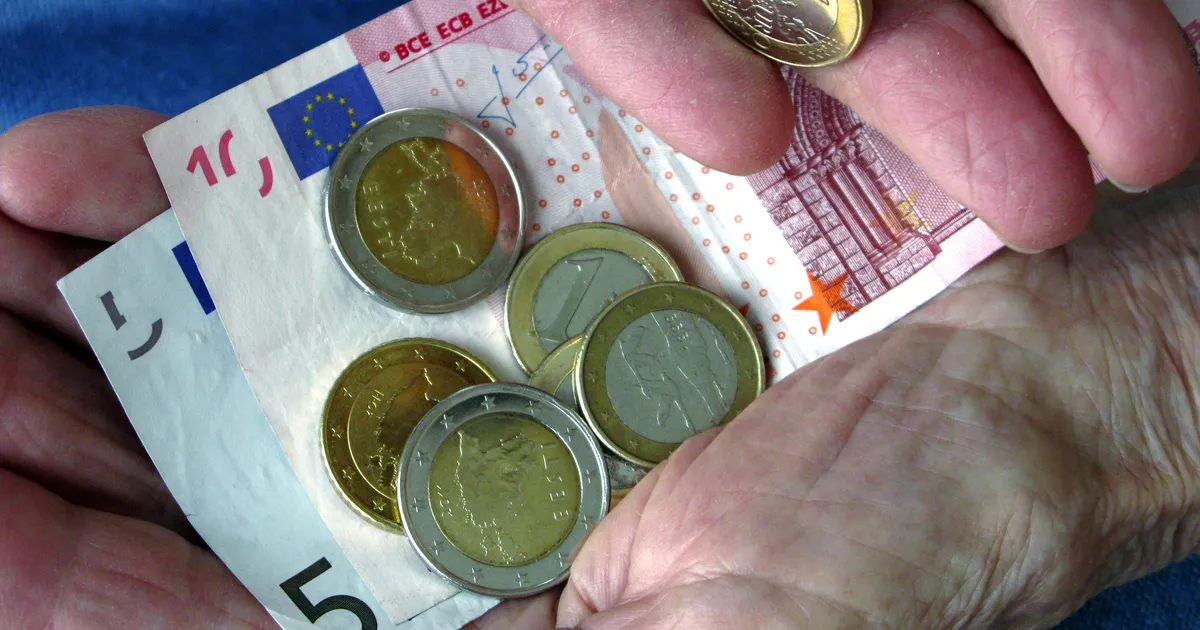
The average pension asset has almost doubled in five years, due to more flexible investment opportunities in pension funds and people's ability to determine how much of their salary they save for retirement. #pensionifondid #investeerimine #II_sammas (translated)

pmo.ee
Keskmine pensionivara on viie aastaga pea kahekordistunud
3146