BETA nonprofit public democratic european moderated

Search

#redemption

FRENCHRAPUS stated that the French magazine LOVE had published exclusive information about GTA 6, with its release expected the following month. According to him, Rockstar wanted to make Lucia a character as impactful and beloved as Arthur Morgan in Red Dead Redemption 2. He also wrote that non-playable characters would have coherent conversations and would be designed with their own lives and histories. The exchanges heard by players would thus make sense, he added. FRENCHRAPUS described the map as a world where players could spend hundreds of hours and become attached to. Finally, he indicated that Rockstar had met with police officers and gang members in Florida to enhance the game's realism. The studio would also seek to maintain the relevance of its satire over several years by avoiding too much reliance on the fleeting trends of the internet, he wrote. #GTA6 #RockstarGames #JeuxVidéo (translated)

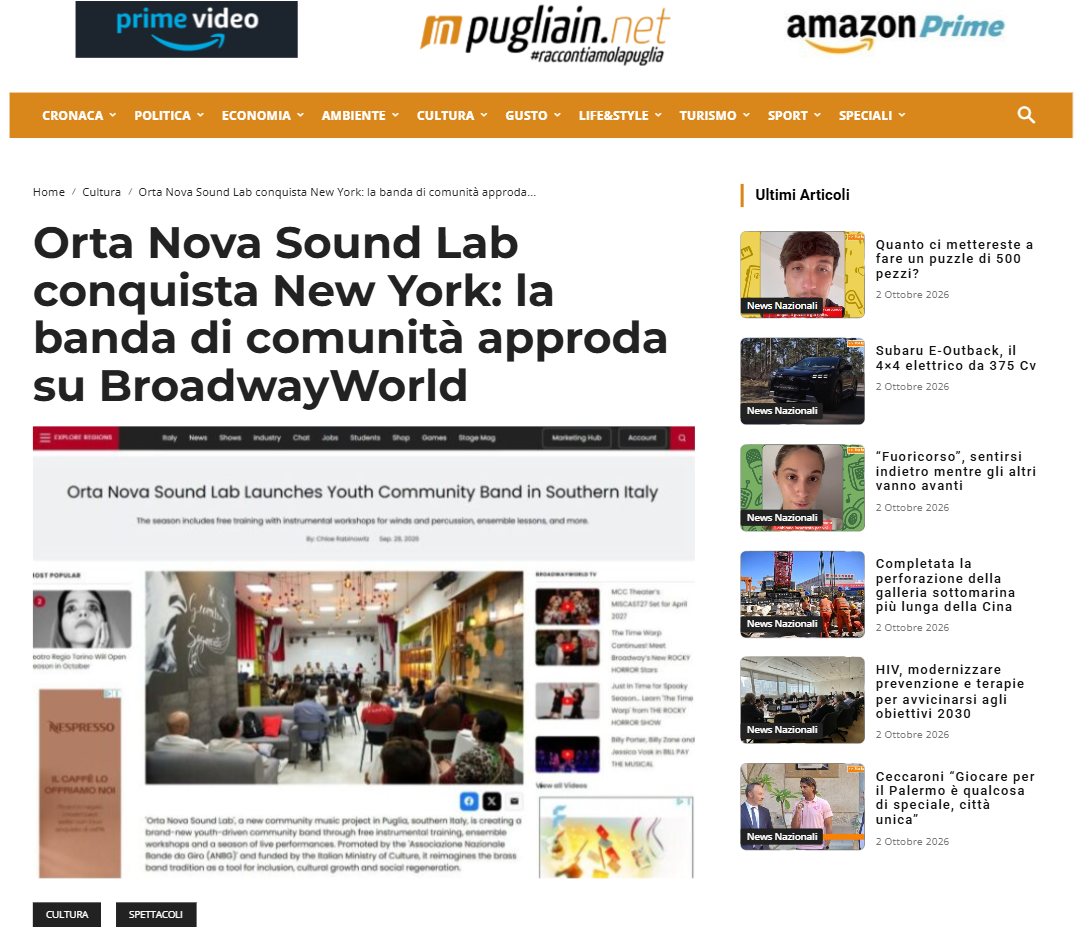
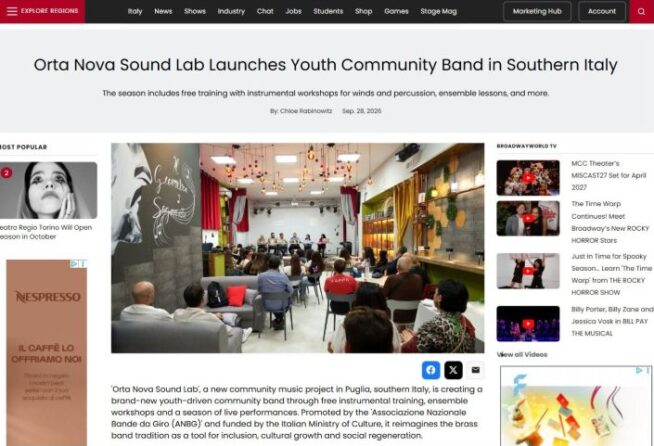
“PUGLIA IN”: “ORTA NOVA SOUND LAB” CONQUERS NEW YORK: THE “COMMUNITY BAND” LANDS ON “BROADWAY WORLD” SOURCE: https://www.pugliain.net/303862-orta-nova-sound-lab-new-york-banda/ I am delighted that my article submitted to editor Chloe Rabinowitz has been accepted and published. In any case, we are not talking about just any website, but the largest theatre website in the world on the internet, the one that covers Broadway, the West End and beyond, with over 6 million visitors per month, present in 100 US cities, 45 countries and in 12 languages worldwide. __________________________________________________________________________ Orta Nova (FG) — The social and musical project “Orta Nova Sound Lab” debuted last week on the prestigious US portal BroadwayWorld, an international live performance network based in New York. The initiative, born in Orta Nova in the heart of Capitanata, nothern Puglia region in South Italy, to create a youth community band, was presented overseas as an innovative model of inclusion and urban regeneration for the Mezzogiorno. The Pulgian model of social regeneration through music, promoted by the “Associazione Nazionale Bande da Giro (ANBG)” chaired by Benedetto Grillo and supported by the Municipality of Orta Nova, has been admitted for funding by the Ministry of Culture under the call for strengthening music in suburbs and vulnerable areas. The project follows in the wake of interventions to counter youth distress and educational poverty envisaged in the spirit of the “Caivano Decree”. The article published in the American outlet is co-authored by New York editor Chris Rabinowitz and by Orta Nova author and researcher Luciano Magaldi Sardella. The text illustrates how the centuries-old Puglian wind-band tradition has been reinterpreted as an instrument of prevention and civic cohesion, thanks to collaboration between the MAO FM 19.77 association, the Olivetti Institute, the Pertini Institute, Music Art and the C.I.S.A. of Foggia. Why the News Went International The “Orta Nova Sound Lab” band project demonstrates that when a project has anti-mafia roots, pedagogical value, and a credible institutional network, the press responds. From local and national outlets such as Cassarmonica, Ansa Puglia, TGNorba, Corriere della Sera Bari, RaiNews TGR Puglia, La Gazzetta del Mezzogiorno, Amica9TV, Brindisi In, Puglia IN, Blasting News Italia, TRM Network, Secolo XIX, FoggiaToday, PlayNews24, Stato Quotidiano, and many others, which thoroughly documented the press conference, coverage has now reached “Broadway World”, which has interpreted the Orta Nova experience as a “social laboratory” capable of answering the mafia with music. This leap in scale derives from joint work and from the liaison work carried out by Luciano Magaldi Sardella, who, together with New York editor Chris Rabinowitz, succeeded in translating for an Anglophone audience the profound meaning of a town band that in Puglia is not folklore, but a civic garrison, a concrete alternative to young people’s dependence on electronic screens and to social disintegration. In a southern Italy often narrated solely through its emergencies, Orta Nova chooses to be narrated for its capacity to generate community. And this time, the news has travelled around the world, starting from a square in the Basso Tavoliere. The Stages of the Programme and the Major Concerts in Capitanata The programme, entirely free of charge for participants, offers training courses for wind and percussion instruments alongside ensemble music lessons. During October 2026, the streets of Orta Nova will host band parades and processions, whilst between November and December the area will see performances by the prestigious Gran Concerti Bandistici of Conversano and Bisceglie. The bill will reserve a specific space for equal opportunities with the all-female performance of the Orchestra Note di Puglia. The journey will culminate in January 2027 with the first official concert of the newly formed Banda di Comunità of Orta Nova, the culmination of a training itinerary that projects the social redemption of the Province of Foggia onto the global cultural scene.

Orta Nova Sound Lab conquista New York: la banda di comunità approda su BroadwayWorld

Nueva información de GTA 6 revelada por Game Informer 🔥🔥 ▫️ Por primera vez en un videojuego de Rockstar Games habrá huracanes. El viento levantará escombros, moverá el cabello, generará ondas sobre el agua y doblará la vegetación de los pantanos. ▫️ La fauna será mucho más completa que en Red Dead Redemption 2, con más de 170 especies. ▫️ Habrá más de 60 especies de aves, más de 30 mamíferos, numerosos peces, reptiles, pelícanos y muchas otras especies. ▫️ Leonida contará con seis grandes distritos: Vice City, las Llaves de Leonida, Grassrivers, Puerto Gellhorn, Ambrosia y el Parque Nacional Monte Kalaga. ▫️ Vice City estará inspirada en Miami, con arquitectura art déco, playas, un enorme puerto de cruceros y tráfico intenso que complicará las persecuciones policiales. ▫️ Grassrivers será el equivalente a los Everglades: una enorme región pantanosa repleta de fauna peligrosa y habitantes rurales potencialmente armados. ▫️ Leonida será el mapa más grande en la historia de Rockstar, con aproximadamente el doble del tamaño de GTA V. ▫️ Aaron Garbut asegura que el mundo también será mucho más denso, detallado e interactivo, con especial atención a tejados, callejones e interiores para que cada edificio se sienta más real. ▫️ Los habitantes de Leonida variarán en altura, complexión, musculatura, distribución de grasa, tono y características de la piel. ▫️ También habrá una mayor variedad de peinados, vello corporal y tatuajes diseñados para representar de forma más auténtica las distintas comunidades del estado. ▫️ Entre las actividades confirmadas estarán el billar, gimnasio, kayak, minigolf, buceo y la posibilidad de visitar zoológicos en pareja. #GTA6 #RockstarGames #Videojuegos

La vida silvestre de GTA 6 será llevada a un nuevo nivel, superando incluso lo visto en Red Dead Redemption 2 🔥🔥 Rockstar buscará que la fauna de Leonida se sienta más viva, variada y presente dentro del mundo abierto. https://t.co/OjGG7zStvP #GTA6 #Videojuegos #RockstarGames

il fatto di non dovermi preoccupare di una battuta di gianluca galassi durante il tie break di una partita perché non ne sbaglia più il nostro goat calvo il suo redemption arc tutto meritato #GianlucaGalassi #Tennis #RedemptionArc

La revista TROISCOULEURS ha lanzado un reportaje de GTA 6 con impresiones de la demo y una entrevista a Rob Nelson 🔥🔥 ▫️ Vice City será dos veces más grande que Los Santos. ▫️ El juego comenzará en los Cayos de Leonida. Tras avanzar la primera parte de la historia, el mapa se abrirá y podremos movernos libremente por él. ▫️ Habrá una enorme cantidad de edificios accesibles. Rob Nelson asegura que podremos entrar en muchísimos interiores. ▫️ La interactividad será superior a GTA 5 y Red Dead Redemption 2. Habrá actividades como buceo, gimnasio, peluquerías, robos, interacciones con NPC y redes sociales. ▫️ El juego tendrá elementos RPG. Nuestras acciones podrán influir en la relación entre Lucia y Jason, podremos pasar tiempo juntos, cuidarnos mutuamente y decidir si queremos jugar como criminales más profesionales o completamente caóticos. ▫️ El sistema policial será más inteligente. La policía podrá recordar detalles como nuestra ropa y será posible despistarlos usando vehículos o evitando que nos vean cambiar de situación. ▫️ El dinero en efectivo podrá perderse. Habrá dinero físico y dinero en el banco; si morimos antes de depositarlo, podremos perderlo. ▫️ Los robos y eventos serán más impredecibles. Dependientes, clientes, policías y otros NPC podrán reaccionar de formas distintas cada vez. ▫️ Los NPC también podrán estar armados y ser violentos. El jugador no será el único capaz de provocar situaciones peligrosas. ▫️ El tráfico cambiará según la hora del día. Durante la demo una misma carretera tenía mucho más tráfico cuando llegó la hora de salida del trabajo. ▫️ Los refugios serán verdaderos hogares. No serán solo lugares para guardar partida, sino espacios donde Lucia y Jason podrán pasar tiempo y vivir momentos cotidianos. ▫️ Las redes sociales tendrán mucha importancia. Rockstar quiere satirizar influencers, streamers, retos virales y la cultura digital actual. ▫️ Rockstar quiere que GTA 6 funcione como una cápsula del tiempo. La idea es que dentro de 10 o 20 años podamos volver al juego y recordar cómo era nuestra época, desde los influencers y streamers hasta las modas y absurdos de Internet. ▫️ Las transiciones entre ciudad, suburbios y campo serán muy naturales. El periodista asegura que apenas notó cuándo pasaban de una zona a otra. ▫️ Gameplay y cinemáticas estarán mucho más conectados. En algunas escenas seguiremos teniendo control parcial del personaje mientras continúa la narrativa. ▫️ Rockstar quiere un mundo mucho más dinámico. NPC, policía, tráfico, eventos y robos podrán combinarse para crear situaciones diferentes en cada partida. Es, sin duda, el reportaje más completo que he leído hasta ahora sobre GTA 6. Todo apunta a que estamos ante algo enorme. Su lanzamiento será en un evento histórico para la industria. #GTA6 #RockstarGames #ViceCity

We're effectively at a point, where Iran either caves in or starts another, much more destructive escalation. What I hear from within Iran is that the economy and hence Iranians are suffering, but looking for a redemption. Hence, I think it will be latter. #Iran #Escalation #Economy #IR

Toda la información que tenemos sobre el DLC de modo historia cancelado para GTA 5. El contenido formaría parte de los casi 192 GB de archivos antiguos de Rockstar que han vuelto a circular por internet, este DLC era mucho más grande de lo que pensábamos. ▫️ Trevor iba a convertirse en una especie de agente secreto al estilo James Bond, trabajando junto a la IAA pero manteniendo toda su personalidad caótica. ▫️ Se han encontrado referencias a alrededor de 38 misiones principales y otras 14 actividades secundarias. No estaban terminadas, pero sí demuestra la enorme escala que tenía el proyecto. ▫️ La historia estaba dividida en varios arcos relacionados con la IAA, Rusia, Corea, Medio Oriente, un casino e incluso misiones ambientadas en el espacio. ▫️ El Jetpack iba a tener un papel muy importante. Existen referencias a varias misiones relacionadas con él, incluyendo operaciones de la IAA y otras vinculadas con Rusia. ▫️ También se encontraron enormes instalaciones subterráneas, una mansión con zonas secretas, bases submarinas, satélites, drones y escenarios relacionados con una nave espacial. ▫️ Entre las armas planeadas aparecen una ballesta y un arpón que podía utilizarse bajo el agua. ▫️ Algunos vehículos y conceptos que estaban destinados a este DLC terminaron apareciendo años después en GTA Online. Y aquí viene una de las partes más interesantes: ▫️ Muchísimas ideas de Agent Trevor fueron recicladas para el DLC de GTA Online "The Doomsday Heist", incluyendo instalaciones secretas, Jetpacks, tecnología avanzada, operaciones gubernamentales y elementos relacionados con Clifford. ▫️ Dan Houser ya había confirmado que el DLC llegó aproximadamente al 50% de su desarrollo antes de ser cancelado. ▫️ Steven Ogg incluso llegó a grabar escenas interpretando a este “James Bond Trevor”. En otras palabras, Agent Trevor no era simplemente una idea que Rockstar descartó rápidamente. El DLC llegó bastante lejos en su desarrollo y ya contaba con misiones, interiores, actuaciones grabadas, vehículos, armas, música y mecánicas propias. Una auténtica lástima que nunca llegáramos a verlo terminado. Aun así, su cancelación no habría sido culpa al 100% de GTA Online. Algunos antiguos miembros de Rockstar han explicado que, cuando Red Dead Redemption 2 entró en una etapa mucho más exigente de su desarrollo, el proyecto comenzó a requerir cada vez más recursos y apoyo de prácticamente todo el estudio. Al final, Rockstar tuvo que priorizar otros proyectos y Agent Trevor terminó quedándose por el camino. #GTAV #RockstarGames #DLC

🚨 ROCKSTAR EST ALLÉ BEAUCOUP TROP LOIN DANS LE RÉALISME ! Dans Red Dead Redemption 2, les violentes crises de toux d’Arthur Morgan, qui souffrait de la tuberculose étaient encore plus réalistes qu’on ne le pensait… Roger Clark, l’acteur qui lui prête sa voix a révélé que Rockstar attendait qu’il soit réellement malade dans la vraie vie pour le faire venir au studio et enregistrer ses toux pour le jeu 😳 #RedDeadRedemption2 #RockstarGames #ArthurMorgan

Two men uncover a dark conspiracy behind a deadly virus—one seeking redemption, the other framed for murders he didn’t commit. Would you sacrifice loved ones to save the masses? #Thriller #Suspense https://t.co/DiiYC1Z4fh #Conspiracy #Redemption #Virus #Therearenospecificcountriesmentionedinthetweetprovided.

Two men uncover a dark conspiracy behind a deadly virus—one seeking redemption, the other framed for murders he didn’t commit. Would you sacrifice loved ones to save the masses? #Thriller #Suspense https://t.co/DiiYC1Z4fh #Thriller #Suspense #Conspiracy #Therearenospecificcountriesmentionedinthetweet.

🚨 ALERTE ! L’acteur qui incarne Arthur Morgan dans Red Dead Redemption 2 révèle être complètement CHOQUÉ par le niveau que proposera GTA 6 🤯 « Croyez-moi, GTA 6 va être incroyable. Les éclairages et les textures sont absolument bluffants. Et je n’en reviens toujours pas de la diversité des PNJ et des paysages de la map. » #GTA6 #RedDeadRedemption2 #Gaming

Dans le dernier chapitre de la série Fauda, qui fait écho aux tragiques événements du 7 octobre, les personnages luttent avec leur traumatisme tout en naviguant dans une réalité complexe, abordant des thèmes de vengeance et de rédemption dans un contexte de guerre en cours. #Fauda #SérieIsraélienne #Vengeance

"Fauda" : le dernier chapitre déchirant d'une série devenue un phénomène mondial, rattrapée par le réel

GTA 6 não contará com o clássico respawn no hospital ou na cadeia caso você seja morto ou preso. Será semelhante a Red Dead Redemption 2, em que você renasce perto de onde morreu. No entanto, em RDR2 existe prisão quando você é preso. O YouTuber MikeShowSha, um dos que participou da preview de GTA 6, disse que o respawn no hospital ou na prisão existe, mas a informação de que não existe vem diretamente da transcrição da fala de Rob Nelson, uma das principais mentes por trás de GTA 6. Ainda não houve esclarecimento sobre as informações contraditórias, mas a palavra do Rob é, obviamente, mais confiável: "Você não sai da prisão ou do hospital mais, você meio que só renasce nos arredores. Mas definitivamente temos vários prédios, a quantidade de interiores é loucura" - Transcrição da fala de Rob Nelson, compartilhada por Kinda Funny Games. Definitivamente é uma mudança polêmica, considerando que esse sistema combina com o tom urbano do jogo e que até mesmo Red Dead 2 contava com a prisão. Acho que o ideal seria uma mistura dos conceitos: você respawnaria no hospital se morresse perto de áreas urbanas, ou perto de onde morreu se estivesse em um local remoto. Já a prisão deveria continuar como sempre foi. #GTA6 #RedDeadRedemption2 #games

Hay dos reportes distintos sobre cómo funcionaría el respawn en GTA 6. Según Kinda Funny, cuando mueres no reapareces en un hospital, sino en una zona cercana, como en Red Dead Redemption 2. La idea sería que puedas volver a la acción más rápido. Pero MikeShowSha dice que sí reapareces en un hospital, como en los GTA anteriores. Puede que la información esté cruzada o que el sistema sea situacional. Por ejemplo, en el modo libre reaparecerías en el hospital, mientras que al morir durante una misión aparecerías cerca para volver a intentarlo rápidamente. #GTA6 #videojuegos #gamers

Freeman della City di Londra: Onoreficenza Ordinaria per Tutti, Onoraria per Pochi. SOURCE: https://www.linkedin.com/pulse/freeman-della-city-di-londra-dal-1996-unonoreficenza-sardella-ph-d--qlt0f/ Abstract La Freedom della City of Londra è un'istituzione di origini medievali documentata fin dal 1237, originariamente concepita per garantire ai cittadini liberi protezione dai vincoli feudali, diritto al commercio e proprietà fondiaria entro le mura della Square Mile (la denominazione del territorio della City londinese). Progressivamente trasformatasi da privilegio economico concreto a riconoscimento civico e simbolico, essa ha mantenuto nel tempo la propria rilevanza attraverso successive riforme normative (notevolmente l'apertura a tutte le nazionalità nel 1996) e conta oggi circa 1.800-2.000 nuove ammissioni annue. Il presente articolo esamina l'evoluzione storico-giuridica del titolo, illustra le molteplici vie di accesso previste dalla normativa vigente (servitù per apprendistato, patrimonio, riscatto per nomina diretta, presentazione tramite le Livery Company (o Compagnie di Livrea) e iscrizione al registro elettorale), e analizza il profilo contemporaneo dei Freemen alla luce di ammissioni recenti a figure di spicco dei mondi della finanza, della cultura, dello sport e delle istituzioni. Contrariamente all'immagine elitaria che circonda molte onorificenze britanniche, la Freedom ordinaria si rivela accessibile a qualsiasi persona, indipendentemente da nazionalità o condizione economica, a fronte di requisiti minimi e di una quota amministrativa di £180-185. Il contributo conclude riflettendo sul significato contemporaneo dell'istituzione: non nei privilegi residuali ormai perlopiù simbolici, ma nella sua funzione identitaria, civico-partecipativa e di connessione con la lunga storia della città più antica e autorevole d'Europa. Parole chiave: Freedom of the City of London; Livery Companies; City of London Corporation; onorificenze britanniche; identità civica urbana. Contenuto dell’articolo Introduzione Nel panorama delle onorificenze storiche britanniche, poche istituzioni evocano un immaginario così ricco come la Freedom della City di Londra. Menzionata in film, romanzi e articoli di costume con toni di esclusività e mistero, essa appare frequentemente associata a figure di altissimo profilo: sovrani, capi di Stato, comandanti militari di ritorno dalle guerre. Eppure, a uno sguardo più ravvicinato e metodicamente documentato, emerge un quadro assai diverso: quello di un titolo che, nella sua dimensione ordinaria e non onorifica, è oggi accessibile a un numero considerevole di persone ogni anno, senza che siano richiesti meriti straordinari né mezzi economici elevati. Il presente contributo si propone di esaminare l'istituzione nella sua duplice valenza, storica e contemporanea, con l'obiettivo di sfatare l'equivoco più diffuso: quello che confonde la Freedom ordinaria con la Honorary Freedom (o Freeedom onoraria) quest'ultima effettivamente rara e riservata a figure di standing internazionale. L'articolo ripercorre le origini medievali e l'evoluzione normativa (§ 2), illustra le vie di accesso vigenti (§ 3), discute requisiti, costi e procedimento (§ 4), analizza la composizione contemporanea del corpo dei Freemen (§ 5), esamina diritti, privilegi e obblighi (§ 6), passa in rassegna i destinatari più illustri degli ultimi decenni (§ 7), e conclude con alcune riflessioni sul significato odierno dell'istituto (§ 8). Origini e Sviluppo Storico dell'Istituzione La Freedom della City di London è documentata fin dal 1237, durante il regno di Enrico III, come forma di status civico che designava gli individui non soggetti a un signore feudale e quindi titolari delle protezioni garantite dalle carte della City. In questa accezione originaria, il termine freeman indicava l'uomo libero in senso pieno: colui che poteva commerciare liberamente nel perimetro della Square Mile, il Miglio Quadrato, possedere beni e aderire alle corporazioni di mestiere senza interferenze esterne. I privilegi pratici erano di portata concreta e direttamente funzionali all'economia medievale: esenzione da determinati pedaggi, tra cui il celebre diritto di condurre greggi di pecore attraverso il London Bridge senza pagamento, concessione radicata nel commercio della lana che dominava l'economia inglese, protezione contro l'arresto arbitrario fuori dalla giurisdizione della City, e accesso ai mercati regolamentati dalle corporazioni. Come confermato dalle successive riemissioni della Magna Carta da parte di Enrico III nel 1225, tali libertà erano intrinsecamente legate all'autogoverno della City, che le difendeva dall'ingerenza regia e baronale. La progressiva codificazione dell'istituzione avvenne attraverso ordinanze regie a partire dal XIV secolo: nel 1319 Edoardo II emanò costituzioni che limitavano l'accesso alla Freedom ai membri delle corporazioni di mestiere, vietando l'ammissione di estranei non affiliati e formalizzando così la "servitù per apprendistato" come via principale per i nuovi entrati, mentre la via patrimoniale garantiva la continuità per le famiglie già stabilite. I monarchi successivi , da Edoardo III in poi, confermarono ripetutamente le libertà cittadine attraverso carte concesse spesso in cambio di prestiti finanziari, consolidando l'autonomia della City e il suo ruolo di creditore della Corona. Nel XIX secolo, con l'industrializzazione e l'espansione demografica di Londra, il controllo corporativo sul commercio si rivelò sempre meno applicabile: il Municipal Corporations Act del 1835 ampliò l'eligibilità a chiunque vivesse, lavorasse o avesse un legame significativo con Londra, sganciando parzialmente il titolo dall'appartenenza corporativa e trasformandolo progressivamente in una distinzione onorifica a carattere civico. Nel corso del Novecento ulteriori riforme inclusivizzarono l'accesso: le donne, già ammesse informalmente come vedove ereditiere in epoche precedenti, ma formalmente escluse dalle vie standard, videro riconosciuto il diritto all'ammissione ordinaria, con Angela Burdett-Coutts che aveva già ricevuto la Honorary Freedom (Freeedom Onoraria) nel 1872 e Florence Nightingale nel 1908, mentre la parità formale si consolidò nel XX secolo. Infine, nel 1996, fu abolito il requisito della cittadinanza britannica o del Commonwealth, aprendo il titolo a qualsiasi nazionalità. Le Vie di Accesso: Quadro Normativo Vigente La normativa vigente, gestita dalla Corte del Ciambellano della City of London Corporation, prevede cinque principali modalità di accesso alla Freedom della City londinese, che riflettono i diversi legami storici tra l'individuo e le istituzioni cittadine. Per servitù (by servitude) conferisce il titolo al completamento di un apprendistato formale secondo la Consuetudine di Londra, tradizionalmente della durata di sette anni, presso un maestro freeman di una Compagnia di Livrea (Livery Company). Questa via, la più antica e di maggior portata storica, verifica il merito attraverso la competenza pratica e la lealtà alla corporazione; gli apprendisti finali vengono ammessi senza necessità di approvazione della Court of Common Council qualora iscritti al registro elettorale della City da almeno un anno, e in tal caso non è previsto alcun contributo economico. Per patrimonio (by patrimony) conferisce l'eligibilità automatica ai figli di Freemen, purché il genitore detenesse questo titolo al momento della nascita del candidato e sia fornita adeguata documentazione. Storicamente limitato ai figli maschi, fu esteso alle figlie con il Municipal Corporations Act del 1835. Il candidato doveva aver compiuto il diciottesimo anno di età, non essere un "fallito non riabilitato" e non avere condanne penali rilevanti. Per riscatto (by redemption) costituisce la via aperta a chiunque: il candidato presenta domanda alla Corte del Ciambellano, supportato da due garanti, i Consiglieri Comunali, Aldermen o Liverymen con almeno un anno di atttvità che attestano la sua reputazione, e la pratica è esaminata dal Vicecomitato delle Ammissioni alla Freedom (Freedom Applications Sub-Committee) e approvata dalla Corte del Consiglio Comunale. La quota amministrativa (Freedom Fine) ammonta a £180 dalla revisione tariffaria del 1° aprile 2024 (£185 nella modalità per nomina diretta). Per i candidati iscritti al Ward List, il registro elettorale della City, la procedura è gratuita. La presentazione tramite Compagnia di Livrea (Livery Company) è la via più frequentemente percorsa nella prassi contemporanea: il candidato diviene dapprima membro della propria corporazione di riferimento, a sèguito di una procedura variabile per ciascuna delle 113 Compagnie di Livrea attualmente attive, e successivamente invia la domanda online alla Corte del Ciambellano per il passaggio alla Freedom della City, con approvazione nella quasi totalità dei casi di carattere routinario. Requisiti, Costi e Procedimento I requisiti per l'accesso alla Freedom ordinaria sono di una semplicità sorprendente rispetto all'aura di esclusività del titolo. Il candidato deve aver compiuto diciotto anni, non essere un "fallito non ristabilito" e non avere condanne penali non ancora estinte ai sensi del Rehabilitation of Offenders Act del 1974. Non è previsto alcun requisito di nazionalità, residenza, livello di istruzione o stato patrimoniale. La documentazione richiesta è di carattere anagrafico standard: certificato di nascita integrale, eventuale certificato di matrimonio o documento attestante il cambio di nome, e se mediante presentazione, il certificato di appartenenza della corporazione di riferimento. La domanda viene inoltrata online tramite il portale della City of London Corporation. La cerimonia di ammissione si svolge alla Guildhall di Londra, nell'Aula Tribunalizia del Ciambellano, ogni giorno feriale tra le 10:30 e le 12:00 e tra le 14:00 e le 15:30. Il neo-Freeman è invitato a leggere ad alta voce la Dichiarazione di un Freeman (Declaration of a Freeman) e a firmare il Registro delle Ammissioni, ricevendo al termine il certificato calligrafato su pergamena e una copia delle Regole di Condotta di Vita (Rules for the Conduct of Life), il documento settecentesco di orientamento morale che invita il titolare a condurre una vita retta, compassionevole e socialmente attiva. Per chi non possa recarsi fisicamente a Londra, la City Corporation ha mantenuto la possibilità di svolgere la cerimonia in modalità virtuale, introdotta durante la pandemia e successivamente conservata. Composizione Contemporanea del Corpo dei Freemen Un dato empirico significativo contribuisce a ridimensionare la dimensione elitaria del titolo: ogni anno vengono ammesse tra le 1.800 e le 2.000 nuove persone, in un corpo complessivo che conta oltre 300.000 ammissioni documentate nel corso dei secoli. Come rileva la stessa City of London Corporation, i Freemen contemporanei comprendono "un'ampia sezione trasversale della popolazione", includendo professionisti, studenti, artigiani, imprenditori, personale militare e cittadini stranieri. Il crescente apporto di studenti universitari, spesso presentati in gruppi dalle proprie istituzioni accademiche e di professionisti internazionali, ha ulteriormente ampliato la base demografica. La cerimonia di gruppo del 2024, in cui 40 individui provenienti da settori che spaziano dalla scienza alla medicina, dall'imprenditoria alle iniziative per la diversità, hanno ricevuto il titolo simultaneamente, esemplifica questa apertura. Va ribadita, tuttavia, una distinzione fondamentale: la Freedom Onoraria della City di Londra costituisce un'istituzione del tutto separata e di portata radicalmente diversa. Concessa dalla Corte of Consiglio Comunale con una risoluzione speciale, è riservata a figure di eccezionale statura internazionalte tipicamente meno di una dozzina di concessioni annue e rappresenta, nelle parole della stessa City Corporation, il massimo onore che essa possa conferire. È questa la Freedom di cui hanno goduto Winston Churchill, la regina Elisabetta II e, più di recente, la presentatrice televisiva Rachel Riley (ottobre 2025) per il suo impegno nell'educazione alla Shoah e nella lotta all'antisemitismo. La confusione tra le due forme è la principale responsabile della percezione distorta dell'istituto nel dibattito pubblico. Il Significato Contemporaneo: tra Identità e Partecipazione Se la quasi totalità dei privilegi pratici un tempo associati alla condizione di Freeman è oggi scomparsa o ridotta a forma cerimoniale solenne, ciò che persiste è il potente valore simbolico e identitario del titolo. La cerimonia conserva elementi di solennità rituale la lettura della Dichiarazione, la firma sullo storico Registro delle Ammissioni, il ricevimento del certificato calligrafato su pergamena, che inscrivono il nuovo Freeman in una catena di continuità di quasi otto secoli, collegando figure eterogenee attraverso un legame condiviso con la storia del Miglio Quadrato (o Square Mile). La nobile istituzione londinese svolge altresì una funzione di coesione nell'ecosistema della City e delle Compagnie di Livrea: le 113 corporazioni attive hanno erogato collettivamente oltre 81 milioni di sterline in attività benefiche nel 2024, con programmi di formazione professionale, borse di studio e apprendistati tecnici che preservano competenze specializzate in settori economicamente rilevanti. Essere Freeman costituisce un prerequisito formale per l'avanzamento a Liveryman, e quindi per l'esercizio dei diritti elettorali nella governance della City: un residuo di democrazia corporativa che, per quanto distante dai modelli di suffragio universale, mantiene una sua logica istituzionale nell'architettura giuridica unica del Miglio Quadrato londinese. Critici di orientamento progressista hanno rilevato che il sistema favorisce reti consolidate e accessi per via ereditaria o professionale, potenzialmente escludendo strati più ampi della popolazione londinese con un bacino di Freemen viventi ben inferiore all'1% dei nove milioni di residenti nella Grande Londra (Great London). Tuttavia, i dati sulle ammissioni recenti, con riconoscimenti che spaziano dall'imprenditoria africana allo sport comunitario, dalla radiofonia alla medicina, suggeriscono una traiettoria di apertura progressiva che, pur senza raggiungere la piena rappresentatività demografica, testimonia la volontà istituzionale di mantenere l'istituto come tradizione viva piuttosto che reliquia esclusiva. Conclusioni L'analisi condotta permette di formulare alcune considerazioni conclusive. La Freedom della City, quella ordinaria, è oggi un'onorificenza accessibile a una platea ben più ampia di quanto l'immaginario collettivo suggerisca: i requisiti di ammissione sono minimi, i costi contenuti, le procedure relativamente snelle e aperte a qualsiasi nazionalità. La persistente confusione con la Freedom Onoraria, riservata a figure di eccezionaleelevatura internazionale, è la principale responsabile di una percezione distorta che merita di essere corretta. Il valore contemporaneo del titolo non risiede nei privilegi residuali, ormai perlopiù solenni e cerimoniali, ma in tre dimensioni complementari: quella identitaria, che connette il titolare a quasi otto secoli di storia istituzionale; quella civico-partecipativa, che attraverso l'accesso alle Livery Companies e al sistema elettorale della City inserisce il Freeman in reti realmente operative; e quella comunitaria, che attraverso i meccanismi di riconoscimento onorifico celebra contributi di portata e provenienza sempre più eterogenee. In questo senso, la Freedom rappresenta un caso di studio istruttivo su come le istituzioni storiche possano reinventarsi senza perdere autenticità, mantenendo vivo il proprio significato attraverso l'inclusione piuttosto che l'esclusione. Riferimenti e Fonti: City of London Corporation. (2024). Freedom of the City of London. https://www.cityoflondon.gov.uk/about-us/law-historic-governance/freedom-of-the-city Guild of Freemen of the City of London. (2025). Freedom of the City. https://www.guild-freemen-london.co.uk/freedom-of-the-city Livery Committee. (2025). Freedom of the City. https://liverycommittee.org/about/membership-freedom-and-livery-clothing/freedom-of-the-city/ Municipal Corporations Act 1835. UK Parliament. Rehabilitation of Offenders Act 1974. UK Parliament. Grokipedia. (2025). Freedom of the City of London. https://grokipedia.com/page/Freedom_of_the_City_of_London City Solicitors' Educational Trust. (2025). Applying for the Freedom of the City of London. LondradaVivere.com. (2025). La "Freedom of the City of London": un'antica libertà ancora viva. City of London Corporation. (2023). Livery Companies: Charitable Activities Report 2024. ONS / City of London Corporation. (2023). Financial Services Contribution to UK GDP.

Freeman della City di Londra: Onoreficenza Ordinaria per Tutti, Onoraria per Pochi.

Freeman of the City of London: An Ordinary Honour for All, an Honorary One for Few SOURCE: https://www.linkedin.com/pulse/freeman-city-london-ordinary-honour-all-honorary-one-sardella-ph-d--m1alf/ Abstract The Freedom of the City of London is an institution of mediaeval origin, attested as far back as 1237, originally conceived to afford freeborn citizens protection from feudal obligations, the right to trade, and the ownership of property within the bounds of the Square Mile — the territory of the City of London proper. Having evolved progressively from a concrete economic privilege into a civic and symbolic distinction, it has preserved its relevance over the centuries through successive legislative reforms — most notably the extension of eligibility to all nationalities in 1996 — and today records approximately 1,800 to 2,000 new admissions annually. The present article examines the historical and juridical evolution of the title, sets out the several routes of access provided by current regulation (by servitude through apprenticeship, by patrimony, by redemption through direct nomination, by presentation through the Livery Companies, and by registration on the electoral roll), and analyses the contemporary profile of the Freemen in the light of recent admissions of prominent figures from the worlds of finance, culture, sport, and public life. Contrary to the elitist image surrounding many British honours, the ordinary Freedom proves accessible to any person whatsoever, regardless of nationality or financial standing, upon the satisfaction of minimal requirements and the payment of an administrative fee of £180–185. The article concludes by reflecting upon the contemporary significance of the institution: not in the residual privileges, now largely ceremonial, but in its identity-forming, civic-participatory function and its connection to the long history of the oldest and most venerable city in Europe. Keywords: Freedom of the City of London; Livery Companies; City of London Corporation; British honours; urban civic identity. Contenuto dell’articolo Introduction Amongst the historic honours of Britain, few institutions evoke an imaginative world as rich as the Freedom of the City of London. Cited in films, novels, and articles on manners and custom with tones of exclusivity and mystery, it is frequently associated with figures of the very highest standing: sovereigns, heads of state, military commanders returning from the wars. Yet, upon closer and more methodical scrutiny, a markedly different picture emerges: that of a title which, in its ordinary and non-honorary dimension, is today accessible to a considerable number of persons each year, without the requirement of extraordinary merit or elevated financial means. The present contribution aims to examine the institution in its twofold aspect, historical and contemporary, with the object of dispelling the most prevalent misconception: that which confounds the ordinary Freedom with the Honorary Freedom — the latter genuinely rare and reserved for figures of international standing. This article traces the mediaeval origins and legislative evolution (§ 2), sets out the current routes of access (§ 3), discusses requirements, costs, and procedure (§ 4), analyses the contemporary composition of the body of Freemen (§ 5), examines rights, privileges, and obligations (§ 6), reviews the most distinguished recipients of recent decades (§ 7), and concludes with some reflections upon the contemporary significance of the institution (§ 8). Origins and Historical Development of the Institution The Freedom of the City of London is attested from 1237, during the reign of Henry III, as a form of civic status designating individuals not subject to a feudal lord, and therefore entitled to the protections guaranteed by the City's charters. In this original sense, the term freeman denoted the free man in the fullest sense of the word: one who might trade freely within the perimeter of the Square Mile, hold property, and join the trade guilds without external interference. The practical privileges were of concrete scope and directly functional to the mediaeval economy: exemption from certain tolls, including the celebrated right to drive flocks of sheep across London Bridge without payment — a concession rooted in the wool trade that dominated the English economy — protection against arbitrary arrest beyond the jurisdiction of the City, and access to the markets regulated by the guilds. As confirmed by the subsequent reissues of Magna Carta by Henry III in 1225, such liberties were intrinsically bound to the self-governance of the City, which defended them against royal and baronial interference. The progressive codification of the institution took place through royal ordinances from the fourteenth century onwards. In 1319, Edward II issued constitutions restricting access to the Freedom to members of the trade guilds, prohibiting the admission of unaffiliated outsiders, and thereby formalising servitude through apprenticeship as the principal route for new entrants, whilst the patrimonial route ensured continuity for established families. Subsequent monarchs, from Edward III onwards, repeatedly confirmed the civic liberties through charters granted often in exchange for financial loans, consolidating the City's autonomy and its role as creditor to the Crown. In the nineteenth century, with industrialisation and the demographic expansion of London, corporate control over trade proved increasingly unenforceable. The Municipal Corporations Act of 1835 extended eligibility to any person living, working in, or having a significant connection with London, partially detaching the title from corporate membership and progressively transforming it into an honorary distinction of a civic character. During the twentieth century, further reforms rendered access more inclusive. Women, already admitted informally as widows by inheritance in earlier periods but formally excluded from the standard routes, saw their right to ordinary admission recognised — Angela Burdett-Coutts having already received the Honorary Freedom in 1872, and Florence Nightingale in 1908 — while formal equality was consolidated in the twentieth century. Finally, in 1996, the requirement of British or Commonwealth citizenship was abolished, opening the title to any nationality whatsoever. Routes of Access: The Current Regulatory Framework The current regulations, administered by the Court of the Lord Chamberlain of the City of London Corporation, provide for five principal modes of access to the Freedom of the City of London, each reflecting different historical ties between the individual and the City's institutions. By servitude confers the title upon the completion of a formal apprenticeship under the Custom of London, traditionally of seven years' duration, under a master freeman of a Livery Company. This route, the oldest and of the greatest historical significance, verifies merit through practical competence and loyalty to the guild. Completing apprentices are admitted without the need for approval by the Court of Common Council, provided they have been registered on the City's electoral roll for at least one year, and in such cases no financial contribution is required. By patrimony confers automatic eligibility upon the children of Freemen, provided the parent held the title at the time of the candidate's birth and appropriate documentation is furnished. Historically restricted to sons, it was extended to daughters by the Municipal Corporations Act of 1835. The candidate must have attained the age of eighteen, must not be an undischarged bankrupt, and must not have relevant unspent criminal convictions. By redemption constitutes the route open to any person whatsoever. The candidate submits an application to the Court of the Lord Chamberlain, supported by two sponsors — Common Councillors, Aldermen, or Liverymen of at least one year's standing who attest to their reputation — and the matter is examined by the Freedom Applications Sub-Committee and approved by the Court of Common Council. The administrative fee (the Freedom Fine) amounts to £180 following the tariff revision of 1 April 2024 (£185 in the case of direct nomination). For candidates registered on the Ward List, the City's electoral roll, the procedure is free of charge. By presentation through a Livery Company is the route most frequently taken in contemporary practice. The candidate first becomes a member of their relevant guild, following a procedure that varies amongst each of the 113 Livery Companies currently active, and subsequently submits an online application to the Court of the Lord Chamberlain for admission to the Freedom of the City, with approval in the vast majority of cases being a matter of routine. Requirements, Costs, and Procedure The requirements for access to the ordinary Freedom are of a simplicity that may well surprise, given the aura of exclusivity surrounding the title. The candidate must have attained the age of eighteen, must not be an undischarged bankrupt, and must not have unspent criminal convictions within the meaning of the Rehabilitation of Offenders Act of 1974. No requirement of nationality, residence, educational attainment, or financial standing is imposed. The documentation required is of a standard biographical character: a full birth certificate, a marriage certificate or name-change document where applicable, and, where admission is by presentation, the certificate of membership issued by the relevant Livery Company. The application is submitted online through the City of London Corporation's portal. The admission ceremony is held at the Guildhall in London, in the Court Room of the Lord Chamberlain, on every working day between 10.30 and 12.00, and between 14.00 and 15.30. The newly admitted Freeman is invited to read aloud the Declaration of a Freeman and to sign the Admissions' Book, receiving upon its conclusion a calligraphed certificate on vellum and a copy of the Rules for the Conduct of Life — the eighteenth-century document of moral guidance that enjoins the holder to lead a life of rectitude, compassion, and social engagement. For those unable to attend in person, the City Corporation has retained the option of conducting the ceremony virtually, a facility introduced during the pandemic and subsequently preserved. The Contemporary Composition of the Body of Freemen One significant empirical datum serves to diminish the elitist dimension of the title: between 1,800 and 2,000 new persons are admitted each year, within a body that counts over 300,000 documented admissions across the centuries. As the City of London Corporation itself observes, contemporary Freemen comprise 'a broad cross-section of the population', encompassing professionals, students, craftspeople, entrepreneurs, military personnel, and foreign nationals. The growing contribution of university students, frequently presented in groups by their academic institutions, and of international professionals, has further broadened the demographic base. The group ceremony of 2024, in which 40 individuals drawn from fields ranging from science and medicine to entrepreneurship and diversity initiatives received the title simultaneously, is illustrative of this openness. A fundamental distinction must, however, be emphasised. The Honorary Freedom of the City of London constitutes an entirely separate institution of radically different scope. Granted by the Court of Common Council by special resolution, it is reserved for figures of exceptional international stature — typically fewer than a dozen conferred annually — and represents, in the words of the City Corporation itself, the highest honour it is able to bestow. It is this Freedom that has been enjoyed by Winston Churchill, Her Majesty Queen Elizabeth II, and, more recently, the television presenter Rachel Riley (October 2025), in recognition of her commitment to Holocaust education and the combating of antisemitism. The confusion between the two forms is the principal source of the distorted public perception of the institution. The Contemporary Significance: Between Identity and Participation While the great majority of the practical privileges once associated with the condition of Freeman have today disappeared or been reduced to solemn ceremonial form, what persists is the powerful symbolic and identity-forming value of the title. The ceremony retains elements of ritual solemnity — the reading of the Declaration, the signing of the historic Admission Register, the receipt of the calligraphed certificate on vellum — which inscribe the new Freeman within a chain of continuity of nearly eight centuries, linking diverse figures through a shared bond with the history of the Square Mile. This venerable London institution also performs a cohesive function within the ecosystem of the City and the Livery Companies. The 113 active guilds collectively disbursed over £81 million in charitable activities in 2024, through programmes of vocational training, scholarships, and technical apprenticeships that preserve specialist skills in economically significant sectors. Being a Freeman constitutes a formal prerequisite for advancement to Liveryman, and therefore for the exercise of voting rights in the governance of the City: a vestige of corporate democracy which, however distant from the models of universal suffrage, retains its own institutional logic within the unique legal architecture of the London Square Mile. Critics of a progressive persuasion have observed that the system favours established networks and access by hereditary or professional routes, potentially excluding broader strata of the London population, with the pool of living Freemen well below one per cent of the nine million residents of Greater London. Nevertheless, the data on recent admissions — encompassing recognition spanning African entrepreneurship, community sport, broadcasting, and medicine — suggest a trajectory of progressive opening which, whilst falling short of full demographic representativeness, attests to the institutional will to maintain the institution as a living tradition rather than an exclusive relic. Conclusions The foregoing analysis permits the formulation of several concluding observations. The Freedom of the City — the ordinary Freedom — is today an honour accessible to a far wider audience than the collective imagination suggests. The admission requirements are minimal, the costs modest, the procedures relatively streamlined and open to any nationality. The persistent confusion with the Honorary Freedom, reserved for figures of exceptional international eminence, is the principal source of a distorted perception that merits correction. The contemporary value of the title resides not in the residual privileges, now largely solemn and ceremonial, but in three complementary dimensions: the identity-forming, which connects the holder to nearly eight centuries of institutional history; the civic-participatory, which through access to the Livery Companies and the City's electoral system inserts the Freeman into genuinely operative networks; and the communitarian, which through the mechanisms of honorary recognition celebrates contributions of an ever more varied scope and provenance. In this respect, the Freedom represents an instructive case study in how historic institutions may reinvent themselves without losing authenticity, preserving their significance through inclusion rather than exclusion. References and Sources: City of London Corporation. (2024). Freedom of the City of London. https://www.cityoflondon.gov.uk/about-us/law-historic-governance/freedom-of-the-city Guild of Freemen of the City of London. (2025). Freedom of the City. https://www.guild-freemen-london.co.uk/freedom-of-the-city Livery Committee. (2025). Freedom of the City. https://liverycommittee.org/about/membership-freedom-and-livery-clothing/freedom-of-the-city/ Municipal Corporations Act 1835. UK Parliament. Rehabilitation of Offenders Act 1974. UK Parliament. Grokipedia. (2025). Freedom of the City of London. https://grokipedia.com/page/Freedom_of_the_City_of_London City Solicitors' Educational Trust. (2025). Applying for the Freedom of the City of London. LondradaVivere.com. (2025). La 'Freedom of the City of London': un'antica libertà ancora viva. City of London Corporation. (2023). Livery Companies: Charitable Activities Report 2024. ONS / City of London Corporation. (2023). Financial Services Contribution to UK GDP.

Freeman of the City of London: An Ordinary Honour for All, an Honorary One for Few
BFMTV Sep 5

Le youtubeur Greg Guillotin a reconnu avoir exercé des violences physiques et psychologiques sur son ancienne compagne, qui a déposé plainte, déclarant avoir honte de ses actes et cherchant à suivre un chemin de rédemption. #ViolencesConjugales #GregGuillotin #Justice

"J'ai honte": le youtubeur Greg Guillotin reconnaît des "violences physiques et psychologiques" sur son ex-compagne

🇺🇸 Blackstone private credit fund maintains 5% cap as redemption requests remain elevated - Reuters https://t.co/0yhxZuLurt #Blackstone #PrivateCredit #Finance

Tomy 🫶🏼 Aug 31

J’ai fini le jeu, je vous mets quelle fin j’ai eue juste en dessous, histoire de pas spoiler. Le jeu est exceptionnel, l’histoire est trop bien alors que de base je déteste les univers futuristes et tout ça, mais on sent qu’il avait besoin d’une année ou deux pour être complètement fini. Night City me donne une sensation bizarre, on dirait une ville morte-vivante : y a plein de quêtes secondaires et d’activités, mais en même temps je ressens zéro vie dans l’open world. Les PNJ sont complètement vide et me font rien ressentir. Il ne détrône pas le jeu de tous les temps qu’est Red Dead Redemption 2. Je lui mets un 8,5/10 #JeuxVidéo #Gaming #CritiqueJeux