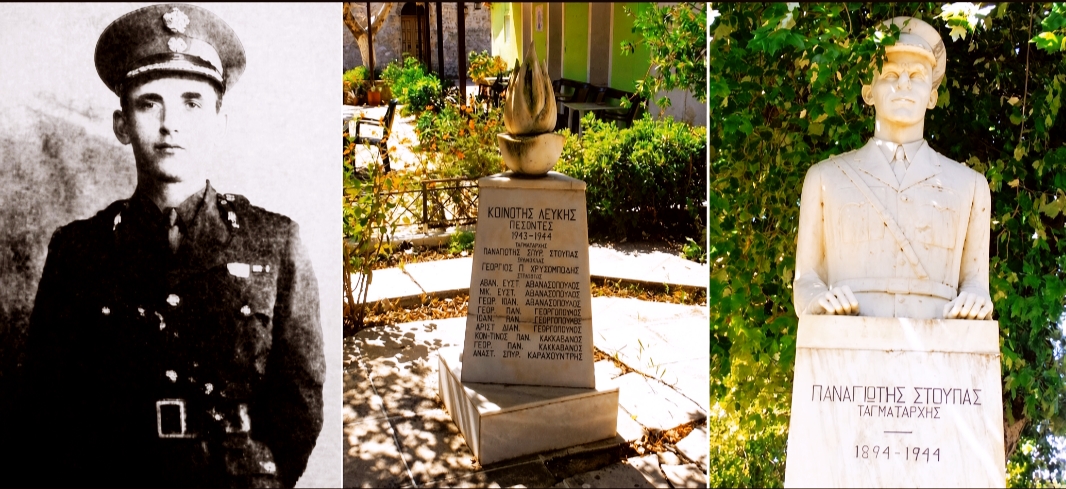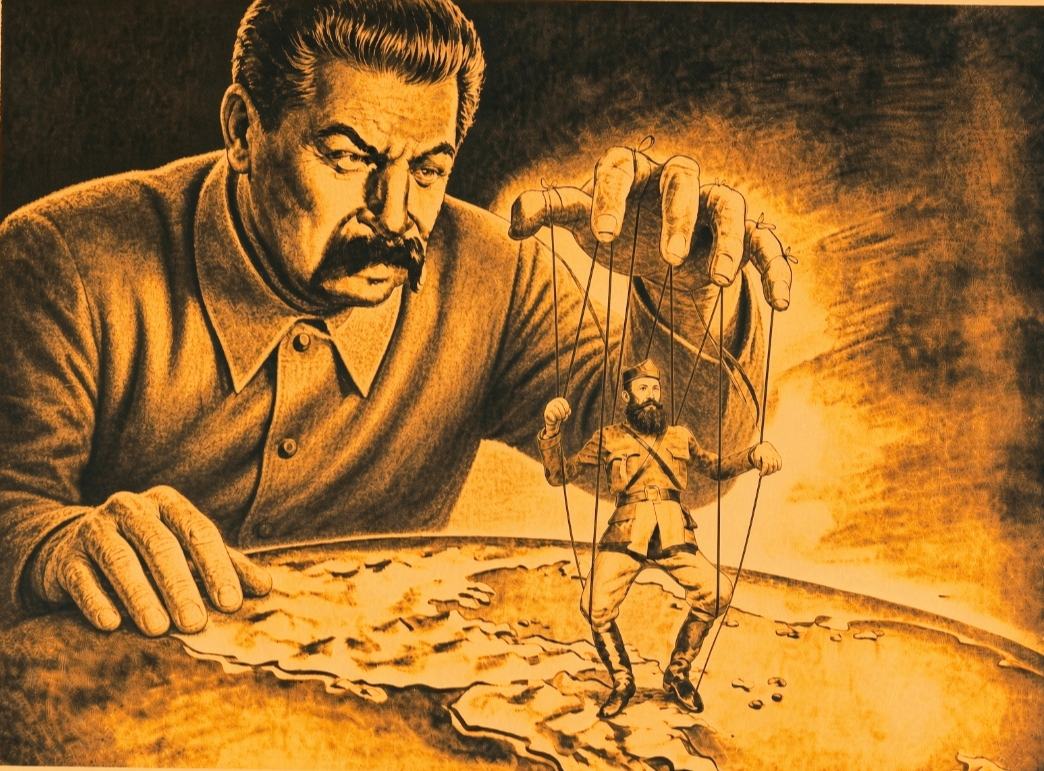
Amalia wrote that Major Panagiotis Stoupas, originally from Lefki Messinia, had participated in the Asia Minor Campaign and in the Greco-Italian War. According to her post, during the Occupation, he created a resistance group in mountainous Trifylia and later joined the national resistance organization "Greek Army" (ES). Amalia mentioned that, following attacks by ELAS and with the intervention of British Major Harrington, the leaders of the ES signed on August 29, 1943, the Dyrrachium Pact, which stipulated the dissolution of the organization and the integration of its members into ELAS. She argued that those who had joined national resistance organizations were at risk, if captured by ELAS, of being forced to join them or be killed. According to her, Stoupas disagreed with the agreement and returned to Lefki. On October 10, 1943, strong ELAS forces surrounded the village, burned his house, and believed he had died, but he had escaped. Amalia wrote that later Stoupas joined the Security Battalions, as, in her estimation, thousands of other Greeks did. The post stated that Colonel Dionysios Papadogkonas, Stoupas's former commander, appointed him commander of the Security Battalion of Meligalas in March 1944. Amalia noted that after the ELAS attack on Meligalas, Stoupas moved to Gargalianoi with 100 men and was not in the city during the days of the massacre. After the collapse of the defense in Gargalianoi, he and his men retreated to Pylos. According to Amalia, when ELAS surrounded Pylos on September 24, local authorities sought a surrender agreement, while ELAS promised that there would be no massacres. She wrote that Stoupas accepted the agreement and committed suicide with his pistol at the castle gate, after saying goodbye to his men. She also cited the post-war testimony of Chris Woodhouse, who, she reported, conveyed words from British journalist Richard Capell in favor of choosing the Security Battalions instead of ELAS. #ιστορία #Ελλάδα #πατριωτισμός (translated)