Investors are concerned about the "Lex Vonovia" and the associated potential expropriations in Berlin, after the stock price of the real estate company Vonovia has fallen by 40 percent and the political coalition has set compensations significantly below the book value. #Vonovia #Immobilien #Enteignung (translated)
The interest group for investors (IVA) sees a need for improvement in the takeover bid from Red Cat Holdings for Steyr Motors, even though the offer provides a premium of 29 percent over the share price. #Übernahmeangebot #SteyrMotors #RedCatHoldings (translated)

The Ministry of Finance warns of an alarming increase in phishing attempts in Austria, aiming to deceive investors and online banking users through fake messages and fraudulent security promises. #Phishing #OnlineBanking #Sicherheit (translated)

In times of record-high national debt worldwide, which unsettles investors, chief market strategist Ronald Temple explains which factors to consider regarding government bonds and particularly highlights the impact of the interest rate increase in Japan on European markets. #Staatsanleihen #Verschuldung #Investitionen (translated)

ETFs have convinced investors with their simplicity and low costs, while the increasing complexity and variety of specialized products, including actively managed funds and leveraged ETFs, pose a challenge to keep track of the available investment options. #ETFs #Geldanlage #Aktienfonds (translated)

Ebrahim Attarzadeh is introducing the renamed Warburg Research into MPCM to offer stock analyses for small and medium-sized German companies and to make the so-called hidden champions visible to investors. #Aktienresearch #HiddenChampions #MPCM (translated)
The high inflation figures from the USA are leading to a sell-off in the tech and semiconductor sector, which also affects Austrian companies like AT&S, while investors are increasingly worried about potential massive corrections in the stock markets. #Börsencrash #Inflation #KünstlicheIntelligenz (translated)

Furkan Yildirim wrote that Bank of America has been examining the correlation between the yield of ten-year US Treasury bonds and stocks since 1962. At yields below 2 percent, the value was plus 0.5, and between 4 and 5 percent, it was plus 0.2. Between 5 and 6 percent, there was no correlation; at yields of 6 to 7 percent, the correlation was minus 0.3, from 7 to 8 percent minus 0.2, and above 8 percent minus 0.3. According to Yildirim, Bank of America explained the change by stating that low interest rates are usually associated with a strong economy, while high interest rates increasingly lead to inflation and expensive loans, making government bonds compete with stocks. The bank summarizes the thresholds, according to Yildirim, as follows: starting from 5 percent, investors become indifferent to stocks and bonds; above 6 percent, higher interest rates harm stocks, and above 7 percent, valuations decline significantly. The ten-year yield reached 5.36 percent in the previous week, the highest level since 2002, and had risen by around 0.7 percentage points since July. After inflation data on Wednesday, it jumped to 5.33 percent; at the time of his contribution, it was around 5.1 percent. Yildirim wrote that the market is already behaving as if yields were above 6 percent: according to Goldman Sachs, the correlation with the S&P 500 was minus 0.56, down from minus 0.64 in June – the lowest value since the start of the data series in 2011. Moreover, according to Yildirim, the ten-year bond is now yielding more than the S&P 500 generates in profits per dollar invested; this was last the case in the early 2000s. As an indication of the importance of inflation, he mentioned that high interest rates during times of high inflation have almost always been a burden for stocks. US inflation was at 3.7 percent in September, up from 3.4 percent in August; gasoline had cost 34 percent more than a year earlier. After the data, the probability of another Fed rate hike in October increased from about 20 to 47 percent. #Börse #Aktienmarkt #Zinsen (translated)
Concerns about an end to the AI boom due to rising interest rates are causing investors in Asia and Germany to increasingly divest from tech stocks, leading to significant losses in the stock markets. #KünstlicheIntelligenz #TechAktien #Zinsen (translated)

There are special circumstances that lead to some countries being more affected – France is an example of this. It is up to the government in Paris to reassure investors, Lagarde told CNN in Bangkok. #EZB #Frankreich #Anleihemarkt (translated)
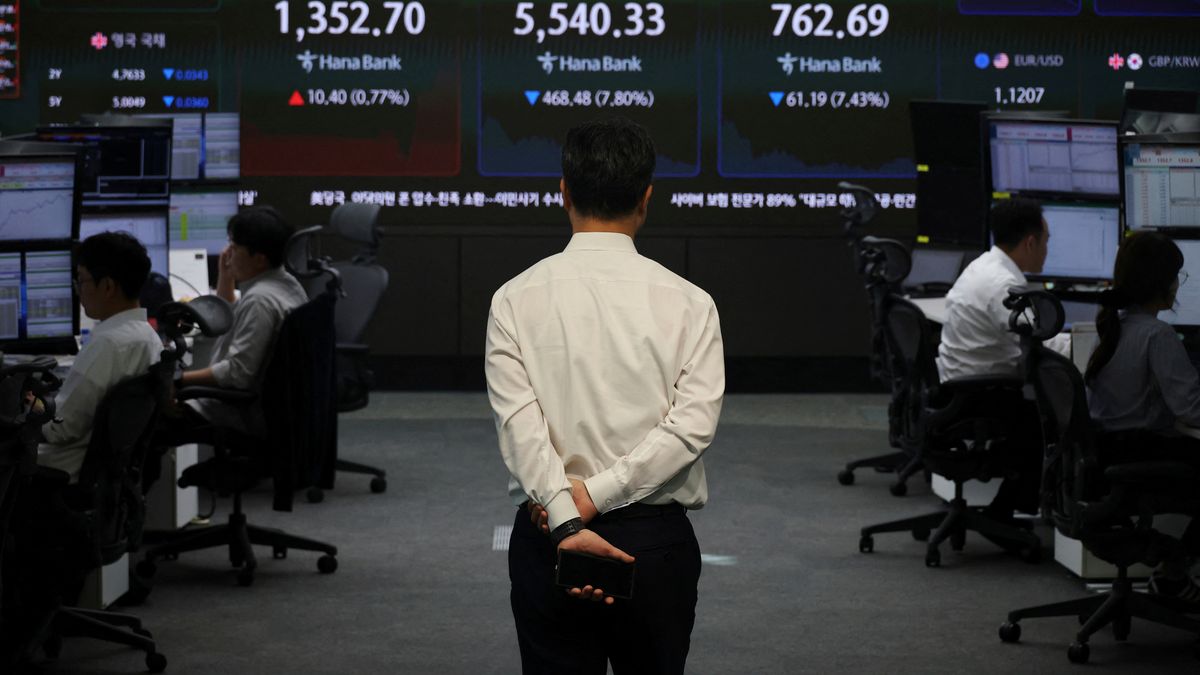
Furkan Yildirim wrote that chip stocks have fallen sharply worldwide. He named as a trigger remarks made by Broadcom CEO Hock Tan, who said at a conference in Singapore on Monday that many AI investors do not understand what they are investing in and have set expectations too high. SK Hynix lost 10.09 percent, Samsung 7.39 percent, and the South Korean stock market 5.46 percent. At the same time, Broadcom expects annual AI chip revenues of $230 billion by 2028 – four times the current value. Yildirim referred to Samsung's recent figures: the company reported a record operating profit of around $80 billion the week before, an increase of 782 percent. Five days later, the stock dropped by 7.39 percent. According to Handelsblatt, Samsung and SK Hynix are now valued on the stock market at just under four times their expected annual profit for 2027 – similar to distressed European car manufacturers. The market apparently no longer trusts the record profits, wrote Yildirim. He highlighted as a key statement from Tan's speech that capital is now scarcer than chips, memory, or power. Intel CEO Lip-Bu Tan identified capital and its costs as the greatest challenge at the same conference. Yildirim also quoted a projection from Apollo economist Torsten Slok: Amazon, Alphabet, Meta, Microsoft, and Oracle could invest $892 billion in data centers this year and even $1.1 trillion by 2027. Public budgets and social security in Germany are expected to invest a total of approximately $170.6 billion by 2025. The companies are increasingly financing their expenditures through bonds and competing with governments for investors, which, according to Yildirim, could raise interest rates for everyone. A model published by the U.S. think tank Brookings estimates that the U.S. will need investments of $10.3 trillion in AI infrastructure by 2032. According to the model, for this to be profitable, the AI sector would need to generate approximately $3.7 trillion in annual revenue by 2032, accounting for 9.2 percent of total U.S. economic output. Yildirim also wrote that Broadcom partially guarantees a loan package of around $42 billion, with which AI developer Anthropic is financing its computing chips for 2027. By the end of October, the first large data center operators will present their figures. The question now is no longer merely whether enough chips can be produced but also who will be able to pay for them. #ChipIndustrie #Investitionen #KünstlicheIntelligenz (translated)
Quantum computers could threaten the security of certain Bitcoin holdings in the future, which is why investors who want to hold or inherit Bitcoin in the long term should switch to quantum-safe methods in a timely manner. #Bitcoin #Quantencomputer #Blockchain (translated)
DAX investors are showing caution before the market opens, as high oil prices and the upcoming US reporting season are fueling uncertainty, while the index is expected to be slightly below the previous day's level. #DAX #Ölpreise #Wirtschaftsprognose (translated)

The DAX is expected to be above 25,000 points at the beginning of the new week, while the markets continue to be influenced by high oil prices and bond yields, and investors are looking forward to the start of the US earnings season. #DAX #Börse #Ölpreise (translated)

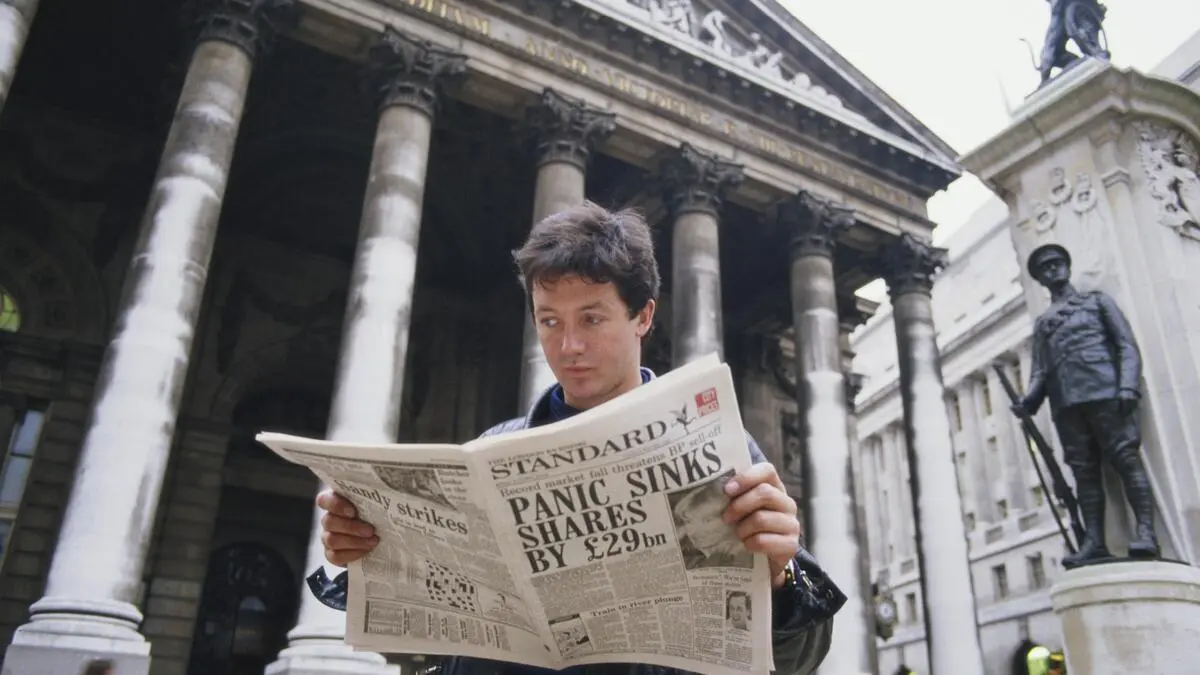
The article highlights the current high bond yields in the USA and draws parallels to the events of 1987, when rising yields ultimately led to a dramatic stock market crash, and questions whether today's calmness among investors is justified. #Anleihen #Börsencrash #Inflation (translated)

Maxim Röder wrote that he sees no long-term reasons for concern about ServiceNow and has already explained his assessment in detail this year. Corporations do not only buy software, but also certifications, liability, support guarantees, audit trails, and a data model that has received millions of customizations over the years. Therefore, the switching barrier is very high. According to Röder, a clone created with Vibe Coding does not offer these safeguards. In case of errors in productive operation, the liability question arises, and no CIO will risk their neck for that. Additionally, large corporations have different approval processes, security standards, and regulatory requirements than small companies. According to Röder, ServiceNow positions itself as a deeply integrated platform that connects various AI models and data sources and orchestrates processes in companies securely. For investors, the question is not whether AI scripts will replace enterprise software, but how quickly and effectively ServiceNow will monetize new AI licenses. #Software #KI #ServiceNow (translated)
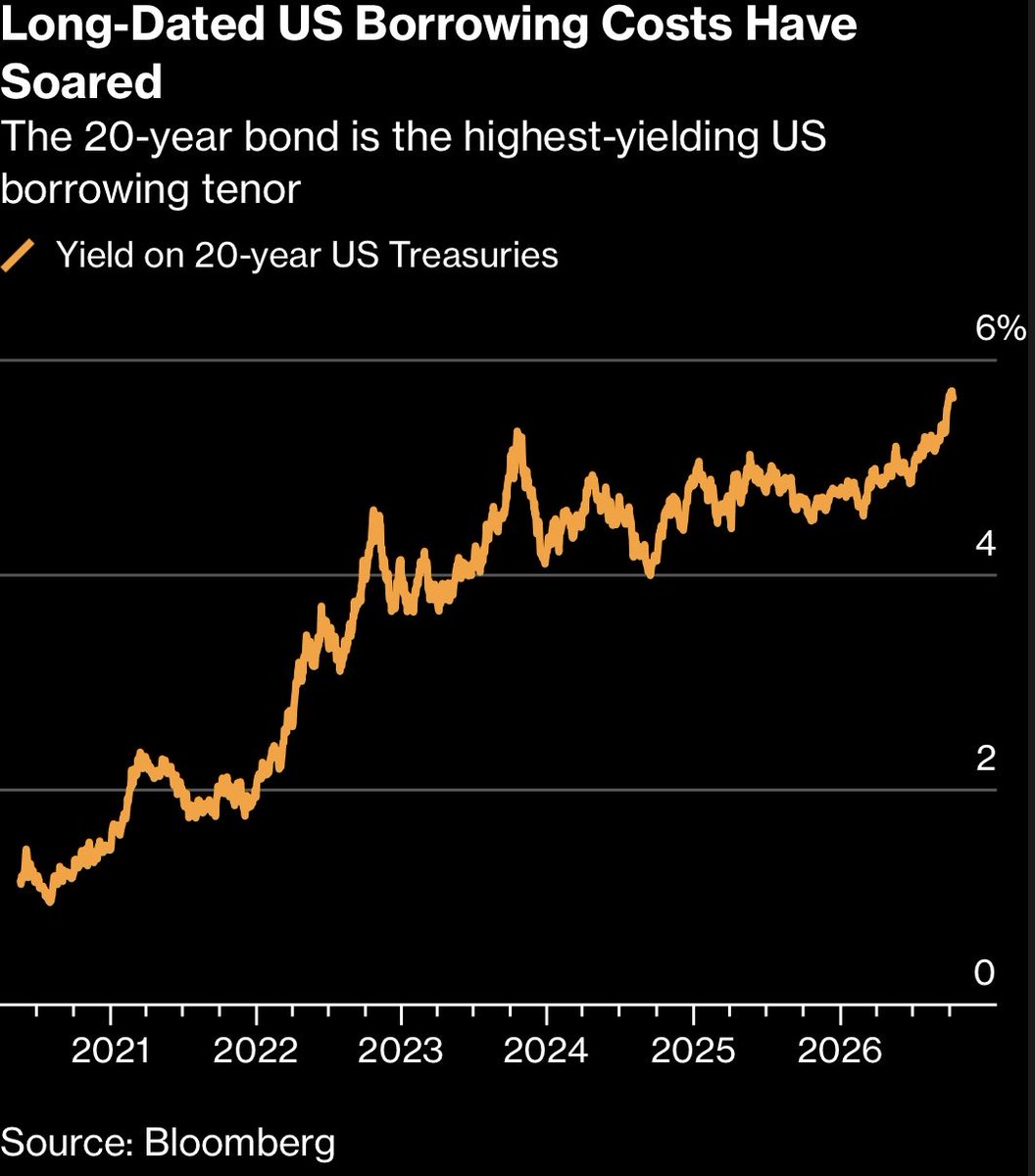
Furkan Yildirim wrote that the US Treasury could auction fewer long-term government bonds as early as November and possibly discontinue the 20-year term altogether. According to Yildirim, Citigroup expects Secretary of the Treasury Scott Bessent to announce a $3 billion reduction in auctions for 20- and 30-year bonds each on November 4. The financing gap is to be closed with government securities maturing within a year at the latest. The department may also ask large banks next week whether pension funds now prefer bonds from Amazon, Meta, and Alphabet to those of the state. The 20-year bond was reintroduced in 2020 after a 34-year hiatus and now offers nearly 5.7 percent interest, more than any other US maturity. At the end of 2020, its yield was just under 1.5 percent. At the same time, Alphabet, Amazon, Meta, Microsoft, Oracle, and SpaceX had already issued dollar bonds amounting to more than $180 billion in 2026; according to Yildirim, Amazon's bonds extend to 2076. According to asset manager TwentyFour, which Yildirim cited, Japanese investors are now receiving enough interest at home to invest their money there. Citi strategist Jason Williams wrote that pension funds may currently be more inclined than usual to invest in long-term corporate bonds of good quality. However, BNP Paribas strategists doubted that smaller auctions would reduce the government's financing costs. Yildirim also pointed out that the yield on 10-year US bonds serves as a basis for mortgages and many other loans, and Bessent had referred to it as an important measure of his success. With an annual deficit of nearly $2 trillion, the debt burden continues to grow as competition for long-term buyers increases. #Finanzen #Anleihen #Wirtschaft (translated)
The latest sales figures from Open AI have significantly influenced the markets and show how an excessive focus on technology giants carries both opportunities and risks, while investors should carefully weigh their decisions. #KünstlicheIntelligenz #Marktanalyse #Investitionsstrategien (translated)
The first real estate fund temporarily restricts payments to investors and activates a liquidity management instrument due to a change in the law. #Immobilienfonds #Liquiditätsmanagement #ErsteGroup (translated)

The client model currently offers investors attractive entry opportunities due to stable prices and growing demand, despite the challenges posed by rising construction costs and geopolitical uncertainties. #Bauherrenmodell #Immobilieninvestitionen #NachhaltigeAnlage (translated)