🚨‼️Since the beginning of Russia’s full-scale aggression against Ukraine, Moscow has been actively seeking foreigners who can be sent to the front. It uses lies, threats, financial promises, and blackmail against those already living in Russia. At the same time, it operates in https://t.co/eWeZKm8DfY #Russia #Ukraine #War #RU #UA
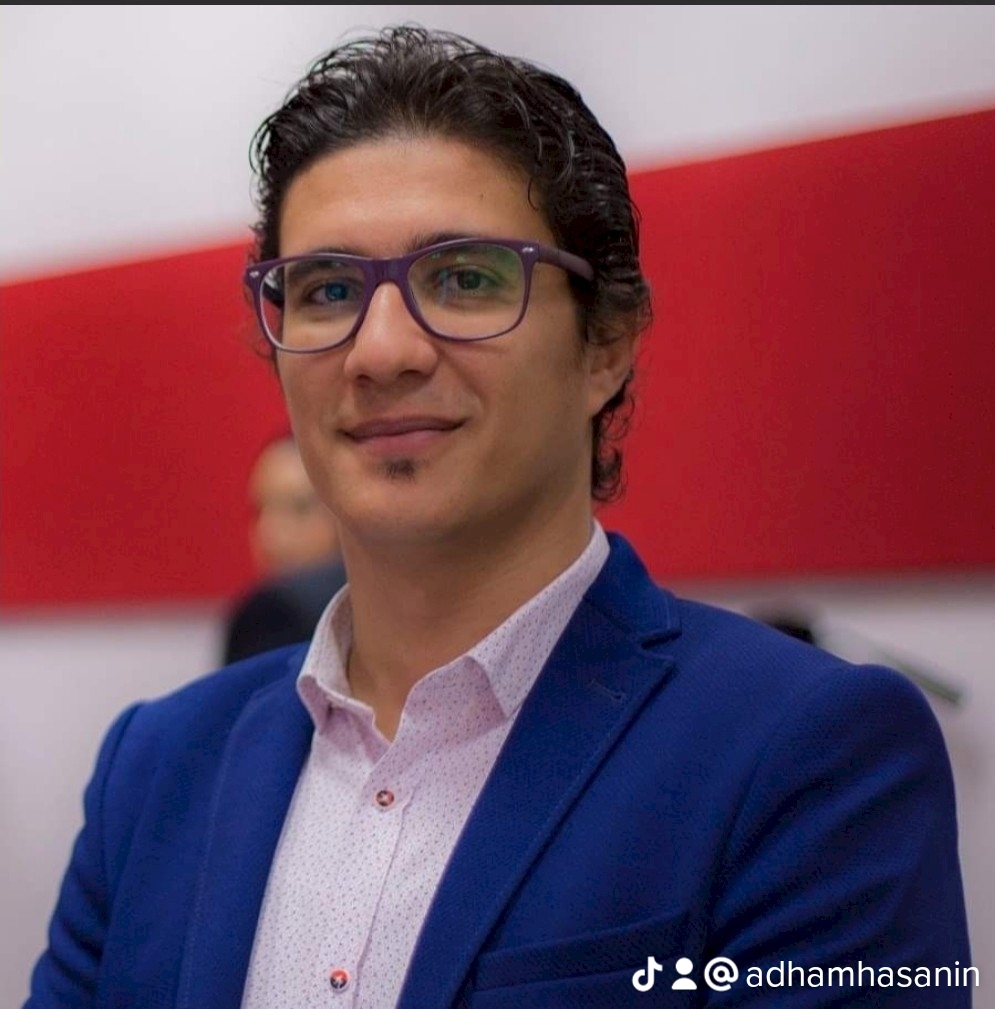
| JULY 2026 | The Guard State How the largest Arab nation became a security contractor at the gates of its own people By Adham Hasanin Egyptian journalist and political writer, based in the Netherlands In June 2025, hundreds of activists from forty countries landed at Cairo airport. Doctors from France, lawyers from Australia, students from the United States, pensioners from the Netherlands. They carried no weapons and no banned slogans; they carried backpacks, walking shoes, and a single intention: to march from Arish to the Rafah crossing — entirely on Egyptian soil — to demand that food be allowed through to a people starving behind the gate. Not one of them reached Rafah. More than two hundred were detained before the march could begin. Around five hundred foreign nationals were deported from airports, hotels, and checkpoints. Passports were confiscated, activists were pulled out of downtown Cairo cafés, and the Global March to Gaza was cancelled on 16 June without taking its first step. And the world watched. This was no secret operation in a dark basement; it happened in the open, documented by the deportees’ own phone cameras, carried by every international news agency. The world watched an Arab state arrest Europeans, Americans, and Africans for wanting to walk towards Palestine. A state guarding the gate of a siege — from the side that was supposed to be the side of rescue. Hold that image, because it is the key to everything that follows. This was not an aberration in Egyptian policy, nor an isolated security decision. It is the function — the complete function around which the Egyptian state has been redefined over the past decade, and which it is time to call by its proper name: the Guard State. I. The Name — What Do We Mean by the Guard State? Political economy has long described states that live off the rent of their location rather than the production of their people. But what has crystallised in Egypt over the past decade goes beyond traditional geographic rent — the Suez Canal, say — into something far graver: the conversion of sovereignty itself into a commodity for hire. The Guard State does not sell its location; it sells its function. It collects its wages not for what it produces, but for what it prevents: it prevents the refugee from reaching Europe, the activist from reaching Gaza, its own people from reaching politics, and the resistance’s weapons from reaching their destination. Four gates, guarded by a single machine, whose wages are paid in loans, deposits, and perpetually renewed rescue packages. This is not a rhetorical metaphor; it is an economic structure with numbers attached. When the Egyptian economy collapsed in 2024, it was rescued not by productive reform but by a single deal whose subject was location: Ras el-Hekma — thirty-five billion dollars for a stretch of coastline. And whenever negotiations with the IMF stall, the tranches are unlocked by explicit European pressure whose subject is migration: nine billion euros from the European Union in the 2024 “Strategic Partnership,” whose own documents place “migration management” at its core. Europe does not pay Egypt to prosper. It pays Egypt to guard. Thus the model is complete: income in exchange for prevention, external legitimacy in exchange for guarding, and international silence about domestic tyranny in exchange for keeping the gates controlled. To see how the model works on the ground, consider the bloodiest gate of all: the gate of Gaza. II. The Gaza Gate — The Guard Who Is Himself Searched The first paradox must be nailed down with facts: Egypt is not a sovereign guard of its own crossing; it is a searched guard. Egyptian relief trucks — ninety-two thousand food parcels in a single convoy this month — are subject to Israeli inspection before entering the Strip: from Egyptian soil, through a crossing that bears an Egyptian name. The state that guards the gate does not hold its key. It owns the threshold, but not the door. Then the October 2025 truce added a new layer to the function. Under the fifteen-point roadmap sponsored by the international envoy together with the “guarantor states” — Egypt foremost among them — Cairo is to train the civilian police force that will replace Hamas in administering the Strip, under the slogan of “one authority, one law, one weapon.” Let us call things by their names: the state that could not — or would not — deliver a loaf of bread without Israeli permission is now qualifying to graduate the security apparatus that will oversee the disarming of the resistance. From guarding the siege to administering what comes after the siege — a promotion within the same project. And meanwhile, what is happening behind the guarded gate? Since the truce, more than one thousand one hundred Palestinians have been killed by Israeli fire — the latest, just two days ago, a ten-year-old boy named Motaz Abu Shaar, carried to his grave in Khan Younis by his mother, Warda. A United Nations commission of inquiry has concluded that Israel is “deliberately targeting children in an ongoing genocide.” This is what the guarantors’ official language calls a “ceasefire.” What meaning is left in the word “guarantor”? A guarantor that the gate stays firmly shut — however high the dead pile up behind it. III. The Mediterranean Gate — The Guard Europe Pays For The second gate faces north. Since 2016, Cairo has boasted — through its officials at every European forum — that “not a single irregular migration boat has departed from Egyptian shores.” This is very nearly true. But the forbidden question is: at what political price has this “efficiency” become an instrument of mutual blackmail? Europe — which condemns Egypt’s human rights record in its parliamentary resolutions — is the same Europe that signed the nine-billion-euro partnership, and the same Europe that stays silent about sixty thousand political prisoners because the alternative, in its calculations, is boats that never stop. And Cairo understands the game and has mastered it: whenever human rights pressure intensifies, the official discourse turns up the volume on “Egypt hosts millions of refugees” and “the last line of defence.” The result is a perfect structure of mutual blackmail: Europe buys its conscience’s silence, the regime sells its location, and the people — Egyptian and refugee alike — are the commodity in the transaction. The democracies that lecture on values are financing the guard who keeps the victims from knocking on their doors. This is not passing hypocrisy; it is a structural partnership in the Guard State model — one that makes Brussels and Berlin shareholders in everything this state produces, from domestic repression to external siege. IV. The Interior Gate — Guarding the People Against Politics But the most dangerous gate is not on any border; it is inside. The Guard State cannot perform its external function unless it first guards an internal gate: the people’s gate to politics. The function requires a people that does not ask: why are we guarding the siege of our brothers? Why are our trucks searched on our own soil? Why are guests deported for coming to walk in peace? To guarantee the question is never asked, the largest silencing machine in the country’s history was built: sixty thousand prisoners of opinion, a press ranked 166th out of 180 worldwide, and a state security case number waiting for anyone who writes. I write these lines from experience, not from reading reports. When I continued writing from my Dutch exile, the machine reached me across continents: accounts shut down by coordinated mass-reporting campaigns, documented threats, a family harassed inside Egypt as leverage — and my name entered into Case 1282 of 2024, not for any act I committed, but for opinions written from free European soil. This is not a personal complaint; it is a job description: the Guard State guards even beyond its borders, because the free word — wherever it is written — threatens the entire contract of guardianship. The logic is perfectly self-consistent: a regime that sells “stability” abroad cannot tolerate a voice revealing that the stability on offer is the stillness of graveyards. This is why the arrest of the foreign activists in June 2025 was inevitable, not incidental: a peaceful march reaching Rafah would have revealed, before the world’s cameras, that the gate opens when it is wanted open — and that the one keeping it shut is a partner, not a mediator. V. What Has Egypt Lost? — The Guard’s Bill An apologist might argue: what is the harm? A state monetising its location as Norway monetises its oil. The answer lies in the essential difference: Norway sells a resource; Egypt leases its will. And the difference between the two is the difference between trade and bondage. Let us tally what Egypt has paid for this model, in bare facts. It lost its water sovereignty: the Renaissance Dam was completed and filled without the state — owner of “the largest defence headquarters in the world” — daring anything beyond statements of concern; for the guard does not make trouble for the international order that employs him. It lost its regional standing: in the Iran–America war halted just weeks ago, Cairo was neither party nor mediator nor even consultant — Pakistan brokered the deal, while Egypt absorbed the economic shrapnel of Hormuz’s closure like a bystander caught in a battle whose parties it does not know. It lost its place in the conscience of its nation: the state that liberated its land in 1973 and led the Arab world for a century has become, in the eyes of the Arab street from the Atlantic to the Gulf, the gatekeeper of the siege. This loss, specifically, no loan or deposit can repay — because it is the only capital that cannot be printed. And it lost — here is the crux — the very national security in whose name the guarding is justified. The model proved its fragility at the moment of testing: when Israel feared an Iranian response last year, it cut off Egypt’s gas by unilateral decision within hours. The guard who believed himself a partner discovered he was merely a hireling whose wages stop the moment danger arrives. VI. The Alternative Is Not a Slogan — It Is the Recovery of the Original Function I will not close with an essay on “the solution lies in Arab unity”; worn-out words kill more surely than silence. The alternative is specific, and it begins with redefining the function. The state is not a guard; the state is the agent of its people’s will. Every foreign policy not derived from that will is — by definition — functional servitude, however it is wrapped in the language of wisdom and moderation. And the Egyptian will is known and needs no referendum: no people in this region accepts that its country serve as warden of the siege of Gaza, or as Europe’s border post. Practically, the recovery begins with three measurable steps. Open the Rafah crossing fully and sovereignly, by purely Egyptian decision — that alone would overturn the equation of the siege. Break the negotiating bondage by linking any cooperation on migration to concrete European positions on Palestine, not statements of concern. And open the interior gate — release the prisoners and lift the hand from the written word — because a state that fears an article will never dare face an occupier. I know the current regime will do none of this; guarding is its founding contract and its financial artery. But this article is not written for the regime. It is written for memory, and for the generation that will inherit the gates — so that it knows that what is presented to it today as “the fate of geography” is no fate at all. It is an employment contract, signed by a regime without a mandate from its people. And contracts, however long they run, end when one of their parties does. And the world — I return to where I began — is a witness that requires no further proof. It watched the deportees at Cairo airport; it watched the searched trucks; it watched Warda Abu Shaar carry her son to his grave behind a firmly guarded gate. The question is no longer: what is happening? The only question left is: who dares to name it? This article is a naming. Adham Hasanin is an Egyptian journalist and political writer based in the Netherlands, covering Arab and European political affairs.
Russia's population density map explains why the Kremlin will NEVER use a nuclear weapon. Its two largest cities could be devastated by conventional strikes within hours. Russia's nuclear threats are just empty blackmail. https://t.co/L3R3D6I3hC #Russia #NuclearThreats #PopulationDensity #RU
Ramachandra Guha's sleight on Rahul Gandhi has made people reassess RG and it has worked in his favour. Looking back, I think I was wrong to see Guha's hatchet job as a sabotage. It might be a clever attempt to get attention on RG. Last night was revealing for other reasons too. India doesn't want to stand too close to Pakistan in these times. For a legitimate reason. India manages to keep safe distance from the Pakistani terror factories through a complex balancing act. Current government, despite its positive limelight at this time, has manipulated the actual mandate and undermined it. And that mandate is far more fierce and dangerous if they consider India as hostile or undermining their claim to power. There are things that India can still do, but then, I am too far out to send my brain farts. For now, it remains on Pakistan to find other industries that can overtake its security business importance. Not yet visible on horizon sadly. Americans are desperate to get a one up on China. And they need 3-4 years for it. Meanwhile, China is one, max two years away from ensuring its development model to continue irrespective of rest of the world, mostly the western world. One of the most critical components of Chinese capabilities is its EUV machine. For USA, the challenge is to delay it or sabotage it. And it is running out of time. The only possibility it has to disrupt China is to weaponize space. That will bring about a clash of titans. Chinese interference in Indian economy and politics will grow now. I had written in past also about the need for a strong India for a prosperous China. Unfortunately, the simulatenous rise of both power powers didn't happen. India chose a servile path to predictability alongside a crumbling empire. Chinese and Indian social media ecosystems are almost entirely separate. But Indians dominate the mass/volume of the global interface for the Chinese. Besides, the great Chinese wall isn't that unbreachable. Indians have responded with raising a terrible stink to Chinese attempts of infiltrating with their propaganda campaigns at higher levels. Chinese attempts for a high quality heli-dropping of propaganda has slowed down for now, but it will return. Indian side lacks the depths and variety in arsenals. My fear is Chinese side will sidestep the routine propaganda and go for serious below-the-radar sabotage where they have a massive edge now. Is it possible that India is looking at a situation where a clean face becomes the PM and the current prick face becomes the President for life sort of thing? Initial thoughts. This might be a simple way to get rid of the American blackmail of this moron. Or the more likely path of a massive crackdown and rise of single party dictatorship?
@Igor_Grosu_md “I congratulate Moldova which is under constant Russian hybrid attack and still managed to open negotiations to EU accession. You face constant Russian military threats, energy blackmail and propaganda attacks and cope with it better than some older European nations.” - https://t.co/Kehr9WZPWb #Moldova #EUsolidarity #Russia #MD #RU #EU
This is a public threat to the POTUS. Should anything like this ever happen, Nethanyahu should be immediately convicted for blackmailing the US President and sabotaging an international negotiation. #POTUS #Netanyahu #Blackmail #US #IL
THE STRAIT OF HORMUZ MUST REMAIN OPEN. 20% of global oil and LNG trade passes through this narrow corridor. No dictatorship must be allowed to blackmail the world economy by blocking international shipping. I call for a NATO maritime security mission with submarines, naval https://t.co/DTEkDK0PeF #StraitOfHormuz #MaritimeSecurity #GlobalTrade #Therearenospecificcountrymentionsinthetweetprovided.
From medieval chains on the Danube to modern blackmail in the Strait of Hormuz. Iran is trying to hold the world economy hostage by threatening global trade routes and oil flows. The Free World must never accept maritime blackmail, ransom politics or terror against international https://t.co/JbXDajhb5L #MaritimeSecurity #GlobalTrade #IranThreat #IR #RO #HU
OPEC out of Vienna. Austria must stop hosting the fossil cartel of oil dictatorships in the heart of Europe. After Russia’s energy blackmail and Europe’s energy crisis, Vienna should stand for freedom, innovation, clean energy and European security — not fossil dependency. 10 https://t.co/ExRiJf8KtO #OPEC #CleanEnergy #EnergySecurity #AT #RU
🇪🇺🤝🇺🇸 Welcome the EU–USA Trade Deal! Thank you European Parliament for doing Europe’s part. Now President Trump: do your part as well. @POTUS ✅ Respect the deal ✅ Stop tariff blackmail ✅ Build the Transatlantic Economic Alliance 2029 must become the year of the full US–EU https://t.co/kUUJsISq3F #TradeDeal #USEUAlliance #TransatlanticRelations #EU #US
We know that Zbigniew Ziobro and his associates removed files belonging to the special services and the prosecutor’s office. We know that tapes used for blackmail, made by a criminal group that recruited girls for brothels in southern Poland, disappeared. We also know that one of #Ziobro #korupcja #Polska #PL
Sviatlana Tsikhanouskaya: The Minsk regime has begun drills on the deployment of Russian nuclear weapons stationed on our land. Belarusians do not want these weapons. Lukashenka has turned Belarus into a platform for Russia’s threats. A free Belarus will be a source of security, not nuclear blackmail.

212–212. The attempt to restrict President Trump’s Iran operation failed in the U.S. House. @POTUS History is calling. 47 years of terror, hostage-taking, dictatorship, regional war, and nuclear blackmail are enough. The Iranian people deserve freedom, prosperity, and peace. https://t.co/VFkGqdxYzw #Iran #Freedom #Peace #IR #US
A 17-year-old from south Norfolk, arrested for allegedly making explosives, distributing terror manuals, and creating deepfake images to blackmail victims, faces a trial next year with multiple charges including terrorism-related offenses and child exploitation. #CyberCrime #Terrorism #Deepfake #GB #NL

A 17-year-old boy, accused of making explosives, distributing terror manuals, and creating deepfake images to blackmail victims, could face trial in April 2027 after being arrested last year in south Norfolk. #Terrorism #Cybercrime #Deepfakes #GB

A 17-year-old from south Norfolk, accused of making explosives, distributing terror manuals, creating deepfake images of underage girls, and engaging in online blackmail, could face trial in April 2027 following a preliminary hearing at the Old Bailey. #CyberCrime #Deepfake #Terrorism #GB #XN

A 17-year-old boy, who cannot be named for legal reasons, faces multiple charges including making explosives, creating deepfake images for blackmail, and inciting racial hatred, with a provisional trial set for April 2027 following an arrest by Counter Terrorism Policing London. #TeenCrime #CyberSecurity #LegalNews #GB

A 17-year-old boy, accused of creating explosives, distributing terror manuals, and producing deepfake sexual images of girls for blackmail, is set to face trial next year after appearing at the Old Bailey, with a provisional date for the trial set in April 2027. #CyberCrime #Deepfakes #Terrorism #GB #NL