BETA nonprofit public democratic european moderated

Search

#Complexity

Cold Beer and Hot Showers - Not Kilowatt-Hours All That Consumers Want The energy sector spends an extraordinary amount of time talking about generation, transmission, storage, flexibility, markets, tariffs, balancing, ancillary services, carbon emissions, batteries, hydrogen, demand response, electrification pathways, system costs, capacity mechanisms, investment signals, market design and regulation. All of these things matter. Some of them matter enormously. But there is a simple question that often disappears somewhere between the conference room, the policy paper and the technical model: What does the customer actually want? The answer is surprisingly simple. Most people do not wake up in the morning thinking about kilowatt-hours. They do not dream about capacity markets. They do not worry about frequency stability. They do not spend their evenings comparing balancing mechanisms. They want cold beer and hot showers. They want a warm home in winter and a cool home in summer. They want the lights to turn on when they press the switch. They want their phone charged, their food refrigerated and their car ready when they need it. In other words, they do not want energy. They want what energy allows them to do. That distinction may sound trivial, but it changes almost everything. For more than a century, the energy industry has been organized around the production, transportation and sale of energy itself. Electricity became measured in kilowatt-hours. Gas became measured in cubic meters. Fuel became measured in litres or tonnes. Markets, regulations and business models were built around those units. The customer, however, never experienced life in kilowatt-hours. The customer experienced comfort. Convenience. Mobility. Reliability. Security. The units used by the industry and the outcomes desired by the customer were never the same thing. For a long time, this mismatch was not particularly important. Energy was relatively scarce, flexibility was limited, and the dominant challenge was supplying enough fuel to satisfy demand. The system could afford to focus on production because production was the central problem. Today the situation is changing. Electrification is transforming energy systems around the world. Renewable generation is increasing rapidly. Batteries are appearing in homes, businesses and vehicles. Buildings are becoming smarter. Heat pumps are replacing boilers. Electric vehicles are becoming mobile storage assets. Customers are increasingly able not only to consume energy but also to store it, shift it, manage it and sometimes even sell it. As this happens, the most valuable question is no longer simply how much energy is produced. The more important question becomes: How well is energy aligned with what people actually need? A family does not care whether its water heater operates at noon or at two in the afternoon if hot water is available when someone steps into the shower. A homeowner does not care whether a battery charges at 1 p.m. or 3 p.m. if electricity costs less and reliability improves. An electric vehicle owner does not care when charging occurs as long as the vehicle is ready when needed. The objective is not the kilowatt-hour. The objective is the service. This is why many of the most important developments in modern energy systems are not really about producing more energy. They are about matching energy to the service required, at the right time, in the right place and in the right form. The technical term for this is often hidden behind complicated language. Experts discuss flexibility, demand management, dynamic pricing, distributed energy resources and system optimization. Consumers experience something much simpler. They experience agency. They experience the ability to save money without sacrificing comfort. They experience the ability to make choices. They experience the ability to benefit from technologies that work for them rather than asking them to work for the technology. This is where many debates become confused. Consumers do not want to be coordinated. They want agency. Good energy systems do not force people to behave differently. They make beneficial behaviour easier, more natural and more rewarding. The best systems do not rely on control. They rely on alignment. When the customer’s interest aligns with the system’s interest, remarkable things become possible. Demand shifts naturally. Storage becomes useful. Flexibility appears. Costs decline. Reliability improves. The customer does not need to understand the complexity underneath. Just as nobody needs to understand how the internet routes packets around the globe in order to send a message, nobody should need to understand wholesale electricity markets in order to enjoy affordable energy services. Success is not measured by how much complexity consumers are asked to absorb. Success is measured by how much complexity the system absorbs on their behalf. The future energy system will undoubtedly involve more digital technology, more electrification, more storage, more automation and more coordination. But none of those are the destination. They are merely tools. The destination remains exactly what it has always been. Cold beer. Hot showers. Comfortable homes. Reliable mobility. Affordable bills. Everything else is infrastructure. And perhaps that is the simplest way to understand the energy transition. People do not want kilowatt-hours. They want the life that kilowatt-hours make possible.

D

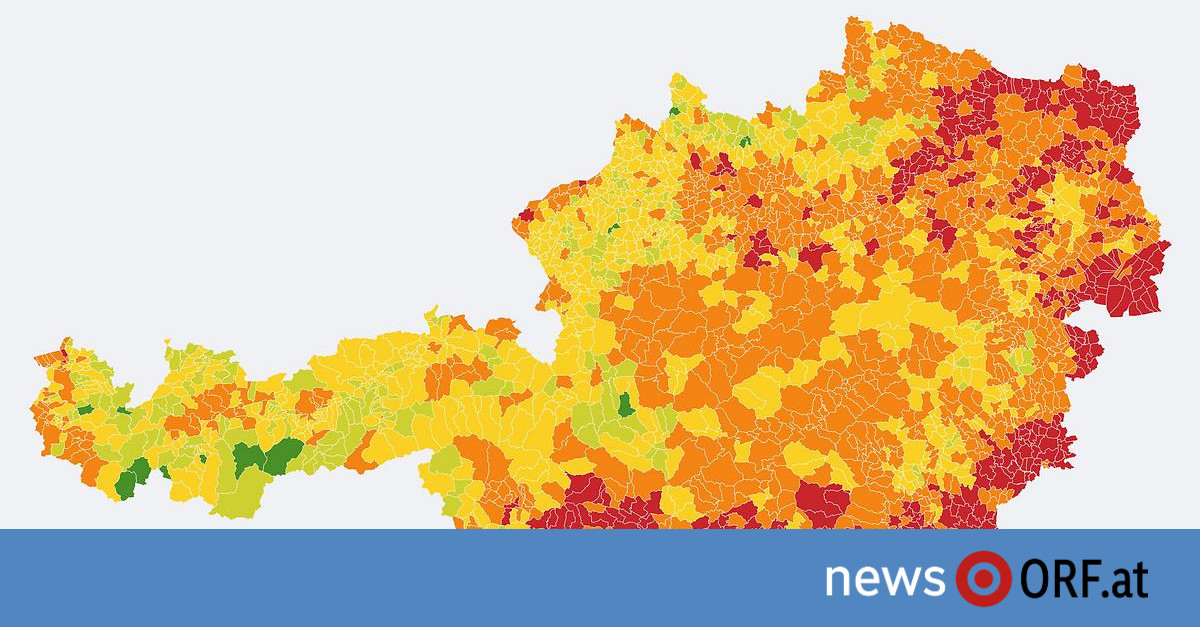
This year, Austria has recorded significantly high heat stress, with 373 municipalities and 22 districts showing very high heat index according to the interactive map of the research team Complexity Science Hub, with some areas, like Bregenz, experiencing a heat wave lasting 61 days. (translated)

373 Gemeinden heuer bisher mit sehr hohem Hitzebelastungswert

Updated data from the Complexity Science Hub shows that by the second half of 2026, more than half of Austrian municipalities will suffer from high or very high heat stress, an increase compared to 2018, with particularly high heat stress felt by the elderly and agriculture due to extreme drought. (translated)

Karte zeigt Hitzebelastung in Gemeinden

Consequences of economic sanctions are non-linear, complex & harder to avoid than the sanctions themselves. #EconomicSanctions #Complexity #Consequences #Thetweetdoesnotmentionanyspecificcountries.Therefore #therearenocountrycodestoreturn.

Article Autortiesības – viens no civilizētas sabiedrības stūrakmeņiem discusses the persistent challenges regarding copyright understanding in Latvian society, pointing out the tension between protecting creative works and the perceived complexity of the legal system, with insights from cultural figures on the necessity of fostering greater awareness of authors' rights amidst ongoing misconceptions. #Autortiesības #Radošums #Kultūra

Autortiesības – viens no civilizētas sabiedrības stūrakmeņiem. Kāpēc joprojām aiz tā klūpam?
BBC Jun 9

The article discusses how Donald Trump and Benjamin Netanyahu aimed to reshape the Middle East through military action against Iran, but instead face a prolonged crisis marked by Iran's unexpected resilience and continued aggression, exemplified by the downing of a U.S. helicopter, revealing the complexity of achieving definitive victory in warfare. #MiddleEastPolitics #IranConflict #TrumpNetanyahu

Bowen: Trump and Netanyahu wanted to reshape the Middle East - now they risk a permacrisis

One conclusion emerged clearly: the scale and complexity of the challenges we face require deeper coordination, stronger partnerships and an effective multilateral framework. No country can address these transformations alone. https://t.co/OugYiF2VSv #Multilateralism #GlobalChallenges #Partnerships #Therearenospecificcountrycodesrelatedtothetweetyouprovided.

BBC May 18

The article discusses the challenges posed by an Ebola outbreak in the Democratic Republic of Congo, which has been declared a public health emergency by the WHO due to the rare Bundibugyo strain, the absence of a vaccine, the conflict-affected region, and the complexity of tracing the virus's spread amidst local misconceptions and funeral practices. #EbolaOutbreak #PublicHealthEmergency #DRCongo

What is Ebola and why is stopping this outbreak so difficult?
BBC May 18

The article discusses the challenges posed by an Ebola outbreak in the Democratic Republic of Congo, which has been declared a public health emergency by the WHO due to the rare Bundibugyo strain, the absence of a vaccine, the conflict-affected region, and the complexity of tracing the virus's spread amidst local misconceptions and funeral practices. #EbolaOutbreak #PublicHealthEmergency #DRCongo

Angriff auf CSD in Berlin: Tatverdacht nicht erhärtet: Zweiter Verdächtiger freigelassen
BBC May 16

In 2016, Donald Trump proclaimed China as America's main economic rival during a campaign rally in Indiana, and since then, his hardline stance on China has persisted, influencing his policies—including steep tariffs and military sales to Taiwan—despite recent diplomatic overtures that suggest a potential shift in tone, highlighting the complexity and ongoing tensions in U.S.-China relations. #USAChinaRelations #TradeWar #TrumpAdministration #CN #US #TW #IR

特朗普訪華:MAGA運動中的中國批評者如何看待他這次北京之行 - BBC News 中文
BBC May 16

Claire Brosseau, a Toronto-based comedian and actress, struggles with severe mental illness and seeks medically assisted dying under Canada's laws, but faces delays in legislative expansion for those with mental disorders, as concerns over the healthcare system's preparedness and the complexity of mental health treatment persist. #MentalHealth #Euthanasia #MentalIllness #CA

What is a 'safe death'? Mentally ill woman asks for assisted dying in Canada

Despite the White House's efforts to avoid confrontations ahead of President Trump's visit to China, recent U.S. sanctions on Chinese firms over issues related to Iran, cybersecurity, and artificial intelligence have escalated tensions between the two superpowers, highlighting the complexity of U.S.-China relations as they navigate both rivalry and dialogue. #USChinaRelations #Cybersecurity #ArtificialIntelligence #CN #US #IR #TW #JP #PH

Spies, Sanctions, Cyberattacks: China and the U.S. Clash Behind the Scenes
BBC May 13

A leading safety expert has called for a comprehensive risk assessment of Glasgow's Queen Elizabeth University Hospital campus, highlighting the complexity of determining safety due to historical failings linked to contaminated water and expressing concerns about the adequacy of ventilation systems in wards, amid ongoing investigations into patient deaths potentially related to the hospital environment. #HospitalSafety #RiskAssessment #PatientCare #GB #SC

Expert calls for full safety review of Glasgow super‑hospital

Lamine Yamal sparked controversy by waving a Palestinian flag during Barcelona's La Liga victory celebrations, a spontaneous act reflecting his strong feelings regarding the Israeli-Palestinian conflict, with reactions from politicians and the Barcelona manager highlighting the complexity of the ongoing debate in Spain. #Barcelona #Palestine #SportsActivism #ES #PS #IL #GW

Lamine Yamal and a Palestinian flag at Barcelona's title celebrations

Recent research has unveiled the existence of a third circulatory system in the human body, known as the interstitium, which comprises interconnected pathways that facilitate the movement of fluids, cells, and molecules between tissues, suggesting a deeper complexity to human anatomy that aligns with ancient knowledge in traditional Chinese medicine. #HumanBody #MedicalResearch #CirculatorySystem #IT #GB #US #CN

It's All Connected

Despite the Trump administration's declaration that the war against Iran had ended, President Trump and Israeli Prime Minister Netanyahu both indicated in separate interviews that the conflict is ongoing, highlighting the complexity and shifting objectives of the military campaign. #IranConflict #TrumpAdministration #MiddleEastTensions #US #IL #IR

Trump and Netanyahu Say Iran War Is Not Over

The article explores the potential impacts of artificial intelligence on religion, proposing three possible futures: one where A.I. promotes atheism by equating minds to mere computational processes, another where the complexity of consciousness fosters a deeper appreciation for spirituality, and a third where A.I. creates widespread metaphysical uncertainty, leading to confusion about fundamental beliefs. #ArtificialIntelligence #Religion #Consciousness #US #CN

Opinion | The Atheist and the Machine God

European officials are increasingly asserting that the economic sanctions imposed on Russia following its invasion of Ukraine are having a significant impact, as evidenced by signs of strain in the Russian economy, despite the Kremlin's continued military aggression and the complexity of attributing specific economic outcomes directly to these sanctions. #Sanctions #RussianEconomy #EUPolicy #RU #EU #FR #SE #US

After 20 rounds of sanctions, the EU sees cracks Russia's economy

The Digital Markets Act (DMA), which came into effect in May 2023, mandates that major tech companies like Apple, Google, and Amazon enhance user choice and foster competition by opening their platforms to rivals, leading to mixed experiences for consumers as they encounter both new opportunities and increased complexity in their digital interactions. #DigitalRegulation #ConsumerRights #TechGiants #EU #DE #LV #US

DMA: How the EU's big tech law changed citizens' lives

The Digital Markets Act (DMA), effective May 2023, mandates major tech companies like Apple, Google, and Amazon to enhance competition by allowing rival services greater access to their platforms, resulting in new user choices and cross-platform messaging, despite some consumers experiencing increased complexity and delays in compliance, leading to ongoing scrutiny and calls for the law's evolution. #DigitalMarkets #ConsumerRights #TechRegulation #EU #DE #LV #US

DMA: How the EU's big tech law changed citizens' lives