The expiry date Arlene Foster refers to only arises in the event of a majority in NI wanting Irish unity. Is the implication here that there should be no unity regardless of how many in NI desire it. The consent of a majority being required for constitutional change is at the #NorthernIreland #IrishUnity #Politics #GB #IE
Marine le Pen est une islamophobe et doit être traitée comme telle. Évidemment que leur proposition d'interdire le port du voile n'est pas constitutionnelle et n’est pas applicable. Mais le sujet n'est pas là. 🧶 #Islamophobie #Liberté #DroitsHumains
"un soupçon initial de sabotage dirigé contre l'ordre constitutionnel"
"Aujourd'hui, ce n'est pas réaliste […] et en plus, c'est contraire à la Constitution"
“Socialism Was Good in Theory” That sentence assumes the theory was never seriously challenged. It was. Long before the Soviet Union existed, before Lenin seized power, and before socialism had been tested on a national scale, major thinkers were already attacking its foundations—from very different directions. Five of them stand out. Tocqueville: Equality Can Become Servitude In 1848, Alexis de Tocqueville drew a sharp distinction between democracy and socialism. Both spoke about equality. But Tocqueville believed they pursued it in fundamentally different ways. Democracy, in his view, sought equality while preserving individual freedom. Socialism risked achieving equality by expanding the power of the state over the individual. His warning was essentially this: equality is not automatically liberty. A society can pursue equality so aggressively that it begins sacrificing the independence that makes political freedom meaningful. Bastiat: Follow Where Redistribution Leads Two years later, Frédéric Bastiat attacked socialism from a different direction. His question was deceptively simple: What happens when the state acquires the authority to take from some people and give to others in the name of justice? Bastiat called this “legal plunder.” His concern was not merely that redistribution might be expensive. It was that once government becomes the instrument through which competing groups obtain benefits from one another, politics can turn into a permanent struggle over who controls the machinery of redistribution. The problem, therefore, wasn’t simply how much the state redistributed. It was the principle that made redistribution legitimate in the first place. (bastiat.org) Nietzsche: Equality Can Become Resentment Nietzsche approached socialism neither as an economist nor as a constitutional theorist. He attacked its psychology. He saw modern egalitarian movements as part of a much older moral impulse: resentment toward exceptional individuals and suspicion of strength, ambition and hierarchy. For Nietzsche, the danger was not simply that everyone might become economically equal. It was that a culture could begin treating excellence itself as something morally suspect. The goal would cease to be lifting people upward. It would become bringing the exceptional downward. Böhm-Bawerk: Challenge the Economics Then came Eugen von Böhm-Bawerk. In 1896, he turned his attention specifically toward Marx’s economic system. His criticism was not primarily moral or political. It was technical. Böhm-Bawerk argued that Marx’s theory of value did not adequately explain how the labor values developed in Capital could be reconciled with the actual prices Marx subsequently needed to explain. In other words, he attacked socialism where it claimed to possess a scientific economic foundation. The argument became one of the central criticisms of Marxian economics and helped launch a debate that would continue for generations. Mises: The Calculation Problem Then, in 1920, Ludwig von Mises attacked an even more fundamental question: Even if socialism is morally desirable, how would a socialist economy actually know what to produce? A functioning economy has millions of competing uses for scarce resources. Build a bridge or a hospital? Use steel here or there? Produce more machinery or more consumer goods? Under private ownership and markets, prices for capital goods provide information about relative scarcity and opportunity costs. Mises argued that abolishing private ownership of the means of production also removes the genuine market prices necessary for rational economic calculation. The problem wasn’t simply that socialist planners might make bad decisions. It was that the system deprived them of the very economic signals required to systematically compare those decisions. (Mises Institute) And that was the sequence. Tocqueville challenged the political premise. Bastiat challenged the moral and legal mechanism of redistribution. Nietzsche challenged the psychology behind egalitarianism. Böhm-Bawerk challenged Marx’s economic theory. Mises challenged the possibility of rational central economic calculation. Five different thinkers. Five different objections. And all of them came before the Soviet Union had demonstrated what large-scale socialist government would actually look like. So “socialism was good in theory, but bad in practice” is not an argument. It is a historical claim that requires you to explain why these theoretical objections were wrong. The interesting question isn’t whether socialism had critics. It did. The interesting question is whether socialism ever adequately answered them” - ChatGPT
The Belgian Union of Health Care Providers has lodged an appeal before the Constitutional Court to contest certain provisions of a health care reform, claiming that they could harm the organization of the system, patient access to quality care, and the working conditions of health professionals. (translated)

🇮🇳 EXINDIA? MODI, STOP POLICING FAITH. India is strongest when it is pluralist, constitutional and free. I fully support tough punishment for: forced conversion, threats, coercion, fraud and deception. But I reject laws that use vague concepts such as “allurement” or “undue https://t.co/g2CKgVqkXT #India #Pluralism #ReligiousFreedom #IN
"Il faut une réforme constitutionnelle profonde, pour mieux partager le pouvoir"
Gabriel Attal, Renaissance candidate for the 2027 presidential election, stressed the need for a profound constitutional reform to better share power during his intervention on France 2's 8 PM news. (translated)

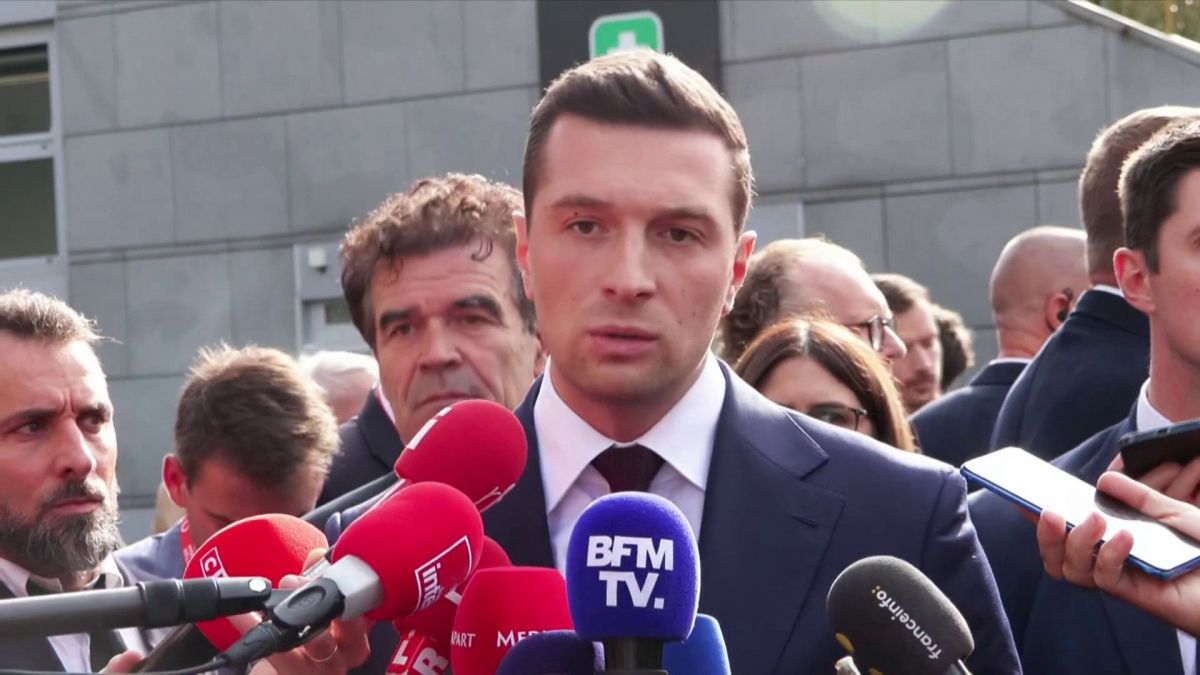
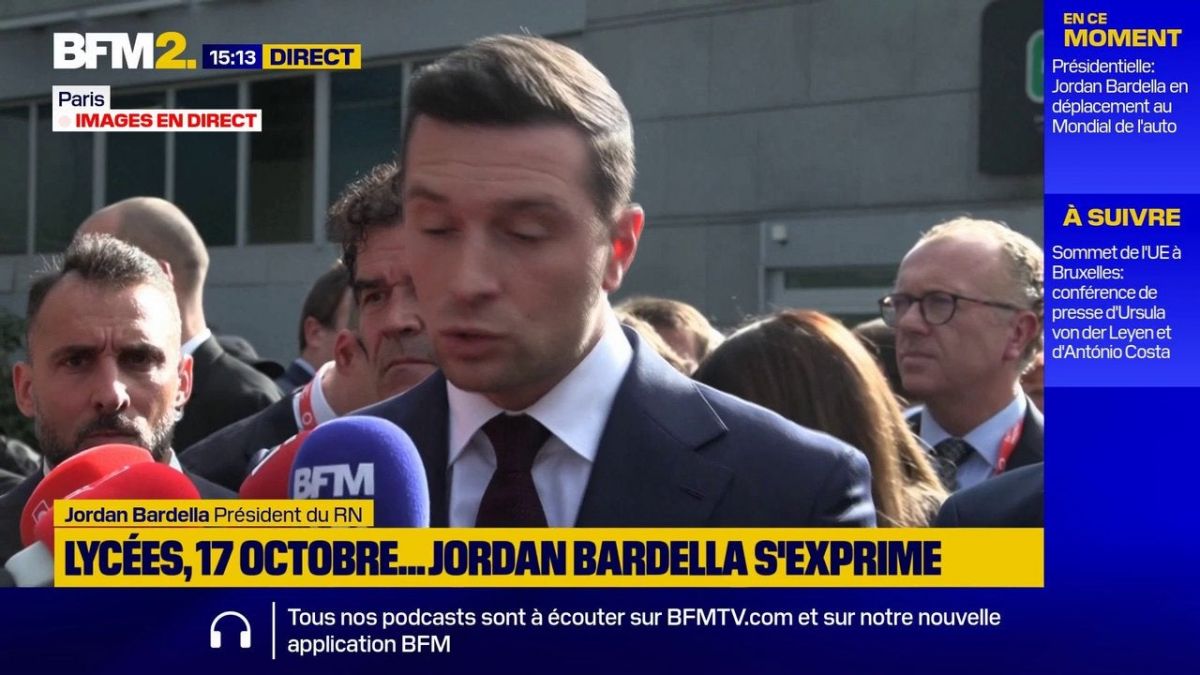
The National Rally persists in its plan to ban the veil in public spaces in France by 2027, a project that faces numerous national and international legal obstacles, including the Constitution and various treaties guaranteeing freedom of conscience and religion. (translated)

In the United States, a legal loophole could make child pornography images generated by artificial intelligence legal, prompting experts to call for a revision of the Constitution to better regulate this phenomenon. (translated)

The National Rally proposes to submit to a referendum the ban on the veil in public spaces, supported by Marine Le Pen, a measure that raises questions of constitutionality according to Paul Vannier, LFI deputy. (translated)

The constitutional reform project of Chilean President Jose Antonio Kast, aiming to strengthen public security through controversial measures, is provoking increasing opposition within the Senate and among citizens, despite initial majority support. (translated)

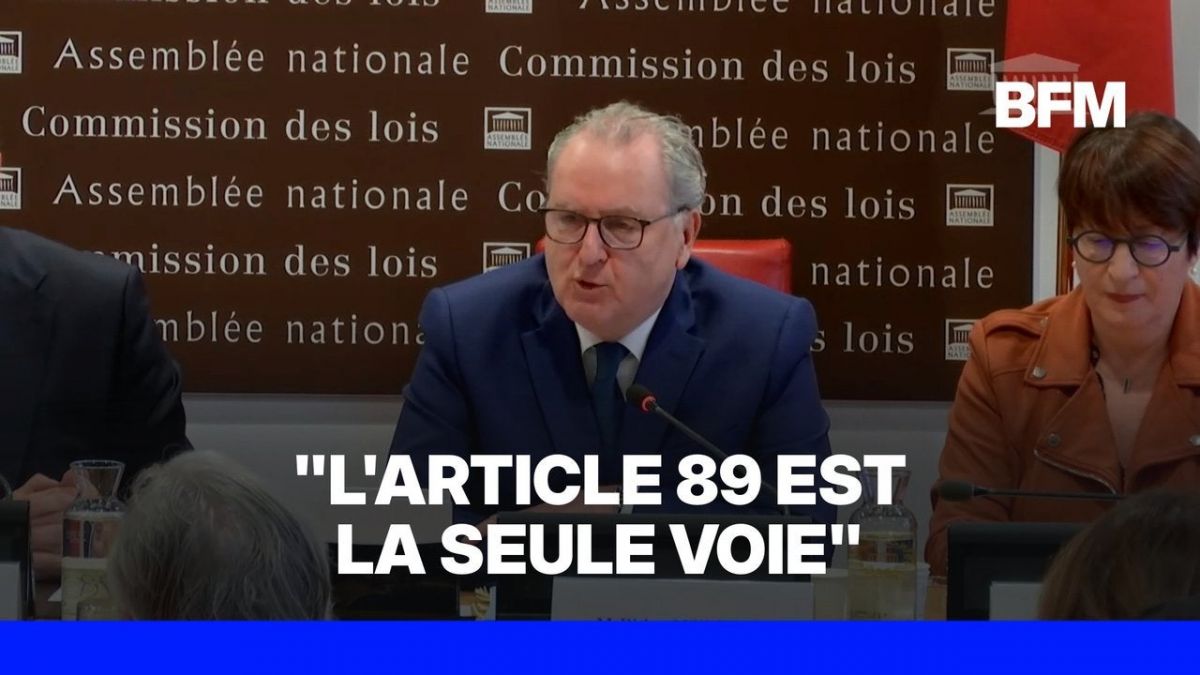
🇫🇷 ANALYSE | La volonté du RN d’interdire le port du voile islamique dans l’espace public et de le sanctionner par une amende serait juridiquement TRÈS DIFFICILE à mettre en œuvre en France. Le Rassemblement national a confirmé vouloir interdire le port du voile dans l’espace public en cas d’arrivée au pouvoir. Une femme qui continuerait à le porter pourrait être sanctionnée par une amende. Mais pour que cette mesure entre réellement en vigueur, plusieurs obstacles juridiques majeurs devraient être franchis. ➡️ UNE LOI CLASSIQUE RISQUERAIT FORTEMENT D’ÊTRE CENSURÉE Si le RN faisait adopter cette interdiction par une loi votée au Parlement, le Conseil constitutionnel pourrait être saisi avant sa promulgation. Une interdiction générale du hijab dans l’espace public pourrait notamment porter atteinte à la liberté religieuse, protégée par la Déclaration des droits de l’Homme et du citoyen, ainsi qu’au principe d’égalité. Pour être constitutionnelle, une restriction à une liberté doit notamment pouvoir être justifiée et ne pas être disproportionnée par rapport à l’objectif poursuivi. Une interdiction visant spécifiquement le voile islamique porté par des particuliers dans l’ensemble de l’espace public présenterait donc un risque très important de censure. Il reste néanmoins impossible d’affirmer avec certitude ce que déciderait le Conseil constitutionnel tant qu’aucun texte précis n’a été adopté. ➡️ POURQUOI LE NIQAB ET LA BURQA PEUVENT-ILS DÉJÀ ÊTRE INTERDITS ? Il existe une différence juridique majeure. La loi de 2010 n’interdit pas spécifiquement "la burqa" ou "le niqab", ni même un vêtement religieux particulier. Elle interdit à TOUT LE MONDE de porter dans l’espace public une tenue destinée à DISSIMULER SON VISAGE. Le Conseil constitutionnel a validé cette interdiction en considérant notamment que la dissimulation du visage pouvait poser des problèmes d’ordre et de sécurité publics et méconnaître les exigences minimales de la vie en société. Le hijab est juridiquement différent puisqu’il laisse le visage découvert. Interdire spécifiquement un signe religieux porté par une personne parfaitement identifiable serait donc beaucoup plus difficile à justifier sur les mêmes fondements. Le Conseil d’État avait d’ailleurs estimé que le principe de laïcité ne permettait pas, à lui seul, d’imposer une obligation générale de neutralité religieuse aux particuliers dans l’espace public. ➡️ LE RN VEUT PASSER PAR UN RÉFÉRENDUM C’est là que la situation juridique devient plus complexe. Jordan Bardella a indiqué que les Français seraient appelés à se prononcer par référendum sur cette question. Le RN pourrait chercher à utiliser l’article 11 de la Constitution pour faire directement adopter un texte par les Français. Mais l’article 11 ne permet PAS d’organiser un référendum sur n’importe quel sujet. Il autorise notamment les référendums portant sur l’organisation des pouvoirs publics ou certaines réformes relatives à la politique économique, sociale ou environnementale de la Nation et aux services publics qui y concourent. Or, faire entrer une interdiction générale du voile dans ces catégories ne va pas de soi. La possibilité d’utiliser l’article 11 pour une telle mesure fait donc débat entre juristes et pourrait provoquer une importante bataille juridique avant même le référendum. ➡️ ET SI LE RÉFÉRENDUM AVAIT QUAND MÊME LIEU ET QUE LE "OUI" L’EMPORTAIT ? C’est un point essentiel. Selon la jurisprudence actuelle du Conseil constitutionnel, celui-ci ne contrôle en principe PAS, après son adoption, la constitutionnalité d’une loi directement adoptée par le peuple par référendum. Cette voie pourrait donc permettre au RN d’éviter une partie de l’obstacle constitutionnel auquel serait confrontée une loi classique votée par le Parlement. Mais cela ne signifie PAS qu’une interdiction adoptée par référendum deviendrait juridiquement inattaquable. ➡️ LA CONVENTION EUROPÉENNE DES DROITS DE L’HOMME RESTERAIT APPLICABLE Même si les Français approuvaient l’interdiction par référendum, la France resterait liée par la Convention européenne des droits de l’homme. Son article 9 protège notamment la liberté de pensée, de conscience et de religion, y compris la liberté de manifester sa religion. La Cour européenne des droits de l’homme a déjà admis que certaines restrictions au port de signes religieux pouvaient être justifiées dans des circonstances particulières. Elle a notamment validé en 2014 la loi française interdisant la dissimulation du visage dans l’espace public. Mais, encore une fois, cette loi ne vise pas spécifiquement l’islam et interdit la DISSIMULATION DU VISAGE, et non le simple port d’un signe religieux laissant le visage visible. La CEDH a également déjà condamné des restrictions concernant des vêtements religieux portés par de simples citoyens dans l’espace public. Une femme sanctionnée pour avoir porté un hijab pourrait donc contester l’application de la mesure devant les juridictions françaises puis, après épuisement des recours internes, saisir la CEDH. La France pourrait être condamnée si la Cour considérait qu’une interdiction générale du voile constitue une atteinte disproportionnée à la liberté religieuse. ➡️ LES TRIBUNAUX FRANÇAIS POURRAIENT ÉGALEMENT INTERVENIR Il ne faudrait pas nécessairement attendre une éventuelle condamnation de la France par la CEDH. La Convention européenne des droits de l’homme est un traité international et l’article 55 de la Constitution donne aux traités régulièrement ratifiés une autorité supérieure aux lois. Les juridictions françaises peuvent donc contrôler la compatibilité d’une loi avec les engagements internationaux de la France et, dans un litige, écarter l’application d’une disposition législative qu’elles jugeraient incompatible avec la Convention. Une loi adoptée par référendum ne ferait donc pas automatiquement disparaître l’obstacle européen. ➡️ ET SI LE RN MODIFIAIT DIRECTEMENT LA CONSTITUTION ? Une autre possibilité serait de modifier la Constitution afin d’y inscrire explicitement la possibilité d’interdire certains signes religieux dans l’espace public. Mais la procédure normale de révision prévue par l’article 89 est beaucoup plus lourde. Le même texte doit d’abord être adopté par l’Assemblée nationale ET par le Sénat. Une présidente ou un président de la République ne pourrait donc pas modifier seul la Constitution simplement en organisant un référendum selon cette procédure. Si la Constitution était effectivement révisée pour autoriser explicitement cette interdiction, l’obstacle constitutionnel interne serait profondément modifié. Mais même une révision de la Constitution française ne ferait pas disparaître les engagements internationaux de la France. Tant que la France reste partie à la Convention européenne des droits de l’homme, la CEDH pourrait toujours être saisie et éventuellement condamner la France. #voile #libertéreligieuse #laïcité
Deputy Jean-Philippe Tanguy announced that the National Rally would propose to penalize wearing the veil in public spaces with a fine in the event of victory in the 2027 presidential elections, a measure that could raise constitutional issues. (translated)

"Il y a des réserves évidentes tant sur la constitutionnalité que l'applicabilité d'une telle mesure"