BETA nonprofit public democratic european moderated

Search

#Currículum

We need to read this text by Freddyzur in which he reveals "political blindness or complicity" (both are equally harmful) of Dinorah Figuera because she ended up approving militants with a perversely chavista curriculum to be appointed as members of the TSJ. Here are the details. (translated)

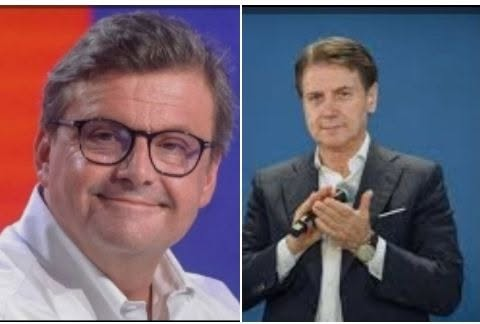
Carlé, you failed in 4 subjects and then in two during the first two years of high school, then you were held back in the third year, got a girl pregnant, at 16, the secretary of your mom's friend's son. A disaster. You're a strong baby in mathematics. University was so-so. Your paternal grandfather, Carlo, ambassador and advisor to President Pertini, friend of Montezemolo, places you in Ferrari (only for a short unpaid internship) and then in Confindustria. You try the competition for a diplomatic career and despite your grandfather's strong recommendation, you fail but still get a job for just two months. A position that drives the entire Italian diplomatic corps crazy. You are forced to let go. You get recommended, I imagine, to join Sky but you are soon sent home. You choose politics as a fallback and Montezemolo recommends you to Letta and then Renzi. You become deputy minister and then even minister. A complete failure (Read ILVA). You exploit the situation (40%) and the PD places you in Europe at 40 thousand euros a month. And then you go around saying you have a résumé to govern Italy, others don't. How sad, Carlé, do you see this beside you??? Take a look at his résumé, it's impressive. He truly represents me. You?...change careers, if there is a career you know how to do... (translated)

Favor dejar currículum los que quieran incusionar en el mundo del cine para adultos https://t.co/DWOFuskTUp #CineAdulto #OportunidadesLaborales #Currículum

It is amazing to note that the person who opposes the arguments of a surgeon, from the right wing, is someone who had to leave politics for lying on their resume. (translated)

Funerali di stato per la bonino… Siamo davvero un paese sotto occupazione. Una che ha da sempre agito contro gli interessi nazionali, ha servito il vile speculatore Soros e ha condito il tutto eliminando 10 mila bambini con la sua associazione. (Almeno per questo fu arrestata se non altro anche se poi fu salvata dall’immunità parlamentare). Evidentemente è questo il curriculum che piace all’attuale classe politica. I funerali di Stato per una così sono una vergogna nazionale. #Italia #Politica #Vergogna

Andalusia ranks last in the PISA Report with the worst result in its history. Education has been the responsibility of Juanma Moreno's Board since 2019. He says there is a lack of "culture of effort." This guy entered without studies in the Young People's New Generation of the PP and then falsified his entire curriculum. (translated)

🔴 Pourquoi l'Angleterre performe-t-elle aussi bien dans PISA ? Je vois 2 raisons : 1⃣ Les réformes du système 2⃣ La "triche" pour gonfler le score Bien sûr, on parle toujours de la première raison, mais je vais aussi évoquer la deuxième ici. 1⃣ Déjà, de quelles réformes et particularités anglaises parle-t-on ? 👉 Programmes plus exigeants ("Curriculum 2014") 👉 Retour aux fondamentaux (ex : calcul mental) 👉 Retour aux pédagogies explicites (exit le "ludique") 👉 Examens nationaux vraiment sélectifs 👉 Autonomie des établissements (ex : recrutement) 👉 Classes de niveaux (notamment en maths) Mais ça, vous l'avez sans doute déjà lu. En revanche, on parle moins de ce qui suit... 2⃣ Les scores anglais sont "gonflés" par la sélection de l'échantillon d'élèves retenu pour passer le test PISA. Pour l'illustrer, voici quelques chiffres sur les populations des établissements participant à PISA : 👉 24 % des élèves retenus pour participer à PISA sont éligibles aux "free school meals", contre 40 % des non-participants 👉 10,7 % des élèves retenus ont un soutien scolaire dédié ("special educational needs"), contre 25 % des non-participants Dans l'ensemble, l'OCDE demande aux pays qui participent à PISA de ne pas exclure plus de 5% des élèves de la "population-cible". 👉 En 2022, l'Angleterre était tout juste à 4,9% 👉 En 2025, ils se sont lâchés : 7,6% d'élèves "exclus" 👉 Pour comparaison, la France est en général à environ 3% Cette troublante "sur-sélection" des élèves anglais ne peut pas tout expliquer dans la bonne performance anglaise, mais on ne peut pas l'ignorer non plus. #PISA #Éducation #Angleterre

De perfect storm die het onderwijs omver blaast ⬇️. Ik zie het allemaal bij mijn eigen drie kinderen. Op de middelbare school van de twee pubers is de lesuitval enorm. Er vallen wekelijks uren uit, vorig jaar had mijn dochter gewoon een half jaar lang geen Engels, zonder dat iemand wist waarom (de ouders kwamen er pas achter toen de hele klas met onvoldoendes thuiskwam en de aap uit de mouw kwam). Er wordt nauwelijks meer gewerkt met lesboeken, want alles gaat/staat online. Voor het huiswerk is een laptop nodig, dus ze zitten de halve dag voor een scherm. Leraren van de 'oude stempel' zijn zeldzaam: van die mensen die de eerste dag van het nieuwe schooljaar meteen duidelijk maken: met mij moet je niet sollen, maar die vervolgens altijd uitgroeien tot iedereens favoriete docent waar iedereen de beste cijfers bij haalt (goh, hoe zou dat nou komen...?). Er wordt van alles georganiseerd aan vage workshops, excursies, thema-dagen (maar niemand wil onder de paarse ballonnenhaag door lopen op Paarse Vrijdag, waarop er vervolgens drie mentorlessen worden besteed aan inclusie) waarvan je je afvraagt wat dat allemaal wel niet kost (en de ouderbijdrage stijgt ieder jaar). De lesmethodes zijn raar, je kunt je kind als ouder nauwelijks meer helpen met het huiswerk omdat de methodes volstrekt onlogisch zijn. Tegelijkertijd wordt er als ouder wel van je verwacht dat je je kind uitgebreid begeleidt met het curriculum onder het mom van 'participatie'. Toen ik vorig jaar in een oudergesprek de opmerking maakte dat ik vond dat er wel heel erg veel van ouders werd verwacht, kreeg ik van de 'trajectbegeleider' (parttime uiteraard) toegebeten dat zij 'ook veel met haar dochter bezig was'. En dan de basisschool. Raddraaiers zetten de toon in de klas (5x je naam op het bord en dan krijg je misschien een standje), waardoor de stille, brave kinderen ondersneeuwen en tekort komen omdat de juf te druk is met het gezellig houden. Ondertussen is het ieder jaar weer een halszaak om genoeg leerkrachten te vinden om voor de klas te krijgen, maar wordt er wel een 'brugfunctionaris' aangesteld die o.a. gaat 'meedenken bij de opvoeding' en 'meekijken bij het invullen van formulieren en begrijpen van brieven van school of de gemeente' (iets met symptoombestrijding...). School wordt steeds meer weinig anders dan dagbesteding die moet worden uitgezeten. Over een paar jaar zijn de mensen die onze samenleving moeten dragen niet eens meer in staat om de instructies op de aanmeldzuil bij het UWV, waar zij onvermijdelijk terechtkomen, te begrijpen. Maar in Den Haag gaat het nog steeds alleen maar over 'kansenongelijkheid'. Gelukkig hoeft die discussie binnenkort niet meer gevoerd te worden. Dan zijn alle kinderen even dom en incapabel. Probleem opgelost. #Onderwijs #Kansenongelijkheid #Onderwijscrisis

En agosto de 2021 una mamá le mandó un mail a Gabe Newell contándole que su hijo Kevin, que todavía estaba en primaria, soñaba con trabajar en Valve algún día Gabe Newell le respondió personalmente con un video para su hijo: 💬 "Hola Kevin, soy Gabe Newell de Valve. Escuché que estabas interesado en tener una entrevista con nosotros algún día y trabajar acá, pero hay una cosa que te quiero decir antes. Sé que va a sonar un poco desafiante, pero primero es importante que te vaya bien en el colegio, hay muchos problemas de socialización, problemas técnicos que resolver y habilidades que solamente vas a adquirir si te va bien en el colegio. Esa es una de las cosas más importantes en las cuales te deberías estar enfocando durante los próximos años. Espero recibir tu currículum algún día." #Valve #GabeNewell #Inspiración

Artemio M Aug 21

Quindi abbiamo 21 dirigenti pagati per un Ponte che non si farà mai, 4 dei quali percepiscono un compenso superiore al tetto dei 240mila euro, grazie a un decreto ad hoc fatto dal governo. Qualcuno sa dove si manda il curriculum? https://t.co/v6Fy0xm8rr #politica #corruzione #lavoro

❗️“Russia has also massively scaled up FPV-drone awareness for teenagers, as military drone techniques were introduced as a separate part of the curriculum at schools (grades 8 and 9)—including the purchase of 18,000 drones for 450 schools. By 2030, over 4,500 schools in Russia https://t.co/z5JFbUP9Qj #Russia #Drones #Education #RU

Il nostro @Dario5S continua a regalarci perle inestimabili. Stavolta posta un video di Giorgio Bongiovanni, direttore di Antimafia Duemila. Uno che racconta di aver ricevuto le stigmate con due raggi emessi direttamente dalla Madonna apparsagli nel 1989 (ecco il perché delle mani fasciate). A quelle ne sarebbero seguite altre sui piedi, al costato e sulla fronte. Un chiaro segno del compito a lui affidato di divulgare il messaggio spirituale di Fatima, ivi compreso l’immancabile terzo segreto. Bongiovanni è noto anche per la vicinanza all’ambiente ufologico legato a Eugenio Siragusa. Gli extraterrestri per lui non sono semplicemente membri di civiltà aliene ma “angeli di biblica memoria”, “Esseri di luce” e messaggeri di un ordine cosmico-spirituale. Uno con un simile curriculum non può che essere anche filorusso. Tra le sue interessanti posizioni ci sono la minaccia nucleare della NATO contro la Russia (non viceversa) e l’idea che dopo l’invasione Zelensky dovesse essere arrestato e tutti i territori contesi dovessero essere dati alla Russia. Nel video lo sentiamo sproloquiare di CIA, stragi e complotti per far chiudere Report e il Fatto prima delle elezioni, con il nostro eroe senza lividi che si domanda seriamente se tutto questo non c’entri qualcosa con i guai di Ranucci. D’altra parte Bongiovanni è membro di diritto del pantheon grillino e post-grillino. Parliamo di uno che, attraverso Antimafia Duemila continua a sostenere la teoria della trattativa Stato-mafia nonostante l’assoluzione definitiva degli ex ufficiali del ROS Mario Mori, Antonio Subranni e Giuseppe De Donno nel reato di minaccia a corpo politico dello Stato. Cioè un complottista che vorrebbe ammanettare anche agli assolti, praticamente il sogno bagnato di tutti i pentacosi. #Antimafia #Spiritualità #Complotti

Per chi non si beve tutto. Mentre gran parte del giornalismo italiano si esercita nell’antica arte del copia-incolla da agenzie ONU e comunicati di Hamas, c’è un giornalista in Rai che ha deciso di non farsi dettare la linea da Ramallah. Si chiama Giovan Battista Brunori, e oggi è una rarità: uno che ha ancora la schiena dritta. Capo della sede RAI a Gerusalemme, Brunori ha fatto qualcosa che nel 2025 equivale a un atto di insubordinazione: ha mostrato Gaza da un altro angolo, quello scomodo, quello che smentisce le lacrime facili e la propaganda prefabbricata. Quando il Tg1 ha disturbato la narrazione La settimana scorsa, il suo servizio per il Tg1 ha fatto tremare più tastiere che razzi. Le immagini? Scorte di aiuti umanitari marcite al sole perché “nessuno andava a ritirarle”. La frase? Tagliente come un referto: «Il cibo a Gaza sta avariando perché non ci sono organizzazioni che lo vanno a prendere.» Apriti cielo. Le ONG si sono stracciate le vesti. La sinistra ha invocato la gogna. La Rai? È corsa ai ripari con una replica del Tg3, in pieno stile “scusate il giornalismo”. Ma Brunori non ha indietreggiato. Perché il giornalismo, quello vero, non chiede il permesso prima di disturbare. Sul campo, non su Zoom Giovan Battista Brunori non racconta Gaza da un bar di Ramallah o da un attico romano. Nel 2024 era tra i pochi a documentare l’attacco del 7 ottobre, le infiltrazioni di Hamas, le case distrutte degli israeliani di Netiv HaAsara, a due passi dal confine. Mentre altri parlavano di “resistenza”, lui mostrava famiglie sgozzate, villaggi assaltati, bambini presi in ostaggio. Un crimine? No. Un servizio pubblico. Ma questo oggi basta per finire nella lista nera degli “squilibrati filo-israeliani” (copyright collettivi studenteschi). La colpa di raccontare tutto Brunori non si limita a un copione. Non chiude gli occhi dove serve. Nel caos informativo della guerra Israele-Gaza, è uno dei pochi a non affidarsi alle infografiche dell’UNRWA e ai pianti in slow motion rilanciati da Al Jazeera. E questo lo rende pericoloso. Perché chi racconta tutto, rompe l’incantesimo. Non c’è spazio per i “Mr. Fafo”, i martiri ricorrenti da Instagram, quando si mostra la realtà nuda: tunnel sotto gli ospedali, miliziani travestiti da soccorritori, aiuti bloccati da Hamas per esigenze belliche. Il problema? È difficile smentirlo Brunori ha un curriculum da campo: Afghanistan, Iraq, Libano, Ucraina. Ha vinto il premio Ilaria Alpi (1998), il Premio Feniks (2021) e quello Delio Costanzo (2024). Ma il suo vero trofeo è l’indipendenza. Non lavora per far contenti i partiti. Né le ambasciate. Né le piazze. Parla arabo. Conosce la storia. E quando va in onda, non ha bisogno di urlare per dire cose gravi. In un mondo dove la verità è soggetta al sentiment, Brunori è rimasto fedele alla sostanza. Non piacerà a chi cerca eroi prefabbricati e vittime su commissione. Ma è l’unico in Rai che ancora ti fa cambiare canale perché dice troppo, non perché dice poco. E oggi, questo, è rivoluzionario. Chi non si inginocchia alla propaganda, chi ha ancora fame di giustizia, ti guarda e ti dice: vai avanti. Perché oggi, raccontare la verità è un atto di coraggio. @LuigiGiliberti2 #Giornalismo #Verità #LibertàDiStampa

Timostene Aug 9

Tu   Tu che hai votato Meloni perché sei un poveraccio e lei ti ha dato i migranti. Dei poveracci più poveracci di te da odiare, per sentirti finalmente qualcuno.   Questo ti ha dato. Non il lavoro, non lo stipendio. Qualcuno da guardare dall’alto. Prima volta nella vita.   Tu che hai votato Meloni per quella fiamma. Gli Almirante, i Rauti, i La Russa, i Rampelli. Ti riporta a un tempo magico che non hai vissuto, dove credi che uno come te comandasse e gli altri stavano zitti. Ma uno come te in quel tempo lì zappava. O moriva a vent’anni sul Don con le scarpe di cartone. Il ricordo che ti hanno venduto non è il tuo. È il loro.   Tu che hai votato Meloni convinto che il nero, oltre alla camicia, fosse quello che potevi fare impunito. E quello per cui ti avevano già pizzicato sanato, perdonato, chiuso lì.  E invece la GdF continua a cercarti. Adesso conta. Quattro anni.   Guadagni meno. La spesa costa di più e lo sai perché la fai tu, non lei.   I migranti sono ancora lì. Gli sbarchi pure. Li odi ancora, ti sfoghi ancora, domani ce ne saranno altri. Perché servono lì. Non a te. A lei.   Il condono l’hanno preso quelli col commercialista bravo. Tu la cartella ce l’hai ancora nel cassetto.   Quando sei stato male hai pagato. Diciotto mesi di attesa o quattrocento euro, hai scelto quattrocento euro.   Tuo figlio manda curriculum a Monaco di Baviera. Quella che doveva difenderti dai migranti ha fatto emigrare lui.   La tua leader la sfottono in mezza Europa e tu ti incazzi come se stessero sfottendo te. Giusto. Stanno sfottendo anche te.   Lei intanto va a cena con quelli che ti hanno licenziato. Ci va da pari a pari. Tu quel tavolo non lo vedrai mai. Non sei invitato, non sei previsto, non servi. Sei il voto, non l’ospite.   Loro ci hanno contato, sulla tua rabbia. L’hanno misurata, targettizzata, comprata a quattro euro a clic. Hanno pagato gente per scriverti le cose che volevi sentire. Non ti hanno considerato un cittadino. Ti hanno considerato prevedibile.   Prevedibile è la parola. Uno che si accontenta di odiare qualcuno più povero di lui e poi vota buono.   Ora tu, dopo quattro anni. Ora che la tua vita è peggiorata, e già faceva schifo prima. Ora tu la voteresti ancora?   Forse la risposta è sì. Non perché stai meglio. Perché cambiare idea vorrebbe dire ammettere che ti hanno fregato, e quello fa più male della cartella esattoriale.   Però intanto pensaci. Da solo. Che sui social non ti guarda nessuno. #politica #Migrazioni #società

#Maldini al CorSera: “#Guardiola era tentato: scriveva già le possibili formazioni e ci disse datemi un euro in meno dell’ultimo ct. Pep ha rifiutato solo per stanchezza. Volevamo un ct giovane, ma Malagò non è stato ai patti: ci vietò De Rossi e Grosso. #Pirlo è stato fatto fuori con un pretesto. Scaloni e De La Fuente che curriculum avevano prima della Nazionale?” #Calcio #Nazionale #Allenatori

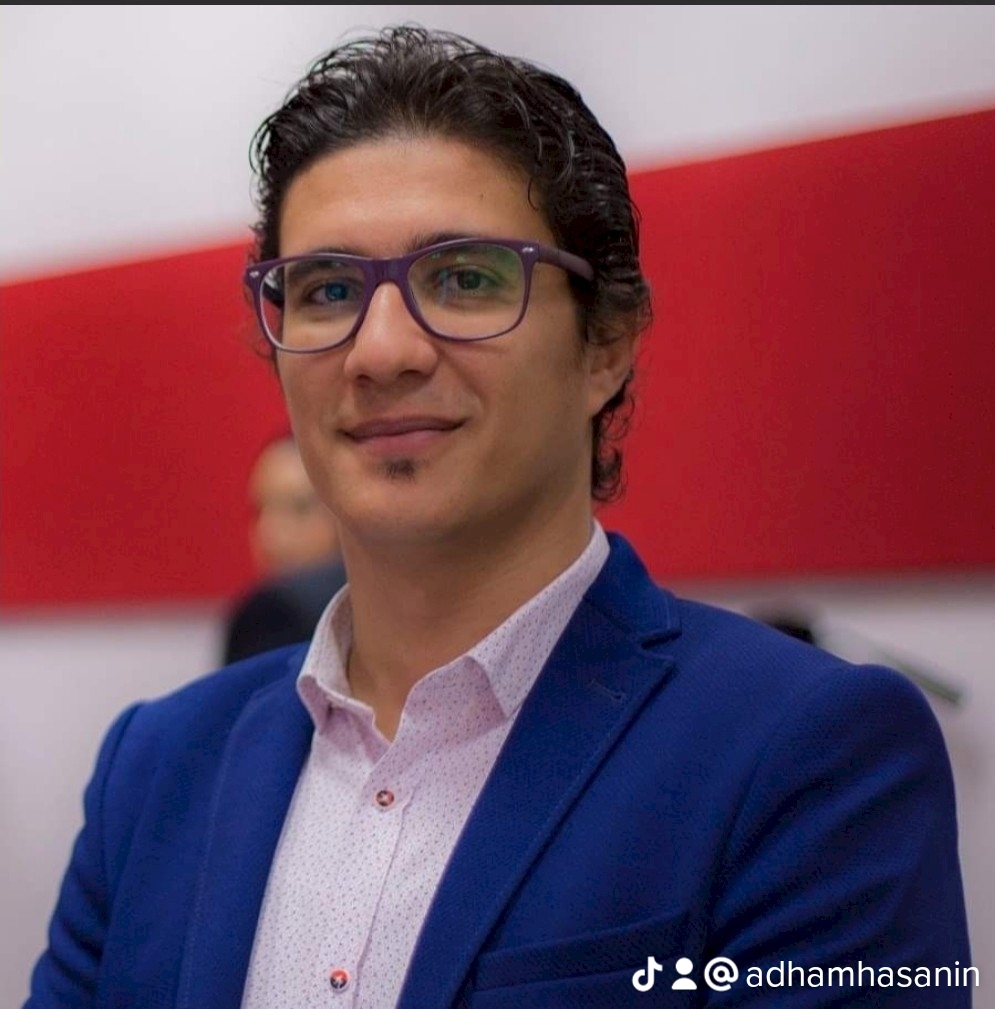
A Generation That Forgot the Shape of the Square On memory left to die alone By Adham Hasanin Egyptian journalist and political writer, based in the Netherlands In a house near mine, there is a boy of thirteen. Born in 2013 just a few months younger than the July coup itself, younger than the new republic under whose shadow we now live. I asked him once, with no preamble, no test, out of nothing more than passing curiosity: do you know what January was? He answered simply, without hesitation, without any sense that he was missing something: "An old revolution, against Mubarak, right?" Not entirely wrong. But it is everything he knows. The name Tahrir Square means nothing specific to him. The sound of the crowd chanting has no echo in his mind. He does not know that his own family whom he sees every day saying "thank God for stability," who warn him against "chaos" whenever a political headline crosses the screen once, at a moment two years before he was born, went down into the street, betting their entire lives on the possibility that something might change. This article is not about politics. It is about memory, and about who decides what gets told and what is left to die in silence. I. Who Erases the Picture? The first question that comes to mind is the easiest and most deceptive one: who erases this memory? And where do we begin holding them accountable? But the truth is too complex to reduce to a single actor. No one actually erases memory, in the literal sense of the act. There is no ministry called the "Ministry of Forgetting," no presidential decree ordering January struck from the collective consciousness. What happens is simpler than that, and more dangerous at once: the subject is simply never told. School says nothing. The textbook leaps from one period to another without pausing on January for more than two faded lines, composed with deliberate neutrality, devoid of any detail that might make the event feel alive to its young reader. Television no longer has any reason to return to it; the programmes that once hosted witnesses and activists stopped years ago, replaced by an official discourse that mentions January only in passing, as an unfortunate prelude to the "stability" that supposedly followed. And the home the most dangerous link of all has become afraid of the subject. Speech now carries a price, and many families, whether consciously or by sheer survival instinct, have decided that silence is safer than the story. The father who marched fears passing on to his son a curiosity that might one day lead him into trouble the family cannot afford. The mother who lost a friend in the events prefers not to reopen the wound before a child who does not yet grasp the weight of loss. And so, generation after generation, the circle of those who know shrinks, and the circle of those who do not even ask because they do not know there is anything worth asking widens. No one decided to erase the memory through an explicit decision. The memory was simply left to die alone, with no one tending it. And it is precisely this decentralised absence of responsibility that makes this kind of erasure more dangerous than any direct official ban: there is no single decision to challenge, no single body to hold accountable. Responsibility is distributed across thousands of small decisions made by thousands of individuals, each within their own context, each seeming reasonable when viewed in isolation. II. Why This Is More Dangerous Than Direct Repression An objection might be raised: is direct repression arrest, imprisonment, publishing bans not far more lethal than mere gradual forgetting? The answer is complex, and deserves calm unpacking. Direct repression can be seen. It can be documented, and the victim can know they are a victim, can tell their story, and their pain can become a testimony added to the collective memory, even if it never reaches justice. The political prisoner knows he is a political prisoner. The journalist banned from writing knows he is banned, and can tell the world he is banned. Direct repression, for all its cruelty, leaves a trace that can be followed. But a generation that has forgotten something happened at all does not even have a starting point from which to ask. This thirteen-year-old boy will never ask "why were we repressed?" because he does not know there is anything deserving that question in the first place. He feels no absence, because he does not know there is anything absent. He simply lives in a version of reality stripped of an entire chapter of his country’s history, and never for a moment suspects that this void is a void at all. Here lies the essence of the danger: direct repression creates victims who know they are victims. Erasure of memory, when it succeeds, creates a generation that does not even know it has been deprived of anything. And deprivation that is not felt cannot be resisted, because resistance always begins with an awareness of loss. The regime that came after 2013 does not need to convince the new generation that January was a mistake. That would be an arduous, costly task, requiring sustained propaganda and continuous effort to persuade each individual one by one. It is far easier, and strategically far more efficient, simply to ensure they never know it was anything at all. The void requires no defence; it requires only silence, and silence is free and always available. III. The Four Mechanisms of Erasure Four complementary mechanisms can be identified working together to produce this collective void not as an organised conspiracy, but as a system of incentives that pushes each party, consciously or not, to contribute to the same process. The first mechanism: formal education. The curriculum, as currently designed, treats January as a passing footnote rather than a founding event deserving detail and analysis. The student memorises two dates the start of the revolution and its presumed end without understanding why people took to the streets, what they were demanding, or how they felt in that pivotal moment. The second mechanism: broadcast media. The channels that once hosted live discussions on January, featuring varied perspectives, have gradually disappeared, or transformed their discourse entirely. Today’s televised image either ignores the anniversary altogether, or invokes it only to frame it as a prelude to chaos that must be avoided. The third mechanism: the silence of homes. This is the most dangerous of all, precisely because it is the most human and understandable. Parents who lived through the experience protect it with silence, not out of aversion to the story, but out of fear of its price. This silence, however legitimate its motives, achieves exactly the same effect as official censorship: it blocks the transmission of knowledge from one generation to the next. The fourth mechanism: the absence of alternative spaces. Even those among the new generation who wish to know cannot easily find places to look. Archives are scattered, trustworthy websites are blocked or require effort to reach, and personal testimonies are dispersed across corners of the internet that an ordinary student at an ordinary school will never stumble upon. These four mechanisms require no central coordination to work together. Each naturally serves the others, and all converge on a single result: a growing void in the consciousness of every new generation. IV. Memory as an Act of Resistance If erasure operates without a centre, then resisting it must also be decentralised. No one waits for a government decision to restore January to the curriculum, nor for a television programme to revive the testimonies. Resistance here is necessarily individual, happening in small details, in passing conversations, in the simple decision to tell rather than to stay silent. This is exactly what I try to do, without any claim to heroism, without any grand mission. I try, whenever I can, to tell the thirteen-year-old boy and others like him details that are never written in official reports or in schoolbooks: what the voices in the square sounded like, how someone felt the first time they realised change was possible, what that moment of hope was like before everything changed. The goal is not to bring back the past; the past cannot be brought back. The goal is that this boy, when he grows older and asks again and he will ask, because the questions always return at some point finds someone to tell him the full story, not two faded lines in a schoolbook. That he knows the stability he is told is the fruit of "wisdom" has a prior history, that this history carried other possibilities, and that real people bet their lives on those possibilities. V. Why This Matters Now Talking about the memory of a generation not yet aware might seem an intellectual luxury next to more urgent matters: arrests, a collapsing economy, regional wars. But the truth is that this issue is the foundation on which every other issue is built. A people who do not know they once rose up will not understand why they should ever think of rising again. A generation raised to believe "stability" is the only natural state possible will never ask itself what drove its own parents, shortly before it was born, to risk everything for an alternative that was never guaranteed. Memory is not a luxury; it is the reference point by which every generation measures its present, and through which it determines what is possible and what is not. And whoever understands this understands why erasing memory, not direct repression alone, is among the most important tools of any regime seeking to guarantee its permanence: because a people who have forgotten they were once free will not even know they are missing freedom. Memory, like the word, needs someone to tell it in order to survive. And when the tellers stop, memory does not die suddenly; it withers slowly, generation after generation, until the day comes when a boy asks an innocent question, and finds no one to answer him but two faded lines in a schoolbook.

L
lastampa.it Aug 3

Artificial intelligence is taking on an increasingly central role in candidate selection, forcing job seekers to adapt their resumes to algorithms, putting transparency, equal opportunities, and work dignity at risk. (translated)

Prima di rubarci il lavoro, l’intelligenza artificiale può impedirci di trovarlo

AYUSO nació en octubre de 1978. Según los curriculums que conocemos (hay 11 distintos) se licenció en 2002 (otros hablan de 2004), por lo que tenía 24 o 26 años ¿La @unicomplutense le dió la última nota 4 años antes de acabar la carrera cuando viajó a Ecuador con 22 añitos? https://t.co/i4BdRpIqW2 #Educación #Historia #Política

🔴 AL MOMENTO : Trasciende que los EUA ya está revisando los antecedentes de algunos posibles candidatos de Morena a las 11 gobernaturas que se disputarán el próximo año y que muchos NO pasaran la prueba ; así se sabe que ya revisan los “currículum” de : Lorenia Valdez y Lamarque , Julieta Ramírez y Alfredo Álvarez en BC ; Carlos Torres en Michoacán y a Ruth Gonzales en SLP : y que prácticamente en su momento TODOS serán investigados y Sheinbaum ya está avisada . #Elecciones2024 #Morena #Gobernaturas