
The post reported that police in Paris said they had first faced violent groups of 500 to 1,000 people, followed in the late afternoon by a large arrival of people whose aim, police said, was to steal and loot amid the disorder. https://t.co/PNOJ8zFvlS #Paris #violence #looting #FR

The author cited a finding that higher lithium concentrations in drinking water were associated with more frequent diagnoses of Wolff-Parkinson-White (WPW) syndrome in children, suggesting a possible link.


Disorder broke out in cities across the country on a day in which more than half a million joined cost of living protests. #FranceProtests #Violence #CostOfLiving


We should not use what happened to cause alarm or disorder. #PanamaEarthquake #NaturalDisaster #EmergencyResponse
I urge that what happened not be used to cause alarm or disorder. #Tsunami #Earthquake #Panama

The author called for reconsidering the diagnosis of borderline personality disorder, writing that for more than four decades people whose distress centred on relationships had been labelled as having a disordered personality. They argued that the evidence no longer supported that framing.

Russia’s influence operation arrives ahead of the US midterms With weeks remaining before America's November midterm elections, a familiar type of content has begun appearing online. Videos resembling reports from CNN, the BBC and The New York Times accuse candidates of corruption, antisemitism and misconduct. Hollywood actors appear to denounce Democrats. Other clips claim that warnings about Russian interference are themselves a Democratic disinformation campaign. The reports are fabricated. Graphika, which tracks online influence operations, says it has identified a coordinated campaign targeting candidates in competitive US Senate races. It assesses with high confidence that the material was produced by Operation Overload, also known as Matryoshka – a long-running Russia-aligned influence operation previously active against elections and political debates in Europe and the United States. The activity coincides with a broader warning from American intelligence officials. Classified assessments reported by The New York Times conclude that the Kremlin has authorised another digital influence campaign ahead of the 2026 midterms, aimed primarily at exploiting existing divisions and undermining confidence in American democracy. There is an important distinction. US officials have not reported evidence that Russia is attempting to manipulate voting machines or alter the counting of votes. The operation is about influencing the information environment surrounding the election. Fake scandals for competitive Senate races Graphika traced a concentrated wave of activity between 10 and 14 September. Likely inauthentic or repurposed accounts distributed videos accusing Democratic politicians of corruption, antisemitism and other misconduct. The targets included Senator Jon Ossoff in Georgia, Representative Chris Pappas in New Hampshire and Texas state representative James Talarico, as well as Senate candidates Sherrod Brown in Ohio, Roy Cooper in North Carolina, Mary Peltola in Alaska, Abdul El-Sayed in Michigan, Joshua Turek in Iowa and Troy Jackson in Maine. The selection was not random. These were politicians involved in Senate contests where the result could matter to control of the chamber. The campaign did not rely on a single political narrative. Instead, it attached different accusations to different candidates – corruption, social issues, antisemitism or personal misconduct – while maintaining a consistent production and distribution model. That model is characteristic of Matryoshka: create apparently independent pieces of evidence, disguise them as journalism and distribute them through networks of disposable accounts. Hollywood celebrities who never said what the videos claimed One of the campaign's more distinctive techniques involved genuine footage of American actors. Videos featuring celebrities including Sarah Jessica Parker and Julia Roberts were altered with captions and other material to suggest they were promoting the slogan #AllDemocratsAreCriminals. The technique continued in subsequent material. Fact-checkers identified fabricated New York Times-branded videos using footage of Alyssa Milano, Sean Astin, Rachael Harris, Leonardo DiCaprio, Eric Braeden, Annie Potts and Patrick Fabian. Some of the original footage came from Cameo, where actors record personalised video messages. Their authentic images were retained while fabricated audio, captions or surrounding material changed the meaning entirely. Lead Stories compared several of the clips with the originals and found that the supposed political statements did not appear in the genuine recordings. Eric Braeden's representative separately confirmed that the claim he had joined the anti-Democratic campaign was false. The advantage of the technique is straightforward. Generative AI does not need to create a convincing celebrity from nothing. The operator can begin with authentic footage of a recognisable person and manipulate only the elements necessary to manufacture a political statement. Stealing the authority of real newsrooms Celebrity impersonation was only one layer. The operation repeatedly borrowed the visual identity of established media organisations. Graphika identified material impersonating or falsely citing the BBC, CNN and Politico, alongside references to France's VIGINUM foreign-interference agency and journalist Brandy Zadrozny. Other material reproduced New York Times-style branding. Some fabricated reports made an unusual claim: that Democrats themselves were organising disinformation or “false-flag operations” and then blaming Russia. This creates a defensive layer around the influence operation. Instead of merely distributing false political allegations, the campaign also attempts to discredit future reporting about the manipulation itself. If successful, evidence exposing foreign interference can be reframed as part of the conspiracy. Graphika says it assesses with high confidence that Operation Overload produced these videos. The technique is well established. Earlier investigations by CheckFirst and Reset Tech documented hundreds of falsified pieces of content produced by Operation Overload, often impersonating journalists, institutions and major media brands. AI-generated or manipulated material has increasingly become part of that production system. What US intelligence says Russia is trying to achieve The broader strategic picture comes from American intelligence assessments reported on 18 September. According to US officials familiar with classified findings, the Kremlin has authorised a covert digital influence campaign aimed at Americans during the 2026 election season. Its apparent objective is to seed or amplify domestic divisions and weaken confidence in the political process. Some officials described the principal aim as creating disorder rather than helping a single political party. The publicly identified Matryoshka material examined so far, however, has targeted Democratic candidates. Those two findings should not be treated as contradictory. An operation can exploit partisan divisions while serving the broader objective of making the electoral system appear corrupt, chaotic or illegitimate. US officials also reportedly assess the current Russian campaign as less extensive or coordinated than some previous election operations. Moscow is considered less focused on congressional elections than presidential contests and remains heavily occupied by its war against Ukraine. Russia has denied previous US accusations of election interference. An operation with limited reach – so far There is another reason for caution: producing large quantities of disinformation is not the same as successfully influencing voters. Matryoshka has repeatedly demonstrated an ability to manufacture content at industrial speed, but much of its material receives little genuine engagement. Researchers monitoring the network have previously warned against confusing automated distribution and platform view counts with authentic audience penetration. There are exceptions. A fabricated New York Times-style video featuring Jamie Lee Curtis had accumulated nearly 200,000 views on X by the end of 17 September, according to reporting by The New York Times. Other pieces attracted considerably less attention. There is currently no public evidence demonstrating that the campaign has changed voting intentions or will affect election results. What the September activity demonstrates is something narrower but important: a Russia-aligned influence infrastructure previously used against European elections has now turned significant attention towards the American midterms. The basic method has changed little – impersonate trusted media, manufacture scandals and use networks of inauthentic accounts to distribute them. What has changed is the production technology. Authentic celebrity footage, synthetic voices, manipulated video and rapidly generated fake journalism allow the same operation to produce more tailored material for more candidates at lower cost. The objective does not require Americans to believe every fabrication. Creating uncertainty over which videos, news reports and public statements are authentic can itself degrade trust in the information environment surrounding an election. Sources - Graphika — Russia-Aligned Influence Operation Targets US Midterm Candidates, German State Elections https://www.graphika.com/insights/russia-aligned-influence-operation-targets-us-midterm-candidates-german-state-elections - The New York Times — Russia Aims to Inject Chaos Into Elections, U.S. Intelligence Finds https://www.nytimes.com/2026/09/18/us/politics/russia-election-disinformation-us-intelligence.html - Kathimerini / The New York Times — Russia Aims to Inject Chaos Into Elections https://www.ekathimerini.com/nytimes/1315792/russia-aims-to-inject-chaos-into-elections-us-intelligence-finds/ - CheckFirst — Operation Overload: An AI-fuelled escalation of the Kremlin-linked propaganda effort https://checkfirst.network/operation-overload-an-ai-fuelled-escalation-of-the-kremlin-linked-propaganda-effort/ - CheckFirst — Operation Overload targeting the US election https://checkfirst.network/operation-overload-a-growing-disinformation-threat-now-targeting-the-u-s-presidential-election/ - Lead Stories — Fake NYT videos: Alyssa Milano, Rachael Harris and Sean Astin https://leadstories.com/hoax-alert/2026/09/fact-check-fake-new-york-times-videos-of-alyssa-milano-rachael-harris-sean-astin-falsely-claim-they-support-all-democrats-are-criminals.html - Lead Stories — Fake NYT videos: Leonardo DiCaprio, Eric Braeden and other celebrities https://leadstories.com/hoax-alert/2026/09/fact-check-fake-new-york-times-videos-of-leonardo-dicaprio-eric-braeden-other-celebs-falsely-claim-they-support-all-democrats-are-criminals.html - Brennan Center for Justice — AI Is Changing Foreign Election Influence https://www.brennancenter.org/our-work/analysis-opinion/ai-changing-foreign-election-influence - ODNI — previous US intelligence assessment of foreign election information operations https://www.dni.gov/files/ODNI/documents/assessments/NICM-Declassified-Foreign-Threats-to-US-Elections-After-Voting-Ends-in-2024.pdf - FBI / ODNI / CISA — previous joint assessment of Russian election influence operations https://www.fbi.gov/news/press-releases/joint-odni-fbi-and-cisa-statement-110424 #DISINFORMED #Episode9 #Russia #UnitedStates #USMidterms #Midterms2026 #USElections #ElectionInterference #ForeignInterference #RussianInfluence #RussianDisinformation #OperationOverload #Matryoshka #Disinformation #InformationWarfare #InfluenceOperations #FIMI #ArtificialIntelligence #AI #AIPropaganda #Deepfakes #SyntheticMedia #MediaImpersonation #FakeMedia #FakeNews #PoliticalDisinformation #CelebrityDeepfakes #SocialMediaManipulation #DigitalInfluence #ElectionSecurity #CognitiveWarfare #Graphika #OSINT #Democracy #WRLD


Trump’s obsession with vulgar memorials to his own vanity shows the darkness around him, his hostility to democracy, loathing of honor, disordered mind: a fantasy where the buildings are festooned with his name, drenched in glitz, bristling with weapons https://t.co/Gw7xpqF0zB #Trump #Democracy #Vanity #Nospecificcountrycodesarementionedinthetweet.


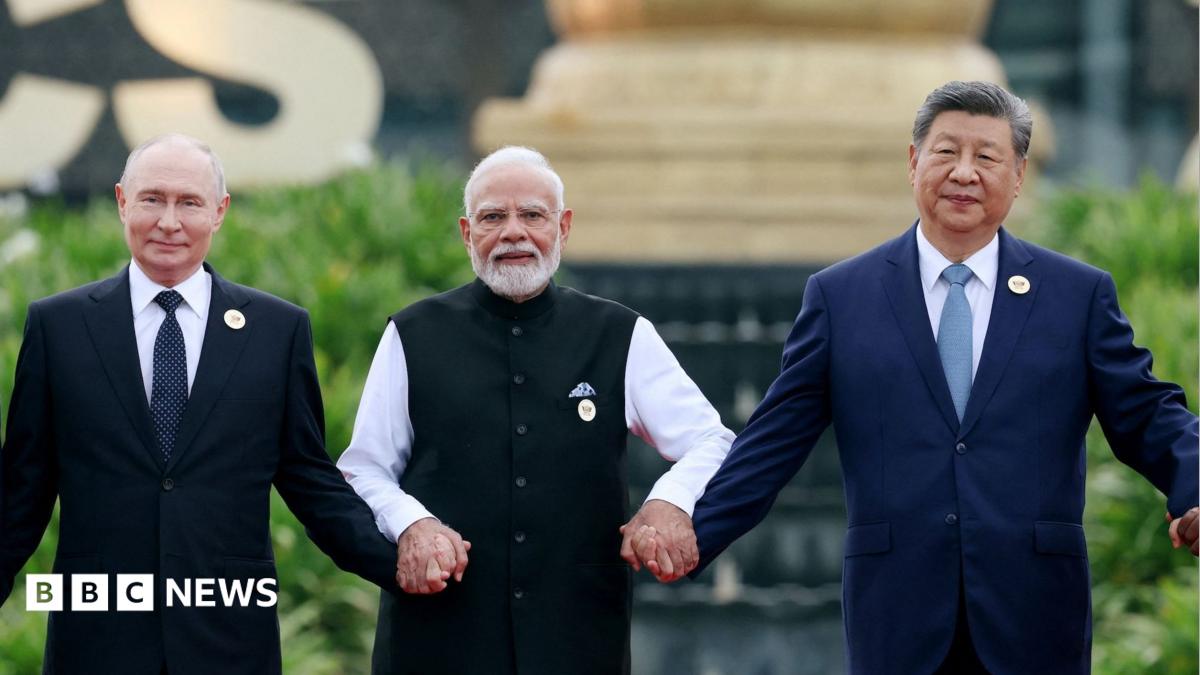
13 September 2026 BRICS SUPPORT FOR WAR CRIMINALS How are we supposed to stop a war criminal when the real-estate fraud dealer from MAGA America Jared Kushner believes that Putin should get something in return for having waged war since 2014 perhaps Trump thinks the war started in 2022 just like other uninformed people. When India’s Modi welcomes Putin with open arms like the others supporters of the world disorder in BRICS. Can you Brazil India China South Africa Ethiopia Argentina Egypt Iran Saudi Arabia United Arab Emirates Indonesia tell me how we can get the wanted war criminal arrested and brought before an international court?
BBC
@bbc.com
·
Sep 13

Meta-analysis: AI chatbots are good for mental health, especially when no human butts in. Mental health disorders impose a substantial global burden, while access to care remains constrained. AI-based chatbots have emerged as scalable digital interventions, yet #MentalHealth #AIChatbots #DigitalIntervention #Therearenospecificcountriesmentionedinthetweet.Therefore #nocountrycodescanbereturned.
Can You Resist Tyranny? The average person today is incapable of governing themselves, which is why so many yearn for a new “system.” They desire an external imposition of control to order their lives in a way they feel incapable of doing for themselves. Riddled with fear, they trade liberty for protection. Ideology recasts their resentment as righteousness. Loneliness drives them to find a herd to become one with. Internal chaos creates a demand for imposed order. When you tell people that the answer to collective madness is not collective action in the opposite direction, they often mistake this for rolling over and accepting defeat. But chaos does not defeat chaos. As Friedrich Nietzsche pointed out, “Madness is something rare in individuals — but in groups, parties, peoples, and ages, it is the rule.” Think about every hero story you’ve ever admired. The hero doesn’t take to the streets and try to convince everyone of his cause. Rather, he confronts evil head-on and puts himself in the line of fire. A well-ordered individual is not harmless or ineffectual. A single competent, strong, and courageous person can carry more weight and value than a mob of NPCs. As Carl Jung said, “a million zeros do not add up to one.” Nor does being well ordered mean being harmless or indiscriminately nice. Such a person must possess strength, aggression, ambition, judgement, competitive instinct, the capacity for force, and the desire for achievement. The question is what these qualities serve. Money, power, and lust, or love, family, and God? If no strong internal ordering principle exists, a movement, leader, ideology, or State will fill the vacuum externally. No one looking for a solution to increasing social insanity can afford to overlook it. All others are contingent on it. The answer is not to dissociate from the world and simply pull yourself together. It is that a disordered individual cannot possibly bring order to his environment. By becoming a man of virtue, he can then carry that order into the roles individuals occupy: father, teacher, pastor, judge, journalist, leader, neighbour, police officer, and citizen.
The Individual as an Antidote to Tyranny The average person today is incapable of governing himself, which is why so many yearn for a new system. They desire external control to order their lives in ways they feel unable to manage themselves. Riddled with fear, they trade liberty for protection. Ideology recasts resentment as righteousness, while loneliness drives them to join a herd. The answer to collective madness is not collective action in the opposite direction. Chaos does not defeat chaos. As Friedrich Nietzsche observed, “Madness is something rare in individuals—but in groups, parties, peoples, and ages, it is the rule.” Think of every hero story you admire. The hero does not retreat from danger or surrender to evil. He confronts it directly and places himself in the line of fire. A well-ordered individual is not harmless or ineffectual. One competent, strong, and courageous person can carry more weight and provide more value than a mob. As Carl Jung said, “A million zeros do not add up to one.” Being well-ordered does not mean being harmless or indiscriminately nice. It means possessing judgment, competitive instinct, the capacity for force, and a desire for achievement. The question is what those qualities serve: money, power, and lust—or love, family, and God? This kind of person is an antidote to tyranny. If no strong internal ordering principle exists, a movement, leader, ideology, or state will fill the vacuum from the outside. The well-ordered individual is not incapable of rage, vanity, resentment, cowardice, or cruelty. Awareness of these shadow aspects helps prevent ideological capture and frees him from the seductive belief that “they are evil and we are good.” Anyone seeking a solution to increasing social insanity must recognize that a disordered individual cannot bring order to his environment. By becoming a person of virtue, he can carry that order into every role he occupies—as a parent, teacher, pastor, judge, journalist, leader, neighbor, police officer, or citizen.

So what is a “personality disorder”? It’s fully healable trauma. It’s shame and dissociation that makes the clinician experience shame and dissociation. Trauma-based B&W thinking has them project shaming ideas on the client. Society perpetuates this abuse dynamic further. #PersonalityDisorder #TraumaHealing #MentalHealthAwareness #Therearenospecificcountriesmentionedinthetweet.
I’ve written hundreds of articles, but this is the longest and perhaps also most important. Why do we keep using the ableist, shaming and outdated concept of personality disorders for trauma? Itself a trauma response, it also acts as societal shorthand. https://t.co/AstFvCayVe #MentalHealth #Trauma #Ableism #Nospecificcountriesarementionedinthetweet.
I was wrong about Lindsay Clancy. Here's why I changed my mind. She was never diagnosed with postpartum depression or psychosis. She was not on 13 medications at once. She was not "hearing voices." She was not abandoned by her family. She was diagnosed with a mood disorder - never psychosis - and went to a variety of doctors who all prescribed different medications, which she took unreliably and not simultaneously. She only heard a voice one time - and that was right before she killed her kids. Extremely atypical for psychosis. She carefully planned her children's murders down to the minute. She researched the distance of a restaurant she'd ask Patrick to go to. Added on a last-minute errand before he left. Calmly answered his phone call in the middle of her crime. Brought her children down to the basement one by one, overpowering their resistance and killing them slowly. It does seem like she had support from her family. She may have still been overwhelmed, but it's not true that all of her cries for help went unanswered. I originally placed too much blame on the many SSRIs she was prescribed. Is it still possible these SSRIs had a negative effect? Absolutely. But the case that these drove her into a psychotic episode is weak. “According to U.S. HHS Child Maltreatment data, mothers account for roughly 70% of child maltreatment fatalities involving a single parent, compared with roughly 30% involving a father, when parent-plus-nonparent cases are included and cases involving both parents are excluded. And interestingly, the “70% mothers / 30% fathers” finding is remarkably persistent across the years, rather than being a phenomenon confined to one particular period” - ChatGPT Feminist Taxonomies of Lindsey Clancy If I am to be born as a woman, life should not be continued If I am to mature as a woman, I should not marry If I am to have sex as a woman, I should not be made pregnant If I am to be made pregnant as a woman, I should not give birth to my child If I am to give birth to my child as a woman, my child should not live
The Downward Spiral of Gender Polarization The growing divide between men and women resembles less a debate than a divorce involving millions. Both sides escalate, talk past each other, and blame the other gender amid a mental-health crisis. Depression among Americans under thirty has doubled in eight years, while anxiety continues to rise. Each gender has failure modes and one successful path. Carl Jung called it individuation; a simpler term is integration. The integrated are not leading the conversation. The disordered are. Every man carries an inner feminine—the part that feels, intuits, and creates meaning. Jung called it the anima. Cut off from it, he becomes cold and contemptuous; overwhelmed by it, passive and moody. Every woman carries an inner masculine—the part that decides, asserts, and holds the line. Jung called it the animus. Cut off from it, she defers to stronger people; possessed by it, argumentative and rigid. I believe the four failure modes pair off. The cold, contemptuous man finds a timid woman who cannot challenge him; the red-pill industry calls this manhood. The passive man finds a domineering woman who can run his life; the feminist industry calls this liberation. A 2025 Nature Human Behaviour study of 14.8 million people in Taiwan, Denmark, and Sweden found that disordered individuals consistently marry one another across cultures and generations dating back to the 1930s. My theory is that integrated people increasingly date within a pool dominated by the disordered. They try, fail, and get hurt, then drift toward the same patterns. The pool corrupts those who might have healed it, creating a feedback loop. We are in a downward spiral: integrated people encounter disordered partners and become disordered themselves, while the already disordered grow worse. Reversal requires enough people to reject cynicism. When every encounter feels like proof that the other gender is broken, our own drift toward disorder begins to feel justified.
When Therapy Replaces Morality: The Rise of the Therapy State By replacing religious frameworks with therapy speak, Western society may have lost its moral “grammar” and traded it for clinical language—though moral and psychological categories work differently. The DSM has expanded dramatically: in 1952 it listed 102 disorders; by 2013 it had over 400. Meanwhile, young adults report worsening mental health: poor mental-health days among 18–25-year-olds rose from 3.5 to 6 per month between 1993 and 2020, and depression diagnoses more than doubled from 2006 to 2020. Yet the most striking shift is self-diagnosis. About one in four American adults suspect they have ADHD, while actual prevalence is around 6%. Social media fills the gap: many popular ADHD and autism clips include misleading or unsupported claims. The label persists because it serves a function. A diagnosis increasingly becomes identity—and identity becomes a shield. When someone claims ADHD, anxiety, or trauma, they may be drawing a boundary others are not allowed to cross. Where moral language asks what we should become, therapeutic language labels what we are; once the label becomes identity, the conversation often ends. Religious language framed forces as external, preserving agency—you could resist. Therapeutic culture internalizes them: you don’t have weakness to overcome; you have ADHD. Jung argued that old gods and demons didn’t vanish; they became neuroses, anxieties, and addictions—turning questions of conscience and choice into labels to accept. The result isn’t greater freedom but greater control. If a civilization can’t say “wrong,” it doesn’t necessarily become more tolerant. Moral language permits disagreement and growth; therapeutic language can pathologize it and end discussion. The therapy state is the successor to moral authority—and it may be easier to enforce.
Daycare Governance and the Tyranny of Compassion Something sinister can hide behind compassion. Caring is virtuous, but it becomes pathological when institutions gain power by expanding the number of people who need care. Munchausen syndrome by proxy shows how: a caregiver fabricates or induces illness in a dependent person, then gains sympathy by performing devotion. The sickness is manufactured, but the care is real. The claim: modern society can scale this into governance. Call it the daycare governance model: (1) victims to protect, (2) caregivers to provide protection, (3) dissenters to remove. Health, therapy, NGOs, academia, media, and bureaucracy gain prestige, funding, and moral authority by managing ever-expanding categories of suffering. It unfolds in two stages. First, the victim class expands: “trauma” drifts from specific, severe harms to everyday experiences, lowering the threshold for suffering until demand is nearly limitless. Second, the perpetual patient forms: ordinary difficulties are medicalized—strength as toxicity, sadness as disorder, restlessness as pathology—creating a cycle where caretakers and victims gain status or protection. This drives a crisis of competence. Victimhood can shield accountability, and institutions are rewarded for treating problems rather than eliminating the need for themselves. Plato warned against doing for people what they can do for themselves: removing every burden removes the reason to grow stronger. True care aims to make itself unnecessary. That’s the difference between a good mother and a poisoning one: one allows appropriate hardship to build independence; the other denies it. Failing to distinguish these forms of care makes the pathology hard to recognize—and easy to applaud.





