
The post shared a Reuters report saying that, as the AI rally weakened, investors’ focus on Wall Street was shifting to corporate earnings. https://t.co/MVdeFIWl2y #WallStreet #StockMarket #Earnings #US
The post shared a Reuters report saying that, as the AI rally weakened, investors’ focus on Wall Street was shifting to corporate earnings. https://t.co/MVdeFIWl2y #WallStreet #StockMarket #Earnings #US

I immediately announced a new 10% global tariff to replace them, and I argued the tariffs would increase America's tax earnings, boost manufacturing and encourage people to buy US-made goods. #USInflation #CostOfLiving #EconomicImpact
I argued the tariffs would increase America's tax earnings, boost manufacturing and encourage people to buy US-made goods. #USInflation #MidtermElections #CostOfLiving
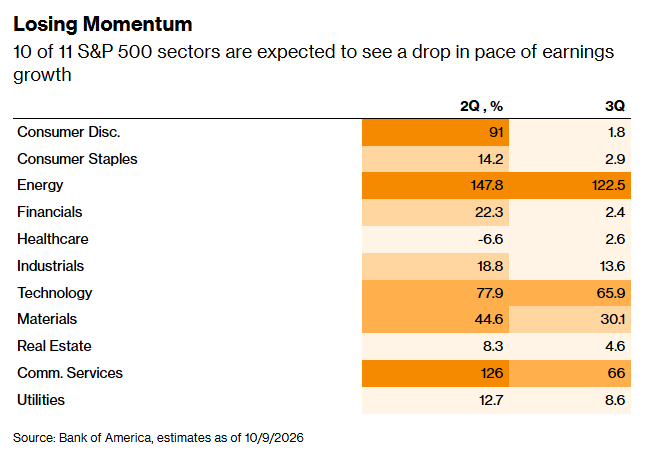
The author shared a Bloomberg article whose headline said the S&P’s strong earnings momentum was becoming difficult to sustain. https://t.co/XcT7q1W32c https://t.co/F57OllvnXv #SP500 #Earnings #Finance #US
The author shared a Reuters report describing a busy week ahead for U.S. markets, with bank earnings and headline CPI in focus as the S&P 500 hovered near record levels. https://t.co/MVdeFIWSS6 #WallStreet #Earnings #Stocks #US
The author wrote, citing FactSet, that S&P 500 earnings were likely to grow by more than 35% in the third quarter. https://t.co/SxmahWbIbu https://t.co/PxpnTbxwLI #SP500 #EarningsGrowth #Finance #US


More than 300,000 public servants are gearing up to strike over pay, raising questions about their actual earnings. #SeguridadOnline #BloqueoDeAcceso #Cookies

The author highlighted findings from Contra Labs’ Creative Intelligence 2026 report, saying 49.1% of creatives reported that AI had increased their earnings and the share of paid projects using AI had doubled over the past year. The author also said ChatGPT was just 1% behind Photoshop among the most-used tools.
The post cited a Reuters report saying that rising bond yields, the US midterm elections and corporate earnings would test the stock market’s usual fourth-quarter strength. https://t.co/MyaHWnYgmP #WallStreet #USStocks #Earnings #US
The post said US average hourly earnings rose 0.1% month over month in September, compared with an estimated 0.3%, and increased 3.0% year over year, against an estimated 3.1%. It also said traders had reduced their bets on an October Federal Reserve rate hike. https://t.co/uedoNtcfTr #Economy #Finance #Employment #US
“If everything you offered wasn’t enough, offer your absence” - Mario Benedetti “The 15 Million Men America Has Lost to Marriage America has a problem that is remarkably difficult to discuss without changing the subject: young men are disappearing from marriage. In 2000, there were 20.7 million unmarried men aged 20–39 and 18.1 million married men—a gap of 2.6 million. By 2025, there were 30.4 million unmarried men but only 15.4 million married men. The gap had exploded to roughly 15 million. That is not a minor cultural adjustment. It is a demographic earthquake. The explanation cannot simply be that men have become unwilling to “grow up.” Economic and educational changes matter. Unpartnered men have lower education, employment and earnings than partnered men. In 2019, 26% of unpartnered prime-working-age men had a bachelor’s degree, compared with 37% of partnered men. Meanwhile, women have made enormous gains in education and economic independence. Marriage is therefore no longer an economic necessity for women to the same extent it once was. The consequences are visible. In 1980, 63% of Americans aged 25 were married; by 2021, only 22% were. The share with a child fell from 39% to 17%. By 2021, one quarter of 40-year-olds had never married, compared with 6% in 1980. And 39.5% of U.S. births in 2024 occurred outside marriage. None of this proves that marriage guarantees happiness, or that being unmarried makes someone dysfunctional. Nor does the 15-million figure mean 15 million men will never marry. But pretending that family formation is irrelevant is equally absurd. A society cannot manufacture spouses for people. Nor should it. But it can create conditions in which work, competence, responsibility, commitment and family formation are attainable—and respected. Instead, we have increasingly normalised economic dependence, digital isolation and permanent adolescence while treating personal choice as though it has no social consequences. The 15-million gap is therefore more than a marriage statistic. It is a warning that millions of young men are failing to make the transition into the responsibilities of adult life” - ChatGPT
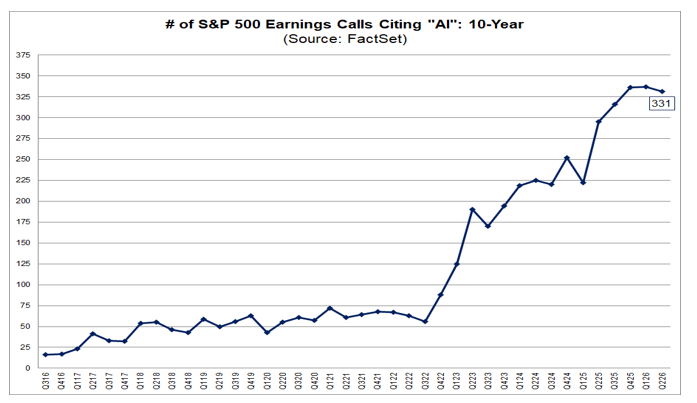
🇺🇸 #SPX | More Than 65% of S&P 500 Earnings Calls for Q2 Cited “AI” - Factset https://t.co/fV3KtAneZ3 https://t.co/rWjwzLIhnB #SP500 #EarningsCalls #AI #US
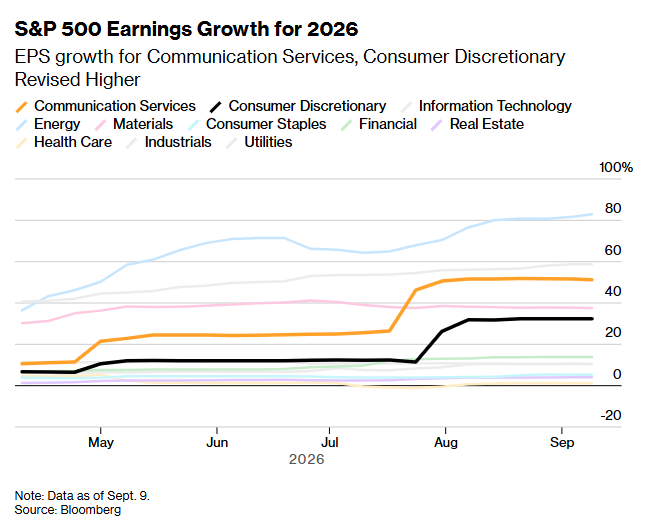
🇺🇸 AI Boom Set to Push S&P 500 Earnings Growth to 32% This Year - Bloomberg https://t.co/xcU4ZmcSKg https://t.co/CDfCWCn7zy #AIBoom #SP500 #EarningsGrowth #US
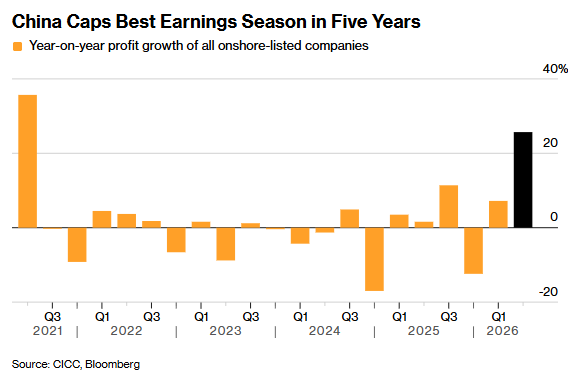
🇨🇳 #China’s 26% Earnings Boom Lands With a Thud in the Stock Market - Bloomberg https://t.co/0hAJF5eQuV https://t.co/YsJ2tHf0rC #China #EarningsBoom #StockMarket #CN
🇺🇸 *US AUG. AVG WORKWEEK 34.4 HOURS; EST. 34.3 - BBG *US AUG. AVERAGE HOURLY EARNINGS RISE 0.3% M/M; EST. +0.3% #USAEarnings #WorkforceData #EconomicReport #US

The Income an Individual Needs to Live Comfortably in Every U.S. State Comfortable living is defined using a 50/30/20 budget, where 50% of earnings cover necessities, 30% go toward discretionary spending, and 20% are allocated to savings or other financial goals. https://t.co/4JD7Ti2gLJ #PersonalFinance #Budgeting #CostOfLiving #US

🇺🇸 #SPX | “Mag 7” Companies Reported Earnings Growth Above 100% Boosted By Investment Gains - Factset https://t.co/5NhTfmix04 https://t.co/QYIw1i3D7j #Mag7 #EarningsGrowth #InvestmentGains #US

Mass Migration as a Path to Expanding State Power Western governments have incentives for mass migration. Increasingly staffed by progressives, the state wants to expand its authority over social relations and the economy. Wealth redistribution and equitable representation are easier to claim once the state controls the levers. Many see rising living costs as a failure; for those harmed, it makes sense. From the state’s perspective, however, faster arrivals than can be housed, schooled, or treated strain the system. The state then responds with more spending in those areas, exerting economic control. A state failure becomes the pretext for expanding the state. Higher population also enables misleading “per-capita” narratives. If five people live together making $50,000 each, GDP is $250,000. Add five more and cut everyone to $45,000: GDP becomes $450,000—nearly double—despite lower individual income. Competition for rooms, food, and yard space raises prices while people earn less, producing fewer earnings and higher costs. Rob Henderson calls these “luxury consequences.” Mark Wiseman, co-founder of the Century Initiative, backed a goal of 100 million people in Canada by 2100 (~800,000 per year). What happened in 2022–2024 exceeded targets. After disaster, Wiseman “failed upwards,” later joining Prime Minister Mark Carney’s advisory council. If the state directs social and economic life, it must also prevent revolts when planning fails. Fragmenting society into factions and encouraging their differences weakens cooperation—divide and conquer. The state’s interest was never a thriving citizenry, only a growing one.

NVIDIA beat its earnings expectations easily and… then just tanked. The bears are stalking the markets. Be careful out there. 🐻📉 #NVIDIA #Earnings #BearMarket #Nospecificcountrycodesarementionedinthetweet.





