
🇯🇵 Carry Trade Exodus Fuels Yen Gain Ahead of #BOJ Rate Decision - Bloomberg https://t.co/MNkRGyWoBP https://t.co/7rAq9RE13h #Yen #BOJ #CarryTrade #JP

🇯🇵 Carry Trade Exodus Fuels Yen Gain Ahead of #BOJ Rate Decision - Bloomberg https://t.co/MNkRGyWoBP https://t.co/7rAq9RE13h #Yen #BOJ #CarryTrade #JP
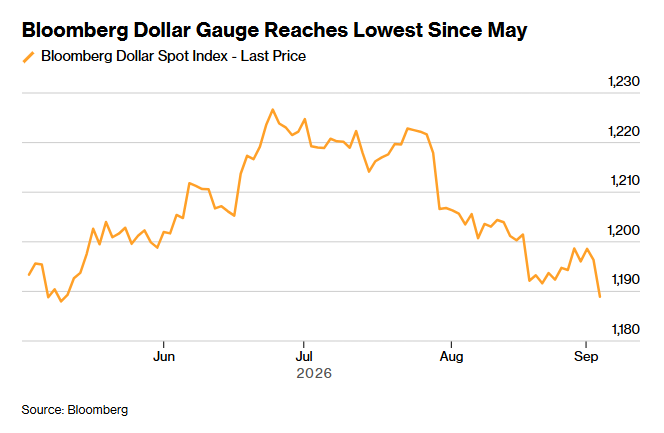
🇺🇸 #Dollar Falls to Lowest Since May on Waller Remarks, Yen Gain - Bloomberg https://t.co/f52rKTkZHL https://t.co/P8cCqYLLIU #Dollar #Yen #Bloomberg #US #JP

L’Autriche 🇦🇹 a aujourd’hui créé le précédent le plus proche d’une interdiction du hijab. La nouvelle loi autrichienne ne se cache même pas derrière une formulation vague et générale « tous signes religieux » : elle interdit aux filles de moins de 14 ans, à l’école, le foulard qui couvre la tête selon les traditions islamiques (« nach islamischen Traditionen »). Pas la croix ou la kippa : uniquement le voile islamique 🧕 Elle est entrée en vigueur ce 1er septembre 2026. Évidemment, les islamistes vont multiplier les recours devant la cour constitutionnelle autrichienne, puis devant la CEDH s’ils n’obtiennent pas gain de cause. Il sera intéressant de voir comment cela aboutit, surtout si l’Autriche se dote prochainement d’un nouvel arsenal destiné à lutter contre l’islam politique. #Hijab #LibertéReligieuse #DroitsDeL'Homme

China has not fought a war in decades. To conquer Taiwan, it needs the latest battlefield lessons and data to compensate for its lack of combat experience. That is where Russia comes in, to gain the military know-how learnt against Ukraine – and Europe https://t.co/JGtpmVzpsT #China #Taiwan #Russia #CN #RU #UA #EU
🇨🇳 #China Property Market Seen Gaining Momentum in September - Securities Times ➡ China’s property market may gain momentum in September as a wave of housing support measures takes effect across multiple cities. ➡ Based on past experience, policy measures typically begin to #China #PropertyMarket #HousingSupport #CN
🇨🇳 #China Cuts Another Decades-Long Tax Loophole, This Time on Foreigners' Dividend Gains - Bloomberg https://t.co/HdSgT1F5S1 https://t.co/56IPHCjQjK #China #TaxReform #ForeignInvestors #CN
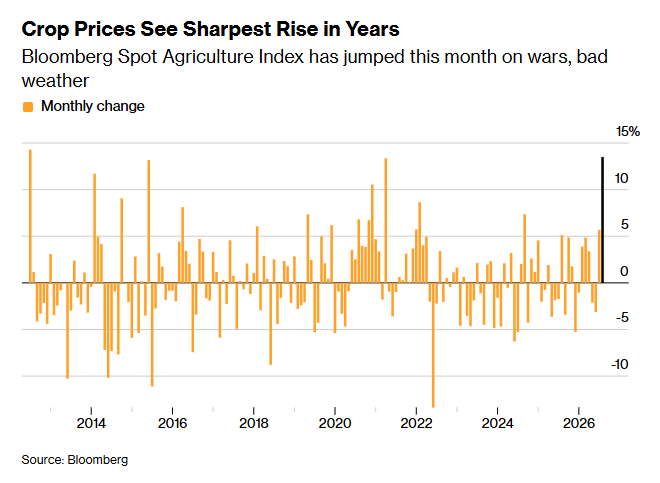
🌎 War, Weather Push Crop Prices to Biggest Monthly Gain Since 2012 - Bloomberg https://t.co/2XPRu9aQN4 https://t.co/emm8cL81RO https://t.co/JJ3ShHYRlW #CropPrices #GlobalUpdate #MarketTrends #Thetweetdoesnotmentionanyspecificcountries #sotherearenocountrycodestoreturn.

Last quarter, tech giants recorded an extraordinary gain of over 160 billion dollars from investments in other AI companies. (translated)


The notion that Russia must hit military and logistics targets in European nations to win the war is gaining currency in Moscow, said Hanna Notte, Eurasia director at the James Martin Center for Nonproliferation Studies and author of a recent book on Russia’s foreign and security #Russia #MilitaryStrategy #EuropeanSecurity #RU #EU

Behind the controversy surrounding Daron Acemoglu, one question: who will lead AI, and who will reap its gains? I wrote a piece around this question. (translated)
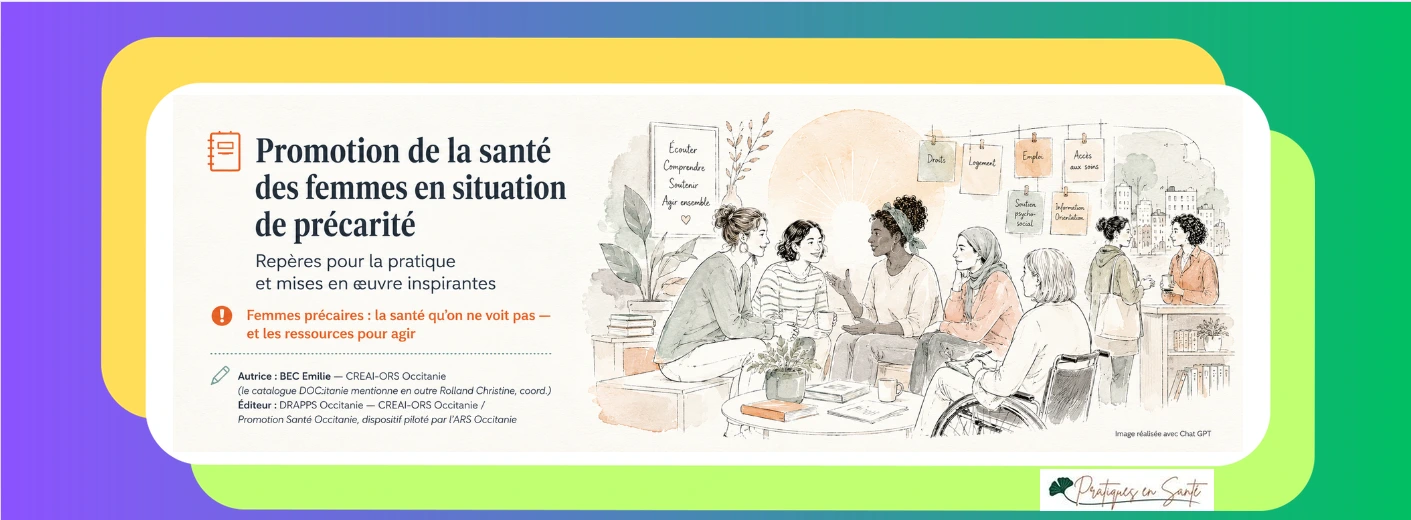
🚨 La santé des femmes en situation de précarité : un enjeu réel, mais éclaté entre santé, social, hébergement et droits. Par où commencer ? 📒 Promotion de la santé des femmes en situation de précarité : repères pour la pratique et mises en œuvre inspirantes ✍️ Émilie Bec — CREAI-ORS Occitanie · DRAPPS Occitanie (ARS Occitanie) Sur ce sujet, l'information utile est dispersée dans des dizaines de rapports. Ce document réunit une sélection de ressources récentes — du frottis-truck aux dispositifs « aller vers » — et précise, pour chacune, ce qu'elle apporte et où la trouver. Sa force n'est pas d'être un mode d'emploi clé en main, mais un point d'entrée pour repérer, orienter et agir : monter une action, argumenter un projet, nourrir une formation. Un vrai gain de temps de veille pour les équipes de terrain. 👉 Mon analyse et le document source sont à retrouver ici : https://www.pratiquesensante.com/blog/pratiques-15/promotion-de-la-sante-des-femmes-en-situation-de-precarite-reperes-pour-la-pratique-et-mises-en-%C5%93uvre-inspirantes-6155 🎙️ À écouter également : la capsule audio/vidéo de Pratiques en Santé. https://www.youtube.com/watch?v=g-05kLyJIFE&t=4s #PratiquesEnSanté #PromotionSanté #SantéDesFemmes #InégalitésDeSanté #AllerVers #Précarité #SantéCommunautaire
🇺🇸 #SPX | “Mag 7” Companies Reported Earnings Growth Above 100% Boosted By Investment Gains - Factset https://t.co/5NhTfmix04 https://t.co/QYIw1i3D7j #Mag7 #EarningsGrowth #InvestmentGains #US


🤔 Le décompte est assez clair. Du mal à comprendre la polémique d'hier sur le temps additionnel, d'autant plus que Bentaleb a confirmé que l'arbitre avait annoncé qu'en cas de gain de temps il ajouterait une minute. D'autant plus que le ballon ne sort pas des 30 mètres lillois et que les actions sont dans la continuité. (On peut aussi s'interroger sur la pertinence initiale des 3 minutes accordées, alors qu'il y a eu 6 sessions de changement en deuxième période). #Football #Arbitrage #TempsAdditionnel

🚨🚨 Vincent Duluc et le journal @lequipe NE COMPRENNENT PAS le temps en plus laissé par Monsieur Wattellier 🇫🇷 durant le temps additionnel de Lille-Paris 👇 🗞️ : « Il reste, pour être franc, qu’ON NE SAIT PAS EXACTEMENT POURQUOI Monsieur Wattellier, qui avait enfin commencé à appliquer le nouveau règlement concernant le gain de temps, en seconde période, A PERMIS AU PSG D’ÉGALISER 70 SECONDES APRÈS les trois minutes de temps additionnel qu'il avait annoncées. Par curiosité, on a revu les 4 minutes et 10 secondes supplémentaires pour quêter une justification du but égalisateur de Marquinhos survenu à la 90e + 5, et ON N’A RIEN TROUVÉ DE CONVAINCANT. ❌ Lille a engagé moins de trente secondes après le but de Vitinha (90e+1), et trente secondes après qu’Ozer est un peu resté au sol sur un coup franc qui lui était accordé : admettons que les Nordistes aient gagné un total de trente secondes sur ces deux séquences, rien ne peut s’approcher des 70 secondes accordées jusqu’au but. L’usage est de laisser tirer un corner, mais pour le deuxième temps de l'action, tout est contestable. » #Ligue1 #VAR #Football

How Did a Democracy Vote Itself Out of Existence? — The Birth of “Streitbare Demokratie” One of the most important questions in modern democratic history is: How can a democracy use democratic procedures to destroy itself? This question became central in Germany after the collapse of the Weimar Republic. Founded in 1919, Weimar Germany was a democratic state with universal suffrage, including voting rights for women, and strong civil liberties. Yet, within fourteen years, democracy had been replaced by Adolf Hitler’s dictatorship. The Nazi rise to power was not simply a military coup. The Nazi Party gained influence through elections, propaganda, and political negotiations. In 1933, Hitler became Chancellor, and his government used legal mechanisms, including the Enabling Act, to remove parliamentary control and dismantle democratic institutions from within. The lesson for post-war Germany was clear: a democracy can be destroyed not only by external enemies, but also by political movements that use democratic freedoms to eliminate democracy itself. When West Germany created its new constitution, the Basic Law (Grundgesetz), in 1949, its founders developed the concept of “Streitbare Demokratie”—a democracy capable of defending itself. The idea was that democracy should not be completely neutral toward forces that seek to abolish democratic rights. A democratic majority cannot legitimately remove the foundations that make democracy possible. Therefore, the Basic Law introduced several safeguards: Political parties that seek to undermine the democratic constitutional order can be banned. The Federal Constitutional Court was given strong powers to protect constitutional principles. Core values such as human dignity, democracy, and the rule of law were given special protection and cannot easily be removed. “Streitbare Demokratie” reflects a difficult balance. Democracy requires freedom of speech, political competition, and tolerance of different opinions. However, history showed Germany that unlimited tolerance toward movements committed to destroying democracy can allow democracy itself to disappear. The central question remains: How tolerant should a democracy be toward those who are intolerant of democracy? Germany’s answer after 1945 was that democracy must defend the principles that make freedom possible. A democracy is not preserved only through elections; it is preserved when citizens and institutions protect the foundations that allow free elections to exist.
Compassion as a Weapon Western civilization is increasingly trapped in a culture of entitlement, where victimhood can become a route to status, privilege, and power. Some elite universities report unusually high disability registrations—e.g., 20%+ at Brown and Harvard and around 40% at Stanford—far above community colleges. Whatever the causes, it raises a troubling question: when systems meant to protect the truly vulnerable become incentives, what happens to everyone else? Rob Henderson describes how accommodations can turn into “status games.” Extra time, special housing, and exemptions can make diagnosis feel like the logical choice, and the lesson travels outward: tomorrow’s leaders in journalism, HR, law, academia, and politics may learn that displaying weakness is rewarded. Research links habitual victimhood displays with traits associated with the Dark Triad (narcissism, Machiavellianism, psychopathy). That doesn’t mean genuine victims are manipulative—it means rewarding victimhood gives manipulators an incentive to enter. In the “virtue game,” grievance becomes currency. Pity can also function as covert power: the weak person gains leverage, while the giver gains moral superiority. When compassion is treated like a currency, it can become a mutually reinforcing racket. The danger isn’t helping the weak. It’s teaching that appearing weak is the surest way to gain power.
The Pathology Behind Compassion Something sinister can lurk behind compassion. Caring for others is noble, but when institutions are rewarded not for reducing suffering—only for managing it—care can become pathological. Munchausen syndrome by proxy shows the logic: a caregiver fabricates or induces illness in someone dependent on them to gain sympathy and attention. The caregiver looks devoted; the “sickness” is manufactured. In that sense, devotion can hide control. I call this the Daycare Governance model: society splits into infants to be protected (oppressed), caregivers who provide protection (allies), and predators to be removed (dissenters). Caretakers gain prestige, funding, and moral authority by managing suffering. Many may believe sincerely, yet incentives can overpower intentions—if status and resources grow with the number of “vulnerable” people, the system has reason to expand the victim class. It does so via concept creep (“trauma” broadens until ordinary difficulty counts), and by creating the perpetual patient, where normal sadness becomes pathology and struggle is rebranded as dysfunction. Care institutions and “victims” then reinforce each other. Dependency costs competence. True care prepares people to stand alone; pathological care keeps them dependent. Endless expansion of victimhood risks producing more dependency. We call it compassion—but compassion without boundaries can become control.
The 7 Types of People Who Create Evil Societies Andrew Łobaczewski, a psychiatrist who lived under Nazism and Communism in Poland, proposed political ponerology: pathological personalities and social dynamics can generate totalitarian systems. He describes seven recurring types: 1) **Psychopaths**: power seekers who gain control via coercion, intimidation, and violence. 2) **Schizoids**: ideological engineers who craft abstract systems and utopian theories; if reality conflicts, they rationalize more rather than revise. 3) **Spellbinders**: propagandists who convert ideology into slogans, moral stories, and emotional appeals that sort “good/evil” and define the in‑group. 4) **The Spellbound**: true believers who absorb the message and enforce it socially, driven by moral certainty; they often recruit through institutions and peer networks. 5) **Adapted Conformists**: quiet enablers who comply from fear and self‑preservation, often within bureaucracy (“I’m just doing my job”). 6) **Resistors**: a moral minority who refuse cooperation and prioritize conscience, often paying costs like isolation or punishment. 7) **Bystanders**: a passive majority who stay silent through fear, confusion, and disengagement. Together: psychopaths hold power; schizoids supply ideology; spellbinders publicize it; the spellbound enforce it; conformists administer; bystanders tolerate; resistors challenge. Crucially, totalitarianism doesn’t require everyone to be fanatical—enforcers and ideologues can pressure the wider population to comply. It can arise under many systems (communist, fascist, theocratic, etc.), not just left vs right.






