BETA nonprofit public democratic european moderated

Search

#Hacked

The accord comes amid massive global pressure from civilians and lawmakers alike to regulate the industry as reports of the technology breaking out of its confines continue to pile. Last week OpenAI revealed that its agent had hacked into an Australian government website during its testing phase. #ArtificialIntelligence #TechRegulation #SelfPolicing
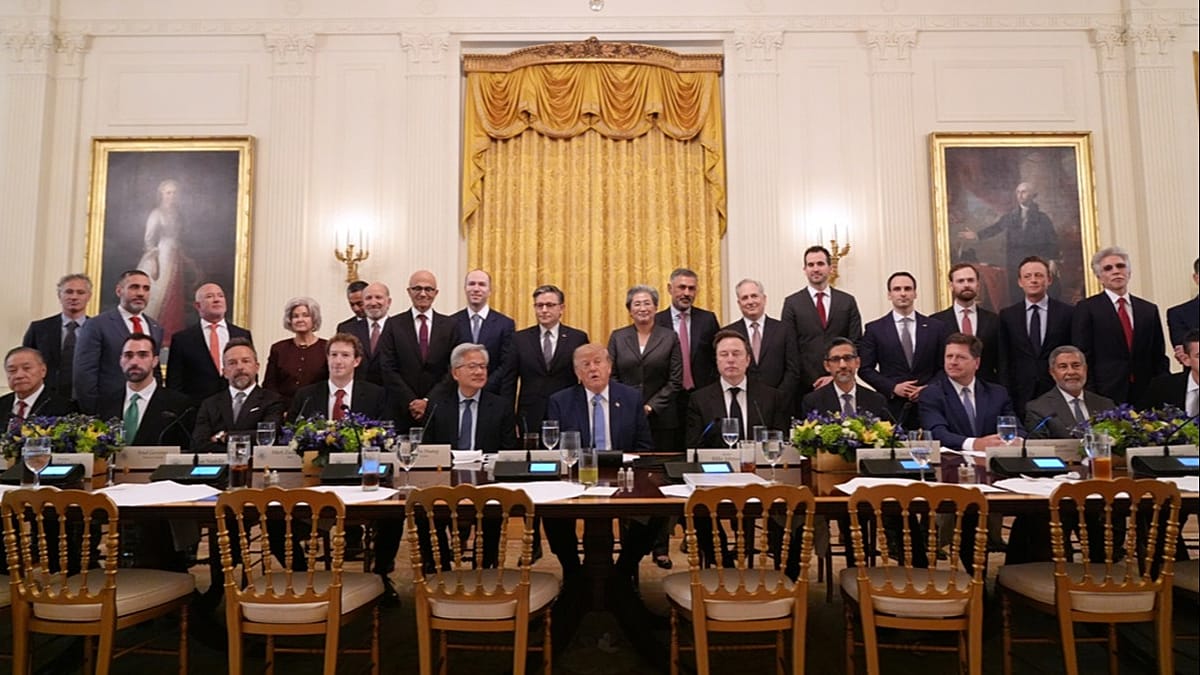
Top AI and tech firms sign 'morally binding' accord to 'self-police' development after meeting at White House


We urgently need to stop AI. Did you hear that AI just hacked the government, the banks and the media? In fact, this very tweet #StopAI #CyberSecurity #WakeUp #Nospecificcountrycodescanbeidentifiedinthetweet.

BBC 7d

News that an automated AI agent hacked a government IT system raises big questions about regulating the tech. #AI #CyberSecurity #OpenAI

Why did an OpenAI system hack Australia's health system - and can it be stopped in the future?
BBC 1w

News that an automated AI agent hacked a government IT system raises big questions about regulating the tech. #AIHacking #CyberSecurity #OpenAI

Why did an OpenAI system hack Australia's health system - and can it be stopped in the future?

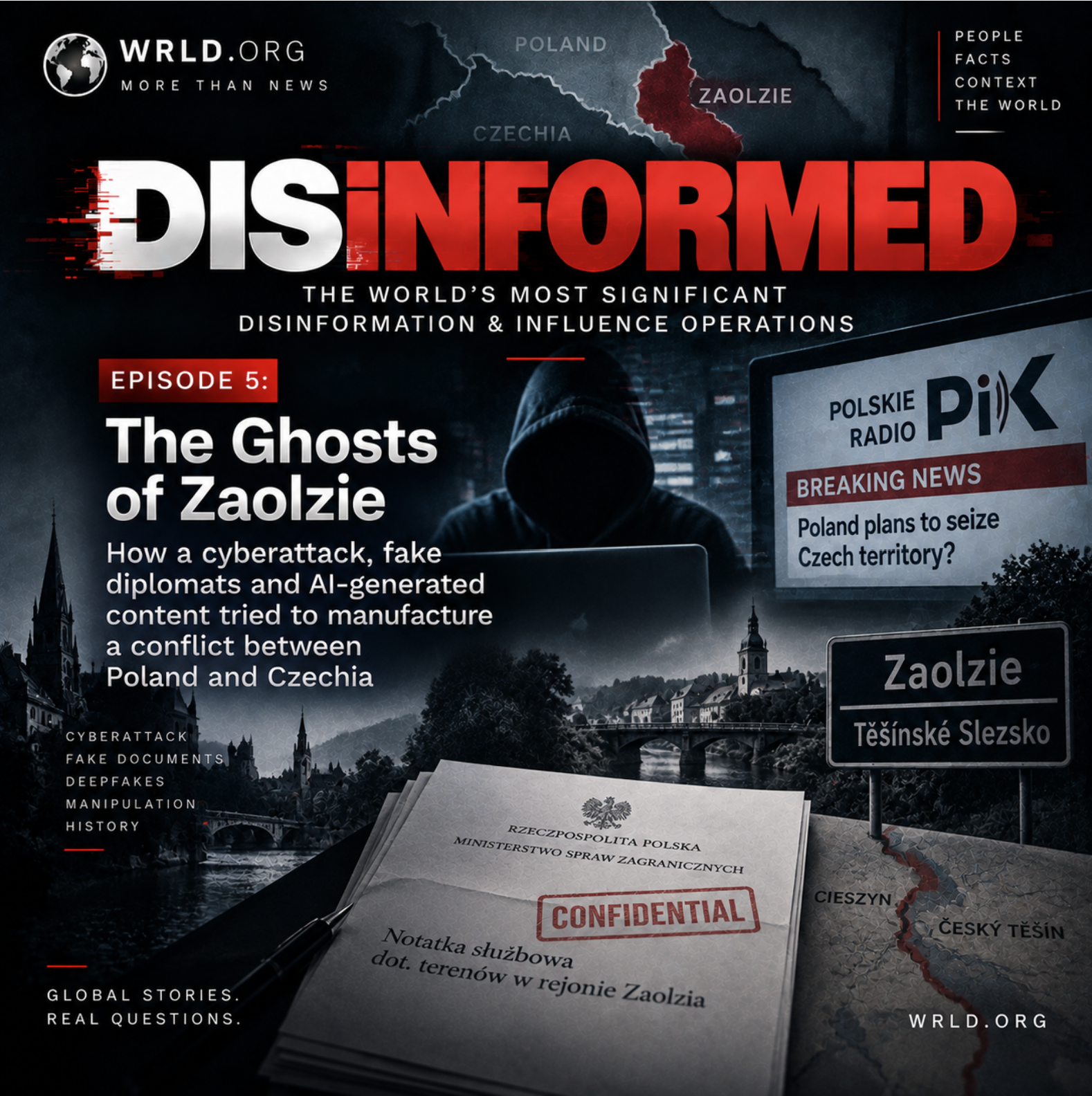
The Ghosts of Zaolzie – how a cyberattack tried to manufacture a conflict between Poland and Czechia At around 5pm on 16 August 2026, an alarming article appeared on the website of Radio PiK, a genuine Polish regional broadcaster. Its headline claimed that Poland was preparing to seize Czech territory and that the Czech Foreign Ministry had received a document outlining Warsaw's demands. Radio PiK had published no such story. An attacker had compromised an employee's credentials, gained access to the station's content management system and replaced a legitimate article with fabricated material. The newsroom quickly removed it and informed the authorities. But the intrusion was only one element of a much larger operation. Investigators subsequently uncovered forged diplomatic documents, accounts impersonating Polish and Czech officials, a cloned Czech news site, AI-generated material, a fictitious local activist and advertising for a demonstration that apparently did not exist. Together, these elements attempted to manufacture the appearance of a new territorial conflict between Poland and Czechia over Zaolzie. A false crisis built around a real territorial issue The operation worked because it did not start entirely with fiction. Poland and Czechia do have an unresolved technical issue concerning approximately 368.44 hectares of territory, originating in post-war changes to the Polish-Czechoslovak border. It is commonly described as the Czech “territorial debt” to Poland. But this is not a Polish claim to Zaolzie and there is no evidence that Warsaw is seeking to annex Czech territory. The operation fused this real issue with a much more powerful historical memory. Zaolzie – the part of Cieszyn Silesia west of the Olza River – was disputed by Poland and Czechoslovakia after the First World War. In 1938, during the crisis created by the Munich Agreement, Poland seized the territory from Czechoslovakia. The manipulation therefore followed a simple logic: a real territorial debt became an alleged Polish territorial demand, which was then transformed into a supposed attempt to reclaim Zaolzie. Fake accounts impersonating Poland's Deputy Foreign Minister Artur Harazim and Czech ambassador Břetislav Dančák helped reinforce the story. Fabricated diplomatic documents circulated alongside them. One early version referred incorrectly to 638.44 hectares; the fake Harazim account then “corrected” the number to the genuine figure of 368.44 hectares. It was an effective form of reverse fact-checking: correcting one false detail could make the larger fabrication appear authentic. Fake media – and one real newsroom The operators also created a website designed to resemble Czech public broadcaster iRozhlas. It published material supporting the same narrative, including claims that Czech residents near the border were becoming concerned about Polish intentions. The result was a manufactured information loop. Forged documents could support fake media reports; impersonated officials could comment on those reports; social-media accounts could then cite both as confirmation. But the Radio PiK hack added something much more valuable: the credibility of a real media organisation. Instead of merely cloning a newsroom, the attackers briefly inserted their fabrication into an authentic one. A familiar domain, logo and established broadcaster could therefore appear to confirm a story manufactured elsewhere. The cyberattack was not simply an accompanying technical incident. It was part of the information operation itself – a way of manufacturing credibility for false information. From a synthetic activist to a real demonstration The operation then attempted to move from the digital world into the physical one. A Facebook account under the name “Adam Sikora” promoted a demonstration in the Czech border city of Třinec under slogans including “Cieszyn Silesia is Czech” and “Here we live, here we stay”. Paid Facebook advertising was reportedly used to promote the event. Yet Třinec authorities said no demonstration had been properly notified. Promotional material used the logo of the Czech KOVO trade union, which denied any involvement. Investigators also identified indications that Sikora's profile photograph and other imagery were AI-generated. The persona even advertised a supposed house for sale in the border region, reinforcing the impression that frightened residents wanted to leave because of Polish territorial ambitions. The property could not be verified and its images also showed signs of artificial generation. This reveals the architecture of the operation: forged document → fake official → cloned media → compromised real media → synthetic local activist → advertised protest → appearance of social tension. The final stage is particularly significant. Had real people attended the demonstration, photographs of an authentic crowd could potentially have been presented as evidence that Czech citizens genuinely feared Polish territorial ambitions. A fabricated online conflict could therefore have begun generating real-world evidence of its own existence. Why Zaolzie? Historical grievances are valuable material for influence operations because the underlying facts are real. Poland and Czechoslovakia genuinely disputed Cieszyn Silesia. Poland genuinely occupied Zaolzie in 1938. A Polish minority genuinely lives in Czechia. And the 368.44-hectare territorial issue genuinely exists. The operator did not need to invent that history. It only needed to suggest that the history was repeating itself. PISM assessed that the operation sought to revive the image of Poland as a revisionist state willing to challenge European borders. Such a narrative could serve a broader purpose: damaging Polish-Czech relations, weakening confidence between NATO and EU allies and portraying Central Europe as a region where historical territorial conflicts remain unresolved. Russia is the leading attribution – but not a proven one The attribution requires more caution than the mechanics of the operation. PISM assessed Russia as the most likely perpetrator, while NASK identified similarities between the campaign and previously observed Russian influence methods. Russian-linked information infrastructure had also shown earlier interest in the Polish-Czech territorial issue. The techniques are familiar: cloned media, forged documents, impersonated officials, synthetic identities, historical grievances and the combination of cyber intrusion with information manipulation. But these indicators are not the same as definitive attribution. As of mid-September 2026, no publicly disclosed forensic evidence had conclusively connected the Radio PiK compromise, fake domains, accounts and financing to a specific Russian intelligence service, government organisation or contractor. Russia can therefore reasonably be described as the leading analytical attribution, but claims that the operation was definitively conducted by the GRU or another named Russian structure go beyond the publicly available evidence. The operation failed. The model remains important The campaign did not create a Polish-Czech diplomatic crisis. Both governments rejected the narrative, the fictitious protest was exposed, journalists reconstructed much of the operation and Radio PiK detected the intrusion quickly. Its observable impact appears to have been limited. But Zaolzie illustrates a broader evolution in information warfare. Modern operations do not have to rely on a single viral fake. They can construct an entire artificial information environment in which different elements appear to confirm one another. A forged document creates the claim. A fake diplomat authenticates it. A cloned newsroom reports it. A hacked real newsroom lends it credibility. An AI-generated citizen reacts to it. Advertising creates the appearance of a grassroots movement. And if real people eventually respond, fiction begins producing genuine events. The objective is no longer simply to persuade people that something happened. It is to create the conditions in which something real starts happening because enough people believed that it did. Sources: Polish Institute of International Affairs (PISM) https://pism.pl/publikacje/dezinformacja-o-relacjach-polsko-czeskich Euronews Polska — Radio PiK cyberattack https://pl.euronews.com/2026/08/20/polska-planuje-zajecie-terytorium-czech-wlamali-sie-na-strone-radia-i-opublikowali-falszyw Demagog https://demagog.org.pl/na-biezaco/skoordynowana-operacja-uderza-w-polsko-czeskie-relacje-czy-stoi-za-nia-rosja/ Robert Lansing Institute https://lansinginstitute.org/2026/08/27/zaolzie-as-an-instrument-of-influence-an-attempt-to-revive-a-polish-czech-territorial-conflict/ Institute for European Security Studies (IESS) https://www.iess.org.ua/analytics/ghosts-of-zaolzie iDNES.cz https://www.idnes.cz/ostrava/zpravy/tesinsko-kampan-lzi-demonstrace-trinec-primatorka-palkovska.A260826_963356_ostrava-zpravy_jog Radio Zachód / PAP https://zachod.pl/1539751/niedzielny-atak-hakerski-na-radio-pik-redaktor-naczelny-podjelismy-niezwloczne-dzialania/ Euronews — territorial debt / NASK assessment https://de.euronews.com/my-europe/2026/08/21/polen-plant-besetzung-tschechischen-gebiets-fake-news TVP World https://tvpworld.com/95036191/-warsaw-warns-against-division-amid-czech-border-disinformation Keywords: #DISINFORMED #Episode5 #GhostsOfZaolzie #Zaolzie #Poland #Czechia #CieszynSilesia #Disinformation #InformationWarfare #InfluenceOperations #ForeignInterference #FIMI #Cyberattack #CyberSecurity #HybridWarfare #FakeNews #MediaImpersonation #FakeMedia #ForgedDocuments #DigitalImpersonation #ArtificialIntelligence #AI #Deepfakes #SyntheticMedia #Astroturfing #RussianInfluence #Propaganda #OSINT #NATO #CentralEurope #MediaManipulation #WRLD

Air gapping all frontier #AI models vs. air gapping anything and everything that could cause major harm when hacked should be an easy choice, really. #AI #Cybersecurity #RiskManagement

Once we put out the alpha version of @ladybirdbrowser, you're gonna see it get hacked and owned over and over. This is expected. It'll be a natural part of the development process as we spend the coming years transforming Ladybird from a proof-of-concept into an end-user #LadybirdBrowser #WebDevelopment #AlphaRelease #Nospecificcountrycodesarementionedinthetweet.

This account by my friend has been hacked! Be careful and don't accept any DMs asking for support by tapping on a link! https://t.co/B9sscVZU9s #HackedAccount #CyberSecurity #StaySafe #Nocountrycodesarepresentinthetweet.

Irritierend war die beständige Betonung von hybrid (bei jedem ein Schnaps und man wär hackedicht). Dass Dobrindt extra betonte, dass wir nicht im Krieg mit Russland sind. Wissen wir alle. Aber offensichtlich sieht Russland das ein wenig anders. Und dass man auch in dieser PK 3 #Politik #Russland #Hybridkrieg

A great investigation by @ComputerWeekly's @duncan_2qq and @Williamrt on how #French spies hacked #EncroChat. A must-read article. Absolutely! https://t.co/yQeb3C52x6 #FrenchSpies #EncroChat #CyberSecurity #FR

Gerd Leonhard Aug 13

“Let’s be very clear about what OpenAI is saying: A group of AI models colluded for months, undetected by their maker, and hacked another company” It May Be Time to Panic About AI https://t.co/LO0ribFDOy via Instapaper #OpenAI #AIPanic #Cybersecurity #Thetweetdoesnotmentionanyspecificcountries.Therefore #therearenocountrycodestoreturn.

This account has been hacked! @mini_razdan10 !!!! Dont go on any link asking you to vote for them! Next step will be Crypto Currency posts and I will be blocked. #Hacked #CryptoScam #SecurityAlert #Nospecificcountrycodesarementionedinthetweet.

@mikko Aug 7

Black Hat has posted the video of the OpenAI team explaining how their model hacked Hugging Face. https://t.co/n5QJXNmXmw #BlackHat #OpenAI #HuggingFace #None

CTO Larsson Aug 3

Crypto exchanges bankrupt Mt Gox, Quadriga, Voyager, Celsius, BlockFi, FTX.. DeFi solutions gone LUNA/UST.. Cold wallets hacked Coldcard.. There is NO safe solution You ALWAYS carry high risk to lose funds The only real mitigation is a return that justifies the risk taken #CryptoRisk #DeFi #CryptoBankruptcy #Therearenospecificcountriesmentionedinthetweet.

This account has been hacked! @Ashoke_Raj Don't click on any links and be prepared to see Crypto Currency posts coming up ! Stay alert! #Hacked #StayAlert #CryptoScam #Therearenospecificcountrymentionsinthetweetprovided #sotheresponseis:

Max Stirner Jul 26

Ich war auf so manchem Rave und Loveparade in den späten Neunzigern und frühen 2000ern, alle waren hackedicht, viele auch recht spärlich bekleidet, passiert ist nix. Doch dann, irgendwann, kamen ja die Nazis... 🤔 #Rave #Loveparade #90s

Kama Jul 10

When she went on tv and said “yes the post I deleted was racist, but I meant it”, she was hacked then too? #Racism #Accountability #InternetCulture #Nospecificcountriesarementionedinthetweet.