WRLD

Search

#Horses
Cytrus 1d

Citrus wrote that during today's stream, Kamil talked about the methods he was taught for horseback riding. According to the author, Szeliga did not believe in the story of Mamm0n, and the dispute between the streamers gradually turned into a sharper exchange of views. https://t.co/fusGsMNmMk #streaming #horses #gry (translated)

2217
Mayor Zohran Kwame Mamdani 4d

The horse carriage industry is coming to an end in New York City. Our administration will make sure workers and owners are protected and the horses are safe.

2024
Luciano Magaldi Sardella (PhD) 6d

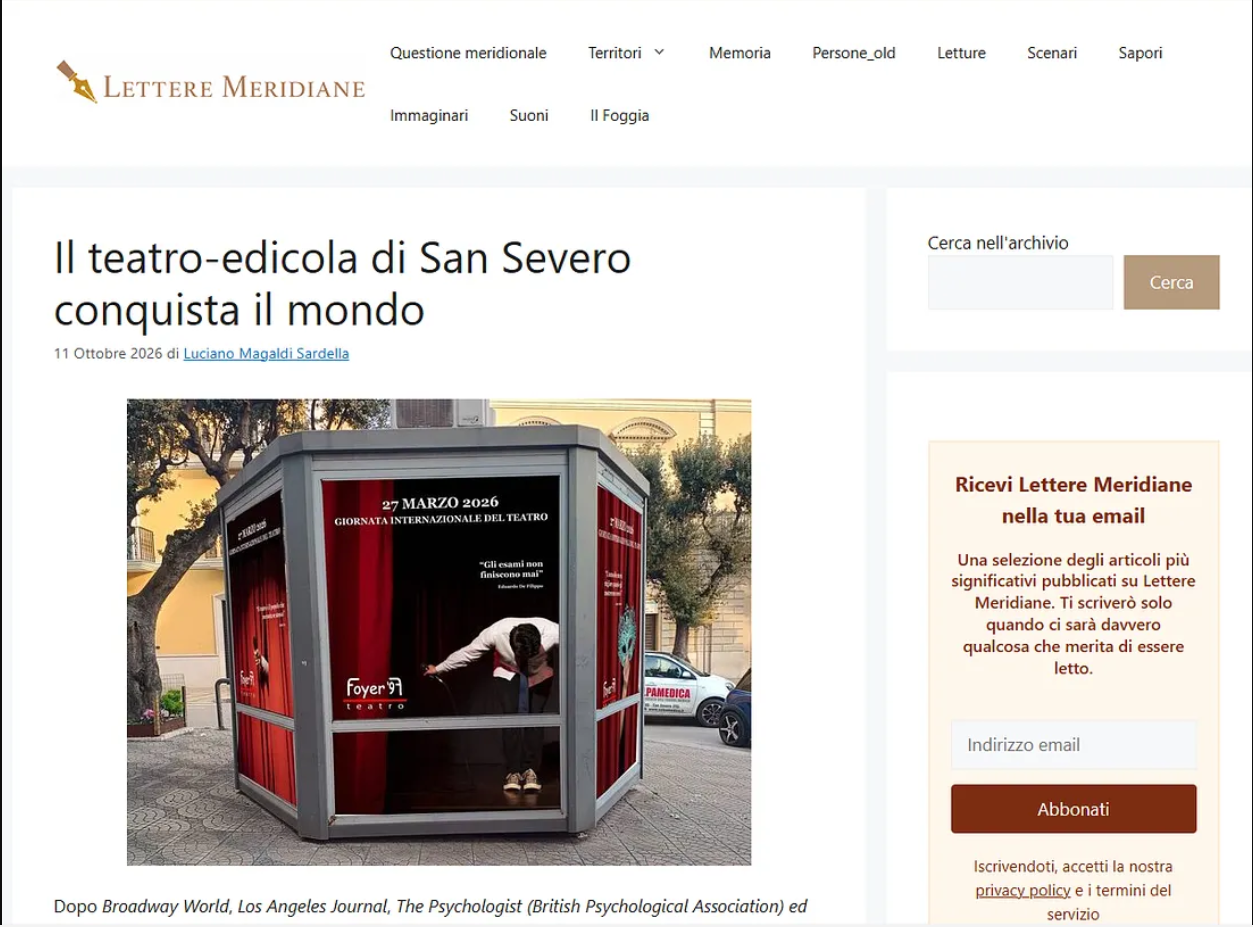
LETTERE MERIDIANE — “TEATRO-EDICOLA” OF SAN SEVERO CONQUERS THE WORLD SOURCE: https://www.letteremeridiane.org/2026/10/il-teatro-edicola-di-san-severo-conquista-il-mondo/?fbclid=IwY2xjawU4oqFleHRuA2FlbQIxMQBwZG9mAXNydGMGYXBwX2lkEDIyMjAzOTE3ODgyMDA4OTIAAR5rVEwYs6UUXg7v-P0SyIQ_DRb_F6ZiY58OcseYoV4J7atcTiERnhWaqKM2pw_aem_Njle1jq1XLzHr93KLBUcVA After “Broadway World”, the “Los Angeles Journal”, “The Psychologist (British Psychological Association)” and Hollywood Beat Magazine, its “academic consecration” has now arrived courtesy of Stanford University. As I have already emphasised in my article on the revival of the GIO Festival in Foggia, celebrated by BroadwayWorld for the world stage premiere of the Giordano’s opera Marina (1888), the province of Foggia has long ceased to be peripheral. It happens when it finds an idea that shifts the coordinates: well, in San Severo, 40 kilometres from Foggia, it has happened again. Only this time an orchestra was not needed; six chairs were enough. The celebrated Teatro-Edicola of San Severo artistic director Francesco Gravino of the theatre company Foyer ’97 has been featured in the academic journal “Stanford Social Innovation Review (SSIR)” as an academic case study. The news, relayed on 19 September 2026 by ANSA Nazionale, looked like a misprint. Then it became clear that it was not. SSIR, an award-winning publication covering multisectoral solutions to global problems, included the project in its Dispatches section with the reportage “The Six-Seat Revolution”. It is the inverse trajectory to that of the GIO Festival: not a forgotten opera returning to a grand historic Italian horseshoe theatre, but an entire theatre reborn inside a disused place, forgotten by man. There are moments when past and future intertwine to create something visionary, innovative, artistically “revolutionary”: San Severo experienced one of those moments on the morning of 27 March 2026, during World Theatre Day, when the shutter of a newsstand closed for six years in Via Matteo Tondi was reopened “not to sell newspapers, but to offer stirring stories”, to quote Gravino’s motto. The idea of the visionary Francesco Gravino, artistic director, stage director and actor of the San Severo company Foyer ’97, active for at least 30 years in Capitanata, centred on the kiosk, hexagonal in metal and glass, granted free of charge by its owner Pino Frau, by now an urban relic created by the publishing crisis of the early 2000s: today in Italy active newsstands have fallen from about 35,000 in 2005 to about 20,000 in 2024, a decline of 42.8%. Gravino and eleven other actors restructured it in two weeks of work, without institutional funding, and transformed it into what is now under examination by the London commission of Guinness World Records as the “world’s smallest theatre”. The formula is deliberately austere: six spectators at a time outside, actors inside at less than a metre’s distance, 15-minute performances, continuous rotation from 11:00 to 20:45, texts ranging from Goldoni to Chekhov, from Ibsen to Dacia Maraini. On the door a QR code with an original theatrical warning: “Warning! This QR code transforms passers-by into actors. Scan only if ready.” The numbers immediately showed that it was no boutade: more than 60 people in a single afternoon, three inaugural days that sold out. But above all a positive echo that went beyond the borders of San Severo. “Broadway World” (just as in the previous case of the GIO Festival), the world’s most influential theatre criticism outlet with over 5.5 million monthly views, devoted exclusive coverage to it on 27 April 2026: “An Abandoned Italian Newsstand Just Became the World’s Smallest Theatre”. Not a mere listing, but an analysis: “There is no foyer, there is no balcony, there is no grid. There is barely a wing. What there is is something almost unrecognisable as an evening at the theatre, and for that very reason it is all the more powerful.” “Broadway World” captured Gravino’s manifesto idea: “This is a theatre of proximity. In an era of digital distance, we are putting human contact back at the centre,” framing it as “More than a clever exercise in site-specific theatre. It is a reappropriation.” All of this, in a Mezzogiorno of Italy often narrated only in terms of organised crime and marginalisation. To that seal of approval was added another, even more disorienting for a newsstand in San Severo: the “Los Angeles Journal”, one of the most influential publications on the West Coast for the performing arts. On 12 May 2026, it headlined thus: “San Severo’s Teatro-Edicola as an Innovative Model for Los Angeles Theaters?” opening as follows: “In a city in southern Italy that Hollywood has never heard of, a theatre director has just built the smallest stage in the world: six seats, fifteen minutes, zero distance. Los Angeles should pay attention.” The “Los Angeles Journal” does not indulge in folklore, but places the kiosk in Via Matteo Tondi alongside the prestigious 1,600-seat Ahmanson Theatre in Los Angeles, the Pantages of Broadway in Hollywood, the 99-seat plan of Rogue Machine, the Odyssey, the Victory Theatre and the Hollywood Fringe. It even recalls Ethan Marks’s Electrical Box Theatre, a veritable electrical box lined with red velvet in downtown Los Angeles, to argue that Gravino has taken to the extreme the question Los Angeles has been asking itself for decades: How small can a stage become before it ceases to be a stage? And it recognizes the San Severo urban model: almost zero cost, two weeks of work and six chairs, in return for immediate provincial, regional and national media coverage, recognition by the San Severo’s Municipal Administration, and a format exportable anywhere. Then, the third American piece came from “Hollywood Beat Magazine” on 20 April 2026: Six seats. Fifteen minutes. One actor. No stage. The magazine recounts the kiosk in Via Tondi left disused for almost six years, the contemporary six-seat cultural outpost, placing Francesco Gravino in a distinguished genealogy: Richard Schechner and environmental theatre, Jerzy Grotowski and poor theatre, Nicolas Bourriaud and relational aesthetics. But it closes with pragmatism: it is not a thesis, it is fixing a street corner, that is, repairing an urban street corner by asking not how large a theatre can become, but how small it must become again to recover its original power. And finally, the celebrated London-based “The Psychologist”, the journal of the “British Psychological Society (BPS)”, the oldest psychological society in the world, transformed the Teatro-Edicola into a scientific case study: on 30 July 2026 it published “The world’s smallest theatre — and Psychologists’ next act”, starting from the same detail, the morning of 27 March when the metal shutter of the hexagonal kiosk in Via Tondi reopened after six years, six people inside, an actor at less than a metre’s distance beginning Chekhov. It describes the formula: six spectators, 15 minutes, 11 actors over 10 hours, from Goldoni to Euripides, inside a kiosk where the fourth wall does not break because architecturally it never existed. But the BPS goes a step further: it cites the 2025 studies by Damien Gabriel in IBRO Neuroscience Reports, that live performance generates measurably stronger emotional and physiological activation than video, and introduces Edward Hall’s proxemics: below one metre is intimate space, reserved for doctors, close friends, lovers. In that one-square-metre space, the actor’s breath is audible, micro-expressions legible, the self-other boundary becomes permeable. The Teatro-Edicola “does not make theatre better, it makes it inevitable”. And it is here that one understands why Stanford is studying it as an academic case study in social innovation, not as a case of artistic originality. In Italy, meanwhile, the national media circuit had already picked up the phenomenon: RaiNews — TG2 Storie brought it to RaiDue at midnight on 19 April. RTL 102.5 devoted space to the format conceived by Gravino and developed by Foyer ’97 in the heart of San Severo in Via Tondi, defining it as a permanent micro-stage capable of bringing theatre into public space. ANSA.it, Gazzetta del Mezzogiorno, La Repubblica, TG2000, Radio Capital, Swiss RSI, ANSA Brazil and many others followed. And for the record: Fiorello praised it in La Pennicanza as an artistic case inspired by his Edicola Fiore, and Biagio Antonacci, on his tour in the Augustan amphitheatre of Lucera, made a “fact-finding” stop at the Teatro-Edicola singing the celebrated and nostalgic Iris in front of an audience certainly larger than the “six seats”. Francesco Gravino’s theatre company Foyer ’97 was not born yesterday: behind it lie the Teatro-Cantina of 2016, the underground theatre, and in 2011 a performance on the bell tower of a church in the centre of San Severo at 45 metres high. The Teatro-Edicola completes, in Gravino’s words, “the entire vertical extension of theatre: underground, street level, rooftop”. And it is preparing for its thirtieth anniversary in 2027 aiming to purchase the kiosk to make it permanent, exporting the “San Severo Model” to Rome, Lucca, and to the festivals of Santarcangelo and Todi. As with the GIO Festival, someone might dare to claim that it is merely a stunt, but when BroadwayWorld places you alongside the Los Angeles Opera House, the “Los Angeles Journa”l proposes you as a model for Hollywood, “Hollywood Beat Magazine” reads you through Grotowski and the “British Psychological Society” uses you to explain mirror neurones, it is no longer a stunt but an excellent artistic and academic positioning. To those who still whisper that Foggia and Capitanata are provincial, the answer is now written on two opposite and complementary fronts: on 5 June in Foggia a 138-year-old opera found the stage again at the Giordano ending up on BroadwayWorld; on 27 March in San Severo a 4-square-metre kiosk invented a stage that did not exist, ending up at Stanford, in Los Angeles, in Hollywood and in London. The periphery, when it has a precise idea, becomes the centre. Even with six chairs. Luciano Magaldi Sardella

www.letteremeridiane.org
Il teatro-edicola di San Severo conquista il mondo
679

Claudio Casula wrote that he would not have believed it possible that so many people spread nonsense about Israel-related topics. He called them stupid and referred to their statements as intellectual garbage. In the past, they would not have been able to publicly spread such thoughts, which he described as more pleasant. #Israel #Meinung #Gesellschaft (translated)

13348
P
Patrice CUDICIO 4w

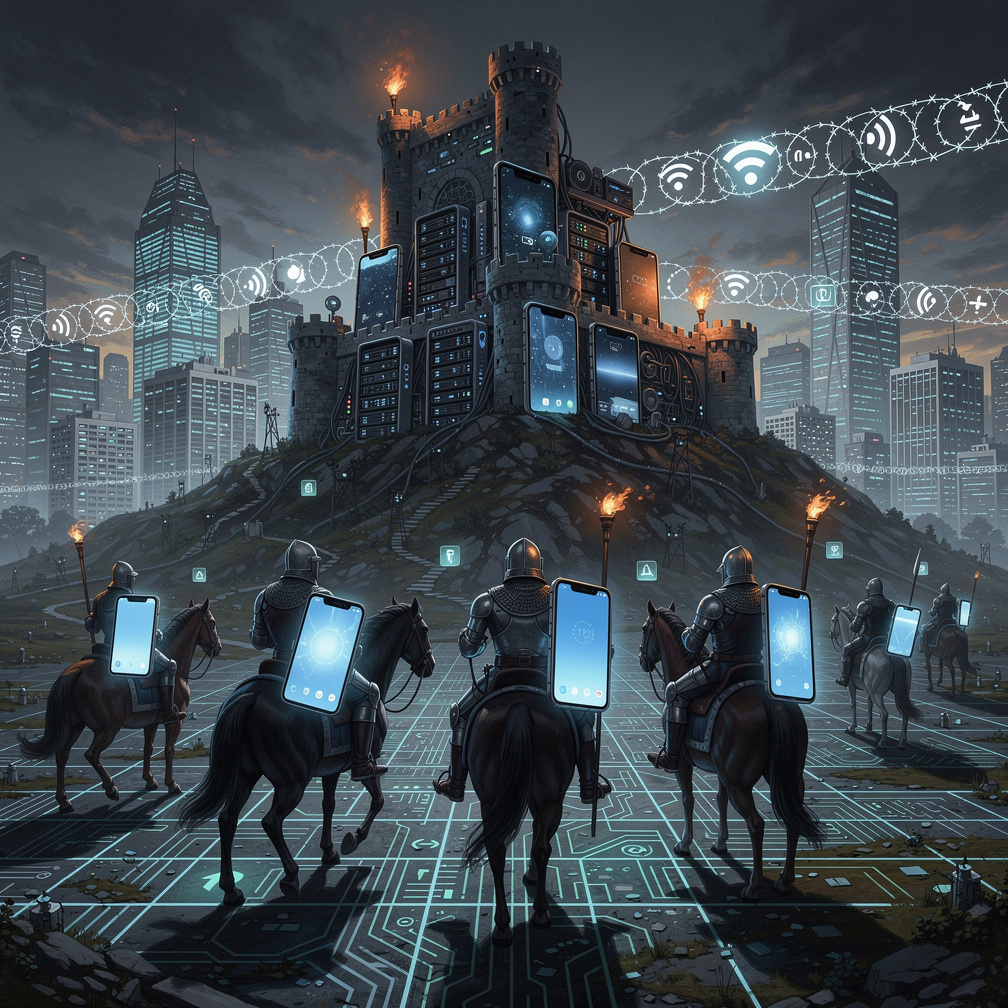
The Return to Feudalism in 21st Century Garb A simple observer's viewpoint, with no claim to hold any absolute truth. The Veneer Cracks There is something strangely archaic about the world unfolding before our eyes, despite its satellites, artificial intelligence, and promises of infinite progress. Here and there, we witness heads of state behaving like feudal lords of another age, patiently nibbling away at the neighboring territory, redrawing borders through force rather than law, as if governing a nation mattered less than expanding one's fiefdom. No names need be mentioned here: current events provide plenty of illustration, and each reader will recognize, according to their own geography and moment of reading, the faces that embody this observation. But this return to the archaic is not confined to grand geopolitical stages. It also permeates the most ordinary daily life—that of social media, where anyone can pour out venom against another without filter, without form, and often without the slightest argument. The verbal jousting of yesteryear, with its codes, its rhetoric, its tacit limits, has given way to raw invective, snap judgment, instant condemnation. We no longer debate: we execute, verbally—and sometimes it doesn't stop at words. The Vanished Inhibition What strikes one, in this dual observation—macro-political and micro-social—is the lifting of an inhibition we thought firmly anchored. Centuries of cultural construction, education, philosophy, sometimes religion, had patiently shaped mechanisms of restraint: politeness as social ritual, argumentation as a mode of resolving disagreement, respect for one's opponent as the very foundation of democratic debate. This civilizational veneer, however fragile it always was, seemed to hold. Today it is cracking, and the question—which for me remains a simple hypothesis, not a certainty—is why. A convenient explanation would blame social media: anonymity, the distance of the screen, the instantaneousness of publication would favor verbal acting-out without the usual mediation of reflection. This is probably true, but likely insufficient. For technology here is only an accelerant, an amplifier—not necessarily a root cause. A Poorly Formatted Neocortex? The more unsettling hypothesis—and I frame it explicitly as hypothesis, not scientifically established fact—is that of a failure in the formation of moral judgment and tolerance toward otherness. The human brain possesses the neural structures enabling empathy, the distancing of impulsive reaction, the acceptance of difference—but these capacities are not innate in their full exercise: they must be built, educated, cultivated, like a muscle that needs patient training from childhood onward. If this education in otherness, nuance, and tolerance of disagreement erodes—for multiple and undoubtedly complex reasons that are not mine to settle here—then older reflexes resurface: instinctive distrust of the stranger outside the clan, the law of the strongest, the logic of territorial or symbolic predation. The other ceases to be a possible interlocutor and becomes once again a potential threat, unless they belong to my tribe, my clan, my party, my digital bubble. Two Scales, One Logic What is striking, in this deliberately provocative reading, is the structural similarity between these two scales. The leader who invades a neighbor in the name of a rediscovered greatness or a reinvented historical right, and the anonymous internet user who insults a stranger in the name of an unnegotiable conviction, may obey the same underlying grammar: that of territory to defend, clan to protect, the other to subdue or exclude rather than understand. The form has changed—satellites instead of horses, tweets instead of heralds—but the substance, in this reading that remains mine alone and commits no one else, seems strangely identical to that of feudal rivalries: the absence of a recognized third party, of an accepted common rule, of a respected arbitrating authority. Everyone becomes judge and party, lord of their own digital or territorial fiefdom. A Civilization on a Knife's Edge Norbert Elias, in his Civilizing Process, showed how Western societies had historically built, with remarkable slowness, an increasing control over impulses and direct violence, in favor of more sublimated forms of social regulation. What we may be observing today—and I stress again the conditional—is a form of regression in this process, or at least a fragilization of the veneer it had patiently laid down. Should we see this as an effect of great technological accelerations, which shake up our cognitive rhythms without leaving education time to adapt? A deeper crisis of the institutions tasked with transmitting these values of tolerance—school, family, religion, the rule of law? Or simply a cyclical movement of human history, where phases of policed civilization alternate with darker backlashes? I have no certain answer, and I would be wary of anyone claiming to hold one. In Conclusion, a Shared Concern This text is only a viewpoint, necessarily partial and subjective, on a world that sometimes seems to replay ancient logics in new clothing. Perhaps I am wrong to perceive a continuity between the feudal lord and the contemporary dictator, between the anonymous online insult and the absence of education in nuance. Perhaps these phenomena are unrelated, or too complex to be thus summarized. But if this reading, even partially, hits the mark, then the question that arises is less one of technological regulation—though necessary—than the far more arduous question of how to rebuild, generation after generation, this capacity to accept the other in their difference, to debate without destroying, to coexist without necessarily dominating. This undertaking, if it exists, will not be resolved by an algorithm nor by an international treaty. It plays out, patiently, in the most elementary education—the one that teaches a child that the other is not a threat, but a possibility. Bibliography Elias, N. (1939). Über den Prozess der Zivilisation [The Civilizing Process]. Oxford: Blackwell (Eng. trans. 1978-1982). Lorenz, K. (1963). Das sogenannte Böse [On Aggression]. London: Methuen (Eng. trans. 1966). Arendt, H. (1970). On Violence. New York: Harcourt, Brace & World. Han, B.-C. (2013). Im Schwarm [In the Swarm: Digital Prospects]. Cambridge, MA: MIT Press (Eng. trans. 2017).

696
Vatnik Soup Sep 10

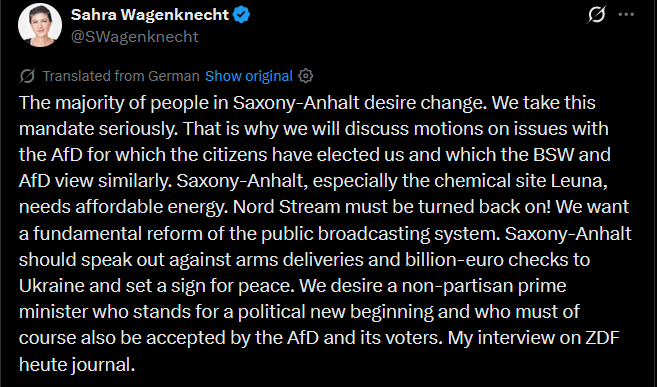
Sahra Wagenknecht, whose party BSW received a little over 5% of the vote in the Saxony-Anhalt elections, is trying to mobilize pro-Russian sentiment in Germany by calling for the reopening of Nord Stream and an end to all aid to Ukraine. Once again, we see horseshoe theory in https://t.co/dIVV42nhqY #SahraWagenknecht #NordStream #UkraineAid #DE #RU #UA

2805
Luciano Magaldi Sardella (PhD) Sep 5

The Vindication of the “GIO Festival”: “BroadwayWorld” Celebrates Marina and the Umberto Giordano Theatre of Foggia SOURCE: https://www.linkedin.com/pulse/vindication-gio-festival-broadwayworld-celebrates-sardella-ph-d--8zzce/ SOURCE: https://www.letteremeridiane.org/2026/08/la-rivincita-del-gio-festival-broadwayworld-celebra-marina-e-foggia/ The GIO Festival has been, to put it mildly, overlooked by Rai3 Puglia and several regional outlets. Yet the festival dedicated to Umberto Giordano — promoted by the Chamber of Commerce of Foggia together with the Municipality and the Province, and supported by the Apulia Region and the Fondazione Monti Uniti — has achieved a remarkable vindication, landing on the homepage of BroadwayWorld thanks to the world première of the opera Marina, staged on 5 June at the Umberto Giordano Theatre in Foggia. This is no small feat, considering that BroadwayWorld is among the most influential American platforms devoted to theatre and the performing arts. The transatlantic debut of the opera by Foggia’s great composer did not escape the attention of Luciano Magaldi Sardella, who submitted to the editorial board of Lettere Meridiane an in‑depth and compelling contribution, reproduced below. In the article, the author masterfully reconstructs the extraordinary story of Giordano’s first opera, composed in 1888 and left without a staged production for 138 years, until its historic performance on 5 June at the Giordano Theatre. Above all, he recounts how the inaugural edition of the GIO Festival has restored Foggia to the centre of the international operatic stage, through the rediscovery and valorisation of Marina, the involvement of major musical institutions, and the attention of the American press. It is a stimulating reflection on the cultural and identity‑driven renaissance of a city that, for far too long, bore Giordano’s name on the façade of its theatre without managing to turn it into a lever of international visibility. (g.i.) + + + + + There are moments in the life of a city when past and future clasp hands upon the stage of the present. Foggia experienced one of these moments on the evening of 5 June 2026, when the curtain of the Umberto Giordano Theatre rose upon Marina, an opera composed in 1888 by a young man of twenty‑one — Umberto Giordano — then a student at the San Pietro a Majella Conservatoire in Naples. After one hundred and thirty‑eight years of silence, that score finally found its first scenic breath in the world. “It is not an ordinary event. It is a turning point. A void filled. A story rewritten.” Umberto Giordano, one of the most celebrated verismo composers of the fin‑de‑siècle — born in Foggia, author of masterpieces such as Andrea Chénier, Fedora, Siberia — had remained, until now, the only great Italian opera composer without a festival entirely dedicated to his oeuvre. A paradox that weighed like a historical injustice upon a city that bears his name engraved on the pediment of its most beautiful theatre. This is the extraordinary journey of Marina, Giordano’s first opera, which after 138 years of oblivion received its world première in scenic form on 5 June 2026 at the Umberto Giordano Theatre in Foggia, as the opening event of the GIO Festival — the inaugural edition of the Giordano International Opera Festival. The manuscript, preserved in the Frederick R. Koch Collection at Yale University’s Beinecke Rare Book and Manuscript Library, has travelled an astonishing path: from the elite libraries of America’s East Coast to the beating heart of the Daunia. On the night of 5 June 2026, at the Umberto Giordano Theatre, that silence was finally broken. The GIO Festival was conceived in Foggia as an ambitious cultural project promoted by the Chamber of Commerce, the Municipality, and the Province, with the support of the Apulia Region, aiming to transform the artistic legacy of the verismo composer into a driver of territorial development and cultural tourism. Under the artistic direction of conductor Gianna Fratta and violinist Dino De Palma, the event at last fills a historical void. Its model is explicit and ambitious: a project inspired by the great festivals dedicated to Italian composers — such as the Verdi Festival, the Puccini Festival, the Rossini Opera Festival — while maintaining a strong territorial and participatory dimension. In other words, Foggia formally claims its seat at the table of the greats. And it does so with the credentials required: an unrepeatable world scenic première (parallel to the concert première at Milan’s Teatro Dal Verme, recorded by the prestigious opera label Decca Classics), a high‑quality operatic production, and the support of leading cultural institutions (Teatro dell’Opera di Milano, Fondazione Teatro Petruzzelli of Bari). The festival benefitted from the collaboration of the Orchestra of the Conservatoire and the Chorus of the Fondazione Teatro Petruzzelli of Bari, the Umberto Giordano Conservatoire of Foggia, the Fondazione Monti Uniti, and the Fondazione Apulia Felix. A network of excellence that lent the event national resonance and stature. The Umberto Giordano Theatre is a nineteenth‑century jewel of rare beauty — the oldest functioning horseshoe‑shaped historic theatre in Apulia. Yet for decades it lived in a state of semi‑clandestine cultural marginality, relegated to the periphery of the operatic routes that matter, hindered by long interruptions in its use from 2007 to 2014, including recent fire‑safety compliance requirements. Some referred to it, with a mixture of condescension and provincial resignation, as a “provincial theatre”, destined merely to bear Giordano’s name. That label is now destined to fall. It is precisely in Foggia that this youthful gem received its first scenic staging, placing the city on the international map of opera. A positioning without precedent in the city’s recent history. The Giordano Theatre recorded a full house for the historic première of Marina, welcoming hundreds of spectators, while many more followed the performance from outside via a large screen installed for the occasion. The production met expectations with full artistic dignity: the staging transposed the narrative to the First World War, heightening the opera’s dramatic and realist character. On the podium, the Symphony Orchestra of the Umberto Giordano Conservatoire conducted by Matteo Dal Maso. Sets and costumes by Alfredo Troisi; lighting by Massimo Russo. An ensemble of talents worthy of the name the theatre proudly bears. The definitive seal of this moment’s historical significance arrived from across the Atlantic. BroadwayWorld, the world’s most influential outlet for live performance criticism and reporting — with over 5.5 million monthly views — dedicated exclusive coverage to the event, publishing a complete photographic gallery of the world scenic première curated by Chloe Rabinowitz and a substantial critical review by Rachel Stone. The American article emphasised the historical value of the undertaking and the bond between the composer and his native city, highlighting the musical quality of the score, deemed surprisingly mature for the composer’s age. For the first time, the Umberto Giordano Theatre appeared on the New York‑based site alongside institutions such as the Los Angeles Opera House, Houston Opera, and BBC Classical Music at the Royal Opera House. It is its natural place. It should have been there decades ago. Until now, the world knew Giordano through his Milanese triumphs, not through the youthful opera written between Foggia and the Naples Conservatoire — the lost (and later rediscovered) Marina of 1888. Let us be clear: this is no minor detail. BroadwayWorld does not grant exclusive galleries to provincial theatres. It does so for events that shift the coordinates of musical and theatrical history within the circuits that matter. This time, those coordinates shifted to Foggia thanks to the GIO Festival, in the name of Umberto Giordano. For the record — and for those who may not yet know — the GIO Festival is a new and ambitious biennial event conceived by the Chamber of Commerce of Foggia, with the aim of celebrating the genius of Umberto Giordano and transforming it into a powerful engine of development for the entire Capitanata. Biennial means continuity, planning, vision. It means that Foggia does not intend to be a meteor in the operatic firmament, but a stable and recognisable presence within the international festival circuit. Andrea Chénier, Siberia, and Fedora had already carried Giordano’s name to the Metropolitan Opera House in New York for more than a century, where his works are still performed to great acclaim. Now Foggia itself — not merely its scattered operatic legacy — claims its rightful “place in the sun”. The composer whom his city struggled to recognise in life, and whose name it preserves on its theatre, its square, and its conservatoire, may finally become the lever of an unprecedented cultural, economic, and identity‑driven renaissance. The GIO Festival 2026 is not, one hopes, a point of arrival. It should be the first chapter of a new story for Foggia, for the Capitanata, and for the cultural South of Italy. The Umberto Giordano Theatre is no longer merely an architectural jewel to be preserved: it has now become a place of creation and inspiration, capable of attracting international press attention and hosting events that enter the annals of world opera. To those who still whisper that Foggia is a provincial city, the answer is now written upon the world’s stages: on the evening of 5 June 2026, the periphery became the centre.

www.linkedin.com
The Vindication of the “GIO Festival”: “BroadwayWorld” Celebrates Marina and the Umberto Giordano Theatre of Foggia
820
Alfons López Tena 🦇 Aug 20

Under Trump, Protected Wild Horses Are Going to Slaughter - A legal loophole allows the government to sell mustangs on the cheap, stripping them of protections and clearing their path to destruction. https://t.co/rqRl2Ysybp #WildHorses #AnimalRights #TrumpAdministration #US

118
Il Fatto Quotidiano Aug 15

Jack Lowden sembra essere il candidato più concreto per diventare il prossimo James Bond, grazie alla sua esperienza teatrale e cinematografica, alla sua attuale interpretazione di un agente dell'MI5 in Slow Horses e all'età ideale per intraprendere un nuovo ciclo narrativo nella saga di 007. #JamesBond #JackLowden #Cinema

www.ilfattoquotidiano.it
Sarà Jack Lowden il prossimo James Bond? Il toto-007 punta sulla spia di Slow Horses
15920
Florian Krammer Aug 5

This week's episode of viroLOGICAL is about West Nile virus, a mosquito-borne virus that is prevalent in many areas including North America and Europe and causes disease in birds, horses and humans. ➡️Spotify: https://t.co/ijZFk6dhCN ➡️Apple Podcasts: https://t.co/L2q2NtbKdr #WestNileVirus #ViroLOGICAL #MosquitoBorne #NA #EU

Tunite Music Jul 16

Few musical forms capture the sheer scale of human drama quite like the piano concerto. It is the ultimate dialogue: a single, vulnerable instrument standing up to, conversing with, and sometimes battling an entire hundred-piece orchestra. But let’s get one thing straight before we dive in. I generally don’t like the idea of designating the “best” or top music pieces or composers. Art, in general, is very subjective. Yes, there are criteria that make a musical piece technically “better” than another, but after a point, when those criteria are over the standard, it is not possible to choose objectively what is better. As the great Béla Bartók once dryly put it: “Competition is for horses, not composers.” Even so, it is undeniably fun to introduce my personal favorite pieces and composers. So while we may casually throw around phrases like the “best piano concertos of all time,” keep in mind there is no specific order here. These are simply ten awesome works that offer a transcendent listening experience. I highly suggest you sit and just listen to them from beginning to end; or, even better, find them in a concert happening near you and attend it live. #ClassicalMusic #PianoConcerto #PianistLife #MusicMagazine #Rachmaninoff #Beethoven #Mozart #Tchaikovsky #ClassicalPiano #LiveMusic #MusicHistory #Chopin #Schumann #ConcertGoer #ClassicFM https://tunitemusic.com/post/top-10-piano-concertos-of-all-time/

tunitemusic.com
Top 10 piano concertos of all time - Tunitemusic
593
Vatnik Soup Jul 11

Russia spends $5 billion a year on propaganda to manufacture support for its invasions through vatniks and narratives such as those pushed by both ends of the horseshoe. Fact-based research to counter it takes time and effort—please support our work: https://t.co/vJ2V1XDXF6 #Russia #Propaganda #Disinformation #RU

475
Latvian public media Jul 10

Tika izziņotas 2026. gada ASV televīzijas balvas Emmy nominācijas, kurās dominē seriāli The Pitt un Hacks, bet arī latvieša Oskara Vilnīša-Panteļejeva vārds iekļauts nominēto sarakstā par darbu seriālā Slow Horses. #Emmy #ThePitt #Hacks

www.lsm.lv
ASV televīzijas balvas «Emmy» nominācijas: līderos seriāli «The Pitt» un «Hacks», sarakstā arī latvieša vārds
17822
S
Sylvia Liebrechts van Peursem Jul 9

Still very hot in our part of france.temperature up to 40*celsius,keeping horses, donkeys,sheep in the shade..and topping buckets etc up with fresh,cold water..

475
S
Sylvia Liebrechts van Peursem Jul 9

Still very hot in our part of france.temperature up to 40*celsius,keeping horses, donkeys,sheep in the shade..and topping buckets etc up with fresh,cold water..

594
Yaroslav Trofimov Jul 7

The way of war is changing, as shown by conflicts in Ukraine and Iran. Are the hundreds of billions of dollars being invested today in new tanks, planes and warships going to become the equivalent of buying horses and arrows on the eve of machine guns and howitzers? My deep dive. #WarAnalysis #MilitaryFuture #ConflictTrends #UA #IR

594
Costin Andries Jul 4

Steagul de luptă al armatei ruse a fost dat jos, după ce poliția a cerut înlăturarea de pe clădirea din Brașov. E a doua victorie cu care mă laud, după ce același steag a fost înlăturat de pe biserica lui Becali din Pipera. Știu că steagul nu mai e de la vecinul lui Peșchir din clădirea de pe Str Stejerișului 45, care mi-a scris furios că a fost cel pus să-l dea jos. Dar mi-a mai spus și că a făcut "plângere penală" împotriva mea, împreună cu Bogdan Peșchir (finanțatorul lui Călin Georgescu cu 7 milioane de dolari) pentru tot felul de chestii care nu există textele meu. Mi s-a comunicat că: - steagul nu aparținea nici administratorului firmei Thorell Design, nici lui Bogdan Peșchir, care, potrivit mesajului, locuiește la alt număr, în clădire. - proprietarul apartamentului cu balconul pe care era arborat steagul se numește Stama Robert și nu locuiește acolo, Câteva comentarii: - hold your horses - Postările mele au avut ca scop semnalarea prezenței vizibile a unui steag de luptă al armatei ruse, folosit în războiul de agresiune împotriva Ucrainei de către un stat care amenință în mod repetat România cu lovituri nucleare. - Am făcut asta pentru că este de interes public să atrag atenția asupra acestui simbol și asupra faptului că este arborat pe terasa unui apartament dintr-o clădire în care funcționează mai multe firme. - Am menționat sediile sociale ale firmelor de la acea adresă tocmai pentru a genera presiune publică în vederea îndepărtării steagului. - îi consider că toți cei care administrează sau locuiesc într-un imobil poartă o responsabilitate colectivă și morală față de simbolurile care sunt afișate vizibil din spațiul public, mai ales atunci când este vorba despre un steag cu o asemenea încărcătură ideologică și militară. - Faptul că steagul a fost îndepărtat în urma intervenției Poliției confirmă că semnalarea publică a fost justificată. - Publicarea unor informații care se regăsesc în registrele oficiale și discutarea unui simbol vizibil din stradă, nu pot fi "faptă penală", indiferent de părerile lui Peșchir și ale vecinului Dar la nevoie, vor discuta avocatii noștri între ei. Am unii FOARTE BUNI, nu a trecut mult timp de când am câștigat un proces cu Mihail Neamțu-Măfoame. #protest #simboldeluată #libertate

12725
Raimund Löw - nun:@raimundloew.bsky.social. May 19

RT @bopanc: Great new study arguing that the Proto-Indo-Europeans mastered horses 6000 years ago, much earlier than believed so far, and us… #ProtoIndoEuropeans #Horses #Archaeology #Thetweetdoesnotmentionanyspecificcountries.Therefore #therearenocountrycodestoreturn.

Alfons López Tena 🦇 May 17

RT @alfonslopeztena: Swimming snakes wipe out endemic lizards from Mediterranean islets — The horseshoe whip snake–Hemorrhois hippocrepis–… #EndemicSpecies #MediterraneanEcology #Conservation #ES #IT